See The Sacred

First Anniversary Sunrise

First Anniversary Sunrise

“…it seems to me absurd to consider problems about other beings while I am still in ignorance about my own nature. Phaedrus by Plato

I’m sitting alone in a sanctuary and thinking about sacred spaces. Here’s the thing I’ve come to understand about sacred spaces: slower motion is required to experience the power of the place. People in a hurry to get somewhere have little or no access to the sacred. Race through a meadow and you will miss it. Sacred spaces do not lose their power; people lose their access to the power of the space.

Once, many years ago in Bali, I made it a practice to walk the same pace as my Balinese hosts. To me, they moved at an impossibly slow pace. As an American, patterned to be forever in a hurry, I walk quickly “to get” somewhere else. There must always be a goal to achieve, a destination to reach. The Balinese were not patterned for transit but for presence. Over time, as I picked up their rhythm of movement I also picked up their pattern: it is possible to walk in presence. It is possible to be where you are with no imperative to get somewhere else – even while walking. It is possible to be in your life instead of racing through it.

A most amazing thing happens when “being here” becomes primary to “getting there”: everything becomes sacred space. Slow down enough and it is possible that you will recognize yourself as a sacred space.

After returning home from Bali I was able to sustain my capacity to move slowly for only a few months. It is easy to move slowly and be present when the culture you are in is patterned for presence. It is an entirely different challenge to move slowly and be present in a fast moving river. In the months after returning home I was either trampled or the cause of others (trying to navigate my slow movement) being trampled. We are not nearly as separate as we think we are. As I resumed my American pace I also dropped my capacity for presence and lost my lens on the sacred.

A recent surgery has necessitated slower moving. I have, in these past few weeks, found myself walking once again like a Balinese. I’ve stepped out of the fast moving river. Yesterday, standing on the back deck, I watched Dog-Dog delight in chasing squirrels. I listened to Kerri talk on the phone with a friend. I felt the sun on my face. There was no other place on earth I would rather be. There was nothing necessary to achieve.

Sit In The First Seat


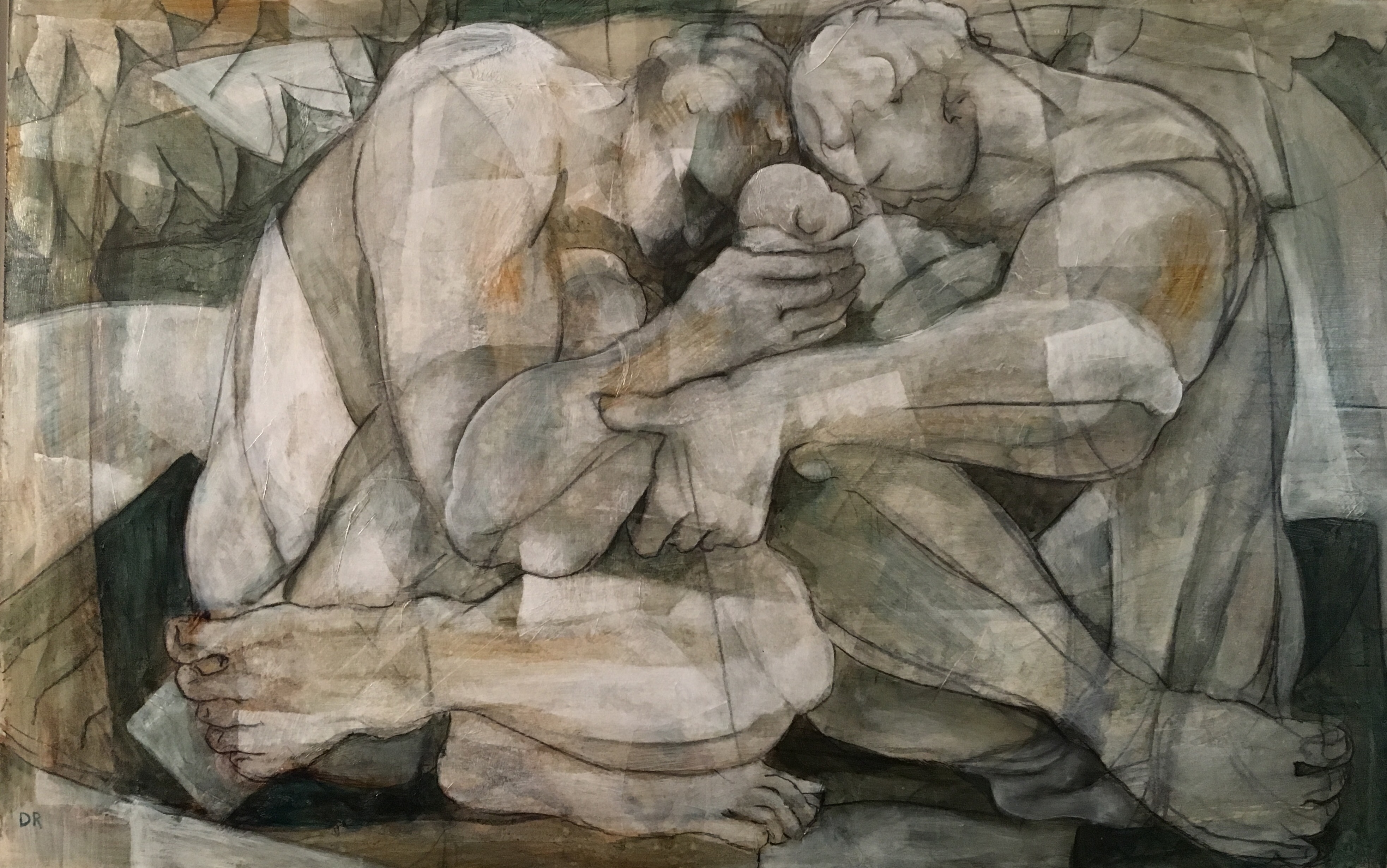
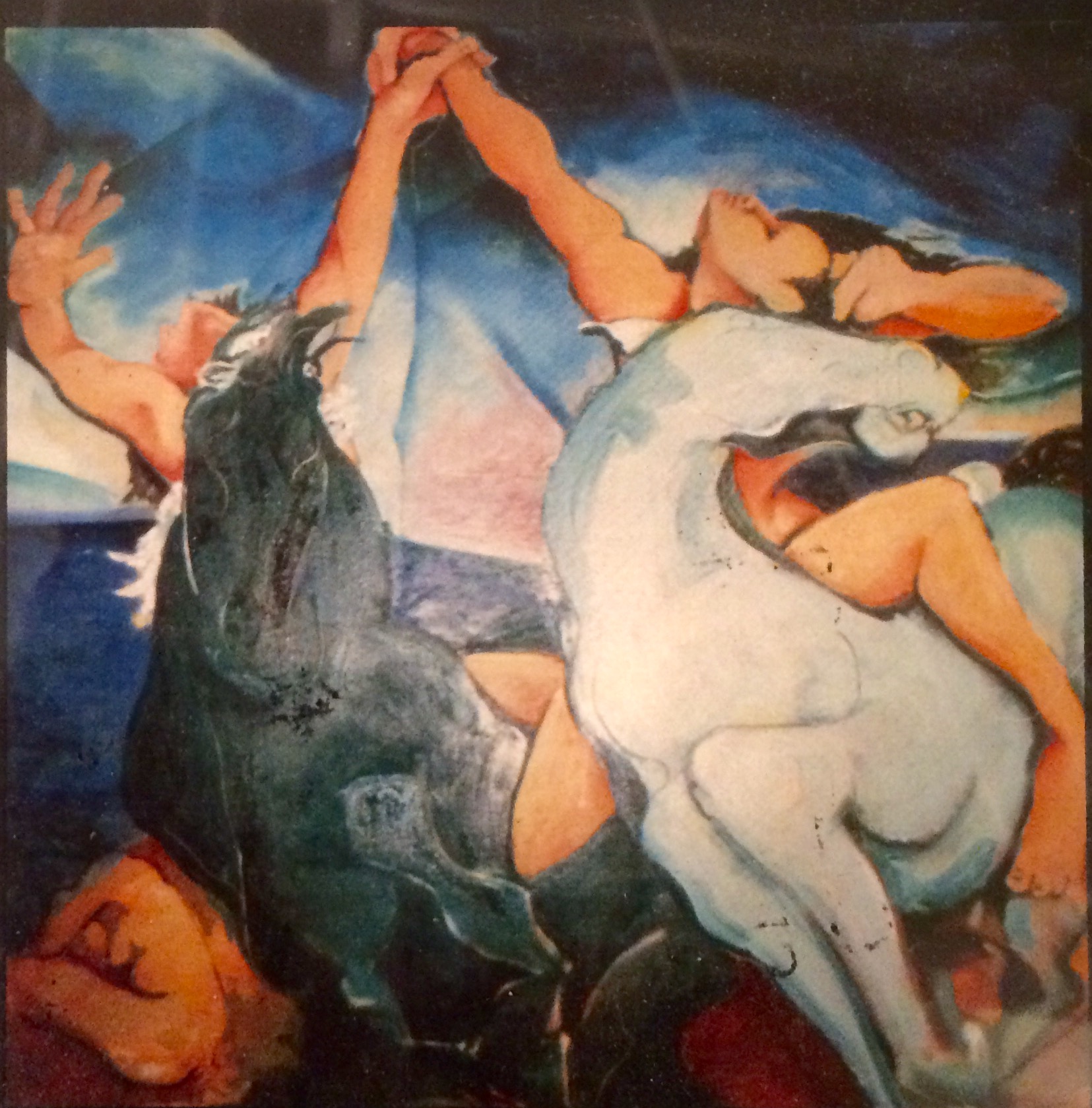
a detail from my latest painting

a detail from my latest painting

I am living this story, as are we all. I am a lover of story so I count myself fortunate enough to know that I am living it. It’s one of the grail stories. Here’s the section of the story that I am now living:

The knight who cannot be beaten (he has a magic sword) is knocked from his warhorse. A warrior, a man with no armor or shield, no protection, emerges from the woods, challenges the knight, and in a single blow, unseats him. That’s not the worst of it: the knight’s magic sword shatters. And, that’s not the worst of it. His armor, his trusty protection through the many wars in the wasteland, pins him down. Like a turtle on its back, he is defenseless. His magic sword, his trusted armor, all that he has relied on, all that he’s built his identity and purpose upon, betray him. He is stunned. He is lost. He closes his eyes and awaits his death.

Death does not come. Well…

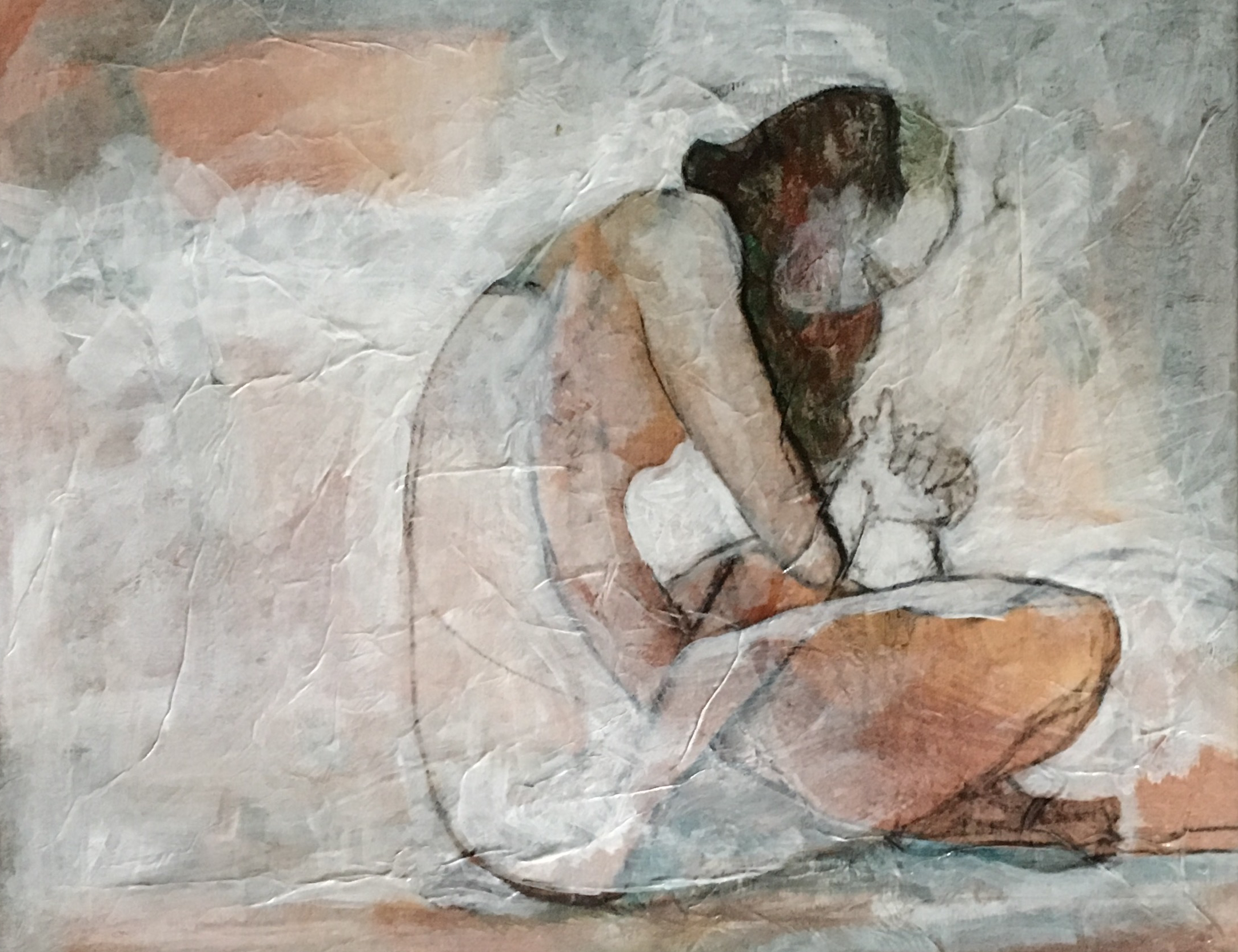
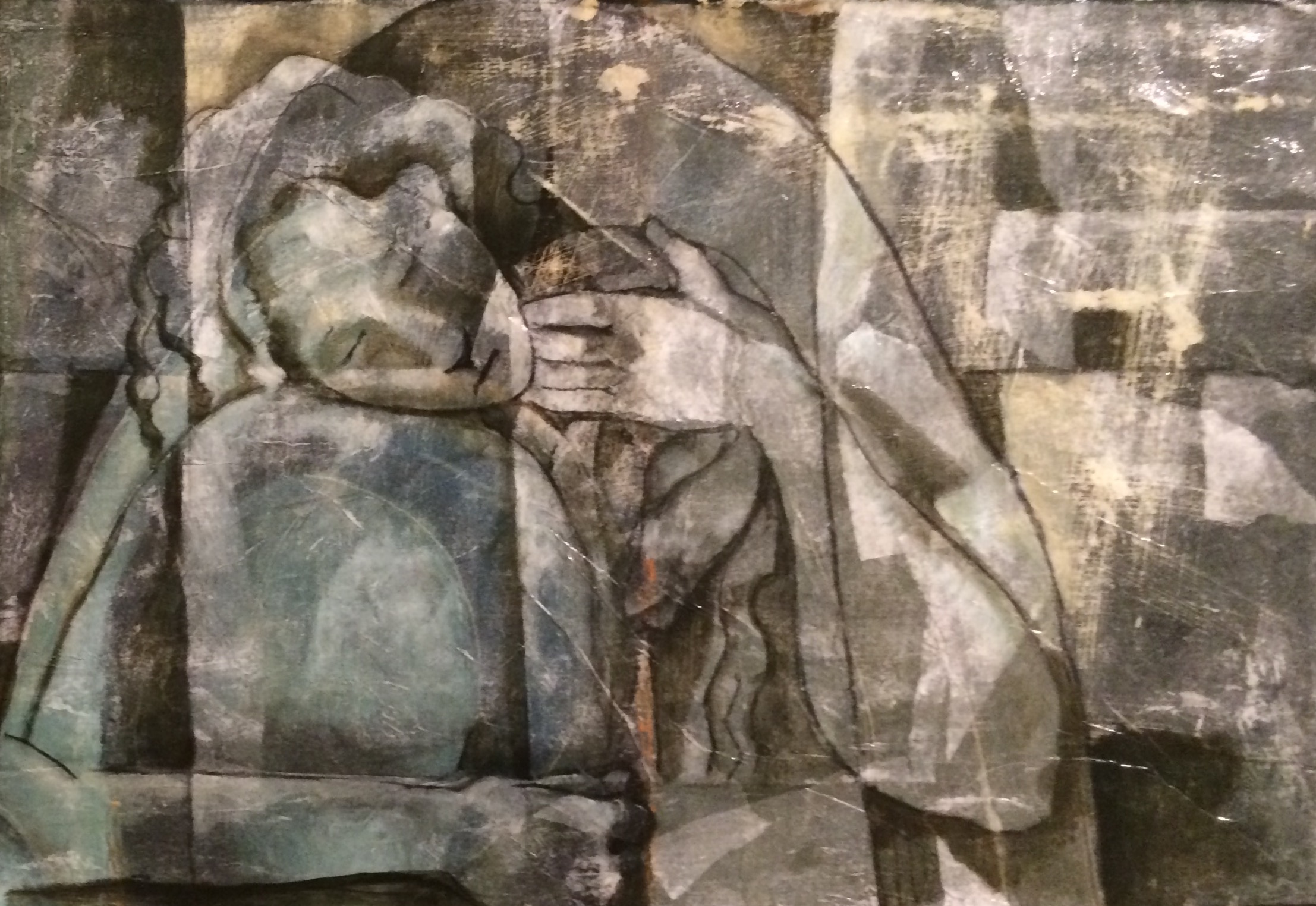
another detail

another detail

The warrior, the man with no armor, does not finish the job. He disappears without a trace leaving the knight stranded but alive. The knight opens his eyes and somehow manages to sit up. He weeps because his endless efforts to save the world have come to naught. In fact, fighting ogres seemed to produce more ogres! He removes his armor. He is no longer a knight. He is no longer capable of saving the world. He is, for the first time since his childhood, unprotected. He is, at last, purpose-free.

Nothing is more frightening – or useful – than to drop the armor of purpose and take a good hard look at what lives beneath all that forged metal.

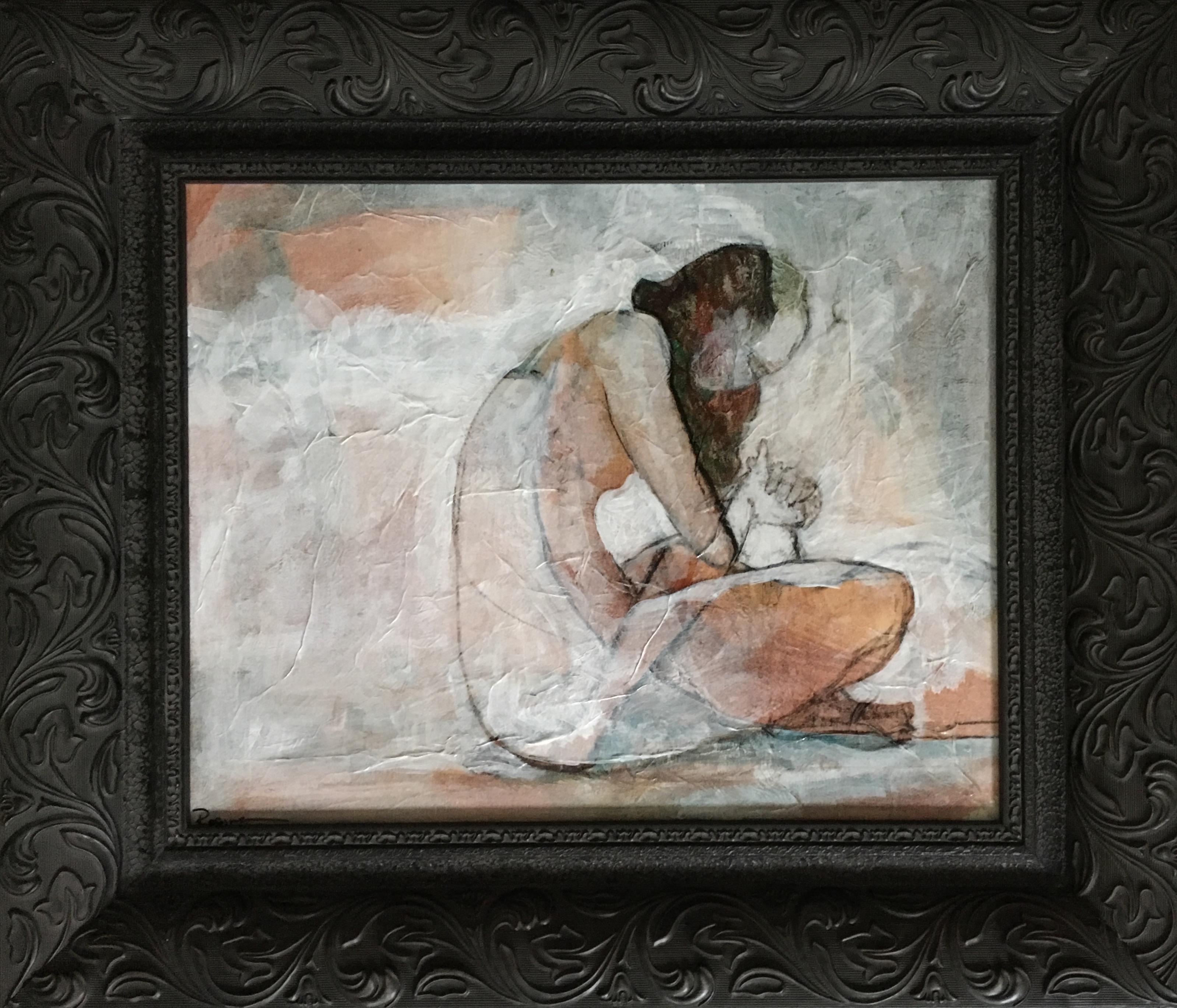
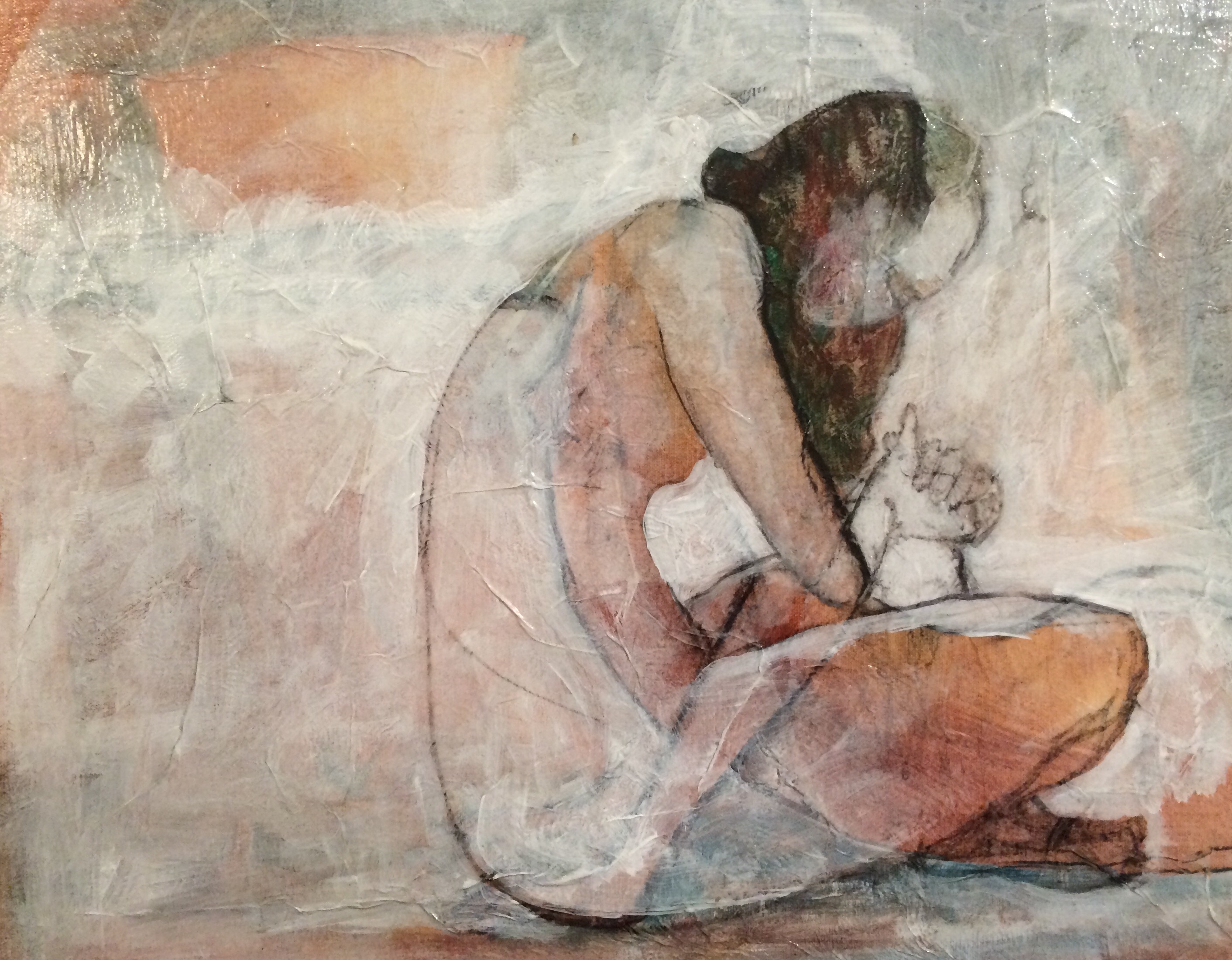
...and another

…and another

At first his lack of identity drives him crazy. He has no answer to the cocktail party question, “So, what do you do?” He feels naked and exposed. Fortunately, a teacher, a hermit, emerges from the woods to help him navigate the crazies. Namely, the hermit helps him by not answering his endless questions. The hermit helps him understand that the world never really needed him because the world was never really broken. The hermit helps him relax and see beyond all of his thinking. He realizes that the wasteland came, not because the world was broken, but because he believed himself to be broken, somehow lacking.

In a life of chopping wood and carrying water he sees that his purpose has nothing at all to do with doing – or roles or achievements. He sees that the road to the grail castle is blocked so long as he believes he is defined by a role or a bank account or lost in a made-up purpose. When he drops his need for importance the grail castle appears.

...and another

…and another

Satori, in all the stories, knocks seekers from their ponies. It stops all pursuits. It pops the illusion of a purpose-driven life. It necessarily strips the seeker naked.

We are all seekers at some point.

When you are required in the workshop to write your epitaph or are somehow forced to articulate what was most important in this life, the doing, the list of achievements, the purpose-drive will always take second seat. HOW you did what you did, the relationships you tended or ignored, the moments you appreciated or missed, will sit squarely in the first spot.


as yet unnamed

as yet unnamed


Save

Save

Have A Conversation

my quick sketches of two of the stained glass window panels

my quick sketches of two of the stained glass window panels

Yesterday I learned that my conversation with the stained glass window was only on hiatus. Several months ago we simply stopped talking. In the silence I thought the conversation was complete. For almost two years we had a weekly chat. I took lots of notes.

I recognize that one is not supposed to have chats with windows – at least not admit to it. Master Marsh teased me saying, “There’s help for things like this.” I’ve decided that my conversation with the window is more ordinary than odd: plenty of people around the world talk to statues. Most of us have had silent reckoning with the sky. I’ve witnessed mechanics talking to their tools and bakers wooing their dough. Who hasn’t cursed the object of a home fix-it job-gone-wrong (plumbing regularly gets a tongue lashing from me!) or praised a project done well? Traffic gets a regular talking to. In this region, at this time of year, more than a few brides make deals with the weather. A soul in exchange for sunshine.

Who hasn’t, in a moment of turmoil, looked inside themselves and asked for help? Who hasn’t uttered a quiet thank you or asked for guidance or made an appeal? Call it prayer, meditation, epiphany, catharsis, intuition, gut instinct, reading the signs, hearing the call, or communing with nature, it’s a conversation.

I’m not the only artist – or scientist for that matter – that, in moments of flow, feels as if something bigger is coming through. In that sense, all of my paintings might serve as the record of a conversation with something bigger. Writers often speak about having the experience of the characters writing themselves, of following rather than creating. Following, surrendering, allowing, listening, responding, getting out of the way. Play the chords long enough and you no longer need to think about them. In the land beyond thinking about it, music becomes possible. It’s a conversation.

Sitting on the chancel, listening to Kerri play, I stared as I often do at the morning light pouring through the colored glass. I studied the symbols. Birth and death. Tree of knowledge, Tree of Everlasting Life. The Grail standing between two flames. It’s a repetition in symbol of the same idea. Born into an experience of duality and distinctions, a world fighting over its differences, we have the opportunity to walk the middle path, the unity consciousness, the “something bigger.” “Between the two, one,” I the heard the window whisper. “It’s simple, really.”

a quick sketch of all three panels: birth, death, and the middle way.

a quick sketch of all three panels: birth, death, and the middle way.

Save

Be Held In Grace

Grace (noun): 1. Simple elegance or refinement of movement. 2. Unmerited divine assistance given humans for their regeneration or sanctification.

The first time it happened Kathleen, my landlady, stepped between me and the canvas shouting, “You can’t do it!” I was about to wipe off the image and start anew. “I love this one!” she said. “I love it.” Baffled by Kathleen’s wild-eyed heroics I granted the painting a stay of execution. I let it live. I faced the canvas to the wall so I couldn’t see it. After a few days I put it back on the easel. I saw it anew. I saw what Kathleen saw. It was a good painting and ultimately birthed an entire series of paintings.

One of the great paradoxes of being a visual artist is to lose sight en route to seeing. Becoming mired in the thoughts of the painting blinds an artist to the painting. Stare at anything long enough and you will stop seeing it (you will only see what you think about it). The only antidote is to turn it around. Forget about it so you can see it anew.

A few weeks ago it happened again. Kerri was coming down the stairs to the studio just as I was about the wipe an image off the canvas. It wasn’t working for me. Like Kathleen a decade earlier, Kerri threw herself over the painting and pleaded for its life. This time I asked her to tell me what she saw that I clearly was not seeing. I asked her to make a case for clemency. She saw something new. She saw Grace. And, she convinced me that I was blind to the painting. I took it off the easel and turned it to face the wall.

I’m learning again lessons that were pounded into me when I was younger but am now finding deeper levels. Step away. Forget. Clear your vision by looking away. Tom called this “closing the building for a spell.” Understand that seeing and thinking are intertwined. It is a sword with two edges that can illuminate or limit. The skill is never found in the thinking, the interpretation. The great skill is to see beyond the thinking. To see. Artistry happens when thought serves sight and not the other way around. The mastery of art and the mastery of life are, after all, one and the same thing.

When I turned the painting around I saw it anew. And, like the reprieved painting of a decade ago, this one, too, is inspiring a series. In a fit of intentional spontaneity (one of my new favorite descriptions of artistry), the second in the series jumped off my brush. I’m preparing surfaces for the third, fourth, and fifth. They are asking me to follow them – no thought required. They are asking me to take a walk with Grace.


Stand In It

photo

a detail from a recent painting

A surprise package came in the mail. It was a gift from David, my artist’s artist. He sends me things to feed my artist soul, to stir my pot or help me sort out my dilemmas. This gift is more timely than most; it is especially relevant for me now. It is a book of photographs and essays by Walter Kaufmann called Time Is An Artist. I’ve barely cracked the cover and already know it carries the wind that will fill my becalmed life-ship.

This is a quote from the first essay: We always live at the limits, but we are rarely aware of it.

I woke up this morning awash with gratitude for a man who stood in line behind me at an airport ticket counter over 30 years ago. I was returning from Europe. I had a hundred dollars and some lose change in my pocket. I was exhausted. I’d flown from London and landed in a blizzard. My connecting flight from D.C. to Denver was cancelled. Because I was traveling on a cheap open-ended student ticket, the cancelled flight meant I was stuck with no way home. I didn’t know what to do and was too tired to sort it out. I was desperate and lost in my desperation. That’s when the man tapped me on the shoulder. He was a guy in a rumpled business suit. That’s all I remember about him. He was also trying to get home. He’d just heard someone mention an airline offering a cheap flight to Denver. It was $89.00 ($100 with tax). I ran for the ticket counter and snagged one of the few remaining tickets.

That’s it. That’s what I remember about this man who tapped me on the shoulder. To him it was probably a little thing. To me it was enormous. I needed hope beyond desperation. I was investing in a story of limitless problems and was met with a moment of generosity.

It seems that I am in a life course, a graduate school for detachment. Last night P-Tom shared a quote that was important to him when he was doing his chaplaincy in a hospital: Don’t’ just do something, stand there (a reversal of the known quote). Stand there. Amidst the grief and the loss and the mess, sometimes it is essential to do nothing but offer presence. The man at the airport gave me his presence. Beyond his situation he was listening to my struggle.

Detach from your story and the gift will be gratitude. What rolls through our minds is nothing more or less than a story. Eckhart Tolle tells us the story is a force that pulls us out of the Now. Carlos Castaneda writes that Don Juan taught him 3 steps on the warrior’s path: Detach. Make a choice. Own the choice. One of the primary reasons people meditate is to quiet the mind. In the quiet it is possible to see the story as just that, a story. Detachment, in this sense, is not disengagement from life or cold aloofness from reality. It is the doorway to life. Stand in it and not the story of it.

Gratitude lives in the Now. Where else?

photo-2

another detail from another painting. kerri says this one looks like gratitude

The man at the airport was on my mind because I have learned in this life-course that gratitude is best served in thimbles: the taste of the pear, the sun on your face. The man tapping your shoulder, “Hey, I just heard….” I thanked him before running but the real gratitude came later. Gratitude came again this morning because I was telling stories of the good angels who’ve populated my path.

Real gratitude for this life lived perpetually on the edge is often lost when the expectation-bar is set too high. To be grateful for your life – your whole life – is… an abstraction. It requires a story that pulls you away from this bite. It is a bucket too big. Savoring is a slow affair, available in the smallest taste, right now.


Reach Out Of Inner Space

Richard Diebenkorn, Ocean Park #68

Richard Diebenkorn, Ocean Park #68

Several days ago on a muddy trek through the state park, the dials in my brain spun ever so slightly and I had an epiphany. It was an epiphany that I’ve had before which, to some, might disqualify it as an epiphany but for me the important stuff seems to occur repeatedly, a new layer falls off, and I see a bit more each time. Clarity is movement to a core, a simplicity emerging from what used to seem complex. So, I had a repeating epiphany.

Last year I attended The Chicago Art Expo. To my shock and surprise, rather than being challenged and energized, I ran screaming from the building. It was disconcerting. It was disorienting. Rather than having direct experiences with art that opened my eyes or challenged my world, I had experiences with curators who were compelled to tell me why the work had merit. They felt the need to locate the meaning and value for me. There was, in each booth, an art-high- priest standing between me and the experience. In fairness, I often felt that, without the interpreter, there was no experience to be had. It was a mental exercise.

In the grand scheme of things, Art serves a purpose. It carries the common story, the cultural identity. It is necessary, not luxury. In that sense, for it to serve its purpose, it requires no interpreter. When it no longer serves its intrinsic purpose – or there no longer exists a common center – an interpreter (marketer) is inevitable.

As Quinn once told me, “If someone has to tell you that they are good, they probably aren’t.”

Joseph Campbell wrote a book called The Inner Reaches of Outer Space. Art (theatre, visual, dance, music), for me, has deep value when it serves the outer reaches of inner space. It is immediately accessible, touching a universal nerve. It has to reach. Standing in the mud and muck of the park, we took a break by the shore of a lake and listened. The wind moved the trees, the limbs clacked and groaned. Crows chased an owl. The sun warmed my face. A layer fell off and a core came closer to focus.

This is not a diatribe against abstraction. We recently saw a Sam Francis exhibit at The Milwaukee Art Museum that left me in tears. I’ve spent hours in front of a Diebenkorn, one of his Ocean Park series, and I can’t get enough of it. I visit it often, like a pilgrim on a pilgrimage. It moves something deep within me. It speaks to something bigger than me and makes me want to be better and better. Standing before it I feel a part of a conversation of hearts and imaginations and deep space calls. I feel a part of a bigger story.

Be Clumsy

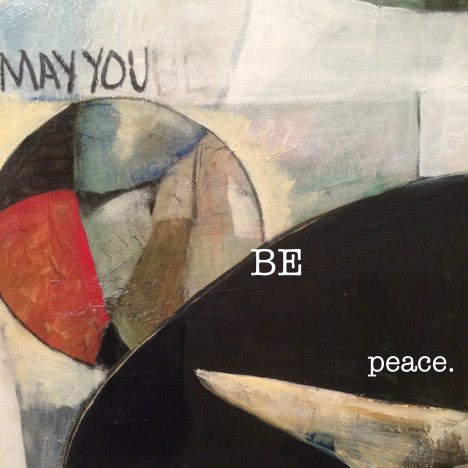
a detail of my painting, May You Be.

a detail of my painting, May You Be.

Clumsy (klum’ ze) adj. 1. lacking dexterity, grace or skill; awkward. 2. ungracefully shaped or made; unwieldy. 3. awkwardly or unskillfully said or done, ill-contrived.

“We don’t allow ourselves to be clumsy,” Kerri said. “Life is clumsy.”

Many years ago I read a commentary that suggested we moderns have a harder time of feeling good about ourselves than people of ages past. The argument went something like this: we have an impossibly high standard to meet and it is mostly illusory. For instance, our predecessors compared themselves and their successes against a relatively small village populace. We are swimming in pool that stretches around the earth. The athletes in our ancestral villages ran against their neighbors, the artists created for a specific purpose that served a tangible need in their community. Our young runners know to the hundreth-of-a-second what greatness requires. They run against the world. Our artists rarely know outside of their own inner imperative why they are creating. With no outer limit they spend a great deal of time wondering if their work has any impact or greater significance. With no outer limit it has no defined audience or community. Stephen, a gifted and prolific artist, used to ask, “Why don’t people recognize the value of art?”

The argument is largely a question of access. Our predecessors had limited and very abstract access to the news of the day, to the happenings beyond their region. We have a 24-hour global news cycle that comes to us on multiple devices that are designed to grab and keep our attention. It is not passive. On our multiple devices we are bombarded with images and messages of what we should look and feel like. Yet, almost all of the images populating our personal measuring stick are constructed. They are manipulated, retouched, powdered and Photoshopped. Legs are stretched. Wrinkles are removed. Sunsets are filtered. We measure ourselves against illusions.

Thus, intermediaries are everywhere. Interpreters abound. I rarely go into a gallery without a curator telling me why the work on the walls is important. The news of the day makes us the rope in a tug-of-war of interpretation.

Art, like life, like deep spirituality, requires direct engagement. It is made rich in the rough draft and the mistake. The broken road is interesting, vital. Learning is a process that takes time. It is messy. It is clumsy. It is not straight, paved, and has no road signs. And, it cannot be walked alone.

There is no forgiveness (of self or other) on the path of perfection; forgiveness is in short supply when the standard is both impossible to attain and an illusion. On the clumsy path, on the messy and muddy road, lives grace, generosity of spirit and deep forgiveness.

Clumsy (klum’ ze) adj. 1. Human

May You Be

May You Be


Taste It Fully

ice circles on the lake

ice circles on the lake

We heard the angry barking of crows before we saw them. They were haranguing an owl. It flew into a tree only a few yards in front of us. For several moments, through the ruckus of the crows, we stared at the owl and it stared at us. Time stopped. Nothing else existed. The owl’s eyes, our breathing, the crow’s chorus.

For our wedding gift, H and Teru sent several collections of poetry, “Manuals on marriage,” they wrote in the note that came with the poems. Kerri and I are savoring the poems, reading one or two aloud to each other every day. They are a source of warmth and inspiration during these cold dark winter months. A poem cannot be rushed or read merely. It must be slowly tasted. It is meant to be entered like a meadow; to be experienced. Try to make sense of a poem and you will miss it. Just like life.

She said, “inner quiet is low maintenance,” and I laughed. Yes it is. The trick is in getting quiet. It is not something that can be found or achieved. It is not a place or a state-of-being. It is what happens when you stop looking for it. Like the hermit says to Parcival when the Grail Castle suddenly reappears, “Boy, it’s been there all along.”

For years Sam the poet was afraid of his poems. Like all great art, his poems, his art, revealed the artist, and so he kept them locked up, un-tasted. He came alive and supremely dissatisfied when he finally unleashed his poetry. He let himself want more but also refused to let himself experience more; one foot on the gas, one foot on the brakes. To taste fully one must be willing to be tasted.

A snippet of a poem (a koan imbedded in a poem), RELAX by Ellen Bass:

The Buddha tells a story of a woman chased by a tiger.
When she comes to a cliff, she sees a sturdy vine
and climbs halfway down. But, there’s also a tiger below.
And two mice – one white, one black – scurry out
and begin to gnaw at the vine. At this point
she notices a wild strawberry growing from a crevice.
She looks up, down, at the mice.
Then she eats the strawberry.

Taste your moment. Taste it fully.

I wrote in my black and red notebook a simple recognition. The field of possibilities cuts both ways: in your despair you must remember that anything is possible. In your joy you must remember that anything is possible. Tiger above (the past), tiger below (imagined future). Do not reject your moment or attempt to hold on to it – both are methods of missing the moment. Taste it regardless of the circumstance. Taste it fully.


Let’s Be Us

a detail from my painting, May You Be

a detail from my painting, May You Be

[continued from Put Down The Hammer]

It is night and I am sitting alone in the sanctuary. I’ve been setting up chairs for a performance and now that the job is complete I’m taking a moment to savor the silence and review this day.

The temperatures have been unseasonably warm and when I opened the back door this morning for Tripper Dog-Dog-Dog I was greeted by the sound of birds singing. It was an April sound in the middle of December. I was so taken by the sound that I called Kerri, “Come and listen to this!” We stood in the doorway for many minutes. It was beautiful as well as a little disconcerting. “El Niño or global warming?” I asked.

Arnie wrote a comment to my last post. He asked: Can it be that we don’t want the ‘we’ in our society – we aren’t comfortable with the ‘we’ and only feel our identity by living out the “us and them”? I am an idealist but, of course, he is right. David Berreby wrote a terrific book called, Us and Them. We are hardwired to perceive the world through a lens of Us and Them. It’s a survival imperative to distinguish between friend and foe. However, a point that is most salient to me: the delineation of Us is mutable. It is not a fixed state but largely circumstantial. That is especially true in this modern age. There is an out of fashion phrase used to describe these United States: a melting pot. There could not be a better metaphor for an ever fluid definition of US. We need not melt but we do need to acknowledge that we are in the same pot. “Give us your tired, your hungry, your poor,…” is central to our national identity (not always central to our national rhetoric) and is a sacred, central statement of an ever-changing US.

We are among the first humans in history to have the pleasure of seeing our planet Earth from space and, as it has been said, from space there are no visible borders. The definition of US depends upon how far out we pull the camera. From space WE are the human race. There are a bevy of alien invasion movies that carry a common theme: when attacked WE inhabitants of Earth will pull together. Or, said another way, until there is a THEM that invades from another planet, WE will be incapable of recognizing full inclusion in the Earth pot.

To Arnie’s point, there is a lot of responsibility that comes with WE. A few months ago, Kerri and I were in Chicago for the day and passed a homeless man, holding a filthy cardboard sign asking for help. He was young, in his early 20’s, and more filthy than his sign. He was suffering. We walked by him. On the train home we had a long conversation about our responsibility to that young man or to any member of our community that is suffering. Many years ago I was with a student group in Bali. We were invited to Udayana University and one member of our group gave a talk about homelessness in America. Our Balinese hosts were shocked. “How could a member of your community be without a home?” they asked. The concept was abhorrent to them, unthinkable. “You are the wealthiest people on Earth…,” they stammered. Later, a Balinese professor said to me, “When you came here today, we wanted to be like you Americans. As you leave, we are proud to be Balinese.”

Us. Them. We. Like me. Not like me. Me. Little words with far-reaching impact. I am not the same person I was only a few years ago. I find it infinitely hopeful – especially now – that, just like me, the delineation of US is mutable, ever changing. It begs the question, Who are WE? And, to another of Arnie’s points, the answer to the question depends upon where we decide to place our focus.

Put Down The Hammer

photo-3[continued from BE WE]

The woman behind the counter at Starbucks, someone I’d never seen before, leaned forward, and chirped, “David! I loved your wedding!” She laughed at the look of confusion that must have crossed my face and added, “No, you don’t know me.” One of our invited guests brought her as a date. “Best wedding ever!” she exclaimed as Kerri joined us. Because the day is a blur, Kerri and I enjoy hearing people’s accounts of our wedding day and she enthusiastically told us of her experiences. It was nice. It was personal.

We took our coffee to a table and joined some friends. After a few moments, the woman behind the counter came to our table. She brought some samples, some health supplements and cosmetic products, “I only do this Starbucks job for the health insurance,” she said, “This is really my business,” she said, sliding the tiny packages in front of Kerri. “You never know who might be interested,” she chirped and blushed before making an exit. It was awkward. It felt awful. We went from personal to prospect in one inelegant step.

There is an old saying that came to mind: When the only tool you have in your box is a hammer, everything looks like a nail.

Many years ago, in a time of great financial desperation, I worked with some financial folks who recruited me to sell their stuff. I learned their processes, got my licenses in record time, and for a few horrid months, tried to sell their wares. I hated it. The work was highly profitable but the cost was highly destructive. Everyone looked like a prospect. To every social encounter, every friendship, every casual meeting, I brought an agenda. For a few months I looked through a lens that made every person, every circumstance, a commodity-opportunity. It reduced life (my life) to an ugly basic. It was toxic. Anna taught me the very appropriate word for what I felt: vampiring. It was a great lesson. It made me pay attention to the intention I bring to my life.

It’s what the woman at Starbucks felt, too. She was desperate. She, like a former version of me, sold the greater need to satisfy the lesser. Vampires are insatiable and stuck in an untenable lifeless-lens: everyone looks like a food source. Desperation is like that. It is easy when desperate to sacrifice friendships for prospecting. No one likes to be a food source.

As I perused this years bountiful crop of ugly images of Americans fighting and crushing each other for cheap toys and electronics, the annual product-stampede/people-crush-and-fist-fight on Black Friday (formerly known as Thanksgiving), I couldn’t help but think about the Starbucks lady. Desperation wears many masks but always makes others look less-than-human. Communities thrive when they feed each other and die when they feed on each other. This is not a mystery.

Commodity is supposed to service community, not the other way around. Vampiring is the only visible path when community loses itself to commodity; it inadvertently tosses away its many tools and leaves itself with only a hammer. It’s a question of order as much as a question of values. There is nothing wrong with commodity when the order of value is respected. Without a WE there can only be a very confused, desperate, and lonely I. It should not come as a surprise that desperate and lonely people do desperate and lonely things.

This is the season of the return of the light. We need do nothing more to create the miracle than put down the hammer and look at others as if they are more than nails.

[to be continued]