Study With Dogga [David’s blog on KS Friday]

“Why do so many of us, as we grow into so-called maturity, become dull, insensitive to joy, to beauty, to the open skies and the marvellous earth?” ~ Krishnamurti, Think On These Things

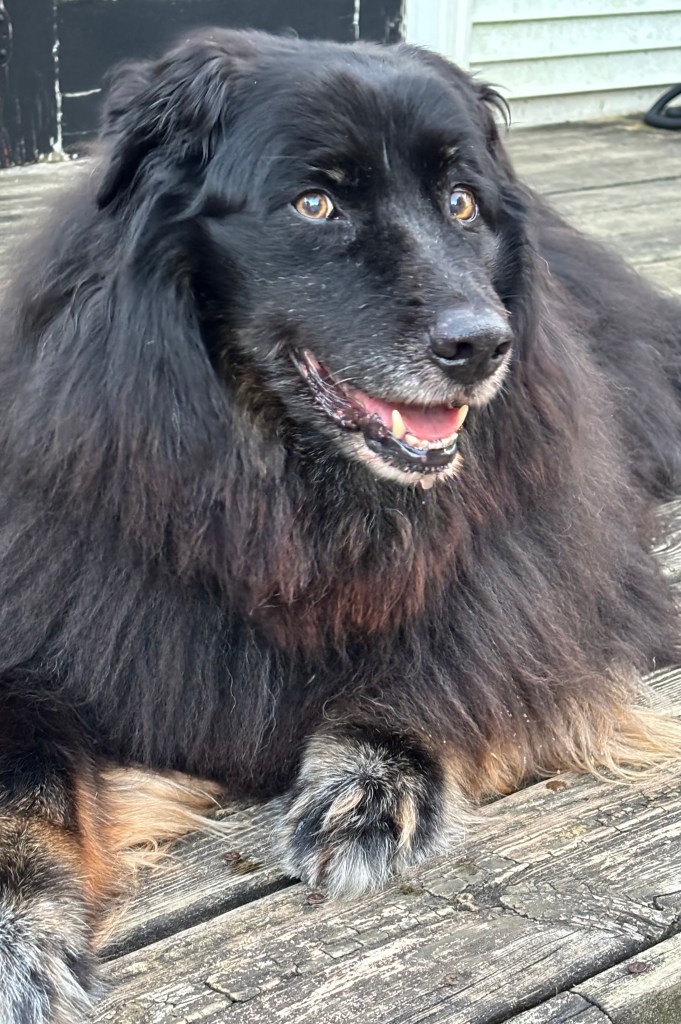
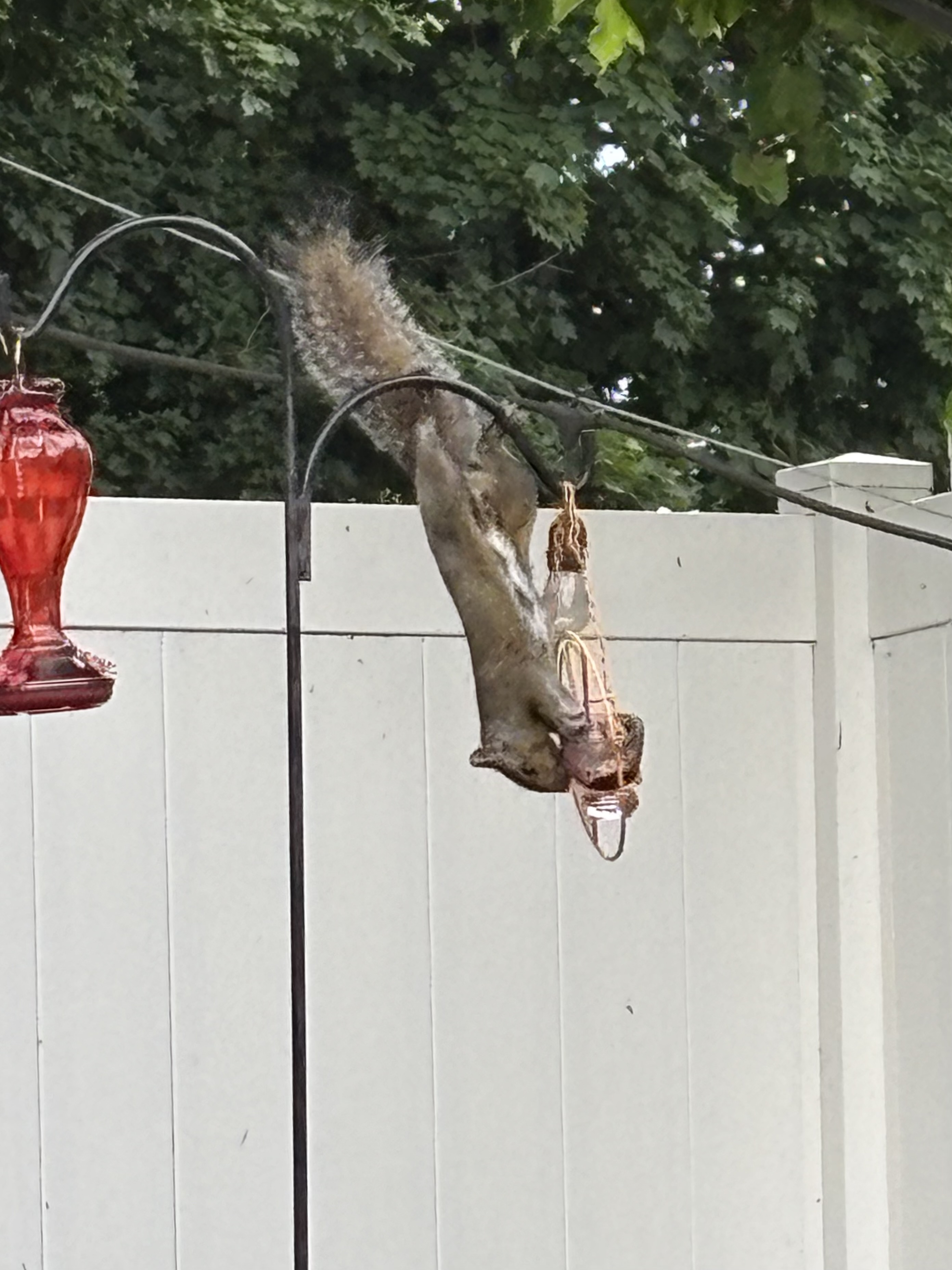
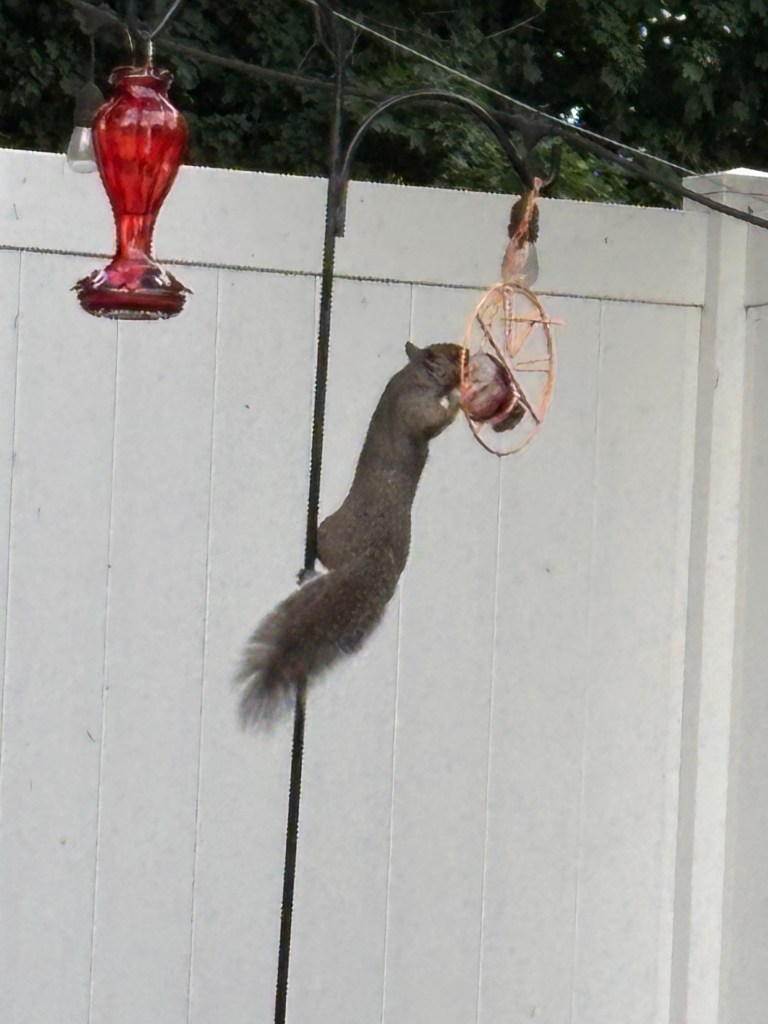
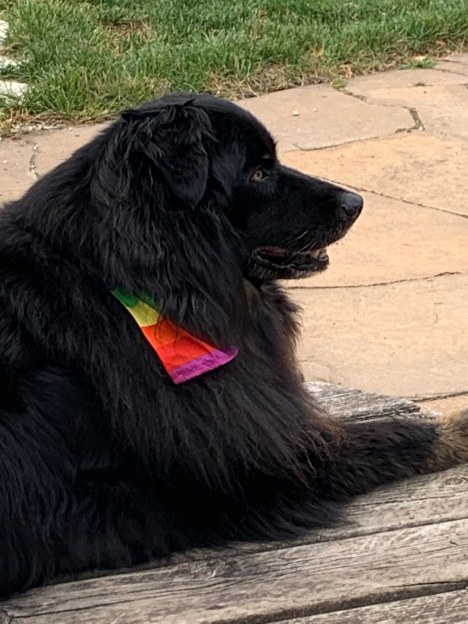
Dogga, in his old age, is doing what my father did in his last years. He sits on the back deck and watches the world. He is not watching the world go by. No! He is taking the world in. I imagine that he marvels at the beauty of it all. The robins taking dirt baths, the squirrels robbing grape jelly from the oriole feeder, the mint and lavender, the smell of earth after the rain. His appreciation of every-little-thing comes from contentment. After a life-long journey he feels no need to achieve or change a thing.

I am watching him and learning. His joy is immediate, quiet and boundless.

The Buddhist tradition posits that desire is the source of all suffering. The desire to be some-other-place. The desire to be some other person. The desire to attain some new thing. Separation from self is separation from the current moment. Dogga, like Columbus in his backyard meditations, is empty of desire, opening present-space for the fullness of life.

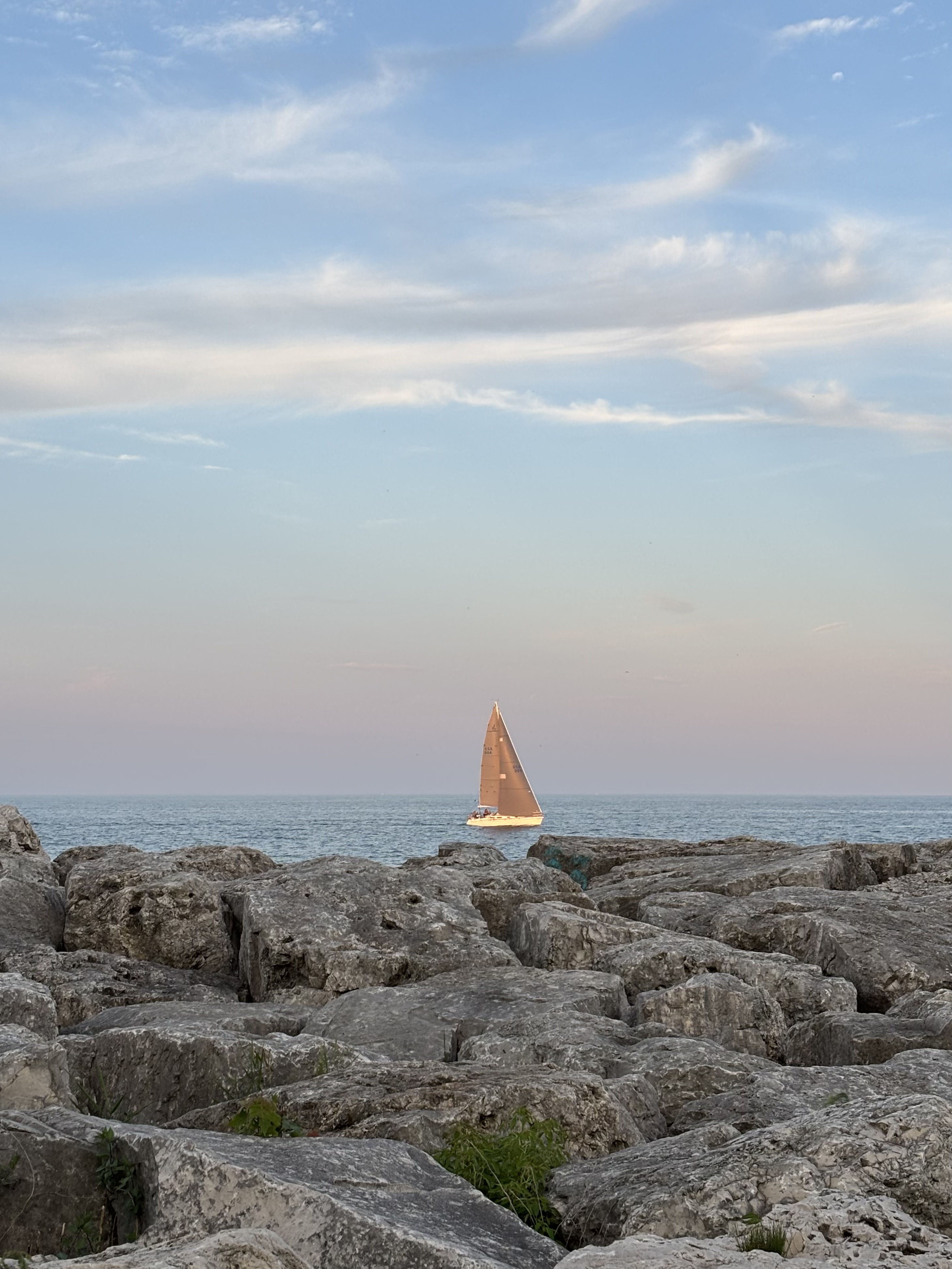
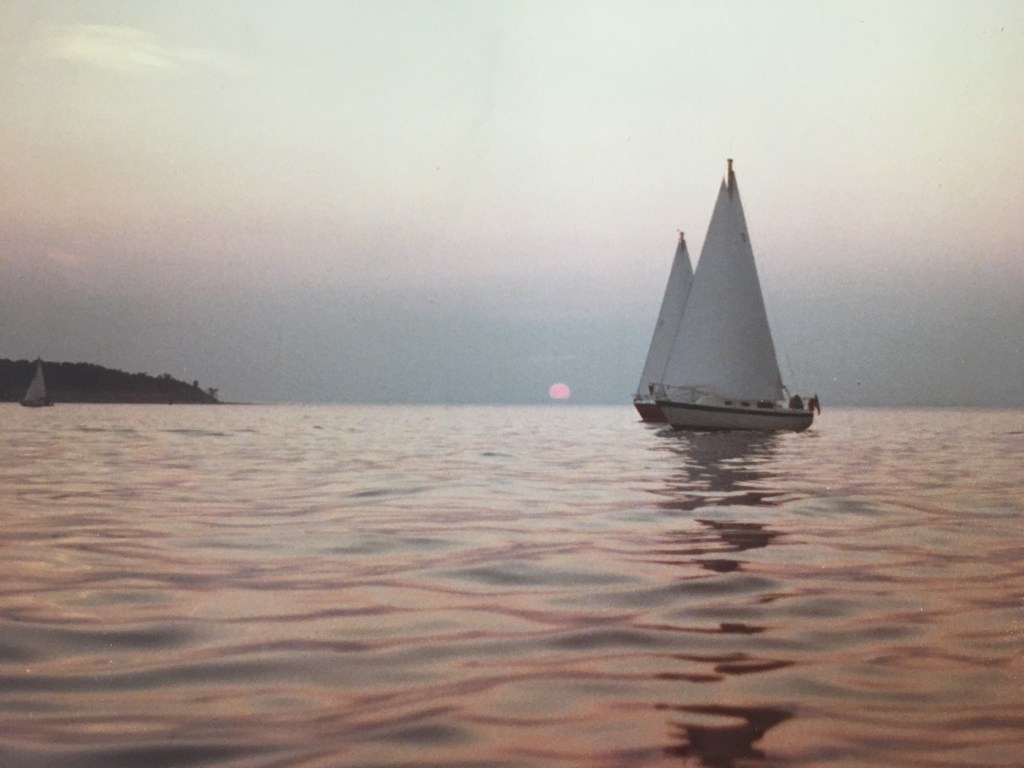
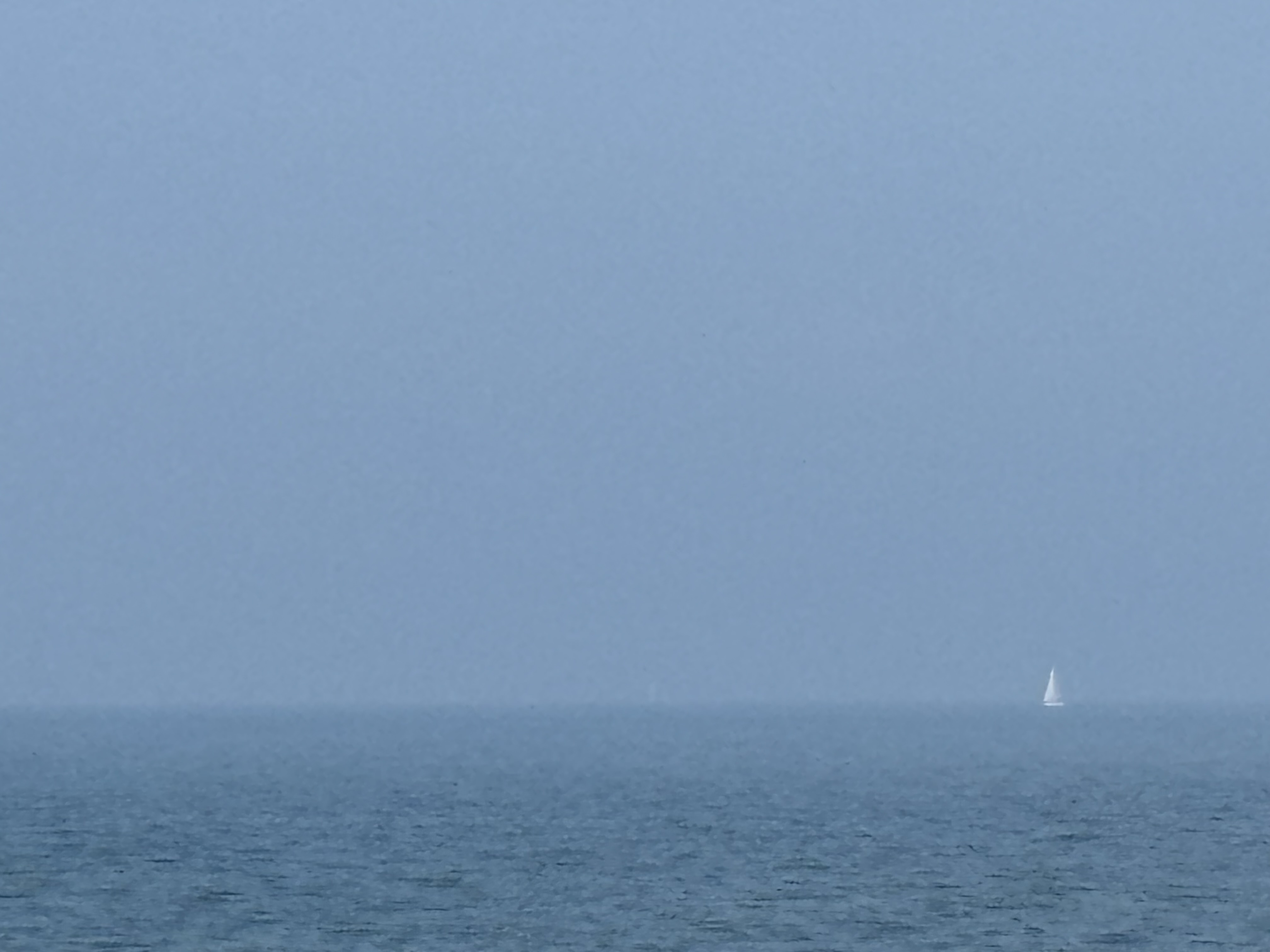
Though I cannot claim to be free of desire, I experience those moments sometimes. I drop-in. We walk along the lake after the rain, cool air off the water breaking the heat of the day. Holding hands, we marvel at the sailboat braving the lake so soon after the violence of the storm. She stops to take a picture and I am suddenly open space, empty of desire, beauty rushing in. It is neither too enormous nor too small. I am not a witness or performer. I am simply marveling. Part of. And then, with the thought that it is fleeting, comes the ache, the desire to hold on to all of it. I laugh, knowing better but not able to practice what-I-think-I-know.

Clearly, I have more learning to do (another desire!) and will happily study Dogga. How does he do it? How does he immerse in the beauty of it all and yet not yearn for it to last forever?

WHEN THE FOG LIFTS on the album THIS PART OF THE JOURNEY ©️ 1998 Kerri Sherwood

Kerri’s albums are available on iTunes and streaming on Pandora

read Kerri’s blogpost about THE SAILBOAT

likesharecommentsupportthankyou!

The Order Of Things [David’s blog on Not So Flawed Wednesday]

It had been over a month since we walked our loop trail. Walking a loop is good for processing life since no navigation is necessary. Keep walking and you will arrive back where you started.

We had a ton of life to process. It is remarkable what happens in a life in a month.

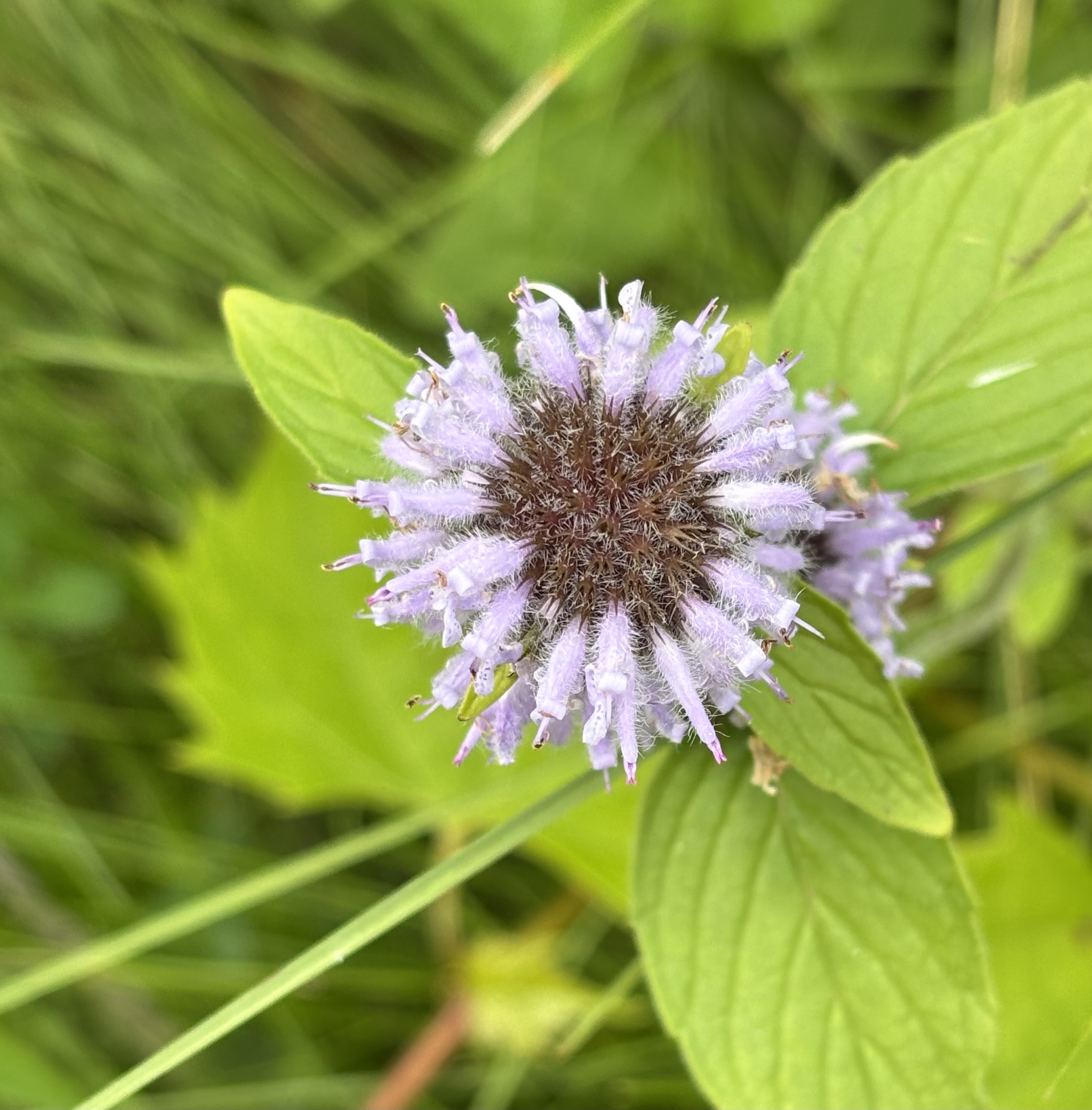
While processing life it is not uncommon for us to stop mid-sentence for a photo-treasure-op. A Downy Wood Mint paused our conversation. At the beginning of our relationship I found it jolting when I was in the middle of a full-blown-rant and Kerri broke off to snap a photograph. It was disorienting. I’d lose my rant-thread. “Now, what were you saying?” she’d ask after her photography deviation.

Now I understand and appreciate the order of things: beauty before rant. In fact, after I stopped being surprised by her spontaneous-photo-combustion, I understood that I was not being dis-oriented; rather I was being re-oriented. A good rant should never stand in the way of appreciation of the moment. Like most people on earth, I have missed a raft of the miraculous because I was too busy complaining about days-gone-by. I missed the greater by insisting on the lesser.

Our loop-walking has made me easier in the world. If I lose my rant-thread in a moment of nature-admiration, then it was probably not worth hanging onto in the first place. It is amazing how a pause for beauty or a moment of simple appreciation can lessen or even transform the forest fire burning in my brain.

“Now, what were you saying?”

“I honestly can’t remember.” A spontaneous pause on our loop to visit the tiny purple Downy Wood Mint cooled and soothed my mind.

read Kerri’s blogpost about DOWNY WOOD MINT

likesharesupportcommentthankyou!

Somebody. Nobody. [David’s blog on Merely A Thought Monday]

“The comparatively affluent can withstand the moral effect of being subsidized and supported by government; not so the poor.” ~John Kenneth Galbraith, The Culture of Contentment

It is among the greatest bait-and-switch tactics played on the American public: While the Reagan republicans and the generations that followed crowed that Welfare Queens were robbing the public, 50 trillion dollars moved from the lower 90% into the personal pockets of the 1%. The misuse and abuse of the system was not – and is not – the woman using food stamps to feed her child.

Do you remember the cry, “Waste, fraud, and abuse!” It is the same strawman/woman tactic used to sell The BIG UGLY BILL that is now stripping medicaid, healthcare and food assistance from millions of citizens – all to provide a tax cut for the morbidly wealthy. Consider this: Elon Musk’s personal wealth is built on billions and billions of dollars of government funding, subsidies and tax breaks. His DOGE bros successfully killed any and all government oversight over his business practices and use of tax dollars. His morbid wealth is accelerated by tax breaks and a tax code that shifts the tax burden of the nation onto the poorest citizens.

It is a corrupt band that only has one note in its repertoire: the same gross stereotype, variation on the Welfare Queen, is fueling the rampant misinformation that now leads to mass deportation of immigrants or, to be more specific, the deportation of black and brown immigrants, people who fled violence and came to this nation seeking a better life. The Welfare Queen tactic worked so well to shift wealth into the hands of the few that it is now being used to vilify immigrants. We hear that they are “soaking up tax dollars, afforded benefits that we are not, depleting resources meant for us…”

“Without fail, each Tax Day a prevalent myth resurfaces that conceals the truth about immigrants’ contributions to federal, state, and local taxes. Bolstered by social media and other outlets, it misleadingly asserts that immigrants, particularly those who are undocumented, evade taxes. The facts don’t back up these claims.”

The facts have never backed up these claims.

White nationalist elites are slobbering at the success of their modified Welfare Queen smear campaign, the rapid erection of concentration camps, the shameful support of their false-narrative by the court Supremes. All the while, the president and his men grift and rob us blind; his personal wealth has increased 4 billion dollars since inauguration day.

When fox news poisons the brains of their audience with a cry of “Socialism” or “Communism”, they are utilizing the same stereotype to fuel the same intention: create a fact-free-diversion by fueling fear, all the while moving the wealth of the nation – and the constitutional protections of the nation – into fewer and fewer hands.

When the current occupant of the White House and his Project 2025 co-conspirators cry that illegals are stealing our elections or that women are ruining our nation and should not have to right to vote or that people from Haiti are all rapists and riddled with AIDS…it is the same game, the same gross stereotype used to distract and deflect the public from the real rapists of our society.

It’s an age-old magician’s trick with a pickpocket intention: distract and steal.

Imagine the public good 50 trillion dollars could provide – could have provided – if it was actually dedicated to serving the public? The best healthcare for all. The best education in the world. Safe and secure bridges and roads. Stimulus for small business. World class research. A solvent social security and secure Medicare system. A stable and educated populace that would recognize when they were being fleeced.

Here’s the greater point. Terms like Welfare Queen are lobbed like bombs at us because they dehumanize people. They explode a victim fantasy in the minds of the easily distracted and render the target of their slander as less-than-somebody (“The welfare queen is taking your money!”). Sadly, in the process, we dehumanize ourselves, too. In “doing unto others,” we do the same onto ourselves. We become less than somebody, a disposable people who cannot afford housing or food or the gas in our cars. An easily controlled throw-away mass perpetually fighting each other, blind to the orange man and his tech-bro-party of urchins actively, gleefully, picking our pockets.

There is only one line remaining between our future as a class of nobodies or as a nation of somebodies, a government of, by and for the people, is to vote. Our vote in November will affirm that we are somebody – or it will deliver us into the hands of those who daily reduce us, strip us of our rights and believe we do not matter. Welfare Queen. Illegal. Antifa. Dumocrat. Loser.

Vote as if your life and our democracy depended on it – because it does.

read Kerri’s blogpost about SOMEBODY

likecommentsharesupportthankyou!

In It [David’s blog on Not So Flawed Wednesday]

“As we grow older, we often cling to our past achievements or rigid ideas of who we are. True contentment comes when we release this need to be a “finished product”. ~ Pema Chödrön

Late at night, not able to sleep, I bumbled upon a Sounds True interview with Pema Chödrön. She shared her thoughts about the gifts available in aging. Slowing down and spaciousness ran through her comments. I found myself deeply grateful for Kerri since I doubt, if left to my own devices, I would have slowed down or learned to watch the birds. I would never have left the studio. It’s taken a Herculean effort on her part to help me “gear down”.

It’s not like I haven’t had teachers and mentors drop out of the sky to guide and help me live a less obsessive life. In Bali a man working his fields saw me walking in the American style – as if I had an urgent destination – and he joined me. We did not share a common language so without a word being spoken he helped me slow down. He helped me learn to breathe and walk in the world, not through it.

Dive master Terri taught me the same lesson. For him, diving was a meditation. Learning to dive was about learning to get neutral. Not to swim through the water but to be in it. To be it. To let it hold me. Only then could I see.

There were many, many brilliant teachers who crossed my path, each bringing to me a variation of the same lesson. Slow down. See. And, although I understood – and believed in – the repeated lesson, I had difficulty incorporating it. It was uncomfortable. It ran against the Puritan upbringing that tied my worth to my achievements. Achieve more = worth more.

It’s quite the conundrum to sacrifice self-worth for presence. Perhaps tossing away rigid value measurements is one of the gifts of growing older. Isn’t it true that, at the end of the day, the most treasured moments of life are about relationship and rarely about achievements? I’ve racked up many, many achievements, as Quinn would say, “Yet another certificate on my wall of respect,” but none of them are as precious as a phone call with a friend, a morning belly-belly with Dogga, a slow walk with Kerri. White wine on the back deck, Dogga asleep in the shade, a hummingbird at the feeder. In it. See it.

It is uncomfortable to slow down in a culture that values the race. It is uncomfortable to seek substance in a culture obsessed with appearances.

When I read this quote from Pema Chödrön I laughed. For me it is profoundly true:

“The interesting thing is that the more willing you are to step out of your comfort zone, the more comfortable you feel in your life.”

read Kerri’s blogpost about WHITE WINE

likesharecommentsupportthankyou!

Do The Opposite [David’s blog on Merely A Thought Monday]

I am not a Gnostic nor do I identify as Christian but I very much appreciate a bit of text from the Gospel of Thomas: The Kingdom of the Father is spread upon the earth, and men do not see it. I pulled it up on my magic computer to find what comment the AI master might offer: “…divinity is staring us right in the face in our daily lives, but our earthly preoccupations, illusions, and dogmas make us blind to it.” 

It is right in front of us. We do not see it.

When I was younger I learned to meditate. I was chasing presence. More than once I came to the hysterical realization that my chase was in fact doing the opposite of what I intended. Presence is not something that can be chased. Rather, it is experienced when stopping the chase. Stand still and breathe. Feel. See.

I recently had a conversation about connection and control. It brought me around again to what I learned in the folly of my chase. There are so many things I thought I could control – many that I didn’t know that I was trying to control – and my efforts to control brought me a mountain of frustration and nothing more. I found it an exercise in futility, a seemingly impossible task, to try and control my illusion of controlling. Just as presence cannot be chased, controlling cannot be controlled. One day, in a flash of no-duh, I understood that all I need do is the opposite: connect to the moment instead of trying to control it.

It was right in front of me all along. Control is born of fear. It is to erect a barrier, to contract. Connection is the opposite. It expands. It releases. How many times have I learned that the heaven I seek is available and visible if I simply stop, let go, or turn around and look? How many times have I learned that what I sought was right in front of me, patiently waiting for me to open my eyes.

read Kerri’s blogpost about HIDDEN IN PLAIN SIGHT

likesharecommentsupportthankyou

At The Edge [David’s blog on DR Thursday]

“I want to stand as close to the edge as I can without going over. Out on the edge you see all the kinds of things you can’t see from the center.” ~ Kurt Vonnegut

Standing at the edge of the lake, looking east, I know Michigan is out there somewhere. I’ve never seen it myself but I have it on good authority that if I paddled my kayak in a straight line I’d eventually bump into it. Standing at the edge I imagine the journey, and in my imagination, I survive storms and thirst and never-before-seen creatures. When I arrive in Michigan I tell the world what I have seen but the world does not believe me. No one has ever seen what I report to have seen – so I must be making it up. And, that’s always a possibility.

Standing at the edge of the lake it is also interesting to turn around, look west and gaze into the center of town. The community organizes itself, moving in synchronicity, but rarely recognizes it. Individuals move throughout their day, pushed this way and that by forces they cannot perceive or control, riding the currents believing that they are somehow separate and independent from the movement of the whole. Each and every moment they shape and are shaped, but believe themselves isolated and alone. Within them are never-before-seen dreams and desires. They do not dare to reveal them fearing they will engender cynicism. Dreams are tender things so they mute their imagining; blunting dreams is always a possibility.

I once taught that judgment is an alarm that sounds at the edge, an alert that the next step will be into the unknown. It is meant to make you aware of the awaiting kayak. It is the call to open your eyes to what-you-cannot-yet-see. It is there to alert you that the person standing before you is an undiscovered universe, different-than-you. They are unknown and vast. It is possible to run from the unknown. It is possible to step toward it.

Standing at the edge, the alarm sounding, debating whether to step or run away, only one thing is certain: this “other” IS one of the forces that moves you, shapes you, and might help you see what you cannot see from your safe center: that the isolation you experience is mostly self-imposed.

Also, to them, you are the scary unknown, the marker of difference, the vast unknown universe capable of changing them.

Sometimes standing at the edge, it is the best to stand still. To recognize the magnitude of all that you do not know. To weigh the enormous possibilities that await if you simply find the courage to take a step, to extend your hand, to say, “Hello.”

Pilgrimage, 14″x18″, mixed media on panel

read Kerri’s blogpost about THE LAKE

likesharesupportcommentthankyou

A More Powerful Force [David’s blog on KS Friday]

Do you wonder, as I do, what has ever been achieved through war? Pick any war from the many, many, many that populate human history and ask, “What was gained?” Really? What was gained? How were we made better?

Certainly there have been useful technological advances. War has been a driver for innovation but I question whether we might have arrived at the same advances without the carnage. Could the advances in medicine been the result of goodwill? The desire to make lives better? And, have all of the technological advances really been advances? Wouldn’t our schools and our children be safer in a world without automatic weapons? Might we solve our differences as readily if war was not an option? Is cooperation and collaboration as potent a force in the world as conflict? Might they be more powerful?

I will be the first to admit that order inspires chaos and chaos necessitates order. It’s a cycle but I wonder if chaos really requires bloodletting?

Putin blames Ukraine for the aggression, Netanyahu blames the Palestinians for the aggression just as the current occupant of the White House blames Iran for the aggression. Hitler blamed the Jews and Pol Pot blamed the intellects. What has any of it achieved? Security? Certainly not. Prosperity? Well, weapons manufacturers are grateful for the business just as oil companies are applauding record profits from the ongoing closer of the Strait of Hormuz. Are we really that shallow? Is it really so impossible to share resources? Do we really need to learn again and again how interconnected our economies – our resources – our planet -our lives – really are?

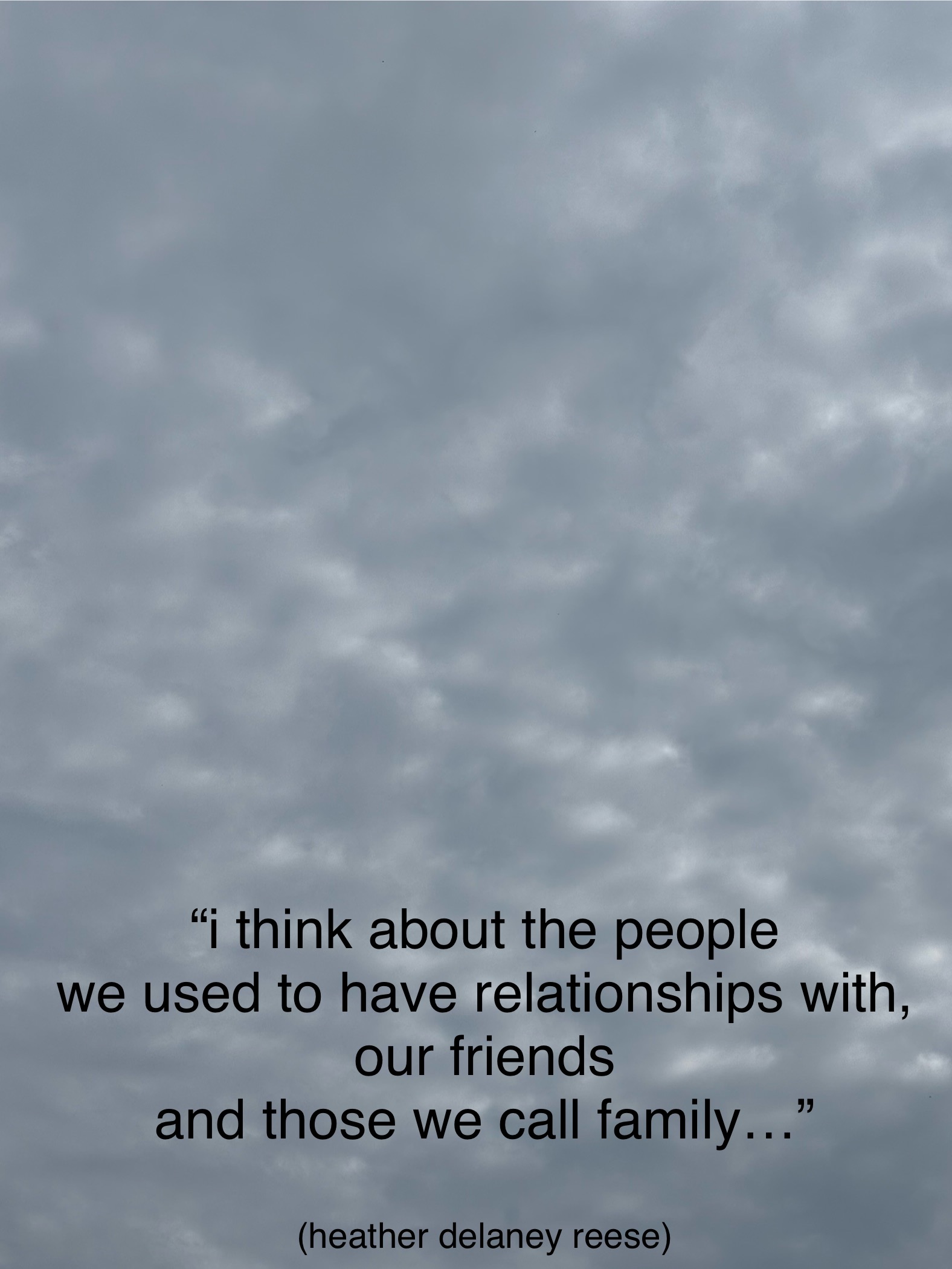
Kerri took a photo of the storm clouds gathering in the sky. It is made beautiful by the safety of home. Home looks like a place but it is in actuality a wide web of supportive relationships. Home does not exist in isolation.

Elie Wiesel wrote that solidarity is essential for existence, “Alone we disappear.” Solidarity: unity, agreement, fellowship. Are these not also essential forces in the world? Martin Prechtel writes of community as “mutual indebtedness”. Is it not incumbent upon me to make sure you have food to eat, and you to ensure that I have fresh water to drink? If I poison the well will not I also suffer? Isn’t the imperative to bridge our loneliness – the necessity to reach across the void to each other – a more powerful force than war? Why else do we send probes into outer space? Rather than war, doesn’t it make more sense to reach across oceans to say, “We are here,” and ask, “How can we get to know you?”

Is it so hard to imagine?

YOU MAKE A DIFFERENCE © 2003 Kerri Sherwood

*This song was the first contact I had with a woman named Kerri Sherwood. I’d written a newsletter entitled, “You Make A Difference” and a few days after publishing my newsletter an email popped in my box with this song. She wrote that my words had touched her and she hoped that her song of the same title would touch me. Well…

Kerri’s music-that-can-change-your-life is available on iTunes and streaming on Pandora

read Kerri’s blogpost about POSSIBILITY

likesharecommentsupportthankyou

Take A While [David’s blog on Two Artists Tuesday]

“You have traveled too fast over false ground;
Now your soul has come to take you back.

Take refuge in your senses, open up
To all the small miracles you rushed through.”

~ John O’Donohue

Even now the cardinal is singing. The early sun warms the quilt covering our feet as we write. Our morning practice of writing blogs together is never rushed. We tease that the editors are tapping their feet, unhappy with our dedication to meditative process evolution. Since we both seem to have issues with authority it is among our favorite games to torture our imaginary editors who are terminally deadline-driven and burdened with our snail’s pace, our too-generous-very-slow writing practice. The editors hate that I stare out the window and daydream. They roll their eyes when Kerri says, “This may take a while.” They desire us to be more “nose to the grindstone”. And isn’t that a happy phrase!

She tells me that it is impossible to get a good photograph of the white trillium unless it is in the shade or the day is cloudy. The sun bounces off the white petals and blows out the image. The day was cloudy so she was excited to find the perfect trillium. While she knelt to take her photograph I closed my eyes and stood still. It is what I do now when we stop for a photo op. Listen and feel. It is good advice to take refuge in your senses; to open up.

Though I adore his poem I imagine that John O’Donohue had it backwards. The soul does not come to take you back. I imagine it has been there all along, waiting. It knows that sooner or later we stop trying to find “it” in some distant future or some grand achievement. Soul waits for us to stop running. It waits for us to stand still enough to recognize that “it” never required a chase or proof-of-worth or acquisition. We at long last stop and take it back.

It’s hard to see anything with your nose to a grindstone – except a grindstone. The last time they were pushing me to hurry-up-and-finish I told the editors that the words “puritan” and “punitive” sounded remarkably similar. They “blew a gasket.” My soul smiled. I closed my eyes and felt the sun warming the quilt covering our feet. I asked Kerri if she was ready to read and she said, “Not yet. This may take a while.”

***

“You have traveled too fast over false ground;
Now your soul has come to take you back.

Take refuge in your senses, open up
To all the small miracles you rushed through.

Become inclined to watch the way of rain
When it falls slow and free.

Imitate the habit of twilight,
Taking time to open the well of color
That fostered the brightness of day.

Draw alongside the silence of stone
Until its calmness can claim you.”
John O’Donohue

read Kerri’s blogpost about WHITE TRILLIUM

likesharesupportcommentthankyou

Everyday, Everyday [David’s blog on Merely A Thought Monday]

Sometimes it feels as if this great big old universe pops us on the head. It wants our attention. It wants us to hear its music beyond the noisy ruckus. This is one of those times.

Many months ago, late at night while Kerri was sleeping, I came across a video called, The Life We Have. I wasn’t paying too much attention and thought it was a hiking video so I clicked on it. I was not prepared for what I saw. At the end I had to stifle my sobs so I didn’t wake Kerri. So, when last week it popped up again in our feed, I told her she had to see it: Rob Shaver, living with stage four cancer for over 20 years, squeezing every ounce of gratitude he can from the life he has. His story is raw. His telling is pure. We both sobbed.

The next day L sent us a video of a man, a friend and teacher, speaking of orienting his life toward gratitude.

The next day D told us of his dedication to live from a place of generosity: generosity in thought, in action, in spirit.

The next day, while sitting in the backyard, seven vultures dropped from the clouds – seven – riding the thermals, spiraling low, just over our heads, and then circling higher and higher until they disappeared again into the clouds. It was gorgeous. Symbolically they represent purification and transformation. “I guess we’d better start paying attention,” I said.

In this past decade, ours has been a path of fire. Layers of dross and armor have been burned away. Bags of life-garbage have been reduced to cinders. We have no illusion that we are garbage-free but we are certain that the junk no longer dominates our view. We are not nearly as invested in murky grievances as once we might have been. We’re more and more clear-eyed in appreciating the moment we’re in and less and less interested in being anywhere else. More and more we hear the music in all things.

“The best thing you can do for your lungs is sing,” Rob Shaver said. This from a man who runs miles a day, a man whose lungs are filled with tumors. ‘”Everyday, everyday, everyday, everyday, everyday…be grateful for the life you have.”

read Kerri’s blogpost about THE MUSIC

likesharecommentsupportthankyou

The Sound of Peace [David’s blog on Not So Flawed Wednesday]

There’s a mourning dove serenading us as we write. I love their song. They make me think of Bali. Each morning I took early meditation walks to the song of mourning doves. For me, they are the sound of peace.

Our Airbnb was on the grounds of a Catholic retreat center. After a long day of freeway driving it was a special treat to leave the known world and enter a patch of earth dedicated to quiet and reflection. Our host told us that we were welcome to walk the grounds so, after unloading our bags, we wandered the woods and slow-walked the roads. I was once again reminded how profound – and immediate – is the impact of our environment on us. Aggression evokes aggression. We meet the violence of the news-of-the-day with anger and fear. We are not as independent, not nearly as separate, as we like to believe. Environment shapes behavior. David Abram wrote that presence (a quiet mind) is nearly impossible in the incessant goal-driven noise of the USofA.

And, so, we stepped into the woods. The harried drive dropped from our shoulders, the frenetic game of freeway leap-frog dissipated. I imagined the trees breathed in our weariness and exhaled ease into our bones. We relished the vibrant colors elicited by the setting sun. We stood still and absorbed the bird song. We strolled by the nun’s residence and I wondered what a life lived in retreat might awaken.

I wondered what this nation might become if it honored quiet truth as much a noisy distraction…and then I let that thought go. It was a remnant of the freeway, a disturbance from another world. It called my attention away from the song of the mourning dove.

read Kerri’s blogpost about THE CENTER

likesharecommentsupportthankyou