At The Edge [David’s blog on DR Thursday]

“I want to stand as close to the edge as I can without going over. Out on the edge you see all the kinds of things you can’t see from the center.” ~ Kurt Vonnegut

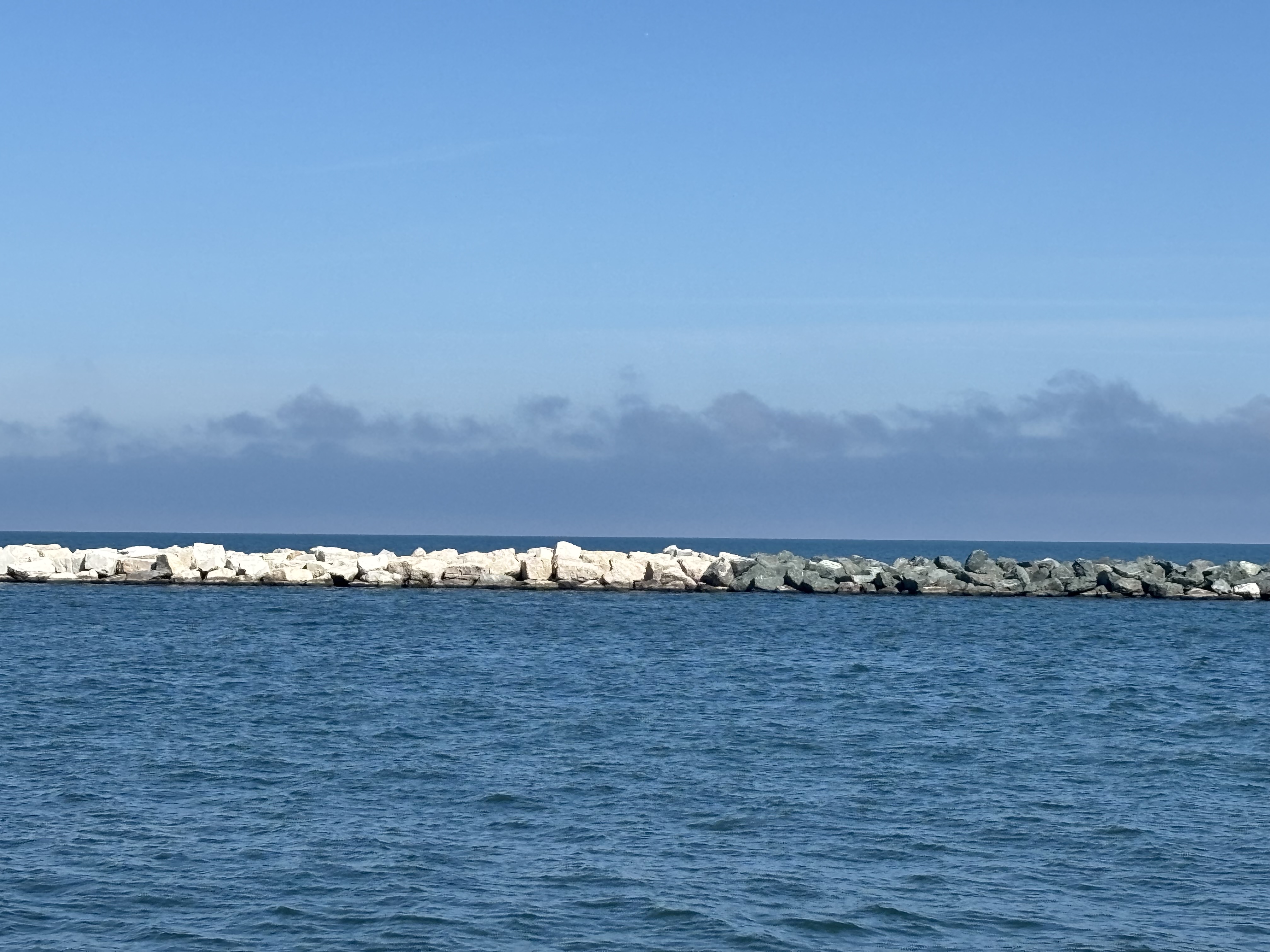
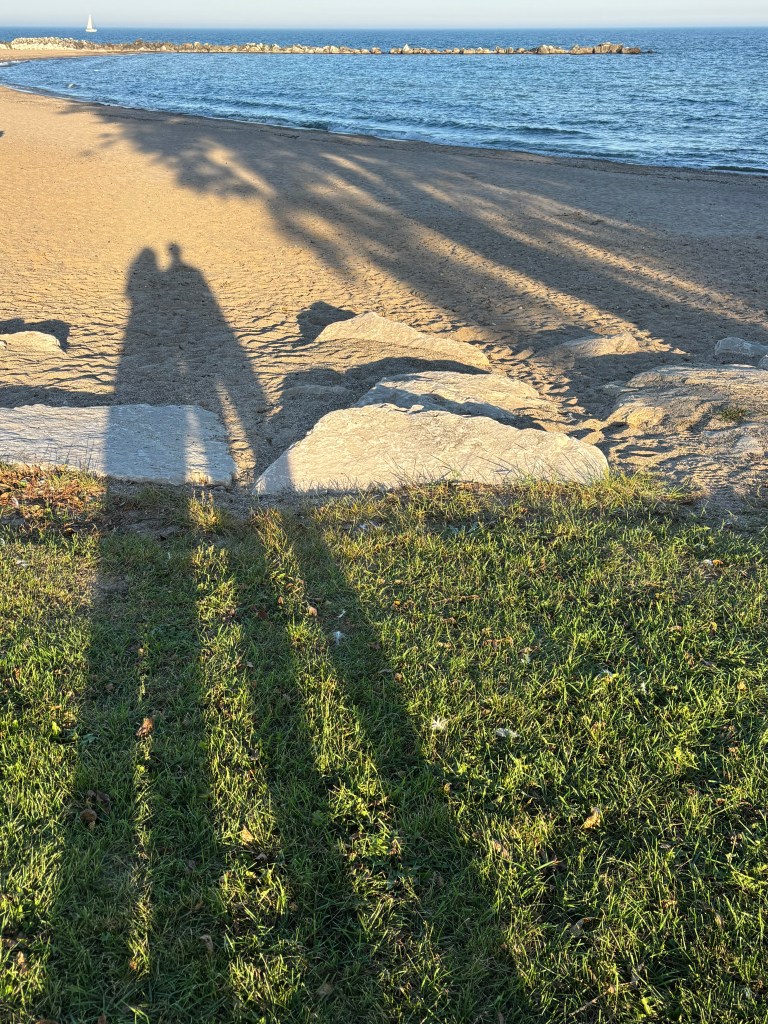
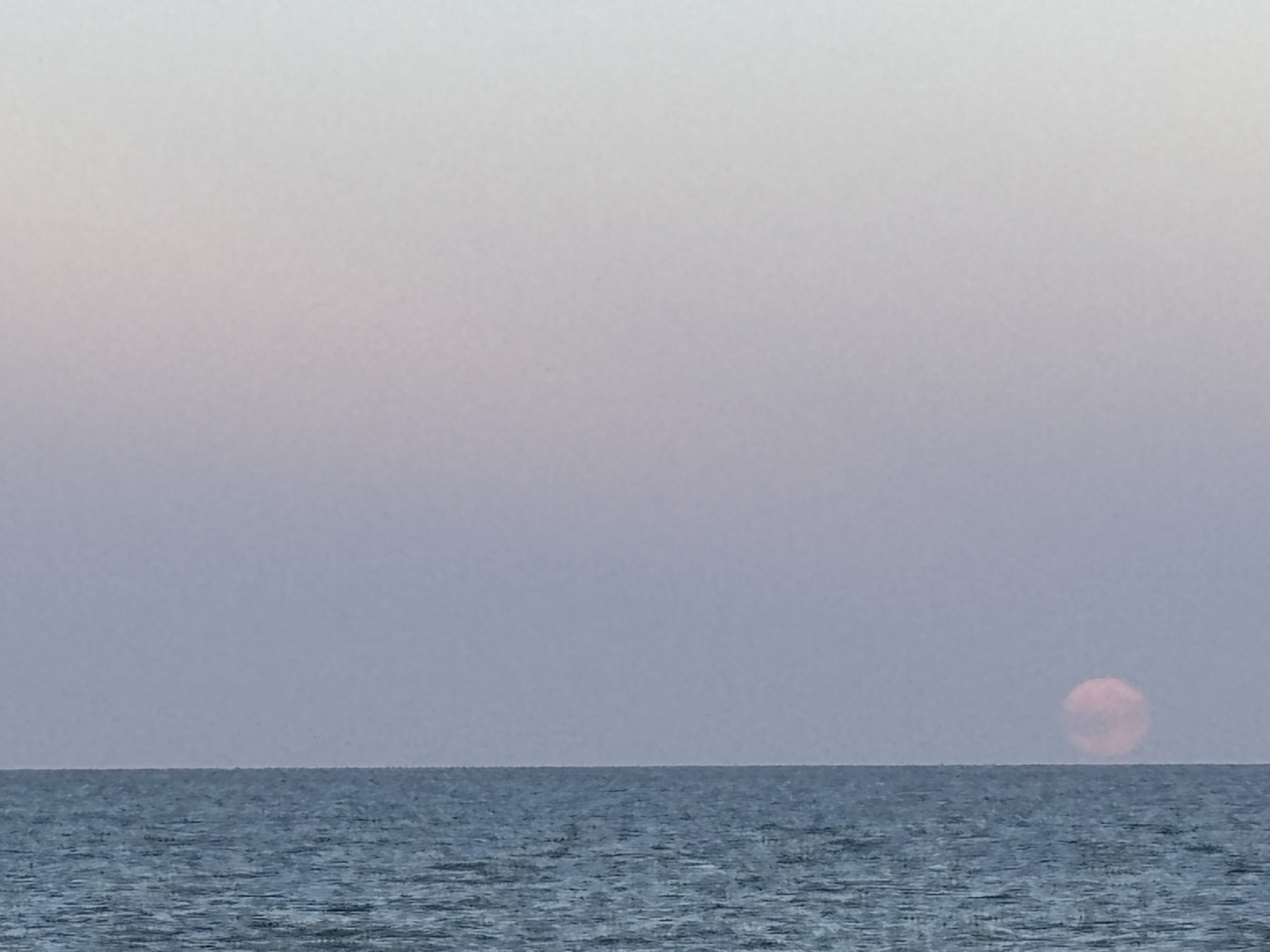
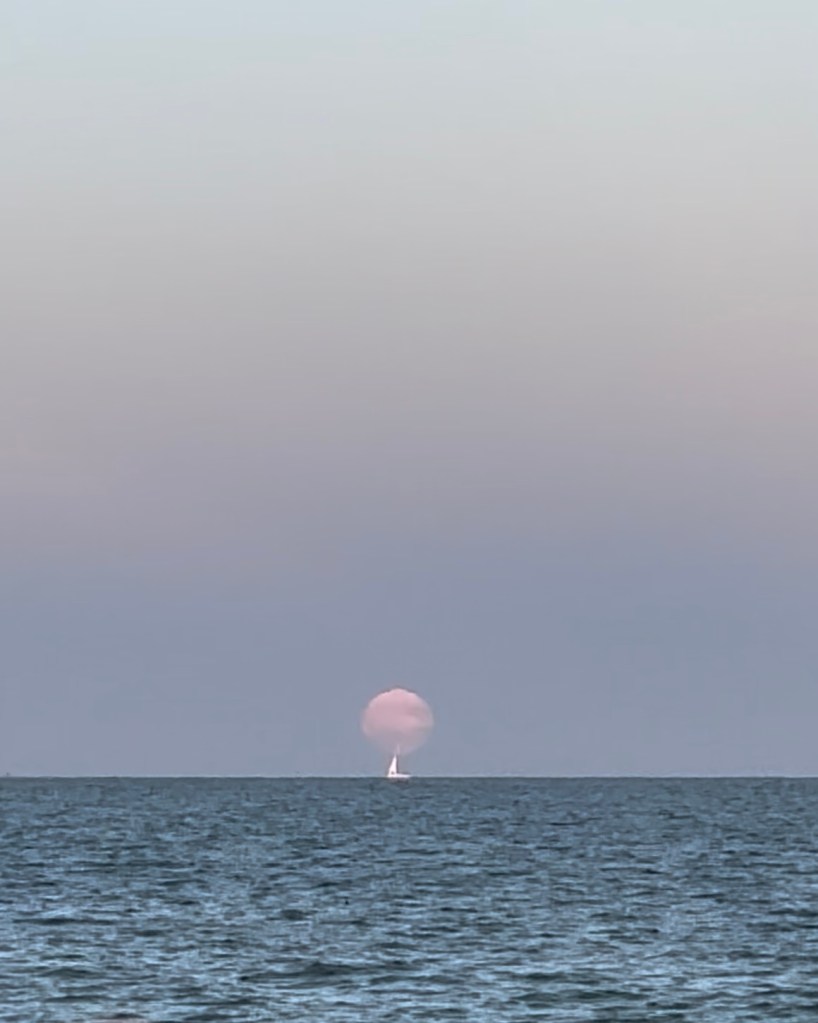
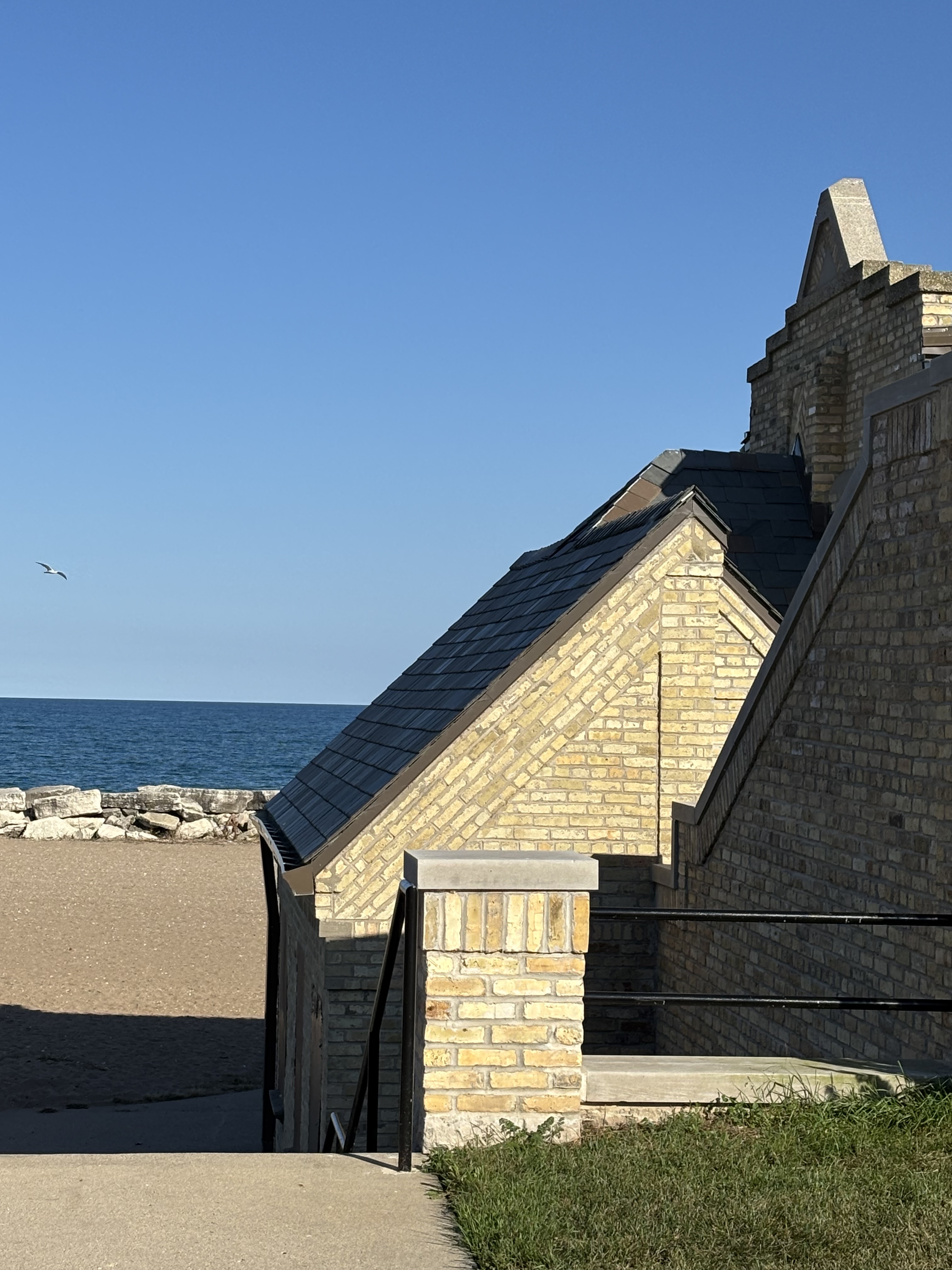
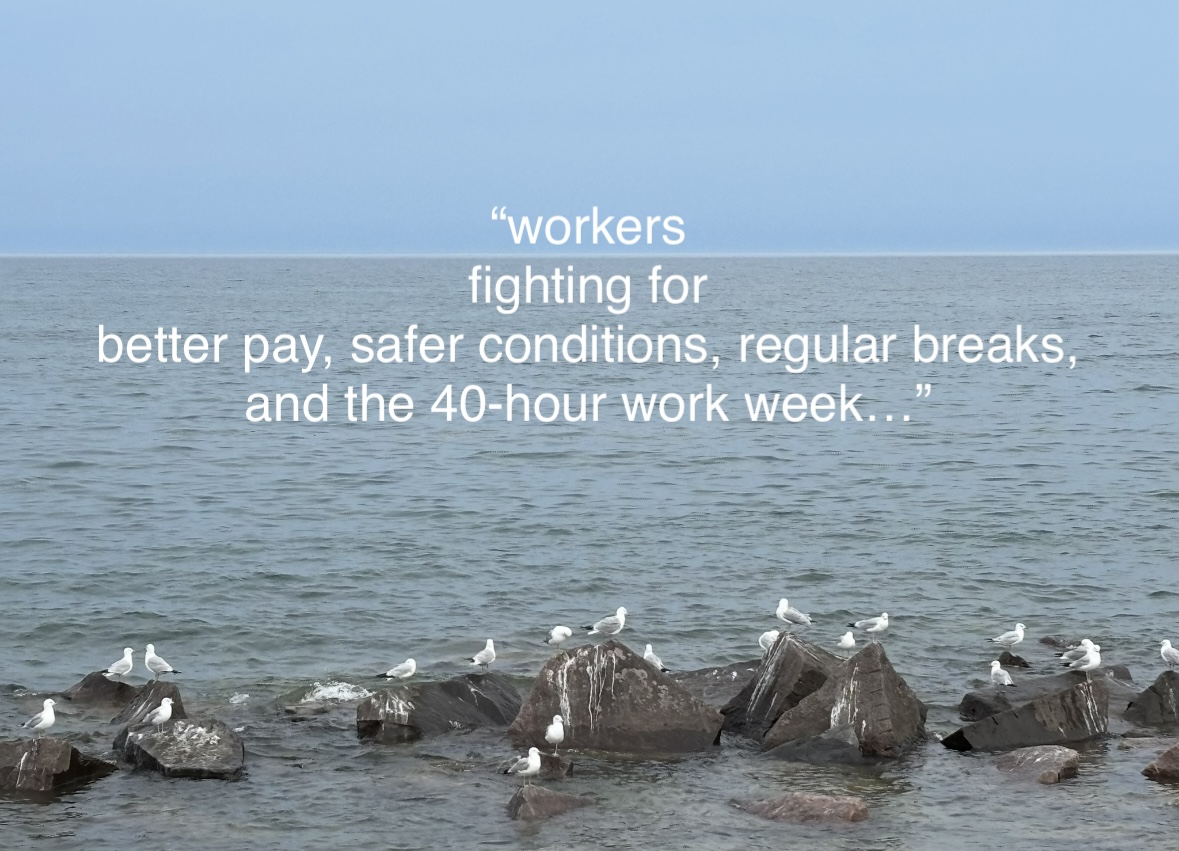
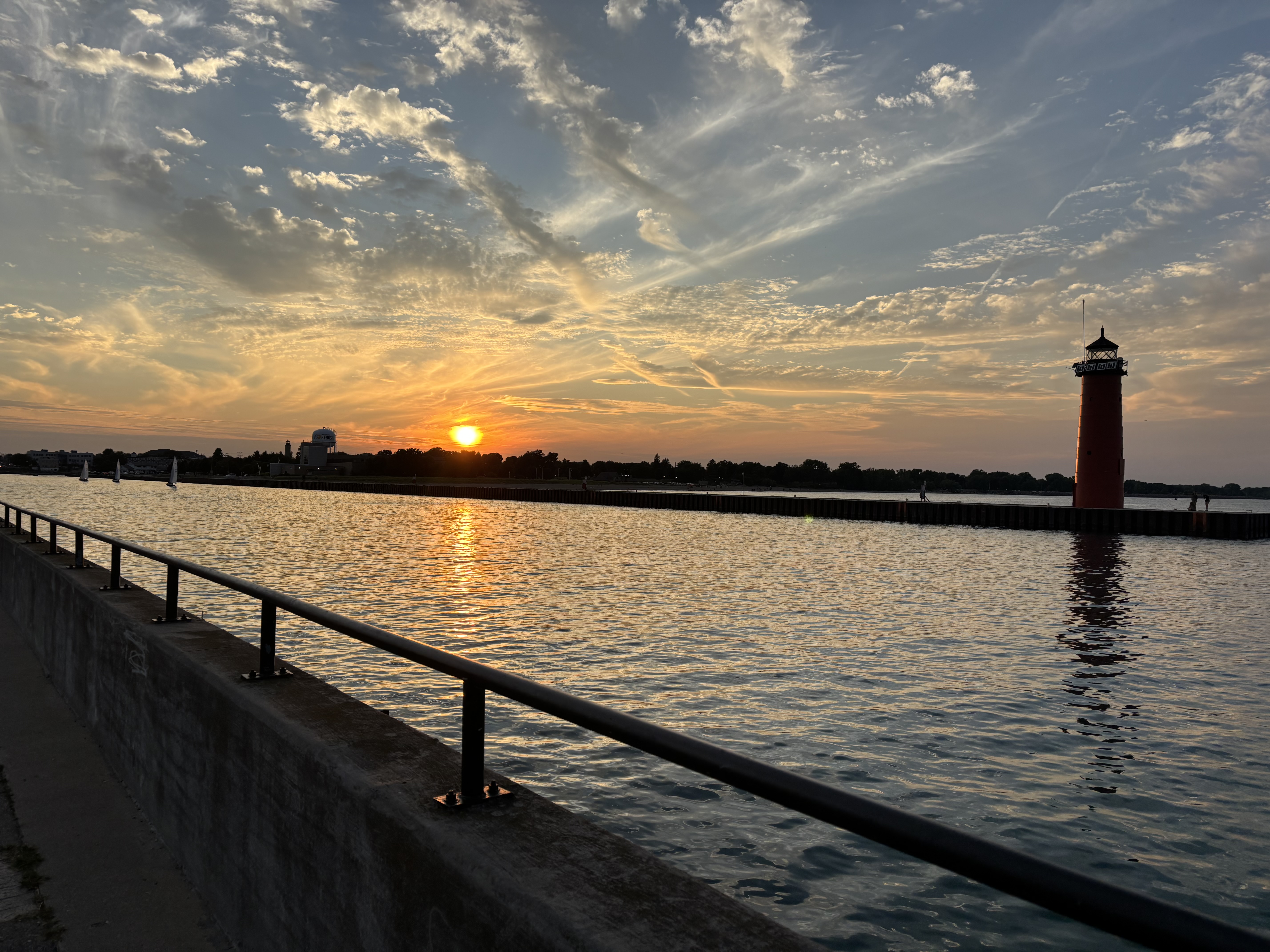
Standing at the edge of the lake, looking east, I know Michigan is out there somewhere. I’ve never seen it myself but I have it on good authority that if I paddled my kayak in a straight line I’d eventually bump into it. Standing at the edge I imagine the journey, and in my imagination, I survive storms and thirst and never-before-seen creatures. When I arrive in Michigan I tell the world what I have seen but the world does not believe me. No one has ever seen what I report to have seen – so I must be making it up. And, that’s always a possibility.

Standing at the edge of the lake it is also interesting to turn around, look west and gaze into the center of town. The community organizes itself, moving in synchronicity, but rarely recognizes it. Individuals move throughout their day, pushed this way and that by forces they cannot perceive or control, riding the currents believing that they are somehow separate and independent from the movement of the whole. Each and every moment they shape and are shaped, but believe themselves isolated and alone. Within them are never-before-seen dreams and desires. They do not dare to reveal them fearing they will engender cynicism. Dreams are tender things so they mute their imagining; blunting dreams is always a possibility.

I once taught that judgment is an alarm that sounds at the edge, an alert that the next step will be into the unknown. It is meant to make you aware of the awaiting kayak. It is the call to open your eyes to what-you-cannot-yet-see. It is there to alert you that the person standing before you is an undiscovered universe, different-than-you. They are unknown and vast. It is possible to run from the unknown. It is possible to step toward it.

Standing at the edge, the alarm sounding, debating whether to step or run away, only one thing is certain: this “other” IS one of the forces that moves you, shapes you, and might help you see what you cannot see from your safe center: that the isolation you experience is mostly self-imposed.

Also, to them, you are the scary unknown, the marker of difference, the vast unknown universe capable of changing them.

Sometimes standing at the edge, it is the best to stand still. To recognize the magnitude of all that you do not know. To weigh the enormous possibilities that await if you simply find the courage to take a step, to extend your hand, to say, “Hello.”

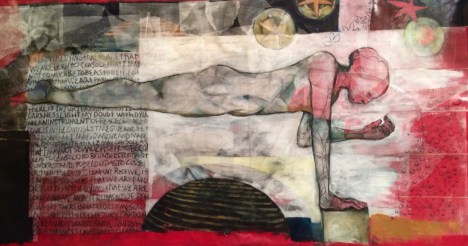
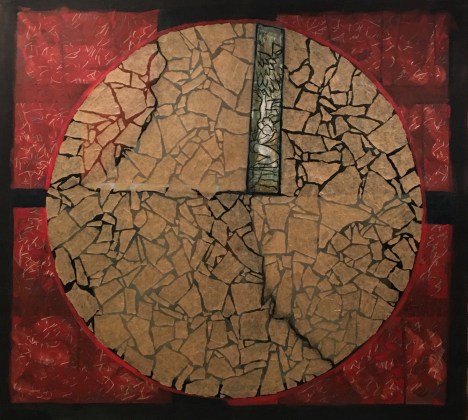
Pilgrimage, 14″x18″, mixed media on panel

read Kerri’s blogpost about THE LAKE

likesharesupportcommentthankyou

Done! [David’s blog on DR Thursday]

I am losing the recall of words and names. It happens. I threatened to take a brain booster and the notion sent us into gales of laughter because, we concluded, I am a more likable person with a less-sharp brain. I will do better in the world now that the edges are rounding. It is best to walk into the future without the booster and a few less facts-at-my-fingertips.

I confess that with my diminished capacity I have experienced greater contentment. Knowledge was armor and with less access to weaponry I’m having to exercise a different set of skills: keeping my mouth closed, listening, not-knowing…the things I’ve pursued my entire life but am now able to achieve because I have to practice them. Life is funny.

I’m splashing paint. I have a plethora of old canvas and odd shaped boards. Simultaneous to my new less-than-sharp brain, when in the studio, I’m experiencing the deep desire not to think about anything. To paint with no other purpose than to see what happens. Experiment. Art as life in the laboratory. Twice in the last week Kerri has come into the studio to see what I’m working on and said, “I like this one.” When I ask her what she sees, she squints her eyes, approaches the easel, and flips the painting over. Up is down and down is up. It is my clue that the painting is nearly complete.

“What would you call this?” It is always my second question: Without hesitation she gives it a name. I marvel at what she identifies in the splashes. I call the painting, “Done!”

Inevitably on the trail, she “Ooooohs” and kneels to capture the tiniest of blossoms. It is the time of year that nature gives her too much to photograph. We stop every few feet. And, although she has told me several times the names of each flower, the names never stick. That is not new. When I was auditioning actors I asked them to wear the same clothes during callbacks since I’d better remember their work by what they wore, not by their names. Visual memory. For me, the tiny blossoms are like actors. I recognize them without their names getting in the way of my appreciation.

Perhaps my recent word-recall-struggles are merely a matter of me becoming more of who I have always been? I’d pose the question to Kerri but she’d squint her eyes, flip me on my head and tell me that I was “Done!” Make no mistake, I’d be very careful NOT to ask her my second question! I do not want to know what title she’d affix to me, especially flipped over, with all the blood finding its way back to my brain.

After The Storm

read Kerri’s blogpost about TINY FLOWERS

likesharecommentsupportthankyou

Furtherance [David’s blog on Two Artists Tuesday]

“Perseverance is the foundation of all actions.” ~ Lao Tzu

Breck-the-aspen-tree is our backyard living monument to perseverance. She survived and now thrives despite a multitude of obstacles, least of which was…us.

We plucked Breck from a grocery story in Breckenridge, Colorado. She was an impulse buy and came in a little pot that barely fit in the back of our car. Breck’s branches had to bend a bit to make the journey. She survived the roadtrip home and struggled mightily after being replanted into an enormous clay pot. She lived on our deck for the first three years. We talked to her throughout the summer. We wrapped her pot with blankets to keep her roots from freezing during the winter months.

Each spring we watched for signs that she survived and each year she rewarded us with fragile buds and minimal growth. We knew we needed to plant her in a permanent spot and our first choice nearly killed her. Within weeks she dropped all of her leaves and turned a sad shade of grey. In desperation we dug her up and moved her into another more sunny spot and waited. With no signs of life for the rest of the summer season and throughout the fall, we were certain that we’d killed her. But, she persevered.

The next season she recovered, produced a host of oddly outsized leaves, and grew a foot. The next year she grew another foot and leafed like a normal aspen tree. The year after that she boomed.

Breck is now taller than the garage. She’s no longer a backseat traveler. Instead, she is hostess to the birds who frequent our yard. We stand at her base looking up and marvel at the new growth. She is nearly a foot taller today than she was a month ago. She is a masterful quaker, playing the breezes, and has no problem bending with the wind.

We regularly stare at her and utter, “I can’t believe it. Look at her.”

Here is the full quote by Lao Tzu: “Of all that is good, sublimity is supreme. Succeeding is the coming together of all that is beautiful. Furtherance is the agreement of all that is just. Perseverance is the foundation of all actions.”

I looked up the word “furtherance”. Lao Tzu uses it often. It seems central to his philosophy and I was taken by his definition, “Furtherance is the agreement of all that is just”. Furtherance: the act of helping something advance, develop, or succeed. Now, isn’t that a timely and profound sentiment? Helping something (or someone) advance, develop or succeed is a coming together (an agreement) of all that is fair, deserved, morally right (just).

Wouldn’t it be profound if we could look at each other and say of ourselves, our community and nation, that we have succeeded by bringing together all that is beautiful, that we persevered through a dark and ugly time, arriving at last at a dedicated furtherance, helping each other develop, advance and succeed?

Do you see the loop? Succeeding is the coming together of all that is beautiful. Furtherance is the act of helping each other and our planet succeed (the coming together of all that is beautiful). Perseverance leads to the sublime. Breck is our constant reminder of all that is possible if we just keep trying.

read Kerri’s blogpost about BRECK

likesharecommentsupportthankyou

Our Actions Will Tell [David’s blog on Merely A Thought Monday]

Throughout my sordid past I was witness to the development of several mission statements. Serious and well-meaning teams of people wrestled with the questions of Who Are We and What Do We Do. The task was to generate lofty yet succinct statements of purpose and values. The statements were aspirational and mostly forgotten the day after the exercise of producing them. If actions were identified, they were rarely executed because a basic reality was ignored: the mission and purpose of a business is to make profit. Strip away the good intention and the bottom line remains the king. The moment the bottom line is threatened: all statements of value, all well articulated purposes are suspended.

If the purpose of a business is profit then the purpose of a not-for-profit is service. Clarity hits the not-for-profit when the cost of the service rises or the income streams run dry: will the service get lost in the immediate imperative to fund raise? Not-for-profit boards are famous for smothering their service organizations by attempting to make them “run like a business” which, essentially makes them lose sight of their purpose.

Study the difference between the rhetoric and the actions. To see the truth, look beyond the rhetoric. Study the actions. To be useful, rhetoric must acknowledge and align with actions.

Governments are service organizations. Democracies serve the needs of the people. Autocracies, on the other hand, are businesses that attend to the bottom line of the few. Currently we call our nation a democracy but one need only look to the actions of our leaders to suss out the truth. In this moment we are an autocracy. We are a service organization (a democracy) attempting to run like a business (an autocracy).

Our nation has some beautiful rhetoric. Our history has been a tug-of-war between those who believe in the service of Democracy and those who exploit the rhetoric for personal gain (autocrats). We either live “liberty and justice for all” or we do not. We are either a nation of laws or we are not. The question before us right now is, “What do we actually believe?”

Study the actions of the current administration and the ruling of the Supremes and the answer is clear: we are a white nationalist business that exploits the many for the profit of the few. To them, the Constitution is pleasant rhetoric but threatens the bottom line.

Study the actions of the people taking to the streets to protest the assault on our rights and the elimination of services and the answer is clear: we are a democracy. We are what we believe. We are what we espouse. To the people, the Constitution is a living roadmap of actions, a blueprint of service.

The disjoint between the people and the current leadership brings us around to a question that’s plagued us since our inception: Is “We-the-people” all inclusive or an exclusive club for the few? Will the voters choose their politicians (democracy) or will the politicians choose their voters (autocracy)?

The tug-of-war has rarely been this apparent.

Our actions in the next few months – and be very clear that a vote is an action – just as a gerrymander is an action – the gutting of voter’s rights is an action – protests are actions…our actions will tell all.*

*If we actually manage to have a free and fair election given the gutting of the Voter’s Rights Act, the aggressive gerrymander, the sycophantic republican congress, the rampant dark money, the corruption of the Supremes…If for some reason you remain confused about what’s happening in this nation, take a moment, look beyond the rhetoric and study the actions.

read Kerri’s blog about WE ARE WHAT WE BELIEVE

likesharecommentsupportthankyou

A More Powerful Force [David’s blog on KS Friday]

Do you wonder, as I do, what has ever been achieved through war? Pick any war from the many, many, many that populate human history and ask, “What was gained?” Really? What was gained? How were we made better?

Certainly there have been useful technological advances. War has been a driver for innovation but I question whether we might have arrived at the same advances without the carnage. Could the advances in medicine been the result of goodwill? The desire to make lives better? And, have all of the technological advances really been advances? Wouldn’t our schools and our children be safer in a world without automatic weapons? Might we solve our differences as readily if war was not an option? Is cooperation and collaboration as potent a force in the world as conflict? Might they be more powerful?

I will be the first to admit that order inspires chaos and chaos necessitates order. It’s a cycle but I wonder if chaos really requires bloodletting?

Putin blames Ukraine for the aggression, Netanyahu blames the Palestinians for the aggression just as the current occupant of the White House blames Iran for the aggression. Hitler blamed the Jews and Pol Pot blamed the intellects. What has any of it achieved? Security? Certainly not. Prosperity? Well, weapons manufacturers are grateful for the business just as oil companies are applauding record profits from the ongoing closer of the Strait of Hormuz. Are we really that shallow? Is it really so impossible to share resources? Do we really need to learn again and again how interconnected our economies – our resources – our planet -our lives – really are?

Kerri took a photo of the storm clouds gathering in the sky. It is made beautiful by the safety of home. Home looks like a place but it is in actuality a wide web of supportive relationships. Home does not exist in isolation.

Elie Wiesel wrote that solidarity is essential for existence, “Alone we disappear.” Solidarity: unity, agreement, fellowship. Are these not also essential forces in the world? Martin Prechtel writes of community as “mutual indebtedness”. Is it not incumbent upon me to make sure you have food to eat, and you to ensure that I have fresh water to drink? If I poison the well will not I also suffer? Isn’t the imperative to bridge our loneliness – the necessity to reach across the void to each other – a more powerful force than war? Why else do we send probes into outer space? Rather than war, doesn’t it make more sense to reach across oceans to say, “We are here,” and ask, “How can we get to know you?”

Is it so hard to imagine?

YOU MAKE A DIFFERENCE © 2003 Kerri Sherwood

*This song was the first contact I had with a woman named Kerri Sherwood. I’d written a newsletter entitled, “You Make A Difference” and a few days after publishing my newsletter an email popped in my box with this song. She wrote that my words had touched her and she hoped that her song of the same title would touch me. Well…

Kerri’s music-that-can-change-your-life is available on iTunes and streaming on Pandora

read Kerri’s blogpost about POSSIBILITY

likesharecommentsupportthankyou

Blue Blue Blue [David’s blog on Flawed Wednesday]

“The GOP is no longer made up of conservatives. It’s now wholly made up of (white) nationalists.” ~ Adam Kinzinger

“A one party system is authoritarianism.” ~ Heather Cox Richardson

If you are like me you spend a good part of the day looking to the sky for an explanation or some sense to be made of the madness plaguing our country. And, if you are like me, there is none to be found. Take this for example: the House Speaker in Alabama just called for a repeal of the 14th Amendment to the Constitution. Apparently equal protection under the law for all citizens is anathema to the Alabama GOP. They would rather go back in time and deprive “certain citizens” of life, liberty, property and due process. Those “certain citizens” are of course, black.

What is the matter with these people? Look to the sky for answers! Nowhere on earth is there sense to be found for the Alabama GOP’s desire to return to life before the Civil War (read: a return to slavery and a world in which only white male landowners have the right to vote).

Here’s another example of the priorities of the modern GOP: “As of March 2026, the Ohio House passed House Bill 249, the “Indecent Exposure Modernization Act,” which aims to restrict “adult cabaret performances” in public spaces, defined in part by clothing choices.” It essentially polices what people wear. If it passes the state senate, a woman could be arrested for wearing a sports bra or going braless. Kerri could be arrested for wearing her flannel shirt because it might be deemed too masculine for a woman.

I’m not kidding. Their national priorities include a ballroom, mass deportation of any person of color, and an assault on voting rights. The end of women’s rights. And a tax cut for billionaires. And the elimination of healthcare and the social safety net. And the protection of wealthy pedophiles from prosecution.

The sky is not big enough to explain such malfeasance.

Perhaps it is way past time to look to the sky for answers and we need to begin looking at each other. This modern GOP is less interested in protecting our rights than they are in stripping rights from us. They want to control the news, academia (what we learn or do not learn), what we wear, who can and cannot vote, who has rights under the law and who does not. They want politicians to choose their voters because they fear what will happen if, as is meant to happen in a democracy, voters choose their politicians.

Our choice in November now has little to do with democrats or republicans. It is not about policy choices. It is whether or not we will return to life in a democracy, if we will have representatives – that is, people elected to government that serve the will of the people rather than being exploited by the whims of a dictator and his enablers. The past year and a half has given us a glimpse into life in an authoritarian state.

There is no help or advice coming from the blue blue sky. We are our last, best chance. The only path forward, the only escape from authoritarian red, no matter where you live or how gerrymandered your district, is to vote blue blue blue.

read Kerri’s blogpost about THE SKY

likesharecommentsupportthankyou

Secret Things [David’s blog on KS Friday]

“I want to be with those who know secret things or else alone.” ~ Rainier Maria Rilke

Cardinals remind us of Kerri’s parents. A pair is nesting nearby and much to our delight they frequent our yard. The brilliant red male was splashing about in the birdbath; it took to flight the moment she snapped the photo. My associations of the image are spiritual.

One of my favorite paintings is a piece that very few people appreciate. I called it Canopy. It features a bird in flight. For me it is a spiritual painting. It is a painting of my desire to know secret things.

I love Leonardo da Vinci’s drawings of flying machines. Humans with wings. He would have looked at Kerri’s photo of the cardinal and asked, “How can I do that?” He didn’t just ponder it, he chased it.

Rilke wrote: “Go into yourself. Find out the reason that commands you to write; see whether it has spread its roots into the very depths of your heart; confess to yourself whether you would have to die if you were forbidden to write.” Most of my life has been a journey into myself to find the reason that commands me to paint and write. Kerri and I often compare notes on the times in our lives that we nearly died when turning our backs on our artistry. We talk of “getting out of our own way” so the muse can come through. It feels like taking flight. It feels like escaping a cage.

“The purpose of life is to be defeated by greater and greater things.” ~ Rainier Maria Rilke

Too many people have attempted to solve my life by suggesting I make a career of painting pet portraits or people portraits. I’ve learned not to roll my eyes. It’s hard to explain. It’s not about the painting or the written word. It’s about the chase of something intangible, unattainable. Among other things, Leonardo chased the spirit of flight. Kerri and I chase secret things, impossible to grasp, things like the flight of spirit.

TAKE FLIGHT on the album THIS PART OF THE JOURNEY © 1998 Kerri Sherwood

Kerri’s albums are available on iTunes and streaming on Pandora

read Kerri’s blogpost about FLIGHT

likesharecommentsupportthankyou

As Old As Aesop [David’s blog on DR Thursday]

“Isn’t it funny,” she said, “that we trust what comes out of the government of Pakistan more than we trust what comes out of our own government.”

Habitual lying destroys credibility. It is the point of Aesop’s fable, The Boy Who Cried Wolf. It’s a story as old as, well, Aesop, who walked the earth and told stories in the 6th century BCE.

Our current unfolding fable begs the question, “What happens when the wolf and the lying boy are one and the same?” Like the fern in our garden the story is unfurling right before our eyes. What moral lesson might Aesop have spun into our developing fable? This lying boy/wolf is certainly feasting freely upon the sheep, all the while crying, “Wolf!” – as if he himself was under attack from every quarter. Has the point all along been to blunt the villagers’ response to genuine urgent warnings? To so completely break down communal trust that the people refuse to believe what they see with their own eyes?

Of course, Aesop has a caution, a moral reminder prepared for our rescue: abuse of trust always backfires. It’s a consequence as predictable and as old as, well, Aesop. The lying boy/gluttonous wolf will have his reckoning. Yet, the villagers will suffer the greater loss. No sheep. Broken trust. A fractured community wondering how to put the pieces back together again.

Sam The Poet, 48″x48″ acrylic on canvas

read Kerri’s blogpost about THE FERN

likesharesupportcommentthankyou

The Sound of Peace [David’s blog on Not So Flawed Wednesday]

There’s a mourning dove serenading us as we write. I love their song. They make me think of Bali. Each morning I took early meditation walks to the song of mourning doves. For me, they are the sound of peace.

Our Airbnb was on the grounds of a Catholic retreat center. After a long day of freeway driving it was a special treat to leave the known world and enter a patch of earth dedicated to quiet and reflection. Our host told us that we were welcome to walk the grounds so, after unloading our bags, we wandered the woods and slow-walked the roads. I was once again reminded how profound – and immediate – is the impact of our environment on us. Aggression evokes aggression. We meet the violence of the news-of-the-day with anger and fear. We are not as independent, not nearly as separate, as we like to believe. Environment shapes behavior. David Abram wrote that presence (a quiet mind) is nearly impossible in the incessant goal-driven noise of the USofA.

And, so, we stepped into the woods. The harried drive dropped from our shoulders, the frenetic game of freeway leap-frog dissipated. I imagined the trees breathed in our weariness and exhaled ease into our bones. We relished the vibrant colors elicited by the setting sun. We stood still and absorbed the bird song. We strolled by the nun’s residence and I wondered what a life lived in retreat might awaken.

I wondered what this nation might become if it honored quiet truth as much a noisy distraction…and then I let that thought go. It was a remnant of the freeway, a disturbance from another world. It called my attention away from the song of the mourning dove.

read Kerri’s blogpost about THE CENTER

likesharecommentsupportthankyou

Dancing On The Periphery [David’s blog on Two Artists Tuesday]

The light plays on the water. I imagine it is the quick glimpse of a spirit, shimmering at the corner of my vision and then vanishing when I try to look directly at it. It was our last night in the village so we walked on the dock to wish it farewell. My imagination of spirits was not random; all day I’d been saying things like, “We have good angels,” or “That was more than serendipity.” Helping hands seemed to surround us.

I also imagine that the very real good angels in our everyday-lives do not like to be seen. That must be the reason they hover at the edges of sight. They prefer to stay out of the limelight. Service is its own reward. I learned this from a lesson I used to adore assigning to my students: be an angel for someone with the single strict caveat that their angel-ness needed to be a secret. “What does it mean to be an angel?” they’d ask in a panic. I’d shrug.

“Figure it out.” And they always did. Their angel experiences were electric, eye-opening. Dare I suggest life-changing? It is profound to intentionally focus goodness on another human being with no expectation of reciprocity – and discover that goodness itself is intensely fulfilling. Life is empty if self-serving. “Find a need and fill it,” Ann was fond of saying.

Hovering at the edge of sight.

We’d returned to the village to reclaim a piece of the past and, standing on the dock, I was suddenly overcome with the realization that the good angel might be – just might be – that long lost piece, that younger version, beckoning, “This way! I’m over here.” The older version and the younger, angels to each other, each responsible for guiding the other home. Dancing on the periphery of sight, reaching through time.

‘It feels different now,” she said and I smiled. Surrounded by warm memories of our days in the village, we stood still on the dock. The sailboats swayed in the harbor. The light played on the water.

“It feels like coming home.”

read Kerri’s blog about THE VILLAGE

likesharesupportcommentthankyou