Dial Three Numbers [on Not So Flawed Wednesday]

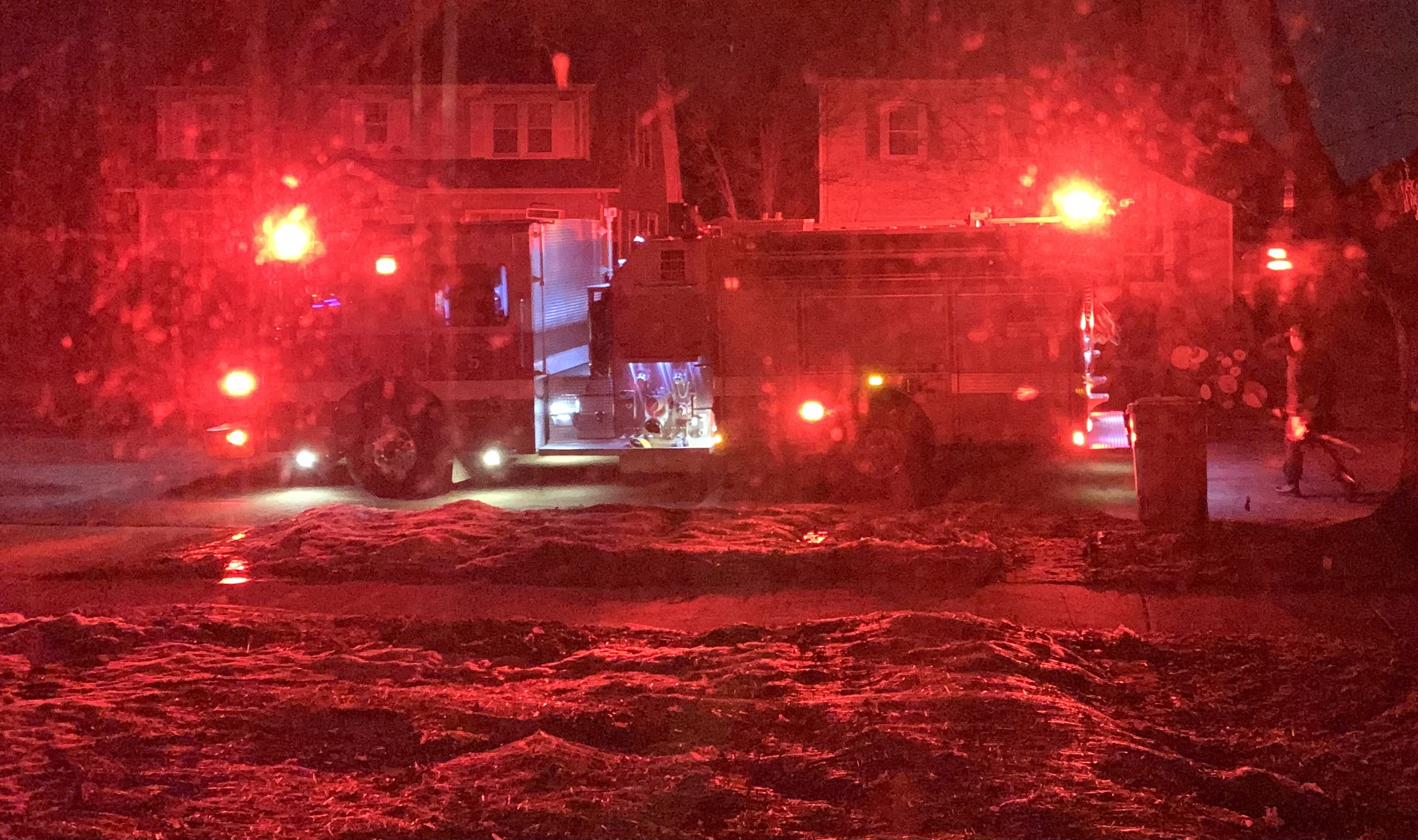
Last month, when the car across the street blew up, there was general pandemonium until the fire department arrived. In a few moments, order was restored. People, myself included, who only moments before had been running around in panic, gathered at the end of our driveway and watched the methodical dousing of the fire. Tragedy turned to block party the minute the men and women of the fire and police departments took charge. We transitioned from unsafe to secure, in a heartbeat, from “I don’t know what to do,” to, “I’m so glad they know what to do”. Neighbors chatted. Speculated. We shared tales of the explosion. We compared notes while the people who know what to do put out the fire and cleaned up the mess.

We take for granted the security we enjoy. In the back of my mind, I know that dialing three simple numbers into the phone will summon people who know what to do.

We awoke in the middle of the night to the sound of our basement carbon monoxide alarms blaring. We turned on the lights but something was dreadfully wrong. It was as if the entire house was on a dimmer switch: there was light but it was very dim. And then we heard a buzzing sound in the ceiling. And then the smell of hot electric wires filled the room.

We dialed three simple numbers. In a panic, we put the dog, our bag with important papers, and the computers into the car.

And then, the people who know what to do arrived with their red lights ablaze. They calmly came in the house. They searched every square inch of our home with heat sensing technology. They pinpointed the source of the buzz and the burning smell. It was not yet dire but could have been bad had we not been awakened by the alarms. Within minutes of their arrival, our fear dissipated. Problems were identified. Safety was secured. Advice given.

We were safe. We dialed three simple numbers and help was on the way.

read Kerri’s blog post about FIRE ENGINES

Step Out Of Line [on Merely A Thought Monday]

“…the fountain of creative work is an intelligent questioning of the rules.” ~Alan Watts, Tao: The Watercourse Way

“If someone tells you they know, they most certainly do not.” It’s not a direct quote from Quinn but it’s close enough. Art school almost snuffed the art in me; there were so many rules and nary a hint of curiosity allowed in the studio. I fled into the theatre after a single year for fear of losing my heart to a book of rules. My theatre professors were explorers of nature. Their refreshing mantra was, “Well, let’s find out!”

What if…? What happens if…?

Nature is boundless expression. Boundless expression is human nature, too, until it is taught otherwise. Boys don’t cry. Be a good girl. Sit in your desk. Follow the rules. There’s a right way. My way or the highway…So much effort to force nature – your nature, your curiosity, to stand on a line.

Einstein revolutionized our world because he dared to posit that Newton had it upside-down. Thank goodness, as Alan Watts observed, “The scientist and the mystic both make experiments in which what has been written is subordinate to the observation of what is.” In other words, they look beyond established belief, expectation and entrenched norms into what is.

What is? Curiosity. A desire to know what’s over that hill. No child begins their life-walk by desiring to color within the lines. Lines are a learned thing. The word “wild” was invented by people whose ancestors emerged from the woods and who have forgotten that they, too, are part of nature – so have become afraid of stepping into the woods. What might they – we – find there?

“It’s not an idea problem,” David Burkus wrote in the HBR, “It’s a recognition problem.” Stepping beyond the known – a great definition of curiosity – is too often seen as an aberration or an assault upon authority. Nip it in the bud. Forcing flow into a fixed state invariably causes idea-blindness and the imperative to think-outside-of-the-box. Innovations are too often smothered in the crib by “What we know,” or “We don’t do it that way.” Coloring in the lines, once ingrained, is a life-long-book-to-follow.

I wish I had a nickel for every time I’ve been invited into an organization or hired by a client to help them “see what they cannot see,” and then subtly or not-so-subtly, been rebuked for opening their eyes to what is in plain sight…or the availability of alternative paths. “We want a vital arts program but we only want art that entertains,” said the school board after the student play asked a serious question of their audience. “…the scholastic theologians would not look through Galileo’s telescope because they considered that they already knew, from Scripture, the order of the heavens.” (Alan Watts)

Think outside the box – as long as you stay within the model or the expectation or the rules. So many models. So many lines. So in love with the struggle and afraid of the simple, natural joy of curiosity. Bend your will to the line. See what you are supposed to see and look no further. What, exactly, are we trying to control?

read Kerri’s blog post about CURIOSITY

Gurgle On! [on DR Thursday]

I’m certain the first time I tried to walk I was not successful. A few stumble-steps and a return to the floor. My first attempts at speaking the English language did not receive a passing grade. As I recall (and I don’t recall), I made some gurgling sounds into which the adults surrounding me projected meaning. I’m certain they cheered and encouraged me to gurgle-on.

Learning is not a terribly difficult thing to do when 1) there’s a reason to do it, and 2) judgment, including words like “success” or “failure” are absent from the experience. Thank goodness my first art teacher treated me like an infant and, rather than critique my mess, she encouraged me to gurgle-on. Consequently, I associate my artistic impulses with fun and exploration instead of the thousand shades of rignt-and-wrong that most people are subjected to.

Recently Skip wrote and asked, “What’s the second rule?” Suspend your judgment and learn.

We just bought a mandoline. It slices and dices and chops and cuts. “The first thing we’re going to make is potato chips!” Kerri proclaimed. And, then, her brow furrowed. “What if we do it wrong?”

“We’ll learn something and make another batch.” Trial and error. Both “trial” and “error” are essential ingredients in the learning process and, since all of life is a learning process, you’d think someday we’d learn to value the “error” portion of the experience. We do ourselves a great disservice placing so much emphasis on passing the test and having the “right” answer. The essential ingredients of trial and error can’t breathe in brains fogged by so much right-and-wrong-ness.

Our first batch, like our first baby step, was a stumble. But more delicious. We stood over the pan eating our result and discussed second steps. What should we do differently next time? Less heat or more? Thinner slices or thicker? This is all I know. I love to learn, especially when food is involved and judgment is not.

read Kerri’s blogpost about POTATO CHIPS!

flawed cartoon © 2016 david robinson

Step Back And Realize [on Flawed Wednesday]

If you are like us, every day brings another report of a friend or loved one who has Covid. As someone recently said to me, “With Omicron, it’s only a half degree of separation between you and someone who’s carrying the virus.” I’d say, given the wave of people we know falling sick and reporting positive test results, it’s true. It’s no time to let down your guard.

On Saturday we watched a documentary film, The First Wave. It’s a film everyone should see. It chronicles the first few months of the pandemic in a New York hospital. It is shocking how, in a few short years, we’ve normalized hospitals being overrun. How removed we, the populace, are from the tangible horror of this pandemic. Refrigerator trucks used as temporary morgues. We stand today at 865,000 deaths and counting. People. By comparison, 620,000 people died in the Civil War. 418,500 US citizens, military and civilian, died in World War 2. We ought to be grieving instead of dividing. We ought to be reaching to help rather than peacocking our politics. This film will slap you awake. It will help you step back and realize what we – all of us – are passing through. It might help you grieve.

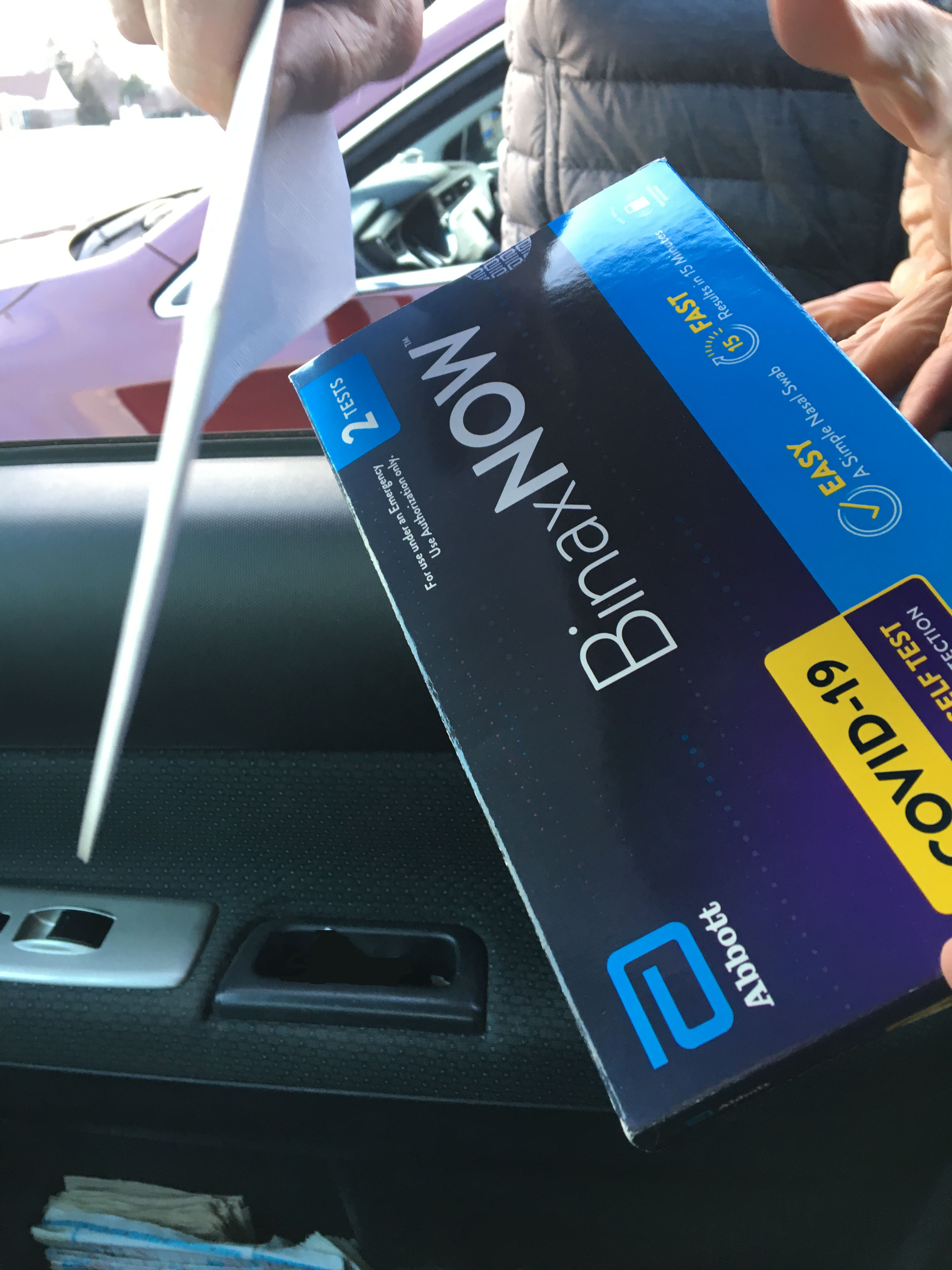
Kerri tells me that the woman in the next car thought she and 20 were doing a drug deal. He felt sick, needed a test and could find none. We had a few so they met in a parking lot to make a safe pass. While making the exchange, he handed her an envelope. Money for the phone bill but I’m sure it looked suspicious.

It reminded me of the time, many years ago, that Sam asked me to meet him in a parking lot. He rolled down his window and passed to me a sheaf of poems. The window went up. I was to tell no one. It was terribly vulnerable for him to share. I cried the day he published his first book of poetry. It was a titanic journey from fear-of-certain-shame to proudly publishing his beautiful work. He was transformed.

I imagine someday we will stand and look back at this titanic journey. I hope that I remember with fondness the story of Kerri and 20 making an exchange in the parking lot, the women one-car-over shocked by what she thought she was seeing, and we smile. Transformed. Remade as better people in a better community making better assumptions of each other. Stronger.

For now, as the credits rolled on The First Wave, we looked at each other and together said, “I’m exhausted.”

read Kerri’s blog post about THE EXCHANGE

Make A Savory Day [on Two Artists Tuesday]

“I don’t believe in guilty pleasures. I only believe in pleasures.” ~ Ira Glass

Among other things, covid has been a great disruptor of our patterns. Our life today barely resembles the life we knew two looooong years ago. Yesterday, while driving through the farmlands en route to buy a loaf of bread at Simple Bakery in Lake Geneva, Kerri said, “It’s all so weird.”

Among our new patterns is more appreciation of our time. We are less willing to stuff our day with things to do, rather, we’ve established a slower rhythm and points during the day to stop, sit together, and savor the events of the day. It began at the onset of the pandemic with our covid-table in the sunroom. A place to sit and watch the sunset at days end. Soon, there were snacks. And then a glass of wine. It became a ritual. Now, there is nothing more important in our day than to meet at our table. Talk. We call friends and family from the table. Dogga leads the way. He meets us there, positioned just behind our chairs with his bone or a few mauled toys. Sometimes we sit for hours – far beyond sunset. We eat our meals there.

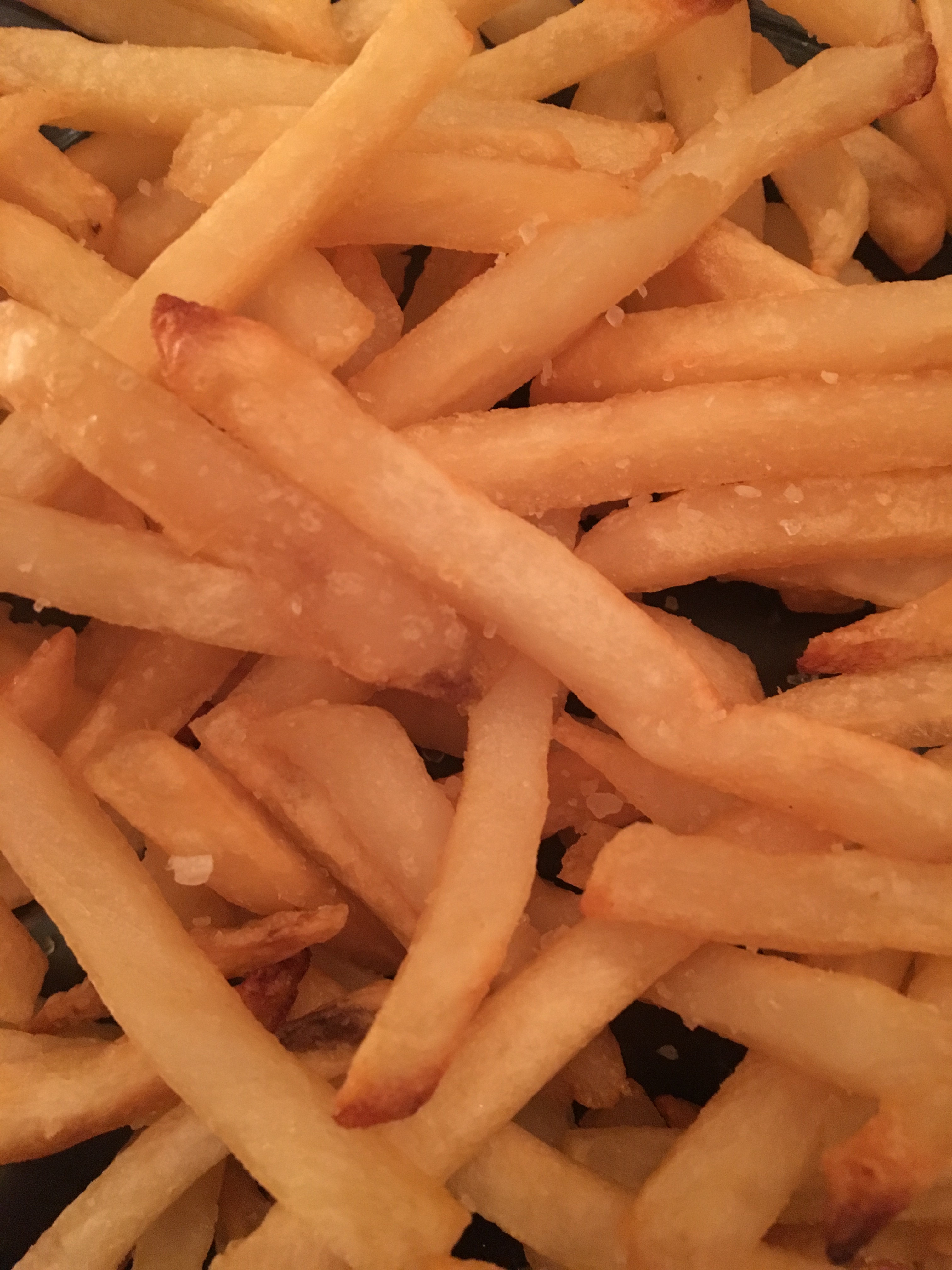
We’ve also established patterns of anticipation within our patterns. My favorite, the silliest but most effective, is french fries for snack. There’s nothing more satisfying on a cold winter evening, than hot salty french fries. We make sure that it’s not a common, every night affair. We save it for the tough days or as a surprise. “Is it french fry night?” Kerri hops and claps in anticipation when she notices that the oven is preheating. Yes. Oh, yes.

The new pattern, of course, is not the table or the fries. It’s the decision to make moments special. We decided amidst the pandemic, the broken wrists, the job losses, the civil unrest, the loss of family and friends, to make lemonade from this time of abundant lemons. We decided to accent the pleasures. To walk slower. To meet our days, not with a list of things-to-do, but with the intention of making a most savory day from the ingredients found in our pantry.

Pattern disruption. Within the hard breakdown of the known, the loss of the comfortable, we are fortunate. Many times, sitting in our sunroom, the happy-lights reflecting in the windows, Dogga quietly behind us chewing his bone, Kerri says, “I love this space.” I nod my head. Me, too. The literal and the metaphoric.

read Kerri’s blogpost about FRENCH FRIES!!!!

See The Adventure [on Merely A Thought Monday]

Let the adventure begin. We put the sign on the table when we moved into the little house on Washington Island. Our new job came with housing and we couldn’t have been more fortunate. Even as the job turned into a debacle, the little house grew in our hearts. It was – and is – a very special place. A few years down the road, we never give thought-space to the work-fiasco. We reminisce about the beautiful place we lived, the good people we met, starry nights, mornings in the canoe, the deer, the power of the lake right outside our door.

A few moments ago I was feeling anxious and was complaining – and realized that I have no business complaining about anything. I stopped myself. Adventures are hard. That’s what makes the experience an adventure. When people lack challenges, they create them. Jigsaw puzzles and computer games. I complain when standing on the threshold of learning something new. My complaining – as I realized a few moments ago – runs amok when I don’t know what to do. It marks the line between the fat-comfort of knowing and the utter-discomfort of not-knowing. Complaining provides cover. I expose my obvious not-knowing; I preempt the shame-strike by complaining. The moment I disallowed complaining, I once again saw the adventure. My anxiety dissipated. The adventure is a jigsaw puzzle all akimbo in the box. I’ll figure it out one piece at a time. Or not. The end result is not nearly as important as the spirit in which I bring to the task. To the moment. To my life.

Mihaly Csikzentmihalyi studied, thought, and wrote extensively about flow. The optimal state of being. I’ve often wished I could invite Mihaly and Alan Watts to dinner and listen to their conversation. The psychologist and the Taoist conversing about flow, that magic space that opens when the path is hard, but not too hard, when boredom is no where in sight. The exercise, when either bored or overwhelmed, is to adjust my orientation to the challenge. Amp it up or slow it down. The zone is self-modulated, rarely an accident, which becomes apparent once the complaining stops. The knowledge that I can place myself in the zone is the spirit I hope to bring to every task for the rest of my days. It’s the practice. It is to see and choose the adventure.

Let the adventure begin. The sign now sits on our table in the sunroom where we meet at the end of each day and tell the stories of our day. While I tell my tale, I see the adventure sign, mostly in reflection, the message reversed. Each day an adventure if I choose to see it. Each day an opportunity for flow if I choose to own and modulate my steps, and place myself in flow.

read Kerri’s blogpost about THE ADVENTURE

Get Lost [on DR Thursday]

“A person who never made a mistake never tried something new.” ~ Albert Einstein

Recently, I revisited Sir Ken Robinson’s TED talk about schools killing creativity. Among his many points, the central idea was simple and clear: we reinforce knowing answers instead of the pursuit of the question. We reinforce “being right” when the beating heart of learning, the vibrant center of creativity, the foundation of scientific process, is to try-and-see-what-happens. To be “prepared to fail,” as he said, is to remove failure from the equation. A curious mind seeks discovery, not “rightness.” An experiment is meant to test a hypothesis not immediately arrive at the answer.

When Kerri and I stepped onto the trail, new to us, the signage was more than confusing. “It’s a loop,” I said, “What’s the worst that could happen?” We chose the orange trail and started walking. We followed the blazes rather than the signs. A storm or drunken ranger must have erected the signs because they were often out of alignment with the blazes. “If we followed that sign, we’d be in the creek,” Kerri said.

Early on in our hike, a man came crashing out of the woods. “Is this the trail?” he asked. “I think I’m bushwhacking,” he said. This man, I suspect, followed the signs. He was having a great time but was somewhat relieved to be back on the beaten path. He was the first of many. A woman stopped us. She and her husband were having a disagreement about which trail they were taking. “Is this the long or short loop?” she asked. We shrugged, a shadow of concern creeping up in the back of our minds.

There was supposed to be a waterfall somewhere on the trail. We asked more than a few people as we passed and received a marvel of contradictory instructions. “There’s a side path on the left.” “Somewhere ahead you’ll see a side trail on the right.” We took option B and had a lovely trek up the mountain but turned back when it became apparent that our choice did not include the waterfall. “Next time,” we said. It was late in the afternoon and we wanted to be back at the car before sunset.

With tired legs and lack of trust in the signage, we came to a trail crossroads. Orange went in three different directions. The sign that pointed the way to the parking lot did not inspire confidence but we followed it anyway. We passed an older couple, local hikers, that assured us we were on the right path. A couple crashed out of the woods, having lost the trail but were equipped with a GPS app: we were definitely headed in the right direction but had more than a mile to go to get back to the car.

“It does not feel good to feel lost,” we agreed. “Especially when the light is waning.”

Arriving back at the car, breathing a sigh of relief. “That was fun!” we laughed. “And stressful at the end.” We were never actually lost but we were successful at filling ourselves with doubt. We were grateful for the older couple that reassured us, the lost couple with the GPS that broke out of the woods exactly when we needed them.

And, we learned a lesson. Next time we’ll take the time to study the map. And, we’ll be equipped with a better app. Our lostness was always in our minds, in our doubt. The next time we lose ourselves in second guessing – and it is certain to happen – we’ll be better equipped to handle our self-imposed-disorientation.

In the meantime, we’re already whipping it up into a great survival story. I didn’t mention the bears or starting fire with flint and steel. Building a survival shelter from twigs. That version, the real story of our heroic adventure, is certain to come soon. Lostness, it seems, stimulates fabulous creativity.

read Kerri’s blog post about THE MOUNTAIN

Dump The Mystic [on saturday morning smack-dab.]

Years ago a woman broke up with me because, “Dating a mystic was too hard.” What she really meant but-was-too-polite-to-say was that I was broke and artistic and the stuff that came out of my mouth was not normal. I’m just not good at cocktail parties where office politics and investments drive the dialogue. I spend my time wondering why I – and now we – were invited. That, and I can’t help but ask questions that go beneath the blather-layer. I am an artist with a weak-inner-editor. I want to know what makes people tick. You’d be amazed – or not – at how frightened people become when asked what passions lurk behind their portfolio. It’s a conversation stopper every time.

It was a great relief in my life the day I met Kerri. We were at O’Hare airport. I locked fingers with this woman I’d never met and, together, we skipped out of the airport. Our hearts were singing so skipping seemed natural and appropriate. Apparently adults are not supposed to skip through airports. People took cover. They scowled and stared. She didn’t care either. We laughed. We skipped.

It’s probably among the reasons we don’t have a portfolio (well, not the financial type). But, at the end of my days, when weighing my choices, I’ll be most grateful that I skipped. We skipped. And laughed. And asked real questions at polite parties. And climbed through the window onto the roof to have a glass of wine – because, for us, that is normal. I will also be grateful for learning – after a lifetime of introspection – to simply give voice to the real stuff BECAUSE it always comes to my mind.

read Kerri’s blog post about NOT NORMAL

smack-dab. © 2021 kerrianddavid.com

Roll With Every Punch [on DR Thursday]

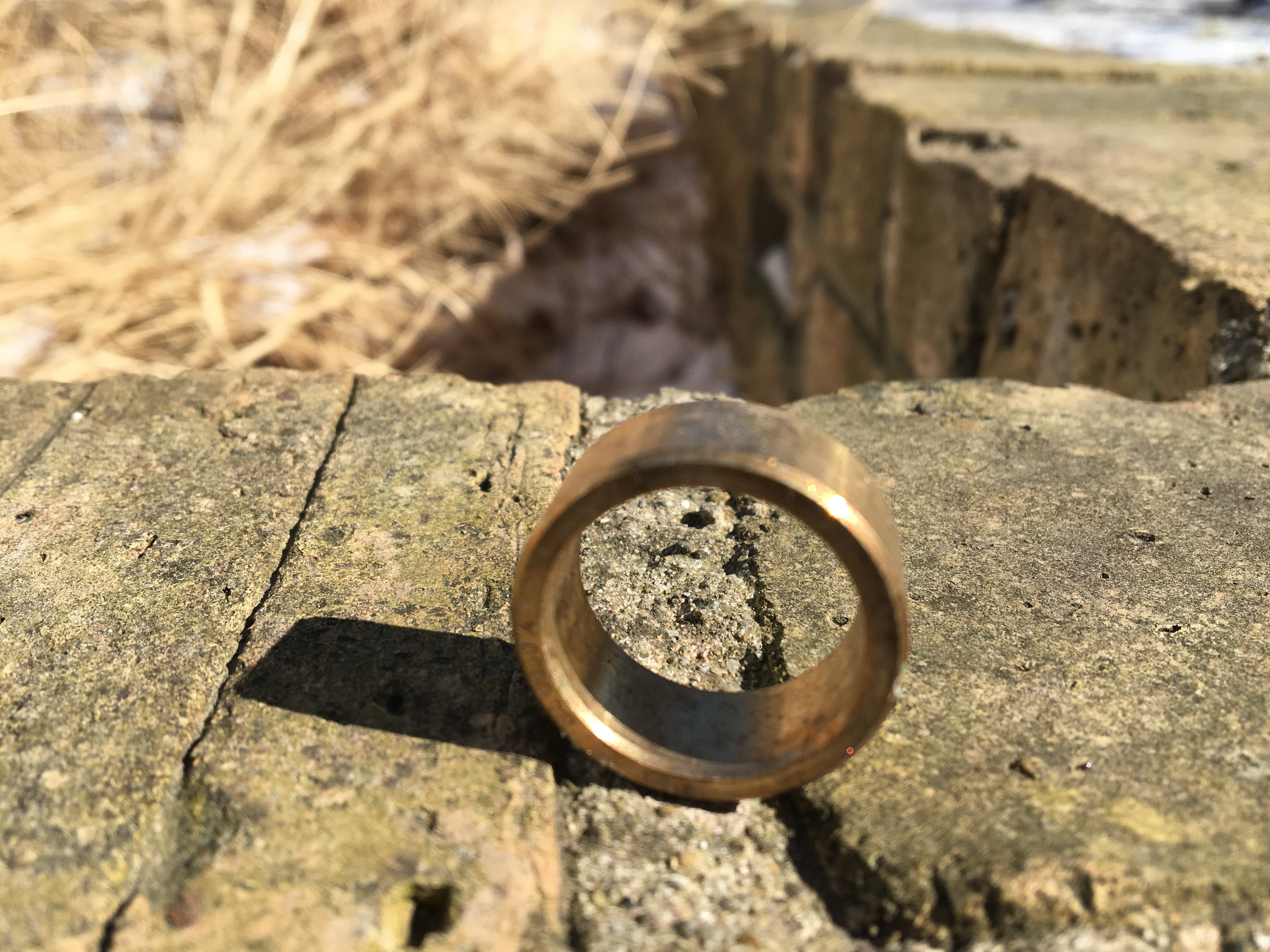
And on the fourth night, just before retiring, I stepped onto the stoop and unplugged the colored lights. Forever. The ancient plug had had enough. It was weary and left behind one of its prongs. “No worries,” Kerri said, “I wouldn’t trust those wires to replace the plug. And, I loved them while they lasted.”

Yes. Just enough. A satisfying gesture. I believe that is our theme for the season. Just enough. Satisfying gesture.

Lately, I’ve made it a practice to ask friends and family, with all the water problems that Kerri and I have had this year, what’s the metaphor they see? What’s the universe trying to tell us? The responses have been great fun: build an ark. The slate is washed clean. Put on your waders. I’ve decided it is none of the above (or all of the above). I’m going with the Lao Tzu paradox:

“Water is fluid, soft, and yielding. But water will wear away rock, which is rigid and cannot yield. As a rule, whatever is fluid, soft, and yielding will overcome whatever is rigid and hard. This is another paradox: what is soft is strong.”

Fluid, soft, and yielding. We are rolling with every punch. Soft is strong. Not much gets us riled up these days. There have been so many punches; rigid wasn’t working. Yielding seemed the better path. We are, as Kerri so aptly articulated, ” Leading with surprise.” Not that a waterline break is to be desired but, ours, although intensely disruptive, brought good stories and good people into our sphere. “I want to be like Kevin,” I said. He’s the engineer at the water utility. Kind, funny, easy in his life. His dedication was to make easier our path through disruption. He and Kerri are sharing holiday recipes.

We are, out of necessity or intention, either way, walking the middle path and being careful not to wander into oppositions. Just enough. Satisfying gestures. Love them while they last. Lighten up. Let go. Fluid, soft and yielding.

No worries.

read Kerri’s blog post about LIGHTS

nap with dogdog & babycat © 2020 david robinson

Receive The Message [on Two Artists Tuesday]

“Progress is impossible without change, and those who cannot change their minds cannot change anything.” ~ George Bernard Shaw

We just made a pact to lighten up. It’s not the first time we’ve made this pact and it probably won’t be the last. What’s important in this particular version of our pact is that we are growing more capable of keeping it.

The week before Columbus died, my sister-in-law sent some pictures of him. He was at the very beginning of what would become a rapid decline. She sent the photos to reassure us but they had the opposite impact on me: I was shocked.

Those photos threw me into a pendulum: some days, nothing seems worth getting riled up about. This ride is short and it ends. I know my mind can whip up a fruit-smoothie of drama in a nano-second but that doesn’t mean I need to drink it. And, on the other end of the pendulum, everything seems worth getting riled up about. This ride is short and it ends. Both/And.

I know the pendulum will settle. I know equilibrium is merely a matter of not indulging in the swing but stepping back and watching. The thoughts will sway to-and-fro and I need not sway with them. To lighten up, as Don Miguel Ruiz advises, “Doubt everything that you think.” Or, as someone once told me, “What we think is the mother-lode of comedy.” Changing a mind begins with realizing that a mind, although it will tell you otherwise, is not the keeper of truth.

We hit the trail for many reasons but first and foremost a good walk serves to restore our balance. Someone has been leaving good spirits along our favorite trail and we delight in discovering them. We leave them for others to find. We’ve encountered happy messages, halloween goblins, and folks just like the red and orange googly-eyed fellow that made us laugh. He was sitting with his back to us in the middle of the path. Kerri did a photo shoot with him; he was a willing subject.

I’ve decided that he crossed our path to affirm our pact: he is the spirit of lighten-up. He is the messenger of you-are-not-all-that so enjoy the day. A trail jester to remind us that nothing we imagine or create compares or is more real or important than the step we are currently taking. “Alas, poor Yorick…” he had his time and so do we. What we decide to do with it, how we decide to live it, is not happenstance; it is completely up to us.

read Kerri’s blog post about GOOGLY EYES