Look At You Look At Me [on Merely A Thought Monday]

It’s taken me this long to discover the source of all cartoon characters: orchids. I’m not kidding. At a recent field trip to the Chicago Botanical Garden’s Orchid Exhibit, I was surrounded by brightly colored fantastic faces, playful and chuckling. “Look at this one!” Kerri exclaimed. “It’s the Imperial Margarine guy!” I thought it was a whacky Pope or funny Cardinal, but the idea was the same.

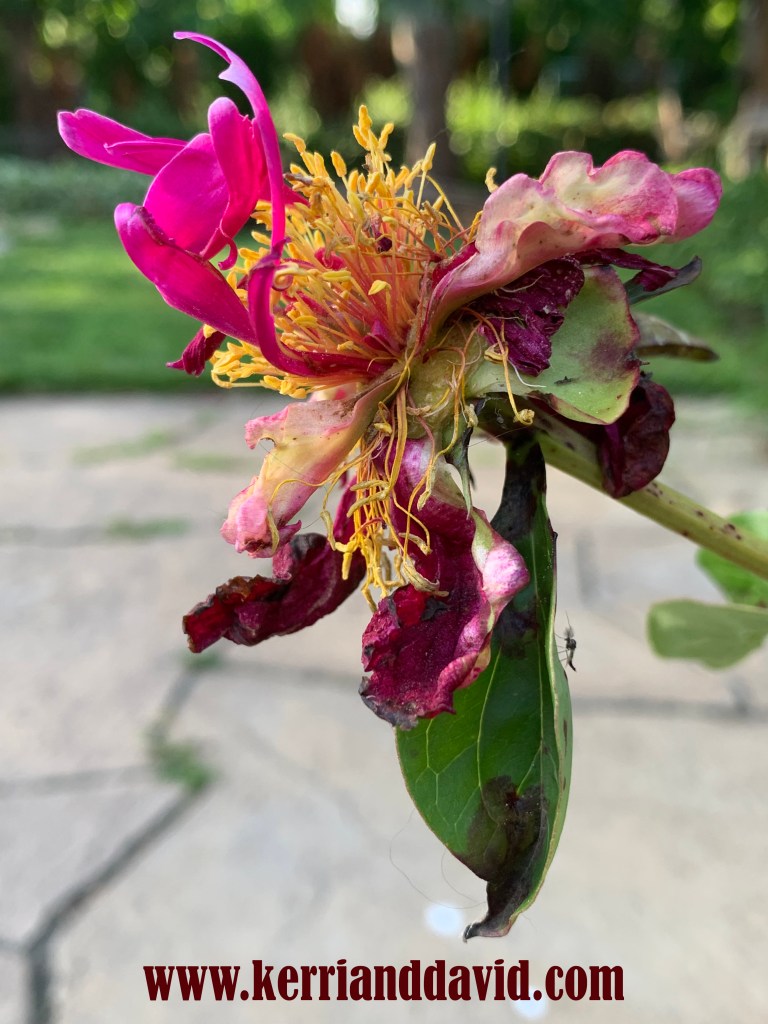
“The earth laughs in flowers.” Emerson’s quote was stenciled on the wall as we exited the exhibit. And the laughing flowers made me laugh. Truly. I felt like a little kid at Christmas. Surrounded by color and delight and whimsy, I found myself more than once pointing, “Look at this one! Oh My God!” And, I felt like the colorful faces were staring back at me, thrilled to tears by the odd looking human standing before them. I-look-at-you-look-at-me. “Look at that face!” they snickered.

The thought stopped me in my tracks and filled me with wonder. We personify everything, projecting our humanness into everything. The art of animation, the world of Disney, is rooted in our desire to project ourselves onto and into the world. Talking mice. Dancing candlesticks. Humpty Dumpty. Wise old trees. Wouldn’t it be lovely, and isn’t it hopeful, to think the world projects itself into us? I want the orchids to fill me with color and awe. To project themselves into me. I know the forests I walk through infuse me with quiet. I know Dogga pulls love from my deepest soul.

Participants. Relationship, rather than controllers. Dancers rather than dominators. Would we be so invested in killing each other for imagined supremacy if we allowed ourselves to laugh the laugh of the flowers? If we actually understood that nothing is forever, that our warmongering was at best delusional? That the single trait that makes us human is to turn and help someone in need? The very capacity that allows us to project ourselves into the orchids is the same capacity that makes it possible to stand in the shoes of the other. Empathy is a two-way street.

If the earth laughs in flowers, these days it certainly cries in humans. Yet, standing amidst the orchids, I looked at all the human faces, hundreds of people wide-eyed with wonder and alive with astonishment. The laughing orchids looking back at the astonished faces, open and vulnerable, and they were evoking those qualities from the crowd. Earth’s tears. So hopeful, these faces, drinking in each other’s beauty.

read Kerri’s blog post about FACES

Care For Your Space [on Not So Flawed Wednesday]

It seems like such a simple concept. Tom taught it. So did Paul. And, since I was one of their students, I taught it, too. How you treat your space is a reflection of what you think of your art. The concept is universal. Replace the word “art” with “work” or “life.” You and your space are not separate. We worked hard at the theatre to become better artists and produce better plays and a significant part of that work was bettering and maintaining our artistic “home.” We were proud of our work and it showed -everywhere. Our “space” included our community and our art was meant to make it better.

Yesterday it was warm so we took a walk on a favorite loop. As we returned to the car we watched a man clean out his truck. He’d come to the park, not to walk or appreciate the quiet. His purpose was to dump his trash onto the paved lot. In an earlier time, pre-gun-gun-everywhere, we might have said something. Instead, we stared in disbelief. His space,I thought, does not extend beyond his truck. Neither does his community.

Yesterday, after the walk I received a text from Mike. He was a big part of my long-ago theatre. He’s realizing a dream and opening his own theatre. He’s led a company for a few decades but they didn’t have their own space. Now, they do. He – the artistic director – was mopping the floor and paused to send me a text. It’s the other part of the lesson from Tom and Paul. And Demarcus. And Quinn. There’s no hierarchy. There’s no above and below. Loving the space, loving the art that happens in the space: no separation. One and the same for everyone involved and everyone needs to be involved.

You and your space are not separate. The care you take of your outer space is equal to the care you give to your inner space. And, vice-versa.

[visit Justin’s to see how a company can make a better world]

read Kerri’s blogpost about NEAT EARTH

With Fresh Eyes, See [on Merely A Thought Monday]

In retrospect, many of the experiences I used to facilitate were meant to pop people – even for a moment – out of the fog of their life story. It’s a curious intention for a guy whose career was/is centered around the telling of stories.

I loved working with masks, especially with people in corporate settings or lofty educational towers. They feared the exposure that a mask might bring so they approached it with eye rolling and whatever-ego resistance. Yet, in every case, they put the mask on with reverence. There is a sequence, after donning the mask, that the wearer “wakes up” and looks at the world for the first time through fresh eyes. Everything is new. Everything. Their hands. The movement of their arms. The color and feel of the carpet. Jaded people, blunted with puffy assumption, through the eyes of the mask, are astonished by the miracle of their fingers. And then, imagine the moment that they discover each other. Their discussion during the debrief would make you weep. It was quiet. Respectful to the point of sacred. In every case the people, newly out of the mask, had to tell of their astonishment and discovery. Their eyes wide with the utter beauty of the world in and around them. And, their new eyes never carried further than the next day. The old mask, the one worn daily, the one full of fear and inflated self-importance, is powerful, too. As they say, masks reveal and masks conceal.

Masks reveal and masks conceal. The phrase refers to the wearer but it also applies to the world seen or not seen through the mask. New eyes are astonished with the ubiquitous beauty of the world newly revealed. Eyes fogged through been-there-done-that stories are dulled to the point of inattention. The magical world is concealed from their sight.

I am working on a script for a piece that I’ll perform in the fall. I realized in my latest draft that it is really about masks. The astonishment of seeing – and seeing is nothing more than or less than the revelation of connectivity. Paying attention is a step toward the eyes that see crackling vibrant color, ears that hear the birdsong. When the dull eyes open, even for a moment, the next impulse is to reach, to “call attention” to the connectivity. “Do you see that?” “Listen, isn’t it gorgeous!”

read Kerri’s blog post about PAYING ATTENTION

Trip And Trip Again [on KS Friday]

One of the advantages of having stepped in every pothole, tripped on every cobble, and made every mistake at least twice, is that I’ve learned about potholes, cobbles, mistakes, tripping and stepping where I ought not step. If I could boil down to the essence the single thing I’m beginning to grok it is this: life is not elsewhere.

I laughed aloud when I at last I realized the absurdity of “practicing mindfulness” as if it was something to achieve. Mindfulness arrives when the practice stops. Of course. Meditating for self-improvement, I’ve read, is a uniquely Western oddity. “Trying” to be present is ridiculous if you think about it. You are present. What else? Because your mind is running amok does not actually magically transport you to the past or the future. You are present with a mind that is running amok. Minds are like puppies: chase them and they run away. Stand still and they will eventually come to you.

Is any of this pothole wisdom helpful? Absolutely not. Like mindfulness, wisdom arrives when the obsession with knowledge-for-betterment ceases. I’ll let you know what that looks like when I stop trying to attain it. There’s no end to the tripping stones. I’ve learned that, too. Again and again. And again.

The best things in life are not achievements. They are relationships. Me to you. Me to me. Me to the world I am passing through, one moment at a time. With you. Stand still in the moment – you might as well since it is where you are – and you’re libel to experience all manner of beauty.

read Kerri’s blog post about SNOWFLAKES

Kerri’s albums are available on iTunes and streaming on Pandora

kindred spirits…away/released from the heart © 1995 kerri sherwood

Look Back [on Not So Flawed Wednesday]

Our 3am conversation was about the horrible clothes we once wore. We both lived through the 70’s and 80’s so there was plenty of fodder for shudders and laughter. I couldn’t be more delighted that cameras in that era used film that was expensive to process, and were not ubiquitous, so there’s limited visual proof of the alarming garments of my past.

Looking back. My favorite aspect of our horrible-clothes-conversation is how much we loved the offending items when we wore them. I had a Huckapoo shirt that was only worn on special occasions. I’d scream and run from that shirt if I opened my closet and found it there today. Kerri described a favorite periwinkle blue dress with black polka dots that had me crying with laughter. The woman I know would faint in fright if she awoke wearing that dress. “Get it off! Get it off,” she’d scream, as if it was a spider.

For two people who spend most of their lives wearing black thermal shirts and blue jeans, it was delicious to trace our past lives through the costumes we’ve worn. The people we were. The investments we made. The colors we donned.

What was sacred is now profoundly silly. What was serious is now grin-worthy. What seemed so important turned out to be so-much-powder.

“Time just rolls. It just keeps rolling,” she said. The hard times and the good times. Hang on long enough and what-is will become what-was and a new-thing will have replaced the previous thing. “It just rolls on through.” At 3am, what matters in life could not be more clear. It’s the conversation. The laughter at our foibles, the sweet, “Shall we try and get some sleep?” It’s what we will see of this age when time rolls on and, late one sleepless night, we look back.

read Kerri’s blogpost about LOOKING BACK

What’s Now? [on Two Artists Tuesday]

After a fairly contentious conference I co-facilitated in The Netherlands, Kerri and I took the bullet train to Paris. It was early in our relationship and our first time abroad together. We couldn’t afford to get to Paris otherwise, so tagging a small vacation onto a work trip seemed foolish not to do. It was the perfect place at the perfect time. I released the conference friction the moment we stepped off the train. I didn’t know it at the time but on the streets of Paris I left behind a skin that I’d badly needed to shed.

We had limited funds so we bought baguettes and Camembert cheese, fruit, tarts from vendors and bottles of wine. We ate in parks. We wandered the streets. Climbed the hill to Sacre’- Coeur, visited Rodin, and tried to get lost. We fell exhausted into bed each night, full of art and sound and color and delicious wandering. One night we sauntered to the Arc de Triomphe and barely escaped a riot. Bus loads of police in riot gear appeared on the street and, wide-eyed, we slipped out of the crowd and hustled to find more peaceful rues. Paris now serves as a marker. There was before Paris. And after.

“This shadow looks like that picture I took of the Eiffel Tower,” she said, showing me the photo of the shadow. The angle is perfect. The shadow is appropriate. Shadows. What was. An outline of the people we were, reflected on the snow. And, the series of photos, shadows along the way, the surprising people we have lived-into since we wandered those streets, shedding old skin, and boarded a plane home with a a question, “What’s next?” What’s now?

read Kerri’s blog post about SHADOWS

Step Out Of Line [on Merely A Thought Monday]

“…the fountain of creative work is an intelligent questioning of the rules.” ~Alan Watts, Tao: The Watercourse Way

“If someone tells you they know, they most certainly do not.” It’s not a direct quote from Quinn but it’s close enough. Art school almost snuffed the art in me; there were so many rules and nary a hint of curiosity allowed in the studio. I fled into the theatre after a single year for fear of losing my heart to a book of rules. My theatre professors were explorers of nature. Their refreshing mantra was, “Well, let’s find out!”

What if…? What happens if…?

Nature is boundless expression. Boundless expression is human nature, too, until it is taught otherwise. Boys don’t cry. Be a good girl. Sit in your desk. Follow the rules. There’s a right way. My way or the highway…So much effort to force nature – your nature, your curiosity, to stand on a line.

Einstein revolutionized our world because he dared to posit that Newton had it upside-down. Thank goodness, as Alan Watts observed, “The scientist and the mystic both make experiments in which what has been written is subordinate to the observation of what is.” In other words, they look beyond established belief, expectation and entrenched norms into what is.

What is? Curiosity. A desire to know what’s over that hill. No child begins their life-walk by desiring to color within the lines. Lines are a learned thing. The word “wild” was invented by people whose ancestors emerged from the woods and who have forgotten that they, too, are part of nature – so have become afraid of stepping into the woods. What might they – we – find there?

“It’s not an idea problem,” David Burkus wrote in the HBR, “It’s a recognition problem.” Stepping beyond the known – a great definition of curiosity – is too often seen as an aberration or an assault upon authority. Nip it in the bud. Forcing flow into a fixed state invariably causes idea-blindness and the imperative to think-outside-of-the-box. Innovations are too often smothered in the crib by “What we know,” or “We don’t do it that way.” Coloring in the lines, once ingrained, is a life-long-book-to-follow.

I wish I had a nickel for every time I’ve been invited into an organization or hired by a client to help them “see what they cannot see,” and then subtly or not-so-subtly, been rebuked for opening their eyes to what is in plain sight…or the availability of alternative paths. “We want a vital arts program but we only want art that entertains,” said the school board after the student play asked a serious question of their audience. “…the scholastic theologians would not look through Galileo’s telescope because they considered that they already knew, from Scripture, the order of the heavens.” (Alan Watts)

Think outside the box – as long as you stay within the model or the expectation or the rules. So many models. So many lines. So in love with the struggle and afraid of the simple, natural joy of curiosity. Bend your will to the line. See what you are supposed to see and look no further. What, exactly, are we trying to control?

read Kerri’s blog post about CURIOSITY

Blur The I [on Not So Flawed Wednesday]

We capture quotes all week. Some we see. Some we hear. Some find their way into the Melange. Most do not. We usually note where we heard or found the quote so we remember the context. It’s a practice. It’s not as if we are perpetually eavesdropping on conversations. We’ve simply tuned ourselves to immediately write the amazing words and phrases that catch our attention.

A common phrase is mind-over-matter. Athletes and actors and dancers are conditioned to ignore the limits of their bodies. To keep going. The mind as master over body. I loved this quote because it is the flip side. The mind, the “I”, wanted to stop but the body did not listen. It kept going.

Lately I’ve been reading about – so, paying attention to – the false separations that language necessitates: Mind and body are spoken of, thought of, as separate things. And, the question is this: where does one begin and the other end? Mind over matter. Body did not listen. I made myself do it. Once you start listening for it, it is ubiquitous. Exactly where is the line between “I” and “myself”? When your toe is in pain, isn’t your whole body is in pain? Follow your gut. What does your heart say?

When Dogga gets excited, his little body bounces. He runs in circles. He has to work hard to sit still. Say, “Do you want to go…” and he’s bouncing before the words “on errands?” reach his ears. He knows he won’t actually go on errands until he first sits on the rug. Eventually, he bounces his way into compliance. Control follows unbridled enthusiasm. Control is a means to an end. Rug before errands. Sit before snack.

Dogga might say, while bouncing enthusiastically, “I wanted to stop but my body kept going!”but I doubt it. Given his unified happy spirit, I’m certain the phrase would come out of his muzzle this way: I wanted to stop but I kept going. Watching him is like reading the I-Ching: no separation.

read Kerri’s blogpost about I AND BODY

Eat The Memory [on KS Friday]

You’d never know it by how we talk and write about food, but we have a smallish sweet tooth. We keep a bit of dark chocolate in the house. Sometimes we split a piece of flourless chocolate cake. Too much sugar is…too much. So, imagine my surprise last week in the grocery store when Kerri came to a full stop in front of the Entenmann’s Crumb Coffee Cake. Using her outdoor voice she exclaimed, “I CAN’T BELIEVE IT! THEY STILL MAKE IT! WE HAVE TO GET IT!”

Memory runs through and is master of all of the senses. “I grew up eating Entenmann’s Crumb
Cake!” she said, returning to her indoor voice. The cake was in the cart and anticipation was on the rise. “Did you have Entenmann’s Crumb Cake growing up?” she asked, barely able to contain her excitement.

I’d never heard of it. She looked at me as if I was to be pitied, a poor waif raised in a cave without running water or crumb cake. Anticipation became a mission. “You have to have it!” Her eyes grew wide, intense. “You won’t believe it!” and then, the narrowing disclaimer, “I hope it’s as good as I remember.”

There is a rule in Kerri’s family and she carries on the tradition. It is a ritual of delayed gratification. Satisfaction constraint. For instance, when Kerri buys clothes, a new pair of jeans, she can’t wear them for at least six months. There is a magic moment, something I’ve never been able to identify, that signals the purchase is ready to exit its quarantine and can be worn. Or eaten. We have a new rug purchased last June that remains rolled and stored behind the door in the living room. Home decor, I’m learning, has an extended waiting period. We call it The Beaky Rule.

The cake came home. It went somewhere. A closet? A cabinet? A drawer? I’ve learned not to ask, “Where or when?” Had I shouted in excitement in the grocery store, that box would not have made it to the car. I’d have been covered in crumb cake before the keys came out.

A few days later, in the middle of the morning, Kerri called up to my office. “Do you need a break?” Up the stairs, like a precious treasure, came a memory from Long Island, a piece of crumb cake and a cup of coffee. The magic moment. The cake released and revealed. We savored it. And, I can report in my quiet indoor voice, it was definitely worth the wait.

read Kerri’s blogpost about CRUMB CAKE!!!!!!!

Kerri’s albums are available on iTunes and streaming on Pandora

the way home/this part of the journey © 1998 kerri sherwood

Taste And Adjust [on Merely A Thought Monday]

In our kitchen, I am the sous chef. Second in command. I chop, slice and dice. Then, I place my colorful preparations in glass bowls, carefully arranged relative to the stove so the chef need only reach to add an ingredient to her magic-making. “What’s first?” I ask. “Onions and garlic,” the chef replies, tying on her apron. I know the answer before I ask but it’s our ritual signal, like the kitchen version of “On your mark,” to the runners at the starting line. The onion steps onto the cutting board.

We love to cook together. I have learned through the many phases of my life that my relationship with food mirrors the relationship I have with life. If I attend to the the palette of tastes and textures that I eat, if I take the time to savor and appreciate my food, I carry that attention into every moment of my day. If I rush through and jam any food-like-object into my mouth, I carry that same inattention into my life. Appreciation, savoring, is mindfulness. Slowing down to plan and fully fill the palette of flavor fosters anticipation. Moving through a grocery store or farmer’s market is a wholly different affair when favorite recipes call.

I did not arrive easily at my understanding of food and life. The first recipes I tried were utter disasters. Don’t ask BK about my inaugural batch of lentil soup. It will send him into waves of horror-laughter. I ate it to prove that my cooking was not so bad but could not hide that my soup nearly killed me. And, I remember the moment that I decided to learn to cook. I remember like it was yesterday the understanding that sent me to the stove: I wanted, perhaps for the first time in my life, to take care of myself. More than that, I wanted to fully taste the richness of being alive and to do it, I had first to stop running. One must stand still to fully taste. To savor, one must stand still with others. “What do you think? Kerri asks, “More salt?”

Experimentation, trial and error, are the only way. Taste and adjust. And, isn’t that a terrific life credo?

In the recent past, each week, we try new recipes with 20. We’ve discovered some incredible flavors, our repertoire is expanding. Soups and chilis and stir fry. Mostly, that we intend to make meals together, that we slow down and enjoy each other’s company en route to a new taste, an ingredient that we can’t pronounce, a spice that is unknown. “This might be a disaster,” we say as steaming bowls of deliciousness hit the table. “Well, there’s only one way to find out,” we say as we click together our spoons and dive in.

read Kerri’s blogpost about EATING WELL

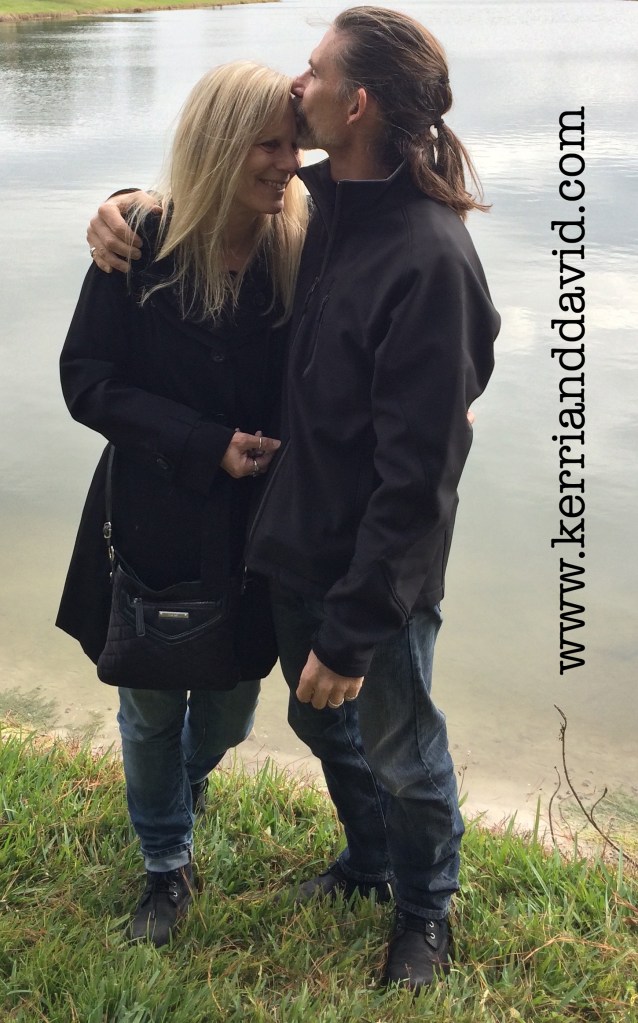
a photo from before the pandemic. we can’t wait for this to end so we might create more memories like this one.