Just That [David’s blog on DR Thursday]

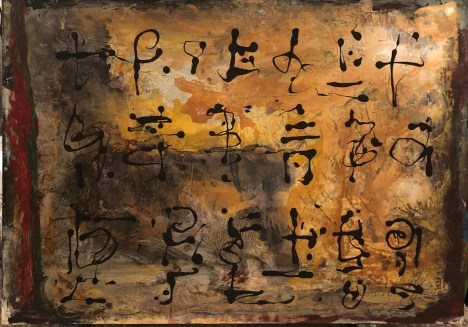
My favorite email of the week comes from Horatio. In last week’s post I included a new painting, an experiment. Horatio wrote, “Wow! Keep digging into that.” Later he added, “Dive in, amigo. That is the earth and the sun and moon all talking to you.” My painting is resonate of runes. Joking, Horatio asked, “Can’t you read runic code?”

“What a great idea!” I exclaimed to myself. I Googled runic code and found several runic translators. For kicks, I typed into the translator, “To be or not to be, that is the question.” This is what Shakespeare looks like in runic symbol:

ᛏᛟ ᛒᛖ ᛟᚱ ᚾᛟᛏ ᛏᛟ ᛒᛖ, ᛏᚺᚨᛏ ᛁᛋ ᛏᚺᛖ ᛩᚢᛖᛋᛏᛁᛟᚾ

Every written language is sound translated into line so we might translate the line back into sound. Musical notes also represent sound in a visual symbol. It is so fundamental, so ubiquitous, that we forget the miracle of it all. We scratch lines on paper to capture ideas, to remember dreams, to record symphonies. We’ve created a code, an alphabet, a limited yet specific number of symbols, developed a set of rules that make our scratches uniform, common and understandable. We created a “dictionary” so the sequencing of the symbols would not be individualized but uniform, shared.

In our nation we insist that we are divided, irreconcilable in our differences, but need a shared language, the most common of common grounds, to do so.

And now we text. The symbols newly created and used, emojis, are pictorial abbreviations, short cuts in a medium servicing the reduction of the message. I❤️U. WTF! 😂 Pictographs and phonetics. In the name of progress we revisit the ancients and now write like Egyptians. We communicate in hieroglyphs.

In these times, difference of language, difference of alphabet, is less of a barrier than difference of opinion. Language translators populate our devices. They are not perfect since culture is non-translatable, but we at least approach the ballpark of understanding. Yet, we are learning, even when our language is shared, that no amount of translating can build a bridge of understanding between maga and the rest of us. A shared language is most useful when facts are also shared.

I am a fan of Wade Davis, an ethnobotanist, a studier of culture and language. He tells a story of indigenous people in the Amazon rainforest, mixing rare plants, grown in different regions, for medicines. He asked them, “How do you know what plants to use?” Incredulous at his question, they laughed and replied, “The plants tell us.”

The plants tell us. “There are more things in heaven and earth, Horatio, Than are dreamt of in your philosophy.” – Hamlet (1.5.167-8)

The lines we draw that carry the sounds that give shape to words are ultimately all drawn from our conversation with nature. Where else? The earth and the sun and moon all talk to us. When we engage with lines meant to carry meaning, like a runic code, we ask, “What does it mean?” When you look at my painting of lines that seems to carry a message, it is natural to ask, “What does it say?” And that – just that impulse – to know, to understand; it is the hope of humanity, the thing we all share, the desire that brings us together, the yearning to understand IS the desire, the most basic of desires, to join, to reach, to connect.

Untitled, acrylic on board

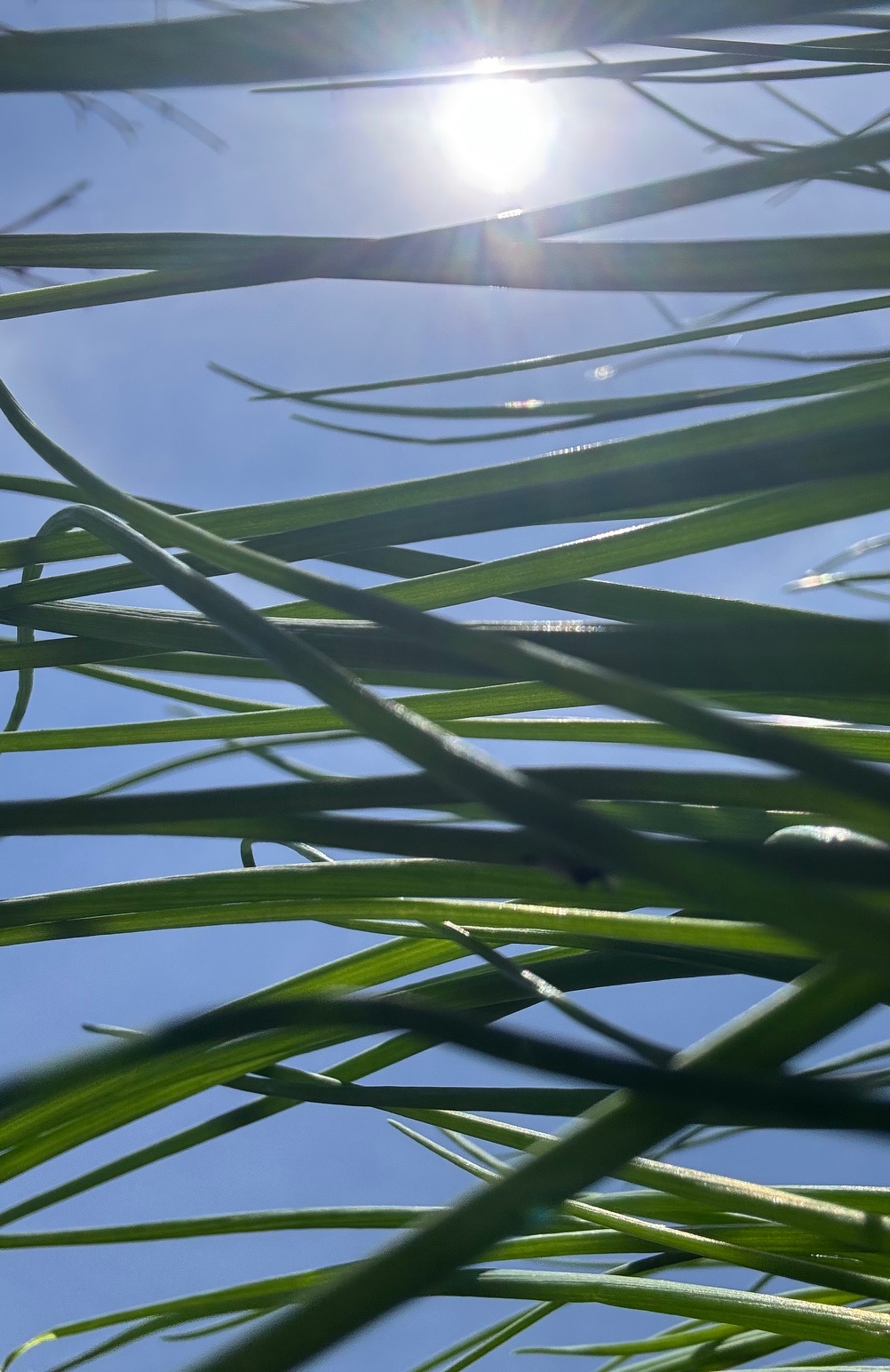
read Kerri’s blogpost about CHIVES AND SUN

likesharecommentsupportthankyou!

ILY [David’s blog on Merely A Thought Monday]

Shapes become symbols. The alphabet is my evidence. Or the silhouette of a dove carrying an olive branch. Two equilateral triangles merged into a star, once the property of Venus and now under the stewardship of David.

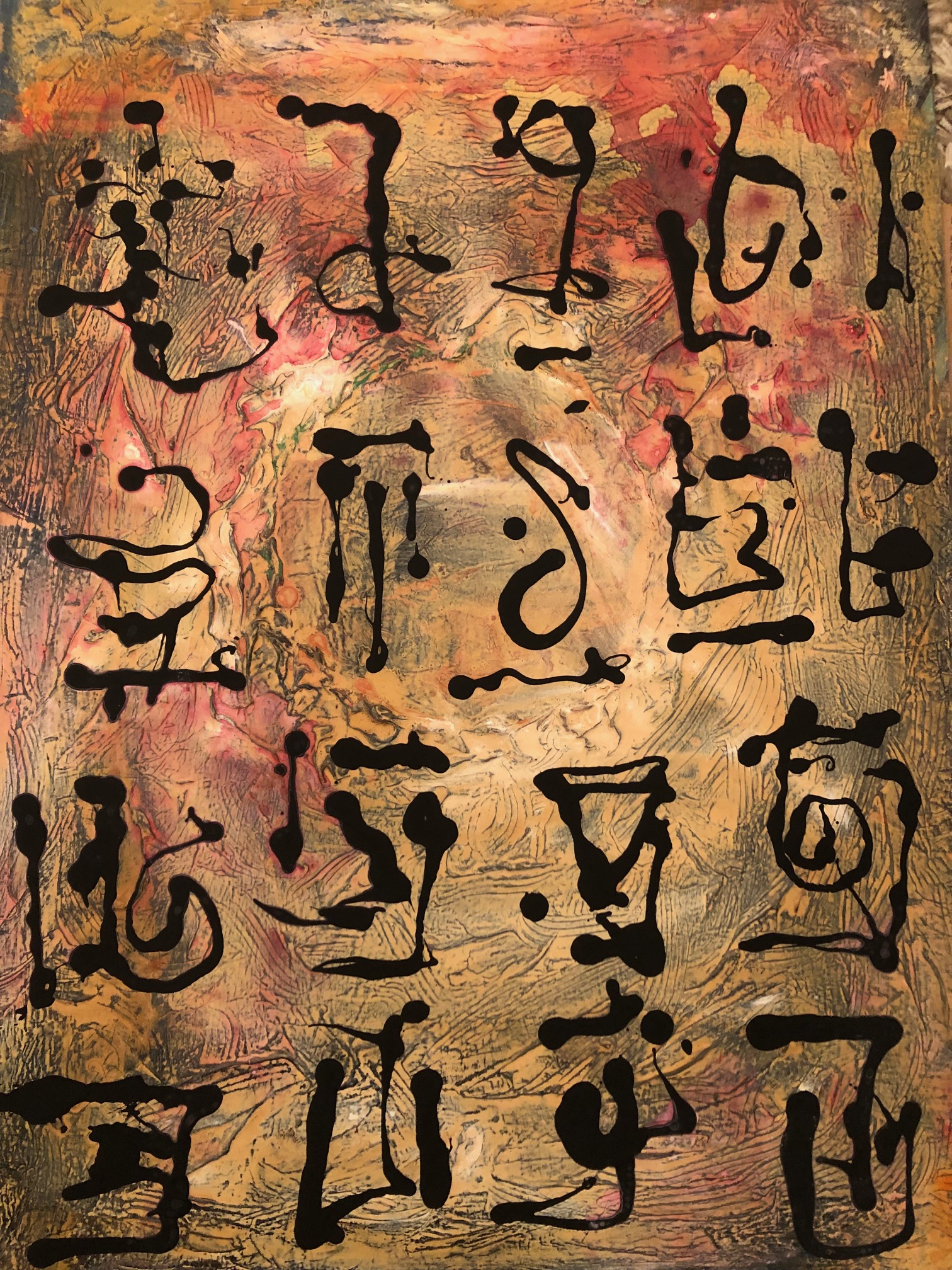
Occasionally I incorporate calligraphy-like strokes in my paintings. The marks resemble the Chinese alphabet. Patrons have asked me what the symbols mean? I’ve learned to smile as if keeping a secret. They want the lines, the symbol, to have a meaning. I’ve learned not to rob them of their wanting. “What does it mean to you?” I ask. A question answered with a question.

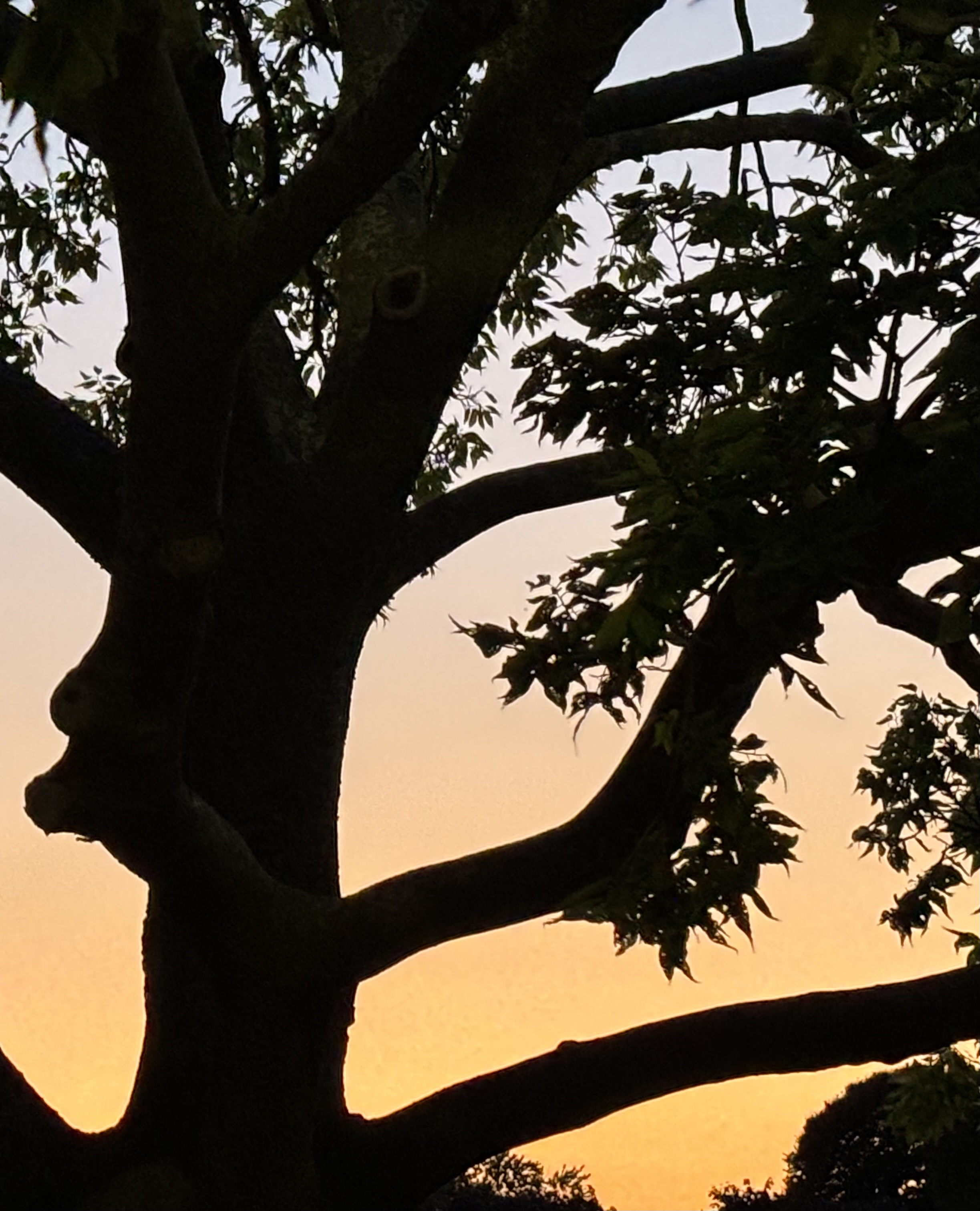
Kerri saw this marking in a felled tree. “It’s I love you in sign language!” she exclaimed. ILY. Her family flashes the hand sign for I Love You when it’s time to depart. It’s the last thing we see as we drive down the street, turn the corner.

Lately, our world is populated with emojis. Heart, heart, heart. So many yellow faces with so many possible expressions. Symbols adding nuance to symbols. “What does this one mean,” I sometimes ask. I am a clumsy user of emojis. It’s yet a foreign language and I have been reprimanded for symbolizing the wrong thing; sending the wrong message. “But I love this whacky face!” I insist. I like using the wrinkled face, one eye open, tongue sticking out.

She rolls her eyes. I flash the I Love You sign. She rolls her eyes again only this time it is followed with a warm hug.

A hug. It’s universal. The best of all symbols.

read Kerri’s blogpost about ILY

like. support. share. comment. ponder. query. skip. swing. dance.

buymeacoffee is a symbolic offer to the creators of symbol in sound, on paper, and in other not-yet-named dimensions.

Seed The Pocket [on Flawed Wednesday]

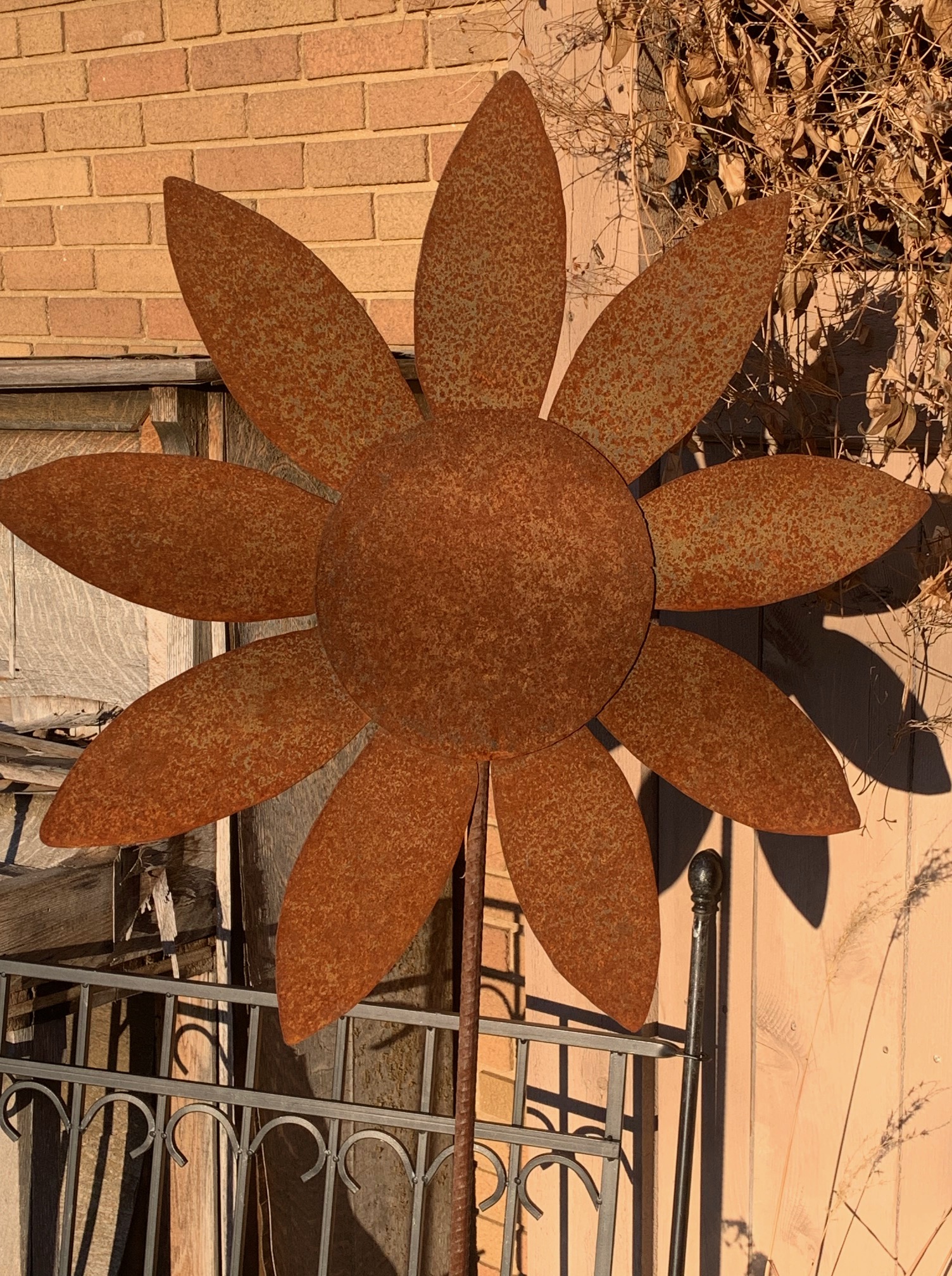
I’ve appreciated this sunflower for many years and until a month ago it never made me think of Ukraine. Now, that’s all I see. Thus, the power of a symbol. Sunflower seeds placed into the pockets of Russian soldiers by brave Ukrainian elders. “So, some good may come from your death.”

Walking through the antique mall, Brad spotted an ugly homemade sculpture. Golf balls with multiple screws protruding, spray painted and supported by wire rods. “Look, the coronavirus!” he exclaimed. Three years ago spheres with spiky knobs would have made me wrinkle my brow but never associate the shape with a virus. Now?

And masks? Will we ever see a surgical mask without feeling the divide in our nation? A confederate flag paraded through the Capitol? Members of the Capitol Police beaten with the stars and stripes; symbols matter.

Every year more and more our written communication is reimagined with emojis. Visual symbols. The new Ideogram. A thumbs up. A heart. Laughing face. Saying more with less or at the very least opening up our communication to broader interpretation. I find that I’m symbolically rolling my eyes more and more. Exclamation point. HAHA! Know what I mean? Winky face.

Leonard Shlain wrote some remarkable books about how our brains are wired by how we communicate; he posits that linear language, the introduction of writing drove us into our left brains and away from our holistic right. Perhaps in our movement back toward the ideogram we are rebalancing? A course correction or returning to center? It takes more than a few years for brains to rewire. Our descendants will, no doubt, either write books about it or communicate their thoughts through a combo platter of alphabet and pictograph.

Either way, we can only hope they grasp the meaning of the peace symbol. Or, at the very least, learn how to give it more preference than the dollar sign. Or, better yet, figure out how to make peace profitable. Can you imagine? Certainly there will be a symbol for that.

Until then, sunflowers in the killing fields. Sad face. Broken heart.

read Kerri’s blog post about THE SUNFLOWER