Do The Double-Double [on DR Thursday]

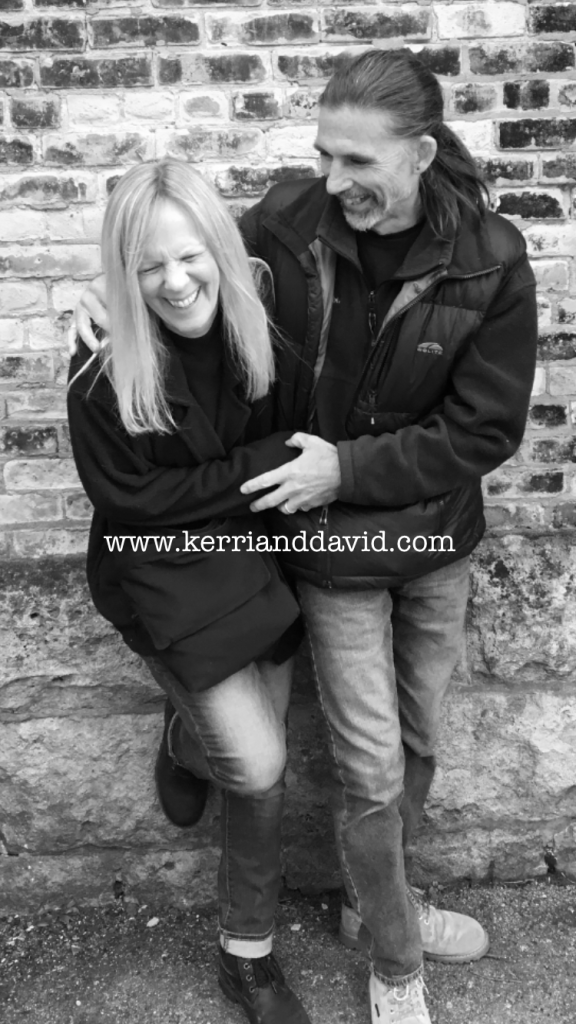
Kerri moved through the gallery as if on a photo shoot. Capturing light, shapes in architecture, I loved that she turned the opening into something other than a stuffy social event. For her, the art-occasion was an opportunity to make art. Double-double.

Since moving to Wisconsin I’ve not shown my paintings – other than online. I had paintings splashed across Seattle every day for over a decade. Showing had lost its luster. Plus, my paintings tend to be large; they require a truck and some serious effort to move and hang and remove. Plus, my Seattle studio was on the 4th floor. Large paintings didn’t fit in the elevator.

Also, I couldn’t show. There’s a harsh financial cliff to monitor when your healthcare is through the ACA. Go a single dollar over the allotted amount and we’d have been taxed into oblivion. So, to show was to court bankruptcy. It was best – safer – to roll up the canvas and hide the paintings in the basement. When friends asked, “Why don’t you show your work?” my pat response was, “I live in the United States.” A conversation stopper every time.

It was a symbolic gesture that I needed to make when I was finally free from the ACA cliff. I entered a painting in a local show. We went to the opening to see one of my pieces, too long in the basement, hanging on a gallery wall. And, my favorite symbolic-detail? The painting I entered is titled Unfettered. Double-double.

unfettered © 2018 david robinson

Dump The Suit [on DR Thursday]

“When you are content to be simply yourself and don’t compare or compete, everybody will respect you.” ~ Lao Tzu

Lately, I’m on a Lao Tzu quote kick. Have you noticed? An advocate for a simple life, his words – or those attributed to him – appeal to me at this moment in my walk.

The outstanding characteristic of my working life is that I have mostly been a sore thumb, the person in the collective who doesn’t belong to the collective. That’s been my value: I am the consummate outsider. I do not sit on the mountain so I can more clearly see the mountain. The alternative perspective. I’ve not always found that to be a comfortable role. For instance, alternative perspectives are invited into conversations but the alternative perspective, when voiced, is rarely welcome. The first response to the alternative perspective is almost always an emphatic whisper, “Conform!”

I have, my entire life as the sore thumb, been told that, “Our people will never do that!” or “They don’t think that way, therefore you must conform-modify-edit…” The emphasis is placed squarely on the limit, the notion that “They can’t…” or “They won’t…”

And, I’ve never found that to be true. In fact, that’s precisely the perception that a sore thumb is hired to challenge. “They” can. “They” will. The job of the alternative perspective is to emphasize the possible, to open paths to the not-yet-imagined, to the revelation of, “We didn’t know we could do that.” Or see that. Or feel that.

In order to walk in an alien world, the sore thumb necessarily steps into the unknown. The first step is to listen and learn: to open to the possible within themselves, to challenge the inner-limiter. The alternative perspective lives on a two-way-discomfort-street with their client.

It is never comfortable to “not know.” It’s never comfortable to say, “I have no idea what that means.” However, it’s a great exercise, a necessary practice. And, it’s actually what the alternative perspective is paid to do and to model. “We didn’t know we could do that,” are words that come after a step into discomfort, a step beyond the known limits. “We step together because we both know how this feels.”

The alternative perspective is never right or wrong, it is simply an alternative. “These are the patterns I see. They may be useful or not.” Conformity bristles when the unknown beckons. Conformity is safe, and the emphatic whisper, while meant to maintain comfort for all, is the line that a sore thumb is hired to help the whisperer cross, “The possibilities we seek live beyond this line.”

The first day I put out my consultant shingle, I bought a suit. It’s what I thought I was supposed to wear. I bought my suit because I’d snagged a client, a financial advisor who wanted me to work with his staff. He’d seen my work – he’d seen me work – in another context. After the job, he asked me, “What’s up with the suit?” I’d always been told by well-meaning teachers that I should “dress for the job I wanted,” so I told my client that I’d dressed for the job. He gave me some great advice: dump the suit. “I want you to show up as you are, not as the person you think we want to see.”

His words became my mantra.

Truth: I hated that suit. I felt like an imposter wearing it. My client gave me a great gift. Be content to be yourself. Challenge the inner-limiter. Inner-limiters are very loud, and like outer-limiters, are generally not worth listening to; they will always advise you to conform, say nothing, and put on an ill-fitting suit.

[Happy Thanksgiving]

read Kerri’s blog post about GOURDS

tango with me © 2018 david robinson

Follow The Twine [on DR Thursday]

[Day #2 of no image upload capacity so, for the melange image, see Kerri’s post or visit the Melange]

Follow the thick neon pink twine, winding through the park, and you’ll eventually come to a giant ball of string. I delighted in the thought that an enormous barn-sized Kitty, had recently been at play. Across the park giant flowers towered into the blue sky. Strolling beneath the stems and petals gave us an ant’s perspective.

Imagination. It’s working all of the time. And, sometimes it takes a giant ball of pink neon twine to make it visible. When we look forward to an event or dread a meeting, we are in full imagination. What else? When we desire a certain future or run fast from an opportunity, we are deep in our imagination. Kerri’s toes curl every time she drives under the train trestle while a train passes overhead: she imagines disaster.

I wish I had a nickel for every time I’ve heard in my life, from students or clients or friends, who’ve said, “I don’t have a good imagination.” The greatest figment of imagination is the notion that there are greater or lesser degrees of imagination. Sense making, personal story, idea generation, brainstorming, hypothesis checking, retirement planning…are all processes of imagination. We sense the world and then story it and the story always begins with the generation of an image. To be human is to be a wild. imaginer.

I’m privy these days to many thought models and process maps. I’ve spent the past 48 hours in a deep conceptual exercise. Emerging from my office at night I squint at Kerri and say, “My brain is tired.” The lovely paradox about the models and maps and conceptual paths is that they are not real. A map of the city is not the city. A model for product development is not product development, it is a map at best, a place to locate the imagination. The imagination uses itself to discover itself.

And, therein lives the paradox: imagination is as much about “discover” as it is about “invent.” We imagine our future so we can walk toward what we already see. As every artist knows, the canvas tells you where to go, the character tells the writer where the story turns. We discover ourselves in our imagination. Follow the pink twine far enough and you’ll eventually come to a giant ball of string.

read Kerri’s blog post about PINK NEON

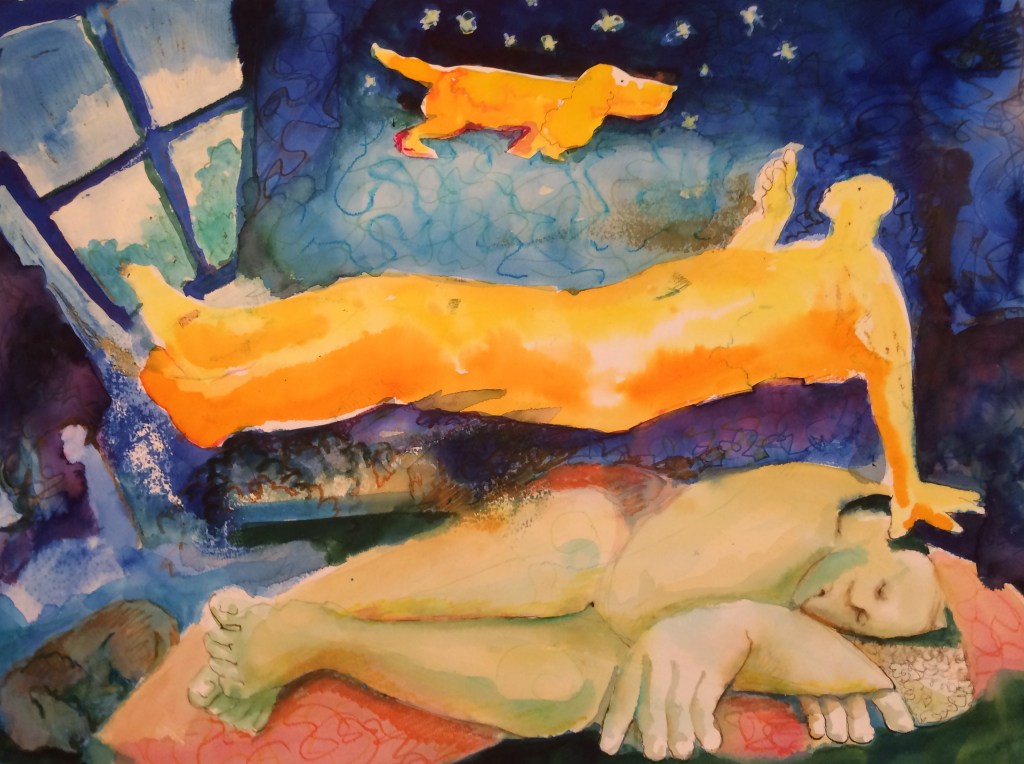
watercolor fun: dog dreaming © 2010 david robinson

Walk With Samuel [on DR Thursday]

“The end is in the beginning and yet you go on.” ~ Samuel Beckett, Endgame

When is something finished? Beckett wrote Waiting For Godot in 1953; characters waiting for what will never arrive. A finish. A completion. Beckett’s life spanned both wars-to-end-all-wars, Korea, Vietnam. He wrote about humanity’s dedication to nonsense. His work has been called bleak and dark. His work is shelved with the canon of The Theatre of the Absurd. And, yet, given the news of the day, these days, who doesn’t feel as if they are living in a Beckett play?

What is often missed in his absurdist plays is the beautiful human capacity to keep walking, to keep trying. Waiting and walking through tragedy, mostly of our own making, with unwavering hope. We story ourselves with nobility even when wrapping ourselves in a lie. We make rules and laws that apply to some but not to all and then we set about to justify the inequality. Money and morality are not the same thing though there’s plenty of storytelling meant to have us believe that wealth only flows to the worthy.

Art is not supposed to make sense because life doesn’t make sense. We make sense of life through the stories we concoct. Emperor’s buried with thousands of statues to keep them company in the afterlife, an artist painting the ceiling and walls of the Sistine Chapel, gods and angels and saints. How many people died building the great pyramids, tomb for a pharaoh? Who would possibly spend their life in abject poverty smearing color on canvas? Van Gogh. A legion of others not known. Are we better for it? I cried the day the Taliban blew up the Buddhas of Bamiyan, 6th century statues that I had not seen in person and was likely to never see. Were my tears more or less absurd than the Taliban’s animosity toward carved stone?

Matters of the heart. When are they finished? Where do they begin?

It was a gorgeous day, perhaps the last warm day of the season. We met our pals at the Chicago Botanical Gardens. Throughout the gardens, preparations were being made for the annual holiday light exhibit. A tree of shiny stars. Giant flowers. Faux candles floating in the waterway. Strings of colored lights were being placed along the walkways. Even during the light of day it was impressive.

In this time of transition, many of the gardens were being prepped for the winter, the pathways were packed with people cooing at the wave of the grasses, the shape of the trees in the Japanese garden. I was gobsmacked by the color of the moss on trees, the shock of red leaves against vivid green. No matter which direction I looked, someone, some special gardener and designer, had crafted beauty. They knew that their work would stop me in my tracks and allow me to whisper, “Unbelievable.”

Winding our way back to the Visitor’s Center, I told Brad that, seeing so many people out enjoying the gardens, excited to walk in beauty, filled me with hope.

To walk in beauty. Dollars and cents can’t reach the reason. Data can’t touch the impulse. There is so much light in this theatre of the absurd. Beckett knew it, writing about the stories we tell, the relationships we create, waiting for something – a beauty – that by definition, will never arrive because we are surrounded by it each and every day.

read Kerri’s blog post about RED SCULPTURE

www.davidrobinsoncreative.com

Get Lost [on DR Thursday]

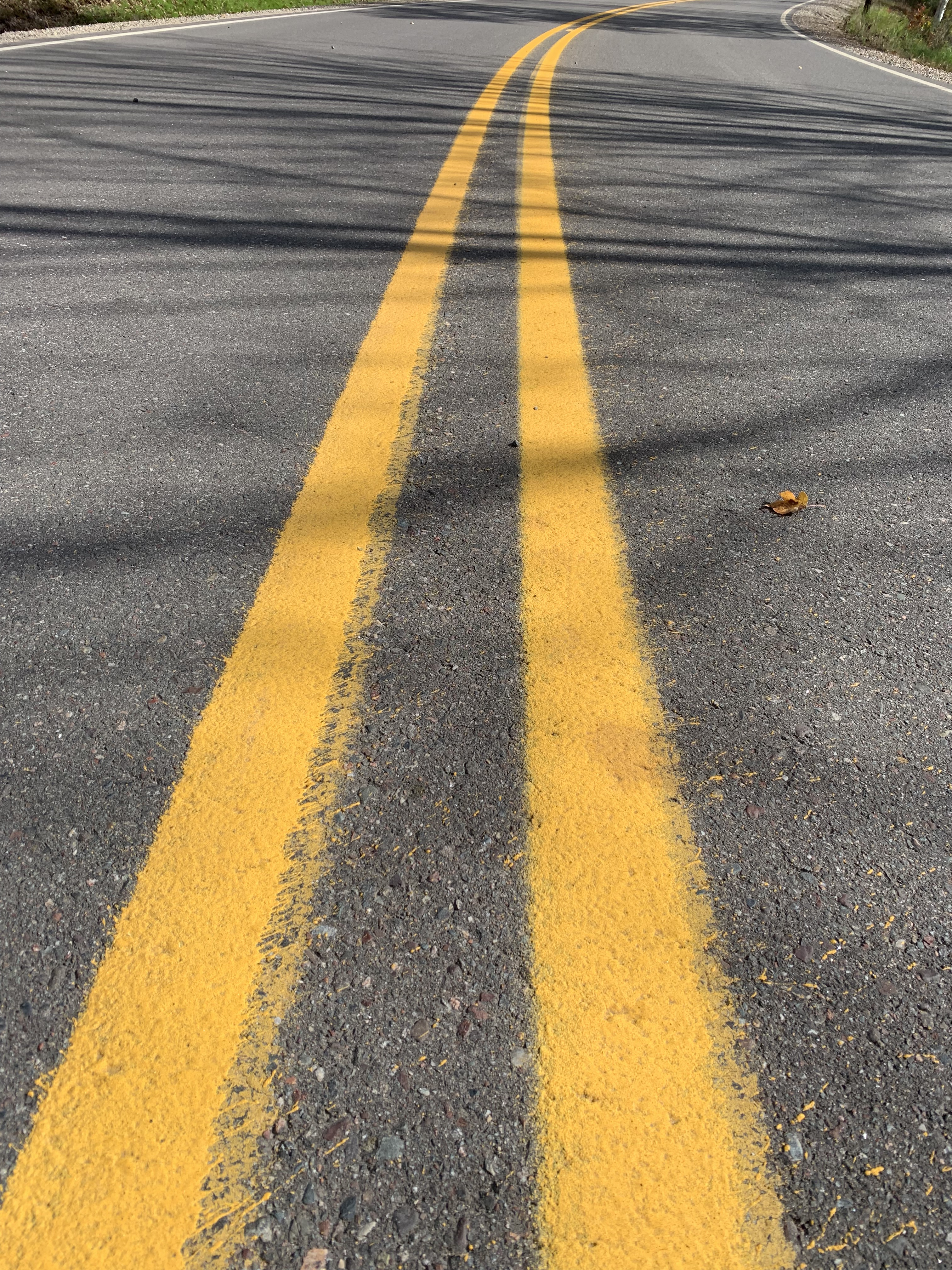
We delight in taking Sunday drives. Sometimes we have a destination but most of the time we have no idea where we are going. We head “out into the county,” the farm land, and with great intention, we get lost. “Left or right?” Kerri asks when we come to a crossroads. “Left.”

The goal is to “not know.” Drive down roads we’ve never experienced. There is a direct correlation between “not knowing” and “clear seeing.” When lost, we open our eyes. It’s something that every artist understands, “always-knowing-where-you’re-going” is a killer of the magic. It is the dividing line between art and craft.

I’m currently working with a team of analytical minds. “Lostness” is often interpreted as failure. It’s not welcome. But, to my great delight, even in the most analytic of creative processes, the engineers and entrepreneurs, shaking their fists at the sky when adrift, find their greatest magic arrives only after time spent wandering the wilderness.

After many twists and turns, rolling country roads and, “Which direction are we headed?”, we pop out of lostness and know exactly where we are. “Hey!” we laugh, “How did we get here?”

The art of getting lost. The art of exploration. The art of having an experience without a predetermined outcome. The art of having an outcome and letting it go, making space for something better. It is the art of cultivating surprise, allowing for the bigger idea to come through. “Left or right?”

It’s a practice. Learning-to-see and letting-go-of-needing “to know.” It’s the same thing. And, a great way to practice, is taking a nice Sunday drive.

read Kerri’s blog post about THE ROAD

pax © 2015 david robinson

Stand In Time [on DR Thursday]

Stephen Hawking asked why we remember the past but not the future. Yesterday, in the middle of a meeting, I received a slack message with a sentiment from Russ Ackoff: entrepreneurs stand in the future and look at the present. I was fascinated by an article by Wade Davis, writing about a culture that experiences time as movement backwards; we row our way into the future.

Declan Donnellan writes that it is impossible to try and be present because we already are present. We live in it. We have to try very hard not to be present. In fact, we have to split ourselves in two halves. One looking backward. The other looking forward. We are, each and every one, Janus.

It is the time of year that time changes. It’s an odd ritual to “fall back” in time. What was 5 o’clock will soon be 4 o’clock, not because of a strange universal movement between planets and stars, but because we say so. A few states in the union don’t participate in the ritual so their time stays the same.

Time on a line. So many different realities, even in the most basic experience. Constructs of time.

I’ve read that old age is a return to childhood. Many, many great thinkers and writers from many disparate cultures tell us that we will journey through life and arrive where we began. The destination is ourself. Have you ever tried to describe your self and found the task impossible? Words simply cannot reach that level of complexity. There is a notion popular in the self-help world to define your life mission, your single life purpose. It’s meant to give you focus-of-action and certain-location on your line of time. It is also nearly impossible to articulate and becomes an exercise in metaphor selection. I’ve smiled knowingly as people in my past have asked, “Is this my mission or am I making it up?” The answer to both is, of course, yes. In a more universal peek, the exercise is meant to take you one more step around the circle that will bring you back to your self.

When I was doubting myself, judgmental because I “didn’t know” what I was doing, Quinn pointed to the tallest building and said, “The person on the top floor is just making it up, too.” He was standing in my future, looking back.

It’s just a matter of time.

Just.

read Kerri’s post about TEA LIGHTS

Greet The World © 2011 david robinson

Go To The Mountains [on DR Thursday]

For Mike, it was the ocean that called. For me, it was the mountains. When Columbus passed, more than a service, more than any gathering, I needed a walk in the mountains. I needed the quiet of aspen, the smell of pine. A moment in time, time that keeps moving through the monumental and the everyday. The trees and stream were here before I was born and they will be here after I am gone. I went to the mountains for perspective.

I am working with brilliant people. We are developing something that we hope will help people. Our conversations are genuine. Our intentions are pure. And, yet, how easily do we get lost in the minutiae. How often do we spin out into abstraction. Right now I have a unique perspective on life. I am in no hurry to get anywhere. I easily let go of my end of the rope in any potential tug-of-war. Will what we create actually help others? That is like asking, “Will they like my painting?” That is not for me to decide. Mine is to paint it. All I know is that our conversations are genuine. Our intentions are pure. None of the rest really matters.

I’ve decided to put two paintings into a local show. I’ve only shown and sold online since moving to Wisconsin eight years ago. I was tired. Before I moved, I had paintings in galleries or office spaces or bars or restaurants every single day for over a decade. I was moving or mailing paintings all of the time (and my paintings are mostly large). Once, I took 15 paintings, loaded on a cart, on the light rail. I arranged for a truck that did not show up and I had to deliver the paintings that day, within a specified time-window. I wheeled 15 large paintings down the street, onto an elevator and maneuvered them onto the train. The train-police came to make sure I meant no harm. We had a nice chat and I showed them my work. We laughed heartily at my delivery method. I wheeled them off the train and through a neighborhood to the gallery. “I’ll never do that again,” I said to the train-police when I wheeled my empty cart back onto the light rail. It all seemed so necessary, important.

A specified time-window. We only have so much time. The clock is ticking. The funds may run out. Will we get there in time? Will our/my work matter? Is the message clear? What is the message? What am I willing to do and not do?

And, so, I went to the mountains for perspective.

read Kerri’s blog post about PERSPECTIVE

Chasing Bubbles © 2019 David Robinson

Place It In The Hollow [on DR Thursday]

For some reason, people need to leave a trace of their passage. We paint on the walls of caves. We erect monuments to ourselves and our heroes. We build cairns to mark the way for those who come behind; we build cairns so others will add stones to the marker. We put plaques on benches and engraved bricks in walkways. We graffiti bridges and walls. Banksy has made a fortune tracing his masked passage.

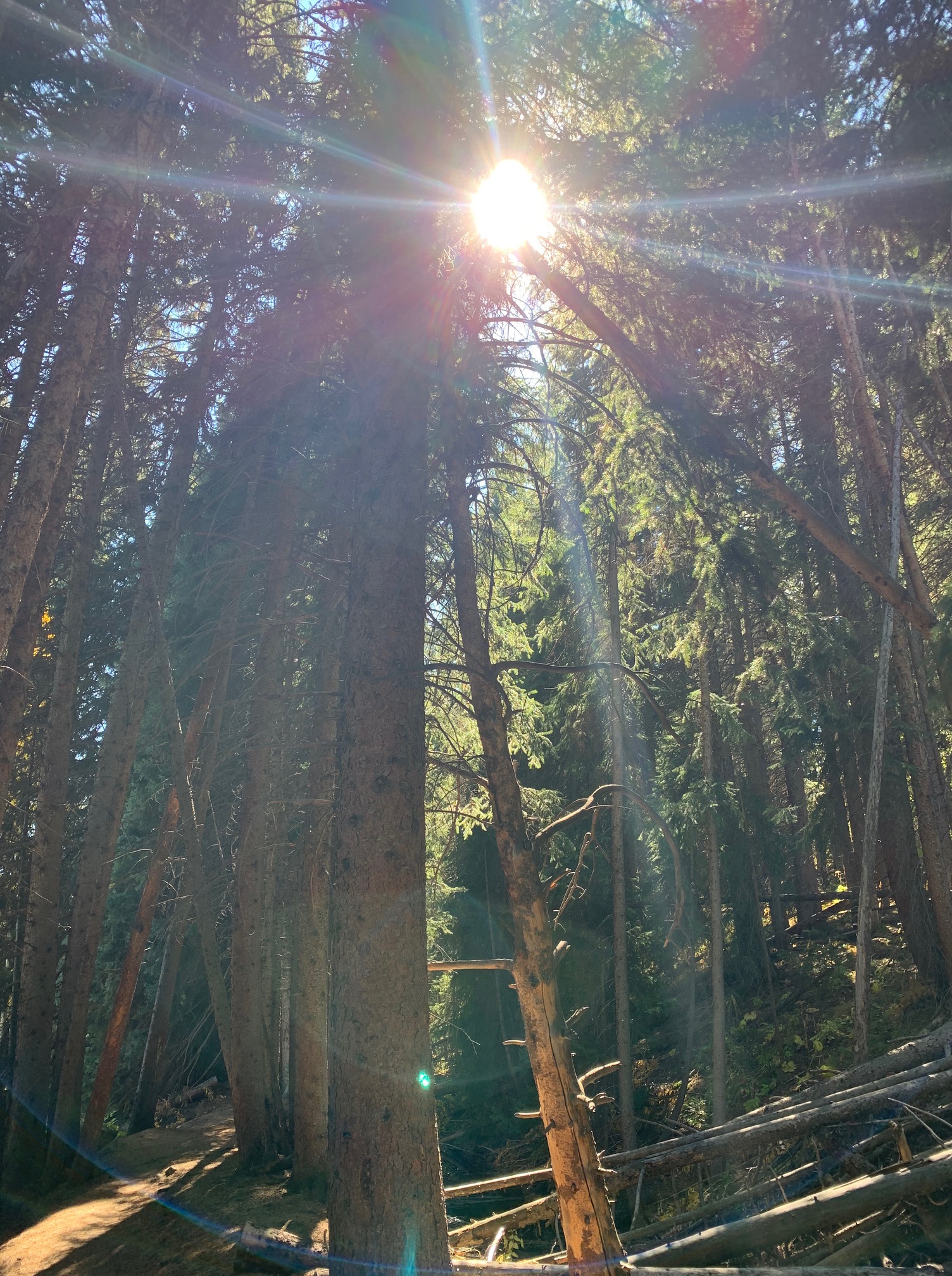
Growing tired as we hiked up the trail, we sat on an old log. We looked over the valley, turned our faces to the sun. And, as we stood to continue up the trail, Kerri pulled a sharpie from her bag. We left two small dots on the log. “We were here.”

Our work in the world not only can be a marker, it is a marker. Every little action is a stone on the cairn: we contribute to the whole whether we like it or not. The person who delivers packages to my door makes my life better. Easier. The score of people who created this computer, invented this software, manufactured the chip that makes it all work, have made my life better. Someone coming behind us will see the cairn we’ve constructed and add to it. Improve upon it. The first computer I touched was a toy compared to this miracle sitting on my lap.

I’m an artist and sometimes wonder if my paintings will live beyond me or will they end up in the Goodwill as so much used canvas. I hear the advice, so often offered to me: “Yours is to paint them, not decide what happens to them.” Too true. Mine is to make the offer. I have no control over the acceptance.

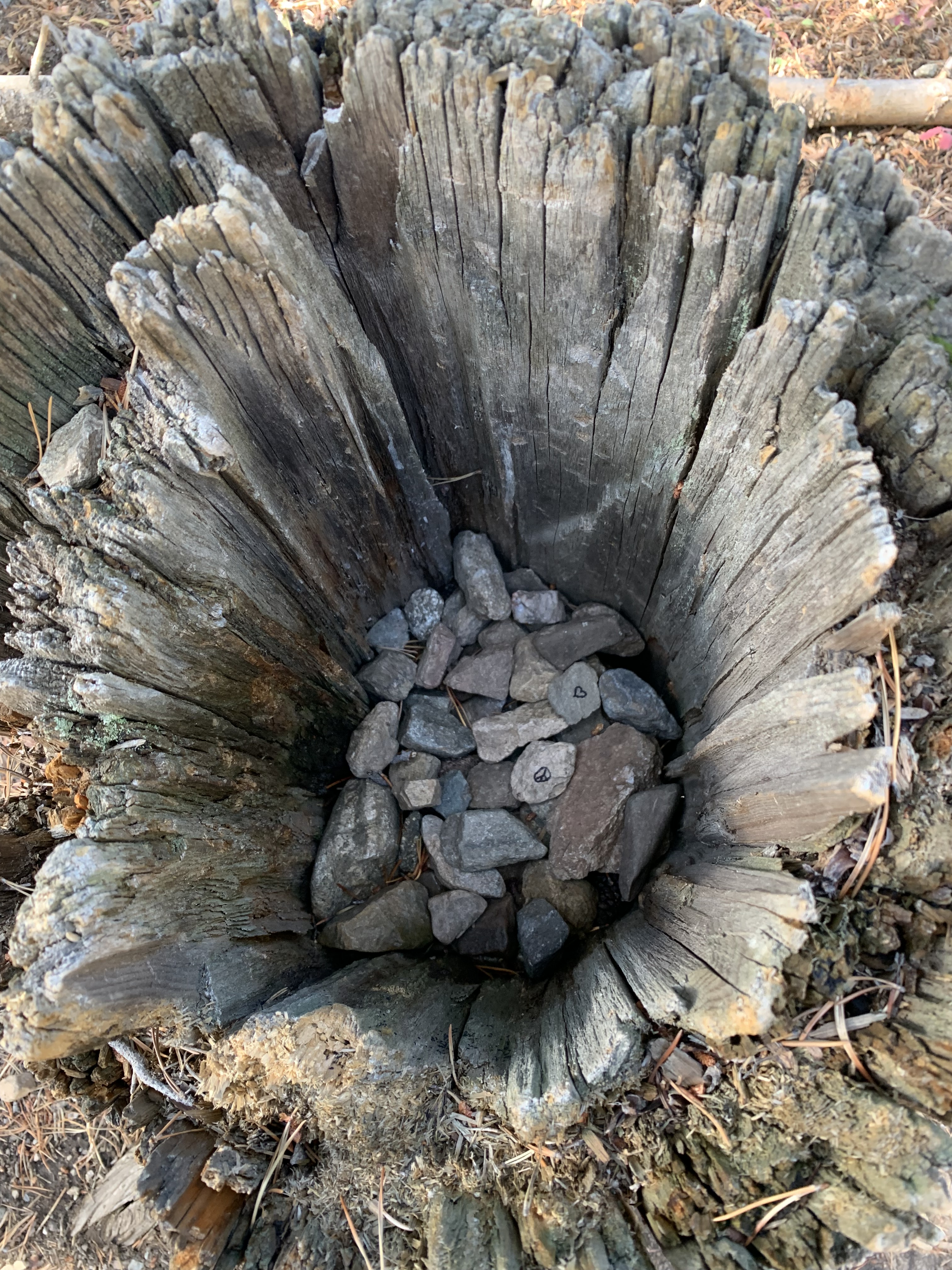
Returning down the trail, Kerri peered into the hollow of a stump. It was filled with stones! Hikers, just like us, had left a note that also served as an ancient invitation: I was here. We picked up stones, the sharpie came out of the bag, scribbled a heart and a peace sign on our rocks before placing them in the hollow. “Do you think anyone will see our stones?” Kerri asked.

An ancient question. Deeply human. Heart and Peace.

read Kerri’s blog post about THE HOLLOW

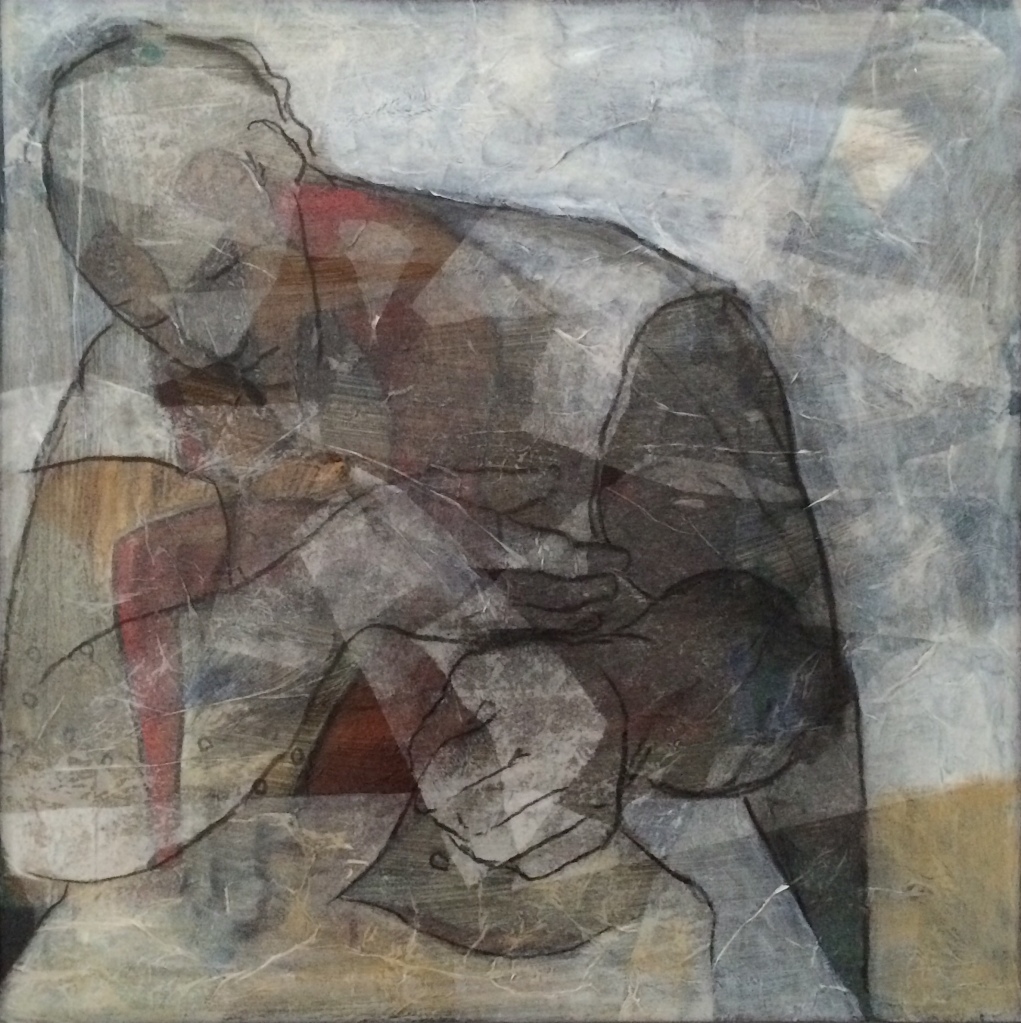
three graces © 2012 david robinson

Light A Candle [on DR Thursday]

A Double Haiku

Candle on a rock,

His favorite fishing hole.

Observance, our own.

Electric aspen,

Trout slide through glassy water.

Quiet, like his voice.

read Kerri’s blog post about OBSERVANCE

www.davidrobinsoncreative.com

See The Shape [on DR Thursday]

The Balinese would call this an auspicious day. They would never perform a funeral rite on a day that was not promising. This soul will come back in seven generations and requires a providential sending.

The Greeks placed coins on the eyes of their departed loved ones. Fare for safe passage over the river Styx.

Columbus’ son will give his eulogy. His son-in-law will guide the ritual. His granddaughter will sing for him. His daughter-in-law will play her compositions, prelude and postlude, and sing a special song for him. His coins are his family. They will pay his passage. Actually, that his family will perform every aspect of his service – his sending – is testament to his earth-passage, what he did during his time while walking on this planet.

Heart.

We laughed while driving across Kansas. The day was fraught with obstacles. Breakdowns and high winds. “Columbus is making this trip eventful,” I said. He was full of mischief.

“I can see that sparkle in his eye,” Kerri responded. Nothing was going to stop us from getting to his service. Nothing. Not even mischief.

I have often been asked, “What is the shape of your day?” A curious question to ask a visual artist. “Not flat nor two-dimensional,” I think but do not say. “Certainly organic. Not geometric. My days are rarely geometric.” I never know what lines-of-thought or surprise events actually close to give definition to my day until the end, when I stand back and look at the whole. That is true for all of us. No one knows the shape of their day at sunrise.

Today, the lines have closed so we gather to look at the shape of Columbus’ life.

Heart. Big heart.

read Kerri’s blog post about HEART LEAVES

Columbus circa 1998