Get Lost [on DR Thursday]

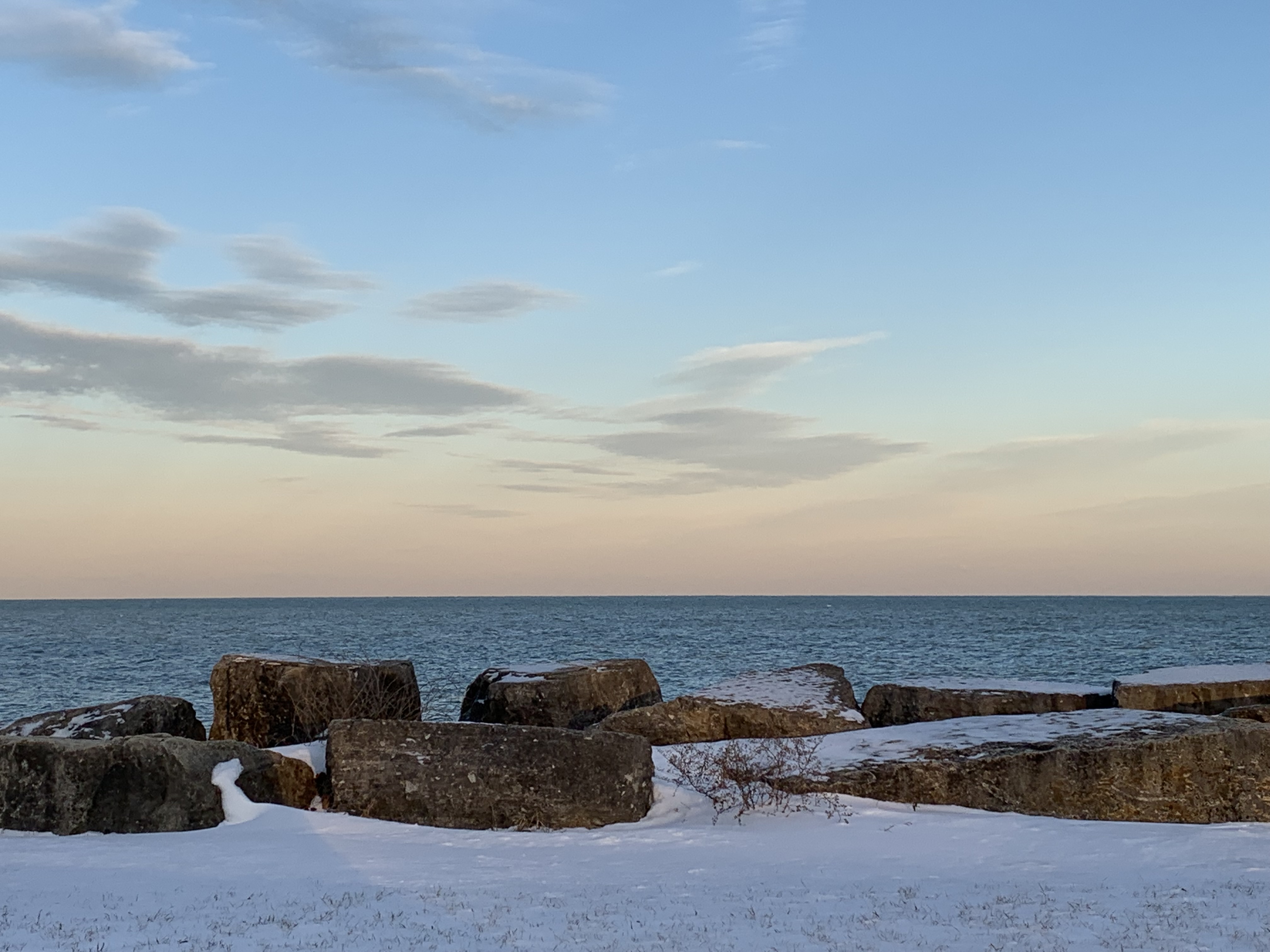
We delight in taking Sunday drives. Sometimes we have a destination but most of the time we have no idea where we are going. We head “out into the county,” the farm land, and with great intention, we get lost. “Left or right?” Kerri asks when we come to a crossroads. “Left.”

The goal is to “not know.” Drive down roads we’ve never experienced. There is a direct correlation between “not knowing” and “clear seeing.” When lost, we open our eyes. It’s something that every artist understands, “always-knowing-where-you’re-going” is a killer of the magic. It is the dividing line between art and craft.

I’m currently working with a team of analytical minds. “Lostness” is often interpreted as failure. It’s not welcome. But, to my great delight, even in the most analytic of creative processes, the engineers and entrepreneurs, shaking their fists at the sky when adrift, find their greatest magic arrives only after time spent wandering the wilderness.

After many twists and turns, rolling country roads and, “Which direction are we headed?”, we pop out of lostness and know exactly where we are. “Hey!” we laugh, “How did we get here?”

The art of getting lost. The art of exploration. The art of having an experience without a predetermined outcome. The art of having an outcome and letting it go, making space for something better. It is the art of cultivating surprise, allowing for the bigger idea to come through. “Left or right?”

It’s a practice. Learning-to-see and letting-go-of-needing “to know.” It’s the same thing. And, a great way to practice, is taking a nice Sunday drive.

read Kerri’s blog post about THE ROAD

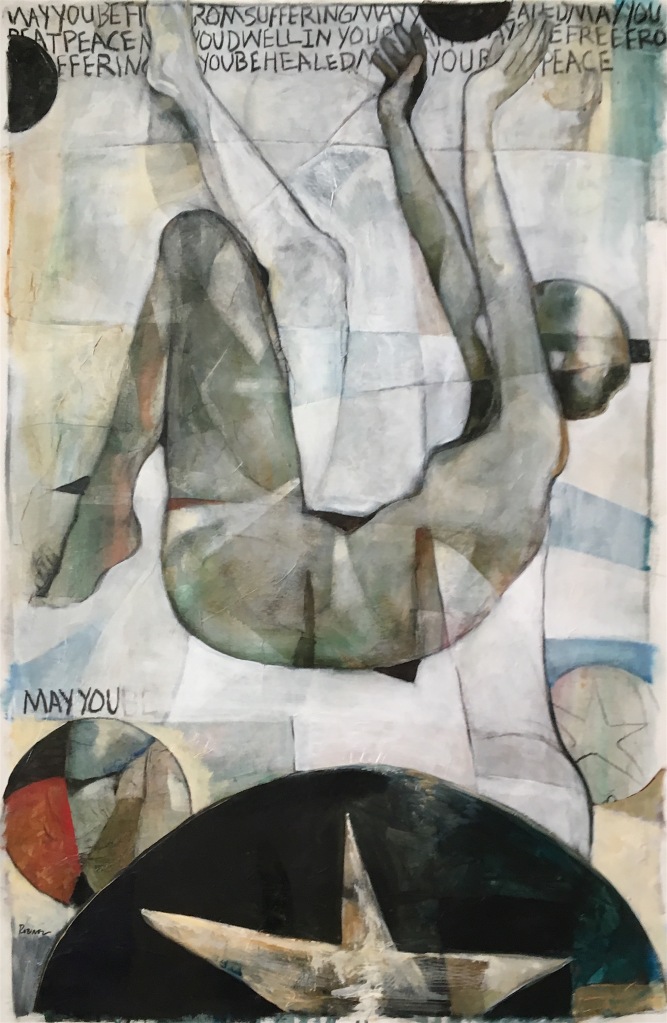
pax © 2015 david robinson

Stand In Time [on DR Thursday]

Stephen Hawking asked why we remember the past but not the future. Yesterday, in the middle of a meeting, I received a slack message with a sentiment from Russ Ackoff: entrepreneurs stand in the future and look at the present. I was fascinated by an article by Wade Davis, writing about a culture that experiences time as movement backwards; we row our way into the future.

Declan Donnellan writes that it is impossible to try and be present because we already are present. We live in it. We have to try very hard not to be present. In fact, we have to split ourselves in two halves. One looking backward. The other looking forward. We are, each and every one, Janus.

It is the time of year that time changes. It’s an odd ritual to “fall back” in time. What was 5 o’clock will soon be 4 o’clock, not because of a strange universal movement between planets and stars, but because we say so. A few states in the union don’t participate in the ritual so their time stays the same.

Time on a line. So many different realities, even in the most basic experience. Constructs of time.

I’ve read that old age is a return to childhood. Many, many great thinkers and writers from many disparate cultures tell us that we will journey through life and arrive where we began. The destination is ourself. Have you ever tried to describe your self and found the task impossible? Words simply cannot reach that level of complexity. There is a notion popular in the self-help world to define your life mission, your single life purpose. It’s meant to give you focus-of-action and certain-location on your line of time. It is also nearly impossible to articulate and becomes an exercise in metaphor selection. I’ve smiled knowingly as people in my past have asked, “Is this my mission or am I making it up?” The answer to both is, of course, yes. In a more universal peek, the exercise is meant to take you one more step around the circle that will bring you back to your self.

When I was doubting myself, judgmental because I “didn’t know” what I was doing, Quinn pointed to the tallest building and said, “The person on the top floor is just making it up, too.” He was standing in my future, looking back.

It’s just a matter of time.

Just.

read Kerri’s post about TEA LIGHTS

Greet The World © 2011 david robinson

Go To The Mountains [on DR Thursday]

For Mike, it was the ocean that called. For me, it was the mountains. When Columbus passed, more than a service, more than any gathering, I needed a walk in the mountains. I needed the quiet of aspen, the smell of pine. A moment in time, time that keeps moving through the monumental and the everyday. The trees and stream were here before I was born and they will be here after I am gone. I went to the mountains for perspective.

I am working with brilliant people. We are developing something that we hope will help people. Our conversations are genuine. Our intentions are pure. And, yet, how easily do we get lost in the minutiae. How often do we spin out into abstraction. Right now I have a unique perspective on life. I am in no hurry to get anywhere. I easily let go of my end of the rope in any potential tug-of-war. Will what we create actually help others? That is like asking, “Will they like my painting?” That is not for me to decide. Mine is to paint it. All I know is that our conversations are genuine. Our intentions are pure. None of the rest really matters.

I’ve decided to put two paintings into a local show. I’ve only shown and sold online since moving to Wisconsin eight years ago. I was tired. Before I moved, I had paintings in galleries or office spaces or bars or restaurants every single day for over a decade. I was moving or mailing paintings all of the time (and my paintings are mostly large). Once, I took 15 paintings, loaded on a cart, on the light rail. I arranged for a truck that did not show up and I had to deliver the paintings that day, within a specified time-window. I wheeled 15 large paintings down the street, onto an elevator and maneuvered them onto the train. The train-police came to make sure I meant no harm. We had a nice chat and I showed them my work. We laughed heartily at my delivery method. I wheeled them off the train and through a neighborhood to the gallery. “I’ll never do that again,” I said to the train-police when I wheeled my empty cart back onto the light rail. It all seemed so necessary, important.

A specified time-window. We only have so much time. The clock is ticking. The funds may run out. Will we get there in time? Will our/my work matter? Is the message clear? What is the message? What am I willing to do and not do?

And, so, I went to the mountains for perspective.

read Kerri’s blog post about PERSPECTIVE

Chasing Bubbles © 2019 David Robinson

Place It In The Hollow [on DR Thursday]

For some reason, people need to leave a trace of their passage. We paint on the walls of caves. We erect monuments to ourselves and our heroes. We build cairns to mark the way for those who come behind; we build cairns so others will add stones to the marker. We put plaques on benches and engraved bricks in walkways. We graffiti bridges and walls. Banksy has made a fortune tracing his masked passage.

Growing tired as we hiked up the trail, we sat on an old log. We looked over the valley, turned our faces to the sun. And, as we stood to continue up the trail, Kerri pulled a sharpie from her bag. We left two small dots on the log. “We were here.”

Our work in the world not only can be a marker, it is a marker. Every little action is a stone on the cairn: we contribute to the whole whether we like it or not. The person who delivers packages to my door makes my life better. Easier. The score of people who created this computer, invented this software, manufactured the chip that makes it all work, have made my life better. Someone coming behind us will see the cairn we’ve constructed and add to it. Improve upon it. The first computer I touched was a toy compared to this miracle sitting on my lap.

I’m an artist and sometimes wonder if my paintings will live beyond me or will they end up in the Goodwill as so much used canvas. I hear the advice, so often offered to me: “Yours is to paint them, not decide what happens to them.” Too true. Mine is to make the offer. I have no control over the acceptance.

Returning down the trail, Kerri peered into the hollow of a stump. It was filled with stones! Hikers, just like us, had left a note that also served as an ancient invitation: I was here. We picked up stones, the sharpie came out of the bag, scribbled a heart and a peace sign on our rocks before placing them in the hollow. “Do you think anyone will see our stones?” Kerri asked.

An ancient question. Deeply human. Heart and Peace.

read Kerri’s blog post about THE HOLLOW

three graces © 2012 david robinson

Light A Candle [on DR Thursday]

A Double Haiku

Candle on a rock,

His favorite fishing hole.

Observance, our own.

Electric aspen,

Trout slide through glassy water.

Quiet, like his voice.

read Kerri’s blog post about OBSERVANCE

www.davidrobinsoncreative.com

See The Shape [on DR Thursday]

The Balinese would call this an auspicious day. They would never perform a funeral rite on a day that was not promising. This soul will come back in seven generations and requires a providential sending.

The Greeks placed coins on the eyes of their departed loved ones. Fare for safe passage over the river Styx.

Columbus’ son will give his eulogy. His son-in-law will guide the ritual. His granddaughter will sing for him. His daughter-in-law will play her compositions, prelude and postlude, and sing a special song for him. His coins are his family. They will pay his passage. Actually, that his family will perform every aspect of his service – his sending – is testament to his earth-passage, what he did during his time while walking on this planet.

Heart.

We laughed while driving across Kansas. The day was fraught with obstacles. Breakdowns and high winds. “Columbus is making this trip eventful,” I said. He was full of mischief.

“I can see that sparkle in his eye,” Kerri responded. Nothing was going to stop us from getting to his service. Nothing. Not even mischief.

I have often been asked, “What is the shape of your day?” A curious question to ask a visual artist. “Not flat nor two-dimensional,” I think but do not say. “Certainly organic. Not geometric. My days are rarely geometric.” I never know what lines-of-thought or surprise events actually close to give definition to my day until the end, when I stand back and look at the whole. That is true for all of us. No one knows the shape of their day at sunrise.

Today, the lines have closed so we gather to look at the shape of Columbus’ life.

Heart. Big heart.

read Kerri’s blog post about HEART LEAVES

Columbus circa 1998

Surface The Pattern [on DR Thursday]

Steve read my book and said he didn’t really understand the thing about pattern. His comment at first surprised me but then I realized he was actually reinforcing the point: we are unconscious to our patterning. We think in patterns. We see in patterns. Culture is pattern. Pattern is invisible and making it visible is a necessary first step in change processes.

The people who surface pattern are often seen by the mainstream as deviant or rebellious. Women demanding equal pay are attempting to make a pattern visible. The BLM movement is attempting to make a cultural pattern visible. Shining a light on longstanding oppression is never welcome in the halls of power.

The people who work to repress the visibility of cultural pattern, conserve the norms, generally claim a righteous superiority. They are keepers of the culture and feel threatened, even victimized, by the sudden visibility of cultural pattern. Exposure is always a threat to the existing pattern and no one relinquishes power or privilege without a fight. The current raft of voter suppression laws – made possible by the fantasy of a stolen election – is a great example. The Big Lie is a textbook example of how far people in power will go to hide a privilege-norm. It is, for us in these un-united states, not a new phenomenon; it is a longstanding well-guarded pattern.

Change happens when the patterns are surfaced. There will always be a tide that rises to extinguish the light of exposure. In the long run, those hardy voices that were, at first, branded as deviant or dangerous, we come to honor and respect. They refused to be silenced. We claim them as our heroes. MLK. Gandhi. Rosa Parks. Cesar Chavez. Susan B. Anthony. There are so many. It is no easy task to surface the patterns. The path of a light-shiner is dangerous and difficult.

John Lewis gave great advice for those dedicated to surfacing unconscious patterns: “Get in good trouble, necessary trouble, and help redeem the soul of America.” He also said that, “…transformation will not happen right away. Change takes time.”

Opening eyes to unconscious pattern, to what is obvious yet unseen, is an artist’s path. Seeing beyond what you think you see…seeing beyond your field-of-dedicated-belief, being curious enough to question what you are being told – can you imagine anything more necessary – more vital – in our age of rabid-misinformation and desperate-pattern-suppression?

read Kerri’s blog post about PATTERN

in dreams I wrestle with angels ©️ 2018 david robinson

Honor Difference [on DR Thursday]

A Double Haiku:

Honor Difference.

A mural in Milwaukee.

Heart of the ideal.

Infinite palette,

Many hands, many painters,

Eyes that choose to see.

Read Kerri’s blog post about Honoring Difference

helping hands ©️ 2012 david robinson

Compose [on DR Thursday]

Many years ago I attended a workshop facilitated by Sam, a brilliant landscape painter. I was delighted and amused when he demonstrated his technique. Rather than paint what he observed, he took great pleasure in rearranging the elements. He moved the trees, altered the hills, relocated the barn. He laughed while mixing up his elements. His eyes sparkled with mischief. Rather than a workshop on painting, the day became an exercise in joy-in-art. Seeing and playing with what we see.

This morning I read that the word ‘composition’ means “putting together.” Definers-of-art-terms associate composition with freedom. “The artist has freedom when choosing the composition of their artwork.” It is a mistake to believe that compositional freedom is the sole province of an artist. If the mind is a canvas then thought is a composition. It is patterned and composed. Arranged and rearranged. We choose where we place our focus. Point-of-view is cultivated, it is not a default setting. We design the story-we-tell-ourselves-about-ourselves. And, then we project it onto the world.

The trick in both art and thought composition is not to wear ruts in the road. Sam was joyful in his art because he was constantly challenging and engaging with what he saw. Art was fun, not morbid tradition. Art was delight-full, not rule-bound or laden with the pressure to capture. Recall that stepping out of the rut was the first lesson in Julia Cameron’s The Artist’s Way. Morning pages and artist’s dates are meant to both see the ruts and open new paths. The same process applies to the thought-canvas. See the rut. Step out of it.

As Sam taught me so many years ago, seeing and playing with what we see begins with letting go of what we think we see. It begins with a blank canvas, an unfettered mind, and the freedom to choose the composition.

read Kerri’s blog post about COMPOSITION

Unfettered ©️ 2018 david robinson

Light The Dark [on DR Thursday]

Strong contrast between light and dark: chiaroscuro. Renaissance painters loved it. The word ‘chiaroscuro’ literally means light-dark.

Today is Stephen’s memorial service. It is across the country or I would be there. I confess, I am haunted by Stephen’s death. When Mike wrote to tell me of Stephen’s passing, he told me that he was at peace when he died.

I’m not sure why his passing has hit me so hard. The last time I saw Stephen was 1998. He was following MM like a puppy. They were working on a set construction project. That’s what I remember. He was 14 years old, so, in my mind, he is frozen at 14. He was one of a pack of brothers that formed a solid core of Dimension’s Theatre Project, a theatre program that I spent more than a decade resurrecting and nurturing into artistic vitality. Stephen and his brothers were present in its heyday. For me, it was an artistic and learning laboratory, a place of spirited artistic creation. I loved every minute of it.

Of the brothers, I knew Stephen the least. I worked most directly with his older brother, Greg. I prided myself that Dimensions was a safe space. Artists, especially young artists, are vulnerable. They need to know that they can make strong offers, take chances, find their edges, without shame. That means living in and creating a culture of mutual support. The person selling the tickets mattered just as much as the actor on the stage. Every member of the community was directly responsible for the health and well-being of every other member. It is the philosophy I inherited. It is the philosophy I carried forward.

Mike took the reins of Dimensions when I left. He carried on the tradition, made it his own, Changing Faces Theater Company. Mike knew the artist that Stephen would become. The musician. The designer. The man who cared for the health and well-being of others, artistic and otherwise. Mike knew the dark and the light of Stephen’s short walk on the earth.

Usually, when I am confused or need to sort out my heart, I take a break and visit the pond. Magic, the frog, lives there. He’s a good hider but every few days comes out for a visit. After Mike’s news, confused at the depth of my confusion, I went to the pond and hung out for a few minutes with Magic. Dogga was running circles, making my visit safe from marauding squirrels. The sun was down.

“Look at this picture!” Kerri smiled. She’d caught Magic in chiaroscuro, made more dimensional and full in light-dark.

“It’s beautiful,” I said, looking at the photograph.

Light-dark. The Renaissance masters loved it. I smiled this morning when I read Stephen’s obituary. It began with a quote, something he must have often said. His words brought to me what I couldn’t find at the pond. Peace for Stephen. “Proper lighting can change the world.”

read Kerri’s blog post about MAGIC

surrender now ©️ 2016 david robinson