Prove It [on Merely A Thought Monday]

I am about to prove that I am guilty of everything I accuse others of being. I am just as capable of surrounding myself with like-minded people as the next person. Let me explain:

I cheered when I read Marc’s response in the conversation chain. It was an appeal, an attempt to puncture a dedicated delusion, an untethered ideology. But, as is always the case when fantasy is met with fact, the holder of the fantasy vehemently defended and further retreated into their illusion. Confirmation bias.

Among my favorite phrases this week comes from a New Yorker article, Why Facts Don’t Change Our Minds. The phrase: the illusion of explanatory depth. Here are two quotes from the article:

“People believe that they know more than they actually do. What allows us to persist in this belief is other people.” In other words, we ally with people who hold a similar belief rooted in the same lack-of-knowledge. Apparently, as a species, we’d rather be reinforced in our ignorance than consider the possibility that we don’t know what we are talking about. Purple Kool-Aid is easier to drink than wondering if what we’re being told may or may not be truth. It explains the current GOP, Fox News, OAN, Ron Johnson, and the rest of the dangerous-national-clown-car.

Quote number 2: “As a rule, strong feelings about issues do not emerge from deep understanding.”

Strong feelings. Deep understanding.

In the canon of human self-aggrandizement, we delight in the narrative that we are primarily rational, that our reason, like a good border collie, has driven our emotions into safe containment. The opposite seems to be the case. Or, at best, we are a mass of contradictions.

There is a flip-side, a necessity woven into our contradiction that gives me hope. Strong feelings and deep understanding are not natural enemies and need not be pitted against each other. Think of it this way, no firefighter, in his or her right mind, would run into a burning building to save a life, if we were as rational and reasonable as we like to believe. They do, however, study fires beforehand to know how to run in, how to reach. They study the science. For every exploiter there is a matching story of a giver, someone whose strong feelings combines with their deep understanding in an effort to better the world, save a life, make things easier.

That which makes us crazy also makes us compassionate. How’s that for a statement of contradiction? Families fight each other until the forest fire threatens their house. Common cause and education are a great poppers of confirmation bias.

Some fires are manufactured with the sole purpose of exploiting confirmation bias. This kind of exploitation is dependent upon – and feeds upon – strong feelings with shallow roots in understanding. Ignorance. The big lie. Vaccine misinformation. Divide and conquer is always reliant on strong feelings intended to create blindness.

Some fires are real. And, the test of a real fire: divisions fall, eyes open, and people run toward the flames to help other people. It remains to be seen how hot and close the flames need to come before the confirmation bias burns off and we realize that we’re in real trouble, that science is real, and that the big trough of purple (red) kool-aid being proffered is doing the opposite of what it professes to do.

It may be in our nature to believe that we know more than we do, but, it is also in our nature, without concern or thought for our own safety, to reach for the drowning person. Deep understanding allies with strong feelings when people cared enough to learn how to reach, how not to become the person drowned by the drowning person.

Do you see it? I am an idealist. I want to believe in the goodness of humanity and the necessity of shared truth. Yet, despite powerful evidence to the contrary, I hold fast to my dedicated belief that we are capable of tipping toward love rather than falling toward hate, that, when faced with undeniable data, that we are capable of questioning our strong feelings en route to a deeper, shared understanding. We are capable of recognizing that the science that brought us the cell phone, satellites, allergy medicine, and electric light is the same science that brings us the data of climate change, and the best way to beat this pandemic. Cherry picking belief in science is…absurd and currently dangerous. Cherry picking news is equally as absurd and currently dangerous. From my idealistic mind, it is a necessity to ask questions, check sources, doubt belief.

We are certainly capable of knowing the real fires from the those fanned by the thought-arsonists. We are capable of questioning, of suspending our delusions. At least, I like to believe that we are. I, like you, surround myself with like-minded believers.

We’ve proven it again and again and again. When we recognize that the fire is real, our dedicated illusions burn the filters from our eyes, we transcend our little stories, and reach our hands with no thought of political alliance or other exploitative non-sense, to help dig our neighbors from the rubble.

read Kerri’s blog post about BASIC LOGICAL REASONING

Witness The Tide [on Two Artists Tuesday]

“You’ll know you are doing something important,” Tom McK said, “by the size of the tide that rises against you.” He spoke those words to me thirty years ago and yet, each day in these un-united-united-states, I hear his voice in my head. Look at the size of the tide rising against BLM. Witness the extraordinary measures Republicans are taking to block access to the vote, to gerrymander and obstruct, to deny an insurrection on the institutions they are sworn to serve.

Based on the tide of resistance, equality for all must be mighty important. Especially since it is central to our rhetoric, the ideal that we espouse.

As a nation we’ve just celebrated the 4th of July, independence day.

Juneteenth was just celebrated for the first time as a national holiday. The Emancipation day of enslaved African Americans.

Are you reading, as I am, of the tsunami of resistance to Critical Race Theory? In a nation that essentially legislated slavery into existence, legislated that black people were lesser-humans, legislated slavery out of existence but created a series of laws enforcing segregation, Jim Crow laws, it wouldn’t be threatening to suggest that racism is embedded in our laws. It’s in our tax codes. In banking practices. It is, today, being legislated in voter restriction laws across this nation. Laws. Laws. Laws.

What’s the big deal with stating the obvious?

Here is the definition of Critical Race Theory: “…that race is a social construct, and that racism is not merely the product of individual bias or prejudice, but also something embedded in legal systems and policies.” [Education Week]

Perhaps stating the obvious is the big deal.

It leaves me wondering (not really) why we as a nation are so resistant to telling our story – our full story. The size of the tide rising against the full story is – and always has been – breathtaking. We forget that this American experiment is just that, an experiment. And, just as no human can ultimately succeed standing on a lie, no nation can succeed until it comes clean with itself.

When the full story of our nation rises to be told, the forces of suppression have always risen with it. Witness the tide. It must be a very important story that, for all of our sake, needs a full telling.

read Kerri’s blog post about RBG

Mark The Passage [on KS Friday]

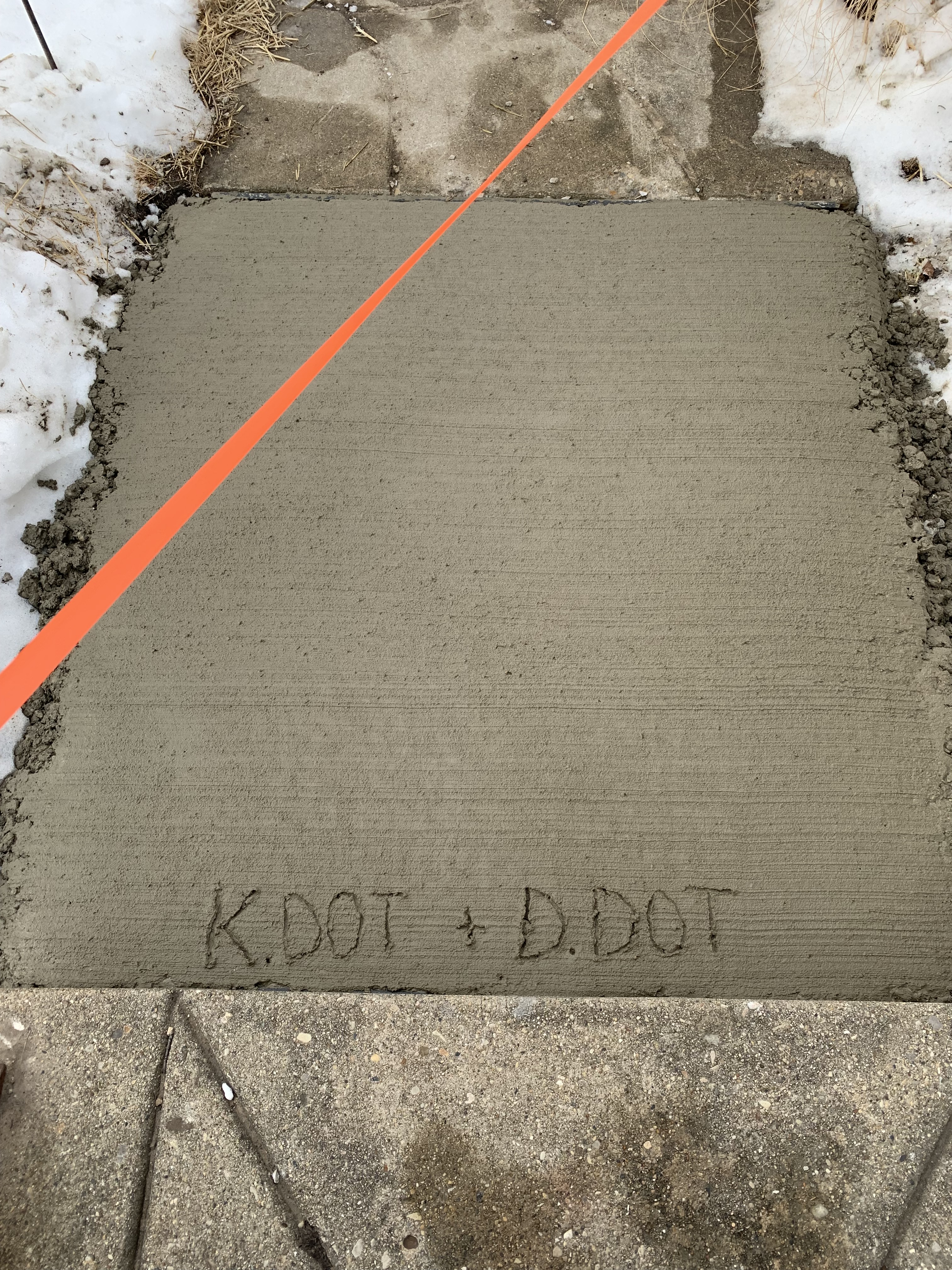
Just after we met, we dug a small pond in the backyard. It was a party that Kerri called The Big Dig. People came with shovels. We drank mudslides. I met many of her friends and neighbors. We laughed. It took less than ten minutes with so many people to dig the hole. The liner went in and rocks placed around the edges. The pump was placed and the water rushed in. It was a marker in time. It was meant to be a marker, a ritual of passage into the new and the unknown.

She’d planned The Big Dig before we met. Originally, it had nothing to do with me. It was serendipity that I could be present for The Dig. Serendipity or design. Who knows.

The morning after the party, sipping coffee, we sat in lawn chairs on the muddy ground surrounding the now bubbling pond. Kerri used the “M” word, married, “When we are married…” She realized what she’d just said. She blushed and apologized and backpedaled. I was, at the very moment she used the “M” word, doing something I’d never done before: imagining myself married. To her. I was seeing it and, laughing at her anguished retreat, I confessed what I was seeing. We sat by the pond and stared at each other. A ritual passage into the new and unknown.

The pond has always been mine to care for. This marks its eighth year. We just replaced the liner. We had to put flagstone around the pond because DogDog was cutting a deep velodrome path around it, racing in excitement every time John and Michele let their Dachshunds out. Each day we walk to the pond to try and catch a glimpse of the frog-in-residence. This year we named the frog Magic.

Just a few days after The Big Dig, Kerri took me to the marina where the 4th of July celebrations are staged. Bands played. There was a carnival. Too much food. The dog jump is a big attraction (dogs running and leaping into a pool of water in a distance-leap competition). After dark we sat on a blanket and watched the fireworks. Sitting on that blanket, vibrant color exploding in the night sky, I imagined myself living in this town, so far from the west coast that had been my home most of my adult life. “Can I live here?” I asked myself. The answer was immediate: you can’t live anywhere else.

DogDog was born on the 4th of July, probably while we were watching the dog jump. We will celebrate his eighth birthday on Sunday with a rowdy race around the pond. His favorite thing. And then snacks. Also his favorite thing. And then a visit with Unka-John. His really, really favorite thing.

A step into the new and unknown. Ritual passages. You have no idea where they will take you or what the reality of the step over the threshold will bring. You cannot know. You can only step.

“This looks like fireworks,” she said, showing me the up-close-photo of the plant. “I love it,” she smiled.

“Me, too.”

Kerri’s albums are available on iTunes and streaming on Pandora

read Kerri’s blog post about the FIREWORK PLANT

i didn’t know/this part of the journey ©️ 1998 kerri sherwood

Find It [on DR Thursday]

Although it probably does not appear this way to you, this photograph is the road back to my easel. It was an immediate inspiration. Kerri did not intend for it to spark the cold coals of my artistic fire, but it did. It was immediate. I couldn’t stop staring at it.

This painting is called Joy. Look at the floral shapes and lines both within and around the figure:

Joy, mixed media, 50x56IN

Many of my paintings of the past several years are floral wonderlands. They infuse the figures, they are bouncing balls of symbolic trees and oversized shrubbery. They remind me to have fun. To play and experiment. I must have forgotten all of that or turned away.

I hit a wall when I painted my red mess. It’s been on my easel for months. Beneath the red mess, the painting that I’d originally sketched on the canvas, is this:

I think I’d had too much of despair-and-comfort and needed to explode my themes. Thus, the red mess.

When Kerri showed me her photograph of tiny pink flowers, I saw the painting, this painting, complete in my imagination. Not despairing, but vibrant and subtle, alive with those amazing floral shapes, five-petal-bursts of life. Contemporary. Huge. Broad strokes. Almost a sculpture.

There is a story from Plato’s Symposium that I’m using as the basis for my script revision for The Creatures of Prometheus , the original human, cleaved by the gods because it was too powerful, searching through life to find its other half. This painting is (or will be) about the search for love, the transcendence of separation. Finding.

And, as you know, once it lives in the imagination, all that remains is the volition to get there.

read Kerri’s blog post about PINK FLOWERS

joy ©️ 2014 david robinson

Answer The Call [on Merely A Thought Monday]

I have an old iPhone. Sometimes it doesn’t ring when people try to call. The sound of the message coming into my inbox is the first clue that someone is trying to reach me. Yesterday, when I heard the alert, I was unloading stone from the car so I didn’t check it right away. I wish I had. It was my dad.

His message was 12 seconds long and most of it was confusion and labored breathing. He is famous for removing his oxygen when no one is around and, in his advancing dementia, he will sometimes accidentally dial my number when he is lost in the story-in-his-mind. I treasure these brief touches, these calls, when I hear the phone and answer. We talk. He’ll stay on the phone and, even when he is panicked, he shares his story. My goal always is to convince him to go to the door and tell someone that he needs help with his oxygen. No one can help him with his story.

I tried twice to return his call but he did not pick up.

The theme of this season is life-cycle. We’ve enjoyed the peonies bud-to-blossom-to-fade. Each step of the process has been gorgeous. In the lingering season of pandemic we are, like many people in the nation, paying attention to our backyard. We’re making it our sanctuary and have already spent many an evening sitting on the deck, the mourning dove singing to us from the trees.

We had the opportunity to visit a local college. It is a new campus. It’s the old newspaper building, transformed. This quote is stenciled on the wall: Your life has purpose. Your story is important. Your dreams count. Your voice matters. You were born to make an impact. It’s a good message for anyone but particularly students trying to find their way into the world. People at the beginning of their story.

It’s also a good message for people at the end of their story, making their way out of the world, though it is not the same as a statement of reflection as one of aspiration. It has more punch.

Were I a teacher at this college, I would tell my students, new buds on the peony, not to worry so much about mattering. Assume it to be true.

I would teach them that they might spend their whole lives trying to make a mark and none of it will matter so much as answering the phone. Your voice will matter. You will have an impact.

No story that you tell will be more important than the story you concoct to get Columbus out of his chair, to shuffle to the door of his room, so he can say to someone, anyone, “Will you help me to breathe.”

read Kerri’s blog post about LIFE PURPOSE

See The Good [on KS Friday]

“…the measure on ones mental health is the ability to see the good in everything. Perception is the key.” ~ Kristine Klussman, Connection

If I kept a gratitude journal, my entry yesterday would be that Bruce was happy. I could hear it in his voice. Although it had been seven years since we last spoke, we talked like we were picking up a conversation from yesterday. Life has changed dramatically for both of us.

It seems we have both reached the revelation of simple appreciation. No longer focused on the big stuff, we talked of the sweet moments, the moments that feed our souls. He asked me to describe my days and I was happily taken aback to tell the tale of walks on trails, beginning each day writing posts with Kerri, ending each day with a glass of wine. Drawing cartoons. A dog that runs enthusiastic circles. Good friends.

I am reminded again and again that goodness is not found in the world. It is brought to the world. We don’t perceive what is already “there,” we wrap what is “there” in a story-blanket. We give it meaning. And then we feel the impact of the meaning we give it. Viktor Frankel famously wrote that “Happiness ensues.” It follows. Despair ensues, too. Anger, too, if that is what is brought.

Earlier this year a friend asked how Kerri and I were doing amidst the job losses and broken wrists. I responded that our circumstance was dire. It was. It just didn’t feel that way, so full was our sense of appreciation. In the midst of a dire circumstance, we started our days writing. Good friends called. DogDog ran enthusiastic circles and made us laugh. We sipped a glass of wine at the end of each day and enjoyed our simple meals. Today, things are less dire and, although we are still standing on shaky ground, we start each day writing together. We hold hands and take walks. We breathe deeply the smell of coffee in the morning. Our gratitude for our days has not changed a bit. Good moments are everywhere.

And today, Bruce is back in touch. He is happy and his happiness, like all happiness, comes from a hard decision that took tremendous courage: he decided to see the good. To bring light. To be light. He is doing the work of savoring the good moments that he now sees all around himself.

good moments/this part of the journey is available on iTunes and streaming on Pandora

read Kerri’s blog post about GOOD MOMENTS

good moments/this part of the journey ©️ 1998 kerri sherwood

Enter The Sanctuary [on Not So Flawed Wednesday]

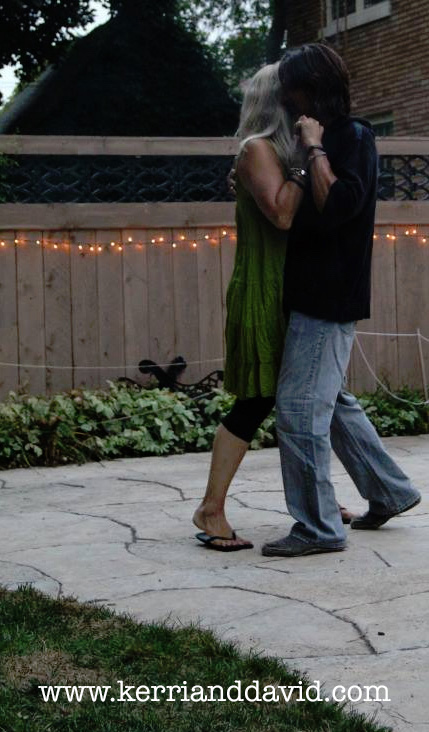
This is an image of sanctuary. The back yard of dear friends, time spent together, taking precautions to be safe in a time of pandemic.

There’s more than one compromised immune system represented in this photograph. It is why we continue to meet outdoors. It is why, until we were vaccinated, we were careful to keep distance between us. How odd to honor the love of dear friends by inserting space between us. Our flip flops and sandals are stand-ins for a group selfie.

When our postal carrier came to the door to deliver a certified letter, she groused about the process for capturing the required signature, “We have to do this because of COVID,” she sneered, “even though there is no COVID.” We’ve learned not to push back on ignore-ance. I was reading about Brazil eclipsing the the over 500,000 deaths-mark when the doorbell rang. Kerri signed for the letter. She closed the door and we simply stared at each other. No words.

I delight in this photograph because, to me, it is slightly disorienting. If you had to guess which direction the photo was taken, you’d most likely guess blue. You’d be wrong. Perspective is just that – perspective. From my perspective, the photograph is upside-down. The photographer wears black flip flops.

We constantly locate ourselves in our stories. The location we choose is not passive or general. It is unique, dynamic. It gives us a point of view but does not afford us a lock on truth. Learning to question your unique perspective, to challenge your story-as-central, is an important growth step. It is maturation. Learning to question what you are told is an invaluable skill to develop.

As a lover of story, as a student of perspective, I am fascinated by the story-war raging in my nation. Politicians drape themselves in the flag, defending a violent insurrection on democracy, while demonizing and fearmongering BLM. Propaganda, hate-mongering and conspiracy theory is run amok and fueled by entertainment posing as news. Voter suppression laws, gerrymandering, stuffing the courts, all in the name of…what? The story of division. The dedicated maintenance of a half-story. A national story increasingly exposed as redacted. Why should a democracy work so hard to prevent a portion of its population from voting? To prevent its full history from being told? As we ask in the coaching world, “What’s underneath?”

Nations, like people, cannot grow until they look at the whole of their story, until all perspectives are voiced.

I’ve wandered back into the world of entrepreneurs and business. Each day I read or am shown the data on teamwork or the power of collaboration. The software-as-a-service world is dedicated to facilitating better communication, efficiency in sharing and collaborating, crossing disjointed platforms, and reaching into clouds where all are stronger as one than when in silos. I’m finding it intensely hopeful. Progress is calling us together. The economy is global as is the pandemic. We are in this together.

No one is healthy if all are not healthy. It’s the rule of the backyard, the honoring of dedicated friendship. My job is to protect you and yours is to protect me. It’s the story of the sandals and flip flops, the image of sanctuary, and, if not the yearning of this nation, it is the reality of this interconnected world.

read Kerri’s blog post about SANDALS

Use Your Chalk [on Two Artists Tuesday]

There are two words floating around in my universe these days: structured and unstructured. Structured data. Unstructured data. Structured time. Unstructured time.

The world as seen through the Puritan lens gives great preference to structure. Unstructured anything is suspect. “Idle hands,” we are taught, “are the devil’s workshop.” Yikes. Apparently it’s dangerous to take a stroll, to sit and ponder, to clear the day and do nothing.

I suspect it explains why our notion of business is hyper-focused on the bottom line and often misses the value of relationships. Bottom lines are easy structure. Relationships, not so much. It is the same with test scores in education. Easy structure. However, stepping into the unknown – the very definition of learning – is largely eschewed because it begins in an unstructured pursuit. Creating the structure, making the meaning, discovering the connectivity is what our hearts and brains like to do. When learning isn’t merely a factory, when business is more than a bottom line, people prosper. They come alive.

Unstructured time. There was a time when time had no structure. Monks attempted to “keep” time by monitoring water through a bucket or sift sand through an “hour” glass. Sometimes the water froze in the bucket so the structure of evening prayer was disrupted. The sand clumped in the hour glass and the measure of time clumped with it.

There are moment on the stage when the actor forgets their lines. It’s called “going up” or “drying.” It is always, in the re-telling, the moment when everything becomes real, alive. It is the moment when the structure becomes unstructured. Hearts race. Eyes widen. The stakes are suddenly palpable. The actor breathes, stands in the vast unstructured universe, and the words return like a swinging bar to a high-flying aerialist. The play is infused with aliveness. Presence is mostly unstructured.

As is common in the structured and unstructured use of the English language, oppositions are easily constructed. Unstructured simply means the meaning has yet to be made. Structured data, structured time, are the tip of a largely unknown iceberg. Love, joy, despair, awe…the full spectrum of experiences, bubble in the unstructured spaces. Numbers can describe a moment in time, can orient for a moment, but will never “explain” yearning or desire or our fundamental need to tell stories (put structure on unfathomable experiences). Structure & Unstructure: they are dancing partners, not combatants.

Where do we come from? What are we here to do? I am going to die, what then? It takes a good deal of unstructured time to sit in these unanswerable questions. There are, of course, plenty of people who will gladly provide structure to your unanswerable – and therefore uncomfortable – questions. Perhaps that is why we adore our structure and demonize the empty spaces? Comfort. Ease.

Kerri cannot pass a hopscotch template chalked on the street. It’s almost automatic. Step, hop, hop, step, hop. The little girl in her connects to the child who chalked the squares on the sidewalk. A simple game. Play. It’s one of the things people do with unstructured time. Set challenges. Make up obstacles. Seek puzzles. Invent. Dream. Connect to the deeper places. Where’s the structured bottom line watching the little-girl-in-my-wife hop and skip and turn in the game-chalked-on-the-sidewalk? The laughter of remembering? The giggle and freedom of the woman hopping the scotch, just because she can?

read Kerri’s blog post about HOPSCOTCH

Do What They Do [on DR Thursday]

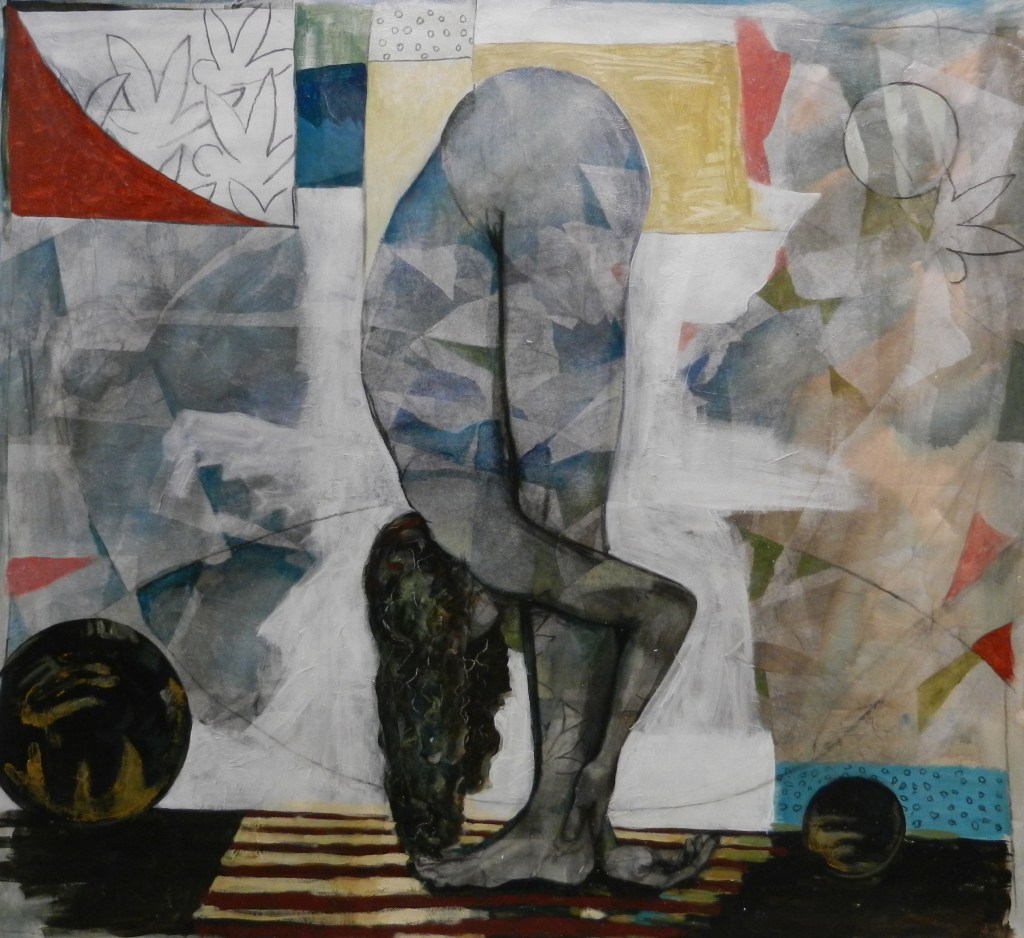
I’ve posted this painting more than any other in my stacks.

Some paintings serve as markers for new directions. This painting is one of those. What came before this painting was suddenly old. What came after was an exciting unknown path. Exploration and play. Big mistakes and messes followed by understanding. Materials can only be pushed so far. Bodies and shapes reveling in negative and positive space.

When I met Kerri, this painting did not have a name. I called it #7 in my yoga series. She called it “Iconic” and the name stuck. I liked the name. It seemed appropriate. An icon is a symbol. Something worthy of veneration.

Now, over ten years later, this icon, once the harbinger of the new, serves as the hallmark of what was.

I delight in this painting, Iconic. It is one of the few. And, although I am grateful for where it led me, I’ve come to realize that it no longer serves to locate me, except in a past chapter, like a yearbook photo.

Letting go. It is why I stand in my studio – I can’t even sit there of late – and look at the mess on canvas that sits untouched on my easel these many months. Somewhere, after this mishmash phase, somewhere, beyond the chaos and disorder and wiping away, there will emerge another marker. An icon. A compass.

Although I’ve written it many times in these past few months, it’s way past time that I admit – to myself – that I am, once again, in the wilderness. Someone once told me that we go to the wilderness to face our demons and find our gods. That seems a bit dramatic. Demons and gods are one and the same, like positive and negative space or comedy and tragedy. The lesson is always the same: stop taking yourself so seriously and the oppositions, the demons and gods, will stop pulling you apart.

Find a child and watch them play with paint. Do that. Do what they do. The wilderness is rich in sustenance if you know where to look.

Someday, in the midst of being lost, I’ll make an accidental mark that jolts me. I’ll turn it around, asking, “What’s this?” A new direction will emerge.

Read Kerri’s blog post about ICONIC

iconic ©️ 2010 david robinson

Look With Honest Eyes [on Not So Flawed Wednesday]

We were sharing pandemic survival stories, the worlds that we explored in our isolation that we otherwise might never have entered. We told Keith of Joey Coconato and how his back country backpacking trips were a nightly fascination. I’m particularly drawn to his hikes through the canyon lands. Keith became animated, saying, “You have to check out the Millennial Farmer!”

I know nothing about farming. Once, sitting on the back porch of a farmhouse Air-B-N-B in Iowa with my dad, I listened intently to his stories from childhood working on the various farms in the community. Had he been able to script his life differently, I think he might have written a farmer’s story. He loved the outdoors. He loved growing things. He always kept a garden and tended flowers. He knew what he was doing! Somehow, I gleaned nothing from his green-thumb-knowledge. I am a plant killer.

In the first short installment of The Millennial Farmer, Zach Johnson tells his audience that he’s making his videos because people know so little about farming and what farmers actually do. He’s a fifth generation farmer in Minnesota. I was, as he predicted, completely gobsmacked watching The First Day Of Planting 2016. I pushed play expecting dirt clods and the rumpled pages of the Farmer’s Almanac and, instead, entered the space age. His tractor was akin to the deck of the Starship Enterprise. His nuanced explanation of the monitors in his cab was enlightening. He’s driving a computer (actually, it mostly drives itself).

My stereotype was completely shattered. I had no idea. And, isn’t that the point of taking a peek into the lives of others? Recognizing that we have no idea about the realities of others lives? Isn’t that the opportunity?

This morning I pondered aloud about how we’ve changed in the months since COVID began. “I don’t know anyone who hasn’t changed.” One of the most profoundly sad awakenings for me during this time of division and dedicated ignorance is how resistant we are – and I believe always have been – of taking a peek into the lives of others in our nation. We simply don’t want to know, so great is the fear of what we will find there.

John Lewis famously said, “We are one people, we are one family, we are one house. And we must keep this house together.” By “keep” he meant to tend. We might become one family when we are willing and able to look with honest eyes into the lives of those who share this house. Our stereotypes, our almanac ideas, keep us fragmented.

Joey and Zach. Both live lives immersed in nature but from diametrically opposed intentions. Both have popped open my eyes to new experiences and bodies of wisdom that I might otherwise never have encountered. Both are following their personal star and sharing what they find on their paths.

As part of our summer planting and backyard oasis, we bought two tomato plants and some basil. Our Boomer farm is not extensive but it is well loved. “Do you think, if we tagged The Millennial Farmer, our tomatoes would stand a better chance?” I asked.

Kerri considered it for a moment, her hands busily potting the basil plants. “It couldn’t hurt.”

read Kerri’s blog post about BOOMER FARMERS