Be Different [on Merely A Thought Monday]

Inadvertently, 20 did me a great favor. On the day Kerri and I married, he carried a concealed camera and captured conversations and special moments of our ceremony. In his footage is a short exchange he had with my dad. My dad said of me, “He’s his own man.”

To that point in my life I’d wondered what he thought of me, my winding career path, my free-form seeming-feral existence. “He’s his own man,” brought me peace.

Once, during a conference that we led, Alan told me I should dress differently. “People would have more respect for you,” he said. Once, trying to fit in, I wore a suit to a facilitation and Rich told me I should dump the suit and dress as myself. I’ve awarded him the blue ribbon for best advice.

In my consulting life I wore clogs. I hated shoes with strings. The first thing I did at every job was kick off my clogs. You’d be surprised how invested people in power suits are in their footwear. You’d be heartened how human they become when they unlace and kick off their shoes. It’s like removing a mask.

People hire me because I am different. Because I see differently. My difference is my gift, the epicenter of what I bring to the world – and that is true of all people.

In a culture that prides itself on its individualism, it’s always been amusing to me how invested we are to “fit in.” Shopping at the right store, wearing the right clothes, we gush about our wild nature while synching tight the corporate tie. To “dress for success” means to fit a prescription, to NOT stand out. Business casual. The real real. All houses must look the same. Revealing behavior betrays the swaggering rhetoric.

Our individualism is at best a thin veneer. In truth, we fear difference. I dare the court of Supremes to uphold a coach’s right to pray before the big game on the 50 yard line if he’s Sikh. Or Muslim. Or Hindu. Or Buddhist. My son is gay. He lives a constant, never-ending battle to defend his difference. Why?

“But the truth is, I am different,” I said to Kerri who was red-faced with anger at the email from the concrete sub-contractor. He turned down the job to replace our bit of sidewalk, broken out during the waterline repair. Among his reasons, “…and he seems a little different.” He was referring to me.

“I’ve dealt with that my whole life,” I said as she furiously typed a reply. “It’s not a big deal. I’m an artist.”

“It is a big deal,” she snarled, typing harder, faster.

Listening to her ferocious key-pounding, I had a sweet wave of appreciation for her. In a lifetime of “different”, it is a rare and precious moment that someone vigorously defends your difference. Rather than hammer you into creased dockers, lace-up shoes or the right haircut, a furious defender was unfamiliar. She, too, is different and knows the bruise of the shame-hammer. I suspect we’ve all experienced its sting.

In my head, I heard my dad say, “He’s his own man.” Peace. I am what I am and the people who love me wouldn’t have me any other way. That makes a difference. All the difference.

This I know: it’s nice – so nice – not to be alone in my difference.

read Kerri’s blogpost about DIFFERENCE

Look Up. Look Higher. [on Merely A Thought Monday]

“And men are so poor in intellect that a few cold chills down their spine will be enough to keep them from ever finding out the truth about anything.” ~ Thomas Merton, The Seven Storey Mountain

This will read like a blazing generality and I do not intend it to be so. Some of the best people I have known are readers of the book(s). They learned along the line to read their book(s) as metaphor instead of literally, as a history. There are, after all, many paths up the same mountain.

As for me, I was cured of religion when I was a boy but it’s taken a lifetime to understand what and why – and to find language to express what should (to me) be obvious to all.

It only takes a moment to lift your eyes from the book and look up – all the way up to the sky. The book is a human invention, as are the gods and the stories of the gods told in them. The sky, on the other hand, complete with stars and suns and universes beyond imagining, are not human inventions. The book lives in the human mind. That which the book is meant to illuminate is…wholeness…all around us. We are part of, not separate from. That’s it. It’s that simple. The game of separation and unity.

We are part of, not separate from. This word “Love” is unity, the absence of made-up-separations.

The book will have you believing that your body and its myriad of impulses are, like nature, in need of taming. Separation from yourself. The book will promote the notion of a chosen few, the singular path, a destiny that is manifest. Separation from other. Elevation for team-white. Moral authority for team-straight. It’s probably good to feel above others and certainly feels powerful to believe yourself keeper of the book’s rules. Isn’t it blatantly obvious that the rules were/are made by men to justify, as-the-voice-of-god, all manner of privilege and cruelty? Separation, separation, separation.

Here’s what I understood as a boy: any god that promotes separation in any form is very small, indeed, and probably not worth worshipping. At the very least it is a man-made god meant to make folks feel better about their obvious impermanence in an infinite universe.

There’s so much in this life worthy of our worship.

Whether or not we walk as one or decide to beat the hell out of each other for the color of our skin or the natural orientation of our sexuality has nothing to do with the vast universe outside of the book. We create the separations to justify our fear or to protect our property.

We are completely capable of love. We are completely capable of reaching across the unknown and living our short time on this earth in full support of the rich myriad of wonder and diversity expressed through us in this infinite possibility called life.

The book is an abstraction. The person standing before you is not.

Love is love. Love is not separation or division or privilege or a skin color or gender or sexual orientation. Love has nothing to do with how much money you have or do not have. Separations are the province of small people inventing small gods for very small reasons – so they can feel good about being separate and small.

Love is love.

read Kerri’s blogpost about PRIDE

Open The Story [on Not So Flawed Wednesday]

Put on your swimmies for a dive into the esoteric.

It was hot last night so I lay awake thinking and that’s never a good thing for the people – like you – who pay attention to the random things I write or say. This is what I thought in the heat of the night: Saul always instructed me to look beyond my opponent and place my focus in the field of possibilities. “Look a hundred feet beyond your opponent,” he said.

It’s universally true that a mind needs something on which to focus. And, left untended, most minds will focus on complaints or problems. During my tilt-at-windmills-consulting phase I’d tease my clients with the notion that, rather than eliminate challenges, people create them. We need them. We call them hobbies. Or play. Or problems. After all, stories are driven by conflict and we are, at the base, storytelling animals. It’s worth noting that a great collaboration is not the absence of conflicting opinions but the capacity to use the heat of creative tension to find/discover a third way.

What does this have to do with Saul and the field of possibilities? A focus, to be useful, needs to be specific. What exactly does the field of possibilities look like?

The reason our untended minds sort to the negative is that the negative is usually concrete, an easy fixation. Fear is a clear picture – even when imaginary. Obstacles are easy to spot. Possibilities are rolling and amorphous. Changeable. It is the nature of a good possibility to shape-shift.

The masters of meditation mostly tell us to soften our focus. Or to let the thoughts roll through the brainpan like clouds; do not attach to what we think. Do not take ourselves so seriously. Practice flow instead of the hard fixing of thought.

And, therein is the source of my late night esoteria: the mind needs something to focus on. Or does it?

If I soften my gaze, if I look beyond the problem-of-the-moment to a vast field of floating possibility, am I tossing myself into a feedback loop? I lay awake wondering what the field of possibility might look like if it was graspable. Some people make vision boards for just this reason. Quinn used to hum and fill his mind with lyrics.

Tjakorda Rai laughed at me and told me I needed to “open my story.” At the time I thought he meant to take responsibility for my story. Now, I know exactly what he meant: let it flow. Get out of the way. The demons and monsters and fears and problems and challenges are…passing things. Story fodder, nothing more. So look beyond them. Flow. Focus on the flow. Open the story.

read Kerri’s blogpost about THE FOUNTAIN

Drop And Roll [on saturday morning smack-dab.]

If you want to see me go primal, all you need do is hang out with me when there’s lightning. One hot flash of light ripping across the sky and I wince, drop, and roll. I enjoy thunder. Lightning, not so much.

The first time Kerri saw my lightning-behavior, we were on a walk when a storm blew in. There was no time between the violent white flash and cannon-style-boom. “It’s just lightning,” she said as I attempted to make myself a smaller target. We ran home. Well, in truth, I grabbed her arm and pulled so hard she had no choice but to fly along (giggling) with her manly-man bobbing and weaving to avoid imminent electrocution.

Even within the safety of the house, I will wax poetic about the beauty and wonders of thunder but add a dash of lightning and I lose all artistry. I dip into my animal brain. I’m happy to admit that, when there’s lightning and you want to find pants in our family, go find Kerri. You’ll find me under the bed with Dogga.

read Kerri’s blogpost about LIGHTNING

smack-dab. © 2022 kerrianddavid.com

Ready The Wings [on KS Friday]

“Yes, I’m being followed by a moonshadow/Moonshadow, moonshadow/Leaping and hopping on a moonshadow/Moonshadow, moonshadow” ~ Cat Stevens, Moonshadow

An appreciation of life, no matter what comes. It is the meaning of this lyric, this song – or so I’ve read. It seems obvious. I’m having many, many conversations about loss these days. This has been an era of loss and, so the cliche’ goes, with loss new opportunity arrives. It’s true though one must move through the loss in order to arrive at the new. On the way, there is weeping and fear and anger and disorientation. Chrysalis. The trick, we are told, is about focus placement. One day we shift our eyes and see what we have instead of what we no longer possess. We move toward rather than look back.

Kerri has, for years, surrounded herself with symbols of peace. They are on our walls, on rings that she wears, on chains draped on the corner of our bathroom mirror. She draws them in the sand on the trail. A prayer for the world she desires to create. Inside and out. Since she fell, my solo-piano-playing wife has lost more than mobility in her wrists. Strange stuff is happening. Fingers that sometimes refuse to respond. Pain that shoots, seemingly from nowhere. After a photograph – a wish for the world, a peace sign in shadow – she said, “Come look at this. Look how much my finger is bending!” Strange stuff.

What is most remarkable about this shadow is, a year ago, it would have been cause for frustration. A reminder of loss. Full of fear. Today, it was a curiosity. She looks back, she looks forward. Each day she writes lyrics and poetry and wisdoms. She hums the music running through her mind and heart and, sometimes, she dances. Standing at the crossroads of what was and what is to become. Peace replaces pain. All in good time. Good time. Wings readying to unfurl.

[peace. this is one of my favorite pieces of Kerri’s]

Kerri’s albums are available on iTunes and streaming on Pandora

read Kerri’s blogpost about PEACE

peace/as it is © 2004 kerri sherwood

Dial Three Numbers [on Not So Flawed Wednesday]

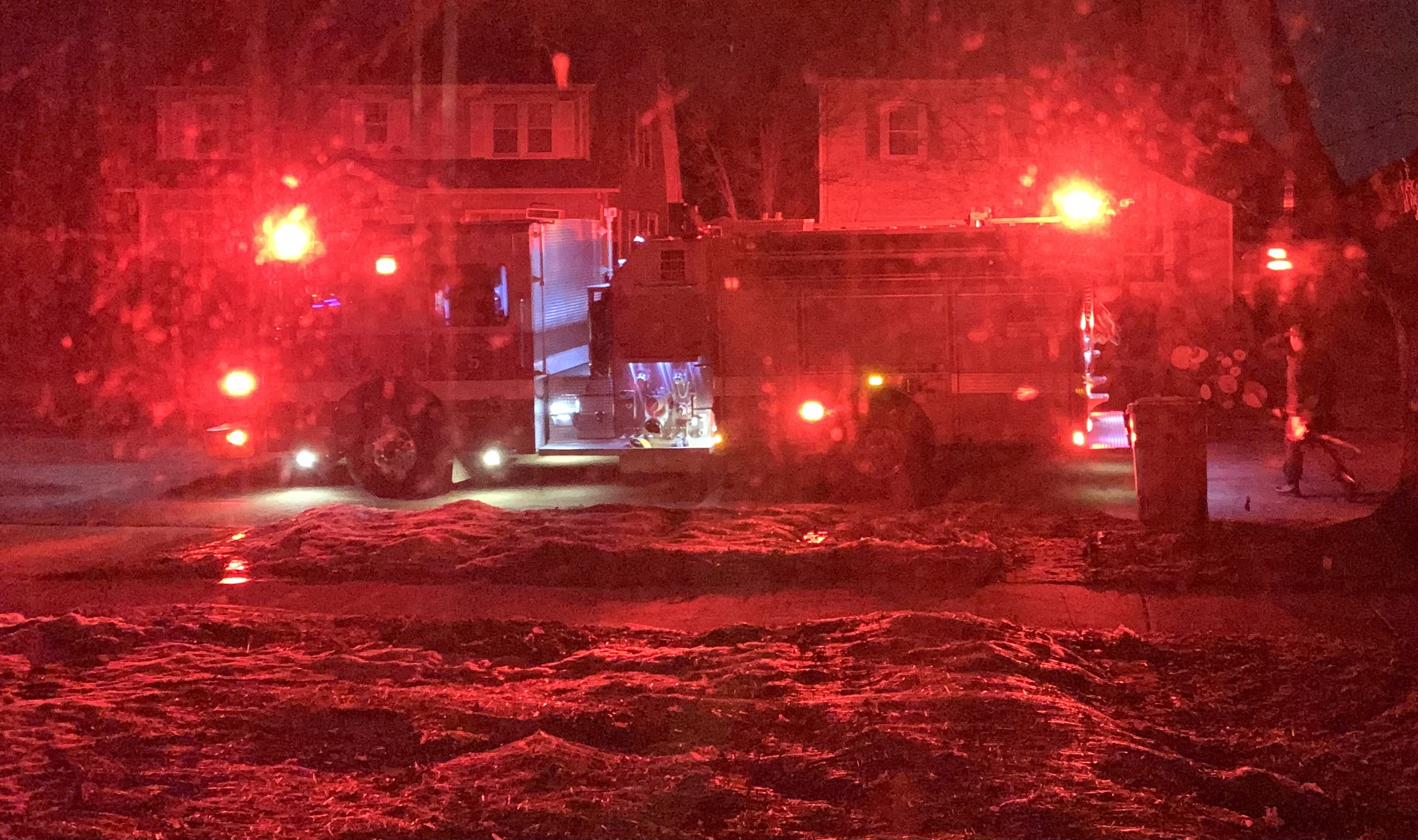
Last month, when the car across the street blew up, there was general pandemonium until the fire department arrived. In a few moments, order was restored. People, myself included, who only moments before had been running around in panic, gathered at the end of our driveway and watched the methodical dousing of the fire. Tragedy turned to block party the minute the men and women of the fire and police departments took charge. We transitioned from unsafe to secure, in a heartbeat, from “I don’t know what to do,” to, “I’m so glad they know what to do”. Neighbors chatted. Speculated. We shared tales of the explosion. We compared notes while the people who know what to do put out the fire and cleaned up the mess.

We take for granted the security we enjoy. In the back of my mind, I know that dialing three simple numbers into the phone will summon people who know what to do.

We awoke in the middle of the night to the sound of our basement carbon monoxide alarms blaring. We turned on the lights but something was dreadfully wrong. It was as if the entire house was on a dimmer switch: there was light but it was very dim. And then we heard a buzzing sound in the ceiling. And then the smell of hot electric wires filled the room.

We dialed three simple numbers. In a panic, we put the dog, our bag with important papers, and the computers into the car.

And then, the people who know what to do arrived with their red lights ablaze. They calmly came in the house. They searched every square inch of our home with heat sensing technology. They pinpointed the source of the buzz and the burning smell. It was not yet dire but could have been bad had we not been awakened by the alarms. Within minutes of their arrival, our fear dissipated. Problems were identified. Safety was secured. Advice given.

We were safe. We dialed three simple numbers and help was on the way.

read Kerri’s blog post about FIRE ENGINES

Step Back And Realize [on Flawed Wednesday]

If you are like us, every day brings another report of a friend or loved one who has Covid. As someone recently said to me, “With Omicron, it’s only a half degree of separation between you and someone who’s carrying the virus.” I’d say, given the wave of people we know falling sick and reporting positive test results, it’s true. It’s no time to let down your guard.

On Saturday we watched a documentary film, The First Wave. It’s a film everyone should see. It chronicles the first few months of the pandemic in a New York hospital. It is shocking how, in a few short years, we’ve normalized hospitals being overrun. How removed we, the populace, are from the tangible horror of this pandemic. Refrigerator trucks used as temporary morgues. We stand today at 865,000 deaths and counting. People. By comparison, 620,000 people died in the Civil War. 418,500 US citizens, military and civilian, died in World War 2. We ought to be grieving instead of dividing. We ought to be reaching to help rather than peacocking our politics. This film will slap you awake. It will help you step back and realize what we – all of us – are passing through. It might help you grieve.

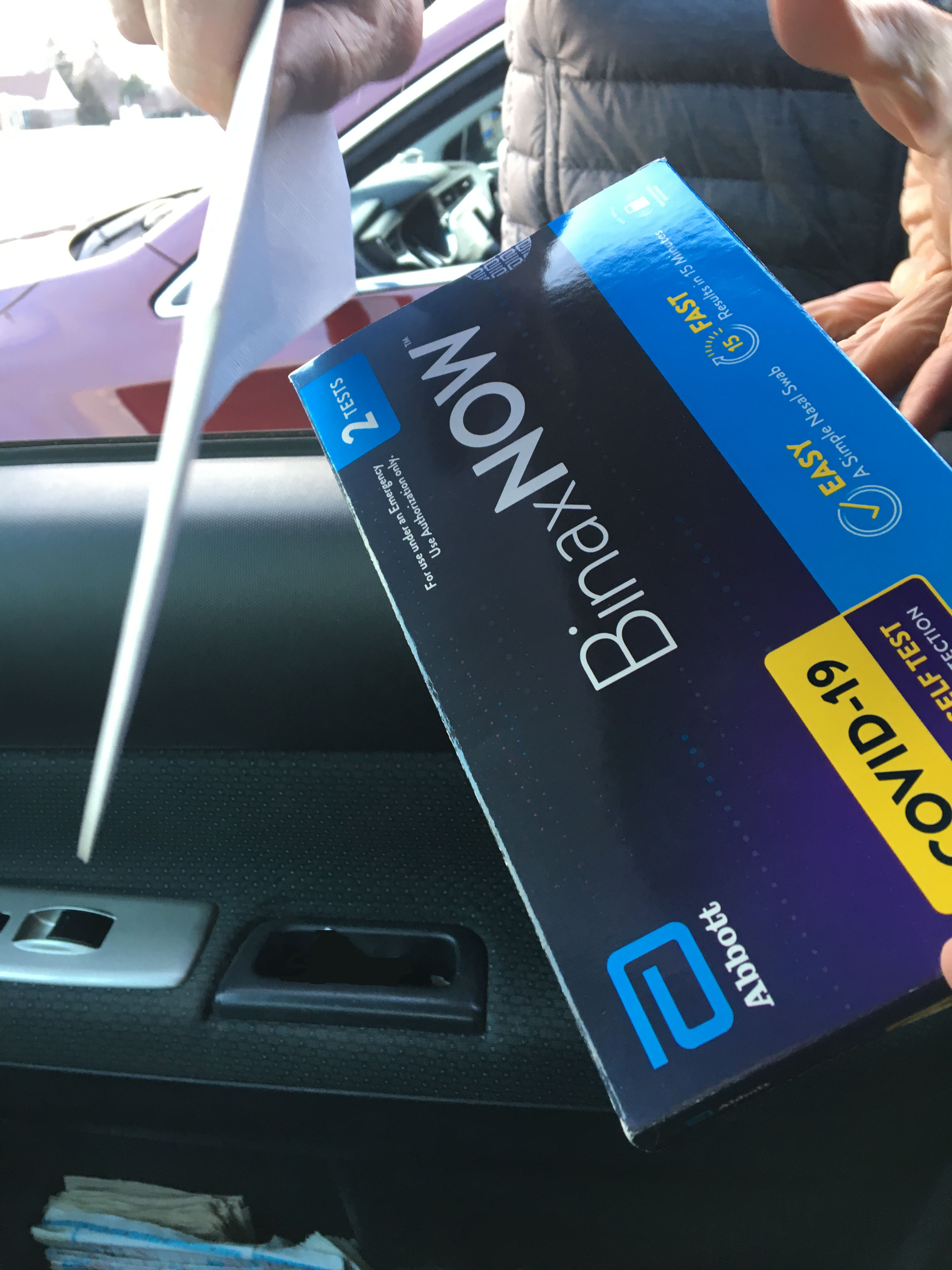
Kerri tells me that the woman in the next car thought she and 20 were doing a drug deal. He felt sick, needed a test and could find none. We had a few so they met in a parking lot to make a safe pass. While making the exchange, he handed her an envelope. Money for the phone bill but I’m sure it looked suspicious.

It reminded me of the time, many years ago, that Sam asked me to meet him in a parking lot. He rolled down his window and passed to me a sheaf of poems. The window went up. I was to tell no one. It was terribly vulnerable for him to share. I cried the day he published his first book of poetry. It was a titanic journey from fear-of-certain-shame to proudly publishing his beautiful work. He was transformed.

I imagine someday we will stand and look back at this titanic journey. I hope that I remember with fondness the story of Kerri and 20 making an exchange in the parking lot, the women one-car-over shocked by what she thought she was seeing, and we smile. Transformed. Remade as better people in a better community making better assumptions of each other. Stronger.

For now, as the credits rolled on The First Wave, we looked at each other and together said, “I’m exhausted.”

read Kerri’s blog post about THE EXCHANGE

Coalesce [on Merely A Thought Monday]

Rich used to tell me that, “People don’t change until the pain of the change is less than the pain of staying the same.” At the time, I thought his mantra was cynical; pain either way. Now, I think it is spot-on.

Discord is the essential ingredient for initiating any creative process. Explorers look at the horizon with a deep need to find-out what’s beyond. Their curiosity outstrips their comfort. Curiosity and comfort. Change and stay-the-same. There’s a tug-of-war in every decision that’s worth making.

Creative tension is a dynamic pull between two poles. Do I add a brushstroke or is the painting finished? This morning I came across a well-known quote by Leonardo da Vinci: Art is never finished, only abandoned. Pain either way. Finishing a work of art is akin to dropping the rope in the creative tug-of-war.

When I was wearing my corporate-consultant-hat, almost daily I repeated a lesson relative to Little Red Riding Hood: without the Wolf there is no story. Too often we try to eliminate our Wolf. We are inundated with messages trumpeting the notion that happiness (or good process) arrives in the absence of discord. It does not. Happiness avails itself when the necessity of the Wolf is understood as the fuel of the story.

People thrive when challenged. We create challenges when we don’t have them. Understanding the role of the Wolf transforms Rich’s mantra into something far less pain-full. The heart yearns. The brain fears. The yearning and the fear will coalesce into some action that may or may not be recognized as a choice. Which is the Wolf? The yearning? The fear? Either way, another day is lived. The story is created.

read Kerri’s blog post about UNCOMFORTABLE

Offer The Chair [on Flawed Wednesday]

“Indeed, the effect of the forum is all the more powerful if it is made clear to the audience that if they don’t change the world, no one will change it for them.” ~ Augusto Boal, Games For Actors And Non-Actors

Many of my pals in the theatre turned their noses up at me when I began doing work in corporations. They thought I was yet another theatre artist doing improvisation-games with the terminally neck-tied. I was not. My work was more in the tradition of Augusto Boal than Keith Johnstone. Some of the best plays I’ve ever facilitated, some of the most profound pieces of theatre I’ve directed and witnessed, happened in board rooms, classrooms or conference spaces. Here’s how I know: the actors and audience were one-and-the-same. Their play was personal. When they left “the theatre” they did not leave the nice story behind and end the evening with a cocktail. They were disrupted. They had seen something that could no longer be ignored or deflected. The hard work was about to begin.

People yearn. People entrench. People plant their flags and claim the most ridiculous territory. I’ve seen teachers come to blows over an overhead projector. I’ve seen lawyers undermine colleagues to gain dominion over a swiveling chair. And, the chair or the projector are never really the issue. The issue is usually an abstraction. Pecking order. Boundaries. Alliances. People have killed each other over a pair of shoes. It’s not the shoes but the status the shoes represent. Abstraction and illusion.

People are generally unconscious about the reasons beneath their passions. I’ve met a score of dedicated meditation practitioners who meditate to control their thoughts rather than realize them. Once I led a group of teachers through the ritual they enact each morning before the arrival of their students. The question was, “What are you preparing to do in your day?” Their answer was unnerving and revolutionary: they were preparing to control the kids. Teaching and learning were secondary.

We are witness to a country-wide communal piece of theatre, an unconscious play. The issue is not the mask. The issue has never been the mask. The issue is, I suppose, people feeling out of control, imposed upon. Fearful. They are, with their bare faces, making a stand. Drawing a line in the sand. That “no one can tell me what to do” might as well be “I am losing control over my life.”

And, as is always the case, as with the office chair and the overhead projector, refusing to don the mask does not really address the real issue, it merely deflects it. The energy and action is focused on non-sense. And when non-sense rules the day, the action taken actually brings about the thing-most-feared. Loss of control. The pandemic continues, the children are being taken, the economy suffers, the community fractures. It’s a lengthy list.

The lesson in the office chair wars and the overhead projector games is always the same. No one wins. Everyone loses in a toxic tug-of-war. The chair might be yours today but it will be theirs tomorrow. The game only ends when one of the players offers the chair to the other or the projector becomes a reason to share. The same will be true of the mask wars. People will die, the pandemic will continue until the mask becomes a generosity. Then, low-and-behold, the virus will abate and real control over our destiny will be within our grasp.

I hope that, like the lawyers or teachers who were brave enough to walk into the real story, to stand face-to-face with a dysfunction, that we meet our story and ask, “Why would so many sacrifice so much over a little piece of cloth?” An overhead projector. A pair of shoes. A chair that swivels…

read Kerri’s blog post about MASKS

Consider It [on Not So Flawed Wednesday]

“Innumerable confusions and a feeling of despair invariably emerge in periods of great technological and cultural transition.” ~ Marshall McLuhan

At the first theatre company I artistic directed, we cut silk screens and pulled ink to make our posters. They were crude but we didn’t know it at the time because that was the most advanced process available. At the time they looked cool and we were proud of them. They took some effort.

I remember the day a student came into my office and showed me how we could design our posters on the computer. His designs were gorgeous, easily adjusted, took almost no time, and came back from the printer quicker than I could cut a good screen. We felt like our status bumped up a notch. We looked professional, and, what we’d been so proud of only a year before, now looked primitive.

My first website cost an extraordinary amount of money. It took weeks of working with a designer. Changes were costly so were made rarely. Now, Kerri and I design, redesign and make changes to our site every week. A few years ago we set up a site for a theatre company, complete with ticket service, database and newsletter capacity all in one easy-to-use app. It cost them almost nothing and any fool could adjust and make changes to it.

People who only a few short years ago considered themselves voiceless can now say any old thing they want to an audience no less than world-wide. Patti once asked a conference attendee, “If you had a voice, what would you say?” If I could go back in time I’d beg her to retract that question.

We live in a time of high anxiety. There are few substantial anchors to moor our reality. I’m about to make the ultimate old guy statement: I remember when…a few limited news channels actually attempted to broadcast the news. They had a limited window of time to tell the news so they made their information count. We now have hundreds of information and misinformation sources that can rattle at us 24/7 and from multiple devices. The challenge is not editing-down-to what-matters, it is filling too much time with loads of spin that mostly has limited substance.

Information spreading – for me, too – has become easy-peasy. I can lob an opinion as easily and as readily as the next person. But, as Marshall McLuhan said – and I whole-heartily concur, “I don’t necessarily agree with everything I say.” In other words, (don’t tell Kerri) I am sometime reactive. Sometimes, I think I know more than I do. Sometimes, I make mistakes. Slowing down seems to be the only cure. Thinking things through. Researching before spouting. Breathe and breathe again. Consider what matters. Really matters.

I’ve walked a complete circle in my life. Now, in all it’s shiny capacity, within the amazing miracles of technology, I find much of what people say and do and assert with this glorious ability – to be crude. Without thought. It’s too easy so it doesn’t much matter. The stream will quickly carry away even the most offensive opinions and endlessly wash in some more. I wonder how considerate people might become if their easy voices were less easily shared? If saying something actually took some time and effort – let’s say, as much time as it took to design, transfer and cut a silkscreen – what might they say? If it was less easy to “like” or “dislike.” If one slip would send the thought back to the arduous start? Maybe we’d be more considerate because we’d take the time to consider what we were expressing – to think about what we were saying and why we were saying it.

I suspect most of our “whys” would get our knuckles rapped by grandmothers who held decorum and polite communication as a high virtue. Saying stuff so-as-to-belong-or-pile-on…or to hear ourselves talk, certainly wouldn’t spare the rod.

That whole thought stream came from taking a walk, looking down, and finding a rock smiling back at me. Someone took some time. Chose a rock. They chose what to paint and had a grandma-approved-reason-why. And, they did a good job of it. “Ahhhhh,” Kerri said, smiling back at the rock. “How considerate,” I added to her awe.

read Kerri’s blog post about ROCKS THAT SMILE