At The Edge [David’s blog on DR Thursday]

“I want to stand as close to the edge as I can without going over. Out on the edge you see all the kinds of things you can’t see from the center.” ~ Kurt Vonnegut

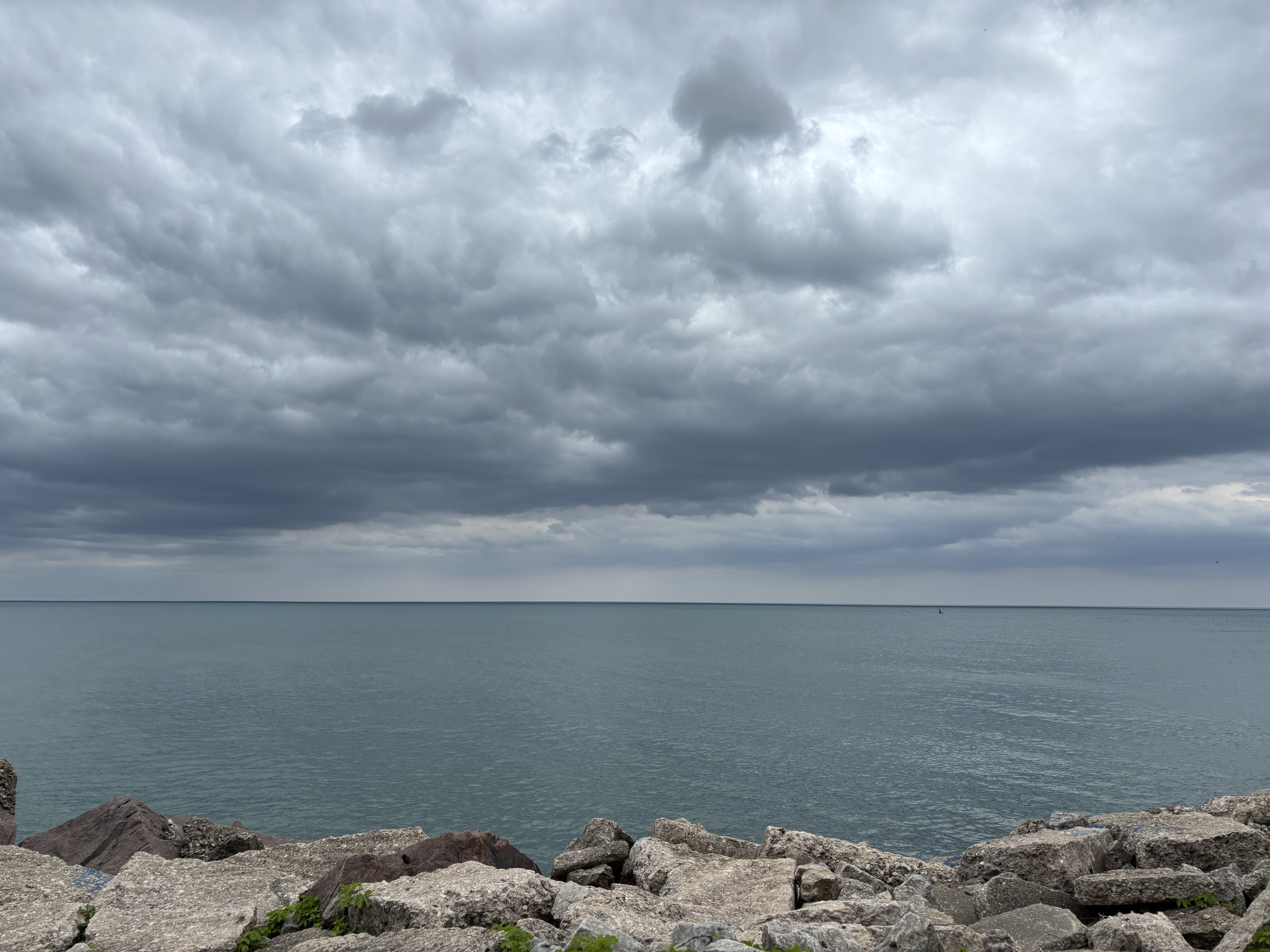
Standing at the edge of the lake, looking east, I know Michigan is out there somewhere. I’ve never seen it myself but I have it on good authority that if I paddled my kayak in a straight line I’d eventually bump into it. Standing at the edge I imagine the journey, and in my imagination, I survive storms and thirst and never-before-seen creatures. When I arrive in Michigan I tell the world what I have seen but the world does not believe me. No one has ever seen what I report to have seen – so I must be making it up. And, that’s always a possibility.

Standing at the edge of the lake it is also interesting to turn around, look west and gaze into the center of town. The community organizes itself, moving in synchronicity, but rarely recognizes it. Individuals move throughout their day, pushed this way and that by forces they cannot perceive or control, riding the currents believing that they are somehow separate and independent from the movement of the whole. Each and every moment they shape and are shaped, but believe themselves isolated and alone. Within them are never-before-seen dreams and desires. They do not dare to reveal them fearing they will engender cynicism. Dreams are tender things so they mute their imagining; blunting dreams is always a possibility.

I once taught that judgment is an alarm that sounds at the edge, an alert that the next step will be into the unknown. It is meant to make you aware of the awaiting kayak. It is the call to open your eyes to what-you-cannot-yet-see. It is there to alert you that the person standing before you is an undiscovered universe, different-than-you. They are unknown and vast. It is possible to run from the unknown. It is possible to step toward it.

Standing at the edge, the alarm sounding, debating whether to step or run away, only one thing is certain: this “other” IS one of the forces that moves you, shapes you, and might help you see what you cannot see from your safe center: that the isolation you experience is mostly self-imposed.

Also, to them, you are the scary unknown, the marker of difference, the vast unknown universe capable of changing them.

Sometimes standing at the edge, it is the best to stand still. To recognize the magnitude of all that you do not know. To weigh the enormous possibilities that await if you simply find the courage to take a step, to extend your hand, to say, “Hello.”
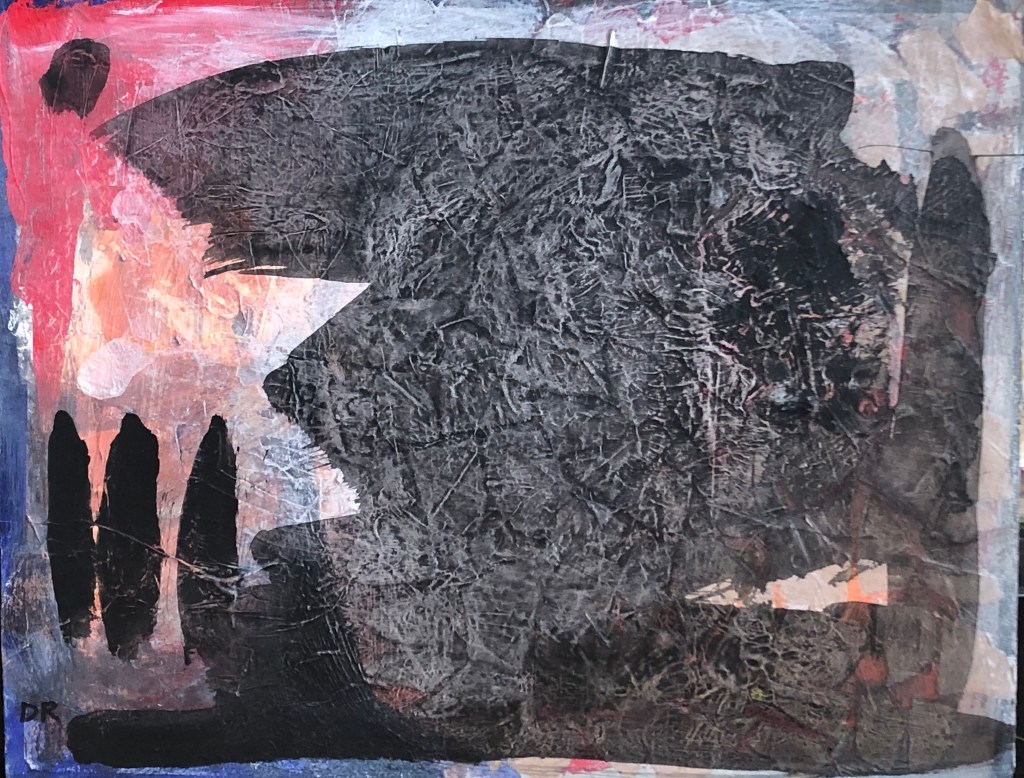
Pilgrimage, 14″x18″, mixed media on panel

read Kerri’s blogpost about THE LAKE

likesharesupportcommentthankyou
Hold Space [on Not So Flawed Wednesday]

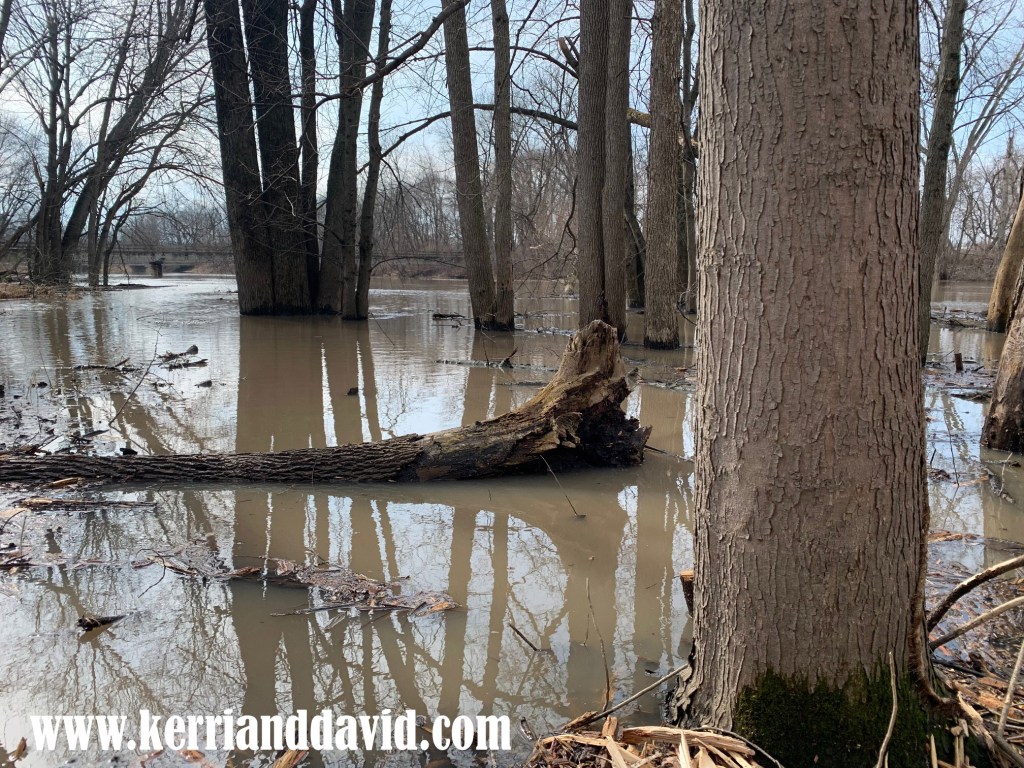
I just realized why the stripped forest is having such an impact on me. While opening the back door to let Dogga out, my dials spun and it slapped me in the face. I am like the forest.

For several minutes, staring at the photograph, writing then rejecting, then writing and again rejecting what I’d written, I decided to get up and let Dogga out. This picture was making me anxious. Moving around has always been good for me when I’m thought-wrestling.

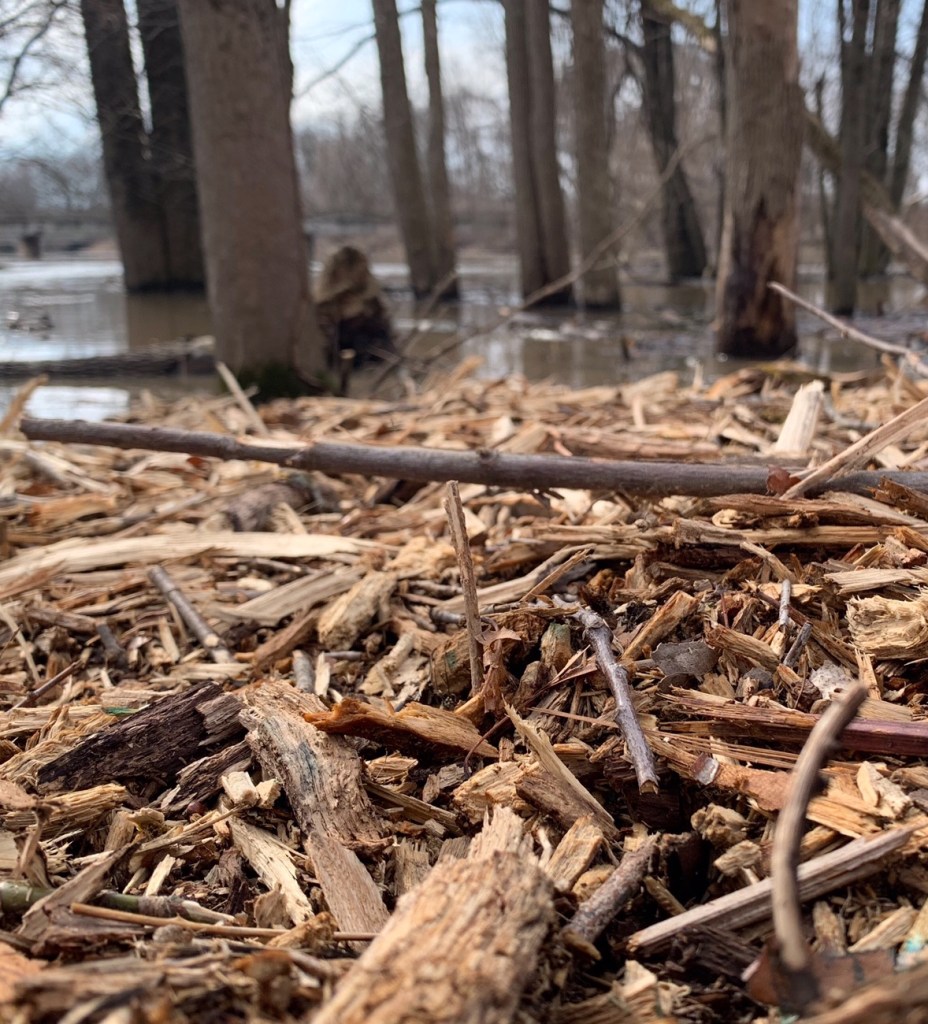
I am like this forest. Exposed. Chips and debris are everywhere. Water is overtaking the trees.

I was writing about a question Justin asked one night at dinner. “What’s your stance about secular Calvinism?” he asked.

“I don’t think I have one,” I replied. Justin’s eyebrows hit the ceiling and I made a snap decision not to follow my reply with an explanation. He was sorting his belief and searching his heart. Empty space was more useful than cramming my erudite-and-empty justification into the moment.

Insight requires space. Lots of space.

I wish I could express how rare it is for me to keep my mouth closed when I have a thought on a topic. Kerri will laugh aloud when I read this to her. “No joke!” she’ll say. I wanted to say to Justin, “I don’t have a stance because I think it’s a given.” His question was akin to asking about my stance on the existence of the moon. No culture sees itself clearly.

No person (me) sees himself clearly.

Chips and debris. The river has overrun its banks. One half of the photo is the result of natural forces. The other half is man-made. Choices. Circumstance and intention. This landscape, once so familiar, will never be the same.

I’ve spent my life cultivating my capacity to see pattern and metaphor. It’s an artist’s prerogative to make the strange familiar and the familiar strange. I am the forest. Familiar, yet completely unknown. Stripped for rejuvenation.

Insight requires space. Perspective requires distance. Perhaps the reason I left open space in my conversation with Justin is something I need do for myself, too. Searching my heart, I am the forest. Stripped of invasive plants I can see all the way to the river. So much space.

What is my stance? Right now, thankfully, I don’t think I have one. I’m holding the space for insight to come.

read Kerri’s blogpost THE FOREST

Embrace Wabi-Sabi [on Not So Flawed Wednesday]

“I love this photo,” she said, “because the flower isn’t perfect.” Wabi-sabi. Appreciation and acceptance of impermanence and the absence of perfection. The full embrace of ‘what is’ rather than some imagined belief or ideal.

I read that the church leaders refused to look through Galileo’s telescope because their book already explained to them how the universe worked. I don’t know if this account is true or not but I’m given to believe it. I see the same story playing out in all shapes and sizes of blind-belief systems today. The wily Fox has millions refusing to look through the telescope in favor of an abstract and angry conviction.

Imperfection. Appreciation of nature and its forces. Look up. Open eyes. Open mind. Open heart. Direct experience that has the power to challenge the staunch and rigidly held opinions. Modesty.

Wabi-sabi. I love this photo.

read Kerri’s blog post about THE WHITE BLOSSOM