Sit On The Curb [on DR Thursday]

As much as our wily-ole brains would like us to believe otherwise, we can be nowhere else but in the present. Everything else is imagination.

Years ago I belonged to a support group of independent consultants. We met once a month to discuss our business challenges, insights, and to give and receive some advice. One of the members of the group was a Byron Cady coach. I have no memory of the discussion that prompted her to offer this Byron-thought-metaphor: “If your house burns down, rather than race around in panic, the best thing you can do is sit on the curb and appreciate the moment.”

To the consumer-mind, wisdom often sounds like bad advice. That you are alive, that you have this moment, means that no real possession was lost. The question is, in the face of calamity, what will you make of the moment?

Brother Joseph told the story of holding a woman wearing expensive furs, each finger was diamond encrusted, as she died on the street. He was, in the moment, overwhelmed by the worthlessness of her stuff. The illusion of value once life has gone.

Life. This moment. Calamity is certain to come. Sit on the curb and see what is there, beyond what you think is there.

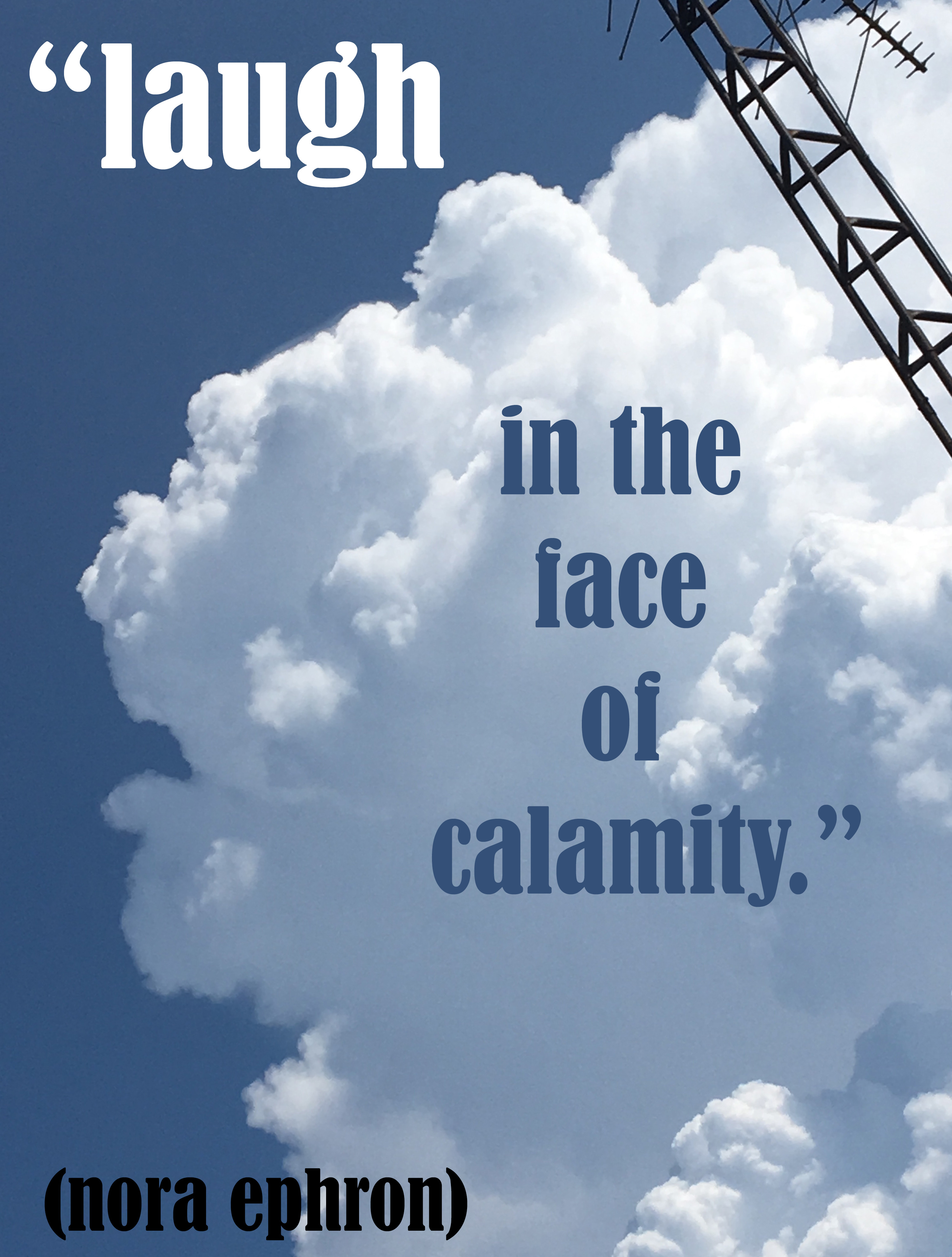
We’ve had our share of adversity these past few years. I would like to report that we laughed heartily in the face of lost jobs and broken wrists and pandemic madness and civil unrest. We did not. We shook our fists at the sky. We made up words and ran loops like Chicken Little. We invested in all manner of fear-of-the-future and ran from monsters-of-the-past. None of our racing around or fist-shaking brought comfort or change.

But, the moments that we took a breath, walked a trail or sat on the back deck and listened to the cardinals and crows, sipped hot coffee on cold mornings, held hands – sat on the curb and appreciated the undeniable truth of our moment: we have everything. We have this moment – the only moment of life that we’ll ever inhabit. We have each other. The rest, the fear of future, demons of the past, are pure imagination. In those moments, wrapped in a circumstance of calamity, we laughed at the beauty of it all.

read Kerri’s blog post about LAUGH IN THE FACE OF CALAMITY

Pull The Weeds [on KS Friday]

My very first painting teacher offered me some sage advice. I was painting figures while the rest of the class worked on landscapes. Being the odd-child-out I assumed something was wrong with me. She said, “Tree painters are a dime a dozen. Someday, being the only one will seem like a gift so ignore what they are interested in and paint what is interesting to you.” Jospeh Campbell said, “Follow your bliss.” It’s the same advice that Jackie Fry gave to the boy-version of me.

I never imagined myself with a back yard. And, now that I have one, I find it a place of rest and peace. This is a confession that I’ll never admit to in the future: weeding is meditative. Each day I find myself taking a few moments to go out and yank the invaders out by the roots. No thought. No other thing to do. I simply tend the garden, knowing I am accomplishing nothing since weeds are good at growing and more will appear tomorrow. We are strange allies, they provide me with a daily meditation.

If I was as an art teacher, I’d send my students into my back yard. Nature is a masterful teacher of color. Orange and green. Highlights of yellow. Barney provides subtle blues, purples, and pinks. The orange and green of the lily pop against the purple and blue of the aging piano. Warm colors come forward. Cool colors recede. It’s all there.

I read somewhere that, as an artist, “to discover” is more potent than “to invent.” See what is there, beyond what you think is there. Everything is fluid so the discoveries are endless. While I weed the sun passes beneath a cloud. Everything changes. The sun reappears and the colors change again. Not the same. Different. I’ll never be able to capture it and that is the best held secret of an artist. Another wisdom from Jackie Fry: you will never succeed. Art is a relationship, not a transaction. So, no pressure. It is a relationship, complex and dynamic. It is not about capturing an image. It is about freeing your sight and possibly freeing the sight of others. Facilitate discovery. Play to play, to become a better player. Open a small door to peek into the vast inner universe.

It’s a paradox. It’s impossible to eradicate the weeds. That is not why I pull them. It’s impossible to capture life in an image. ‘Capturing’ is not why I paint. Relating is why I paint. I do it because I’ll never create anything more beautiful than the Tiger Lily dancing with Barney. I paint so that I might see and share in the dance.

ALWAYS WITH US on the album AS IT IS by KERRI SHERWOOD

Kerri’s albums are available on iTunes and streaming on Pandora

read Kerri’s blog post about the TIGER LILY

always with us/as it is ©️ 2004 kerri sherwood

Gather And Share [on DR Thursday]

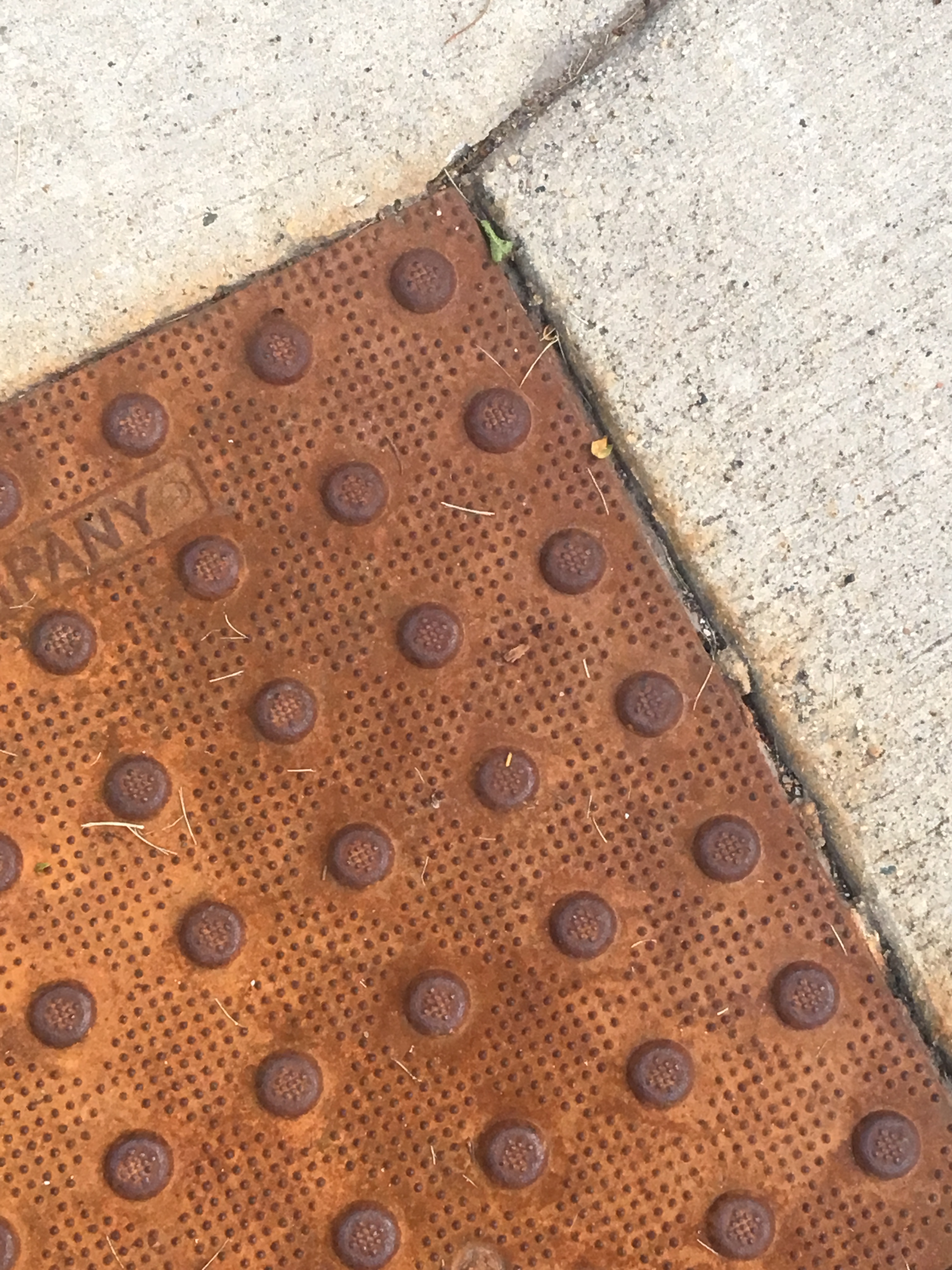
Back in my Don Quixote days, with the onset of a camera in every phone, one of my favorite exercises to give to groups was to send them out in search of textures. Gather texture. Gather pattern. It was quite literally eye-opening. It was also, quite literally, presence-enabling and life-invigorating.

There is enormous power in the simple phrase, “Stop and look.” See.

In “gather” there is no judgment. Consequently, the photos that came back, rich in texture and collision of texture, patterns revealing themselves everywhere, were gorgeous. Dynamic. But, mostly, they were revealing. Otherwise serious adults, who believed that there was nothing new, that life was less-than-exceptional, came back from their texture-gather with open eyes. Some giggled. These people, claiming that they did not possess an ounce of artistry, would show their photos to the group and say, “I pulled that in so we could see it better.” Or, “Don’t you just love how those two things come together?” Or, my favorite, “You didn’t give us enough time! I couldn’t gather it all!”

Ah. Not enough time to see it all. Not enough time to take it in. Now, isn’t that a statement of the-love-of-life? Isn’t that the epicenter of an artist’s life. Isn’t that a more interesting path than, “Same-old-same-old”?

Dots. Diamonds of dots. Lines. Pattern. Texture. Too much to see. Too much to experience. And the best, most simple way to step into vibrancy is to stop and look.

But, there is one more step, the part that made the exercise powerful. The essential part was and is almost always overlooked. Stopping and looking and gathering is great but only has meaning – only becomes artistry – when it is shared. Without fear or judgment. Stop. Look. Gather. Come back to the center and share what you see.

read Kerri’s blog post about TEXTURE

yoga series: meditation ©️ 2012 david robinson

See The Good [on KS Friday]

“…the measure on ones mental health is the ability to see the good in everything. Perception is the key.” ~ Kristine Klussman, Connection

If I kept a gratitude journal, my entry yesterday would be that Bruce was happy. I could hear it in his voice. Although it had been seven years since we last spoke, we talked like we were picking up a conversation from yesterday. Life has changed dramatically for both of us.

It seems we have both reached the revelation of simple appreciation. No longer focused on the big stuff, we talked of the sweet moments, the moments that feed our souls. He asked me to describe my days and I was happily taken aback to tell the tale of walks on trails, beginning each day writing posts with Kerri, ending each day with a glass of wine. Drawing cartoons. A dog that runs enthusiastic circles. Good friends.

I am reminded again and again that goodness is not found in the world. It is brought to the world. We don’t perceive what is already “there,” we wrap what is “there” in a story-blanket. We give it meaning. And then we feel the impact of the meaning we give it. Viktor Frankel famously wrote that “Happiness ensues.” It follows. Despair ensues, too. Anger, too, if that is what is brought.

Earlier this year a friend asked how Kerri and I were doing amidst the job losses and broken wrists. I responded that our circumstance was dire. It was. It just didn’t feel that way, so full was our sense of appreciation. In the midst of a dire circumstance, we started our days writing. Good friends called. DogDog ran enthusiastic circles and made us laugh. We sipped a glass of wine at the end of each day and enjoyed our simple meals. Today, things are less dire and, although we are still standing on shaky ground, we start each day writing together. We hold hands and take walks. We breathe deeply the smell of coffee in the morning. Our gratitude for our days has not changed a bit. Good moments are everywhere.

And today, Bruce is back in touch. He is happy and his happiness, like all happiness, comes from a hard decision that took tremendous courage: he decided to see the good. To bring light. To be light. He is doing the work of savoring the good moments that he now sees all around himself.

good moments/this part of the journey is available on iTunes and streaming on Pandora

read Kerri’s blog post about GOOD MOMENTS

good moments/this part of the journey ©️ 1998 kerri sherwood

Ask The Gorilla [on DR Thursday]

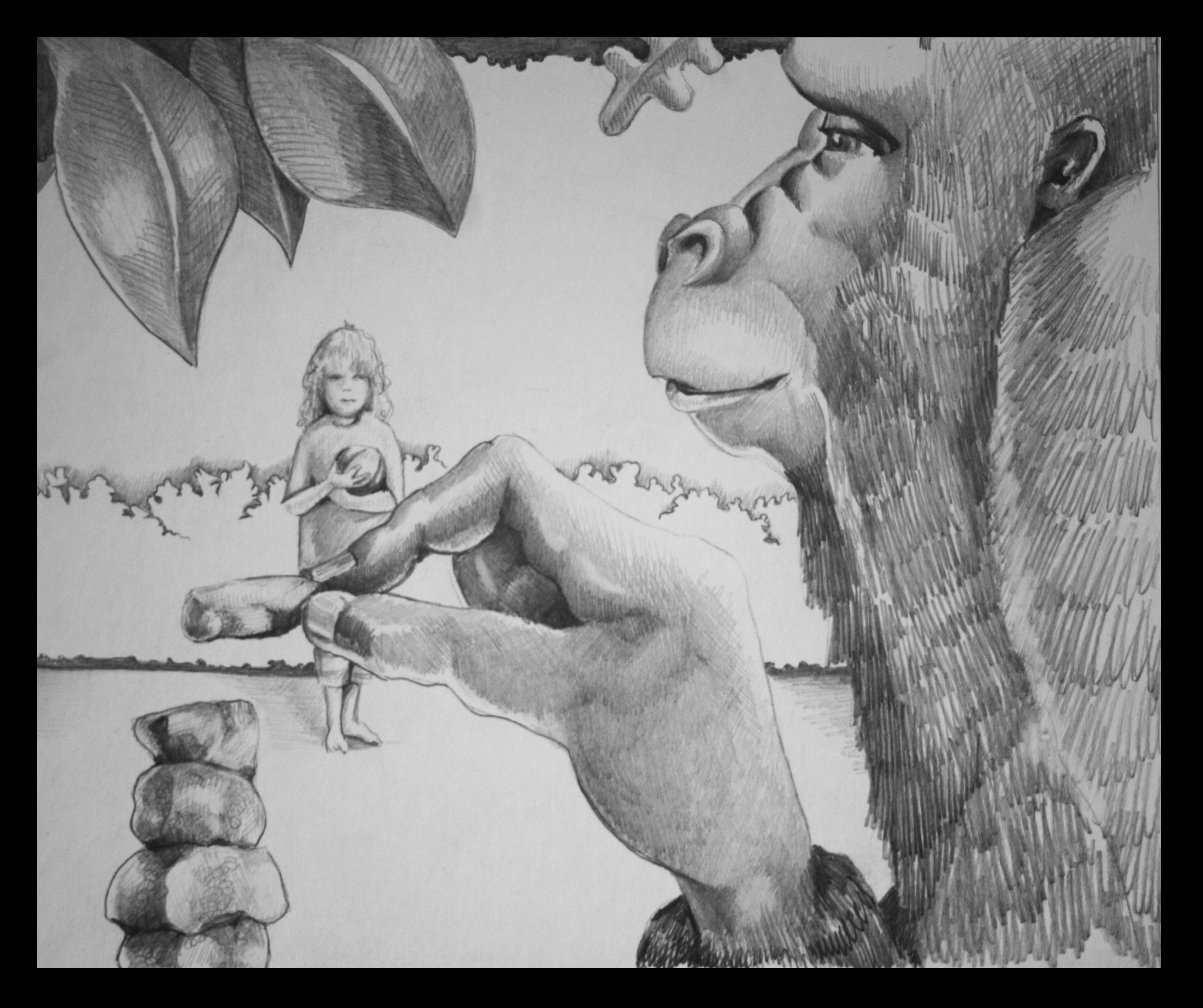
I’m not the first person to use a gorilla as the teacher in a story. This gorilla, in this story, is teaching the little girl the difference between playing-to-win and playing-to-become-a-better-player. The story begins when the girl asks the gorilla, “Do you want to play?” and the gorilla responds, “Well, it depends. What do you mean by ‘play’?”

It’s not a flippant question. It speaks directly to the “why” of what you do. The reason. Simon Sinek put this question at the center of his golden circle. James Carse wrote his philosophical masterpiece, Finite and Infinite Games, about this simple distinction.

Yesterday I had a conversation about success. A conversation about the difference between internal and external motivation. External motivators, like winning-as-your-why, are necessarily grounded in fear. What if you lose? Who are you if you fail? Winning at all cost will eventually lead to quagmires not unlike where the Republican party now finds itself. Obstruct. Lie. Gerrymander. Fix the vote. Fix the game. Any and all deeper value or ethic is sacrificed. There is always a cost when the “why” is as superficial as “to win.” The body seizes-up, loses its freedom of movement when fear of losing is the central driver of action. The nation-body, too.

The path to mastery cannot run through a win-lose “why.” Failure is an essential on a master’s path. Throw many pots, the metaphor from Art & Fear, is a mantra not only for artistic freedom, but for honing skills. Getting better and better at playing. See what happens. Playing to play, to become a better player, transcends and finally removes the word ‘failure.’ The body gains more and more freedom of movement when every action is a learning experience.

I wrote and illustrated this book back in my dark ages when I was facilitating diversity and inclusion trainings. Some companies hired us because they feared being sued. They feared losing money and had no real interest in diversity, inclusion, equality, fair play, betterment for their employees. They feared losing their privilege. Diversity initiatives ask that we stop rigging the game.

Other companies hired us because they truly desired to address the inequities in their organization. They wanted to step into their blind spots and see. They wanted to become better and better players in their communities. Early on we learned to distinguish between the fear-clients and those that were sincere. We became better players by choosing to work with organizations that were honest and sincere about their “why.” Players of infinite games.

I never attempted to publish Play-to-Play, my little illustrated meditation. Over the years I’ve given away some of the illustrations. It is one of the many stones I’ve stacked, pots I’ve thrown, the many projects and paintings that are literally stacked in my studio. It seems more relevant now than ever before. Yesterday, looking again at the illustrations, I told Kerri, “I should draw this again. I’m better now.”

She asked, “Why?”

I said, “Exactly.”

read Kerri’s blog post about STACKING STONES

play to play ©️ 2005 david robinson

Look Closer [on Two Artists Tuesday]

Arnie recently sent me a book, Connection by Kristine Klussman. As is my practice these days, I’m reading it slowly, a few pages at a time. I recognize much of what she’s writing about: focus placement, meaning making, cutting through the ‘should’s’…all in the process of re-connecting to what is really important in this life. The book offers specific exercises and process steps to help readers take a closer look at their lives. To identify the gaps between espoused and lived values in order to make different choices and close the gap. Alignment.

In art school, the most valuable lesson (for me) was to learn to see beyond what I ‘think.’ I’ve written about the professor who asked us to look at our yellow #2 pencils and tell him what color were the pencils. A riot of eye rolling ensued but, in the end, he helped us to see that the simple yellow pencil was alive with green and purple and red. Our minds generalize. It requires a bit of slowing down and, dare I write, a bit of presence, to see and experience how rich and alive even the simplest things, a yellow pencil, really are. The dictum applies to each and every day of life, especially the days we generalize into boredom or “same-old-same-old.” Slow down. Look again. There’s more to the yellow pencil than you think.

When Kerri and I arrived home from our trip to move my mother into an independent living community, we poured a glass of wine and opened the box my parents had kept with the artifacts of my life. Old newspaper clippings of play reviews, playbills, gallery opening announcements, elementary school report cards, photographs that reached back through proms and school portraits to blurry black and white infant prints with “David, 4 months” scribbled on the back. It was a poignant exercise of pulling the life-camera in for a closer view. Life-fragments in a box are like the yellow pencil. They require a closer look.

I’ve always appreciated Kerri’s tendency to pull the camera in closer. She is forever taking photographs and then pulling the image this way and that, like so much taffy, looking for the most interesting slice, the most dynamic composition. In her photographic-push-me-pull-you, there is often a discovery. “Look at this color!” she’ll exclaim. Or, “Did you see this! Look at the spines on this plant!” She cultivates surprise. She understands that a closer look will always reveal tiny not-yet-seen-miracles.

Expecting surprise. Taking the time to look beyond yellow-pencil-expectations. Closing the gap between lived and espoused values. Slowing down just enough to realize that there is no such thing as “same-old-same-old.” These are age-old sage suggestions for living a rich and meaningful life. All of it, born of a tender, quiet suggestion to take a deep breath and have a closer look.

read Kerri’s blog post about A CLOSER LOOK

Come Look! [on Two Artists Tuesday]

“The artist finds, rather than creates and controls.” ~ Declan Donnellan

I’m not sure when I began including floral shapes in my paintings. I’ve always appreciated the shape of symbols and shapes as symbols. One day in my Seattle studio, I lined the walls with my most recent paintings and was surprised to discover leaves and plants and stems etched into figures and the spaces. My charcoal and paint flora was generic; they were not studies of plants nor in any way representational. They were shapes. They were accidental.

Even when my plant-shapes became intentional they remained generic, improvisational. I didn’t go outside and study the shapes of leaves. It never occurred to me to step into the field next to my studio and look at the plant life. I’m slow that way.

And then I met Kerri. We walk almost every day. While my mind wanders into the ethers and gets lost in the sky, she is busy looking at life’s minutiae. She stops often and takes photographs, usually of a tiny treasure. A forest flower. The bud about to burst on a limb. A butterfly nestled into the leaves. “Look!” she exclaims and kneels on the path, camera in hand. She navigates thorns, wades into tall grasses, climbs over rocks, all to get close enough to see, really see the miniature miracle.

Because she sees, I see. She is single-handedly responsible for my ongoing Georgia O’Keeffe revival. And what I’ve re-learned as Kerri beckons me to, “Come Look!” is that my vast imagination is not capable of creating the amazing shapes and colors and delights that surround me. I’ve been walking through this intense world of marvels my whole life and noticed only the smallest slice. The best I can do is pay attention and dance with what I find.

It’s humbling – as it should be. I’ll never be a better creator than nature because I am a creation of nature. In fact, I realize again and again that my job as an artist is not to create, it is to discover what is already right in front of my face. To open eyes – my eyes and others’ eyes – to the enormity of what already exists. The wild shapes, the dancing colors, the glow of life that I’ll never be able to capture, no matter how great my technique or pure my intention. The best I can do is point to the mystery, with symbol, shape and color, and say, as Kerri does for me each and every day, “Look! Come Look!”

read Kerri’s blog post about SUCCULENTS

Look To 3 [on Not So Flawed Wednesday]

My long-ago-business-partner used to tell groups that every human being wears an umbrella hat called “normal.” That is, we try to maintain and make sense of the world according to our personal (and cultural) criteria. We carry the criteria around with us – it does not exist beyond us. We are comfortable when wearing our umbrella hats. We get really uncomfortable when something comes along that knocks our hats off of our heads.

When we lose our hats, we’ll do anything to regain our comfortable “normal.” The fear of losing our hats is what makes change – personal and cultural – so difficult. Despite what they say, no one wants to lose their hat. Organizations have a nifty phrase, change-management, to shield against the reality that change – real change- requires discomfort. How to prevent discomfort? Manage it! No worries! Everything is under control!

The other strategy – also not very effective in the long run – is to pretend that the hat is still on your head. No worries! It’s all made-up! Everything is normal!

The pandemic blew our collective hats off of our heads. We’ve had a front row seat to the realities and responses of a disrupted normal. The recent photos from Miami Beach, the aggressive non-mask-wearers, the absurd and deadly politicization of a pandemic…all in the name of hat retention and recovery.

In our circle of life, we’ve had the ubiquitous conversation about the return of normal. “When can we get together again?” Prior to the pandemic, our week was patterned on, our lives were grounded in, our Sunday and Thursday night dinners with 20. In a fluid artistic life, dinner with 20 was the shape-giver to our otherwise formless weeks. One day last March, we tossed our hats to the wind. It wasn’t safe to gather.

Over the year we left groceries at his door. He dropped goodies at our door. We waved from the car. We had regular phone calls. A few times, when the weather was nice, we sat in the back yard at great distance and discussed how weird life had become.

We looked for our new-normal-hats but they were nowhere to be found. It’s what happens when change cannot be denied: the management of discomfort is the best that you can do. Keep stepping. Chop wood/carry water. One day at a time. A new normal will surface sometime. A new pattern will be established. Pattern making is what we homo sapiens do.

In the past few months we three were vaccinated. We waited for a few weeks. We diligently read our CDC guidelines. And then, as if a year had not passed in the interim, we gathered to share a meal and drink a bottle of wine. Nothing had changed and everything had changed.

2 at the table is once again 3. We are slowly reestablishing what we once knew as normal. Our laughter is easy as it has always been. But the nation we inhabit, the community we see and experience, is transformed. There are stores we will never again support. There are relationships that will always be superficial. There is a bald ugliness exposed as never before in the nation. Ruthlessness. So many dead amidst such fatuous games of denial. The hot wind that blew our normal-hats away exposed the geography – the actual geography – beneath our nation that espouses equality but has deep division and favoritism woven into its DNA. Control by division. It is a mechanism: black gain is seen as white loss. White gain is built upon black loss. It is a seesaw, an angel/devil game. It’s a system doing – brutally – what it was designed to do.

Disruption is an opportunity for change. With so many lost hats, with so much ugliness exposed, a good look in the national mirror is possible. As we struggle to find our new normal hats, it occurs to me that angel/devil games, deep divisions, are never “solved” in twos. Movement is created by two points. Insight is a three-legged stool. Complexity is addressed through triangles, through a focus on relationship. Opposition-in-twos will keep us forever on the systemic seesaw.

Laughter is restored, possibility uncovered, through the lens of three.

read Kerri’s blog post about 3

Take The Time [on Two Artists Tuesday]

“Nobody sees a flower – really – it is so small it takes time – we haven’t time – and to see takes time, like to have a friend takes time.” ~ Georgia O’Keeffe

To see takes time.

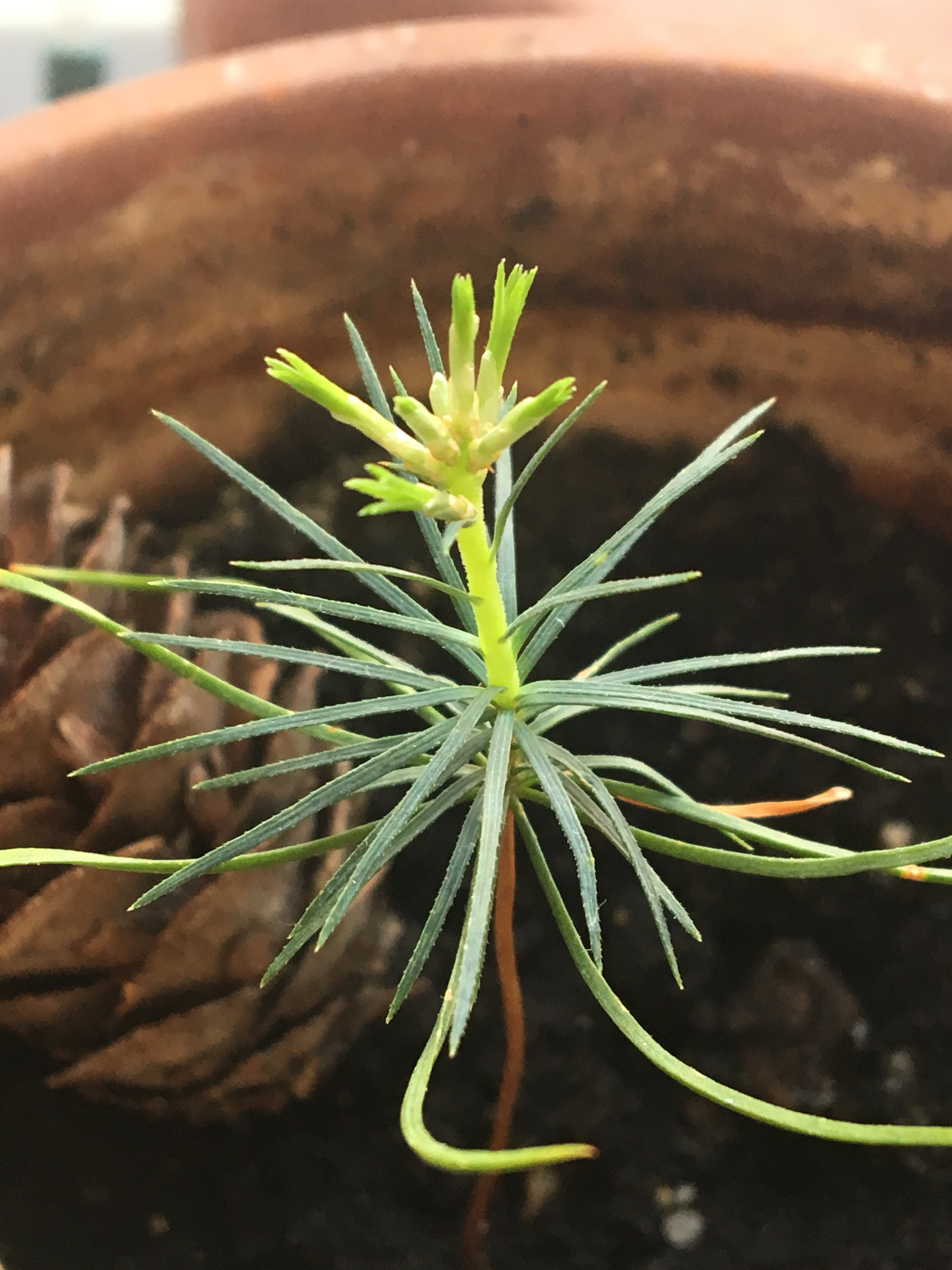
Desi has been teaching us to see. She sits on the table in a clay pot. We join her at the table every evening to sip a glass of wine, watch the light wane, the robins and cardinals dart across the yard, debrief the day. We’ve been watching Desi all winter, spending time with her. Watching.

Truth be told, I did not expect Desi to live long in her pot. She’s seemingly so fragile, her “trunk” no wider than a sewing needle. And yet, throughout the winter, her robust green needles never yellowed. She thrived, verdant in her unlikely home.

Kerri talks to Desi more than I do. I’m the silent male but I regularly send her my good thoughts. She regularly reciprocates. Kerri and Desi can carry on for quite awhile about nothing in particular. Soil. Water. Warm days. Pine-tree-talk. Hope.

Hope. A few weeks ago, Desi stood taller. New tender sprouts pressed from nowhere , tiny arms reaching for the sun. We celebrated Desi’s new heights. We encourage her to keep going – and she does! Now, each evening, first thing when we sit at the table, we spend time ‘seeing’ Desi.

In a hard pandemic time she lightens our spirits. She cares nothing for the news cycle or the ridiculous foibles of bipeds and we find that refreshing. Most of all, if, for a moment, we forget that we are surrounded by hope – it’s everywhere – we take a moment or two and have a sit-down-visit with Desi. We take the time to see what is always right in front of our eyes.

read Kerri’s blog post about DESI

Really Look [on KS Friday]

20 watches the house, the dog and our very large cat when we are away. To keep us in touch with what’s going on at home, he sends us mystery photos: common things around our house made mysterious through an extreme close up or unusual angle. Our job is to solve the photo-riddle. I love the game because, no matter where we are, it instantly makes me look at the world in a different way. Or, better said, it makes me look. Really look.

I also appreciate the game because, upon returning home, I run around the house looking at the objects he transformed into enigmas. All that I have grown dull to seeing re-emerges as rich in color and shape and texture and story.

Kerri has the visual sensibility of a contemporary artist. She went down a path of music but might just as well aimed her artistry at the visual. Hers is a natural sense of design. Her camera might as well be an accessory or visual-opportunity-attachment since she moves through the day capturing photographs of passing detail. I’ve known her to be paying bills and jump up suddenly to catch the light on the wall or the texture of the door. Her eye is never passive. She and 20 are alike in that. They are visual twins with unique sensibilities and both serve to keep my eyes open and looking-beyond-what-I-think.

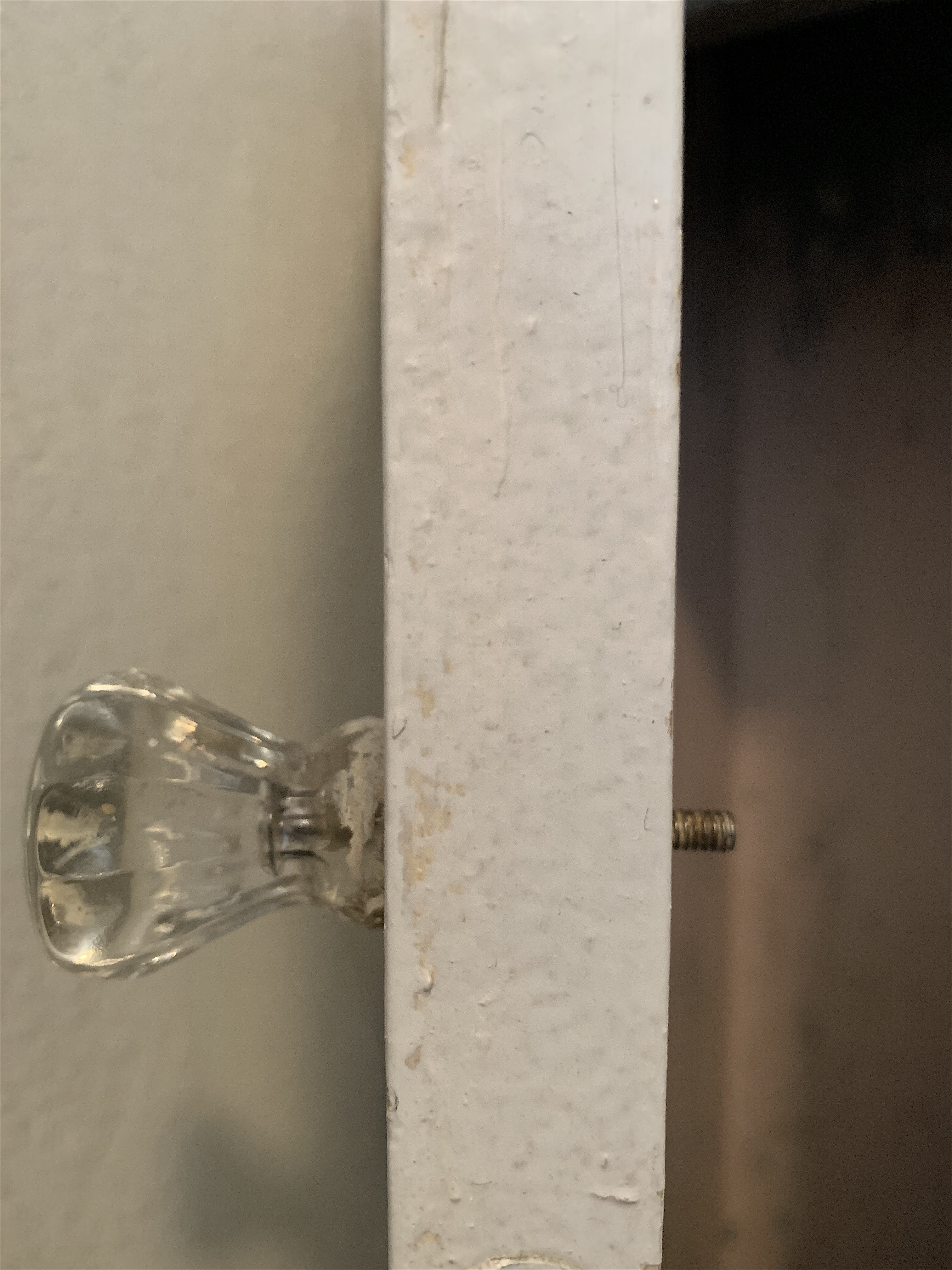
Yesterday, in mid-sentence, she stopped and said, “Oh! I want to show you something!” turned and ran down the hall. When I started to follow she said over her shoulder, “You can’t look! Stay there!” A minute later she returned, sheepish, and showed me the photo she’d just taken. “Do you know what this is?” she beamed. Too excited to wait for my answer she announced, “It’s the laundry chute! Isn’t it cool!” She walked away studying her photograph, muttering, “It’s so coooool.” I ran to the laundry chute to have a look. To really look as if for the very first time.

read Kerri’s blog post about THE CHUTE

find Kerri’s albums on iTunes