See The Signs [on Not So Flawed Wednesday]

Religions around the world and across time have personified this moment. The return of the green. From one day to the next buds appear on trees. The signs of life’s vibrant enthusiasm returning (again) from long winter, barren earth, metaphoric death. Persephone’s homecoming from the underworld and Demeter, her mother, goddess of the earth, allows the return of life.

It’s a very, very old story told in many, many different ways. Human beings, storytellers all, making sense of death and life, generalized across the real experience of cycles and seasons, all pressed through the lens of this-causes-that. Reduce us to an essential oil and we are makers of metaphor and seers of pattern.

I told Kerri that I got out of the wrong side of the bed this morning. An idiom. Imagine the power in brains that utilize idioms! The meaning cannot possibly be carried by a literal interpretation of the individual words. We pull the meaning out of or inject it into the collection of words. We know what it means because the meaning has a long history. The Romans, I’ve read, believed there was a correct side of the bed. Arising on the correct side of the bed would ensure good luck. The right side of the bed was positive, the left side was dubious. Jump out of bed on the left side and the day was ruined!

Superstition: making sense of the happenings of a day or a life, pressed through the lens of this-causes-that.

Mostly, I am restless. It snowed all day yesterday. I yearn for the moment when I can, for the first time of the returning (pattern) spring, lean against the wall and feel the warm sun on my face. I will, like I did last spring, enjoy the moment to the point of non-thinking. I will drink it in with no need to wrap a story around it or make sense of what I am feeling. I will appreciate it to my bones and revel in the return of warmth, new growth, and light.

read Kerri’s blog post on GREEN
Look Around [on DR Thursday]

My sketchbooks are punctuated by weird landscapes. It was a practice. When I felt the need to draw regularly, to exercise my artistry, I worked on compositions for future paintings. And, when I had no idea what to draw, no composition in my head, I sketched my weird landscapes. They were fun and I got lost in them.

There was a blowback effect. I’ve never been a landscape artist. I considered my weird landscapes as not-serious exercises. Yet, they were made of scribbles and patterns and it became a game to collect patterns from nature. My not-serious exercises required me to look around. To get close. To look at the edges and splashes and etchings available in nature. To see. My weird landscapes became eye-opening meditations.

There are miracle-patterns in bark. Orchids, I recently learned, are a master-class of pattern, shape, and color. It is impossible to find a hand painted brush and ink painting as perfect or as spontaneous and lively as the strokes on the rattlesnake plant. Go to the garden if color combinations are in question.

I will never invent anything as imaginable, as impossibly beautiful, as what already exists in this world. I will never produce any painting as glorious as the paintings in nature. The best I can do is play. Look and marvel. And isn’t that a great relief?

read Kerri’s blogpost about RATTLESNAKE PLANT

eve © 2006 david robinson

Listen To The Memento [on DR Thursday]

Stop for moment and look around your house. How many of the objects that populate your shelves and walls are mementos? Keepsakes from travels or special events? I’m always struck, after a devastating fire or tornado, how often I watch people sifting through the rubble of their home to find a photograph or a special ring. There is the shock of losing the home, but the stories! What will happen with the loss of the reminder, the things that carry the story?

Last week, after the night we thought there was a fire in our walls, we talked about our race to get out of the house, and the question of “What do we grab and take?” The dog. The special papers. The computers. A few clothes. Those “items” fall into two categories: what you love (the dog. each other) and what we need to start again (special papers, the computers, a change of clothes). Although losing the passports and birth certificates would be difficult to replace, the first category is really all you need.

I’m certain, because our experience was so recent, I want to sob watching the news footage of families fleeing their homes in Ukraine. What do you grab and take when yesterday you went to work and today you are fleeing bombs and war? Where do you go? We have friends a few minutes away who would have taken us in and helped us back on our feet. When fleeing is the destination…where do you go?

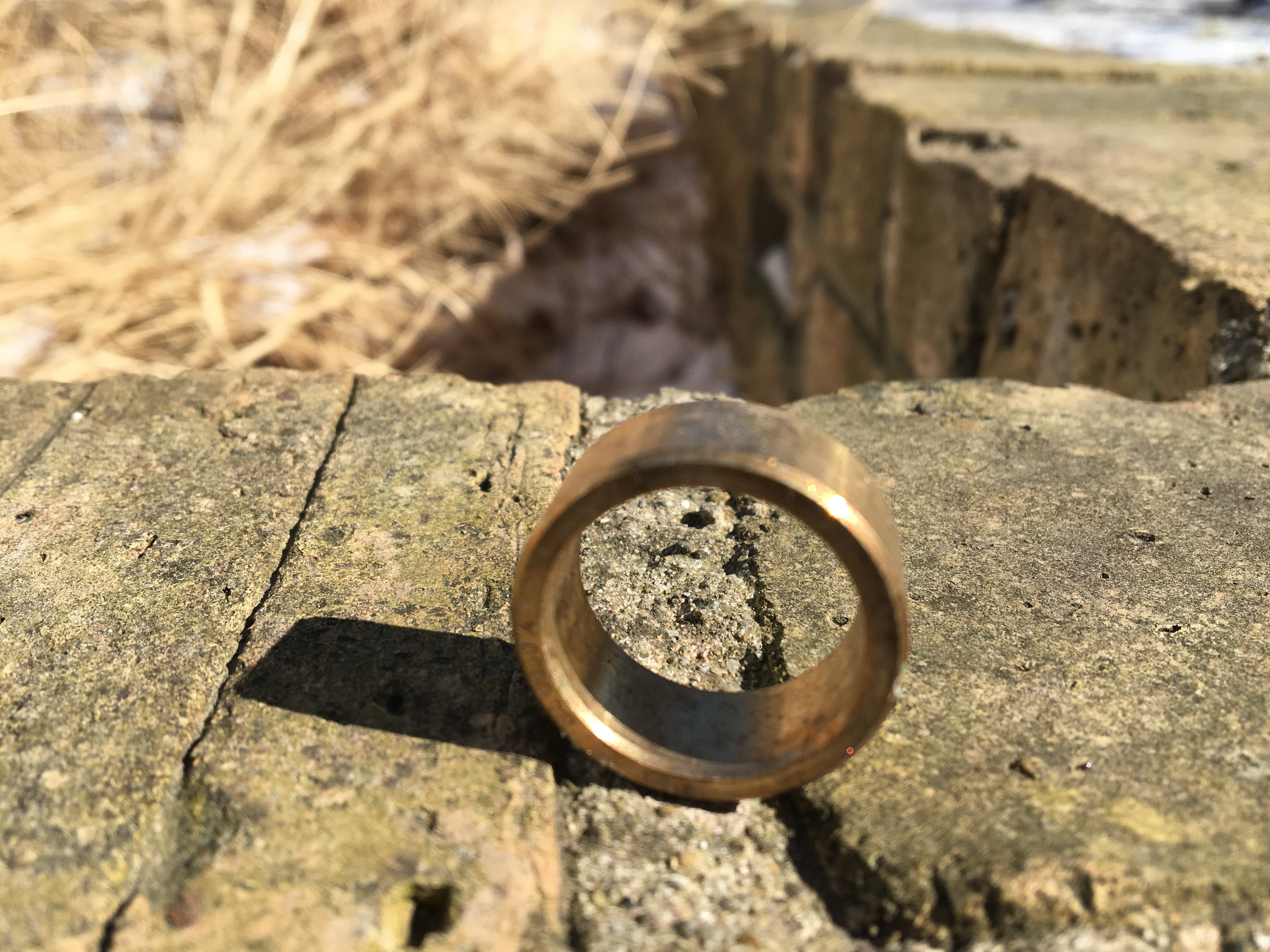
The sun was bright through the cold on the day we pushed LittleBabyScion down the driveway so we could get Big Red out and onto the street. At first, she thought she found a wedding ring poking out of the snow. One of the men who worked so hard to replace our water line must have lost it. But then, we realized it was a brass fitting. We brought it in house. Someday, when the trench has settled, the front yard has grass again, when we feel comfortable leaving the television plugged in, and the house is restored to order, the ring will serve as a memento to remind us of the upheaval.

Yesterday I held the ring for a moment and I wondered why we – humans – build memorials to war that carry messages chiseled in stone, “Never again…” or “Remember…”, sentiments that are meant to remind us that murdering each other for resource or political gain actually achieves nothing but pain and the erection of yet another stone and steel memento – it’s a flip of priority – as if the special papers and computers have more importance than the people. The people become expendable. Where do you flee in the face of such madness?

read Kerri’s blog post about THE RING

Fill The Pot [on Two Artists Tuesday]

It’s food week at the Melange. Well, truth be told, it’s always food week here. When we’re not in our studios we meet in the kitchen and either eat food or talk about eating food. Sometimes – okay – everyday, when I am up in my office working, Kerri sends me a midmorning text: “Are you staaaaarving?” My reply never waivers: “Yes. Yes I am.” Snacks appear and happiness ripples throughout the house.

It’s winter and it’s covid so our circle of experience has shrunk mightily. Kerri injured her foot so our daily winter walks through the frozen tundra are on hiatus. As our recent photographs have betrayed, we are explorers in our own house. Photos of Dogga. Photos of the moon. Clever shots of candles and glasses of wine. And food, food, food.

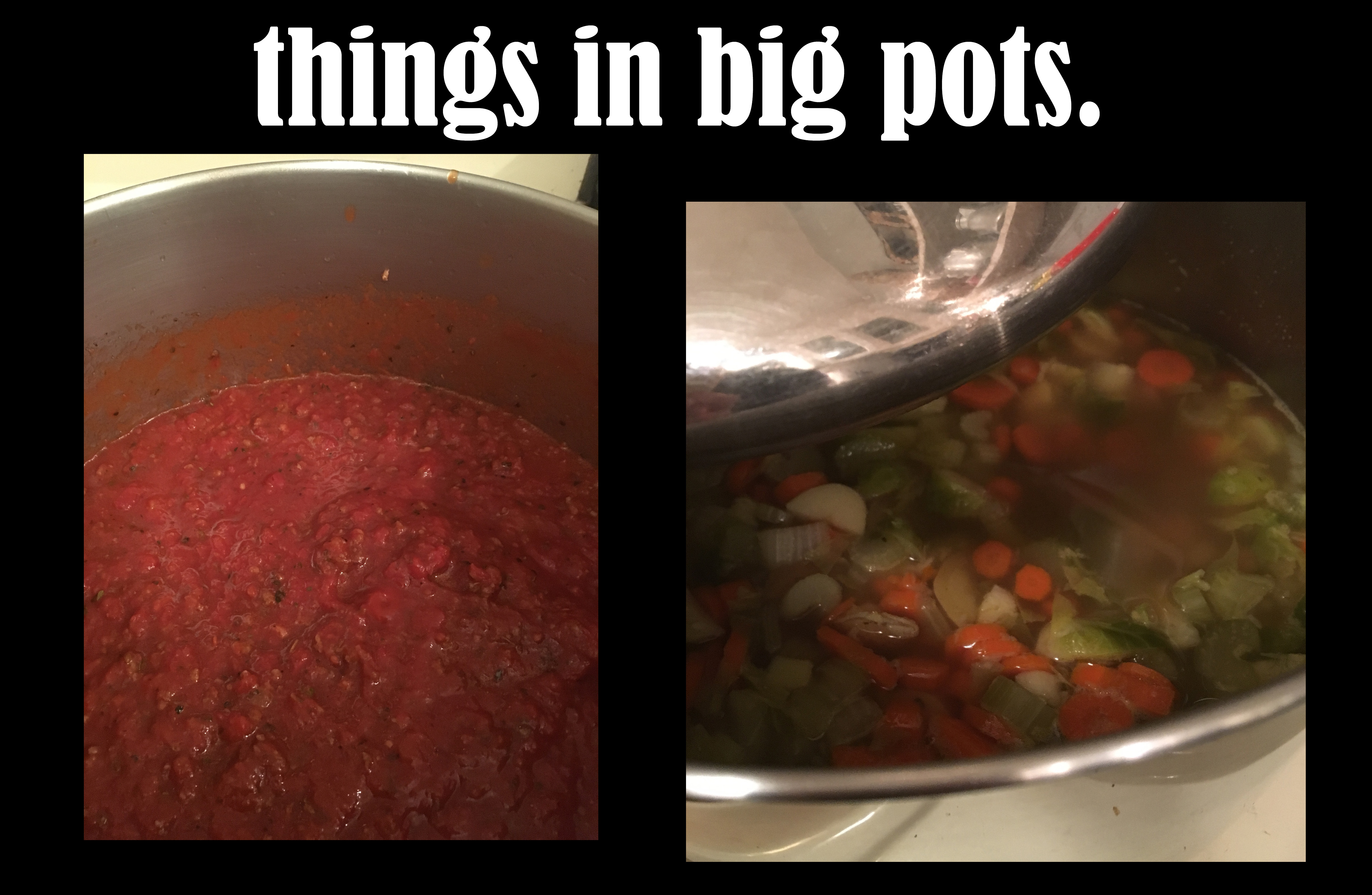
Because it is winter, the big pot has re-emerged. Soups or spaghetti sauce are often simmering on the stove. During the warm months, the big pot goes on vacation but faithfully returns when the temperatures drop. There are weeks when the big pot never makes it back to the cabinet. It’s a workhorse.

I appreciate the reappearance of the big pot because, in addition to being essential for soups, it evokes stories. It never fails. The pot comes out. The chopping commences. And the stories start to roll. Our big pot has been around for a very long time so it is alive with story. Big pots bring memories of parents and grandparents, holiday meals, Dorothy cooking on the cast iron stove. It evokes remembrance from childhood, steam rising from the pot and fogging the kitchen window. Once, as a boy, I couldn’t breathe and leaned over the big pot. The steam helped.

This week we are excited: we have a new soup to try. Last week we made a simple vegetable soup, a recipe we lifted from 20. The big pot also helps us to dream. We remember a pre-covid world when we had gatherings and dinner parties, when we squeezed people into chairs at the table, elbows negotiating heaping plates of pasta, crusty bread, and wine. Laughter. “It’s the first thing we’re going to do,” Kerri says, “when this is all behind us.” The pot will come out. A vat of sauce will bubble on the stove. Friends will pack into the kitchen, asking, “When do we eat?”

read Kerri’s blogpost about BIG POTS

Wander In Wonderland [on Two Artists Tuesday]

I’ve re-read his email several times. Skip’s explanation of the development of the computer. Subject/Object. Noun/Verb. Items/Action. It’s a story of cause and effect. This causes that. I’ve learned more from this single email than from my very expensive graduate degree. And, it’s sent me down the rabbit hole and I am currently in a world easily as miraculous as Alice’s Wonderland.

Does the moon cause the tides? It does if you are an English-speaker. Causation is the foundation structure of the English language. An action needs an initiator. The noun is king. He kicked. The sea rocked the boat. The moon causes tides. If you speak Mandarin, the moon and the tides are inseparable, not perceived or described as separate events but as interconnected. The same dance, differentiated forms.

Where does an action begin? A consequence end? I warned you. A rabbit hole.

Our perception of the world has everything to do with the language we use to describe it. Our creating of the world has everything to do with the language we use to imagine it. In a world where actions are separate from items, verbs from nouns, this causes that, it’s easy to believe that order is separate from disorder, cosmos is separate from earth, humans are separate from nature. Death is separate from life. Is it?

Each year that passes I’ve noticed the world of written communication includes more emojis and fewer words. Attention spans are shorter – mine, too. Tweet and text. Images carries the bulk of the message. If you could see the analytics on my blog you’d note that if I use more than 600 words, you are less likely to read what I write. We are slowly moving toward ideograms and slowly away from alphabets. Whatever will we do, what might we see, when nouns and verbs blend into image? When the eyes of dedicated separation begin to see through the eyes of interconnectivity – or, as Skip says, “When actions become central.”

It’s called a Wolf Moon, I read, because wolves are particularly loud and vocal during the first months of the year. One questioner asked if the moon causes the wolves to howl. Noun/Verb. Subject/Object.

read Kerri’s blogpost about THE WOLF MOON

Make A Savory Day [on Two Artists Tuesday]

“I don’t believe in guilty pleasures. I only believe in pleasures.” ~ Ira Glass

Among other things, covid has been a great disruptor of our patterns. Our life today barely resembles the life we knew two looooong years ago. Yesterday, while driving through the farmlands en route to buy a loaf of bread at Simple Bakery in Lake Geneva, Kerri said, “It’s all so weird.”

Among our new patterns is more appreciation of our time. We are less willing to stuff our day with things to do, rather, we’ve established a slower rhythm and points during the day to stop, sit together, and savor the events of the day. It began at the onset of the pandemic with our covid-table in the sunroom. A place to sit and watch the sunset at days end. Soon, there were snacks. And then a glass of wine. It became a ritual. Now, there is nothing more important in our day than to meet at our table. Talk. We call friends and family from the table. Dogga leads the way. He meets us there, positioned just behind our chairs with his bone or a few mauled toys. Sometimes we sit for hours – far beyond sunset. We eat our meals there.

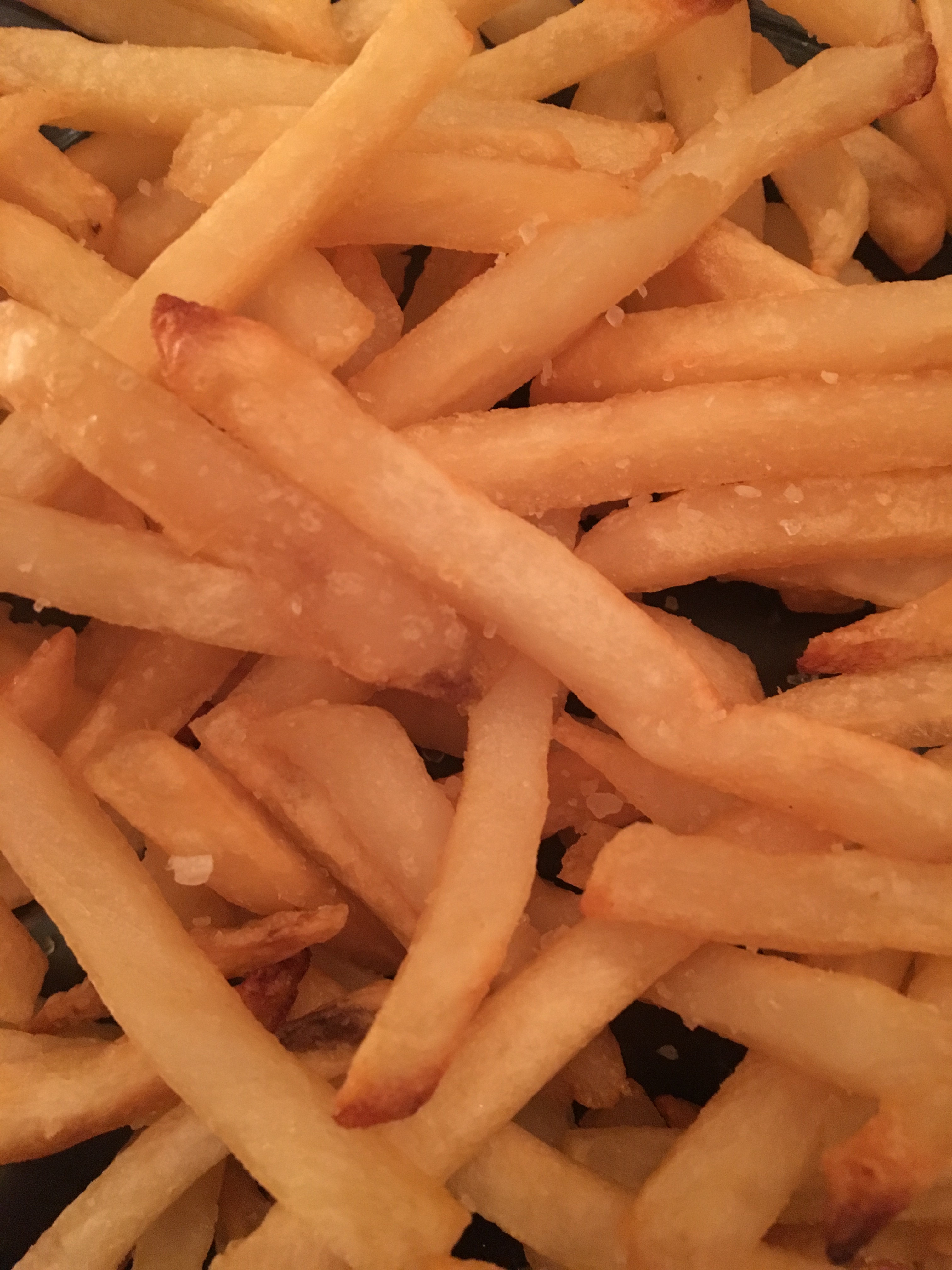
We’ve also established patterns of anticipation within our patterns. My favorite, the silliest but most effective, is french fries for snack. There’s nothing more satisfying on a cold winter evening, than hot salty french fries. We make sure that it’s not a common, every night affair. We save it for the tough days or as a surprise. “Is it french fry night?” Kerri hops and claps in anticipation when she notices that the oven is preheating. Yes. Oh, yes.

The new pattern, of course, is not the table or the fries. It’s the decision to make moments special. We decided amidst the pandemic, the broken wrists, the job losses, the civil unrest, the loss of family and friends, to make lemonade from this time of abundant lemons. We decided to accent the pleasures. To walk slower. To meet our days, not with a list of things-to-do, but with the intention of making a most savory day from the ingredients found in our pantry.

Pattern disruption. Within the hard breakdown of the known, the loss of the comfortable, we are fortunate. Many times, sitting in our sunroom, the happy-lights reflecting in the windows, Dogga quietly behind us chewing his bone, Kerri says, “I love this space.” I nod my head. Me, too. The literal and the metaphoric.

read Kerri’s blogpost about FRENCH FRIES!!!!

Connect The Poles [on KS Friday]

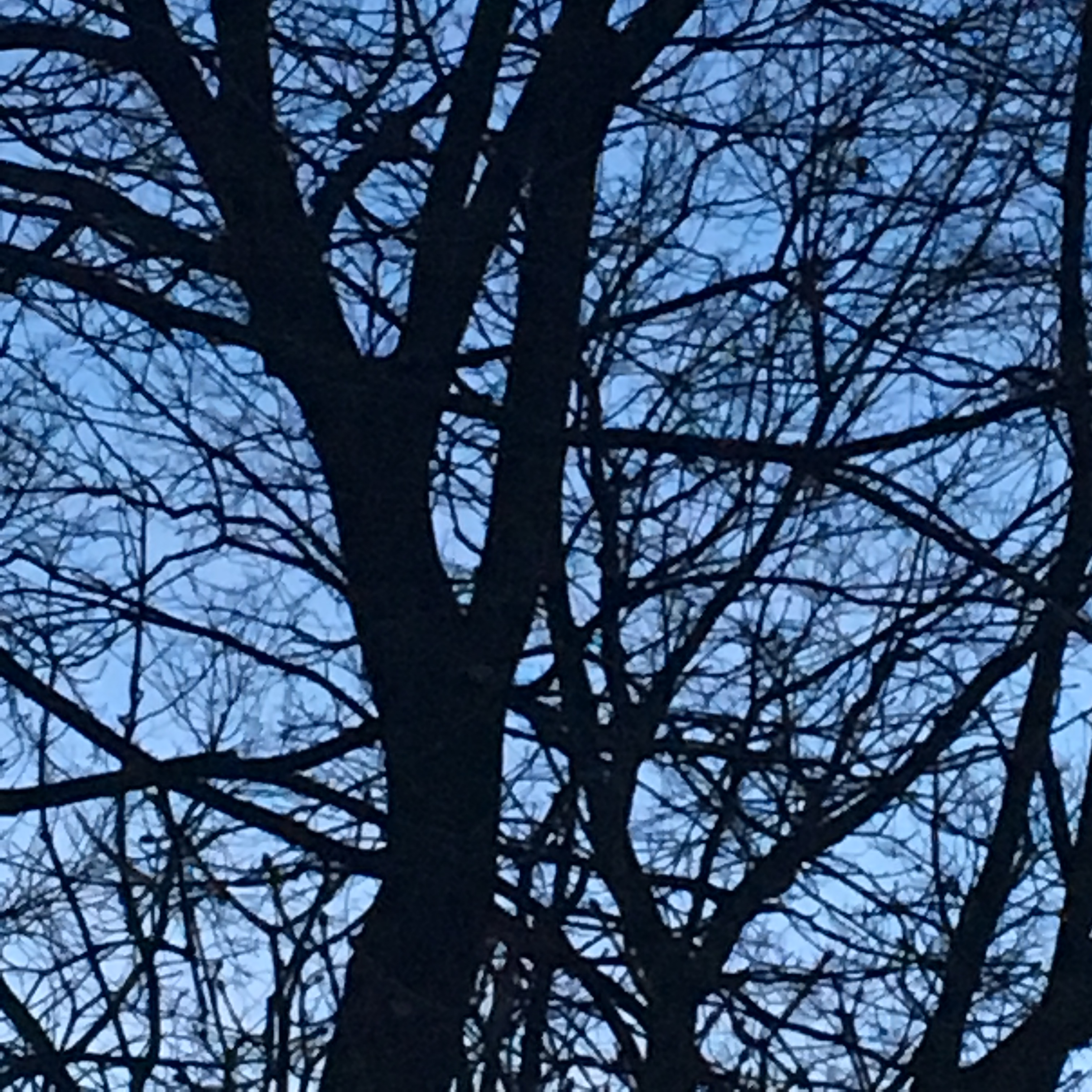
Though it is not, this could be a close-up of an x-ray. Arteries carrying blood away from the heart, veins carrying blood back to the heart, and the capillaries that connect the them. Outgoing. Incoming. And the connection between the two. And, as is always true of language, in the naming and the action-describing, the whole system is obscured. This part does this. That part does that. Mechanical mind applied to a miracle of pulsating life.

In North Carolina I overheard an old guy grousing about climate change. He is a sceptic. “There’s record snow in California!” he decried, “And, we’re having record heat here! You can’t have it both ways!” His reluctant listener bobbed her head. “It’s either warming or it’s not!” he railed. “Explain that to me!” Mechanical mind. Parts-thinkers cannot see the whole system. The capillary-word that tumbled from his mouth but bypassed his mind was “record.” The poles are, after all, connected.

I am fascinated by my current work. I am witness to and a participant in the creation of software. The language is familiar though the meanings are new: epic and story. Bug. My mind, lately, has been awhirl. The developers necessarily talk of information as content-objects. Items. The language of “fixed” things. Yet, the problems in the world that they design and solve for are “fluid.” Information, in our day-and-age, never stops. It grows exponentially everyday. It is movement, constant motion. More/faster. Sometimes I get a glimpse behind the curtain and see the developer’s work of content-items-in-motion. You’ve never seen a faster moving current of symbols. Is it a particle or a wave? It depends.

The tree in our front yard reaches toward the house. Kerri tells me that our children climbed through the branches when they were young. When the crew had to clear some branches to trench the yard, Kerri winced each time a branch snapped and fell to the ground. “I can’t look,” she said, not taking her eyes off the tree. Holding vigil. Holding her heart.

It’s easy to forget that, in all cases, no matter the eyes though which we see, the movement is always back to center. To the heart-of-the-matter. The pieces are never isolated. This tree is not separate or distinct from the sky or Kerri’s heart. The poles are always connected, whether we recognize it, see it, acknowledge it, or not. Breathe in. Breathe out. Two actions or one?

read Kerri’s blog post about THE TREE AND SKY

Kerri’s albums are available on iTunes or streaming on Pandora

See The Adventure [on Merely A Thought Monday]

Let the adventure begin. We put the sign on the table when we moved into the little house on Washington Island. Our new job came with housing and we couldn’t have been more fortunate. Even as the job turned into a debacle, the little house grew in our hearts. It was – and is – a very special place. A few years down the road, we never give thought-space to the work-fiasco. We reminisce about the beautiful place we lived, the good people we met, starry nights, mornings in the canoe, the deer, the power of the lake right outside our door.

A few moments ago I was feeling anxious and was complaining – and realized that I have no business complaining about anything. I stopped myself. Adventures are hard. That’s what makes the experience an adventure. When people lack challenges, they create them. Jigsaw puzzles and computer games. I complain when standing on the threshold of learning something new. My complaining – as I realized a few moments ago – runs amok when I don’t know what to do. It marks the line between the fat-comfort of knowing and the utter-discomfort of not-knowing. Complaining provides cover. I expose my obvious not-knowing; I preempt the shame-strike by complaining. The moment I disallowed complaining, I once again saw the adventure. My anxiety dissipated. The adventure is a jigsaw puzzle all akimbo in the box. I’ll figure it out one piece at a time. Or not. The end result is not nearly as important as the spirit in which I bring to the task. To the moment. To my life.

Mihaly Csikzentmihalyi studied, thought, and wrote extensively about flow. The optimal state of being. I’ve often wished I could invite Mihaly and Alan Watts to dinner and listen to their conversation. The psychologist and the Taoist conversing about flow, that magic space that opens when the path is hard, but not too hard, when boredom is no where in sight. The exercise, when either bored or overwhelmed, is to adjust my orientation to the challenge. Amp it up or slow it down. The zone is self-modulated, rarely an accident, which becomes apparent once the complaining stops. The knowledge that I can place myself in the zone is the spirit I hope to bring to every task for the rest of my days. It’s the practice. It is to see and choose the adventure.

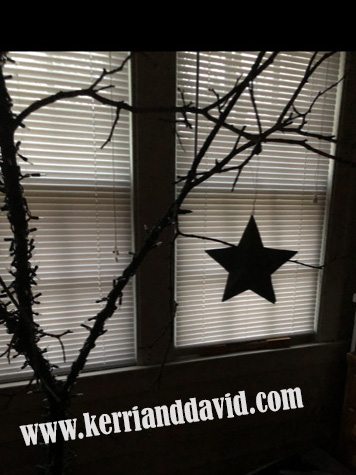
Let the adventure begin. The sign now sits on our table in the sunroom where we meet at the end of each day and tell the stories of our day. While I tell my tale, I see the adventure sign, mostly in reflection, the message reversed. Each day an adventure if I choose to see it. Each day an opportunity for flow if I choose to own and modulate my steps, and place myself in flow.

read Kerri’s blogpost about THE ADVENTURE

Jump Out Of Your Chair [on KS Friday]

If I want to think clearly – or clear my thinking – I walk. Sitting still has always been and continues to be an invitation for thought-log-jams. It was a problem when I was a student. Classrooms come with desks and an expectation that the learner will sit still. I became a master of the controlled wiggle, not because it broke the logjam but because it helped maintain my sanity. For me, sitting still is like a hair shirt with an itchy tag. Sitting still makes my IQ plummet several points. Sitting still interrupts my synapses.

Tom Mck told me that the alternative schools were populated by artists. I intimately understood his observation. Artists need to move to think. They thrive in an alternative to still-sitting.

I’ve made sure that my work throughout my adulthood included movement. Directing plays. Painting big paintings. Facilitating workshops. Even as a teacher I cleared the room of desks. This morning I saw a headline in Forbes Magazine declaring that children learn more through play than through guided instruction. It was curious to me that this was a headline. Sugata Mitra’s been shouting the news for decades. Neil Postman spent his life reading the research and advocating for what the research implied: turn little people toward a passion and get out of the way. Curiosity and desire are an unbeatable team. They will move faster than you might imagine. Move, move, move. Dance. Paint. Sing. Construct. Act. Play. They will let you know when they need you.

I’m learning the lesson again. My work places me squarely in front of a computer for hours each day. Flow. Eddy. Logjam. Wiggle. Move. Sigh, as the synapses start firing up again. Repeat. At this advanced stage of earth-time, you’d think I’d have grasped the full understanding that, for me to be effective, I have to move around. Each morning I review the previous day’s work and immediately know whether or not I found a movement/sitting-still balance.

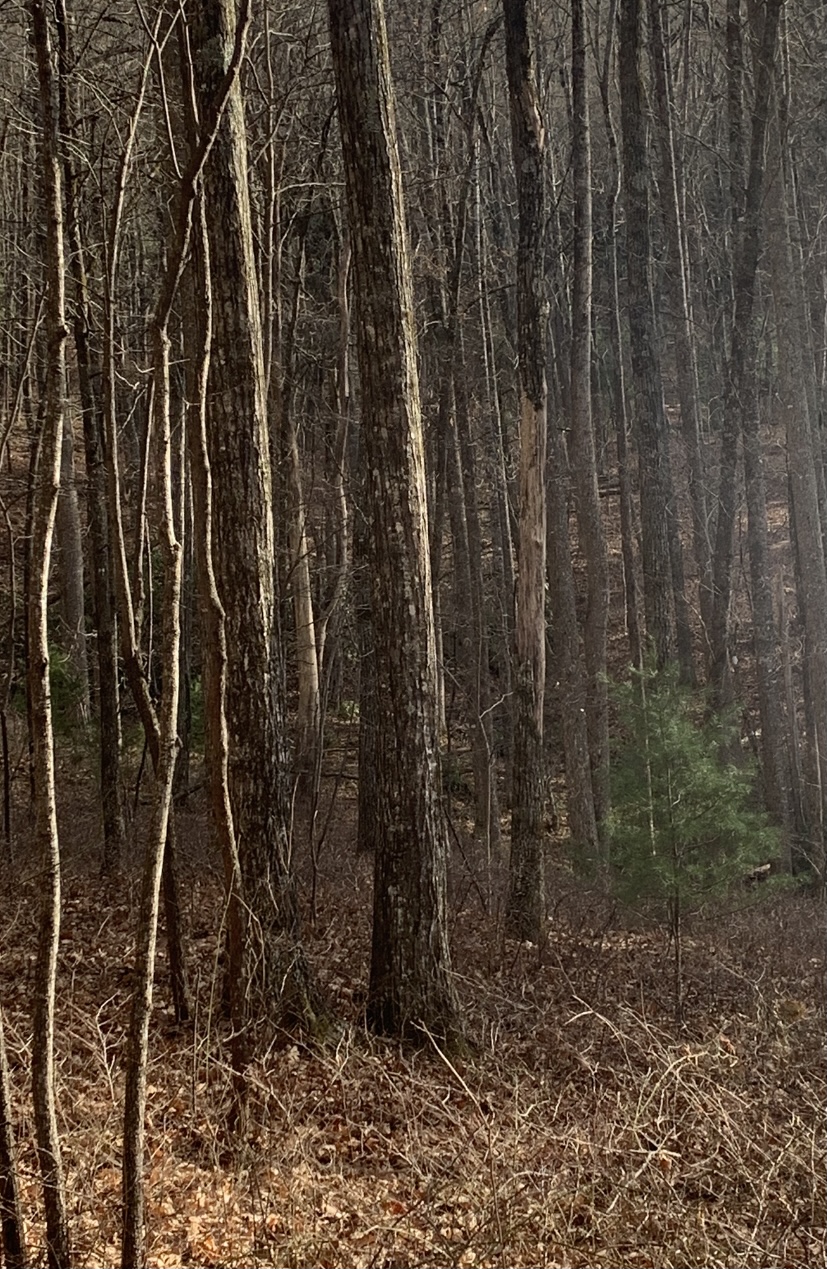
When we stepped on the trail and entered the woods in North Carolina, my mind was chock-full-of-thought-logs. Like everyone else, I stare at the screen and lose track of time. A day can pass me by and I never leave my swivel chair. I swivel for survival. For months, I’d been swiveling and forgetting to stand up and dance my ideas. Fifteen minutes into our hike, the jam broke free. My mind cleared. I could see the subtle landscape inside and outside. I breathed a deep breath. The forest was gorgeous. My mind was spacious and flowing! I resolved, once again, yet again, to attend to the necessity of movement that keeps my mind and heart flowing. Wiggling is maintenance, merely. Swiveling is not a solution. The real game, the full flow, is only available when I jump out of my chair and move-it.

read Kerri’s blog post about THE FOREST

Kerri’s albums are available on iTunes and streaming on Pandora

meander/as it is © 2004 kerri sherwood

Keep The Embers Glowing [on Two Artists Tuesday]

If you encourage us to talk about porches of our past, we’ll tell a tale of sitting in the rocking chairs at our airbnb in the mountains of Colorado, one evening, watching the traffic go by, accidentally drinking the whole bottle of wine (at 10,000 feet), “walking” down the street to get a burger, and instead, finding ourselves at the center of what the locals called “experimental drink night.” I’m sure, to this day, they laugh at the two black-clad tourists who were too polite to turn down what came out of the bartender’s blender. We dialed 20 at 1am and too loudly told him the tale. Good friends will listen to anything that comes out of your mouth at anytime, day or night, and 20 is the best.

Last night, sitting on our airbnb porch in this North Carolina mountain town, sipping a glass of wine, watching the traffic go by, I “remembered” that night. This is our first venture out – just for us – since COVID washed over our lives. It’s become habit to plan our travel path – through an ordinary day or, in this case, miles from home – with minimal human contact as a top criteria. Watching the traffic go by, I thought about that, too. Now, we’d never stumble down the street to get a burger. We’d sit tight – as we did last night – and make ourselves a meal.

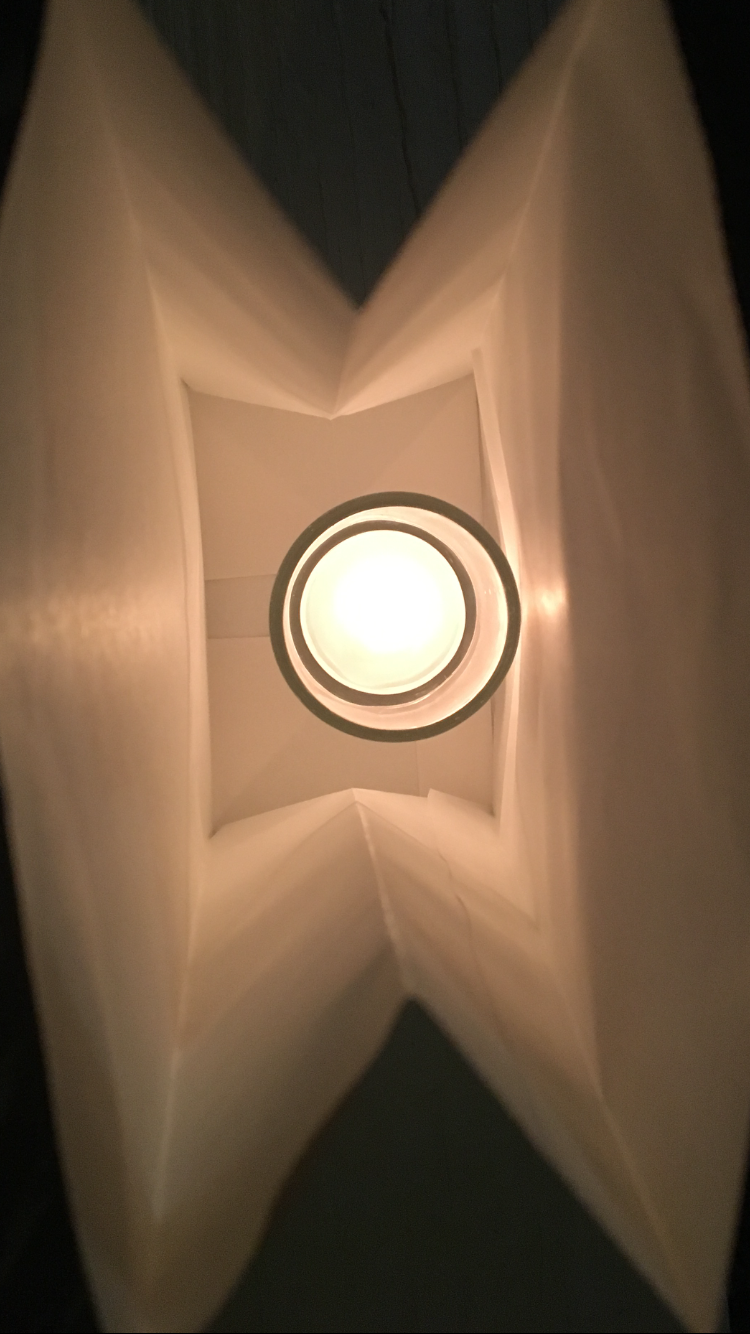
As part of our meal, we lit a few luminaria. We brought a few sacks and candles with us. I realized that we’re keeping a tradition going, however small, so that one day we’ll tell the tale of how we kept our holiday traditions alive – traditions that were once about gathering together, traditions that were meant to bring people into proximity to each other rather than carefully maintaining distance. Our tradition always includes candles. Luminaria. Fire and light. One day – someday – the light we place on the porch will include other people. For now, we keep a small flame to keep the tradition intact.

We’ve started a new tradition that I adore: pop-up dinners. We carry with us a small bistro table and two folding stools. They are lightweight and, in a moment, can appear anywhere. Last night – our last night here – they popped up on our porch. We made a special dinner, surrounded ourselves with luminaria, and watched the world go by. We greeted the people who walked by. We shouted greetings over the traffic across the street to the old guy who’s so beautifully decorated his house for the holidays. He loved our lights. We loved his. At a distance.

We keep the flame alive. We keep the embers of tradition glowing. We’ve established new variations on our adventure theme. Experimental drink night was a one-off affair. Pop-up dinners are here to stay. Be careful what tales you inspire us to tell. Someday, when we’re all together on the porch, we’ll give you an ear-full.

read Kerri’s blog post about LIGHT