“Here we are, trapped in the amber of the moment. There is no why.” ~ Kurt Vonnegut
I’m on a Vonnegut bender. Lately, I’ve fallen into his quotes and I think I’m about to re-read everything he wrote. Standing on the threshold of synesthesia, he submitted his master’s thesis in anthropology on the shapes of stories. It was rejected by “the committee” as being too simplistic, but embraced by the world after he achieved success as a writer. The man was as witty as Quinn and a definite stander-on-the-margins of society, reflecting back both its beauty and brutality.
Trapped in the amber of the moment. Gorgeous. And, standing at the center of the moment, all the explanations necessarily fall away. There is no “why” because there is no separation, no other place to be or person to become. The committee would reject the notion outright since committees are dedicated to explanations and justifications. The elevation of one idea above another. The writer, the artist, serves a different master. “Practicing an art, no matter how well or badly, is a way to make your soul grow, for heaven’s sake.” Yes, another Vonnegut quote. Create something. Soul growth rather than reasoning.
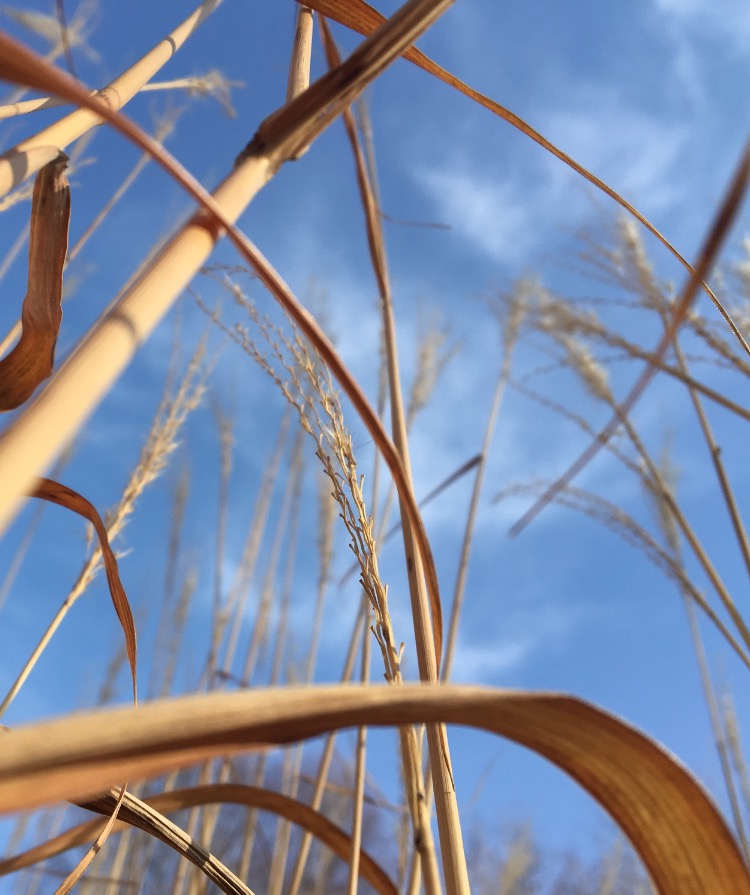
At the center of the moment there is no why. There is no space for puzzling-it-out. There is simply this: a rousing and rowdy “why not!” Blue sky. Tall grasses dancing. Feel it. All of it. No single explanation can possibly contain it.
It is now my opinion, based on life’s experience, that it you don’t find the cliff, the cliff will find you. Wing development is the name of this game. Hide in the closet, bury your head in the sand, drink yourself to oblivion, pretend the monster is not at the door, and you’ll discover in your last moments that looking the other way was, in fact, your cliff.
Master Marsh once asked me why I had the need to run and jump off every cliff. At the time I said, “I don’t know!” My latent response comes straight from Vonnegut: wing development. Apparently my wings took their sweet time developing and needed some extra cliff-age. And, as we all know but are too polite or arrogant to admit, wing development never ceases. There’s always another cliff until there’s not.
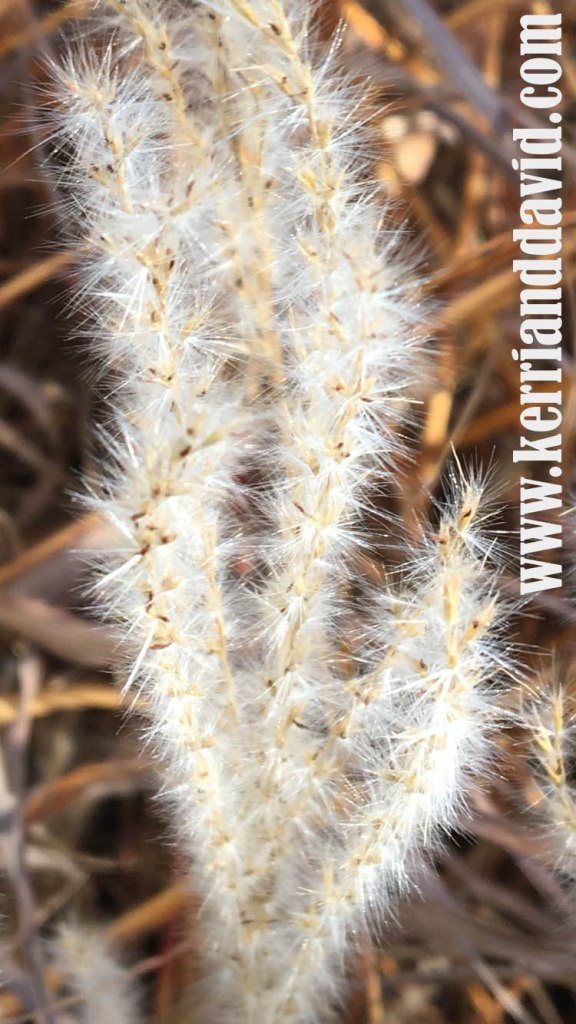
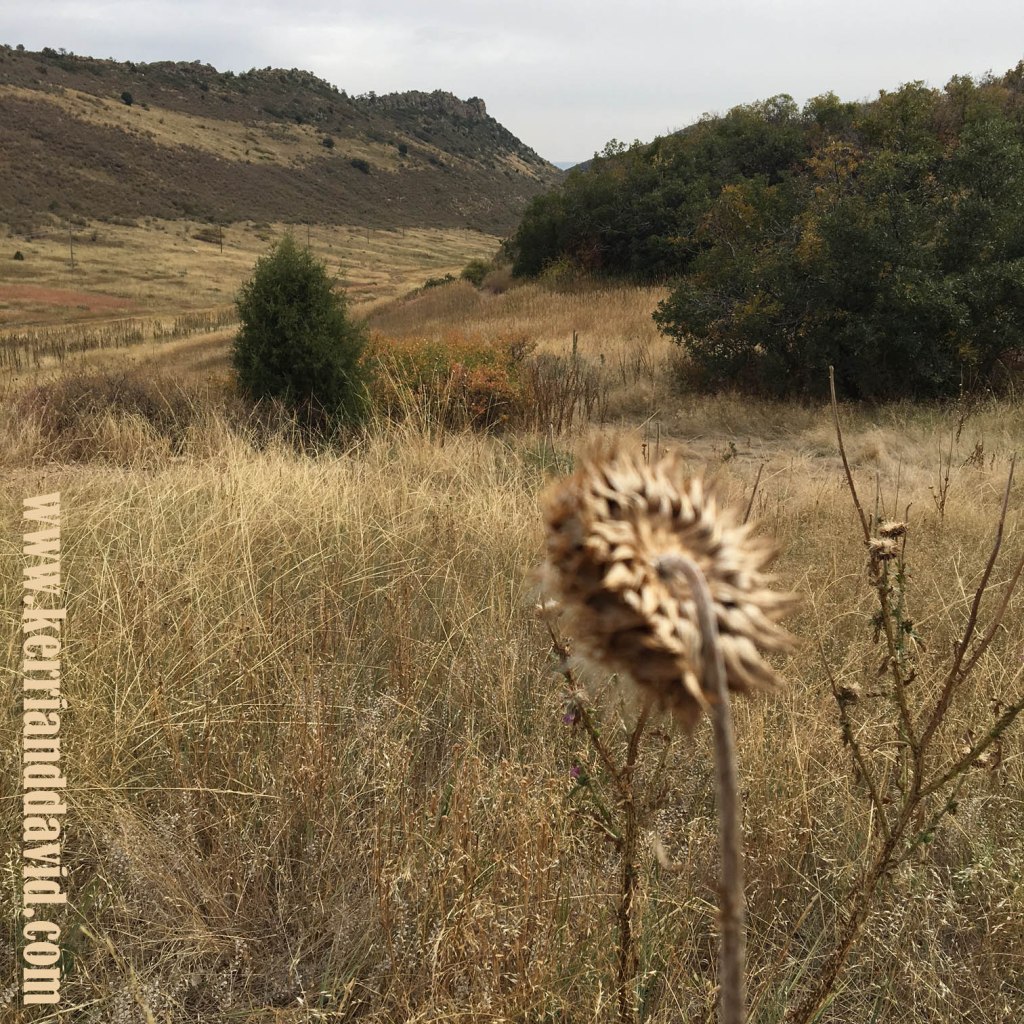
We had a rare warm day so took a walk on our favorite trail. The brilliant raw sienna of the empty pod caught Kerri’s eye. While she took photos of the pod I thought about the thousands of seeds it once held that took flight on the wind. A few certainly found fertile soil. Most did not. That’s the idea behind Kurt Vonnegut’s advice. Don’t hoard your idea seeds. Put them out. Audition for the play. Submit your story. Offer your idea. There’s great truth to the advice: your job is to put it out there, not to decide whether or not it is good enough. Explode the pod rather than protect the seed.
Greg recently told me said, “it doesn’t have meaning until it’s published.” He wasn’t speaking about publishing in a newspaper or by Random House. Sending an email is an act of publishing. To text is to publish. Greg was referring to sharing. It has no meaning until it is shared. And, sharing your creations can be -and often is – vulnerable and scary. Giving a speech is terrifying to most people. Dancing, painting, composing a song, playing a solo, offering your idea in a meeting…all are acts of publishing. All are potential cliffs to jump off.
Explode the pod. Let the seeds fly. The wind will carry them. Some will find fertile soil. Most will not. Wing development is easier when you realize that you are a pod of ideas and not a judge of worth or value.
This is what he wrote. “The irony I feel is that the world is lost on the artistic temperament of these students. They don’t seem awake to all that’s going on.” He’s directing teenage students in a play. He was my student thirty five years ago and reached out to me. We compared notes of the production I directed when he was a teenager, and the production he’s directing now. The world has changed mightily. His production will be viewed through a wholly different lens.
I flipped his phrase over in my mind. Artistry is to be awake to all that’s going on. And, awake is not a steady state. It’s not an arrival platform. It’s a relationship between the inner and the outer. What I know about that relationship is that sometimes you need to look away. His students have drilled for active shooters in the hall since they were in kindergarten. Mine couldn’t have imagined it. His students are navigating a pandemic, they’ve never known a world pre 9/11, they live in a country that is eating itself alive. My actors had easier access to what was going on. What was going on was closer in, more immediate and less abstract. They were not looking at a world-wide horror story or lost in the morass of social media. Cell phones were science fiction to my cast. My actors looked at each other and not at their screens.
Stories are about something. We just watched Erin Burnett’s interview with a Ukrainian husband who lost his wife and children to a Russian mortar attack. A month ago, violent death was nowhere on their radar. They were making dinner, going to school, doing homework, late for work. Erin Burnett began to cry and thank goodness. Humanity breaks through and we awake to what’s going on – really going on. We should all be weeping with Erin Burnett and this man.
Sometimes I feel as if I am looking for the small beautiful moments. I am trying to root my day in the explosion of color, the pastel sky, Dogga in the sun. Holding hands. Cooking dinner together. I am trying to be awake to what is going on, the anger and division and warmongering and carelessness as we soil our nest – without it frying my insides. Holding hands is just as real. Reaching toward our neighbors is also what’s going on.
Stories have to be about something and most often stories are about transcendence. Waking up to what is going on is less about waking up – we already know – and more about fully acknowledging it, facing the full picture and turning toward it rather than running away. But, before that final act, that moment of deciding enough-is-enough, before we are willing to blink open our eyes, we pretend the problem is non-existent or small. We ignore the obvious. 500 year storms every year. A family killed by a mortar shell. We bury our faces in our phones, we ban critical race theory, and toss our attention in a Twitter reality or a Tik-Tok diversion.
I wanted to write back and suggest that the world is not lost on the artistic temperament of his students, it’s simply too hard to look at the world so they are choosing to look away. That’s what their play will ultimately be about.
My sketchbooks are punctuated by weird landscapes. It was a practice. When I felt the need to draw regularly, to exercise my artistry, I worked on compositions for future paintings. And, when I had no idea what to draw, no composition in my head, I sketched my weird landscapes. They were fun and I got lost in them.
There was a blowback effect. I’ve never been a landscape artist. I considered my weird landscapes as not-serious exercises. Yet, they were made of scribbles and patterns and it became a game to collect patterns from nature. My not-serious exercises required me to look around. To get close. To look at the edges and splashes and etchings available in nature. To see. My weird landscapes became eye-opening meditations.
There are miracle-patterns in bark. Orchids, I recently learned, are a master-class of pattern, shape, and color. It is impossible to find a hand painted brush and ink painting as perfect or as spontaneous and lively as the strokes on the rattlesnake plant. Go to the garden if color combinations are in question.
I will never invent anything as imaginable, as impossibly beautiful, as what already exists in this world. I will never produce any painting as glorious as the paintings in nature. The best I can do is play. Look and marvel. And isn’t that a great relief?
I’ve tried to keep notes on my computer. I know that typing my notes into the digital world will make them searchable. Easier to find. It just doesn’t work for me. If I write with a pen on paper, I remember. Marking an important page with a Post-it note makes finding my notes faster than a search engine. It’s not that I am old school. I’m kinesthetic.
I’ve always kept notebooks. At this moment there are two within my reach. The Melange notes. On the desk in my office a is a notebook and three yellow pads. The yellow pads are a task-capture strategy. The notebook is idea capture. Quote capture. Thoughts-in-progress. The notebooks are like my sketchbooks, a place to work out my thought-compositions. They are the history, the breadcrumb trail of a project. For me, the riches are never in the outcome. The real treasures are alive in the notebook process paths.
I’d rather look at an artist’s sketchbook than the finished painting. I have a book of Picasso’s sketches that I treasure. Spend a few moments in Leonardo’s sketches or Michelangelo’s scribbles and you’ll forever toss away the notion of a mistake. Look behind the scenes at the process. A dancer will spend hours in repetition to incorporate a move into their body. The playwright will write hundreds of pages to arrive at a few, yet, those hundreds of pages are nothing less than reduction to essence. Refinement on the path of saying more with less.
Look behind to see the structure. Turn it over to see the pattern. I am, to this day, in awe of the Wayan Kulit master. I looked behind the shadow puppet screen to see the artist at work and, what appears in simple two-dimensions in front of the curtain, is a symphony of structure and improvisation. The man wore an oil lamp on his head to cast the light for the puppets, held a rock between his toes to tap, keeping time for the musicians seated behind him, all the while manipulating and voicing multiple characters, telling with simple clarity an epic tale. A lifetime of trial and error, complexity made simple, like a dancer, the story was deeply choreographed in his body. I wished I could have seen this elder storyteller-priest when he was young and developing his mastery. I’d love to see his notebooks.
I’ve recently had cause to return to my old notebooks. I marvel at the thought cycles coming back around. I’m taken again and again by the questions that still linger, and by those that seem antiquated. “How could I have not seen it!” I smile, knowing in just a few more drafts, a notebook or two down the road, the clarity would arrive.
A peek behind the scenes. It is for me, where the real beauty shines.
George Ohr was one of the great ceramic artists of the late 19th and early 20th century. Like Van Gogh, he died unknown, never experiencing the success of his work. Robert reminded me of George Ohr’s story and I reminded Robert that Ohr would be a terrific story for him to tell through a one-man play.
What is it to follow your art-call with heart and dedication with nary a hint of financial reward or success on the horizon? Vincent Van Gogh would have been called an amateur during his life since the making-of-money is the flag we plant in the sand marking the line between being a professional and a dilettante. Those lines do not exist for artists with a deeper call. The money does not the artist make.
The Ohr-O’Keefe Museum of Art was designed by renowned architect Frank Gehry, quite a journey for the unseen work of George Ohr’s life to find so much vibrant admiration after his passing. Had he known it would have changed nothing. He’d have spent his days at the potter’s wheel either way.
“Shape clay into a vessel; It is the space within that makes it useful. Cut out doors and windows from a room; It is the holes that make it useful. Therefore, profit comes from what is there; Usefulness from what is not there.” ~Lao-tzu
Profit and usefulness. Shape and space. Mary Oliver asked the question: What will you do with your one wild and precious life? It hits the nail squarely on the head. It was not the pots that George Ohr made or the paintings that Van Gogh painted, it was the space they entered while throwing pots and painting paintings. It was the world they entered through their artistry, more expansive than financial success, more necessary than renown. A wild and precious life lived wildly and with avid appreciation.
Standing amidst the brilliant orchids, some of the flowers were in their last days. Their beauty fading, they cared not a wit. It is not in their nature to stretch their faces and pretend that the cycle of life is more valuable in the early bloom than it is in the late retreat. All is treasured, beguiling. Every last moment, not to be stalled or held onto. The root as necessary as the bloom, the winter as indispensable as the spring.
“Yes, I’m being followed by a moonshadow/Moonshadow, moonshadow/Leaping and hopping on a moonshadow/Moonshadow, moonshadow” ~ Cat Stevens, Moonshadow
An appreciation of life, no matter what comes. It is the meaning of this lyric, this song – or so I’ve read. It seems obvious. I’m having many, many conversations about loss these days. This has been an era of loss and, so the cliche’ goes, with loss new opportunity arrives. It’s true though one must move through the loss in order to arrive at the new. On the way, there is weeping and fear and anger and disorientation. Chrysalis. The trick, we are told, is about focus placement. One day we shift our eyes and see what we have instead of what we no longer possess. We move toward rather than look back.
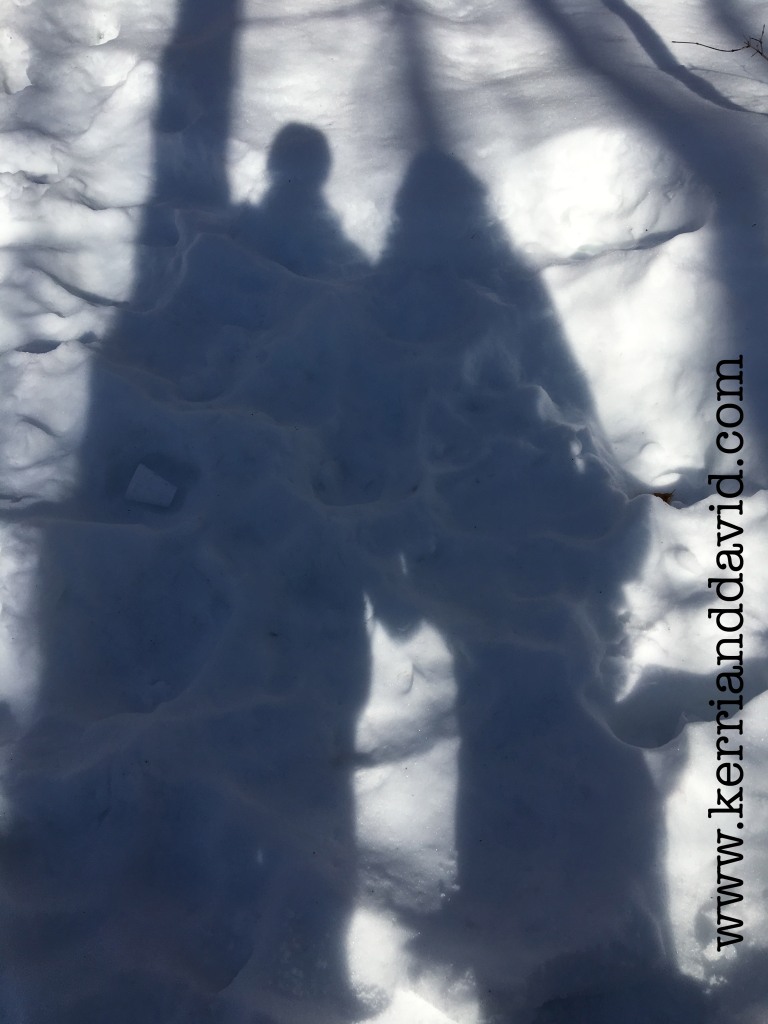
Kerri has, for years, surrounded herself with symbols of peace. They are on our walls, on rings that she wears, on chains draped on the corner of our bathroom mirror. She draws them in the sand on the trail. A prayer for the world she desires to create. Inside and out. Since she fell, my solo-piano-playing wife has lost more than mobility in her wrists. Strange stuff is happening. Fingers that sometimes refuse to respond. Pain that shoots, seemingly from nowhere. After a photograph – a wish for the world, a peace sign in shadow – she said, “Come look at this. Look how much my finger is bending!” Strange stuff.
What is most remarkable about this shadow is, a year ago, it would have been cause for frustration. A reminder of loss. Full of fear. Today, it was a curiosity. She looks back, she looks forward. Each day she writes lyrics and poetry and wisdoms. She hums the music running through her mind and heart and, sometimes, she dances. Standing at the crossroads of what was and what is to become. Peace replaces pain. All in good time. Good time. Wings readying to unfurl.
[peace. this is one of my favorite pieces of Kerri’s]
Kerri’s albums are available on iTunes and streaming on Pandora
It seems like such a simple concept. Tom taught it. So did Paul. And, since I was one of their students, I taught it, too. How you treat your space is a reflection of what you think of your art. The concept is universal. Replace the word “art” with “work” or “life.” You and your space are not separate. We worked hard at the theatre to become better artists and produce better plays and a significant part of that work was bettering and maintaining our artistic “home.” We were proud of our work and it showed -everywhere. Our “space” included our community and our art was meant to make it better.
Yesterday it was warm so we took a walk on a favorite loop. As we returned to the car we watched a man clean out his truck. He’d come to the park, not to walk or appreciate the quiet. His purpose was to dump his trash onto the paved lot. In an earlier time, pre-gun-gun-everywhere, we might have said something. Instead, we stared in disbelief. His space,I thought, does not extend beyond his truck. Neither does his community.
Yesterday, after the walk I received a text from Mike. He was a big part of my long-ago theatre. He’s realizing a dream and opening his own theatre. He’s led a company for a few decades but they didn’t have their own space. Now, they do. He – the artistic director – was mopping the floor and paused to send me a text. It’s the other part of the lesson from Tom and Paul. And Demarcus. And Quinn. There’s no hierarchy. There’s no above and below. Loving the space, loving the art that happens in the space: no separation. One and the same for everyone involved and everyone needs to be involved.
You and your space are not separate. The care you take of your outer space is equal to the care you give to your inner space. And, vice-versa.
[visit Justin’s to see how a company can make a better world]
After a fairly contentious conference I co-facilitated in The Netherlands, Kerri and I took the bullet train to Paris. It was early in our relationship and our first time abroad together. We couldn’t afford to get to Paris otherwise, so tagging a small vacation onto a work trip seemed foolish not to do. It was the perfect place at the perfect time. I released the conference friction the moment we stepped off the train. I didn’t know it at the time but on the streets of Paris I left behind a skin that I’d badly needed to shed.
We had limited funds so we bought baguettes and Camembert cheese, fruit, tarts from vendors and bottles of wine. We ate in parks. We wandered the streets. Climbed the hill to Sacre’- Coeur, visited Rodin, and tried to get lost. We fell exhausted into bed each night, full of art and sound and color and delicious wandering. One night we sauntered to the Arc de Triomphe and barely escaped a riot. Bus loads of police in riot gear appeared on the street and, wide-eyed, we slipped out of the crowd and hustled to find more peaceful rues. Paris now serves as a marker. There was before Paris. And after.
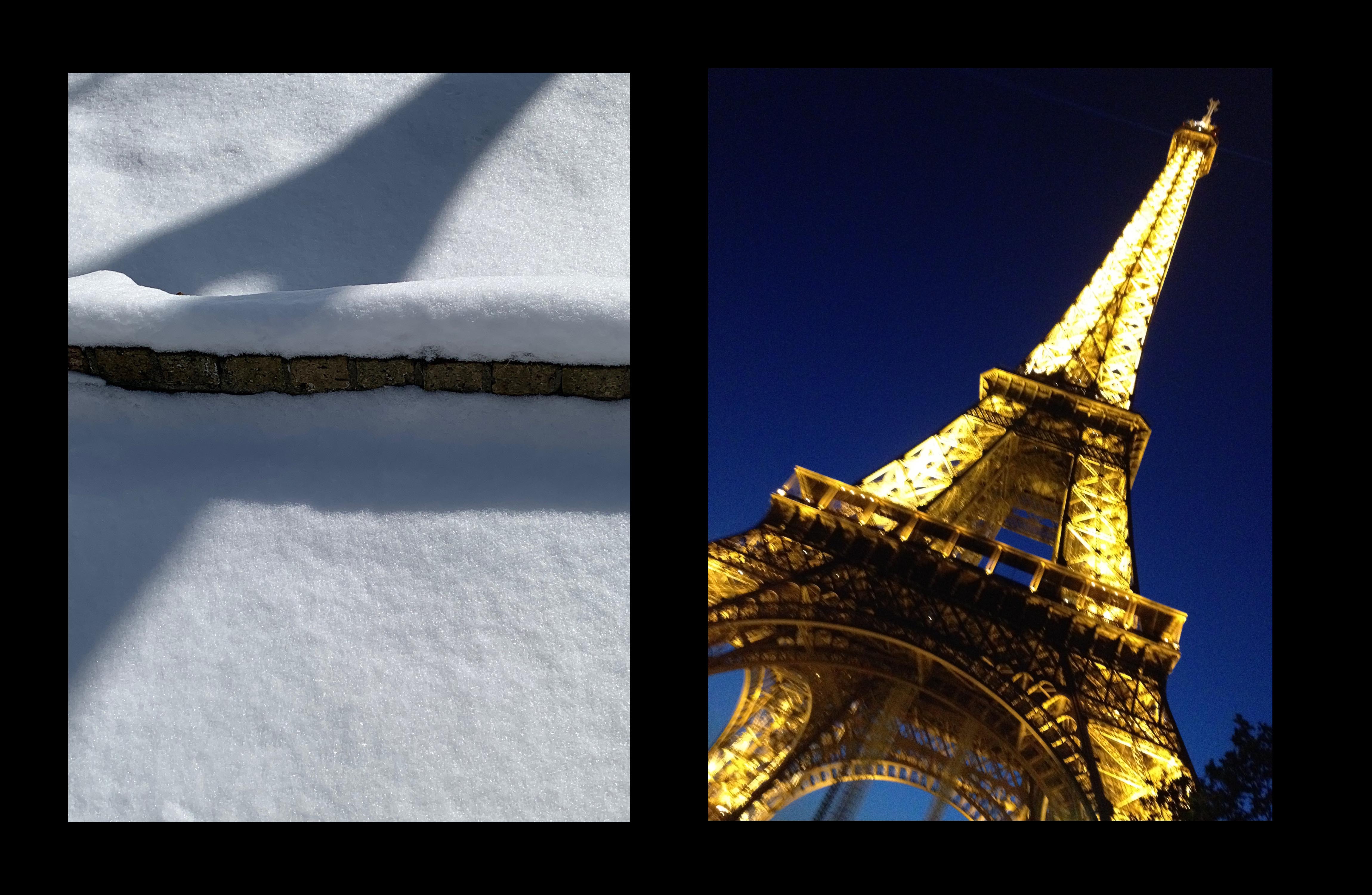
“This shadow looks like that picture I took of the Eiffel Tower,” she said, showing me the photo of the shadow. The angle is perfect. The shadow is appropriate. Shadows. What was. An outline of the people we were, reflected on the snow. And, the series of photos, shadows along the way, the surprising people we have lived-into since we wandered those streets, shedding old skin, and boarded a plane home with a a question, “What’s next?” What’s now?
Posted on February 24, 2022 by davidrobinsoncreative
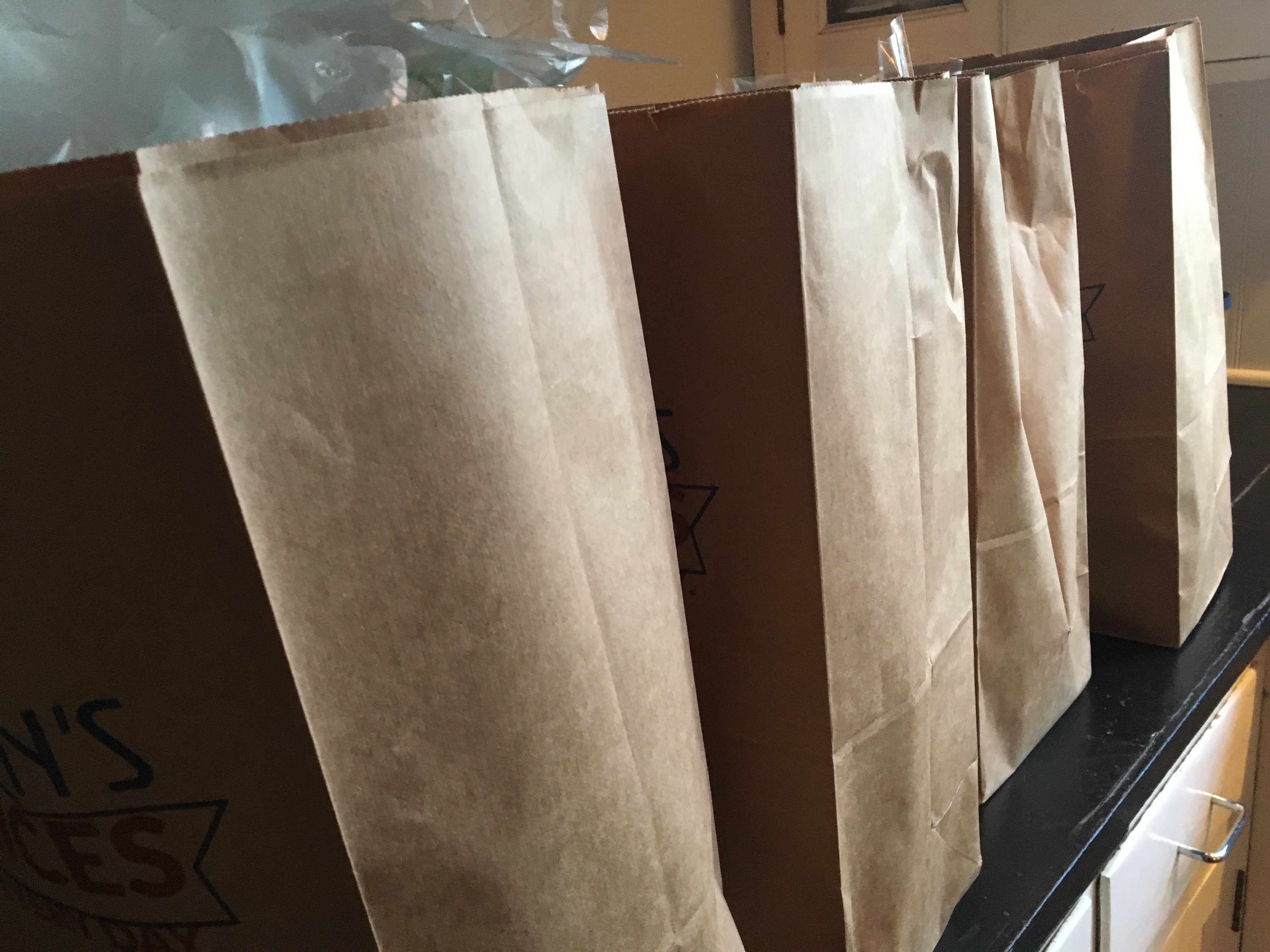
To Chris Crites, grocery shopping day is a feast. To Chris, these sacks are more than functional. They are more than ordinary shopping bags. These bags are canvas. They are opportunities for art. They are surfaces meant for brilliant mugshots. The underbelly of society made beautiful on brown paper sacks.
I’m not sure if it was Chris or the other artists in my Seattle pod that prompted me to experiment. One of my forays into “where will this take me” required paper sacks. Lots of paper sacks, torn to bits and pasted on a canvas. I drew and painted on top of the bits.
I forgot about my experiment until I met Kerri and one day unrolled all the canvas to show her what was in the pile. She cooed at my paper bag experiment. “This should be a series,” she said. “It should be called Earth Interrupted.” And, so it was.
I have (mostly) been a painter of people. I’ve learned that art – and theatre – for me are a means and not an end. In other words, I don’t paint because I want to master the craft of painting or make brilliant paintings. I paint to study people. I paint because it is a meditative space. I paint because I lose myself and enter someplace bigger. I paint because it helps me “to see.”
I completed six additions to the Earth Interrupted series and then stopped. I lost my way. That’s always been my experience when I abstract- when I leave the figure and mess with texture and shape. I know I’m not finished with it. Getting lost is part of the process.
Unloading the groceries last week brought me up short. I felt like Chris Crites. So much possibility sitting on the counter. So much material begging to be transformed.












 The Direction of Intention