The Glue That Binds [David’s blog on Merely A Thought Monday]

It’s such a small line of distinction yet the implications are profound. Our mechanic, Steve, believes that he is rendering a service to members of his community. His goal – his ethic – is to do good work for the people who trust him with their cars. Consequently, he has a loyal following and a solid, healthy business. Visit Steve’s shop and you’ll find an old guy sitting in an easy chair reading the paper. No one is in a hurry. Ask a question and Steve will stop what he’s doing and come look under your car. Then, he’ll chat with you about the weather or politics or swap stories about what the kids are up to. Steve won’t try to sell you what you don’t need. Leave your car with him and more often than not, after the repair, your car magically shows up in your driveway.

I always feel good after a visit with Steve.

Across the town is a specialty shop. They do work that Steve can’t do – or won’t do – in his small garage. He used to refer clients when they needed specialty work done on their cars. Not anymore. The owner of that shop is hyper-focused on how to maximize his business so, now, if you take your car to the specialty shop, you’ll be presented with a long list of repairs that your car may or may not need. The owner of this shop is no longer driven by a service ethic; he’s driven by a profit motive. He’s definitely maximizing his business.

There is a line of distinction and it is as simple as this:

I believe what we’ve lost, what we are now missing, is what Steve embodies: a genuine service motive. It’s an old world mentality, a small town ethic: work as service to others. Social cohesion is the result of people dedicated to serving other people. You can feel it at Steve’s shop. It’s personal. People gather there. Trust is a given.

On the other side of the line is the specialty shop. It’s a mill. Business is business and business is about making money rather than caring for the needs of the customer. You can feel it. It’s become impersonal. The lobby is like an elevator: no one talks. Trust is not a given: the work is hyper-efficient, factory-esque, so customers leave doubting the quality of the workmanship because the customer is no longer the center of the equation. Cha-ching is now the boss.

Social cohesion is the casualty of business dedicated to the bottom line above the people they serve.

And isn’t social cohesion what we are lacking?

We can serve each other – the very thing that makes a community and nation great. Or, we can exploit each other – the very thing that divides a community and erodes its trust. I believe that all of those angry red-hat-wearing-fox-news-watching folks want the same thing that I want: more Steves. They – like me – don’t want to be continually exploited, demeaned, and reduced by gorilla corporate interests who use us as a resource to be consumed and not a customer to be served. We want a government that serves the people rather than lines corporate pockets. More trust.

In the afterward of her book, Michelle Obama thanks the many, many people who supported her with the double entendre, “I am glad for you.” It is the encapsulation of a service motive. The first meaning of the double: For you I am glad. Your work made me a better writer, a better person. I could not have done this without you. Your service on my behalf matters more than I can express.

Meaning number two: I celebrate you. I serve your betterment just as you serve mine. We give generously to each other because Generosity – service – is the glue that binds us: social cohesion.

It’s a simple line of distinction. It is profound.

read Kerri’s blogpost about GLAD FOR YOU

likesharesupportcommentsubscribethankyou.

Connective Tissue [David’s blog on Two Artists Tuesday]

I literally watched the ice crystals blossom on the glass. I was Jack watching multiple bean stalks stretch and reach into the sky. They feathered and connected, the light behind them making the ice-miracle color-lush.

It brought fascia to mind. That is not as arbitrary a thought as it might as first seem. I am reading about fascia. Don’t ask me why. I won’t be able to answer. My reasons are not random, just hard to articulate.

Fascia is the connective tissue of the body. It not only wraps around muscle, organs, and bones, it also embraces every ligament, every joint, every nerve, every artery and vein, every cell of our bodies. Every thing. It is a paradoxical wonder: it is flexible but provides structure, it is soft and loose but provides support. It literally holds our bodies together. It gives us shape. Most amazing of all, it is continuous, a an unbroken tissue-web from the tippy-top of our heads to the farthest molecule of our big toe, from the outermost layer to the innermost core.

When fascia is stressed, it tightens. It grips. It holds down the fort.

It responds to sensory stimuli. It feels. Trauma, physical or psychological, can cause the fascia to lose flexibility; this loss is called “restrictions”. In other words, too much stress makes fascia grip and not let go. The restriction creates an energy eddy that solidifies. A hard spot. A place where toxins congregate.

The good news is that the eddy or restriction can be released – but never through force. Pressure only serves to make the grip tighter. Gentle oppositional touch, fascia yoga, will eventually send the message: you can let go now. Relax. Trust.

I remember watching Koyaanisqasti, the 1982 documentary composed of slow motion and time lapse footage, no spoken words, that explores our relationship with technology and nature. Koyaanisqasti is a Hopi word meaning “life out of balance.” I was awe-struck by the interconnectivity it revealed. We move as one whether we realize it or not. We are not separate from nature or the world in which we live. We are nature. Out of balance with ourselves.

My long lost pal Roger used to say that it is a trick of language that fools us into compartmentalizing our experiences. “When you hurt your toe, it’s not just your toe that is injured; your whole body is injured,” he’d say.

Every “thing” impacts every other “thing”. Separation is an illusion.

The second day. The fascia of the nation is stressed. Hard spots have formed. Our faith in the populace is strained. We tighten our grip. We isolate, circle the wagons and hold down the fort. It is early so we can do little more than shake our heads in disbelief. 77 million of us chose the path of hatred and gross indecency. We fracture. We necessarily emphasize separation, “I am not them.”

And yet, we…The whole body is injured.

Perhaps the fascia has some lessons to teach us about how we might deal with the trauma to our national body: the election of indecency, the elevation of a confederacy of dunces. It certainly provides clues for how we – those of us who did not vote for hatred – might regain a healthy equilibrium. Gentle touch. Send the message to one another, “I am here.” Not only are we more than opposition; we are the carriers of the spark of the ideal of democracy. We are the movement forward. Even though an abomination currently sits at the resolute desk, we are the connective tissue, the shape givers of our nation and of the future.

read Kerri’s blogpost about ICE

likesharesupportcommentsubscribe…thankyou.

The Most Loving Thing [David’s blog on Two Artists Tuesday]

We are still recovering from covid. The progress is slow but certain. We’re finally -after a month – able to walk pieces of our usual trails. Each day we gauge what we can realistically do, we stop often, we turn around or cut short our regular loop when our bodies signal it’s time to stop. “My legs are shaking,” I say as we return to the car. We are not frustrated by our weakness, rather, we are inordinately grateful to be outside, in nature, marveling at the November sky. Especially now. In nature we find sanity in a nation that has lost its mind.

Within our information bubble there is an energetic discussion about self-care. There is encouragement to disconnect from the doom-scrolling and, instead, firmly focus on what brings joy, what invokes love. There is a concurrent ubiquitous conversation about feeling unsafe in a nation that put a rapist in the white house, a convicted felon and avowed fascist who daily promises violence to those who oppose him. Fully half of the nation opposes him so feelings of insecurity are warranted.

The third conversation strand is quieter, a question filled with inordinate sadness. It is the question of whether or not to disconnect from people – family and friends – who knowingly voted for fascism, who support the coming violence. These relationships, personal and familial, no longer feel safe. It’s a matter of trust – of being able to trust someone who either lacks a moral center or who is so enraged that they see themselves mirrored in the despot-elect. It’s impossible to trust people so completely unplugged from reality and so willing to justify thuggery.

It is confusing to love but not to trust. It is bewildering to feel threatened by those you love. It’s a question of vulnerability. It’s a question of honesty, “Do I pretend…” It is made more untenable when taking-a-break or disconnecting is understood as not-loving.

I understand the choice – either way – to be self-loving. We must now protect ourselves.

Also, there is this: a loving parent will not let their child run into the busy street. It is a loving act to shout, “You cannot do this!” It is not without love that we look at our maga-voting family and friends and say, “I cannot pretend that this is election was like all others; I cannot pretend that we are merely having a difference of opinion. We are not. Your vote was for an amoral grotesque who openly promises violence as an authoritarian dictator. Our difference runs much deeper than mere opinion.”

The most loving thing we can do for ourselves is nurture and attend to relationships with those we trust. The most loving thing we can do for our friends and family now hurtling toward the dangerous fascist road is to shout, with voice or with silence, “You cannot do this.”

read Kerri’s blogpost about NOVEMBER SKY

like. share. comment. subscribe. support…thank you.

My Wise-Eyes [David’s blog on KS Friday]

We were awake in the middle of the night. I don’t mind these doughnut holes in our sleep because we tend to have heart-to-heart chats. In the dark hours we reach deep into reflection and yearning. We ponder. Last night we talked about our writing. The differences in our styles, what we have learned from each other, how we are becoming better-and-better writers because we write side-by-side, share our work and edit each other.

Every artist needs a person to view or read their work who is completely honest. No energy need be spent protecting the artist-ego. In the theatre that person is called “wise-eyes.” And, in order to take full advantage of the wise-eyes, the artist needs to have open-ears capable of hearing honest reflection. It’s a relationship of deepest trust: “Tell me what you think, see, hear…” Wise-eyes are hard to come by.

Last night, as we talked, I was suddenly overwhelmed by my good fortune: we can – and do – talk about anything. I trust her feedback and insights implicitly. She has my best interests at heart and I have hers. And so we grow. I married my wise-eyes.

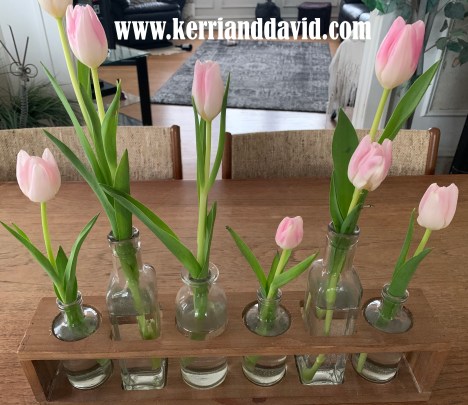
The gorgeous shock of dried flowers against an impressionist’s blue sky. I would never see this image were I to walk on my own. And that’s the point. She has me opening my eyes to look at the world in ways that do not come naturally to me. Paradoxically expanding my view to include the close-in, the detail. My head is usually in the esoteric clouds. My wise-eyes-wife is teaching me to also look down, to plant my feet on the ground, to (as she says) “gear-down”. To challenge my idea of what comes naturally. I am becoming a much better artist for it.

Untitled Interlude/Released From The Heart © 1995 Kerri Sherwood

Kerri’s albums are available on iTunes and streaming on Pandora and iHeart Radio

read Kerri’s blogpost about DRIED FLOWERS AND BLUE SKY

like. share. support. subscribe. comment. thank you.

Turn Around And Look [on DR Thursday]

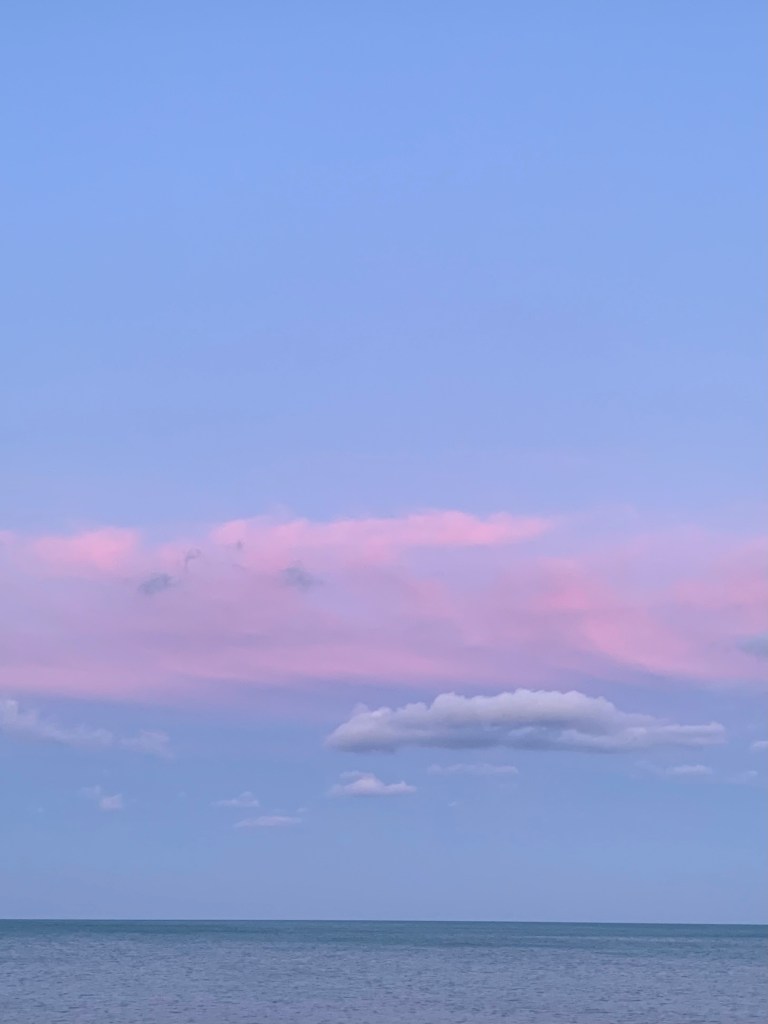
One little line gives reference to the whole. The horizon line. It is how we naturally – visually – orient in space. It is a baseline of perception. It’s the beginning of discernment.

It is a line that disappeared.

Among other things, art is a reflection of its time. In the past century, art leapt into the abstract. We are “post-modern”. Expressions of personal fantasy rule over community truth, a breaking apart of shared ideals, instant doubt of objective theories…we are mirrored in post-modern art. What is art? What is it not? There’s not a whit of agreement to be found.

General distrust is the beating heart of the post-modern ideal. Division, aggression, tribalism, conspiracy…are its blossoms. Our children perform active-shooter-drills in school; a performance we shudder to attend while our leaders smile and look the other way. Post-modernism at its finest. The absence of a baseline.

Shared truth, group trust, community…requires an undeniable horizon line.

What is up? What is down? What has value? What does not? What has merit? What is undeserving? There is a line. Where is it?

Walking through the antique mall, Brad and I discussed chatGPT. I’m playing with it; he’s using it in his work. It’s raising some very big questions. The questions are not new. They are the next step in a series of questions people have been asking for the past 30 years: what is true? A photograph was once proof that something happened. That hasn’t been true for a few decades. A video was once proof an experience occurred. That is no longer true. News – a word that once implied the accurate reporting of an event. No more. No horizon line.

Brad and I turned our discussion to a sorely missing quality in our times: discernment. In the absence of a horizon line, people will – and do – believe anything. We speculated that, with the introduction of chatGPT into our world, perhaps discernment will once again become important. Perhaps the complete absence of a truth-anchor will turn us toward a common center and require us to look at each other, to seek and restore general trust. The post-modern tide will someday turn and we will draw an old/new line in the sand: we’re-all-in-this-together.

I know, I know. Pie-in-the-sky. However, I’d like to point out that shared dreaming brought us here. Shared dreaming is how we stood on the moon. It is how we can talk to someone across the planet using a small device that fits in our pockets. When a dream becomes shared it becomes powerful. Manifest. A shared dream is a form of a horizon line.

If a shared dream isn’t powerful enough to establish trust, try remembering the other one; the original line of discernment. The line that invites curiosity. It need not be debated. Turn around and look. The horizon line is everywhere.

Four-by-Four, 48x48IN, acrylic, (sold)

read Kerri’s blogpost about THE HORIZON

4×4 © 2007 david robinson

Open The Binder [on Merely A Thought Monday]

He was referred to me because he was failing. His English teacher told me that he was impossible, that he rarely came to class and he “just wasn’t interested in writing.” At the time I was working at the “alternative school” running an independent study program. My job was “to catch the students that were falling through the cracks” or “to retrieve the students who’d already fallen.” To this day, the language kills me.

We talked. We laughed. The assignments I gave him were about fun and breathing space. After three sessions, when he trusted me not to judge him, he came to our appointment with a thick black binder. It was very old. The seams were ripping. It was a sacred object. He tapped his fingers on the cover, still deciding whether or not to share it with me. He wriggled in his chair, vulnerable.

I will always remember the moment he asked, “Can I show you something?” I felt honored. It is what I always feel when an artist comes out of hiding and shares their work with me.

He gingerly opened the binder. It was literally bursting with stories that he’d written and alive with illustrations that he’d drawn. This young man was ditching English class so he could hide in the football stadium and write stories.

I asked him to read to me. As he read, he made marks on the page. “What are you doing?” I asked.

“Making changes.”

After a few sessions I asked questions about the characters. He shared his illustrations. One day, he came to our session with a new story complete with sketches that we placed in sequence across the floor. As he read, we stepped to the next drawing. And the next. He made more marks on his pages. He made notes on his sketches.

One day I asked if I could read one of his stories to him. As he listened to me read, he began to coach my reading. “Whoa! Did I write that?” he said, grabbing the pages from my hand. And then he asked, “How can I write that in a better way?”

“I don’t know,” I smiled. “What does it mean to be better?”

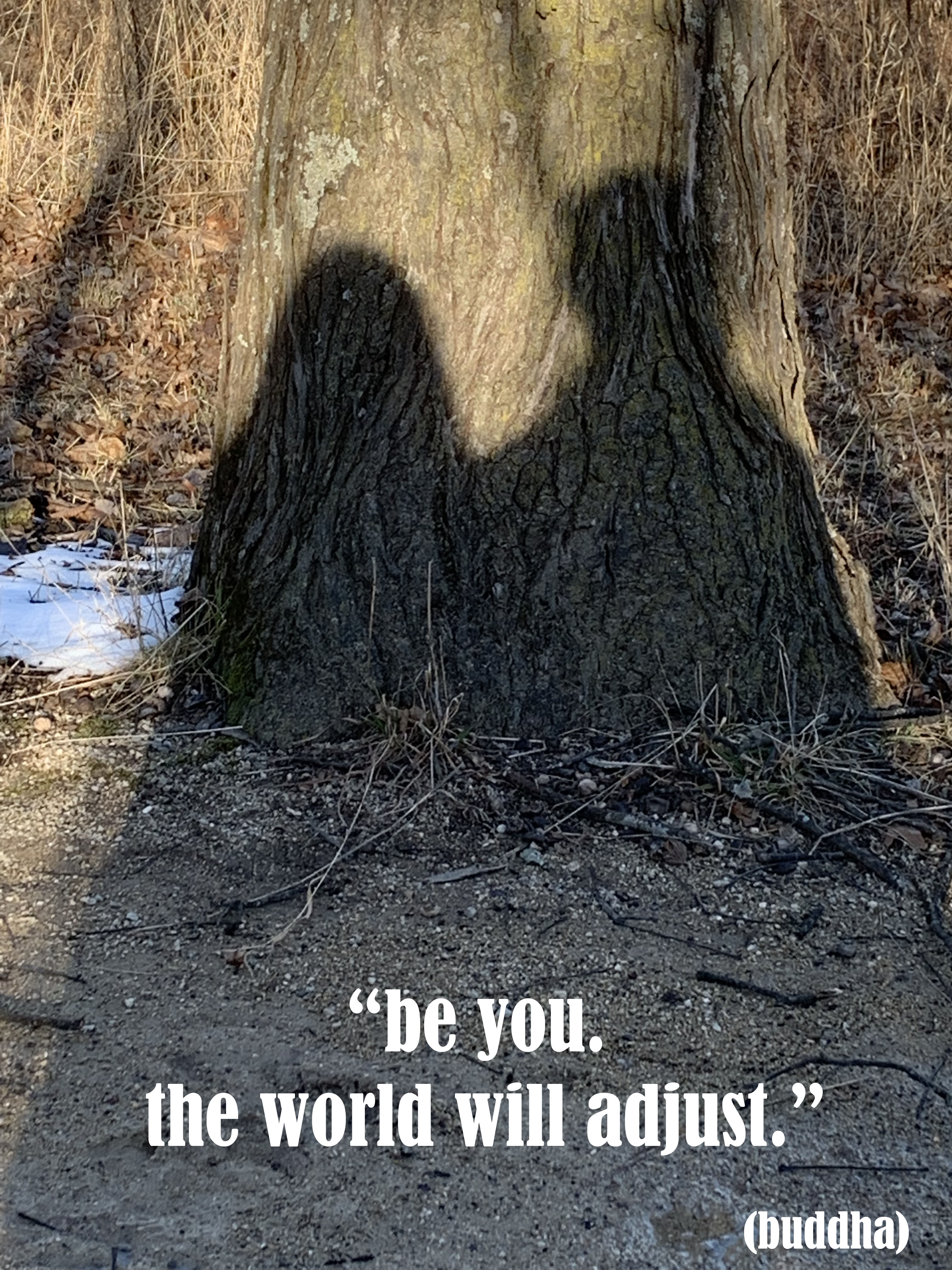
read Kerri’s blogpost about BE YOU

Dissolve And Do [on DR Thursday]

“If you hear a voice within you say, ‘You cannot paint,’ then by all means paint, and that voice will be silenced.” ~ Vincent Van Gogh

“A writer writes. A painter paints.” Wise words from Tom. It was a mantra and his patent response when asked how one becomes an artist. I imagine Tom learned this wisdom from DeMarcus. DeMarcus certainly learned it from his mentor. Artistic ancestor to descendent, the quality that makes an artist is the practice. Nothing more. Ask me what makes an artist and you will hear what I learned from Tom.

There’s a special, hidden layer in this mantra. Someday, if you are a lucky artist, you stop thinking of yourself as an artist. The role dissolves in the doing. It no longer matters how others see you or the label you apply to yourself. It’s nice to separate yourself from the herd yet service to the herd is the point. That, I am coming to understand, is the moment that artistry fulfills itself. A deep trust ensues. No blue ribbon or large sale or shiny prize will change the essential. No outside eye or opinion or judgment or praise alters the fact in the least. A writer writes. A painter paints.

How do you pursue an artistic life? We take walks and pay attention. French blue sky and early tree blossom. And then, each day, as is our practice, we write or draw or compose.

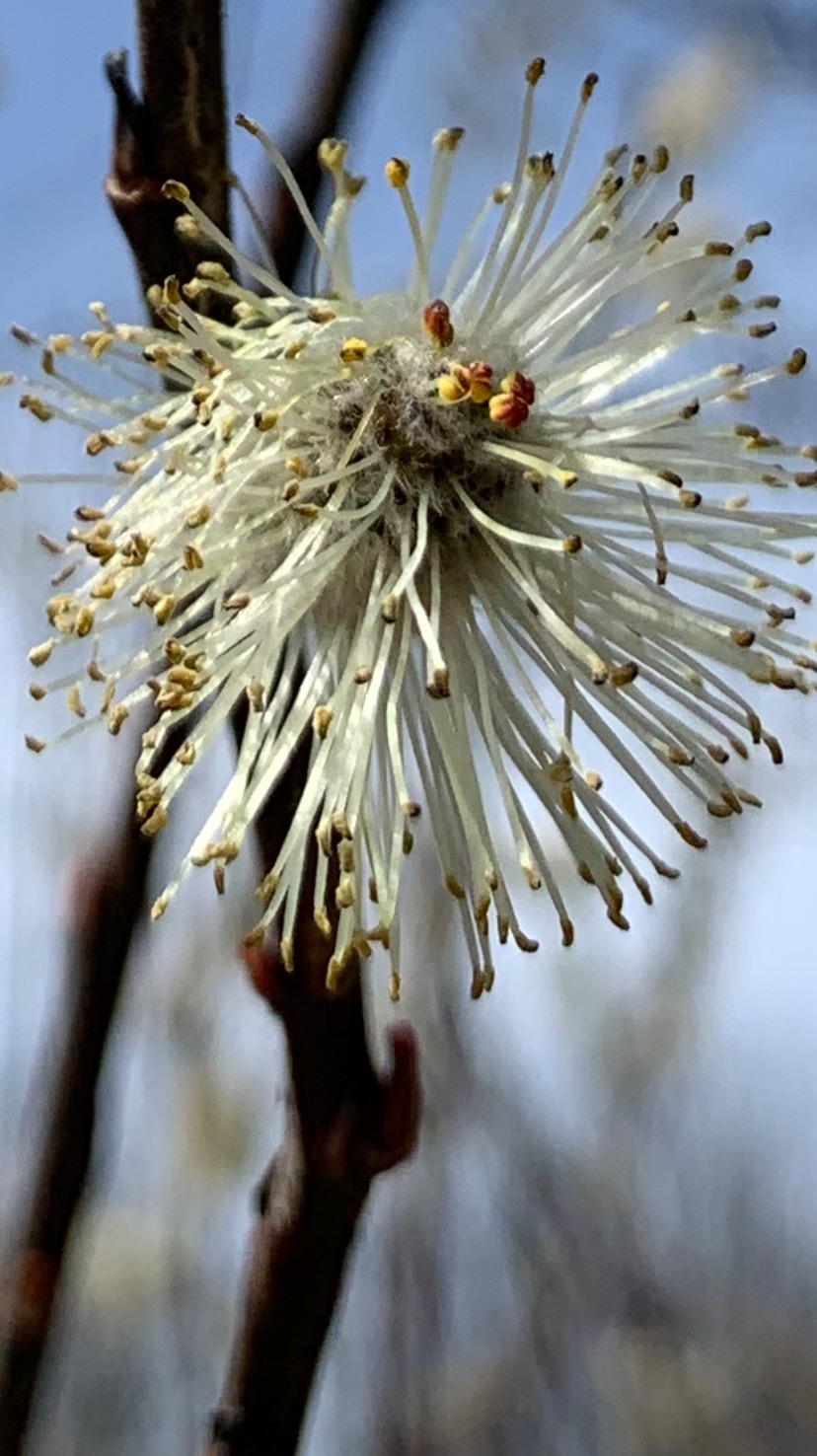
read Kerri’s blogpost about TREE BLOSSOM

Newborn, 48x32IN, mixed media

newborn © 2019 david robinson

Trust The Symbol [on Not So Flawed Wednesday]

“Perseverance, secret of all triumphs.” ~ Victor Hugo

It is nearly November and the tomato plants are still producing. I’ve come to think of our tomato proliferation as a dance between Kerri and the plants. Each morning, all summer long, with the good advice of 20, she tended the tomatoes. And, the tomatoes tended her. They continue to inspire quiet in her. I’ve watch the gentle morning dance from the window, DogDog circling the yard, Kerri with the watering can, pinching leaves, securing supports, or simply admiring yet another green orb that appeared overnight.

There was also the basil, mint, and lavender. After the tomatoes were nurtured, they joined the dance. Presence.

You know things are not going well when your friends start comparing you to Job. I’m not a bible guy but even I was keen to the reference. We’ve had a few years of rolling bad luck and molehills turned into mountains. 20 is fond of saying, “Karma is a long game,” and there were days that I asked Kerri what she did in a past life to deserve the most recent disaster. After punching my arm, we’d chant in unison, ‘One day at a time.” Take this step. Enjoy this day. The circumstance doe not define us. And, mostly, we lived it, staying in the center of the hurricane.

And, then, about the middle of May, the winds changed. It was palpable. Somethings actually began to tip in our favor. And, for reasons I cannot explain, we needed to grow tomatoes. Kerri needed to grow tomatoes. Last summer we made an anemic attempt at growing lettuce. We ate a salad or two from our mini-farm, but it was more of an exercise, something to do, rather than a symbol of the arrival of better times. The tomatoes came as harbingers, heralds of a new era.

To say that they’ve been prolific is an understatement. All summer long, lines of tiny red miracles sat on our table, ripening. The plants have withstood pounding rain, excessive heat, and withering humidity. Not only have they withstood it, they’ve prospered in it. It’s a hopeful symbol. Somewhere deep down inside, we hope to follow their lead. After a few years of the-other-shoe-always-dropping, we’re slow to trust our symbol. But, like our symbol, we’re taking our time, not getting ahead of ourselves, and will harvest our good fruit when the time is right.

Until then, we persevere, one day at a time, grateful for the portent our good tomatoes bring.

read Kerri’s blog post about TOMATOES

Step Into The Ripple [on DR Thursday]

sometimesfaith WITH EYES jpeg copy 2

I’ve never understood faith as a religious term. Look up the word in the dictionary and you’ll come across trust, belief, and conviction. Rather than a lofty word reserved for worship day, it has always struck me as an everyday something – that becomes extraordinary when you realize how ever-present-and-ordinary it actually is. Stepping blindly. Blindly stepping. Each and everyday.

We surround ourselves with calendars and lists and routines and rituals and patterns – all necessary mechanisms to plan our days but they also serve to protect us from the truth of our walk on this earth: there is not a moment, an hour, or day that is actually known before it is lived. Every moment of every day is a step into the unknown.

The real practice of faith is not about an abstraction.  It is a recognition that walking in faith is an essential part of the human condition. The real practice is in realizing it. Being right where you are, open to the reality and empty of the illusion of certainty that you know what is coming. You do not. The true spiritual practice is to empty yourself of the need for the illusion of control.

Fully inhabiting the moment. Standing at the crossroad of past and future without the map of ‘I-know-what’s-going-to-happen’ dulling the experience.

Spiritual practices are not meant to be other worldly. They are, at their best, concrete relationships found at the intersection of past and future, in that tiny slice of infinity called “the moment.” It is a miracle of unknowns and surprises.

The practice of faith is the practice of putting down what you think you know – dropping the notion that you know what will happen- and stepping fully and with intention into the rippling unknown.


read Kerri’s blog post about FAITH


frozen lake website box copy

chasing bubbles ©️ 2019 david robinson

chicken marsala ©️ 2016 david robinson & kerri sherwood

Be The Storm [on Chicken Marsala Monday]

inspirationisa WITH EYES jpeg copy 2

“It is a sacred art that deals with revelation rather than observation.”~Jamake Highwater, The Language Of Vision

Tom used to say, “A writer writes and a painter paints.” Those are wise words grounded in the mechanics of art. Simply show up. Do the thing. Nuts and bolts. That’s the first step. Show up at the easel, on the dance floor, at the piano, at the writers desk and begin. Tom was a teacher and over his life heard an overabundance of excuses, reasons ‘why not.’ Said another way, he advised his students to stop thinking about it and do it. “Get out of your own way,” he’d counsel. That’s the second step. Horatio calls this step ‘trust-your-work.”

Show up. Do the thing. Get out of your own way. Trust your work.

And, what happens with trust? When the artist can get out of his/her own way, the sacred art, the art of revelation becomes possible. It’s a beautiful paradox. Show up and get out of the way. And, between those two actions, those crackling oppositions, a greater force, inspiration, gathers and releases like a storm.

if you'd like to see more CHICKEN... copy

FALL50%OFFSALE copySeptember 1 – 16

read Kerri’s blog post about INSPIRATION IS A GATHERING STORM


www.kerrianddavid.com

facebook logo copy 2

inspiration is a gathering storm ©️ 2016/18 david robinson & kerri sherwood