Get Lost [on DR Thursday]

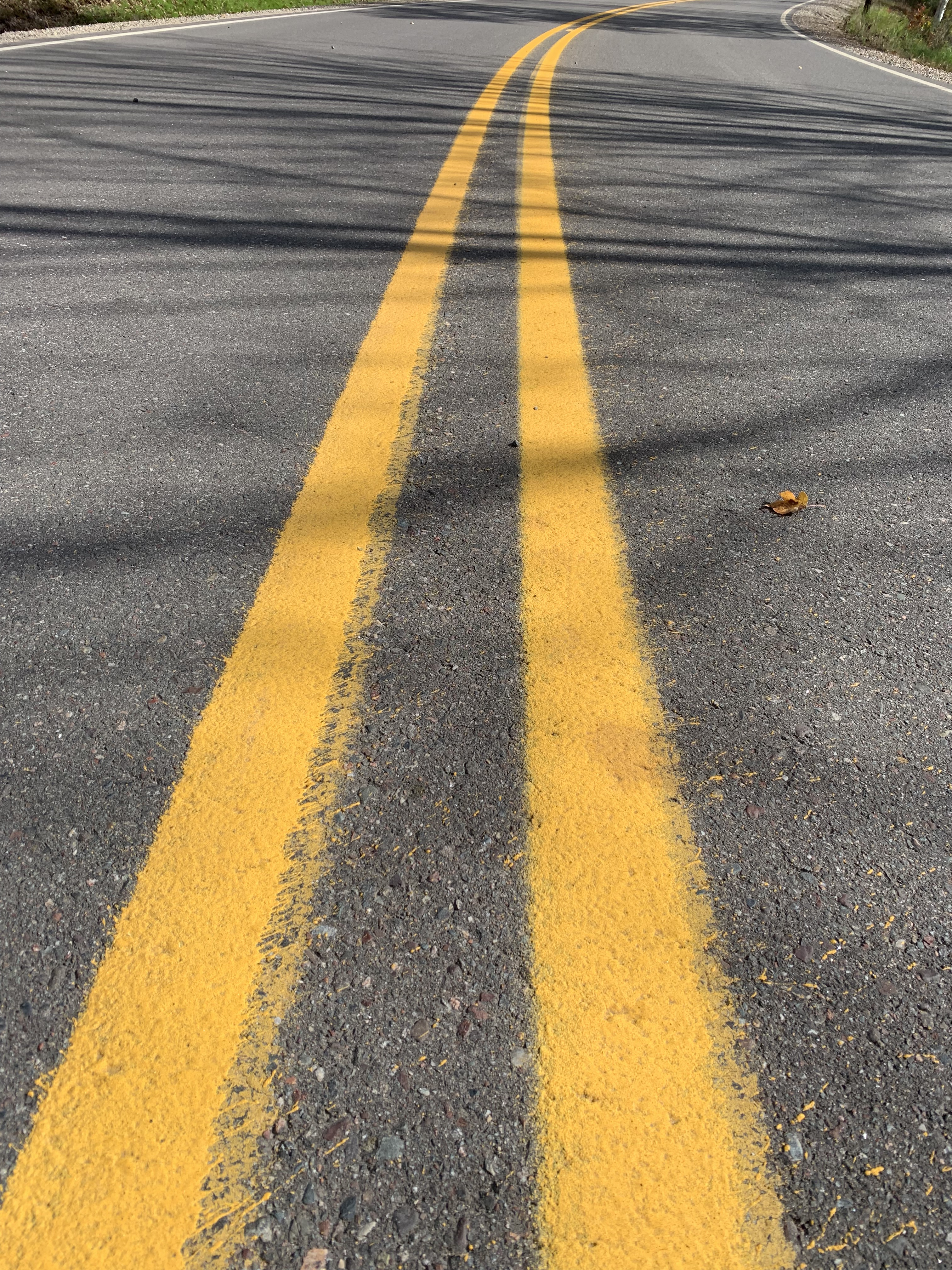
We delight in taking Sunday drives. Sometimes we have a destination but most of the time we have no idea where we are going. We head “out into the county,” the farm land, and with great intention, we get lost. “Left or right?” Kerri asks when we come to a crossroads. “Left.”

The goal is to “not know.” Drive down roads we’ve never experienced. There is a direct correlation between “not knowing” and “clear seeing.” When lost, we open our eyes. It’s something that every artist understands, “always-knowing-where-you’re-going” is a killer of the magic. It is the dividing line between art and craft.

I’m currently working with a team of analytical minds. “Lostness” is often interpreted as failure. It’s not welcome. But, to my great delight, even in the most analytic of creative processes, the engineers and entrepreneurs, shaking their fists at the sky when adrift, find their greatest magic arrives only after time spent wandering the wilderness.

After many twists and turns, rolling country roads and, “Which direction are we headed?”, we pop out of lostness and know exactly where we are. “Hey!” we laugh, “How did we get here?”

The art of getting lost. The art of exploration. The art of having an experience without a predetermined outcome. The art of having an outcome and letting it go, making space for something better. It is the art of cultivating surprise, allowing for the bigger idea to come through. “Left or right?”

It’s a practice. Learning-to-see and letting-go-of-needing “to know.” It’s the same thing. And, a great way to practice, is taking a nice Sunday drive.

read Kerri’s blog post about THE ROAD

pax © 2015 david robinson

Try To Explain [on Merely A Thought Monday]

It’s nearly impossible to explain. I’ve had the conversation a thousand times and I know it’s fruitless from the outset. Why did I choose a life without a safety net? A life with stability and benefits? Why was I willing to work 80 hour weeks for not-very-much-pay? I’ve heard more than once that “Artists are indulgent.” Or, “Artists are fools.”

Maybe. I’ll never know because it is impossible to explain to someone who operates from a different imperative. I’ve thought myself foolish more than a few times, and, usually, when I measure myself by the standards of 9-to-5.

For me, like all the artists I know and admire, there has never been a distinct line between work and play. Given any amount of free time, I’d rather be in the studio than anywhere on earth. When I was directing plays and running theatre companies, I couldn’t wait to get up in the morning and get back to work. The time between productions or studio time, what most people call “vacation,” was-and-is meant to catch up on sleep and fill up the well for the next project. Often, this thing called ‘vacation’ was an opportunity to visit museums, drink in art/inspiration or stand in a castle or sit in the city where the next play is set.

For most of my life, even before I really thought about artists or artistry, vacation involved a sketchbook. I sat in the back of the station wagon and drew Colonel Sanders from the bucket of chicken or tried to copy a photo from the National Geographic magazine. Fun and play involved a deep dive into the world I could create/discover through a pencil on blank pages.

I can spend hours sitting and watching people. Small dramas. Gestures. Manipulations. Kindnesses. A little burst of love that would otherwise go unnoticed. Traveling for work meant time spent in airports, a goldmine of observation-time. Work or play?

Perhaps that is why there is no line between work and play. I see it in Kerri, too. We are constantly noticing. Paying attention to what is beautiful or interesting. Feeling what is needed and what is not. We’ve talked endlessly about being empathic. Feeling what others feel. I’ve watched Kerri walk into a rehearsal and “know” where there is pain, where there is joy, know when she needs to wrap some humor around a bruised community. Many years ago, a wise-old-artist told me that I had to learn to distinguish between what was my “stuff” and what was not. What were my feelings and what was not. Sage advice. I’ve been witness to many artists imploding, carrying other people’s garbage as their own.

When we walk, Kerri takes photographs. “I’m sorry,” she says, stooping to focus on a leaf or stone. Why does she apologize for noticing? Here’s a hint: all of her life she’s been asked to explain why she stops to notice. What value can there possibly be in stopping forward motion, especially in a world hell-bent on “getting there faster.” What is the value-proposition of noticing? “Can you please explain why you have to stop and see and, of all things, make it into music?” Or a story. Or a painting. Or a dance.

“Why did you climb that tree?” the adults asked. “It’s where I write poetry,” she explained. Work or vacation? Is it play?

Every Saturday we go through Kerri’s photos from the week and choose five as prompts for our Melange. We collect phrases we hear, words that inspire or disturb. Those end up in the Melange, too. Are we working? Is this play? We delight in sitting each day and writing together. We laugh at our Smack-dab cartoon. They are fun to write and draw and color. None of this makes us any money. Is it work or is it vacation?

I’m currently drawing cartoons and tossing thought-bombs into a community of software entrepreneurs – the boss understands that I notice things and can translate what I notice into other shapes and expressions. Is there value in that? Is it work? Is it play? Will it make money?

Are there possibly other measures of value?

It’s nearly impossible to explain.

read Kerri’s blog post about VACATION

Lookit [on KS Friday]

“It was not that he had nothing to say, he just hadn’t realized that what he had to say was enough.” ~ Kent Nerburn, Dancing With The Gods

Kerri practices what Kent Nerburn calls “the art of close inspection.” When we are on the trail or in the backyard or in the kitchen, she’ll suddenly jump, grab her camera, and take a shot of some gorgeous detail. A reflection. A flower. A texture. I would have walked by without ever noticing. She sees detail. And, she is never off duty; she is always looking. Seeing.

I know her images are authentic – meaning that she is not trying to “make art” or make grand statements or be clever – because she is tickled by what she captures. “Lookit!” she exclaims as she shows me the image. Her delight is as pure as her eye-for-composition.

When I moved to Wisconsin and put my studio in the basement, she’d take photos of my paintings. Never the full painting, always a detail. It unnerved me a bit because the composition of her detail-image was always much better than my composition of the full painting. “Lookit!” she’d say, showing me the image. We called them “morsels.” I started studying her morsel-shots. My musician-wife was a secret master of visual composition and I had much to learn. She encouraged me to take photos of my works-in-progress as a way of standing back from the painting, as a way of seeing what my eyes could no longer see.

I’ve been drawing cartoons for months. This series is special because it is simple, pared down. How much expression can I capture in a simple line – in fact, in the fewest lines possible? The art of close inspection is having an impact on me. I’m getting paid to draw this series and am fully aware that they might never see the light of day. And, it simply does not matter. I love them. I know they are pure because, with each new cartoon, I race down the stairs (my drafting table is upstairs) and say, “Lookit!” as I hand them over to Kerri to finish them with her photoshop magic. After she performs her magic, she brings the computer to me and says, “Lookit!” and I smile. “Doyoulikeit?’ she asks.

“Ilikeit.”

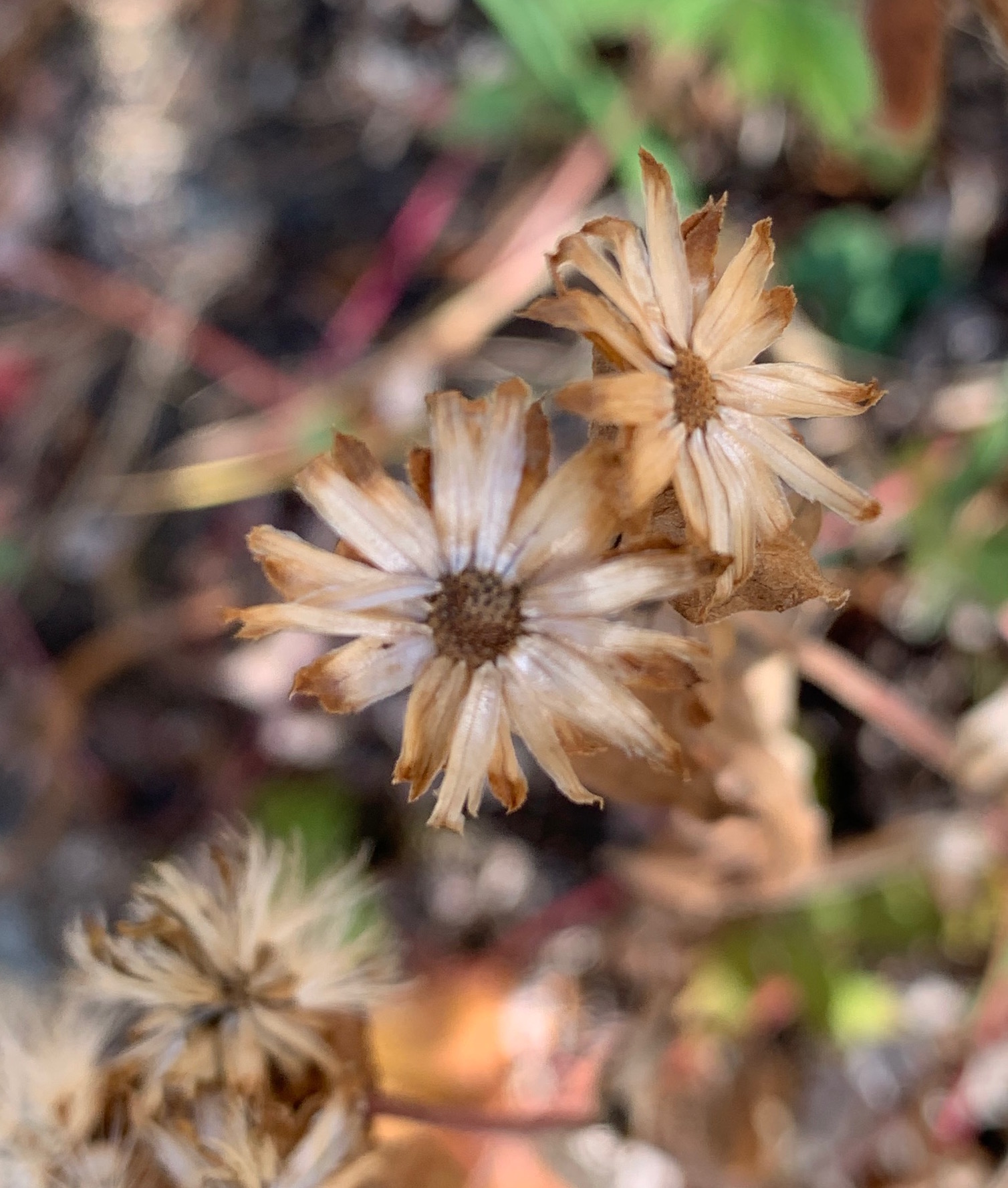
read Kerri’s blog post about FALL FLOWERS

Kerri’s albums are available on iTunes or streaming on Pandora

you come to realize/this part of the journey © 1998 kerri sherwood

Listen To Claude [on Two Artists Tuesday]

In his 60’s, the famous Impressionist painter Claude Monet went blind. Cataracts were removed, restored his sight, but also changed his capacity to see color. He painted in blues because he couldn’t perceive red and yellow. He was not fond of the paintings that he produced. He painted what he could see. Historians, on the other hand, credit his blue paintings as an important link to abstract painting.

We never really know the impact of our actions or our work.

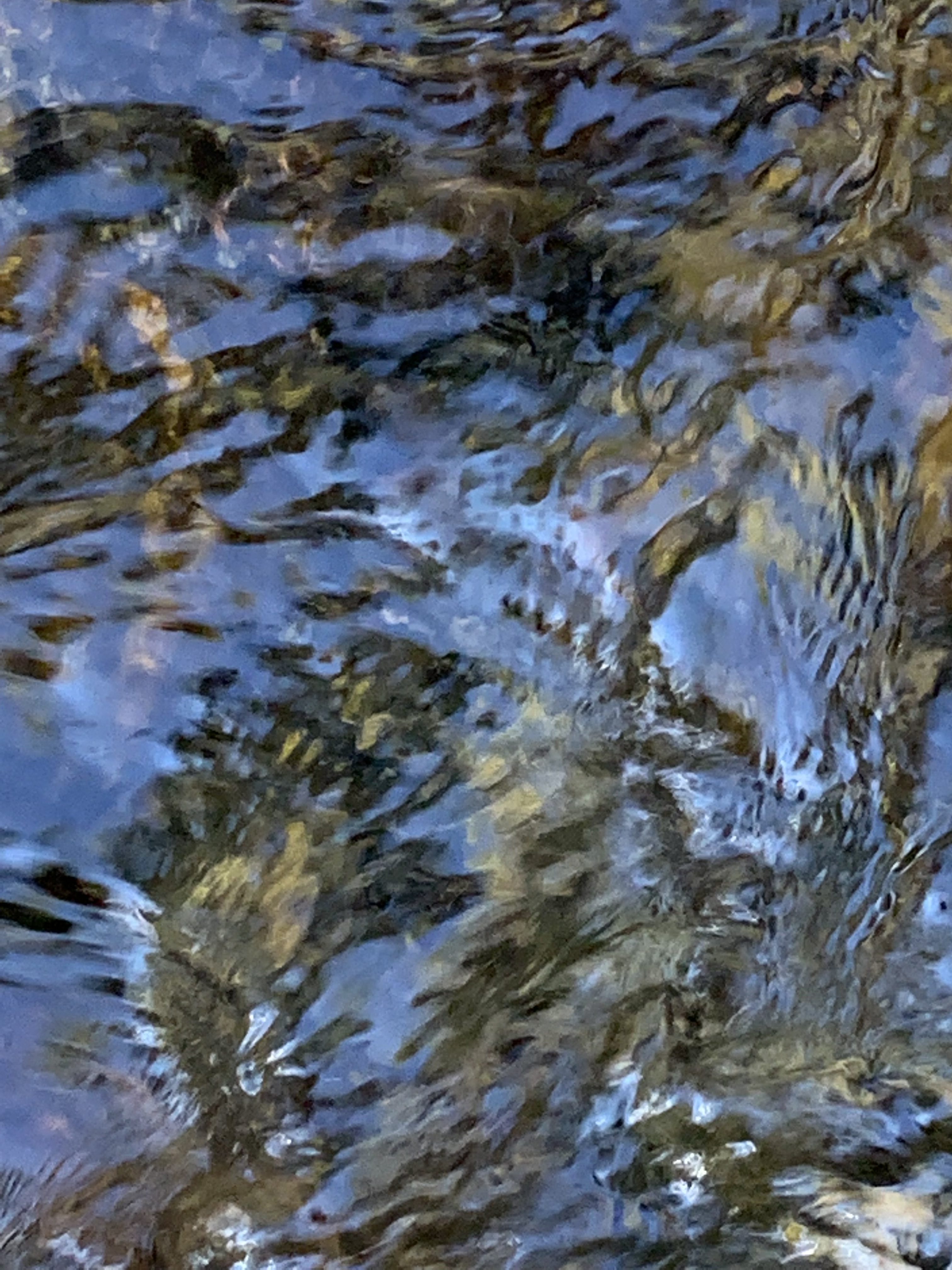
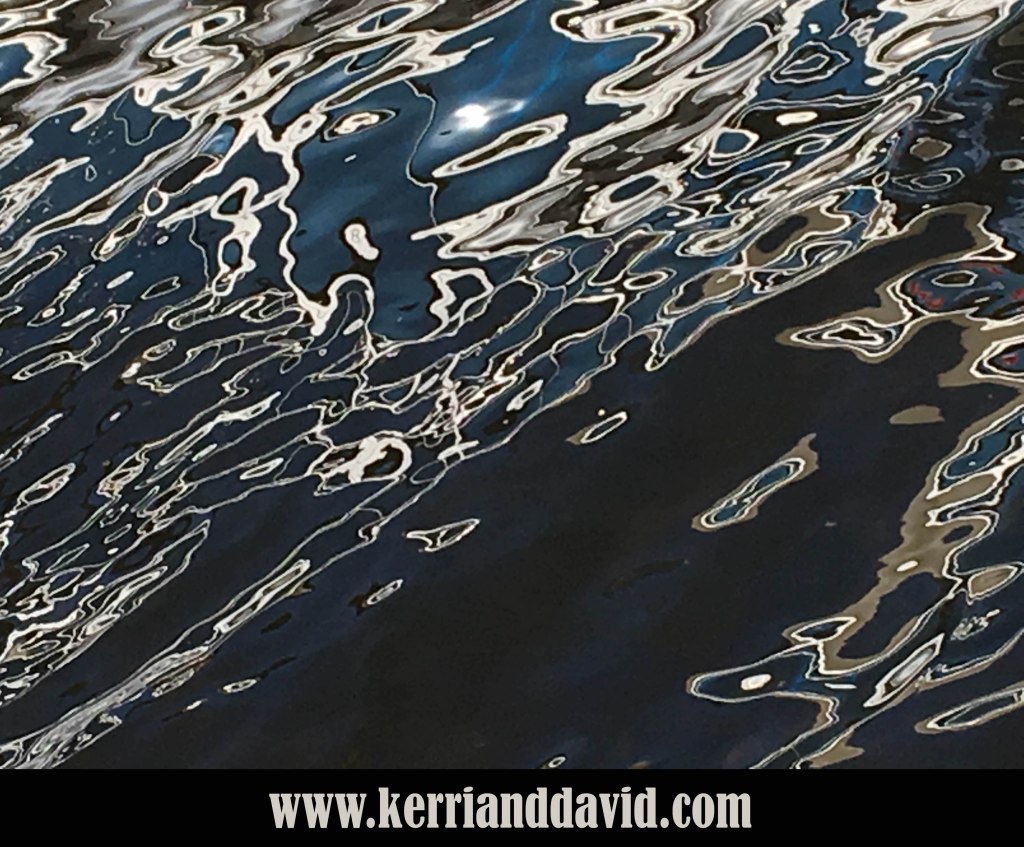
The path paralleled a stream. As we walked up the mountain, she stopped often and took photographs. The sun on the water was enticing so she aimed her camera at the stream. “Look!” she said, showing me. “These look like abstract paintings!”

“They look like Monet,” I said. “Gorgeous.”

Whether they know it or not, artists are always having conversations with their artistic ancestors. I was amused at the idea that Kerri and Claude were having a chat. The world of a master painter, living before ubiquitous photography, meets they eyes of one who sees and quickly captures.

I was also amused that, through Kerri’s picture, Claude and I were having an exchange. “I love your blues,” I say. Claude responds, “Ah, but it’s the reds and yellows that make the blue so vibrant. Contrast principle,” he winks.

Excited, she returned to the stream to take more photos.

I turned my face to the sun. I breathed in the mountain air, the aspen leaves fluttering. I have not finished a painting since the pandemic began. “I feel empty,” I say to Claude.

“We paint what we see, ” Claude whispered. “Sometimes we simply cannot see.”

“Yes,” I said, “I am blind. But my cataracts are not in my eyes.”

“No,” Claude replied. “You are not blind, you see well enough. You’ve closed your eyes.”

“Lookit!” Kerri smiled, “These are so cool!” She shows me more water close-ups, a symphony in orange, blue and gold.

“Don’t worry,” Claude smiled. “When you are ready, you’ll open your eyes again. You’ll see a whole new world. New colors and shapes. More than blue.”

“You think so?” I ask.

“Isn’t it beautiful!” Kerri glowed.

“Do you see?” he smiled and faded into the photograph.

“Yes,” I laughed and nodded, “It’s really beautiful.”

read Kerri’s blog post about MONET WATER

images of water © 2021 kerri sherwood

Honor Difference [on DR Thursday]

A Double Haiku:

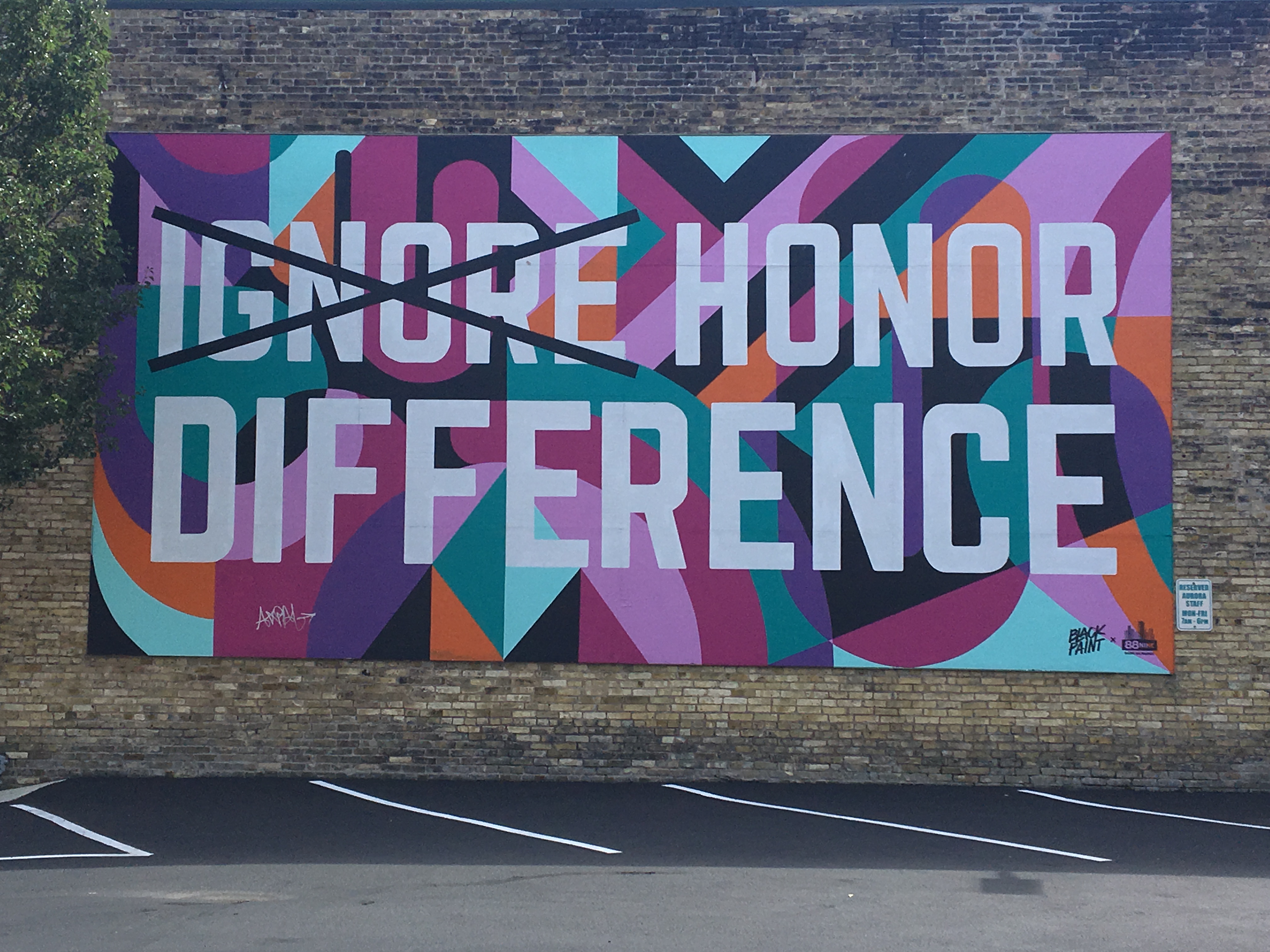
Honor Difference.

A mural in Milwaukee.

Heart of the ideal.

Infinite palette,

Many hands, many painters,

Eyes that choose to see.

Read Kerri’s blog post about Honoring Difference

helping hands ©️ 2012 david robinson

Compose [on DR Thursday]

Many years ago I attended a workshop facilitated by Sam, a brilliant landscape painter. I was delighted and amused when he demonstrated his technique. Rather than paint what he observed, he took great pleasure in rearranging the elements. He moved the trees, altered the hills, relocated the barn. He laughed while mixing up his elements. His eyes sparkled with mischief. Rather than a workshop on painting, the day became an exercise in joy-in-art. Seeing and playing with what we see.

This morning I read that the word ‘composition’ means “putting together.” Definers-of-art-terms associate composition with freedom. “The artist has freedom when choosing the composition of their artwork.” It is a mistake to believe that compositional freedom is the sole province of an artist. If the mind is a canvas then thought is a composition. It is patterned and composed. Arranged and rearranged. We choose where we place our focus. Point-of-view is cultivated, it is not a default setting. We design the story-we-tell-ourselves-about-ourselves. And, then we project it onto the world.

The trick in both art and thought composition is not to wear ruts in the road. Sam was joyful in his art because he was constantly challenging and engaging with what he saw. Art was fun, not morbid tradition. Art was delight-full, not rule-bound or laden with the pressure to capture. Recall that stepping out of the rut was the first lesson in Julia Cameron’s The Artist’s Way. Morning pages and artist’s dates are meant to both see the ruts and open new paths. The same process applies to the thought-canvas. See the rut. Step out of it.

As Sam taught me so many years ago, seeing and playing with what we see begins with letting go of what we think we see. It begins with a blank canvas, an unfettered mind, and the freedom to choose the composition.

read Kerri’s blog post about COMPOSITION

Unfettered ©️ 2018 david robinson

Read The Walk [on Two Artists Tuesday]

Between the morning rehearsal and the evening wedding, we had several hours without commitments so we did the thing we most like to do. We walked. It was a gorgeous September day. We were in Milwaukee’s Third Ward, a miracle of reclaimed and converted warehouses, shops and condos that line the waterway. We followed the Riverwalk, Kerri snapping photographs, ambling our way to Lake Michigan.

It’s odd in this age of pandemic, to be in a city on a beautiful weekend day. The rules of engagement are different. The rules of enjoyment are different. Be out in the day but avoid the crowds. There was an art fair, a crush of people, so, as artists, normally pulled toward art gatherings, we walked the other way. In years past we would have waded in to the fray, talked to the artists, enjoyed people enjoying art.

Instead, we found a bounty of art on our walk. The shadows playing on the walls. The flowers. The finials. The sculpture. Everywhere we looked we found riches of intentional design. People dedicated to creating beautiful spaces had a field day re-imagining what had once been an industrial wasteland on the water.

Chiseled into the the boards upon which we walked was a narrative history of the city. We stepped on top of important dates of the Civil War. We walked across innovations, breweries arising in a city of beer, World Wars and the changes they wrought. Sports victories. We walked across the story of a previous pandemic, a hundred years ago. A few thin boards, markers of a tragic toll.

For a moment I stood and watched the kayaks paddling, the pontoon boats cruising the channel, the diners seated beneath umbrellas, the strollers, like us enjoying the day with no destination calling. Full moments in lifetimes that someday might be told in a few thin boards of narrative highlights.

I wondered how many people, how much dedicated action, it took to make this moment beautiful and possible. The architects. The artists. The artisans. The craftsmen and women. The laborers. The florists, The gardeners. The shopkeepers. The waiters. The chefs. The suppliers. The mail carriers,…Dreamers all, stretching back through time. Interconnected and interdependent in ways that only few recognize.

That’s the challenge, isn’t it? Were I to chisel the story of our pandemic in a boardwalk, or create a sculpture meant to capture our moment in narrative time, my theme would be interconnection and interdependence unnoticed. Unmasked. A myopic madness, a messy delusion of every-man-for-himself, a sure-fire way to perpetuate a pandemic or warm a globe.

There is, of course, no evidence for life thriving in a vacuum. On the other hand, there’s plenty of evidence, apparent on a stroll in a city on a beautiful sunny September day, killing some time before a wedding, that it takes all of us, every last life, to thrive. An artist needs an audience. A developer needs a supplier. A doctor needs a patient who wants to be healthy. Who wants to do more than survive. Thriving is, after all, a group sport. A careful reading of the boards tells a very specific tale: no one does this walk alone.

read Kerri’s blog post about OUR WALK

Decide To See [on Merely A Thought Monday]

My thoughts while watching the wedding:

Oprah asked Gary Zukav this question: Where is soul? His response: Where is it not?

Exchange the word ‘love’ for the word ‘soul.’ Where is love? Where is it not?

In the English language, words like ‘love’ and ‘soul’ are nouns. Things. And, things must have limits. It is a remarkable misunderstanding, a miracle of minimization. Love, the single hardest ‘thing’ to define, in fact, impossible to define, is undefinable because it is without limit. The best we can do is point toward love-made-visible. A newborn in the arms of its mother. The moment the couple, standing before their community, stares into each other’s eyes and promises, “I do.” Watching a sunrise on an anniversary. A mother dancing with her son, the groom.

Love is. Where is it not? That means, of course, that it is “in” everything, everywhere. The air we breathe. The thoughts we think. The actions we take, big and small. It is in how we treat our neighbors. In how we see ourselves. In how we report our news. In how we tell our lies and our truths. Love is.

It is the province of no-single-religion. In fact, it is where every religion on earth goes off the rails. To claim to be “the way” or “the one true…” is to attempt dominion over love. To place rules and boundaries on the boundless.

The question Oprah didn’t ask: if it is everywhere, in everything, in war and in peace, hate and acceptance, does it have any meaning at all? If it is ubiquitous, unchangeable and indescribable, why bother? Gary’s answer, I imagine, would be something like this: we choose the form we give to our love, do we not? We can choose to put the accent on unity. We can choose to put the accent on separation. Love is. We can choose to put the accent on division or we can choose to offer our support.

There is never more or less love. Isn’t that the point? Love is beyond definition. What changes is not the love or the amount of love. What changes is what we decide to see. What changes is how we decide to see, especially how we decide to see ourselves in this world with so many “others.”

read Kerri’s blog post about JUST LOVE

Unfold [on KS Friday]

September. The air was cool last night. We put on longer sleeves, sat on the deck and listened to the sounds of the summer night. Cicadas. The waves crashing into the shore. The bubbling of the fountain. Distant voices of others enjoying the evening. Dogga sighed and stretched, closing his eyes.

Stephen’s memorial, a gathering of friends and relations. At the same moment, across the country, a baby was born, a new little brother. On the same day, Kim completed another circle around the sun. I missed wishing her happy birthday. Celebrations of life wearing its many faces.

The chipmunks have discovered Kerri’s tomatoes. They are considerate thieves and take only one tomato at a time. Lately, a salmon-colored cardinal sits on the cage and pecks the leaves of the plants. The basil did well until the relentless heat and humidity, the torrential rains. It is ready to retire, old before its time. The crows swarm the hawk. The squirrels have shifted into overdrive, preparations for the coming season.

We stopped on our walk. Kerri approached the tree and snapped a photo of a bright crimson leaf, harbinger of fall. “So much has happened this summer,” she said. “I can’t believe it is already September.”

Textures. Colors. Sounds. Passages. Paying attention. It has us asking that age-old question, “What really matters?’

David sent a photograph. Dawson squeezed a whole tube of blue paint onto a canvas and, with a new cool art-tool, spread the rich thick paint, carving it into creation. An artist dad in play with his artist son.

That age-old question is so easy to answer, wearing longer sleeves, sitting on the deck on a cool summer evening. You can see it from “the plateau,” as George Leonard used to call it. Be in your moment, and you will see that the little things are really the big things. On the plateau, everything unfolds simply and with clarity. Friends gather. A baby is born. Blue paint squeezed onto a canvas.

UNFOLDING on kerri’s album AS IT IS

Kerri’s albums are available on iTunes or streaming on Pandora

read Kerri’s blog post on TEXTURES

unfolding/as it is ©️ 2004 kerri sherwood

See The Spaces [on DR Thursday]

The space around and between. Shapes that share edges. Emptiness that provides definition. In art it is called negative space. Not-the-object. In art classes, students draw the negative spaces in order to see or to learn a new way of seeing. Try it. See the holes and the space around the leaves as primary. It’s not as easy as it sounds.

Some folks use the term “air space” because they get snagged on the word “negative.” It’s a term of opposition when set next to “positive.” Yet, just as there is an electric field that flows between negative and positive ions, electrons and protons, there is a field that flows between negative and positive space. Yin and Yang. A dynamic polarity. A creative field of movement and energy. The air space is alive because of the perceived opposition. The positive space is not visible without the negative.

When I was a consultant, I used the phrase “the space between” to imply relationship. There are people. There is the space between people. Relationship is invisible but it defines the people. Relationship illuminates the otherwise unknowable individual. They are impossible to separate. In a community obsessed with nouns, bottom lines, test scores and individual rights, the verbs and the relationships often go unnoticed and unappreciated. As if the negative space didn’t matter. The space between is where the movement lives and the problems are solved. It is where new seeing is possible. It is created and creative. The word “community” lives in the space between.

Try it. Take a day and focus on the space between. See relationship as primary. You may experience a whole new way of seeing.

20 sent this image,a memorial. It makes the point.

read Kerri’s blog post about NEGATIVE SPACE

iconic ©️ 2010 david robinson