What Do You See? [David’s blog on Two Artists Tuesday]

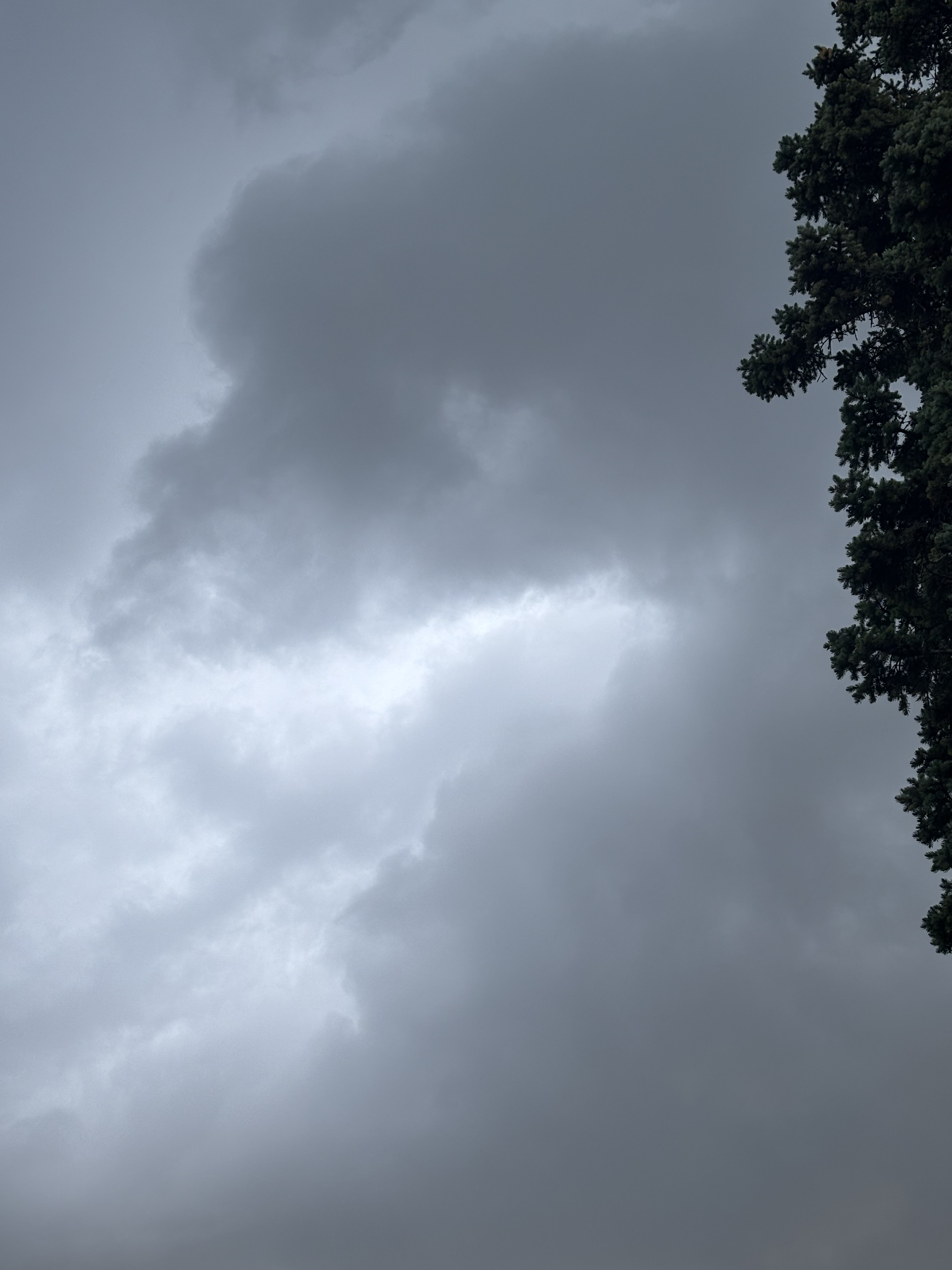
In this cloud Kerri sees a dragon. What do you see?

34 years ago Dave bought one of my paintings. It was so new that I’d neglected to sign it. In fact, I’d hung it on my living room wall because I wasn’t certain that it was finished. I was studying it. It was at best a happy accident that he even saw the painting. He loved it and bought it. I boxed it up and shipped it. I didn’t even have a proper photograph of it. Recently, out of the blue, he contacted me to ask if I might issue a certificate of authenticity. I was delighted to whip up a certificate for him but even more delighted to finally have a photo of the painting.

During our email exchange he asked me a question that is commonly asked of artists: “Maybe you could help me with a conversation I have had countless times with my wife and friends over the years.What is going on in the painting?” I smiled, knowing that he was going to hate my answer.

The first rule of artistry, as it was pounded into me, is to never answer the question, “What’s going on in the painting?” Or the song. Or the dance. The reason has nothing to do with keeping it a secret or whipping up a mystery. The reason is that “the art” happens in the moment of direct engagement, the moment when someone (not the artist) sees something in the painting, something personal. Something they bring to it or pull from it. They re-create the painting as theirs. That moment is a moment of creation. It’s the reason I get cranky at curators who feel the need to tell an audience what a painting means or what is going on in the composition; the curator steps between the viewer and their direct experience. They interrupt the creation. It’s like a priest inserting himself between a worshipper and their direct personal communion with their higher power. Some things need no interpretation.

Art is meant to open people to personal insight, to evoke questions or a deeply personal response to what they perceive. To spark conversation and lively debate.

When an artists tells someone what they intended, they are closing down the possibilities, stopping the moment of re-creation.

Dave wrote, “I have had people say it’s a panoramic of a hectic bar scene complete with a dog. Others say it’s showing an individual struggling with themselves, or a metaphysical exercise with multiple persons showing multiple emotions. Any light you can shine on the subject of the painting would be very helpful.” I adored every interpretation he shared.

Many years ago, at my very first art show, during the opening, I followed two old guys around the gallery. They did not know that I was the artist. I followed them so I could eavesdrop on their very lively conversation. They speculated about the meaning of each piece. I was amazed at what they saw. They had fun debating the sanity of the artist. They finally concluded that I must be insane BUT wrapped in their conclusion was the single best compliment I have ever received. After determining that I was insane, one of the gents leaned into his friend and said, “All of the good ones are, you know.”

Imagine how disappointed they’d have been if I had tagged along and told them what each piece meant to me. Trust me, their interpretations were infinitely more interesting than my intention just as, for Dave and his friends, a hectic bar scene with a dog or an internal struggle or a metaphysical exercise…are wildly more satisfying than any light I might shine on the painting. My light would kill the fun and the power of their re-creation.

What do you see? Kerri sees a dragon in the clouds…
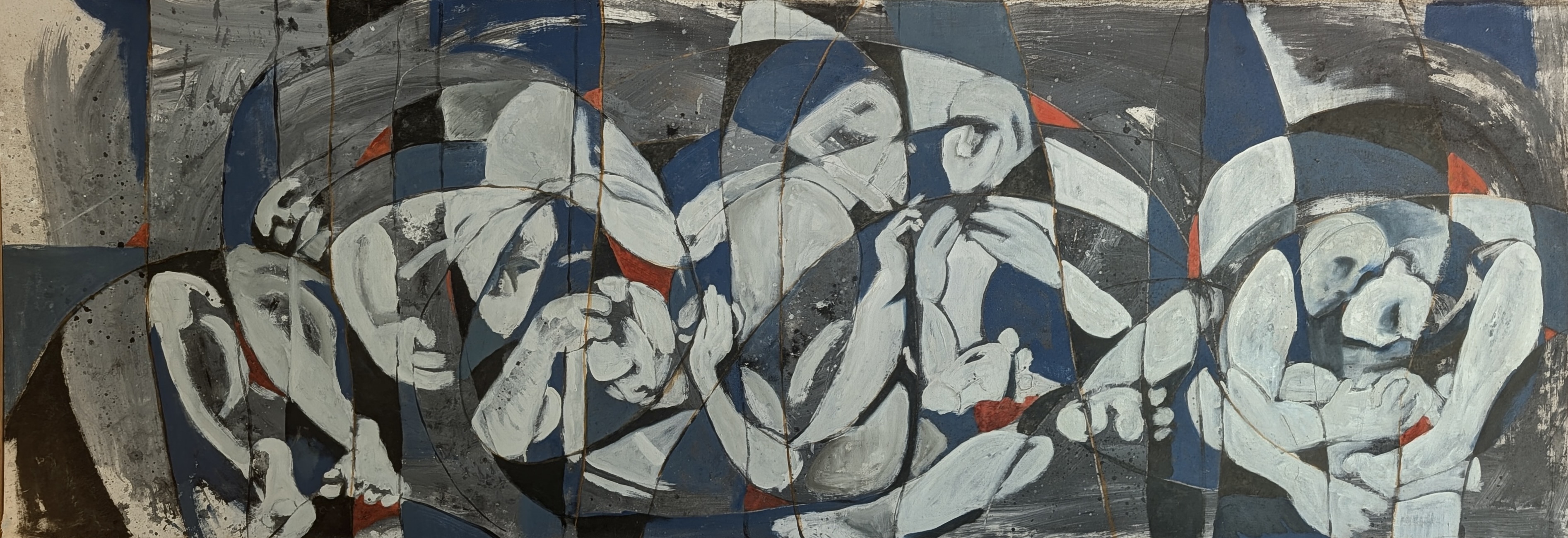
Untitled, circa 1992, approx. 36″ x 112″, acrylic, house paint, animation cell paint on canvas

read Kerri’s blogpost about DRAGON IN THE CLOUDS

likesharecommentsupportthankyou!

Lookit [on KS Friday]

“It was not that he had nothing to say, he just hadn’t realized that what he had to say was enough.” ~ Kent Nerburn, Dancing With The Gods

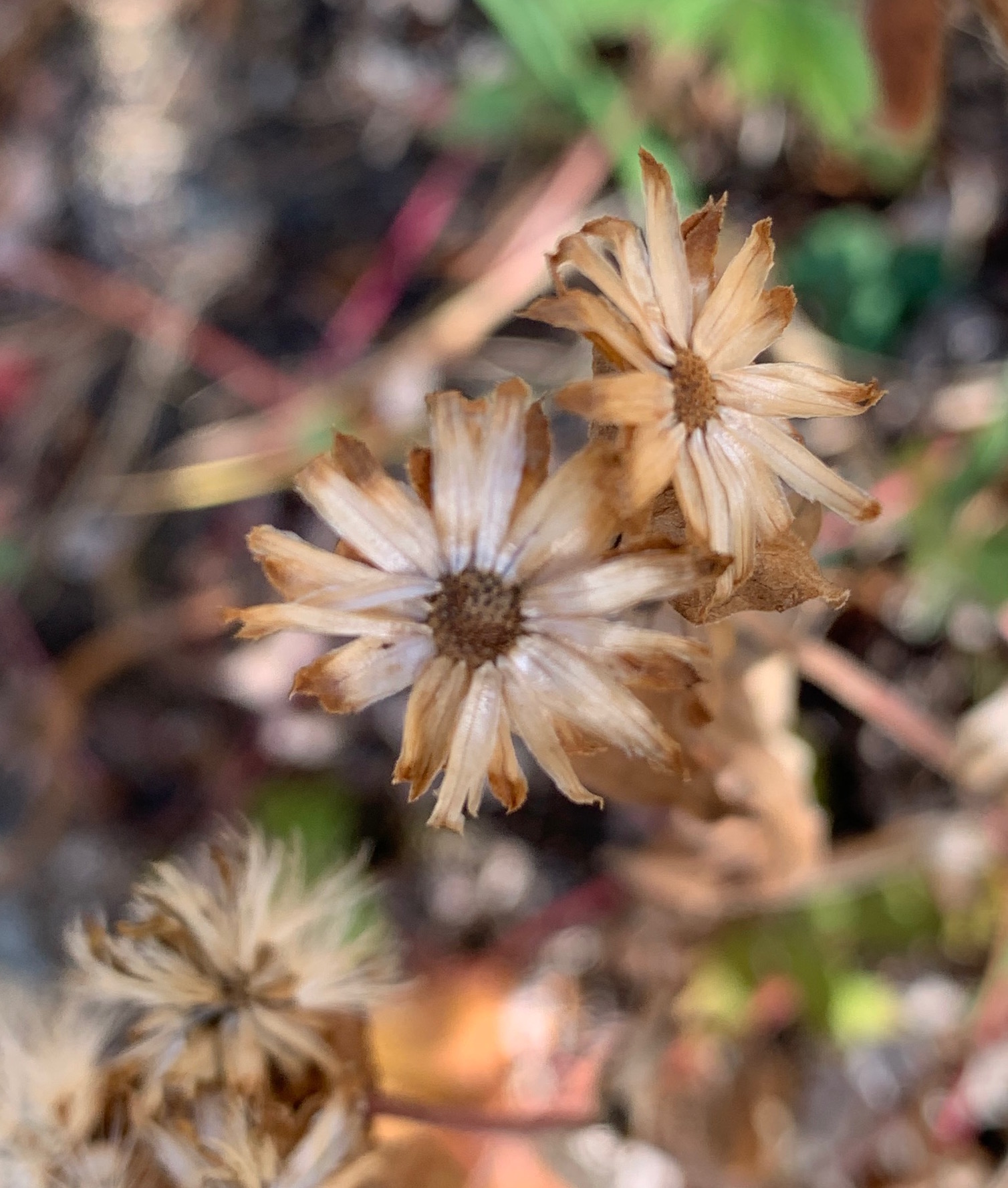
Kerri practices what Kent Nerburn calls “the art of close inspection.” When we are on the trail or in the backyard or in the kitchen, she’ll suddenly jump, grab her camera, and take a shot of some gorgeous detail. A reflection. A flower. A texture. I would have walked by without ever noticing. She sees detail. And, she is never off duty; she is always looking. Seeing.

I know her images are authentic – meaning that she is not trying to “make art” or make grand statements or be clever – because she is tickled by what she captures. “Lookit!” she exclaims as she shows me the image. Her delight is as pure as her eye-for-composition.

When I moved to Wisconsin and put my studio in the basement, she’d take photos of my paintings. Never the full painting, always a detail. It unnerved me a bit because the composition of her detail-image was always much better than my composition of the full painting. “Lookit!” she’d say, showing me the image. We called them “morsels.” I started studying her morsel-shots. My musician-wife was a secret master of visual composition and I had much to learn. She encouraged me to take photos of my works-in-progress as a way of standing back from the painting, as a way of seeing what my eyes could no longer see.

I’ve been drawing cartoons for months. This series is special because it is simple, pared down. How much expression can I capture in a simple line – in fact, in the fewest lines possible? The art of close inspection is having an impact on me. I’m getting paid to draw this series and am fully aware that they might never see the light of day. And, it simply does not matter. I love them. I know they are pure because, with each new cartoon, I race down the stairs (my drafting table is upstairs) and say, “Lookit!” as I hand them over to Kerri to finish them with her photoshop magic. After she performs her magic, she brings the computer to me and says, “Lookit!” and I smile. “Doyoulikeit?’ she asks.

“Ilikeit.”

read Kerri’s blog post about FALL FLOWERS

Kerri’s albums are available on iTunes or streaming on Pandora

you come to realize/this part of the journey © 1998 kerri sherwood

Walk Through The Firewall

from my narrative series: Sleepers

from my narrative series: Sleepers

The text read something like this: There are some things in life you cannot circumnavigate. You can only move through them.

Carol told me that each year there is a growing change in her students. There is a gap between their generation and ours – and it is alarming. She teaches young actors at a college for the arts.

“What’s the difference? “ I asked, “what’s the change?”

“They are increasingly more and more medicated,” she said. “Through their whole lives, since they were small children, they’ve been reinforced through medication that their emotions, what they feel and how they express it, are bad. To teach them to be actors, to be authentic on the stage, to allow that what they feel is necessary and good, is nearly impossible when they are drugged to prevent them from feeling anything.”

She paused for a moment and added, “I can’t ask them to get off their drugs. I can only help them consider that their feelings, their emotions, are not the enemy but the route to truth.”

I offered that the drugs serve as a firewall that keeps them from themselves. It dulls them from the full range of life experiences. Years ago, when I was working in the schools, I experienced the first wave of kids drugged into compliance. It seemed that the solution for almost everything was medication. Their attention was either in deficit or their behavior obsessive and, either way, meds were the answer.

We talked of the other firewalls, the drugs that numb us or distract us from a full range of life experiences. Television in excess is the most obvious. And then there is the downside of social media; disconnection in the guise of connection.

I shared that, on my move to Wisconsin, I decided to unplug from the daily news. For me, it was serving as a firewall against the essentials of life. Too much adrenaline and fear numbs us. It makes us close, shut down. I felt that the noise was doing the opposite of what it pretended. I suspected that I was less informed by listening to the onslaught of opinion-masked-as-news. I realized that I was agitated all the time by the battling correspondents and felt infected by the us-and-them picture they were painting of the world. When minor events are elevated to disaster status the real disasters pass unnoticed. Everything evens out. All colors of life reduce to bland gray.

Now that I’m through the firewall the events of real importance are evident beyond the chatter. If I really need to know it, I hear about it. In unplugging, I am actually more informed. And then there is this: without the incessant chatter, my artistry is coming through with clarity and potency. In seeing more clearly I can see my self more clearly. When not dulled or distracted by the noise, the full range of sound and color has re-emerged. The lesson: this world does not need fixing or changing or improvement. Neither do I.  It is gorgeous and profound when we are able to live unafraid of what we feel.