Appreciate The Nectar [saturday morning smack-dab.]

My dad called coffee ‘the nectar of the gods.’ It has special properties that I am only now beginning to fully appreciate. The-nectar-of-the-gods was wasted on me when I was young. I didn’t appreciate it. I drank it for comfort and taste. Now I get it. Coffee is an essential survival beverage. The gods are laughing. We’re just trying to stay conscious.

read Kerri’s thoughts about COFFEE!

smack-dab. ©️ 2021 kerrianddavid.com

See The Good [on KS Friday]

“…the measure on ones mental health is the ability to see the good in everything. Perception is the key.” ~ Kristine Klussman, Connection

If I kept a gratitude journal, my entry yesterday would be that Bruce was happy. I could hear it in his voice. Although it had been seven years since we last spoke, we talked like we were picking up a conversation from yesterday. Life has changed dramatically for both of us.

It seems we have both reached the revelation of simple appreciation. No longer focused on the big stuff, we talked of the sweet moments, the moments that feed our souls. He asked me to describe my days and I was happily taken aback to tell the tale of walks on trails, beginning each day writing posts with Kerri, ending each day with a glass of wine. Drawing cartoons. A dog that runs enthusiastic circles. Good friends.

I am reminded again and again that goodness is not found in the world. It is brought to the world. We don’t perceive what is already “there,” we wrap what is “there” in a story-blanket. We give it meaning. And then we feel the impact of the meaning we give it. Viktor Frankel famously wrote that “Happiness ensues.” It follows. Despair ensues, too. Anger, too, if that is what is brought.

Earlier this year a friend asked how Kerri and I were doing amidst the job losses and broken wrists. I responded that our circumstance was dire. It was. It just didn’t feel that way, so full was our sense of appreciation. In the midst of a dire circumstance, we started our days writing. Good friends called. DogDog ran enthusiastic circles and made us laugh. We sipped a glass of wine at the end of each day and enjoyed our simple meals. Today, things are less dire and, although we are still standing on shaky ground, we start each day writing together. We hold hands and take walks. We breathe deeply the smell of coffee in the morning. Our gratitude for our days has not changed a bit. Good moments are everywhere.

And today, Bruce is back in touch. He is happy and his happiness, like all happiness, comes from a hard decision that took tremendous courage: he decided to see the good. To bring light. To be light. He is doing the work of savoring the good moments that he now sees all around himself.

good moments/this part of the journey is available on iTunes and streaming on Pandora

read Kerri’s blog post about GOOD MOMENTS

good moments/this part of the journey ©️ 1998 kerri sherwood

Go Empty [on DR Thursday]

Readers…will welcome the enlightening description of ’emptiness as a beneficent state before creation.” ~ Anna Freud, forward to ON NOT BEING ABLE TO PAINT by Joanna Field

Kendy gave me the book, On Not Being Able To Paint in 1999. That was the year I burned almost all of my paintings. Let’s just say that I hit a wall. Another interpretation of my 1999 big fire is that I needed to create space. It’s a paradox I very much appreciate: as an artist, the overwhelming need to create space when feeling completely empty. ‘Being empty’ is not in-and-of-itself spacious.

Emptiness before creation is…biblical – it is pre-biblical, Chaos and Abyss are players in the Greek-god-canon. The universe abhors a vacuum but welcomes space.

This painting, lovingly dubbed THE RED MESS, has been on my easel for months. It predates the great basement flood. It’s what I was painting when I entered the void, when my tank went empty. I must have known I was low on creative fuel because I was trying something new. Red. The painting was, before I wiped it, an image of Kerri taking a photograph of a train through the trees on the Des Plaines river trail. She has a series of Trains-Through-Trees and I’ve delighted in watching her race to catch the shot.

Karola, perhaps the wisest AND happiest person I have ever known, encouraged me to allow myself to “go empty.” At the time, I was in my twenties, I feared emptiness. I thought my muse might leave and never come back. I fought her advice while trying to take her advice. One foot on the gas and the other foot on the brakes. “David,” she said in her German accent, “you have to let the glass go empty before it has the space to fill up! Let yourself go empty!” She laughed so hard at the look on my face that tears came to her eyes.

Now, I’ve sorted out my pedals. I descend into the studio every day and stand before this red mess. I don’t want to take it off the easel. It’s helping me embrace-the-space. It’s a loving postcard to myself, a reminder to respect the emptiness. To stand in the void and welcome the spaciousness.

Muses do not leave. People routinely turn their backs on the muse. Mine is right in front of me, sitting on my easel, draped in brilliant red, just like a stop sign. It is not a matter of hitting the gas or the brakes. Sometimes you just have to get out of the car and rest your eyes for a while.

read Kerri’s blog post about THE RED MESS

Enter The Sanctuary [on Not So Flawed Wednesday]

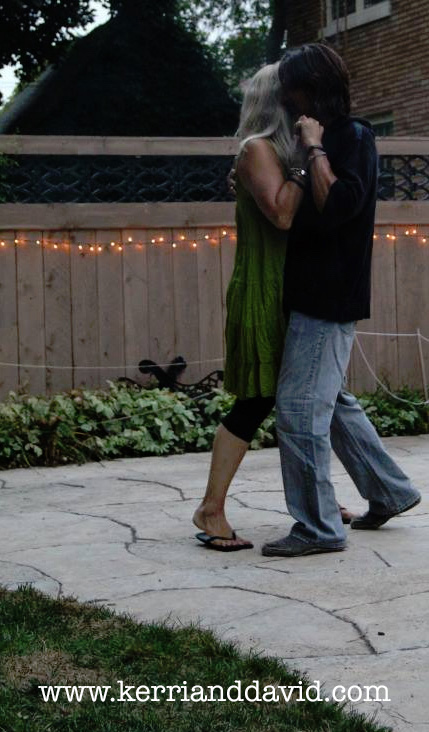
This is an image of sanctuary. The back yard of dear friends, time spent together, taking precautions to be safe in a time of pandemic.

There’s more than one compromised immune system represented in this photograph. It is why we continue to meet outdoors. It is why, until we were vaccinated, we were careful to keep distance between us. How odd to honor the love of dear friends by inserting space between us. Our flip flops and sandals are stand-ins for a group selfie.

When our postal carrier came to the door to deliver a certified letter, she groused about the process for capturing the required signature, “We have to do this because of COVID,” she sneered, “even though there is no COVID.” We’ve learned not to push back on ignore-ance. I was reading about Brazil eclipsing the the over 500,000 deaths-mark when the doorbell rang. Kerri signed for the letter. She closed the door and we simply stared at each other. No words.

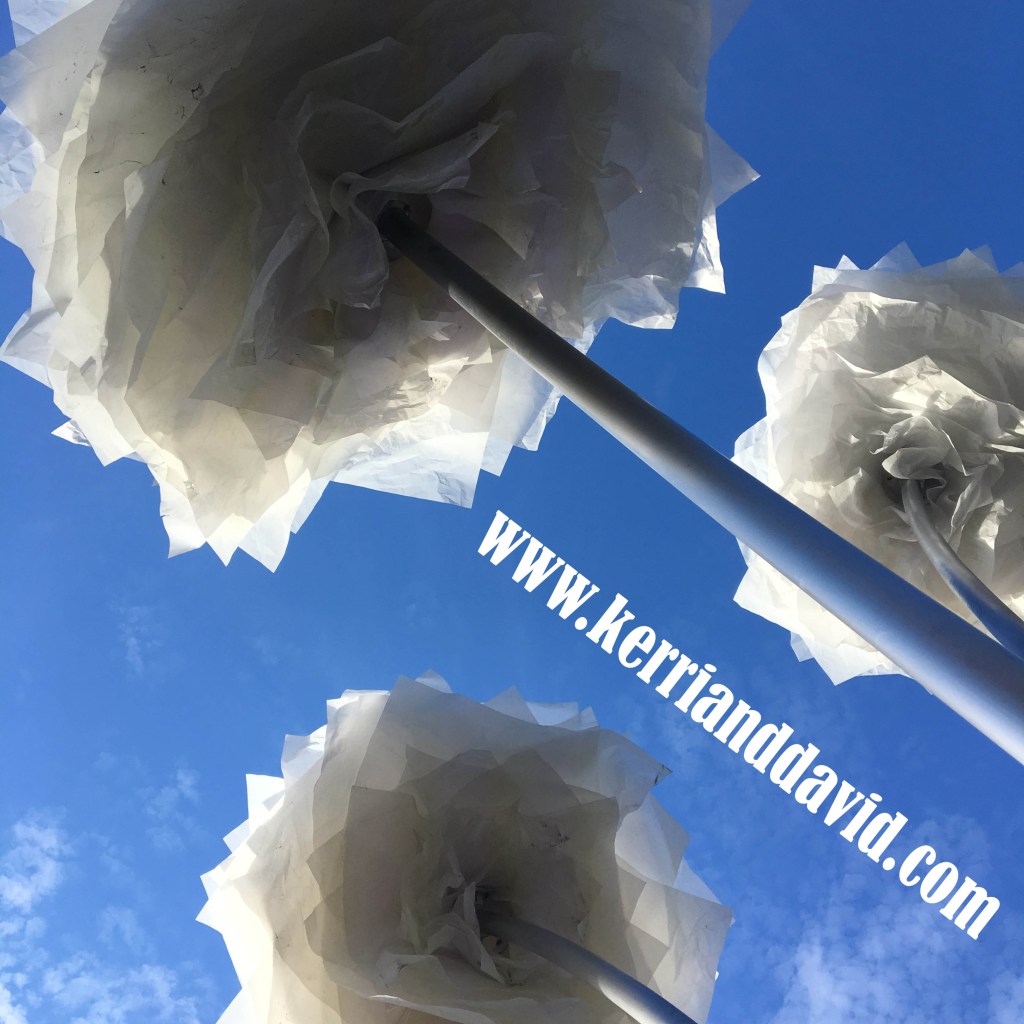
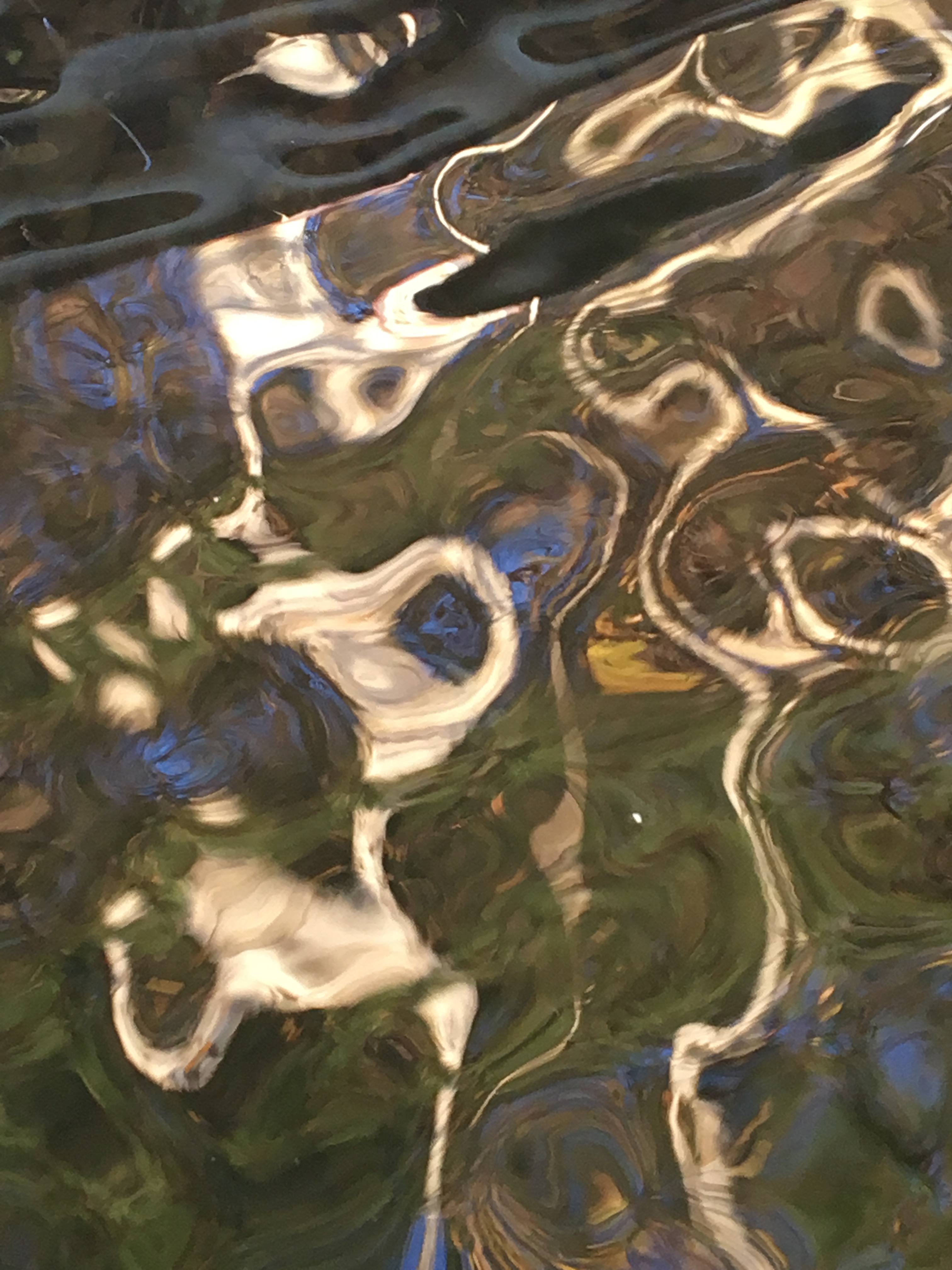
I delight in this photograph because, to me, it is slightly disorienting. If you had to guess which direction the photo was taken, you’d most likely guess blue. You’d be wrong. Perspective is just that – perspective. From my perspective, the photograph is upside-down. The photographer wears black flip flops.

We constantly locate ourselves in our stories. The location we choose is not passive or general. It is unique, dynamic. It gives us a point of view but does not afford us a lock on truth. Learning to question your unique perspective, to challenge your story-as-central, is an important growth step. It is maturation. Learning to question what you are told is an invaluable skill to develop.

As a lover of story, as a student of perspective, I am fascinated by the story-war raging in my nation. Politicians drape themselves in the flag, defending a violent insurrection on democracy, while demonizing and fearmongering BLM. Propaganda, hate-mongering and conspiracy theory is run amok and fueled by entertainment posing as news. Voter suppression laws, gerrymandering, stuffing the courts, all in the name of…what? The story of division. The dedicated maintenance of a half-story. A national story increasingly exposed as redacted. Why should a democracy work so hard to prevent a portion of its population from voting? To prevent its full history from being told? As we ask in the coaching world, “What’s underneath?”

Nations, like people, cannot grow until they look at the whole of their story, until all perspectives are voiced.

I’ve wandered back into the world of entrepreneurs and business. Each day I read or am shown the data on teamwork or the power of collaboration. The software-as-a-service world is dedicated to facilitating better communication, efficiency in sharing and collaborating, crossing disjointed platforms, and reaching into clouds where all are stronger as one than when in silos. I’m finding it intensely hopeful. Progress is calling us together. The economy is global as is the pandemic. We are in this together.

No one is healthy if all are not healthy. It’s the rule of the backyard, the honoring of dedicated friendship. My job is to protect you and yours is to protect me. It’s the story of the sandals and flip flops, the image of sanctuary, and, if not the yearning of this nation, it is the reality of this interconnected world.

read Kerri’s blog post about SANDALS

Use Your Chalk [on Two Artists Tuesday]

There are two words floating around in my universe these days: structured and unstructured. Structured data. Unstructured data. Structured time. Unstructured time.

The world as seen through the Puritan lens gives great preference to structure. Unstructured anything is suspect. “Idle hands,” we are taught, “are the devil’s workshop.” Yikes. Apparently it’s dangerous to take a stroll, to sit and ponder, to clear the day and do nothing.

I suspect it explains why our notion of business is hyper-focused on the bottom line and often misses the value of relationships. Bottom lines are easy structure. Relationships, not so much. It is the same with test scores in education. Easy structure. However, stepping into the unknown – the very definition of learning – is largely eschewed because it begins in an unstructured pursuit. Creating the structure, making the meaning, discovering the connectivity is what our hearts and brains like to do. When learning isn’t merely a factory, when business is more than a bottom line, people prosper. They come alive.

Unstructured time. There was a time when time had no structure. Monks attempted to “keep” time by monitoring water through a bucket or sift sand through an “hour” glass. Sometimes the water froze in the bucket so the structure of evening prayer was disrupted. The sand clumped in the hour glass and the measure of time clumped with it.

There are moment on the stage when the actor forgets their lines. It’s called “going up” or “drying.” It is always, in the re-telling, the moment when everything becomes real, alive. It is the moment when the structure becomes unstructured. Hearts race. Eyes widen. The stakes are suddenly palpable. The actor breathes, stands in the vast unstructured universe, and the words return like a swinging bar to a high-flying aerialist. The play is infused with aliveness. Presence is mostly unstructured.

As is common in the structured and unstructured use of the English language, oppositions are easily constructed. Unstructured simply means the meaning has yet to be made. Structured data, structured time, are the tip of a largely unknown iceberg. Love, joy, despair, awe…the full spectrum of experiences, bubble in the unstructured spaces. Numbers can describe a moment in time, can orient for a moment, but will never “explain” yearning or desire or our fundamental need to tell stories (put structure on unfathomable experiences). Structure & Unstructure: they are dancing partners, not combatants.

Where do we come from? What are we here to do? I am going to die, what then? It takes a good deal of unstructured time to sit in these unanswerable questions. There are, of course, plenty of people who will gladly provide structure to your unanswerable – and therefore uncomfortable – questions. Perhaps that is why we adore our structure and demonize the empty spaces? Comfort. Ease.

Kerri cannot pass a hopscotch template chalked on the street. It’s almost automatic. Step, hop, hop, step, hop. The little girl in her connects to the child who chalked the squares on the sidewalk. A simple game. Play. It’s one of the things people do with unstructured time. Set challenges. Make up obstacles. Seek puzzles. Invent. Dream. Connect to the deeper places. Where’s the structured bottom line watching the little-girl-in-my-wife hop and skip and turn in the game-chalked-on-the-sidewalk? The laughter of remembering? The giggle and freedom of the woman hopping the scotch, just because she can?

read Kerri’s blog post about HOPSCOTCH

Enjoy The Return [on Merely A Thought Monday]

It’s back. Pop Goes The Weasel, in an incessant cycle, playing as background accompaniment to the birdsong. The truck circles the neighborhood, the sonic equivalent of water torture on wheels. I’ve spent too many hours pondering how the driver, the seller of ice cream, sitting in the epicenter of the looping Pop refrain, retains their sanity. I couldn’t do it. It’s low on my list of aspirations. I’m certain my assignment in hell will be the ice cream truck driver.

Of course, the musical assault is accompanied by – no, much more, it inspires – the delighted squeals of children, excited-to-a-frenzy when hearing the tune, begging coins from their parents, and running to the truck to get their treat before it disappears around the corner. The happy squeals bring instant forgiveness to my hardened heart for the Weasel drumming of my brain.

It’s the solstice. The ice cream truck, like the position of the sun in the sky, is a sure sign of summer’s return. On a walk by the lakefront a few days ago, the truck bellowed passed us, looking a bit worn and tired. It stopped. The neighborhood kids scrambled, parents’ pockets were emptied, purses turned upside down, skinny legs and clenched fists raced toward the paint-peeling truck.

Forgive my brain but I was suddenly overwhelmed and duly impressed at the chain of innovation that, although it now appears old and ordinary, went into making this dilapidated truck and the joy it invokes possible. Refrigeration. Pasteurization. The waffle cone. Ice cream on a stick. Recorded sound. Speakers. Not to mention the internal combustion engine.

As the kids swarmed the Weasel, I looked around at all the older faces, those folks with newly emptied pockets, watching their kids and grandkids enjoy the ritual that they once enjoyed when they were the young enthusiastic pick pockets. Every face was smiling. Even mine. Add that to the chain of innovation. It might be the most important of all the innovations in the chain. Bringer of joy. Inciter of happy memory. It certainly should be the point, the aim of all invention. Better life. No one needs to read a business book when an ice cream truck is circling the neighborhood. It’s all right there.

Bird song. Children’s squeals of delight. Pop Goes The Weasel. Hot days. Melting ice cream. Summer.

read Kerri’s blog post about GOOD HUMOR

Feed The Hunger [saturday morning smack-dab.]

I’ve often pondered what to call our middle-of-the-night meals. Lately, we call it our “3am banana.” I used to call it my “life preserver.” Over time, as my capacity to anticipate the feeding-moment has improved, middle-of-the-night-meals have become much less dangerous.

read Kerri’s thoughts about CEREAL WITH BLUEBERRIES

smack-dab ©️ 2021 kerrianddavid.com

Await The Whoooosh! [on KS Friday]

Although the genre-labels attached to her music, words like “new age” or “easy listening,” might lead you to believe otherwise, Kerri is not a gentle player of her piano. She doesn’t sit at it. She stands. Often, when she plays, the piano literally hops. This diminutive woman is a force of nature when she steps into her music. For her, playing is a full-body affair.

In this day and age of electronically generated music (and art), it’s hard to explain the love of the analog, the delight in full-body art-making. There is a flow – there is no other word for it – that is possible when using brushes and paint on large canvas or making music on keys that aren’t digitally supported. It becomes a dance. It requires opening, getting out of the way.

Early in our lives together we’d listen to her recordings, “Can you hear the whooosh?” she’d ask. “That’s the pedal! I love that sound!” she’d say. “Whooooosh! I don’t like playing on keyboards. There’s no whooosh.”

No whooosh. I’ve watched her play on keyboards – many times. You’d never know it but she has to hold herself back. If she let herself play, full-body-play, she’d knock the keyboard off its stand. She has to contain the force, water through a dam.

It’s anybody’s guess how she’ll play after her wrist recovers from the wet-floor-fall. There are still some months to go. In the meantime, the piano is calling. I know because she’s cleaning her studio. A studio cleanse is always the sign of an artist preparing for the next…Open space. A gathering storm. There’s only one thing I know for certain: on that day, when the pain is gone and she calls, “Come here and listen to this!” DogDog and I will go into the studio, find a safe place clear from potential piano hops, and we’ll take full-body delight in the return of the whoosh.

listen for the whooosh

Kerri’s albums are available on iTunes and streaming on Pandora

read Kerri’s blog post about PEDALS

that morning someday/blueprint for my soul ©️ 1997 kerri sherwood

Do What They Do [on DR Thursday]

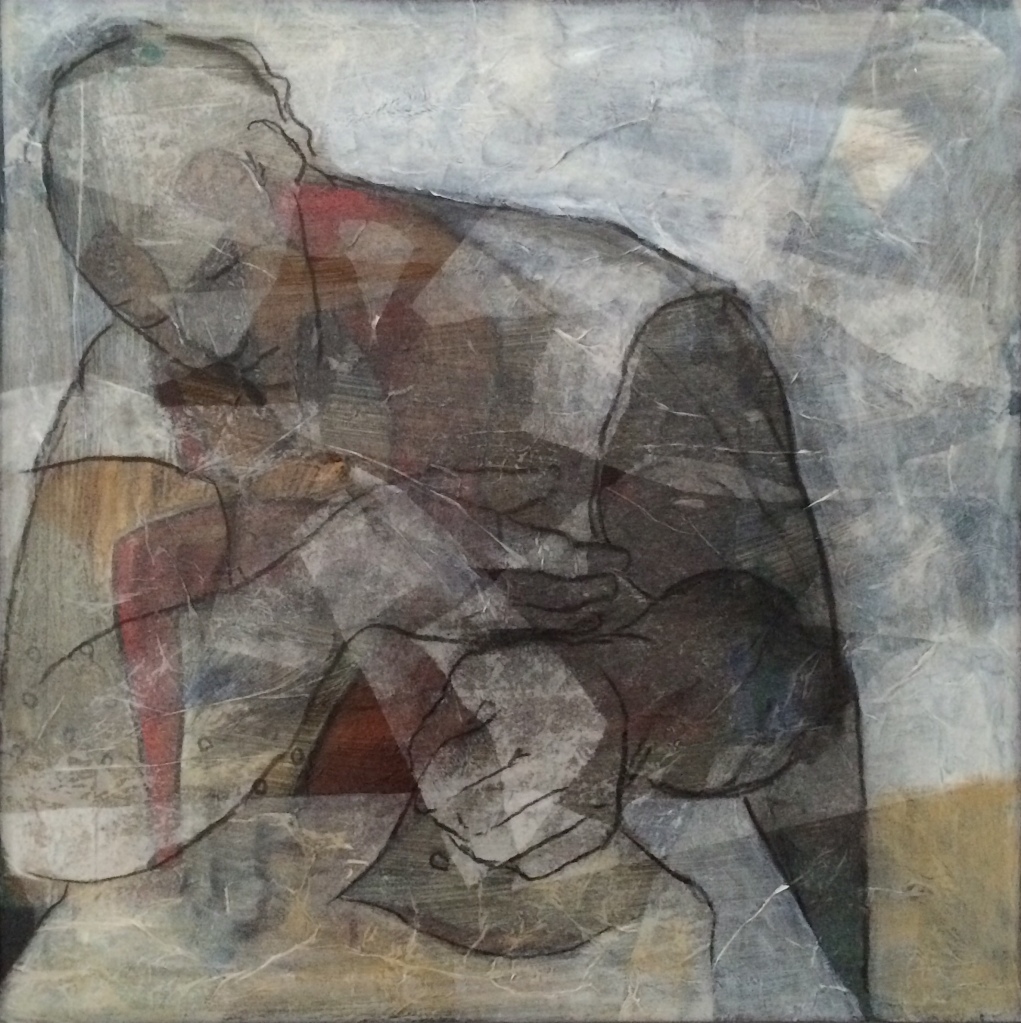
I’ve posted this painting more than any other in my stacks.

Some paintings serve as markers for new directions. This painting is one of those. What came before this painting was suddenly old. What came after was an exciting unknown path. Exploration and play. Big mistakes and messes followed by understanding. Materials can only be pushed so far. Bodies and shapes reveling in negative and positive space.

When I met Kerri, this painting did not have a name. I called it #7 in my yoga series. She called it “Iconic” and the name stuck. I liked the name. It seemed appropriate. An icon is a symbol. Something worthy of veneration.

Now, over ten years later, this icon, once the harbinger of the new, serves as the hallmark of what was.

I delight in this painting, Iconic. It is one of the few. And, although I am grateful for where it led me, I’ve come to realize that it no longer serves to locate me, except in a past chapter, like a yearbook photo.

Letting go. It is why I stand in my studio – I can’t even sit there of late – and look at the mess on canvas that sits untouched on my easel these many months. Somewhere, after this mishmash phase, somewhere, beyond the chaos and disorder and wiping away, there will emerge another marker. An icon. A compass.

Although I’ve written it many times in these past few months, it’s way past time that I admit – to myself – that I am, once again, in the wilderness. Someone once told me that we go to the wilderness to face our demons and find our gods. That seems a bit dramatic. Demons and gods are one and the same, like positive and negative space or comedy and tragedy. The lesson is always the same: stop taking yourself so seriously and the oppositions, the demons and gods, will stop pulling you apart.

Find a child and watch them play with paint. Do that. Do what they do. The wilderness is rich in sustenance if you know where to look.

Someday, in the midst of being lost, I’ll make an accidental mark that jolts me. I’ll turn it around, asking, “What’s this?” A new direction will emerge.

Read Kerri’s blog post about ICONIC

iconic ©️ 2010 david robinson

Look With Honest Eyes [on Not So Flawed Wednesday]

We were sharing pandemic survival stories, the worlds that we explored in our isolation that we otherwise might never have entered. We told Keith of Joey Coconato and how his back country backpacking trips were a nightly fascination. I’m particularly drawn to his hikes through the canyon lands. Keith became animated, saying, “You have to check out the Millennial Farmer!”

I know nothing about farming. Once, sitting on the back porch of a farmhouse Air-B-N-B in Iowa with my dad, I listened intently to his stories from childhood working on the various farms in the community. Had he been able to script his life differently, I think he might have written a farmer’s story. He loved the outdoors. He loved growing things. He always kept a garden and tended flowers. He knew what he was doing! Somehow, I gleaned nothing from his green-thumb-knowledge. I am a plant killer.

In the first short installment of The Millennial Farmer, Zach Johnson tells his audience that he’s making his videos because people know so little about farming and what farmers actually do. He’s a fifth generation farmer in Minnesota. I was, as he predicted, completely gobsmacked watching The First Day Of Planting 2016. I pushed play expecting dirt clods and the rumpled pages of the Farmer’s Almanac and, instead, entered the space age. His tractor was akin to the deck of the Starship Enterprise. His nuanced explanation of the monitors in his cab was enlightening. He’s driving a computer (actually, it mostly drives itself).

My stereotype was completely shattered. I had no idea. And, isn’t that the point of taking a peek into the lives of others? Recognizing that we have no idea about the realities of others lives? Isn’t that the opportunity?

This morning I pondered aloud about how we’ve changed in the months since COVID began. “I don’t know anyone who hasn’t changed.” One of the most profoundly sad awakenings for me during this time of division and dedicated ignorance is how resistant we are – and I believe always have been – of taking a peek into the lives of others in our nation. We simply don’t want to know, so great is the fear of what we will find there.

John Lewis famously said, “We are one people, we are one family, we are one house. And we must keep this house together.” By “keep” he meant to tend. We might become one family when we are willing and able to look with honest eyes into the lives of those who share this house. Our stereotypes, our almanac ideas, keep us fragmented.

Joey and Zach. Both live lives immersed in nature but from diametrically opposed intentions. Both have popped open my eyes to new experiences and bodies of wisdom that I might otherwise never have encountered. Both are following their personal star and sharing what they find on their paths.

As part of our summer planting and backyard oasis, we bought two tomato plants and some basil. Our Boomer farm is not extensive but it is well loved. “Do you think, if we tagged The Millennial Farmer, our tomatoes would stand a better chance?” I asked.

Kerri considered it for a moment, her hands busily potting the basil plants. “It couldn’t hurt.”

read Kerri’s blog post about BOOMER FARMERS