Gurgle On! [on DR Thursday]

I’m certain the first time I tried to walk I was not successful. A few stumble-steps and a return to the floor. My first attempts at speaking the English language did not receive a passing grade. As I recall (and I don’t recall), I made some gurgling sounds into which the adults surrounding me projected meaning. I’m certain they cheered and encouraged me to gurgle-on.

Learning is not a terribly difficult thing to do when 1) there’s a reason to do it, and 2) judgment, including words like “success” or “failure” are absent from the experience. Thank goodness my first art teacher treated me like an infant and, rather than critique my mess, she encouraged me to gurgle-on. Consequently, I associate my artistic impulses with fun and exploration instead of the thousand shades of rignt-and-wrong that most people are subjected to.

Recently Skip wrote and asked, “What’s the second rule?” Suspend your judgment and learn.

We just bought a mandoline. It slices and dices and chops and cuts. “The first thing we’re going to make is potato chips!” Kerri proclaimed. And, then, her brow furrowed. “What if we do it wrong?”

“We’ll learn something and make another batch.” Trial and error. Both “trial” and “error” are essential ingredients in the learning process and, since all of life is a learning process, you’d think someday we’d learn to value the “error” portion of the experience. We do ourselves a great disservice placing so much emphasis on passing the test and having the “right” answer. The essential ingredients of trial and error can’t breathe in brains fogged by so much right-and-wrong-ness.

Our first batch, like our first baby step, was a stumble. But more delicious. We stood over the pan eating our result and discussed second steps. What should we do differently next time? Less heat or more? Thinner slices or thicker? This is all I know. I love to learn, especially when food is involved and judgment is not.

read Kerri’s blogpost about POTATO CHIPS!

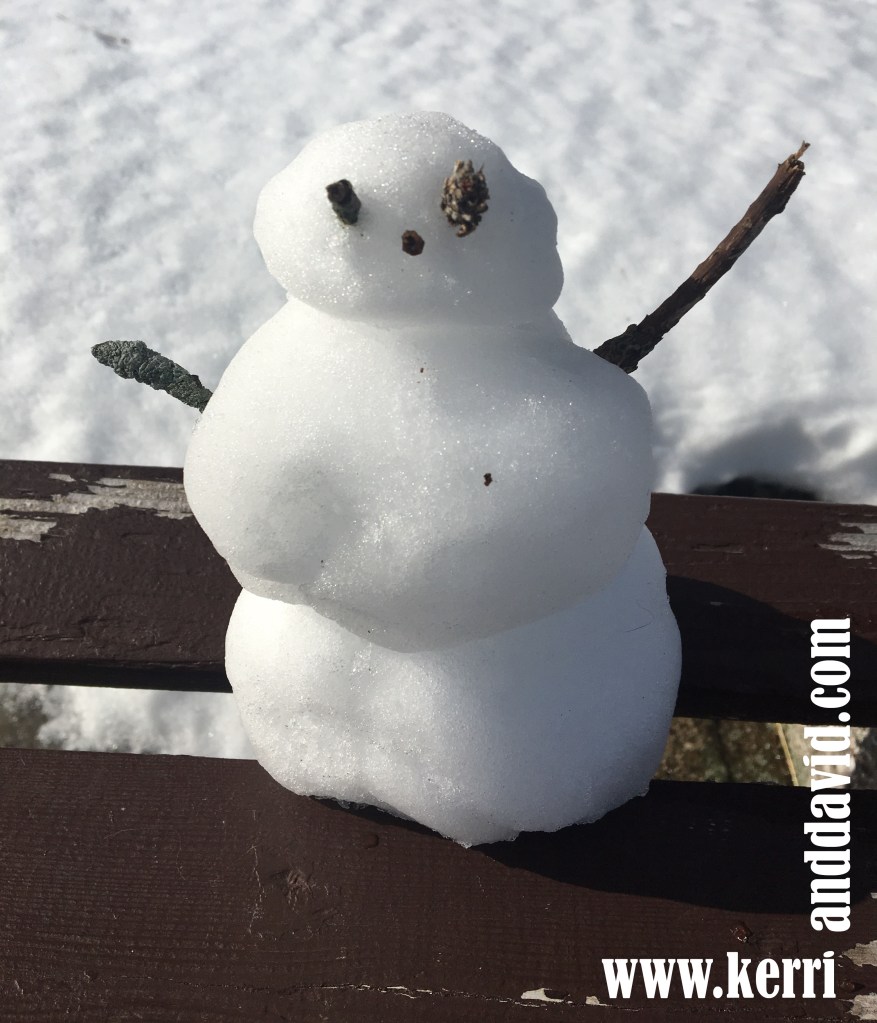
flawed cartoon © 2016 david robinson

Feed It [on KS Friday]

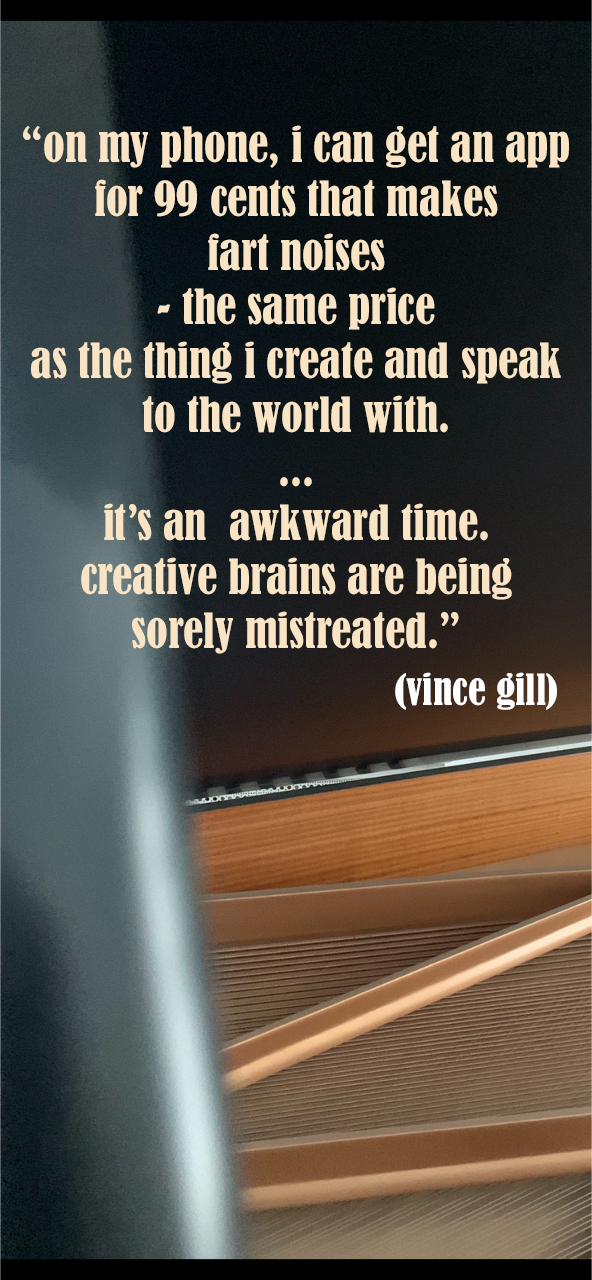
“The devaluation of music and what it’s now deemed to be worth is laughable to me. My single costs 99 cents. That’s what a single cost in 1960. On my phone, I can get an app for 99 cents that makes fart noises – the same price as the thing I create and speak to the world with. Some would say that the fart app is more important. It’s an awkward time. Creative brains are being sorely mistreated.” ~ Vince Gill

I am the first in line to tell you that everyone has a creative mind. Everyone. That river of ridiculousness running between your ears is nothing other than creativity-run-amok. What else? Telling yourself that you are not creative is, in itself, a creative act. Seeds planted early in life grow into mighty obstructions. Creative wastelands are created. If you want to hear a terrific appeal to educators to nurture rather than stifle the creative mind, listen to Sir Ken Robinson’s 2006 Ted Talk. It’s appropriately titled “Do Schools Kill Creativity?”

I’ve listened to numerous school boards tell me how much they truly value the arts – until it’s time to pay for it. Sadly, it’s not a question of whether or not they value the arts; it’s that the arts, the creative minds, do not fit any of the standards of valuation against which all things are measured. They do not know how to value the creative minds that they steward. Arts organizations and artists, mostly, are not money makers. Creative minds, creative acts, do not fit in the boxes and are not measurable on standardized tests. Thinking outside of boxes is, after all, the point of a creative mind. Metrics and goals stop a creative mind and heart in its tracks. The cruelest thing you can ask any artist to do is write a grant.

And yet, an artist has to make a living. Yaki asked me if I had to choose between making a living and making my art, which would I choose? I answered, “Art, of course,” but that it was really a question of Maslow’s hierarchy: it’s hard to make art when you are not surviving. What I didn’t say is that his question perfectly captured the reason schools kill creativity and creative brains are sorely mistreated: it is assumed one must choose between. Making a living and thriving creativity are understood as oppositional.

How many parents have tried to dissuade their children from following their passion for the arts? How many times have I heard Kerri say of the stacks of music on her piano waiting to be recorded, “What’s the use?” How many times have I sat in my basement studio looking at my stacks and rolls of paintings and wondered, “Why bother?” We do it to ourselves, too.

And then, the phony metric falls and we breathe, pick up our brushes and sit at our keyboards. There is a river of riches that runs deeper than money. It is, after all, a creative act to kill a passion. It’s also a creative act to feed and nurture an artistic soul. Both. It’s what the school board doesn’t understand: the choice is not between making a living or living as an artist, the choice is between feeding inspiration, expanding a creative mind, or smothering it.

read Kerri’s blogpost about CREATIVE MINDS

Kerri’s albums are available on iTunes and streaming on Pandora

watershed/as it is © 2004 kerri sherwood

Jump Out Of Your Chair [on KS Friday]

If I want to think clearly – or clear my thinking – I walk. Sitting still has always been and continues to be an invitation for thought-log-jams. It was a problem when I was a student. Classrooms come with desks and an expectation that the learner will sit still. I became a master of the controlled wiggle, not because it broke the logjam but because it helped maintain my sanity. For me, sitting still is like a hair shirt with an itchy tag. Sitting still makes my IQ plummet several points. Sitting still interrupts my synapses.

Tom Mck told me that the alternative schools were populated by artists. I intimately understood his observation. Artists need to move to think. They thrive in an alternative to still-sitting.

I’ve made sure that my work throughout my adulthood included movement. Directing plays. Painting big paintings. Facilitating workshops. Even as a teacher I cleared the room of desks. This morning I saw a headline in Forbes Magazine declaring that children learn more through play than through guided instruction. It was curious to me that this was a headline. Sugata Mitra’s been shouting the news for decades. Neil Postman spent his life reading the research and advocating for what the research implied: turn little people toward a passion and get out of the way. Curiosity and desire are an unbeatable team. They will move faster than you might imagine. Move, move, move. Dance. Paint. Sing. Construct. Act. Play. They will let you know when they need you.

I’m learning the lesson again. My work places me squarely in front of a computer for hours each day. Flow. Eddy. Logjam. Wiggle. Move. Sigh, as the synapses start firing up again. Repeat. At this advanced stage of earth-time, you’d think I’d have grasped the full understanding that, for me to be effective, I have to move around. Each morning I review the previous day’s work and immediately know whether or not I found a movement/sitting-still balance.

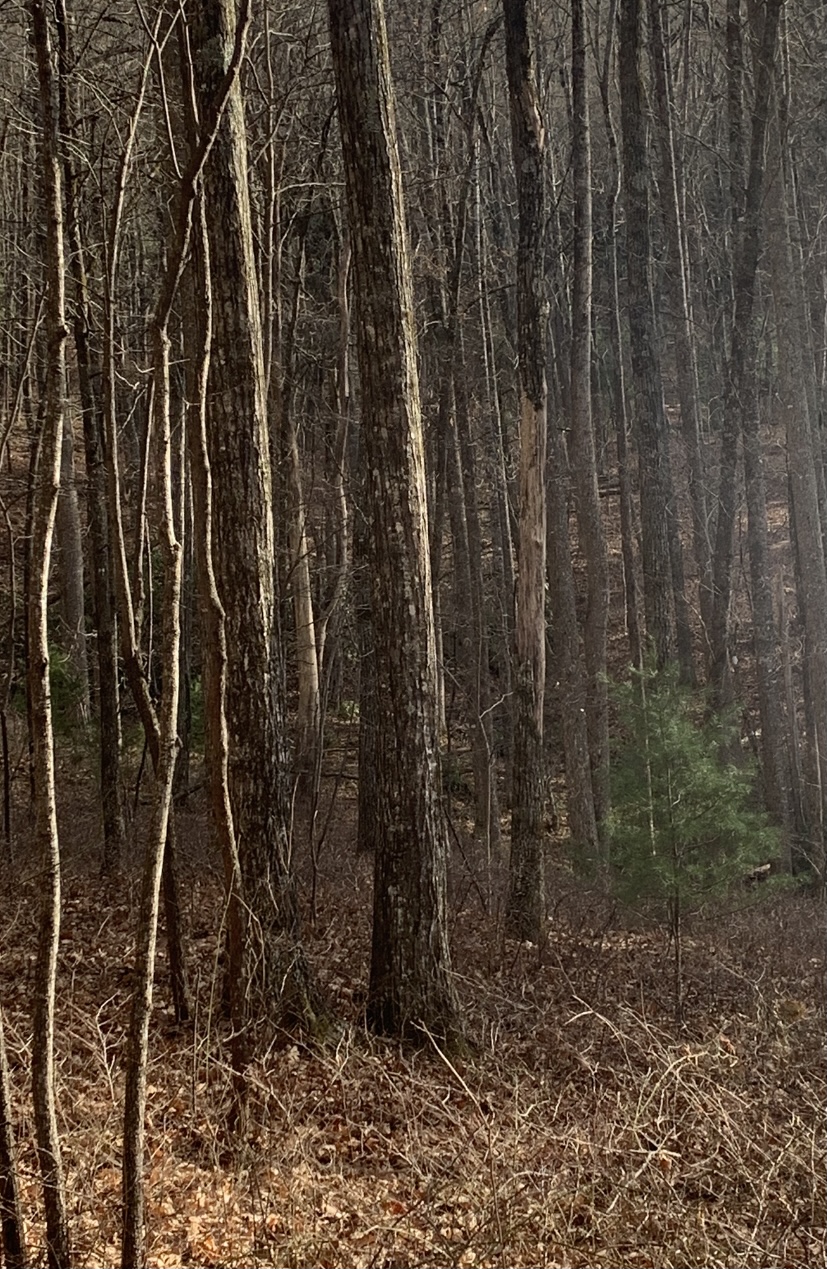
When we stepped on the trail and entered the woods in North Carolina, my mind was chock-full-of-thought-logs. Like everyone else, I stare at the screen and lose track of time. A day can pass me by and I never leave my swivel chair. I swivel for survival. For months, I’d been swiveling and forgetting to stand up and dance my ideas. Fifteen minutes into our hike, the jam broke free. My mind cleared. I could see the subtle landscape inside and outside. I breathed a deep breath. The forest was gorgeous. My mind was spacious and flowing! I resolved, once again, yet again, to attend to the necessity of movement that keeps my mind and heart flowing. Wiggling is maintenance, merely. Swiveling is not a solution. The real game, the full flow, is only available when I jump out of my chair and move-it.

read Kerri’s blog post about THE FOREST

Kerri’s albums are available on iTunes and streaming on Pandora

meander/as it is © 2004 kerri sherwood

Be Indeterminate [on Two Artists Tuesday]

Through the good graces of our tomato plants, I’ve learned a few new concepts this summer. Determinate and indeterminate. Bush and vine. Determinate tomato plants (bushes) are bred to stop growing. Indeterminate tomato plants (vines) will grow indefinitely or until the weather conditions “are no longer favorable.”

Our plants are indeterminate. Each morning, Kerri visits our planting bench and checks her tomatoes. 20 taught her a few simple tending-rules and now, each morning, there are more and more little indeterminate miracles moving backward along the color spectrum, finally arriving at a brilliant red.

Life is indeterminate.

My new tomato-terms come just in time. My current project has me revisiting my past life as a teacher and facilitator. If I apply my new terminology to people I can’t help but think it is the lucky few who survive so much dedicated energy to stop the learning-mind in the name of education. The natural output of a system designed on manufacturing principles is to truncate the questioning mind by patterning the notion that there is a predetermined answer. It becomes a game of finding the answer that teacher wants – a closed loop – instead of an incitement of curiosity. Children are excellent game players and translate the gaming pattern into their now-dulled-adulthood.

There is a cycle apparent in all genuine learning processes. It begins with discontent. Curiosity is a movement born from some form of discontent. It leads to questioning. Questioning always leads to disturbance (the interruption of the known). And, just like that, out of the disturbance something new is seen, call it a breakthrough, call it an insight, call it new learning…Many classrooms – certainly the systems – are designed and organized to keep disturbances to a minimum. The mantra is ‘control’ rather than ‘inspire curiosity.’ Business has the same dedication.

We’re taught that disturbance is the sign of something wrong rather than the crusty earth breaking to reveal new verdant life.

Discontent leads to questioning, leads to disturbance, which leads to breakthrough. And, an insight will always lead to discontent. It’s a story cycle, where yearning meets obstacle. Learning is by definition uncomfortable and at its best when it is uncontrollable.

Last week I attended a meeting. My two companions and I brought our homework back to the team. One was content. The other two of us were filled with discontent. The leader of the session, at first, was angry. He did not get the result he’d anticipated from his exercise. “So, you two are telling me this process was worthless!” he raged. We’d spent our week questioning instead of answering. Discontent. Questioning.

“No! It was great!” we chimed in chorus. “Look at all the good information we uncovered!” It was a mess. Big disturbance. We cycled through our misalignment a few times, wrangling over perception and usefulness. More rage. And then…an insight. The breakthrough. All of the rage, all of the appeasing, began to flow in a single direction. A possibility took shape. A target materialized that was much better than the prescribed pursuit. Energy filled our zoom-osphere. Laughter. Excitement.

Learning. Indeterminate. Open questions. Hot pursuits.

I am drawn to and surrounded by the dedicated indeterminates; those who refuse to stop learning: David, Mike, Horatio, MM, Bruce, 20, Judy, and yes, Kerri…I am a very fortunate man to be surrounded by so many tomatoes moving their way backward along the color spectrum, not afraid to walk through their discontent toward bigger and bigger questions.

read Kerri’s blog post about TOMATOES

Make Life Better [on Merely A Thought Monday]

Lately, the universe has pitched me headlong into a master class on efficiency. Maximum productivity with minimum wasted effort. A useful concept in certain arenas and an intensely destructive concept in others. For a person who’s spent his life in a study of curiosity, art, and the creative, it’s an unexpected study at this stage of the game. It is sometimes uncomfortable but I consider it an opportunity for balance. Artists rarely meditate on efficiencies. We’re more of a discovery clan and efficiency is generally the enemy of discovery. No one ever sailed to the edge of the world with efficiency-on-their-lips.

Once, I made the argument to a school board that daydreaming was highly productive. It seems a no-brainer to me that exercising the imagination should be highly valued in a learning environment. Einstein’s Theory of Relativity came to him in a dream about cows. It is not an accident that many insights and revelations come in the shower or while driving or peeling a carrot. Newton’s apple did not fall on his head while he was exercising maximum productivity. The mind, to be efficient, needs space to breathe, fields to roam. It is the most elegant of paradoxes but mostly lost on worshipers at the altar of efficiency. In the modern business world, efficiency is all about time since time is billable. You know the mantra: time is money. Do more with less. Somehow, we’ve turned that nonsense into a virtue, a thing to be desired. A reason to squeeze.

There’s another, more admirable side to efficiency-seekers. How to make work less arduous. Grease the wheels and remove the friction. Relieve the burden. Not faster but easier. Ann used to say, “Find a need and fill it.” She’d look at people toiling and ask, “How can I ease their struggle?” Beaky was that way, too.

Near our home there is a stretch of shoreline with an ineffective seawall. It was built with stones and debris that become projectiles when hit by forceful waves. The locals know to avoid that stretch during a storm. It’s deadly. After the storm, it has become our ritual to walk the path to see the destruction. It’s always impressive. How far can a wave throw a heavy stone? The answer: farther than you think. Mother Nature yawns when we think we can control her. The seawall has become my metaphor for human hubris but also masterful inefficiency. It would cost money to build a proper wall. So, instead, after each storm, crews collect the rocks and pile them back on the shore, readying them to be hurled by the next storm.

We saw a double-rainbow and turned toward the shore. Kerri never misses an opportunity to capture a little miracle or a slice of beauty. We parked in front of the seawall-of-inefficiency and I laughed out loud. A budding Banksy sprayed a message on the rubble: love. The secret message-maker could not have found a more appropriate word: Love. Can you imagine anything more inefficient and, at the same time, more potent? Love moves mountains but is not billable. It transcends time. What better reason to do anything? Well, perhaps reason has nothing to do with it and never has. Reason has the worshipers-of-the-efficient perpetually re-stacking stones.

It’s easy to be seduced but let’s face it, life reduced to billable hours is not life at all. On the other hand, there is nothing more inspiring, nothing more curiosity-invoking than asking, “How can I make life better for everyone?”

Love on a rubble pile. What could be better? On second thought, what could possibly be more efficient?

read Kerri’s blog post about LOVE ON A ROCK

Care Enough [on Merely A Thought Monday]

hope copy

This is my broken record moment: a system will do what it was designed to do. Sitting as I am in Kenosha, Wisconsin, the latest national flashpoint, I feel I have a front row seat to the system activating in response to a challenge.

Our system was designed to prevent “the unity of the commoner” in order to keep the focus off of the ruling aristocracy. This morning I read this sentence in the news: The president is fanning the flames of violence and dividing the country for political gain. The implication of Trump’s attacks is that there is a binary choice between law and order, and offering understanding and a path to justice for Black Americans.

A binary choice. A false choice. The commoners can EITHER have law and order OR they can stand for equal justice for all Americans. With equality comes the possibility of unity and unity is a threat to the system. In other news, just as you might suspect, vigilantism is on the rise. The system is responding exactly as designed.

Here’s the conundrum: we believe that protest and civil unrest are the path to real systems change and yet protest and civil unrest always split the community (prevent the unity of commoners). The path to social change in the USA cannot come from division. It might start there but it has to transcend the designed divide.

While the pandemic rages and the commoners are fighting each other on the streets, the stock market has soared. The United States has the highest level of income inequality among the countries in the G-7 and the gap is growing. It is not an accident that Fox News has its Henny Penny followers running around screaming “Socialism!” at the very time that America boldly steps toward an oligarchy.

My dad used to tell me that I’d educated myself into stupidity and I’d shake my head. Why would anyone choose to be uninformed? An ignorant populace is easily swung by the nose. An ignorant populace might have guns but they are unarmed where the real danger lurks.  It seems a good many of us are happily manipulated, hungrily eating anger and hate rather than asking a question or bothering to scratching the paint to discover if what we’re being sold is true or a con. It’s easy to check a fact or a source but you first must want to do it. That is where we fall down. We simply do not care. We opt for tribal division and easy blame over communal health – again, the system is doing exactly what it was designed to do.

Caring enough to question. That, too is an option. Caring enough to question is a possible path forward but requires us to look beyond the spoon-fed-rhetoric, the misinformation campaigns, and the intentionally stoked fires of division. It requires us in our questioning to shift our focus from the fight to the workings of “the ruling aristocracy.”

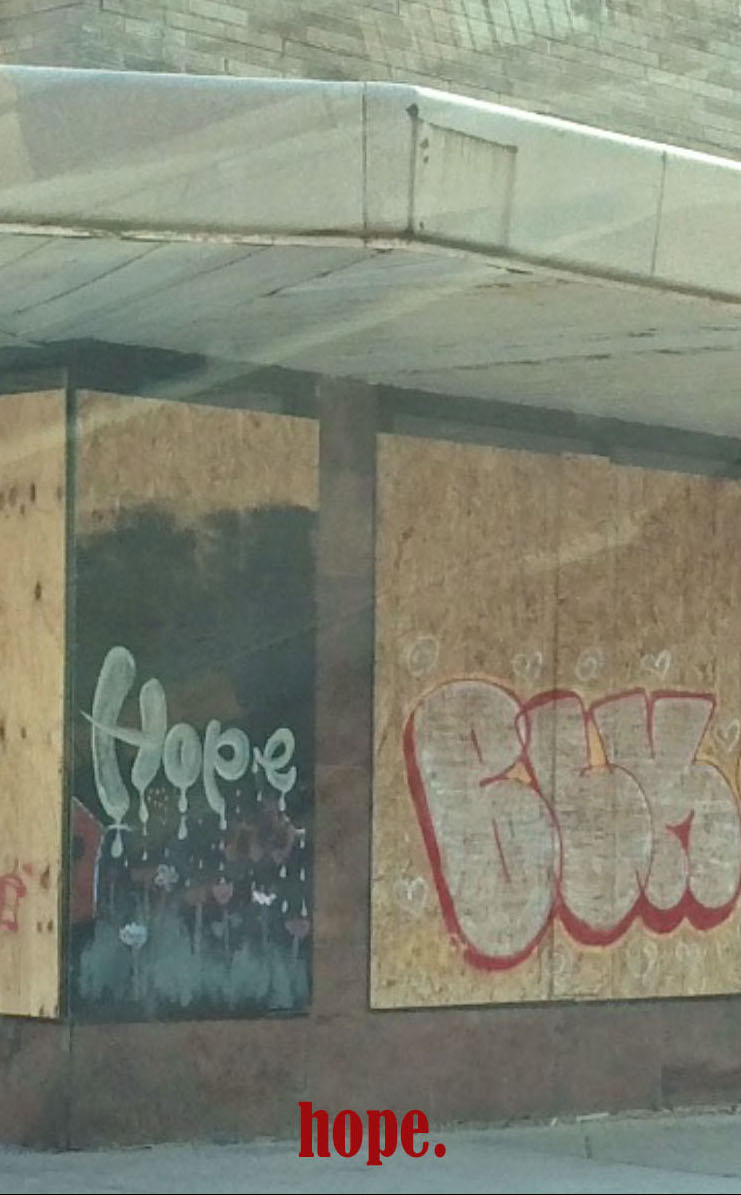
There’s also this: the businesses in downtown Kenosha and beyond are boarded up. The people of the community came out to paint them with messages of hope and support. Stamped on the hood of a burned out car is an appeal: Let’s Be Better Humans.

The impulse for change and a better world is there. A river of hope is there. The voices from the angry fringe will always shout loudest but I have to believe the vast majority, the quiet people who come out to paint, are looking for a common ground. There is hope, lots of hope, if we can take a look in our national mirror and see that we are doing exactly what the system is determining that we do. If we see it, we might be able to care enough to question, to deny the divide. We might be able to come together. We might be able to find a way to do better, to be better humans.


read Kerri’s blog post about HOPE


let'sbebetterhumans website box copy


Mourn The Loss [on KS Friday]

last i saw you copy

28 years ago, on this day, Kerri’s older brother, Wayne, died of lung cancer. If you want to know how she feels about it, you need only listen to LAST I SAW YOU. Grief made utterly beautiful in its yearning.

It is the gift of the artist to transform, to turn the darkest day, the breaking heart, into something bearable. It is the gift of the artist to communicate what cannot be captured in language, to transport us, in a safe way, into and through the hurt so we might touch the unfathomable depth of love. It is the gift of the artist to open new pathways and possibilities, to guide communities into and through impossible conversations. To point the way to a new story, a new perspective growing from an old and ancient root.

In my mind it is the greatest loss when an artist turns against their artistry. The entire world loses on the day an artists says, “Why bother.” There’s no money in it. The artist loses most of all because they’ve bitten the poison in the American apple. They wither and die. Not everything is or should operate like a business. Education is not nor ever should be a business. Worship is not a business. Healthcare is not nor ever should be a business. Run them that way and the priorities flip. The greater is lost in the lesser. When making money becomes more important than health or care or spirit or the expansion of minds, we lose our way. We send our kids back to school during a pandemic to open the economy. Sacrificial lambs. Throw them into a volcano to make it rain.

What we value in this nation is abhorrent.

And then there is Kerri. What a gift. What a loss. She read today that someone is now making silverware out of old CDs. “Look,” she said, showing me the article. “We have a basement filled with CDs! Maybe we should have gone into the silverware business!” Proving to herself once again that her gift is less than worthless. Worth less gift. No business.

Great! I thought but did not say. A world filled with forks but void of your music. No one to lead us through the dark, no way to reach the truly beautiful.

“My paintings,” I said, feigning alliance, “are destined for a thrift store.” I’ve given up the fight with her (though, by this post you can see that I am a liar).

I continue to paint with no illusion about “sales” or “showing” or the other necessities of “business.” It’s for me, now. Transformation of dark to light can be selfish, too. Personal. After all, for me, it’s always been a spiritual path. Business necessities pale in the comparison.

If you want to know what I [and Wayne] feel about Kerri turning her back on her artistry, you need only listen to LAST I SAW YOU. Listen for the strings. It will break your heart.


LAST I SAW YOU is on the album THIS PART OF THE JOURNEY


read Kerri’s blog post about LAST I SAW YOU


ray of light WI website box copy


last i saw you/this part of the journey ©️ 1997 kerri sherwood

meditation ©️ 2015 david robinson

Put Down Your Straight Edge [on Two Artists Tuesday]

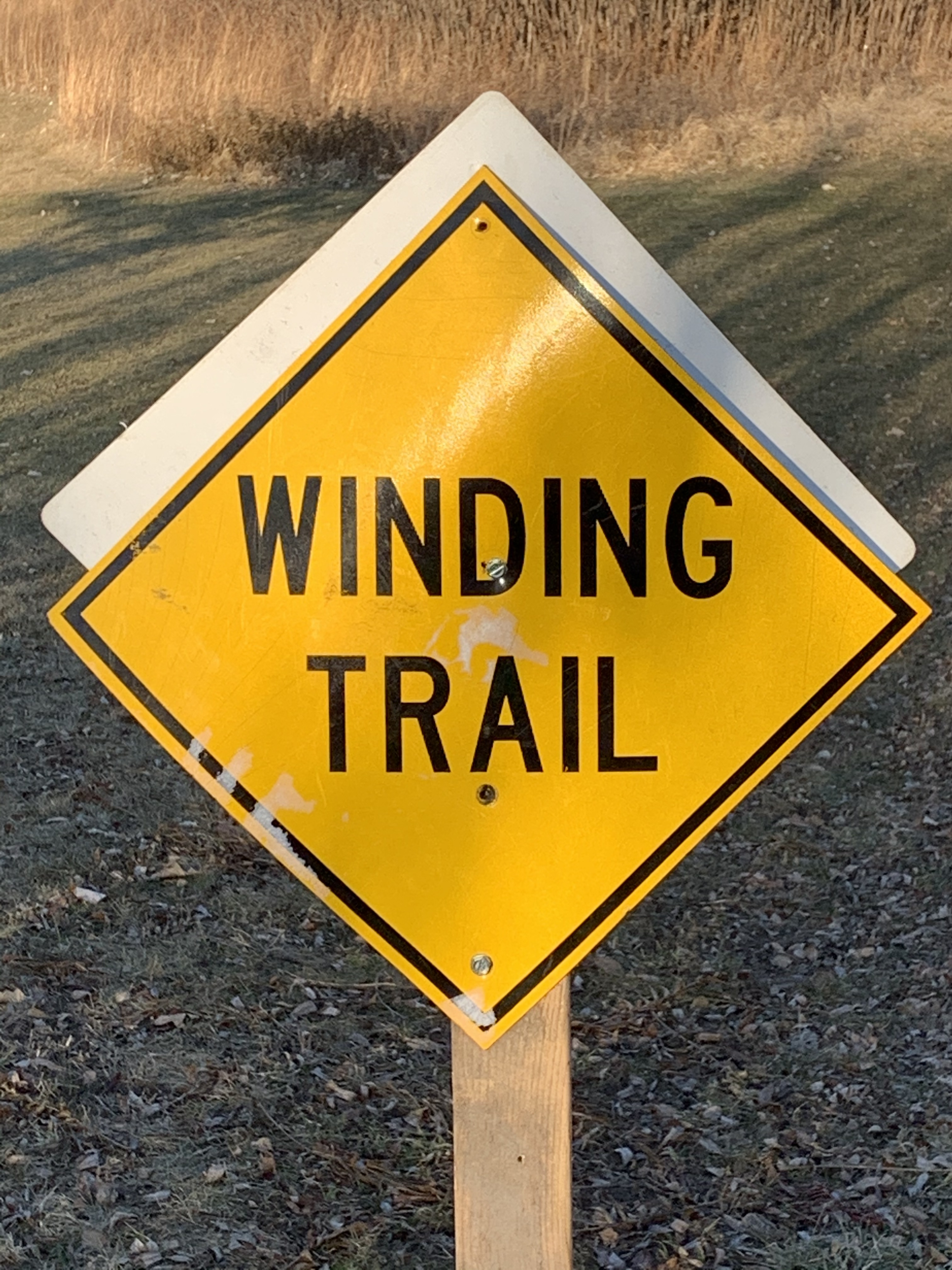
winding trail copy

I just wrote a “Statement of Philosophy of Teaching.” It’s for an application to teach at a college that emphasizes experiential learning. If I had a dime for every time I championed experiential learning or used that phrase on a crowd of wooden educators, stony-faced business types, or boards-of-directors, I’d have no need to write statements of teaching philosophy. And, truly, think on it for a moment, what is the opposite?

Andy’s phrase: experience equals knowledge, knowledge equals confidence, confidence equals success. In other words, the only way to learn to ride a bike is to get on the bike and ride. There will be falls. We call that learning. And, the really great thing about getting on the bike and riding is that one day, after a few more falls and many more miles, you might compete in the Tour de France. You will be pursuing something other than your balance skills. Learning is like that.

The problem with shorthand phrases like Andy’s, although accurate on one level,  is that they describe a straight line. Life, I’ve learned from experience, has rowdy roller coaster phases that nearly fling you off the planet, awkward backward stepping to get out of wrong choices, chapters wandering lost in the forest, days spent sitting on the rock stripping off the armor before another step can be taken. Life is not lived in a straight line. Experience is a windy road. It only looks straight in the post-mortem. Knowledge gathering en route to confidence is no walk in a meadow. Andy will tell you that, too.

We make meaning out of our experiences after the fact. We have experiences first and story them second. It is why learning is circular. It is why a rich life is circular, why life lessons come around again and again.


read Kerri’s blog post about WINDING TRAILS


arches shadows k&d website box copy


Know The Value [on Two Artists Tuesday]

paint by number copy

“What’s it worth?” This seems to be the least answerable question of our times. Its cousin question, “Is it real?” is under assault and so qualities like ‘value’ or ‘worth’ are less and less discernible.

For instance, I laughed heartily recently when I listened to a podcast Horatio sent my way. It was about the billions of dollars spent on our educational system of testing that has produced minimal results. It doesn’t work. Data, brain science, and common sense have known this for years. I can hear Tom now (and see his famous sigh-with-eye-roll), “It has to be real. It’s about relationship. It needs direct application.” Do the tests make for better education? No. Of course not. The opposite. And, we knew that before implementing the system of testing. So, what is real? What was it worth? The system consumes itself.

A few years ago, Kerri and I went to the Chicago Art Expo. We came upon a gallery installation, a single piece. It was priced at $40,000.00. A line of twine stretched across the booth. Clipped to the twine was a single household sponge. It had been dipped in paint. Kerri, using her outside voice, said to all who could hear, “ARE YOU KIDDING ME?” It was purchased. What was it worth? Was it real? It was the precursor to artist Maurizio Cattelan’s recent piece. He duct taped a banana to a wall. He’s now sold three versions for $120,000 apiece.  What is it worth? What is real? Art commenting on art. The system consumes itself.

Politics in America. It’s all about crowd size regardless of what the photograph reveals. [sorry, I couldn’t help myself]. There are so many that we actually keep a running tally of the presidential lies. We are slack-jawed at those who nod their heads and bellow their agreement with the demonstrably untrue. What is real? What’s it worth? The country hungrily consumes itself.

We haunt antiques stores. We rarely buy anything but enjoy the exploration. At School Days Mall, one of our favorite adventure antique grounds, Kerri turned and gasped. A paint-by-number landscape wearing a Minnie Pearl tag. “I recognize this painting!” she said, wide eyed. Her mom, Beaky, liked to paint and had a paint-by-number phase. The painting evoked a good story. It evoked a momentary possibility that this might be THE ONE Beaky painted. Kerri sent a text to her sister. They shared a memory. They reached through time and had a moment with their mother. Priceless.

Watching Kerri, so excited, text with her sister, it occurred to me that one reason we go to antiques stores is to touch stuff that comes from a time when value and worth were better understood. We go to the throwaways to find some substance. What is real is not in question.

Banana taped to the wall or paint-by-number landscape? What’s real? What’s it worth?


read Kerri’s blog post about PAINT-BY-NUMBER


tpacwebsitebox copy

Huck It Up [on Not So Flawed Wednesday]

THIS husby's dollar bill ceiling copy

Look closely. It’s not a flock of butterflies or a strange strain of ceiling-sitting-grasshopper. It’s money, greenbacks, tacked to the tiles. It’s how the community of Sister Bay collects money for local causes. Go to Husby’s, chuck money into the air and hope it sticks.

Kerri was on a rant. She was reading about the obscene amounts of money being raised for political campaigns. Power is big business! As she was ranting about the better use of so much money, I scrolled passed an article, 12 States Spend Less On Schools Now Than Before The Recession.  For all of our grand rhetoric and dedication to the showmanship of testing-for-excellence, we have a very hard time putting our money where our mouth is. These days, teachers everywhere are on strike because they have chosen what once was the most noble of careers, but now it takes two or three jobs to make ends meet. Her rant met my eye-roll. It’s upside down.

It was the middle 1990’s when I was a teacher, sitting at my desk reading the paper before my day was to begin. I was browsing an article about the starting salaries for city workers. I should have gasped but I was not really surprised. A starting garbage collector salary was vastly more than a tenured teacher. I like my garbage to be collected so don’t mistake my comparison. We express value through the exchange of money. It was impossible for me not to get the message. It’s upside down.

I understand that we are in a booming economy.  It’s a pervasive story. It’s trumpeted everyday. And yet, there is this headline ripped from the news: Almost 80% of US Workers Live Paycheck to Paycheck. I shake my head in disbelief every time I hear the fearmongering tale about the raging perils of socialism knocking on our door. Even a quick peak at the reality will reveal that social equity is not the monster that threatens us. Upside down.

Imagine my surprise when I entered Husby’s! In this small bar nested in this tiny town on the beautiful peninsula known as Door County, I found a community that recognizes the topsy-turvy nature of our economics! Good causes in an upside down world require an unusual strategy. Put a tack through your dollar bill. Fold the bill and tack around a quarter. Huck it up and hope it sticks. The kids and good causes will receive a bit of money-love from their community when the ceiling gets full. The money, the spare change collected from community love and caring, will come down. I suspect the money will matter but the community-that-cares will matter more. The empty ceiling will inspire new bills to fly up. The cycle will start anew.

ceiling money donations copy


read Kerri’s blog post about MONEY ON THE CEILING


not our best morning minturn website box copy