Hear The Whisper [on Two Artists Tuesday]

a house copy

A house remembers.

We took my dad back to his home town. It was a pilgrimage. He wanted to see it one last time. We walked through the cemetery. He pointed to headstones and told stories. He looked for people and grew frustrated when he couldn’t find them. He’d breathe a sigh of relief when, after walking row after row, we finally found them.

The pilgrimage was not to the cemetery. It was to a tiny little house that his grandfather built that he needed to return. To touch. Nowadays it is being used as a shed. His dad grew up in that tiny house. It was the center of his universe when he was a child, his cathedral.

Standing before the tiny house, he told the story of how his grandfather split open and pried apart the rafters, making a second story. He built on a small kitchen. He added a small bedroom on one side. There was a porch.

To our eyes, it was now barely standing. To my dad’s eyes, it was the most beautiful home on earth.

As we walked the perimeter I couldn’t help but feel that the house needed to see him as much as he needed to see the house. It remembered, “You came back!” It seemed to sit up straight, remembering the days that it housed a family, that meals were cooked within its walls, that children slept there. As my dad told the stories, I was overwhelmed with the notion that he wasn’t just telling us, he was talking to the house. And the house was nodding, smiling, “Yes, I remember…” The children ran free. Everyone worked hard.

As we walked away he knew he would never see it again. But he’d shared the story. He’d introduced us to this house, his-and-now-my sacred place. “This is where you come from,” the house and my dad whispered together, “Remember.”

IMG_2909


read Kerri’s blog post about A HOUSE REMEMBERS


footprints in sunlit snow website box copy

Tickle Open The Closed [on Merely A Thought Monday]

eleanor roosevelt copy

It used to be one of my favorite exercises to facilitate. Ask one person in a small group to tell a story of blame. Ask the rest of the group to invest in the story. In no time the small groups would be indignant, talking over each other in disgruntlement. A klatch of agitated victims, howling.  They’d laugh in their aggravated frenzy. They’d devise clever revenge or ways to torment the object of their blame story. They’d grow a monster.

Blame stories are like sugar. They are easy to eat and highly addictive. There’s rarely any real substance, so much gossip-cotton-candy, but there is an odd pleasure in playing the role of  “the injured party.” The groups would always reflect that the exercise was fun. So much so that they’d often forget it was an exercise. Commiseration and validation, after all, are the point of a blame story. That, and making someone else responsible for how we feel.

Ask the same groups to tell a story of choice or opportunity and most times, after only a minute or two, they’d sit in silence. Their, “Great. That’s really great,” support would dwindle. Feeding an idea is not nearly as easy as feeding a story of blame.

Quinn used to tell me that creativity is not for the faint of heart.

The groups were always shocked to discover how much of their lives were spent chewing the gristle of discontent, of feeding the notion that someone else was to blame for their choices or their circumstance. They’d generally comment on how easy it was to commiserate and how difficult it is to question, challenge or stop the blame-game. Mostly, they were shocked to discover how little of their time they dedicated to feeding ideas, theirs or another persons.

Blame stories are easy because they are reductive. They engender tight little balls of closed minds and closed circles. They close hearts. They take almost no energy at all to spark but, once burning, like a wildfire, they are capable of consuming entire forests.

Idea exploration is expansive. Seeing possibilities requires eyes that look up and out.  It takes much more energy to imagine, to question, to ponder. To try. To experiment. To ask. To challenge what you think you know. Opening minds, opening circles and hearts requires a deep sense of self-responsibility. It requires an even deeper sense of responsibility to others.

One of the purposes of the artist is to open closed circles, to tickle open closed minds. To help their community see anew and entertain never-before-imagined possibilities.

It takes more effort and courage to sail to the edges of the known world than it does to hang out around the water cooler and complain about others. Great minds do not have more capacity than any other mind, but they do require a very different focus.


read Kerri’s blog post about GREAT MINDS & IDEAS


k&dbw backs website box_ copy


FaceTheRain

feel the rain, mixed media, 2019

Rest Full [on KS Friday]

quarter rest

“The primeval beauty of silence becomes audible in the elemental music of the earth and in our music of instrument and voice. At the core of the world and at the core of the soul is silence that ripples with the music of beauty and the whisperings of the eternal.” ~ John O’Donohue, Beauty

I have said more than once these past few weeks, that the silver lining of two broken wrists is that all the presses have stopped. The endless list of things-to-do fell into dust on the floor and the true priorities jumped into immediate clarity. The superficial things gave way to the essential.

Little things, like showering or getting dressed in the morning, are no longer mindless  rote activities. The are now intentional. Attention is paid to every movement, every moment.  They are care-full. I am learning once again that there are riches all around me when I am not racing to get to the next thing but, instead, occupying the moment that I am living. The other night at rehearsal I nearly burst into tears so beautiful were the people and the laughter surrounding us. A month ago, pre-wristgate, I might have missed it.

Caring for an other.  Caring for one and another. Other caring.

We rest. We do not push through. So many in our amazing community have asked me, as I care for Kerri, am I also taking care of myself? I love this question. It is generous. The answer is ‘yes’ and the question it raises is ‘why isn’t this level of self-generosity the norm?’ Are you caring for yourself? In the midst of all that life flings your way, first and foremost, as you care for others, are you also attending to yourself?

I’m learning that the two things are inseparable: caring for another is also caring for yourself. Or, flip it over: it is impossible to fully care for yourself without caring for others. We know ourselves through relationship. We can only thrive when loved and while loving. People in isolation go mad. Banishment from the group was once considered a punishment worse than death.

As silence is to sound. Caring as making beautiful life-music. We take our quarter rest.


read Kerri’s blog post about QUARTER REST


ks website header copy


pumpkinfarm website box copy

Find The Quiet [on DR Thursday]


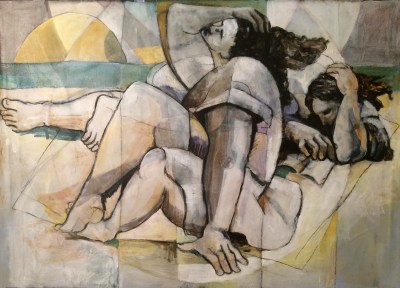
I paint figures. I’ve never been a landscape painter or a painter of abstracts. I want to touch the spirit within the body.  I want to wander through the inner landscape.  I want to find the quiet-power places.

I didn’t know what to call this painting so Kerri named it A Little Modesty. I liked the name. Synonyms of modesty: unassuming, humility, simplicity. These are quiet-power words.


read Kerri’s blog post about A LITTLE MODESTY


drc website header copy


laughing website box copy

a little modesty copyright 2012 david robinson

Pick Your Star [on Not So Flawed Wednesday]

pre joy joy copy

Mike Libecki is a mountain climber. He calls the necessary suffering of his sport pre-joy. “That way,” he explains, “I get to use the word joy in all of my sentences.” There’s joy at the summit. There’s pre-joy on the way up. It’s not a bad orientation to life, everything is relative to joy.

Skip’s meditation these days is on resilience. After a horrific car accident, he has more than a few tales of pre-joy. He has even more tales of joy. Human beings have a remarkable capacity to choose their stories, to orient to a path that is life-giving or to collapse their story into a state of no-joy. Skip chose resilience. The capacity to recover. To spring back in order to spring forward. Pick your star and sail toward it. That is Skip’s lesson to me.

Judy just wrote a book, Summoned By A Stroke. It is the blog posts she wrote to her community of support after her husband, Kim, suffered a major stroke. It is a remarkable testament to the invincibility of the human spirit when it intentionally orients to joy. It is also pays homage to the magnetic pull joy has on a community. There is  no attempt in Judy’s story to deny the pre-joy; there is a deep understanding that there would be no real joy without it.

During my Seattle years, when I was feeling blue, I would jump on the ferry to Bainbridge Island to visit Judy and Kim. This man wrecked by a stroke and, my friend, Judy, his wife, never failed to lift my spirits, to fill me up with laughter. More than once, on the return ferry, I would sit in utter amazement. I told myself that I should be bringing comfort and support to them but the opposite was, in fact, the case. What I experienced with them was beyond words. So much joy. If there is a place where pre-joy and joy blend together, Judy and Kim inhabited it. Today, this is Judy and Kim’s lesson to me:

“Kim and I are learning that happiness is not about what we do or where we go but how loving we are in relationships, how open and curious we are about where we find ourselves, and how inventive we can be with what we are given.” ~ Judy Friesem, Summoned By A Stroke


read Kerri’s blog post on PRE-JOY/JOY


slow dance party cropped website box copy

Point Your Nose Toward The Moon [on Two Artists Tuesday]

moon for wix copy

This moon called us. We were leaving rehearsal, pulled out of the parking lot and were hit in the face by an enormous orange moon. “We have to go to it,” Kerri whispered. We drove to the shore and sat with the moon for a while.

Staring out of the truck (it was a very cold night and with broken wrists it was easier to keep Kerri buckled in), my energy running low, this super moon reminded me of a long-ago-book, LUCY AND THE WATERFOX. The last few illustrations feature a beckoning moon. This is the Waterfox’s lesson for Lucy and, as it turns out, the Waterfox had a few words for me, too, on this moon-full night:

“The Sky is where you belong! Fulfill your heart’s longing and let the pack think what they think! Everyone knows that most foxes don’t swim and most foxes don’t fly, it’s not that they can’t, it’s because they don’t try. A fox whose heart soars like yours needs to dance in the air. Remember: words are like magic, misused they are tragic and belief is a great and most powerful word!” With that he gave her a wink, tipped his big hat and swam out of sight.

And so, while the other foxes nestled deeper into sleep, Lucy pointed her nose toward the moon. She took to the sky repeating his words so she’d never forget: words are like magic, misused they are tragic and belief is a great and most powerful word.”


Illustration 25

from my children’s book, Lucy & The Waterfox


read Kerri’s blog post about the SUPER MOON


moon website box copy

Snap Your Fingers [on Merely A Thought Monday]

we should be wide awake billboard copy

When I was roaming the world working with corporate types, tilting at windmills, I would tell my be-suited crowd that words matter. I’d relay a story I heard from Don Miguel Ruiz. He told his audience that people in the United States completely misunderstood the word, “spell.” He said, “You think to put a spell on someone is magic, like hocus-pocus. But, that is not it at all. Tell a little girl that she is fat and you will have spelled her forever.”

She will hate her body. That is a powerful spell.

Words matter. Tell the nation that the “Democrats are vicious” or that the news is “the enemy of the people” and the enchantment is undeniable, angry.  Push the spell through a propaganda machine and it magnifies in intensity. Like a ritual drum, the thump-thump whips the glassy eyed adherents into a red frenzy. Insist that long debunked conspiracies are real or that the deep state is out to get us all and the spellbound will see demons threatening everywhere.

The nation body splits and just like the little girl looks with hatred at the other part of itself. A powerful spell.

‘Hoax’ thump-thumped in the face of undeniable fact and the mesmerized fall into line, repeating what they are told to repeat. “Cluck like a chicken!” the hypnotist suggests and the sleepers dutifully cluck. Common sense surrenders to the spell.

Teachers of consciousness use different techniques but are in general agreement about how to awake from a nasty spell. Step back. Doubt what you think. See what is there and not what you think is there. Detach from your attachment to what you want to believe, to what you are being told. The salesman always wants you to buy the car. He is not your friend. He does not have your best interest in mind. He will use his words tell you anything. Despite what you are told, this car will not make you happy, it will not solve all of your problems. It will not make you sexy or powerful or complete. Uncouple from the words, the spell being woven, and see.

If she is lucky, the little girl one day wakes up and realizes that the hatred she experiences is not her own; it was planted in her with a word. The hatred she wields against herself and turns on to others is not of her creation. She learns that she must snap her own fingers and call herself awake. The hypnotist, she understands, only has authority if she continues to cluck and sleep.


read Kerri’s blog post about WAKING UP


luminaria website box copy


Ride The Lion [on KS Friday]

watershed the songbox copy

Let’s just say that 2020 is off to a rough start. If I was to get out my old-school label maker and slap a sticky tape descriptor on last year, on 2019, it would be the year of contention. 2020 is shaping up to be the watershed. Ka-chunk, ka-chunk, ka-chunk.

Broken contracts [literal and metaphoric]. Broken wrists. Broken dreams. All of our presses have stopped. We are moving very, very slowly through our days. We are having long conversations about where we’ve been, our successes and failures, dreams realized and those that went to ashes in our mouths, and where we want to go from here.

Unless you are being chased by a real lion, fear is mostly a function of imagination. In the real-lion scenario, fear is a life-saver that makes world-class sprinters of us all. In every other case, sans lion, it is a made-up monster that chases.  Running does no good. This chasing monster requires the opposite of the real lion: stopping, turning, and looking squarely into the eyes of your own dark imagination. The only relevant question is, “What’s wearing the mask of this monster?” Shame? Failure? What should have been? What will never be?

It is a turning point. Stopping. Breathing. Turning and staring back at your wild-eyed scare-fantasy and realizing that it’s merely a mechanism to prevent you from being where you are.  Standing in this exact moment is the only place from which you can enact change. It is the single location in which you can fully, unequivocally appreciate your life. Self-made monsters always dissipate when scrutinized.

Running away casts you as both runner and lion, chaser and chased. Fear the imagined-lion, be the runner. It splits you in half. The sky is falling! The sky is falling! And what if it is not falling? What if the lion-monster chases precisely to prevent you from standing still?

It’s a vicious circle, an energy eddy, this hyper-active dark imagination. It is true, if you think about it, that an imagination that is capable of so much doom is equally capable of fixating on the light side. Ride the lion. Better yet, give it wings so the ride is uncanny and wondrous. The ultimate human choice is where we decide to place our focus.

The story we decide to tell follows the focus-choice. Standing still, the only place from which we can see the array of choices and available stories, we are once again learning, seems to be the gift of the Watershed.


WATERSHED on the album AS IT IS is available on iTunes& CDBaby


read Kerri’s blog post about WATERSHED


skylake website box copy


watershed/as it is ©️ 2004 kerri sherwood

Value It [on DR Thursday]

DawsonDetail copy 2

“Creativity is a dance where the flow of the eternal gleams through the brittleness of time and the distance of space.” ~ John O’Donohue, Beauty

The arts are so often seen as unnecessary. They don’t pencil out. Hard to make money, yada yada. The budget just submitted by the current administration once again is attempting to cut the funding for and kill the National Endowment for the Arts. “A waste of money,” they say.

No way to measure it. Can’t be reduced to a spreadsheet.

Kerri was recently asked by her employer to calculate how many hours per week she spent working on her music. “What constitutes working on it?” she asked, “I think about it all the time. I’m constantly listening for and searching out good music. Does it qualify as working on it when I sit to play, to compose, to noodle on an idea?” She sighed the sigh that all artists sigh when asked to reduce their artistry to a number. “Maybe 125 hours a week? Does a lifetime playing, composing, conceptualizing, conducting, rehearsing and leading choirs count in my working on it” she quipped. They didn’t smile. The committee got together and determined her value based on their spreadsheet.

We know that when a society disappears from earth it leaves behind art and artifact. We discover what was important to the society by the arts they produced.  The architecture, the pottery, the scribbles on a cave wall. Their values expressed. Their arts – like ours – are the eternal gleam pressed into specific forms.

The arts are nothing less than the glue that keeps a society together. The common story is, after all, a story, and it is told through literature and theatre and dance and music and painting.

One of the necessary first acts of every dictator, after identifying a scapegoat, is to eliminate the artists, the thinkers, and the educators. It is a control strategy: rend the common story. Split the people. Then, make questioning and expressing a crime. Diminish reason. Eliminate the voice of imagination and reflection. Vilify the voice of dissension. Appeal to the reptile brain [that part of your brain that deals with the basic functions but has no reach into higher order thought].

Asking the question “why” and challenging the group-think is the artist’s and academic’s job. To discern between truth and lie. To open eyes. To open hearts. To open minds. Value beyond measure in a free society if the society values its freedom.

Yada yada.


read Kerri’s blog post about NEW MOTHER


bonfire website box copy


new mother ©️ 2017 david robinson


Climb The Rough [on Not So Flawed Wednesday]

dontworry with frame copy

It’s an odd quirk but Kerri likes to watch mountain climbing documentaries before she goes to sleep each night. We’ve seen most of the world’s catalogue of climbing videos, Everest and K-2. I feel as if I’ve been to base camp. I sometimes shout at the screen, “NO! Don’t you know that the weather can turn on a dime!”

We’ve watched the story of the team that discovered George Mallory’s body. He fell and broke an ankle. Fatal on Everest. We’ve watched footage of Sir Edmund Hillary and Tenzing Norgay on their summit bid.  We’ve watched documentaries about the Sherpa people, the dangers of the ice fall, and the emergency doctors at base camp.

I tease Kerri and tell our friends that she needs to watch someone fall off a mountain before she can get to sleep. She protests, “I don’t need to see them fall!” The life and death struggle is soothing enough, a gentle entry into slumber.

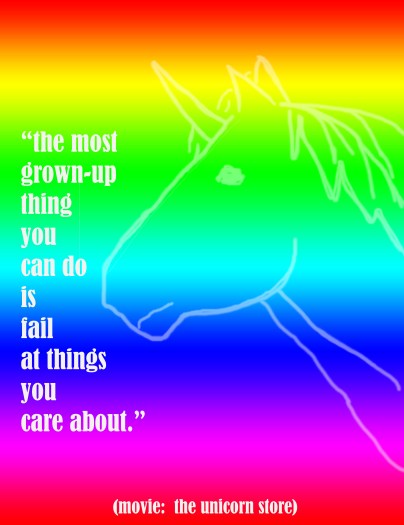
The message from the climbers is as beautiful as it is simple: if you fear failure you shouldn’t climb mountains. You will fail far more than you succeed. You will attempt. You learn. You choose to be wise and live rather than push to the summit and then lose your life. It is the ultimate reminder that a healthy process is much preferable to the achievement of the goal. They remind us that most climbers die after the summit. They die coming down because they forget that the goal is not to summit, the goal is to summit safely and come back alive. The goal is life. The summit need not happen today. Live and take your chance tomorrow. The only failure on the mountain is to die when you didn’t need to.

It’s a great metaphor. Life is like that. No one does this life without more than a few rough patches, more than a few falls. When you recognize that everyone has a mountain to climb and, regardless of the mountain, it is all about learning, all about the experiences that may someday bring you either to the summit or to the recognition that the summit was actually never the goal. It’s about the appreciation of the experiences.

There will always be another goal. Another summit. However, the experiences you remember and appreciate will be the struggles. The easy stuff is easily forgotten. The hard stuff, facing the doubt, finding a new edge, makes for a great life story and helps us understand that we are far more capable than we at first realize. Everyone is far more capable than they imagine and would never go beyond the limits of their imagination without the rough patches on the way up the mountain.


read Kerri’s blog post about ROUGH TIMES


vailKdotDdot website box copy