Stand Still And Listen [on Two Artists Tuesday]

ferns copy

Screen Shot 2020-06-01 at 11.24.58 AM

~Beloved by Sam Magill, from his collection of poems, Fully Human

Today my thoughts return again and again to Sam, a secret poet, a bard, a believer in the goodness of humanity. Sam knows that a wound, when properly honored, can lead to something far greater than mere healing.

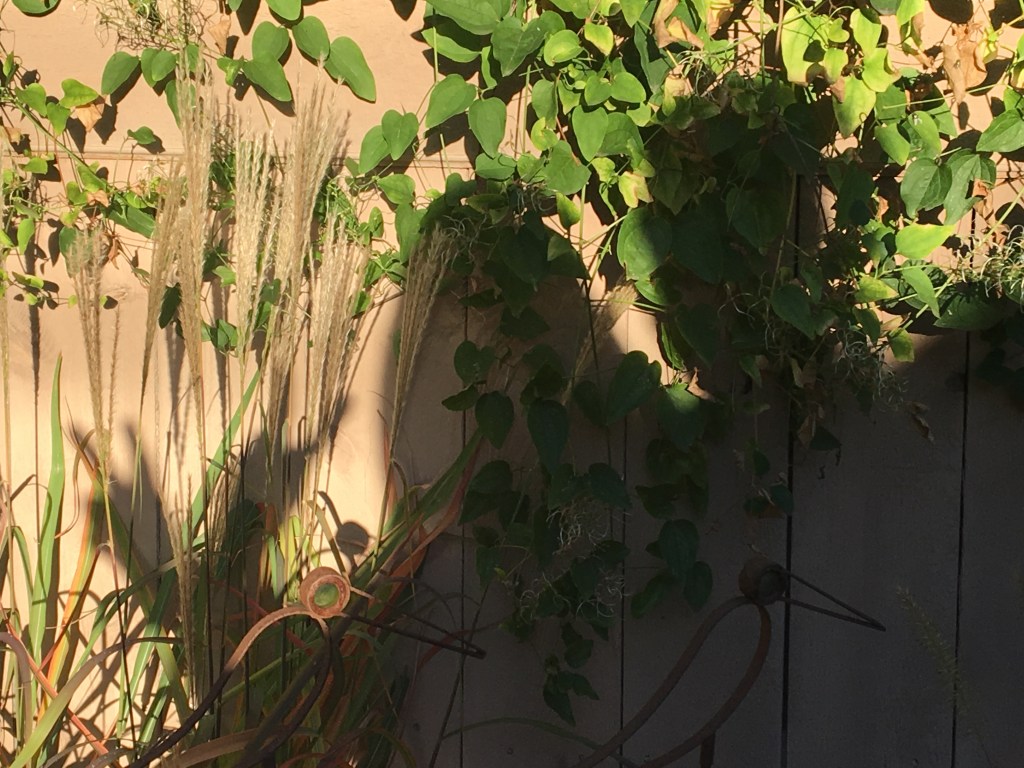
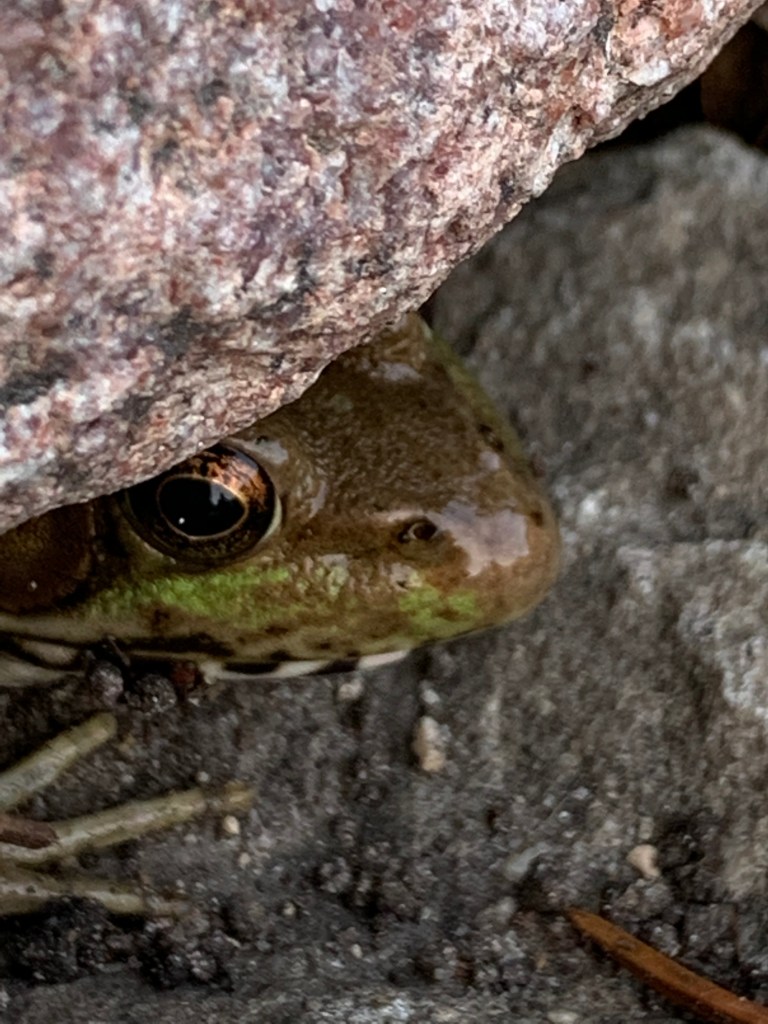
He would look, as we do, with awe at the ferns. He would giggle at how quickly they change color with the light. He would delight in the frog that magically took up residence in our pond. He loves, as we do, the things of this life that live beyond explanation.

If you asked Sam what we need do as our cities burn, as a pandemic rages, as leadership fails and the face of inequity stands naked and unmasked, he might tell us to do nothing. To stand still and listen. “The hard crusty soil is cracking open,” he might say, “there is new growth struggling to push through.”


read Kerri’s blog post about FERNS


prayerflags pastel website box copy


Face The Sun [on Two Artists Tuesday]

clover copy

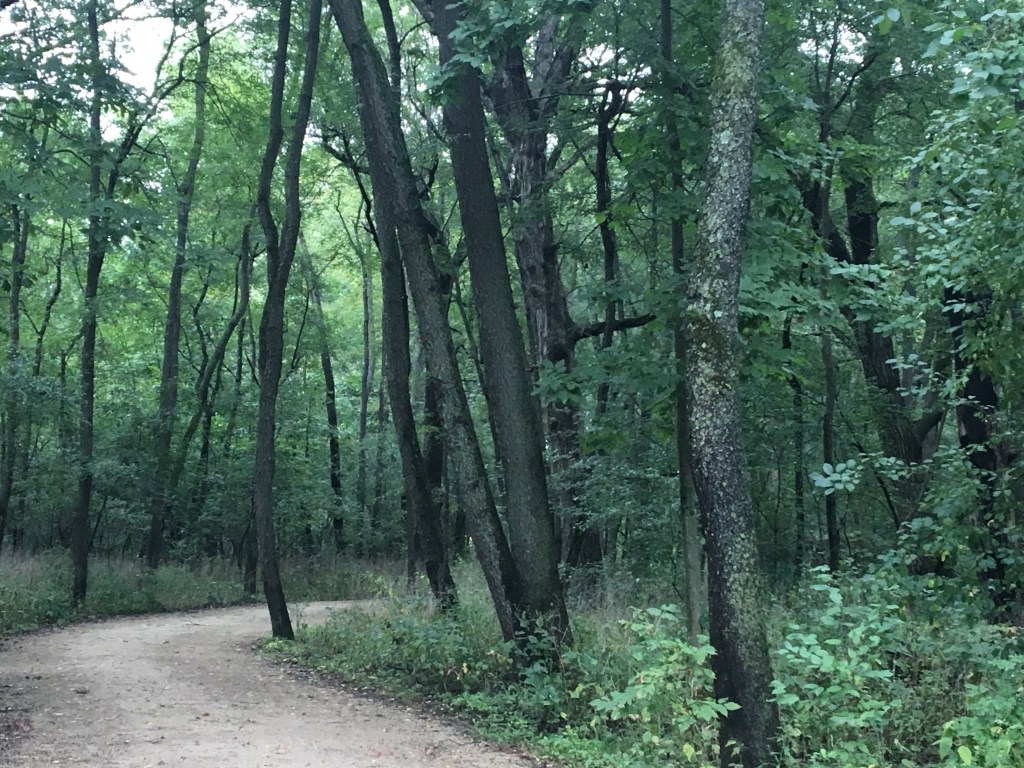
Walking the river trail I couldn’t help but whirl in the contradiction: everything has changed and nothing has changed. While the world of people is awash in pattern disruption, the rest of creation is following the script exactly.

Spring. The muddy season. The world pops green just as we knew it would. Just as it did last year and the year before and the year before. I believe our backyard ferns are growing 6 inches a day. Even the daily Dog-Dog assault cannot deter their reach for the sun. Life returns from darkness. Demeter sings at Persephone’s return.

If you seek an affirmation of life come sit in our backyard. The bird song will lift your spirits, these flying shocks of color will make you giggle with delight. Vibrant yellow, a cardinal more salmon than red. My eyebrows cartoon-pop in disbelief. We sit facing the sun in our broken Adirondack chairs and drink in the warmth.  “This doesn’t suck.” I say, eyes closed, basking in appreciation of the sun as it reaches to my bones. I’m certain I said the exact same thing last year and the year before that. Rituals of renewal need not always be solemn.

Sometimes I think this game of life is really an exercise in focus placement. I can choose to see the world as the work of Hieronymous Bosch– and sometimes I do. Beautifully horrific. Or, I can swivel my lens to Georgia O’Keefe and look at the wondrous small things, the miracle of nuance and the close-up. Sometimes, when I am at my best, I turn my eyes to see as Ellsworth Kelly did, when he imagined his chapel of light. “I think people need some kind of spiritual thing,” he said.

And so, with the vibrant greens popping, the screaming yellows flying, the blue-blue of a cloudless sky, tender lettuce leaves breaking through topsoil, I find myself surrounded by a Hieronymous Bosch narrative cycle but with just a little refocus, I am stunned by the grander cycle of marvel and mystery in this Ellsworth Kelly world.


read Kerri’s blog post about CLOVER


lastlittlehousefeet website box copy


Why Ask Why [on Two Artists Tuesday]

even nature is asking why copy

A rare warm day, walking the Des Plains River trail. I should have been startled when Kerri suddenly jumped off the trail but I’ve grown accustomed to her spring-loaded-photo-impulsive-gambols. I actually love the passion of her image capturing so I’ve learned not to be surprised when she leaps and snaps. There is no danger. There is a photo opp.

“SEE!” she exclaimed, showing me the photo. “Even nature is asking ‘Why?'”

My first thought: Which “why” is nature asking? Why a pandemic?  Why so much division?

Simon Sinek has made a career of teaching people to ask “Why?” before asking “How?” It makes sense: you should probably know why you want to scale the mountain before asking, “How will I do it?” People need an answer to “why.” And, because we are human, the answer to “why” need not be reasonable or rational. “Because it is there,” is an acceptable answer to “why?” I want to. I need to know. I want to feel. I need to see what is there.

“How?” is a question that can only be answered after the fact. “How” is known through reflection. There is the plan. There is the reality that comes when the plan meets the unknown forces. The plan changes. The only honest answer to “how” is: do what makes sense and we’ll talk about it later.

Amidst a pandemic, it is only human to throw up our arms to the sky and demand an answer to our “Why?”  To borrow a lyric from Nick Cave & The Bad Seeds: “I don’t believe in an interventionist god. But I know, darling,  that you do.” In other words, viruses are intention-free. Sometimes, even though we want an explanation, there is no “why.”

There is, however, always a plan, there is a path to “How?”  How do we protect ourselves? How do we deal with it? In fact, there are layers to the question “how?” The first layer of ‘how’ is simple: social distance, wear a mask, wash your hands. Looking back from this vantage point, we know it is the best we can do short of a vaccine. Simple science.

The second layer of the how-cake is more complex and, like all ‘how’ questions, we will only be able to talk about at some point down the broken road. Maybe a vaccine. Maybe herd immunity. Maybe, maybe, maybe. Maybe we will be foolish, like the Philadelphia parade during the Spanish flu and escalate the death toll to the point that we wake up and listen to the first ‘how?’

The virus is a force like a tornado is a force. Why did it take my neighbor’s house and not mine? Why did the forest fire rage through this neighborhood and not that neighborhood?

Here’s the only “why” question we really need to consider: in the face of this virus-forest-fire, why did we rush out to light matches (pack into bars and onto beaches), parade around screaming about our individual rights instead of metaphorically rushing into the fire to save our neighbors in the only way we knew how (social distance, masks) –  as we would have done in an inferno?

I don’t believe in an interventionist god. But I do believe in intentional human beings (conscious and otherwise).

Nature need not ask “why?” We do. It’s a sure bet that our answer will make little or no sense at all.


read Kerri’s blog post about WHY


? website box copy


Find The Deeper Impulse [on Two Artists Tuesday]

stop sign quarter copy

See a penny, pick it up. All that day you’ll have good luck. 

I saw a penny in the parking lot of the UPS store and, wanting to have a full day of good luck, I swooped down and picked it up. Kerri, horrified, said, “What are you thinking? Put that down!” I was marched back to the truck and slathered myself with hand sanitizer.

My penny swoop debacle in the parking lot of the UPS store is how I mark the beginning of the pandemic. It was the first time that the danger of a simple action, touching what someone else had touched, penetrated. The penny dropped [sorry – I couldn’t help myself]. It was early in this experience called pandemic, before masks, before social distancing. Wash your hands. Don’t touch your face. And, above all, leave the good luck penny on the pavement.

And it seems like years since I touched that penny.

My penny swoop was an impulse. Kerri asked me what I was thinking but I wasn’t thinking. I was riding on the instinct train. The child-rhyme ignited my luck desire and I went in for the grab. And, isn’t that the real hardship of this pandemic? Quashing the impulse to hug your friends, to walk toward your neighbor to say hello, to let the kids play together, to stop in the store and chat with acquaintances? 20 stands outside  his mother’s assisted living apartment; she stands on the balcony and they shout to each other. Each day I watch Kerri override the deep-mother-instinct to run and find her children, all-grown-up-and-moved-away.

It’s unnatural, this veto of instinct. And, it is what makes us human. It is natural to run from danger and yet doctors and nurses everyday walk into hospitals during this pandemic. They walk into exposure. First responders, police and fire people, everyday put the public safety above their own. It is what lifts us into our humanity; placing the needs of others above our own. It is what we celebrate, what we admire. What we claim as our highest ideal. People giving of themselves for the benefit of others.

We call that sacrifice. We call it service. We call it sacred. We  call it grace and generosity. We go to houses of worship and proclaim it. We make movies about it. Frodo must destroy the ring of power for the benefit of all. Otherwise, he twists in his selfish personal power lust and becomes like Gollum. This tale is universal for a reason.

And, I suspect that I am wrong. The survival instinct has a deeper nature. Soldiers talk about it just as first responders do: in the moment of real danger there is not a question about throwing themselves on top of their companion, sacrificing self to save the other. It, too, is an impulse. A purer survival instinct. It is not an override.  It is, when all else is stripped away, what we are.

“Compassion is the basis of morality.” ~ Arthur Schopenhauer


read Kerri’s blog post about PICKING UP SPARE CHANGE


neighborhood cheers website box copy


ComfortNow Framed copy


Consider Levitation [on Two Artists Tuesday]

pear on wine bottle copy

And what does this mean, this pear sitting atop a wine bottle? Certainly this was not a naturally occurring event! No pear could possibly achieve so grand a seat without some form of assistance. Or, could it?

Levitation is a possibility but it is doubtful that this pear – or any pear, for that matter – is capable of the necessary powers of concentration required to raise itself to wine bottle heights. And, if levitation is the answer, we are still left with the primary question: what does it mean?

The pear might answer, as George Mallory answered when asked why he might want to place himself atop Mt. Everest, “Because it is there.” Meaning making does not require depth but it does necessitate curiosity. “Because I can” really means “because I want to.” The grass is always greener. Why step on the moon? Why sail to the edge of the world? Why paint a painting or compose a song? Something calls.

Because it feels good. Because it is beautiful in my eyes. Because I might learn something about myself and, therefore, the world in which I create/inhabit. Most explorations are internal journeys even if they look like mountain ascents. Soul searching leads to more experiences with soul. The best questions lead to bigger questions, like this one (last week’s winner for best question): Does the soul live in the body or does the body live within the soul?

It seems like a good time to borrow a title from Joseph Campbell: what exactly are The Inner Reaches Of Outer Space?  What are the outer reaches of inner yearning?

Does this pear have yearnings? What does it mean, this pear sitting atop a wine bottle? Believe me, I’ve asked the pear and it remains silent on the subject. Wise pear! It knows I must make my own meaning and hopes that I will never cease asking my questions and, above all, never delude myself into thinking I have even the slightest bit of an answer.


read Kerri’s blog post about the PEAR & THE BOTTLE


savannah selfie WEBSITE BOX copy


Angels_at_the_well_jpg copy 2

angel at the well


Pray For Apollo [on Two Artists Tuesday]

contrail copy

I confess to seeing this contrail and thinking it might be Apollo’s chariot. Of course, if it was Apollo’s chariot then we’d all be in really big trouble. The sun seems untethered from the chariot. Depending on how the myth is told, the sun is either being pulled by the chariot or the sun IS the chariot and, either way, if you are seeing what I am seeing, Apollo has lost control.

Of course, the other side of my brain always kicks in and I think to myself, “Apollo flipping across the sky, gripping the reigns, sans chariot, is not a bad metaphor for these troubled days.” In addition to riding the chariot/sun across the sky, Apollo is symbolic of reason and logic. All things illuminating.

Our world is upside down. Fact is assailed as fiction. Conspiracy theories are traded like baseball cards to deflect attention from the actions of a feckless president  pushing disinfectant as a pandemic cure while science bites its tongue for fear of offending him. Blame inhabits the vaunted seat of responsibility. A good portion of the population willingly and knowingly plants their heads in the sands of propaganda.  Reason is shunned. Questioning and perspective are rejected. Sand is preferable to logic. We’ve reduced our hallowed ideal of jurisprudence to base partisanship; justice is no longer blind but sees in shades of red or blue.

Apollo twirls like a kite, hanging on for life to his mighty horses as they race across the sky, wild-eyed, in no particular direction.


read Kerri’s blog post about CONTRAILS


ace and bill website box copy


Horses FullSize copy

Keep Playing [on Two Artists Tuesday]

tendonitis copy

As I reported several weeks ago, if you where standing on the far side of the piano, you’d never know Kerri was playing with casts on both of her wrists. You’d never know that she was playing with two broken wrists, her right thumb completely out of the line-up. Nine fingers doing the job of ten.

As a composer, singer-songwriter, a person whose entire career, her livelihood, has been about playing the piano, she was at the keyboard four days after her fall. She had to know if she could play. I couldn’t believe my eyes or my ears. In my best mother hen voice, I suggested, “Maybe you should wait a bit.”

“I have to know,” she said with THAT tone in her voice.

When I first met her, I took note that she stands when she plays the piano. She is not a bench sitter. Rather, she is a full-body player. She is a full body composer. Sometimes the piano literally hops with the force of her playing. She is little but grows exponentially in energy and presence when she steps up to the keys. The first time she played for me I had to step back from the power that came through her.

Now, several weeks into her mending time, the casts are off and the splints are on. I tell her that they make her look all Mad Max. Michael Jackson’s glove is bush-league compared to her performer-fashion-statement: double black splints.  She looks like a pugilist getting into the ring with her piano. The disparity between her bruiser-piano-vogue and the beautiful music she creates makes my head swirl.

Of course, all of that piano punching has brought a new hurdle in the wrist recovery saga: tendonitis. She went on a Google frenzy when the hard nodules began forming in her palm. They hurt. “My palm is on fire!” she said, “What do you think they are?” Google inflamed her already wild imagination with horror diagnoses and none of the scenarios were good. In fact, they were downright dire.

Doctors were called. Photos of palms sent. A scary foray into the medical facility mid-pandemic was arranged. She emerged from the facility, pulled off her protective mask and climbed into the truck. “Well?” I prompted.

“I didn’t touch anything,” she announced.

“I’m asking about your hands,” I huffed. “What did they say about the nodules growing in your hands?”

“My tendons don’t like that I’m playing with casts,” she said. “Probably tendonitis.”

“That’s good news!” I said and she hit me with THAT look. “Okay, so. Well. Not great news. What are you supposed to do?”

“Keep playing,” she said, looking out the front window. “They gave me some exercises. Advil. But, I keep playing. What else can I do?” she asked, a question not to me.

“Good then. You’ll keep playing.” My mother hen suggestion went unvoiced: maybe some rest? I didn’t want to be hit with THAT look two times in a row. Instead, knowing full well that she is not a bench sitter, knowing that she is a full-body artist and that, for her, to play is to heal, I said, “Okay. Let’s do it. Let’s keep playing.”


read Kerri’s blog post about THE SAGA CONTINUED


their palettes website box copy

Greet The Sentinel [on Two Artists Tuesday]

Sunglasses copy

On the backside of Bristol Wood, on the winding green trail, there stands a new sentinel. Dedicated to her role, she watches over the path, guarding the safety of all walkers.

Similar to the Queen’s Guard at Buckingham Palace, try as you might, you can mock, make faces, do silly dances,… this guardian will not flinch. This guardian will not break from her duty [note: I’m only supposing. Kerri and I DID NOT do silly dances on the green trail at Bristol Wood! Ridiculous! Who would do such a thing?].

I am comforted by her presence. I find solace in the dichotomy between her serious role and her whimsical uniform. In a time of too much seriousness, I feel encouraged in her dedication to bringing smiles to strollers as part of her mission as sentry of safe passage.

Each time we pass her, I think, this watchwoman has much to teach us in the time of pandemic, in the time of fear and isolation. We can, each and everyone of us, keep the trail safe, take our role of guardian-of-the-other very seriously while, at the same time, inspire smiles and silly dances [note: okay, truth? Kerri MIGHT have done an abbreviated silly dance before the Guardian but I held my integrity intact and showed the utmost respect for the difficult job of the Guardian. Really.].

FullSizeRender copy


Read Kerri’s blog post about THE BRISTOL GUARDIAN


laughing website box copy

Let It Spin [on Two Artists Tuesday]

perspective copy

The answer to “Who Am I?” is mostly a matter of perspective [or concoction, depending upon your perspective ;-)]. As much as we might want it to be, who-am-I is not a fixed state of affairs. Thankfully, we are not as narrowly defined as we want to believe.

We constellate together some identity-fixed points (son, father, banker, artist, gardener…) that give general shape to the who-am-I inquiry.  Mix in a few subsets: competitive, passive, rich, poor, successful, homeless, handy, all-thumbs… and there’s some nice variation giving color to the primary fixed points.

For some real fun, factor in the changes of identity that happen over the course of a lifetime. Who did you understand yourself to be at 10? At 20? At 30? Dear friends just became grandparents; their entire universe is spinning. Who are they now?

I have had moments of triumph that turned to dust in my mouth. What looked like fulfillment was, in fact, an empty sack. Once, thinking I was looking good, I walked headlong into a glass door. Instant fool. Identity is much more fluid than fixed.

In the Buddhist tradition there is a “Big Dipper” exercise. From our perspective on the earth, there is a constellation of stars that form a big dipper in the sky. But, travel toward that constellation, the image of ‘big dipper’ starts to warp and then falls apart altogether. The position of the stars does not change. Our perspective does. The constellation is nothing more than an illusion. Mostly, my constellation of fixed identity points is nothing more than an illusion.

These days I’m thinking much about my illusion and attachment to my fixed points. My move to Wisconsin came with career death and I spent more than a few years grasping for the lost stars in my constellation. New stars appeared. I became a husband. I have two ‘given’ children. My beard has become grey. Yesterday, to my utter amusement, I found myself concerned with fallen leaves staining the patio and had thoughts of immediate raking. What has become of me? In the past week, I’ve awakened more than once with this thought: What if the painting on my easel is to be my last. It’s not finished and it’s an utter mess! I want to leave a better last impression! I have more work to do!

And then, I wondered, what if, as I travel out beyond the constellation, this image of myself, this part of me that I call ‘artist,’ matters not at all? Fluid, not fixed.

And so, my perspective spins, more anchor points fall away and the entire universe opens.


read Kerri’s blog post about PERSPECTIVE


handshadowstones website box copy

Become Whole [on Two Artists Tuesday]

barney spring 2020 copy

When Barney came to live in our backyard, he’d been long forgotten in the dank dark basement boiler room. His soundboard was shot. He was headed for the junkyard when Kerri intervened and asked if Barney might come live out his days with us. It has been five years since Barney arrived in the junk man’s pick up truck. He has aged beautifully.

The first day in his new home Barney spoke when Kerri played his keys. He let go of his voice one key at a time. Within a week he was silent, no longer what he once was but not yet sure of what he was becoming.

We adorned him with flowers in pots for a few summer seasons. Certainly, he was content to support the flowers – like a crossword puzzle, it was something to do – but it never rose to the level of purpose. We realized he was doing it for us so when the third season arrived we let go our desire to give him meaning. He heaved a sigh at our revelation, and, at last, purpose-free, he enjoyed the sun for no other reason than it felt good. That season, wild geraniums grew around his baseboard and embraced him, the chipmunks used him as their hiding spot. The little critters made him laugh as they stood on his blistering lid and taunted the rowdy dog.

Initially, we tried to slow his inevitable peel, slathering him with marine oil, but his skin wrinkled and bubbled anyway. The white veneer of his keys was the first to go. We realized that Barney was becoming another kind of beautiful. He was, as Rilke wrote, living his way into the answer to all of his questions.

Jen and Brad suggested in our stay-at-home-seclusion that we exchange images of spring. I stepped onto the back deck and recorded the birds singing. And then I saw the wild geraniums were showing up and gathering around Barney. He was absolutely gorgeous in the morning light, sculptural and at peace. I’d just read something Thomas Merton wrote and it perfectly described Barney on this early spring morning: There is in all visible things…a hidden wholeness.


read Kerri’s blog post about BARNEY IN SPRING


Barney copy


heart rock website box copy