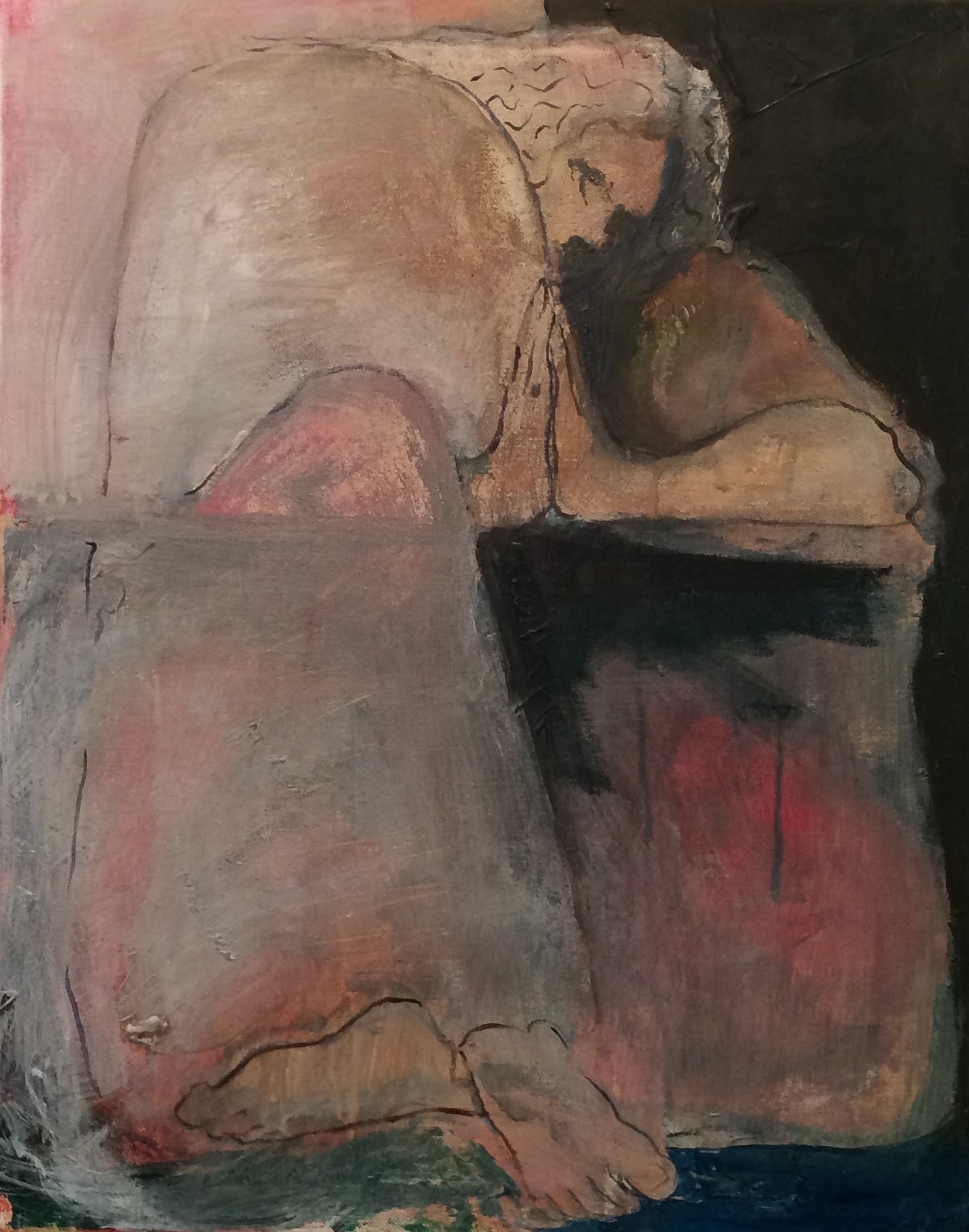
Turn Around [on Two Artists Tuesday]

stump copy

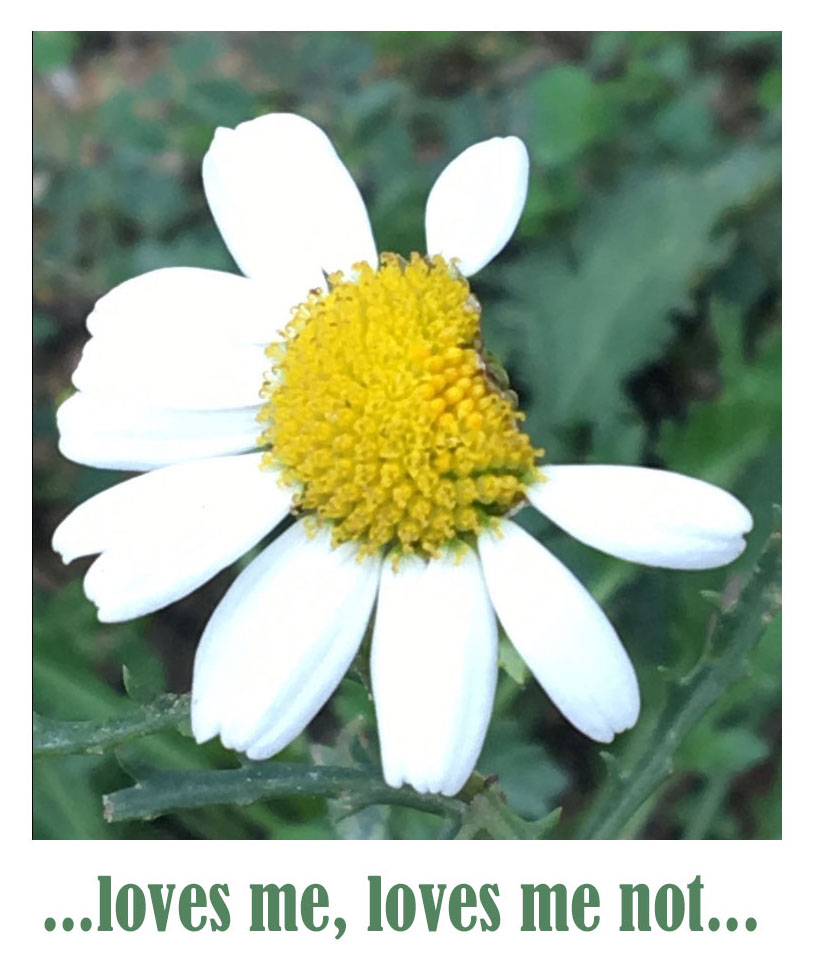
Jen suggested green. So, throughout the day, to keep us sane in our home-stay-life, we shared pictures of green things, surprising and ordinary, that we found around the house or in our walks. The next day was lines. Then circles. We use our seclusion to open our eyes and see what is beautiful and striking – and mostly unnoticed until now.

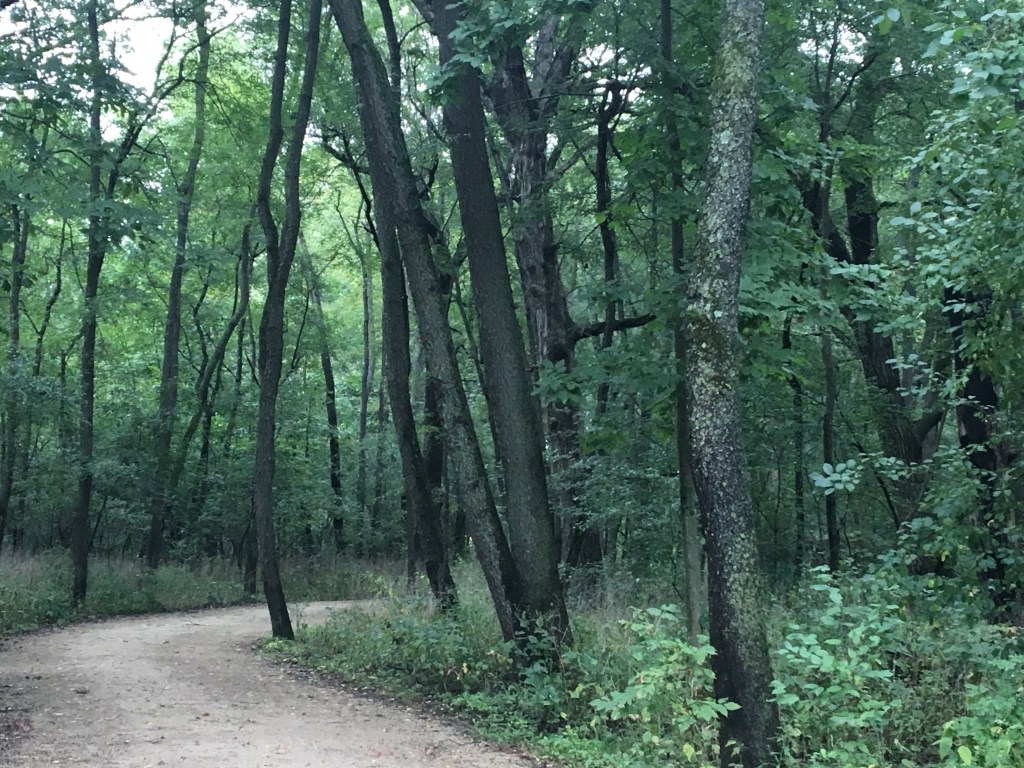
Late the other night, 20 and Kerri spent an hour on the phone. 20 is among the those at highest risk and has self-quarantined. There is a park close to his house and, once a day, when it is likely that few other people will be out, he walks the paths in the park. He takes amazing photographs and each day sends us his latest pictures. On the phone, he introduced Kerri to the app he uses to tweak his gorgeous photos. “This opens a whole world of possibilities!” she exclaimed.

Have you noticed the hysterical songs, art, games, mock-challenges (the is-it-a chihuahua-or-a-blueberry-muffin? challenge is my current favorite). Creativity flourishes within constraints. It is a form of paradox-magic that I’ve always appreciated. A good constraint has the power to yank people out of their daily problem solving morass and turn them around into the creative.

Robert Fritz has the best definition for this magic: problem solving is trying to eliminate what you don’t want. Creating is trying to bring into being what you do want. It is a matter of direction (wink, wink: the direction of intention). At first glance these challenges and games might seem frivolous but a deeper look always reveals something more profound. We are opening our eyes to what is right in front of us. We are sharing, trying to help each other through a difficult time. Our natural capacity for play and whimsy rises to the top. Possibilities rise to the top. Instead of asking “why?” we begin asking “why not?” We create.

Idealistic blather or pattern? Problem solving has a way of creating more problems – it is a myopic. Turn around and consider the world you want to create. Walk at that. You’ll find that your eyes open, your thoughts expand. Playing-to-play will be valued and necessary. You’ll note, with gratitude, that you are not in this creative ride alone.


read Kerri’s blog post about CIRCLES


megaphones website box copy

Visit [on Two Artists Tuesday]

birch in winter copy

All this week I’ve been lost in memories of childhood. Nothing indoors, my remembering is outside. Running through fields. Aspen trees. The sound of snow. The smells of coming spring in Colorado. The intense blue sky. Standing against a brick wall, face to the sun to drink in the warmth on cold day. These memories are more sensual than story. It’s as if, this week, I need to remember the feeling of being a child.

I’ve always loved to draw and paint. I’d spend hours drawing eyes and faces. I drew portraits of Colonel Sanders from the empty chicken bucket. I spent hours inside of National Geographic magazine drawing the figures I found there. I drew again and again and again a cabin in the woods that lived only in my imagination. I knew the place the first time I scribbled it on paper. There was a period of time in my mid-life that I thought I might someday happen across the cabin-of-my-imagination.  I forgot the feeling of being happily lost inside the world of my imagination. This week, I remember.

Up north, walking on a frozen lake to see the eagle’s nest, we passed this stand of birch trees. Andy Goldsworthy could not have placed them better. White and fragile against the forest, they glowed in the afternoon sun. They shocked me into presence. I was surrounded with people I love, the sun was warm on my face, the creaking of the ice, the smell of pine, Kerri’s delight. “Remember this feeling,” I told myself. Remember this moment. Someday, after you’ve long forgotten this day, you will reach back and be thankful to have this place in memory, this feeling, to visit again.


read Kerri’s blog post about BIRCH TREES


footprints in sunlit snow website box copy

Receive The Message [on Two Artists Tuesday]

sleigh ride copy

It is my practice, when an animal crosses my path in a special or unusual way, to research the animal’s symbolism. I love story, mythology and the power of symbols (words are symbols, too!) – and, oddly, as a human, I am given to ask that most basic of human questions, “What does it mean?”

One night I had a very long eye-to-eye communion with a coyote. Two snakes crossed my path. Crows used to plague me on a daily basis. A white owl kept me company for a spell. Each was the impetus for me to dive into the symbol, the possible medicine or message of each visitation.

Kerri is horse crazy yet it hadn’t occurred to me until last week to spend some time with the horse as an animal spirit. We were up north on a brief get-away and Dan, in a fit of genius, arranged a sleigh ride. The horses pulling the sleigh were Bill and Ace. Kerri and Ace were immediate friends. They were more than friends. I watched a sweet magic swirl between woman and horse. There is no simple emoji for what passed between Kerri and Ace.

This past year has, for us, been a time of great upheaval and contention. Kerri’s broken wrists are only the latest-and-greatest slice in a year full of crazy pie. And so,  I stood witness to the immediate magnetism, the power of the horse to touch and raise Kerri’s spirits. In the sleigh, for the first time in months, Kerri completely relaxed. The tension and contention of these many months disappeared. She whispered excitedly about Ace and her love of horses. No doctor could have prescribed a better medicine for what ailed her.

Horses signify the overcoming of obstacles. They speak of how to carry yourself in the face of adversity. They appear to remind us to take care of our spirits, our minds and emotions and bodies. Above all, they symbolize freedom of spirit. Freedom. A horse can serve people but can never be fully tamed by people [I may as well have written of Kerri: she can serve but she will never be tamed].

A few days later, on our drive home, she was full of light and possibility. “I think we may have finally turned the corner,” she said. “Or, maybe, we should just live as if we’ve turned the corner.” Yes. What better way to address an obstacle, to carry yourself in the face of adversity, than to let your spirit run free, to live as if the hurdle was already cleared. No resistance.

I smiled and looked out my window. What does it all mean? Who cares. I whispered a quiet gratitude that a horse crossed our path and now my wife’s spirit is running free.


read Kerri’s blog post about HORSES & SLEIGHS


Horses FullSize copy


ace and bill website box copy


See The Series [on Two Artists Tuesday]

life series quote copy

The closing moment of the film Love Actually is a wonderful montage of greetings at the arrival gate at Heathrow airport. The Beach Boys sing God Only Knows to images of children greeting grandparents, husbands rushing to their wives, friends opening their arms to friends. Hugh Grant’s voice over: “Love actually is, all around us.”

For reasons I’ve never quite understood, we human beings have an uncanny ability to focus on the negative stuff while completely missing the love all around us. We famously study ourselves and the data is overwhelming: we yammer on and on to all who will listen about the “bad” thing that happened in our day. We share the “good” stuff less and with far fewer listeners. There’s something about a fight that draws our eyes while a kiss will make us look away.

Stand on any street corner and  watch the world go by and one thing becomes immediately clear. There are far more acts of generosity than there are acts of violence. The kind hearts outstrip the mean spirits by far so why do believe the opposite?

Krishnamurti famously said that “Life is a relationship. Living is a relationship. We cannot live if you and I have built a wall around ourselves and just peep over that wall occasionally.”

Violence and division make for better ratings because it’s profitable [and easy] to focus the feed on all things negative. Low hanging fruit. It’s profitable to keep the eye off the thousand tiny miracles. But that doesn’t mean they aren’t happening all around us, every minute of every day.

What might it take to pull down the wall so we might more than periodically peep over it? So that we might see that love actually is all around us? To borrow a phrase from The Beach Boys, “god only knows.”


read Kerri’s blog post about A THOUSAND TINY MIRACLES


feet on dashboard website box copy

Hear The Whisper [on Two Artists Tuesday]

a house copy

A house remembers.

We took my dad back to his home town. It was a pilgrimage. He wanted to see it one last time. We walked through the cemetery. He pointed to headstones and told stories. He looked for people and grew frustrated when he couldn’t find them. He’d breathe a sigh of relief when, after walking row after row, we finally found them.

The pilgrimage was not to the cemetery. It was to a tiny little house that his grandfather built that he needed to return. To touch. Nowadays it is being used as a shed. His dad grew up in that tiny house. It was the center of his universe when he was a child, his cathedral.

Standing before the tiny house, he told the story of how his grandfather split open and pried apart the rafters, making a second story. He built on a small kitchen. He added a small bedroom on one side. There was a porch.

To our eyes, it was now barely standing. To my dad’s eyes, it was the most beautiful home on earth.

As we walked the perimeter I couldn’t help but feel that the house needed to see him as much as he needed to see the house. It remembered, “You came back!” It seemed to sit up straight, remembering the days that it housed a family, that meals were cooked within its walls, that children slept there. As my dad told the stories, I was overwhelmed with the notion that he wasn’t just telling us, he was talking to the house. And the house was nodding, smiling, “Yes, I remember…” The children ran free. Everyone worked hard.

As we walked away he knew he would never see it again. But he’d shared the story. He’d introduced us to this house, his-and-now-my sacred place. “This is where you come from,” the house and my dad whispered together, “Remember.”

IMG_2909


read Kerri’s blog post about A HOUSE REMEMBERS


footprints in sunlit snow website box copy

Point Your Nose Toward The Moon [on Two Artists Tuesday]

moon for wix copy

This moon called us. We were leaving rehearsal, pulled out of the parking lot and were hit in the face by an enormous orange moon. “We have to go to it,” Kerri whispered. We drove to the shore and sat with the moon for a while.

Staring out of the truck (it was a very cold night and with broken wrists it was easier to keep Kerri buckled in), my energy running low, this super moon reminded me of a long-ago-book, LUCY AND THE WATERFOX. The last few illustrations feature a beckoning moon. This is the Waterfox’s lesson for Lucy and, as it turns out, the Waterfox had a few words for me, too, on this moon-full night:

“The Sky is where you belong! Fulfill your heart’s longing and let the pack think what they think! Everyone knows that most foxes don’t swim and most foxes don’t fly, it’s not that they can’t, it’s because they don’t try. A fox whose heart soars like yours needs to dance in the air. Remember: words are like magic, misused they are tragic and belief is a great and most powerful word!” With that he gave her a wink, tipped his big hat and swam out of sight.

And so, while the other foxes nestled deeper into sleep, Lucy pointed her nose toward the moon. She took to the sky repeating his words so she’d never forget: words are like magic, misused they are tragic and belief is a great and most powerful word.”


Illustration 25

from my children’s book, Lucy & The Waterfox


read Kerri’s blog post about the SUPER MOON


moon website box copy

Do Like Duchamp [on Two Artists Tuesday]

doorknobs copy

Roger used to say that Picasso’s paintings determine the shape of our cars. He meant that “seeing” is not passive. Just as audiences in a play wiggle in their seats at seven minutes into the play, the usual time for a commercial break on television, our visual sensibility is also patterned and mostly culturally uniform. Beauty is in the eye of the beholder and that eye has been conditioned.

One of the great moments of visual conditioning came in 1917 when Marcel Duchamp entered his “readymade” sculpture, FOUNTAIN, in an art exhibit. FOUNTAIN is a urinal. He signed his readymade scultpture R. Mutt. It is possible to spend many days of your life reading about FOUNTAIN, the symbolic meaning of a toilet, the then-new art term “readymade” and the challenges readymade-as-art posed to the art world, how Duchamp came to enter a urinal in an art exhibit. In that moment of time, a whole new genre was born: conceptual art. The idea behind the work is more important than the finished piece.

You can draw a straight line from Duchamp’s toilet to the recent banana duct taped to the wall by Maurizzio Cattelan. And, you might ask, just what was the idea behind the banana?

You can draw a straight line from Duchamp’s FOUNTAIN to Kerri’s out-door-voice-exclamations in a gallery, “ARE YOU KIDDING ME?” The idea behind the conceptual work generally needs a curator’s explanation. “I WANT TO EXPERIENCE IT, NOT HAVE IT EXPLAINED!” she gestures wildly, sending other patrons fleeing. In that moment, my wife becomes exquisite performance art.

You can draw a straight line from Duchamp’s urinal to my inability to walk through an antique store and not see elegant design worthy of Louise Nevelson. Racks of door knobs. Stacks of suitcases. A wall of bric-a-brac, the wall composition more meaningful and beautiful than any of the individual pieces displayed.

A statement from Captain Obvious: artists live in a time and the art they produce is an expression of that time. Duchamp put his toilet on a pedestal in 1917, the year the world was nearing the end of the first war to end all wars. It was a horror story. The manufacture of stuff was hitting its stride.  The Royal Academy had a lock on determining what was considered art and what was not. The rules of polite society felt dangerous and suppressive. Duchamp, like all change agents, pushed against the norm.

There is composition and design in the everyday. There is human-created beauty all around us. We learn in school that form follows function and form is design. We learn in school that one of the purposes of art is to create beauty. Another purpose is to shock people out of complacency, to see what is in front of them and not what they think is there. Beauty usually lives beyond what we think.

We live in very confusing times. We are asking fundamental questions about truth, about social norms and what is acceptable. We are asking questions about who we are and what we believe. You can draw a straight line from Duchamp’s FOUNTAIN to our current confusion. Is it art? Is it not? If the idea is more important than the final expression then what happens when all that is left to see and touch is absent of the idea? What happens when the curator is gone and only the urinal remains? Sense breaks down.

What happens to  the eye and ear that is shocked open but refuses to see what is right in front of them and, instead, retreat behind the fortress of what they think?  What happens when form no longer follows function but things flip the other way around? What happens when form IS function? Propaganda, mostly. A naked emperor and plenty of people passionately swearing that they see clothes. Readymade thought.

We live in those times. Sense breaks down. We tape bananas to walls and issue a certificate of authenticity.


read Kerri’s much-less random blog post about DOOR KNOBS


frontdoorknob website box copy


Know They Are Watching [on Two Artists Tuesday]

deer tracks converge copy

We go to Bristol wood to return to center. It is a place of peace. It somehow breathes serenity into our overactive minds.

Sign of deer are everywhere in the woods. We rarely see them but we know they are there. I imagine they watch us. I imagine they silently encourage us to walk slower, to catch our breath. To listen to tree song. We delight when we walk a path where they recently tread.

Deer are a symbol of gentleness and intuition. Balance and peace. This summer, on the Island, we saw deer everyday. We would retreat from the contentious community back to the littlehouse, pour some wine, and take a walk. A deer would inevitably appear and we’d stop talking. We’d breathe. We’d watch. It would watch us, too. After a few moments it would leap and disappear and, with it, our day’s concerns would also disappear. The deer would shift our conversation, from a lengthy list of disgruntlement to the beauty immediately surrounding us.

I’ve decided that, in our broken-wrists-time-out, our goal should be to make the whole world Bristol Wood. That we shouldn’t retreat to find peace but should invite peace and balance and serenity into the rest of the day, no matter where we happen to be living it.

Things I used to know. Things I once practiced.

Know that they are there, everywhere. Watching. Silently encouraging us to walk slower, the breathe, to focus on the beauty immediately surrounding us and not on the other stuff. It turns out that balance and serenity are practices, not pursuits. They are choices. Peace-of-heart-and-mind do not exist in the woods exclusively. Peace comes to the place where I decide to allow it. To practice it. To make it a priority.


read Kerri’s blog post on DEER SIGN


deer in woods copy


tpacwebsitebox copy


Stand Out [on Two Artist’s Tuesday]

you be you bus copy

You be you. If you think about it, who else can you possibly be? As trite as it may seem, this appeal on the side of a bus captures in simple marketing language one of the greatest paradoxes of living life in the most individualistic culture on the planet. We are reinforced to be hyper-unique but hammered repeatedly to fit in. It is the ultimate split intention. It is why we have such a ubiquitous self-help industry and so many preachers-of-purpose-seeking. Asking, “Where do I fit in?” is a terribly hard question to answer when the expectation is to stand out.

I suspect our current dedication to division is, to some extent, built upon this paradox. Split souls are generally angry souls and anger is an easy organizing principle to exploit. Tribes of anger need nothing more than enemies to bridge the split. A good enemy, real or imagined, can provide to an angry tribe both a sense of individual purpose and a place to belong.

I heard a term the other day that frightened me: low information voter. Years ago I heard an economist speak at a conference and his message was profound. A healthy democracy requires an educated populace. Without the capacity to sort through the heaps of rhetoric, pull apart the agendas to see beyond the manipulation, without some simple capacity  for analysis, or a bigger picture, then votes will be cast from simple, uninformed and often angry belief. In other words, democracies fall when its members do not care enough to know what they are voting for. Power will always corrupt. The brilliance of a democracy is that the people are meant to be the ultimate check on power. In order to be the check, they have to look beyond the political party line and ask, “What really happened here?”

The leaders of angry tribes need low information voters. It’s the only way they can stay in positions of power. It feels good to fit in. But, in a culture known for its individuality, it feels all the more satisfying to stand up, to stand out and ask, “What’s really going on here?”


read Kerri’s blog post about YOU BE YOU


savannah selfie WEBSITE BOX copy

Check Your Reality [on Two Artists Tuesday]

ice copy

We parked the truck in the Kemper Center lot, far enough from the shore not to be hit by the flying debris, the chunks of seawall and pavement being hurtled from the impact of the waves. Kerri has lived here for over 30 years, “I’ve never seen anything like this,” she repeated as a towering wave engulfed the gazebo, took down a piece of the wall of the art center, a hunk of coastline disappeared.

Later, after the storm, we went back. Trees were down, encased in ice. Huge sections of the walking path were shattered and tossed into the flooded mess of the parking lot behind the center. Walking was treacherous. Like the trees, the ground, the rocks, the destruction was coated in a thick layer of ice. It was beautiful and inconceivable.

Words mask all manner of reality. We have a word, nature, that can’t even begin to touch the magnitude, the power of where it points. Mother Nature. I have been thrown out of bed in an earthquake that brought down freeways like they were so much satin ribbon. Go to Pompeii or Herculeneum, visit Mt. Saint Helens, watch with disbelief any of the news  footage of any one of the tsunamis that have wiped communities off the map. Wrap your mind around it, if you can.

We are cavalier in our conversations about global warming. We impact, we do not command. We reduce it to questions of business, of protecting the beef industry. Which economy will suffer most? We make up these strangely insignificant divisions. We imagine that we are the center, holding all the controls. We imagine that it is all about us. So small, a chihuahua yipping at a forest fire.

Sitting in the truck, feeling the boom of the waves in my chest as they tore off chunks of the shore, I felt tiny. I remembered a snippet of film I saw about a man who wore a superhero suit and stood in the face of an oncoming storm. He flexed and stomped and raged for the camera. And then the storm hit. The best he could do was run for his life.


aftermath copy


read Kerri’s blog post about THE STORM


bonfire website box copy


ice ©️ 2020 kerri sherwood

for prints of “ice” go here