Protect Our Diversity

Many years ago, sitting in a Starbucks, my brother told me that I should be careful because not everyone wanted the diversity I was promoting. His warning struck me as odd. At the time I was partners in a business that facilitated diversity training and change dynamics. I was traveling to many places in this nation, north, south, east, west, and places in the middle, to work with people in corporations and schools and communities who’d come up against the startling reality that all people do not share the same reality, that equality is an ideal not yet realized, that we are a nation defined by our other-ness.

When I was in school I was taught that the USA was a melting pot, a hot crucible into which people of many backgrounds, creeds, and colors were transformed into something stronger. I was taught that we were a nation of immigrants. It is printed on our currency: e pluribus unum. Out of the many, one. Why, then, would I need to be careful? Diversity was not something I was promoting, it was (and is) our circumstance. It was an identity I was helping people navigate in their workplaces and communities.

I read somewhere that the real challenge of the American Experiment is that we have to reinvent ourselves everyday. Because we are not (and never have been) able to share a common ethnic-religious-origin story, we must strive everyday to create a shared story. We create our story. We were, at our inception, an experiment in other-ness. To insist that we were meant to be singular – white and Christian – is a concoction. Our shared story begins with the single common thread that runs through most of our ancestral paths: we came from some other place seeking freedom in one form or another: religious freedom, freedom from persecution, the freedom to pursue opportunities. What binds us, the single story-blanket under which we can all crawl, is our diversity. Out of the many, one.

There is and always has been a tension in our story creation. Each new wave of others is resisted and often persecuted by the previous wave. When, in a nation of diverse backgrounds, in a country made strong by its multiplicity, does one actually become an American? And, what does an American look like? And, how far are we from living the ideal of all being created equally? With liberty and justice for all? It’s a moving target at best. It is a worthy ideal and worth the struggle.

The Experiment, like all experiments, has had some miserable failures. It has taken some giant strides forward. It is riddled with paradoxes and often runs into a hard wall of hypocrisy. We’ve torn ourselves in half and pasted ourselves back together. We’ve had our share of hate-mongers and xenophobes. We have one now. And, we always transcend them because we do not run on fear or anger but on promise and opportunity. The conservative impulse is always at odds with the progressive desire. It provides the heat for the crucible. It provides the tension for creativity and growth.

The greatest centers of innovation and entrepreneurship in the history of humankind have all been crossroads, places where many cultures cross paths and come together. Difference is a great opener of eyes and minds. We are an intentional crossroads, a meeting place by design. Our make-up of differences might be the single reason why we have grown as a nation of invention, advancement, and possibility.

In one aspect my brother was right: I should be careful, we should be careful to protect and keep the ideal in the center. It is worth marching for, it is worth challenging the fear-mongering and stepping in the way of a leader who plays on anger to create division. We should be careful to honor and steward The Experiment forward to the next generation of diverse Americans.


Escape The Freak Show

Very is the most useless word in the English language and can always come out. More than useless, it is treacherous because it invariably weakens what it is intended to strengthen. – Florence King

Tom used to say that watching television reminded him of going to the circus as a kid to see the freak show. He’d pay his nickel and step into a dark tent filled with oddities meant to repel and repulse. The attraction was the revulsion. I feel that way every day reading the news of the latest antics of the current occupant of the White House. We now open our news apps several times a day and routinely exclaim, “You aren’t going to believe this one!” It’s either a freak show or the latest installment of Game of Thrones. Though, the real horror of our current national predicament is that we can’t exit the tent.

I do not need the news to interpret for me what is actually taking place in our nation. I only need listen to what is said. Language matters. How we ask questions matters. How we frame our arguments matters. The labels we use to define our experiences matters. In today’s Washington Post op-ed piece, E.J. Dionne Jr. wrote: As George Orwell taught us, how people talk offers a clue about how they think and what they value. Our language, he wrote, “becomes ugly and inaccurate because our thoughts are foolish, but the slovenliness of our language makes it easier for us to have foolish thoughts.” He added, “If thought corrupts language, language can also corrupt thought.”

A president whose language band width is limited to doubling his adverbs (for emphasis, I assume), i.e. very, very, or can find no other adjectives beyond the simple polarities of bad or great is not only troubling, it, as Orwell taught, reveals a lazy mind. Very, very lazy. We should not be surprised that his preferred mode of communication is Twitter and that he’s confused governance with signing executive orders. A bully knows no other way.

Today Michael Gerson, the conservative voice in Washington Post, wrote in his op-ed piece: “Stepping back, cooling off a bit, displaying some strategic patience, taking the long view: The first two weeks of the Trump administration have been the most abso-friggin-lutely frightening of the modern presidency.”

Abso-friggin-lutely! Now, there’s an adverb! And, frightening is an apt adjective.

Building a wall that is already a boondoggle, spending millions to investigate corruption where none exists, picking fights with allies, obsessing over crowd size, vote counts, and television ratings, issuing an ill-conceived travel ban directed at Muslims, abusing a judge for doing his job,…. Frightening. And, like any good freak show, it is drama for the sake of drama. It is governance by threat.

But above all, this: language matters. It is how together we define our reality. Debate (a complex use of language to clarify points of view, make law, challenge laws, express values,…) is the crux and crucible of our system. Our lazy-mind-in-chief routinely defines his own reality and then expects others to conform to his delusion. Bad. Refuse to conform or challenge the sentiment and risk a nasty tweet. Right now, all the other children on the playground are afraid of the sting of the tweet-stick but soon, as happens to all bullies, the kids, red coats and blue alike, will start talking and realize that together, they are more powerful than the angry boy with the simple solution.

It would be comical if only we could escape the freak show tent.

Substitute damn every time youre inclined to write very; your editor will delete it and the writing will be just as it should be. – Mark Twain


Choose Your Path

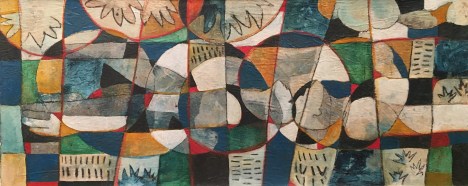
another detail of And Now

a detail of my painting And Now

Months ago Steve told me that he’d read my book. “I liked it,” he said, “But the only thing I don’t get is the first chapter. What do you mean when you say that we don’t have problems, we have patterns?” Since we were in the middle of a rehearsal we didn’t have the chance to discuss it. I forgot about that conversation until yesterday. I was digging through some old notes and found my original note, the first time I told a group that they didn’t have a problem, they had a pattern. I was facilitating a very dysfunctional group and having a great time untying their collective dedication to misery. Afterwards, I wrote extensive notes because the day’s conversation spun my dials. In rereading these notes I find them more relevant today than ever. Here’s what I recorded:

On the road to power the path splits: one path leads to power-with-others. The other road leads to power-over-others. The fork in the road is determined by where you seek your worth. It is, when all else is stripped away, a matter of focus placement. Where do you seek your worth?

            1) If you seek your worth from others, you will take the path to power-over others.

          2) If you seek your worth within yourself, you will take the fork that leads to power creation with others.

If you seek to glean your worth from others you are essentially trying to control the uncontrollable (what other people think, feel, see,…is out of your control). Control is a fear path and requires protection, shielding, etc..

When people stop trying to control what they cannot control, when they place their energy and focus not on what others think of them but on what they think of themselves, they open. They become safe in the world primarily because their safety is not located in what others think (it is located in themselves).

To pay attention to the self brought from the group an assumption that they would become self-absorbed; they would ignore or disconnect from others. I asked them to imagine this: make the basic assumption that they were loved, that they were already worthy beyond measure. A healthy self-worth does not require self-absorption but its opposite. Respect for others is not possible in the absence of self-respect. Given the imagined assumption of self worth, what might be possible? It all depends upon where they place their focus (where they aimed their focus). Focus placement is a learned pattern.

I have always been interested in comparative religions and have often been confounded by the split that runs through the three primary western faiths (Judaism, Christianity, and Islam – all people of the book sharing a common root). To stir my pot Linda and Bill loaned me a book that speaks to the split in the Christian tradition entitled If Grace Is True by Philip Gulley. The essence of its message: what you see (and therefore, what you believe) depends upon where you place your focus. You can focus on the god of righteousness and retribution or you can focus on the god of grace. If your focus is on righteousness and retribution, you will necessarily believe in a chosen people, an us-and-them paradigm, and fear will be your driver (power-over). This god will send hurricanes to punish. If, however, you focus on the god of grace, then there can be no divisions. Grace is for everyone. This god does not send disasters nor takes sides with who wins wars because division is made-up by humans seeking power. Grace creates power-with.

Our nation, at this moment, is in a heated debate about where to place its focus. Standing at the fork it is embroiled in a dispute about which path to take. The danger on the path of power-over is that it invariably and inevitably eats itself. Fear is a potent driver for a little while. Pushing others down to elevate your self might feel good for a time but will always blow back on itself. Diminishing others is a lousy path to (dare I say it?) true power.

For a short time in the 80’s I did work at a school in Los Angeles that served children in gangs. We played a lot. We laughed as a way of loosening the grips of fear-seeing. The epicenter of our work together always came down to this truth: any idiot with a trigger finger can take a life. It is easy to push others down. It takes a heart and a mind (and a community) to give life. The real work of courage is to lift others up; that is what using your gifts in service to the world is all about. And, in the end of the day, the only difference is which path you choose, where you decide to place your focus, and which pattern you decide to reinforce.


joywithframecool stuff/prints/mugs/notebooks

WATERSHED on iTunes:  Kerri Sherwood track 10 on AS IT IS

watershed: an event or period making a turning point in a course of action or state of affairs.

Save

Use Reason

Step Into Unknown with Sig“When a speaker who does not know the difference between good and evil tries to convince a people as ignorant as himself, not by ascribing to a poor beast like a donkey the virtues of a horse, but by representing evil as in fact good, and so by a careful study of popular notions succeeds in persuading them to do evil instead of good, what kind of harvest do you think his rhetoric will reap from the seed he has sown?” Phaedrus by Plato


The woman walked to the end of the small pier and started to weep. It was a cold day and windy. Kerri and I maintained silence as we passed. The woman was making an appeal to her god. She asked the stormy lake and angry sky, “Why?”

Belief is a powerful thing.

Beth believes that the universe was created 6,000 years ago. Even though the gasoline she pumps into her car is evidence to the contrary, nothing will shake her firm belief. No amount of science, data, or experience can crack her conviction to what she believes.

At first glance Beth might seem an oddity but she is actually more representative of the norm. Consider this quote published this morning in our local paper. It’s an editorial from the Los Angeles Times entitled, “The ‘fake news’ dilemma.” “Some observers argue that the public’s receptivity to fake news is a sign that we live in a ‘post-factual’ society, with people who are mainly interested in information that comports with their preexisting notions.” In other words, no amount of science, data, or experience can crack our convictions to what we believe. And, like Beth, we do not want to hear [or consider] anything that challenges our beliefs. Rather than question, we plant our belief-flag and defend the territory.

Flag planting makes for good ratings. Conflict is an easier story to sell than compromise so it is not surprising that we have news sources that blatantly cater to our preexisting notions. Division makes us a good market and infinitely manipulatable.

Certainly defending the territory of unquestioned belief feels good. Righteousness, blame and gossip always feel good. There’s no responsibility required! Here’s another bit to consider from the editorial: “The problem is obvious: When surveys by the Pew Research Center find that 62 percent of U.S. adults get at least some of their news from social media, and 20 percent of social-media users say the things they read online have changed their views on an issue or candidate, the electorate is all the more vulnerable to a disinformation campaign. By Buzzfeed’s count, the 20 most popular fake-news stories in the last three months of the campaign were shared more often on Facebook than the top 20 stories from leading mainstream news sites.”

What prayer do we have when we are too…lazy…incapable…. to discern gossip from news, belief from fact [dear reader help me find a word other than fact].

For me, the top spot on the hierarchy of beliefs-that-blind is the “pre-existing notion” that we human beings operate from reason. Reason requires doubt, questioning, listening, and reaching for the perceptions of others. Reason, like heart, is a commons. It thrives on honest debate and will have nothing to do with individual or collective rigidity. We are not born with it, however we are born with the capacity to engage it. It is not something any single individual attains – it is not attainable – it is relational – it requires multiple perspectives and continued conversation. It requires a step into the  unknown.

Thoughts Babble Hearts Speak


Save

Save

Start Walking

photoTell Me. How can I be a learner?

My mind went absolutely blank, and I heard myself saying, Its simple. To be a learner youve got to be willing to be a fool. ~George Leonard, Mastery

I used to do a lot of work in education. My career in the theatre took a sharp left-hand turn when I started consulting with schools. The puzzles that plagued educators seemed to me easy to address. To be human is to be curious. Tickle the curiosity, begin the story and get out of the way.

Tom once told me that teaching is about relationship (not control). He also told me that the best teaching/learning needed to be directly applicable; it had to be immediate. It had to be real. It had to matter – to both the teacher and the learner. The trick is to extend the mattering into greater and deeper levels of abstraction.

An emphasis on testing is an emphasis on knowing. Great learning places the emphasis on not-knowing. It reinforces the pursuit and dispels the notion that knowledge is something achievable. Worthy questions always open more worthy questions. To be human is to be curious. To be alive is to wonder what is on the other side of the hill and then take a step toward it.

The fool George Leonard references isn’t “ the unthinking person,” it is “the carefree fool in the tarot deck who bears the awesome number zero, signifying the fertile void from which all creation springs, the state of emptiness that allows new things to come into being.”

Emptiness. Not knowing. Relationship. Mattering.

Step Into Unknown with SigThe question, “How do we/I do it?” is a great step-stopper. It is the leading edge of every personal and organizational stagnation excuse. We don’t know how. I’ve come to believe that it isn’t a natural question but is learned behavior. It is an emergency brake installed by a system that values right answers over great questions.

My wife and I have a short-hand phrase, Beaky’s Wheelchair, to remind us when we stall, that “how?” is something that can only be known after the fact. No one knows “How?” at the beginning. Beaky needed an electric wheelchair to be mobile and the world of insurance/medicare was standing still. After months of waiting, with no clue which direction to begin, we started making calls. We met every “no” with a “why not?.” We asked a multitude of foolish questions. We learned. And learned some more. Within a matter of weeks, Beaky had her wheelchair.

How do you play the guitar? Paint a picture? Bridge a conflict? Transcend a limit? Know one knows. Tickle the curiosity, let go of any notion that you need to know how, and start walking.

text from Krishnamurti as it appears in my painting

the text from Krishnamurti as it appears in my painting


Save

Save

Save

Save

Unify

a watercolor from 2003, House On Fire

a watercolor from 2003, House On Fire

Stay with me. I actually have a point.

If ever I teach actors again, or coach people in any endeavor, or communities/businesses seeking betterment, I will only have two things to teach: 1) Grounded-ness and 2) Focus placement on the unifiers. These two concepts are really  one looping concept but for ease and the sake of being understood, I will offer them independent of one another.

As focus placement goes, an actor on the stage has two options and depending on the focus placement they choose, they will either create the play or destroy it. A focus on how they look or sound or feel destroys the play. It is a self-focus in an art form of relationship (all art forms are made vital in relationship). A self-focus breaks the relationships and effectively locks the audience out of participating in the story. It makes the actor giddy with fear, easily distracted, alone. Conversely, the actor can focus outside of themselves, on the other actors on the stage, on the energy between, on their pursuit. An outer-focus creates relationships and serves as a magnet that pulls audiences into the story. It facilitates participation, creates relationship, and shared experiences. It unifies. Literally.

The actor who listens to him/herself pulls up their root. They unground themselves. The actor whose focus is outward, who is actively pursuing relationship, creates grounding. In fact, they must be grounded to create vital relationships. It is a first principle. Grounded-ness begets grounded-ness; it unifies. It strengthens. It invites. It clarifies truth.

The same principles apply off the stage or out of the studio. It is, however, more complex off the stage. It is much, much, more sticky.

And here’s the point: It has been said that nothing is better at uniting a community than having an enemy. It’s true. A common enemy provides an outer focus. It provides another team to defeat. It works so well that leaders across the ages, leaders who would otherwise look insipid, leaders who, like a bad actor, have a self-focus, a control need, have concocted all manner of enemies. It is a deflection. It works for a short while but what starts as false unity strips a community of its true binder. It separates and splits. It diminishes. It destroys.

Here’s the sticky part. One of the oldest tricks in the book for controlling a community is to split them, to locate the enemy within the community. And then, for good measure, magnify the split. In the early colonies – that ultimately became The United States of America – it was a strategy known as The Giddy Masses (see Ronald Takaki’s excellent book A Different Mirror). Make the people giddy with a false enemy. Uproot them. Deflect them so they cannot join in relationship and be strong as a community. Self-focused leaders cannot survive a unified, healthy populace. It is a strategy: separate the people so they cannot see the movement of power.

Today I started to read the news but stopped after only a minute. Building walls. Expelling Muslims. Enemy creation everywhere! Fox news and MSNBC are great giddy creators. It’s a bad story poorly told. It weakens all players. The primary actors do harm to their audience. Grounded-ness, a first principle, can only come to all when the actors choose to focus on the relationships, see the unifiers, to create rather than destroy. Groundedness comes when the audience engages, questions what they are being told and open (rather than close) their minds.

Grounded-ness. Focus placement on the unity. The principles that make great art also make great society. Fear, the province of the bad actor, the lot of a passive audience, although temporarily effective, can only destroy the play.

Save

Save

Stand In It

photo

a detail from a recent painting

A surprise package came in the mail. It was a gift from David, my artist’s artist. He sends me things to feed my artist soul, to stir my pot or help me sort out my dilemmas. This gift is more timely than most; it is especially relevant for me now. It is a book of photographs and essays by Walter Kaufmann called Time Is An Artist. I’ve barely cracked the cover and already know it carries the wind that will fill my becalmed life-ship.

This is a quote from the first essay: We always live at the limits, but we are rarely aware of it.

I woke up this morning awash with gratitude for a man who stood in line behind me at an airport ticket counter over 30 years ago. I was returning from Europe. I had a hundred dollars and some lose change in my pocket. I was exhausted. I’d flown from London and landed in a blizzard. My connecting flight from D.C. to Denver was cancelled. Because I was traveling on a cheap open-ended student ticket, the cancelled flight meant I was stuck with no way home. I didn’t know what to do and was too tired to sort it out. I was desperate and lost in my desperation. That’s when the man tapped me on the shoulder. He was a guy in a rumpled business suit. That’s all I remember about him. He was also trying to get home. He’d just heard someone mention an airline offering a cheap flight to Denver. It was $89.00 ($100 with tax). I ran for the ticket counter and snagged one of the few remaining tickets.

That’s it. That’s what I remember about this man who tapped me on the shoulder. To him it was probably a little thing. To me it was enormous. I needed hope beyond desperation. I was investing in a story of limitless problems and was met with a moment of generosity.

It seems that I am in a life course, a graduate school for detachment. Last night P-Tom shared a quote that was important to him when he was doing his chaplaincy in a hospital: Don’t’ just do something, stand there (a reversal of the known quote). Stand there. Amidst the grief and the loss and the mess, sometimes it is essential to do nothing but offer presence. The man at the airport gave me his presence. Beyond his situation he was listening to my struggle.

Detach from your story and the gift will be gratitude. What rolls through our minds is nothing more or less than a story. Eckhart Tolle tells us the story is a force that pulls us out of the Now. Carlos Castaneda writes that Don Juan taught him 3 steps on the warrior’s path: Detach. Make a choice. Own the choice. One of the primary reasons people meditate is to quiet the mind. In the quiet it is possible to see the story as just that, a story. Detachment, in this sense, is not disengagement from life or cold aloofness from reality. It is the doorway to life. Stand in it and not the story of it.

Gratitude lives in the Now. Where else?

photo-2

another detail from another painting. kerri says this one looks like gratitude

The man at the airport was on my mind because I have learned in this life-course that gratitude is best served in thimbles: the taste of the pear, the sun on your face. The man tapping your shoulder, “Hey, I just heard….” I thanked him before running but the real gratitude came later. Gratitude came again this morning because I was telling stories of the good angels who’ve populated my path.

Real gratitude for this life lived perpetually on the edge is often lost when the expectation-bar is set too high. To be grateful for your life – your whole life – is… an abstraction. It requires a story that pulls you away from this bite. It is a bucket too big. Savoring is a slow affair, available in the smallest taste, right now.


Be Clumsy

a detail of my painting, May You Be.

a detail of my painting, May You Be.

Clumsy (klum’ ze) adj. 1. lacking dexterity, grace or skill; awkward. 2. ungracefully shaped or made; unwieldy. 3. awkwardly or unskillfully said or done, ill-contrived.

“We don’t allow ourselves to be clumsy,” Kerri said. “Life is clumsy.”

Many years ago I read a commentary that suggested we moderns have a harder time of feeling good about ourselves than people of ages past. The argument went something like this: we have an impossibly high standard to meet and it is mostly illusory. For instance, our predecessors compared themselves and their successes against a relatively small village populace. We are swimming in pool that stretches around the earth. The athletes in our ancestral villages ran against their neighbors, the artists created for a specific purpose that served a tangible need in their community. Our young runners know to the hundreth-of-a-second what greatness requires. They run against the world. Our artists rarely know outside of their own inner imperative why they are creating. With no outer limit they spend a great deal of time wondering if their work has any impact or greater significance. With no outer limit it has no defined audience or community. Stephen, a gifted and prolific artist, used to ask, “Why don’t people recognize the value of art?”

The argument is largely a question of access. Our predecessors had limited and very abstract access to the news of the day, to the happenings beyond their region. We have a 24-hour global news cycle that comes to us on multiple devices that are designed to grab and keep our attention. It is not passive. On our multiple devices we are bombarded with images and messages of what we should look and feel like. Yet, almost all of the images populating our personal measuring stick are constructed. They are manipulated, retouched, powdered and Photoshopped. Legs are stretched. Wrinkles are removed. Sunsets are filtered. We measure ourselves against illusions.

Thus, intermediaries are everywhere. Interpreters abound. I rarely go into a gallery without a curator telling me why the work on the walls is important. The news of the day makes us the rope in a tug-of-war of interpretation.

Art, like life, like deep spirituality, requires direct engagement. It is made rich in the rough draft and the mistake. The broken road is interesting, vital. Learning is a process that takes time. It is messy. It is clumsy. It is not straight, paved, and has no road signs. And, it cannot be walked alone.

There is no forgiveness (of self or other) on the path of perfection; forgiveness is in short supply when the standard is both impossible to attain and an illusion. On the clumsy path, on the messy and muddy road, lives grace, generosity of spirit and deep forgiveness.

Clumsy (klum’ ze) adj. 1. Human

May You Be

May You Be


Let’s Be Us

a detail from my painting, May You Be

a detail from my painting, May You Be

[continued from Put Down The Hammer]

It is night and I am sitting alone in the sanctuary. I’ve been setting up chairs for a performance and now that the job is complete I’m taking a moment to savor the silence and review this day.

The temperatures have been unseasonably warm and when I opened the back door this morning for Tripper Dog-Dog-Dog I was greeted by the sound of birds singing. It was an April sound in the middle of December. I was so taken by the sound that I called Kerri, “Come and listen to this!” We stood in the doorway for many minutes. It was beautiful as well as a little disconcerting. “El Niño or global warming?” I asked.

Arnie wrote a comment to my last post. He asked: Can it be that we don’t want the ‘we’ in our society – we aren’t comfortable with the ‘we’ and only feel our identity by living out the “us and them”? I am an idealist but, of course, he is right. David Berreby wrote a terrific book called, Us and Them. We are hardwired to perceive the world through a lens of Us and Them. It’s a survival imperative to distinguish between friend and foe. However, a point that is most salient to me: the delineation of Us is mutable. It is not a fixed state but largely circumstantial. That is especially true in this modern age. There is an out of fashion phrase used to describe these United States: a melting pot. There could not be a better metaphor for an ever fluid definition of US. We need not melt but we do need to acknowledge that we are in the same pot. “Give us your tired, your hungry, your poor,…” is central to our national identity (not always central to our national rhetoric) and is a sacred, central statement of an ever-changing US.

We are among the first humans in history to have the pleasure of seeing our planet Earth from space and, as it has been said, from space there are no visible borders. The definition of US depends upon how far out we pull the camera. From space WE are the human race. There are a bevy of alien invasion movies that carry a common theme: when attacked WE inhabitants of Earth will pull together. Or, said another way, until there is a THEM that invades from another planet, WE will be incapable of recognizing full inclusion in the Earth pot.

To Arnie’s point, there is a lot of responsibility that comes with WE. A few months ago, Kerri and I were in Chicago for the day and passed a homeless man, holding a filthy cardboard sign asking for help. He was young, in his early 20’s, and more filthy than his sign. He was suffering. We walked by him. On the train home we had a long conversation about our responsibility to that young man or to any member of our community that is suffering. Many years ago I was with a student group in Bali. We were invited to Udayana University and one member of our group gave a talk about homelessness in America. Our Balinese hosts were shocked. “How could a member of your community be without a home?” they asked. The concept was abhorrent to them, unthinkable. “You are the wealthiest people on Earth…,” they stammered. Later, a Balinese professor said to me, “When you came here today, we wanted to be like you Americans. As you leave, we are proud to be Balinese.”

Us. Them. We. Like me. Not like me. Me. Little words with far-reaching impact. I am not the same person I was only a few years ago. I find it infinitely hopeful – especially now – that, just like me, the delineation of US is mutable, ever changing. It begs the question, Who are WE? And, to another of Arnie’s points, the answer to the question depends upon where we decide to place our focus.

Put Down The Hammer

photo-3[continued from BE WE]

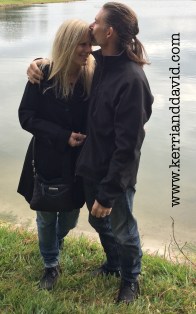
The woman behind the counter at Starbucks, someone I’d never seen before, leaned forward, and chirped, “David! I loved your wedding!” She laughed at the look of confusion that must have crossed my face and added, “No, you don’t know me.” One of our invited guests brought her as a date. “Best wedding ever!” she exclaimed as Kerri joined us. Because the day is a blur, Kerri and I enjoy hearing people’s accounts of our wedding day and she enthusiastically told us of her experiences. It was nice. It was personal.

We took our coffee to a table and joined some friends. After a few moments, the woman behind the counter came to our table. She brought some samples, some health supplements and cosmetic products, “I only do this Starbucks job for the health insurance,” she said, “This is really my business,” she said, sliding the tiny packages in front of Kerri. “You never know who might be interested,” she chirped and blushed before making an exit. It was awkward. It felt awful. We went from personal to prospect in one inelegant step.

There is an old saying that came to mind: When the only tool you have in your box is a hammer, everything looks like a nail.

Many years ago, in a time of great financial desperation, I worked with some financial folks who recruited me to sell their stuff. I learned their processes, got my licenses in record time, and for a few horrid months, tried to sell their wares. I hated it. The work was highly profitable but the cost was highly destructive. Everyone looked like a prospect. To every social encounter, every friendship, every casual meeting, I brought an agenda. For a few months I looked through a lens that made every person, every circumstance, a commodity-opportunity. It reduced life (my life) to an ugly basic. It was toxic. Anna taught me the very appropriate word for what I felt: vampiring. It was a great lesson. It made me pay attention to the intention I bring to my life.

It’s what the woman at Starbucks felt, too. She was desperate. She, like a former version of me, sold the greater need to satisfy the lesser. Vampires are insatiable and stuck in an untenable lifeless-lens: everyone looks like a food source. Desperation is like that. It is easy when desperate to sacrifice friendships for prospecting. No one likes to be a food source.

As I perused this years bountiful crop of ugly images of Americans fighting and crushing each other for cheap toys and electronics, the annual product-stampede/people-crush-and-fist-fight on Black Friday (formerly known as Thanksgiving), I couldn’t help but think about the Starbucks lady. Desperation wears many masks but always makes others look less-than-human. Communities thrive when they feed each other and die when they feed on each other. This is not a mystery.

Commodity is supposed to service community, not the other way around. Vampiring is the only visible path when community loses itself to commodity; it inadvertently tosses away its many tools and leaves itself with only a hammer. It’s a question of order as much as a question of values. There is nothing wrong with commodity when the order of value is respected. Without a WE there can only be a very confused, desperate, and lonely I. It should not come as a surprise that desperate and lonely people do desperate and lonely things.

This is the season of the return of the light. We need do nothing more to create the miracle than put down the hammer and look at others as if they are more than nails.

[to be continued]