Know Secret Things [on DR Thursday]

I wanted to begin this post with a quote from Rainier Maria Rilke’s Letters To A Young Poet. As I always do, I opened his book this morning and fell into it. I couldn’t decide which quote to use – there are so many! Finally, I put it down because I concluded that I’d have to place the entire book into this post. So, I begin this day both quote-full and quote-free. Nothing to share and everything to share.

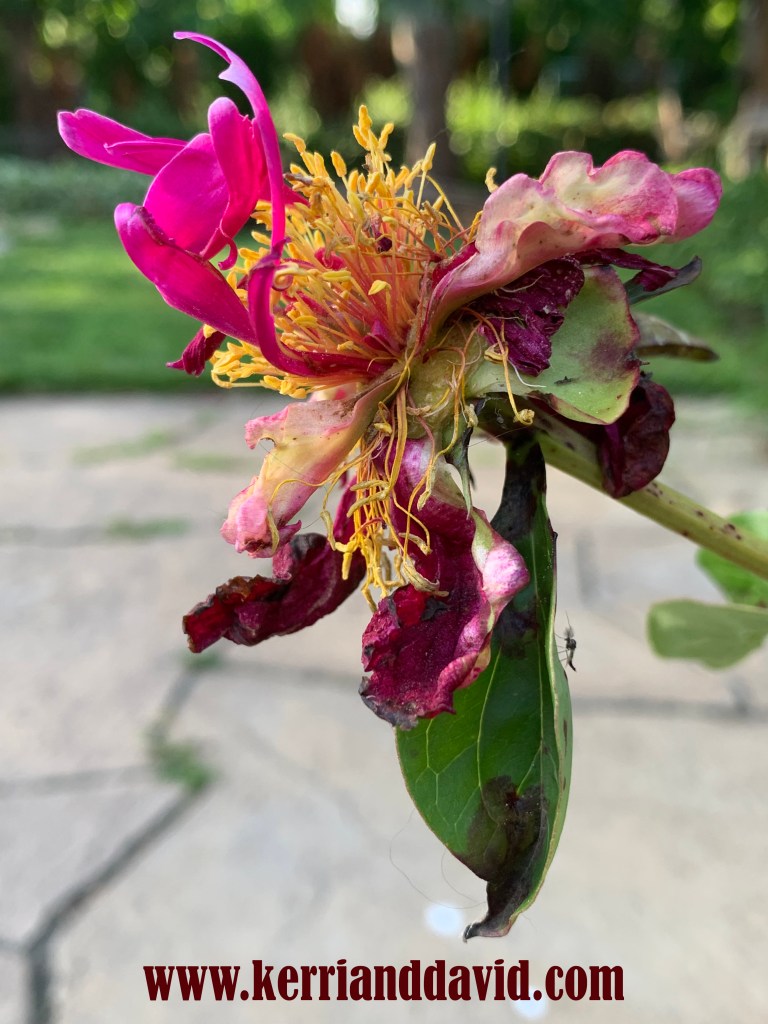
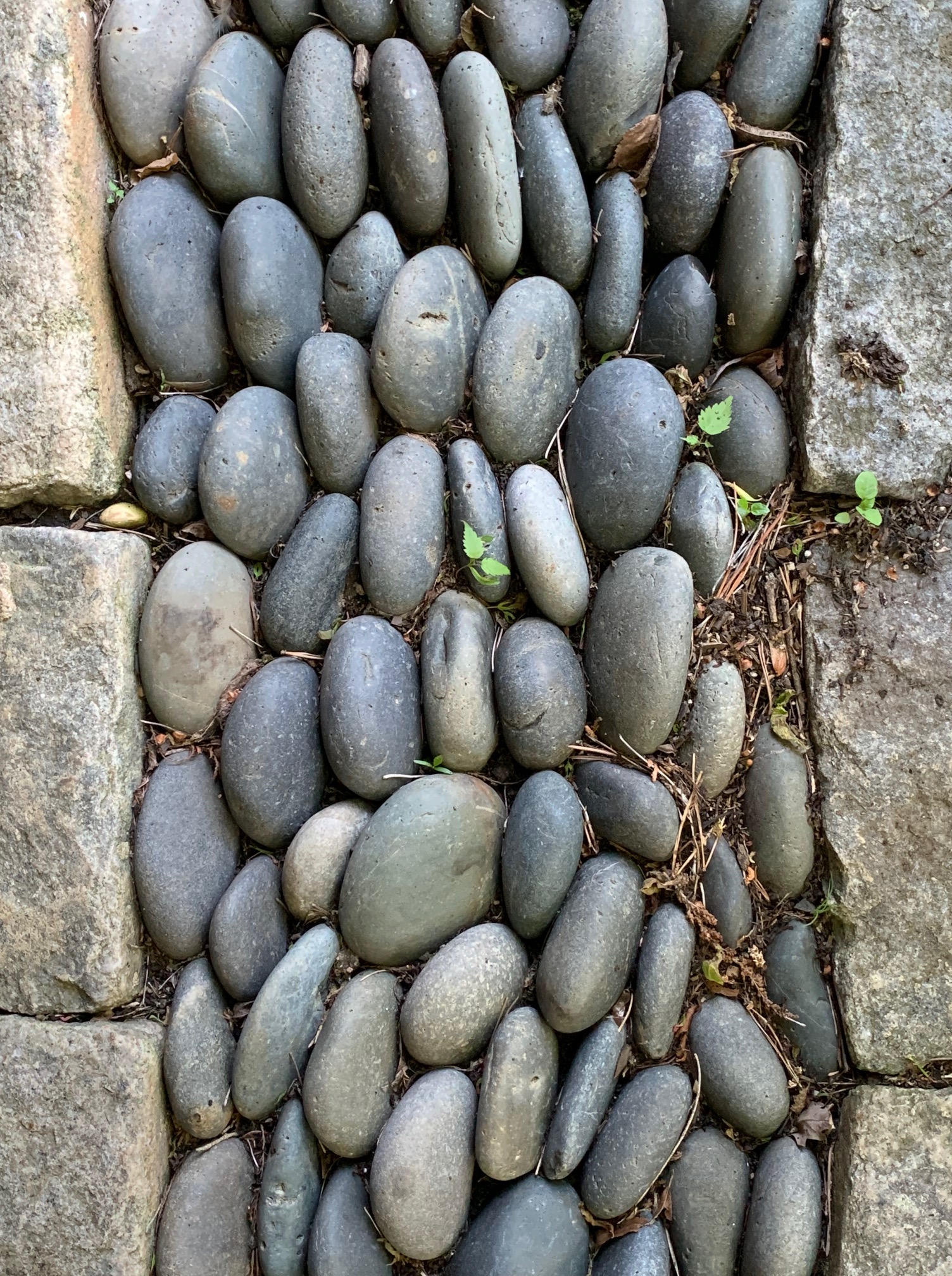
Showing me her photo, Kerri asked, “What do you think of this still life?” I don’t think I’ve ever heard her use the phrase, “still life.” It’s a painter’s phrase, much like the word “garment” belongs to costumers. “I love this,” I said, knowing why she used the painter-phrase. “It looks like a painting.”

My very first art teacher was a jolly older woman named Jackie Fry. She offered oil painting classes at the recreation center. I carried my paint box and canvas boards to Saturday morning classes. I was the odd ball in the class because I didn’t want to paint trees. I wanted to paint people. Not portraits. People. I felt badly about being the odd ball and she gave me the tidbit of advice that has informed my choices for decades: “Tree painters are a dime a dozen,” she said. “Follow your star and not theirs.”

Great advice. She made me paint still life set-ups. “You have to learn to see basic shape and color,” she said when she saw my frown. “People are shapes.”

People are shapes. Learn to see. Follow your star and not theirs. Advice worthy of Rilke, which brings a quote to mind:

“I want to be with those who know secret things or else alone.”

Phew. Now you don’t have to read the entirety of his very wise book just because I couldn’t decide which beautiful phrase to use.

read Kerri’s blogpost about THE GOURD

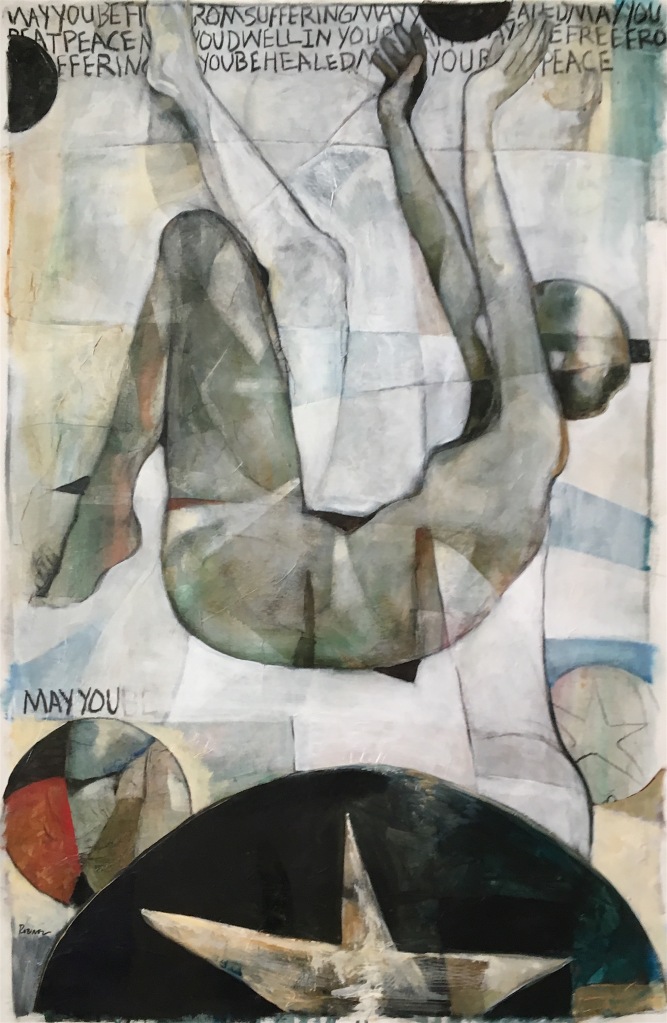
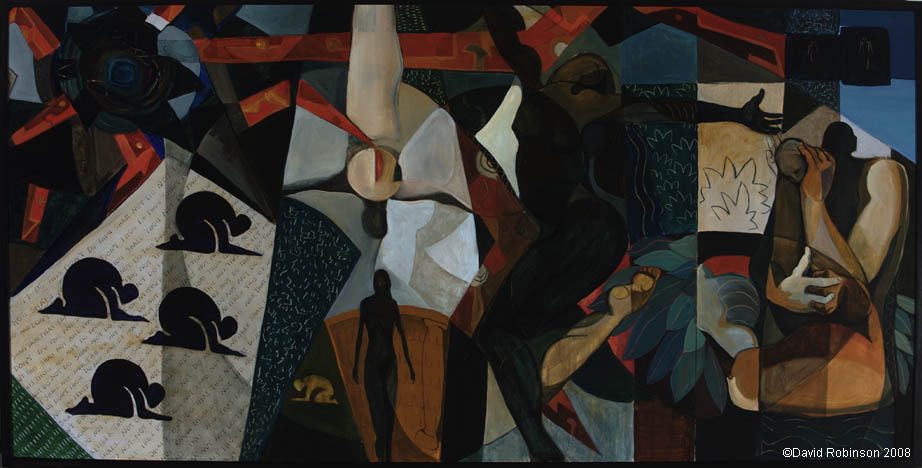
john’s secret (pray now) © 2010 david robinson

Find Your Way [on Two Artists Tuesday]

I will never forget the day I followed the stream, watching the life-ending struggle of the salmon as they fought the current the final mile to return to their place of origin, their spawning ground. To the local people, the people who tended the hatchery, the salmon were gods. Gods or not, watching their struggle to return was sacred. The utter necessity to continue life through the next generation – as the final act of life. Cathedral building.

We brought home a Selenite crystal. It is raw, translucent, gorgeous. A Google search of its properties reveals that it promotes calm and provides clarity. I’ve never actually been invested in the debate about whether or not a crystal has powers. I’ve made the association so, when I look at it or hold it, I have in my mind that we brought this beautiful crystal home to elevate our spirits. And, so it does.

I live in the golden age of marketing. I’m told that a new truck will make me sexy, the latest medication will make my life a snap, that a pizza delivery will bring my family together like never before. Status and power are available through the purchase of machines and clothes. One year, no interest. We buy these messages, filling our closets with passing satisfaction. Is the fulfillment of a new pair of shoes imagined, less-than-genuine? We are consumers so doesn’t it make sense that contentment lasts no more than a spin through the washing cycle? Momentarily satisfied. What’s next?

I suppose the question is whether or not the crystal brings peace to me or do I bring more calm to my day because I’ve surrounded myself with messages – and, therefore, intentions – of serenity?

I know without doubt that a new truck will not imbue me with sex appeal. Yet, I have a pair of jeans that I save for the days that I want “to look good.”

Skip drove two days to find the sun so that he might stand in it and rejuvenate. I go to the basement and stand amidst the boxes that currently fill my studio and stare at a large blank canvas. Like the sun, it rejuvenates me. Yesterday, the nurse at the community health clinic said she loved her job because she felt that she was really helping the people who need her the most, “There are better rewards than money,” she said. Imagine the necessity – the hope – she brings to her life and work. Rejuvenation.

I do not know whether we are gods or not, but our struggle to find our way home is no less beautiful or fraught than the salmon. It is breathtaking, this swim upstream. Confusing. Sacred.

read Kerri’s blogpost about CRYSTALS

Fail At The Box [on Merely A Thought Monday]

Among Don Miguel Ruiz’s Four Agreements is this gem: do the best that you can.

Through the lens of the Occident, those folks on earth oriented to the idea that their nature is bad and needs taming, the Agreement is a statement of self-forgiveness. Do the best that you can. It’s a good bit of advice when everything on earth seems to come with a measuring stick.

Don Miguel is Toltec so his Four Agreements are rooted in an entirely different understanding of nature. To do the best that you can has little to do with performance or achievement. There’s no judge sitting on the high bench scrutinizing goodness or badness. There’s no book with black marks next to your name. This Agreement is about setting an intention. The other Agreements are about speaking with impeccability, making no assumptions, taking nothing personally. In other words, it’s never about you; you can’t possibly know the reasons why; your words matter. So, do the best that you can.

Circumstances are uncontrollable. Sometimes people are mean. Sometimes the tornado comes through and blows your house away. It’s not personal. You probably can’t do anything to change the tornado and even less to change other people. So, change yourself. Or, better, be yourself. Attend to your story and free yourself from the illusion of living under grand judgment or any of a number of other control fantasies. Do the best that you can.

Lately, I’m pondering the too-tight-image-boxes we squeeze into and try, but can never quite, fulfill. The impossible image; a too tight expectation. The Pleaser. The One Who Knows What Is Right. The Peacekeeper. The Strong One. A step away from the box-expectation, the-role-I-think-I-must-fulfill, is a giant leap into happiness. Inside the box it is virtually impossible to do the best that you can. Boxes are alive with assumptions (what I must do, who I must be); buzzing hives of judgment, and, when in a box, speaking truth is frowned upon, so editing and/or silence rules the day. Just try doing your best when living in a too tight box!

Fear and anger fill boxes. That is, after all, the purpose of the box, the fruit of the impossible mission.

Here’s my advice to myself: fail at the box. Cut it up and put it into the recycle bin. Then, free of the too-tight judgments, it’s possible to set mistake-free intentions. Life as finger painting: do the best that you can.

read Kerri’s blogpost about SOME DAYS

Make Dandelion Delicacies [on KS Friday]

Because our yard is a festival of dandelions and our trail is alive with the vibrant yellow flowers, just for kicks, I Googled “dandelion recipes.” Coffees and teas, salads and pizza, quesadilla, syrup, jelly and cookies; eat the root, chomp the greens, it seems dandelions are nature’s one-stop-yummy-snack-shop. Brats! And, of course, let us not forget about dandelion wine!

How is it that this pervasive-misunderstood-as-an-invader-plant is so edible and rich in possibilities? I’ve never eaten a dandelion. If I can find an insecticide-free-zone I’m going to pick a bucket full and try a few recipes. My bet is that Master Marsh has washed down a dandelion or two en route to picking a tune on his guitar. He can make anything – and does – so my future dandelion meal will follow MM around the kitchen and learn his favorite dandy-lion recipe and then enjoy the concert after the plates are licked clean. I’ll do the dishes after the show. It’s the least I can do.

One of my favorite rituals of the spring season is to watch Kerri discover and photograph the first dandelion. It’s like the return of an old friend. “Look-It!” she points and cheers. The camera comes out and a sweet photoshoot commences. She has a fond spot in her heart for dandelions. I wish I had the series of First Dandelion Sightings of the Season. Her eye has changed. The more photographs she takes, the better her composition-eye is becoming. Art works like that. Do it again and again and it gets better, more sophisticated. Easier. Her eye was great to begin with but now I do double-takes. “Whoa!” I say, “Let me see that again.”

Tom used to tell me that the alternative schools were filled with artists. Young people who do not fit in and cannot thrive in the restriction of the lawn. Pervasive-misunderstood-invader-plants. Pulled and placed where they cannot disrupt the blanket of green. Yet, so rich in possibilities. So versatile in form, capable of feeding the soul. Medicinal people. Seers. And, when they age (ahem), they make dandelion delicacies, play music for their friends, and celebrate the small pop of yellow on the side of the path.

It’s good not to be a lawn.

kerri’s albums are available on iTunes and streaming on Pandora

read Kerri’s blogpost about DANDELIONS

fistful of dandelions © 1999 kerri sherwood

Re-Connect [on Merely A Thought Monday]

The latest addition to my “Terms in this Unknown Land” document is TL;DR. Too-Long-Didn’t-Read. I laughed aloud when I heard this new acronym in a meeting. If there is a sign of our times, an identifying marker of our era, it is this: TL;DR.

We communicate through text and emoji. Chat. Twitter is a thing because it mandates brevity. Scrolling the news app is a study in cramming the full story into a brief headline. Marketers have mastered the 5 second ad. Businesses are liberal in their use of “narrative” and “story” but have no time to actually hear one. A short synopsis will have to do. Get to the point.

As a member of my culture I find that I scan more than I read. If I can find it on Youtube, I’d rather watch it than read about it. When I began writing blogposts ten years ago, the “rule” was 800 words or less. The rule has adjusted with our attention spans and now the target is between 400 and 600 words. Often, when I receive links to articles, they come complete with an estimate of how many minutes are required to read them. Yesterday, I read advice from a marketing guru that suggested we restrict paragraphs to two sentences or less; more than two sentences is a red flag: too much information. Less than two sentences is…a sentence.

So much information is coming at us all the time, we have no time or thought-space to take it all in. I wonder if we can discern relevance from dreck. A quick look at our leaders leaves me with a resounding “No!” Relevance is lost in the dreck and, since they represent us, they are us, our information inundation has rendered our attention spans tiny and blunted our acuity. We are awash in information while wisdom has gone missing.

Each week I attend meetings; the central concern is explicitly or implicitly about helping people connect. It reminds me of the conversations I heard in graduate school: while living in a city of a million people, the concern was about how to create community. So many people. So little community.

I ponder these things every day. With our ubiquitous technology, we couldn’t be more connected. Through social media, I know what people had for dinner or what cute thing the kids said. I receive advertising that confirms my devices are listening to me. Yesterday, for-the-hell-of-it, I said, “Machu Picchu.” Today I am awash in travel ads for Peru.

We are connected. Connection to everything is connection to nothing. Relevance is hard to discern in a tsunami of information masking as connectivity.

Relationships – real relationships – take time. Values cannot be communicated in a text. They must be demonstrated and deeply rooted in lived narrative. Stories that carry relevance cannot be well-told in synopsis. Opinions are so easy to tweet. Dreck is easy to fling. It is not the capacity to share that we lose in the crush. It is not connection. It’s the capacity to be present. With presence comes the capacity to listen. Presence is not in a hurry to be some other place.

Rich connectivity requires more than quick consumption of information. Sharing, real sharing, the kind beyond pressing a “send” button, is a two-way street between people who have the time to invest in each other. Once, it was called relationship.

TM;CL. Too much. Can’t listen.

read Kerri’s blogpost about TL;DR

Dissolve And Do [on DR Thursday]

“If you hear a voice within you say, ‘You cannot paint,’ then by all means paint, and that voice will be silenced.” ~ Vincent Van Gogh

“A writer writes. A painter paints.” Wise words from Tom. It was a mantra and his patent response when asked how one becomes an artist. I imagine Tom learned this wisdom from DeMarcus. DeMarcus certainly learned it from his mentor. Artistic ancestor to descendent, the quality that makes an artist is the practice. Nothing more. Ask me what makes an artist and you will hear what I learned from Tom.

There’s a special, hidden layer in this mantra. Someday, if you are a lucky artist, you stop thinking of yourself as an artist. The role dissolves in the doing. It no longer matters how others see you or the label you apply to yourself. It’s nice to separate yourself from the herd yet service to the herd is the point. That, I am coming to understand, is the moment that artistry fulfills itself. A deep trust ensues. No blue ribbon or large sale or shiny prize will change the essential. No outside eye or opinion or judgment or praise alters the fact in the least. A writer writes. A painter paints.

How do you pursue an artistic life? We take walks and pay attention. French blue sky and early tree blossom. And then, each day, as is our practice, we write or draw or compose.

read Kerri’s blogpost about TREE BLOSSOM

Newborn, 48x32IN, mixed media

newborn © 2019 david robinson

Call It Realism [on Not So Flawed Wednesday]

This garlic could have been painted by Jan Vermeer. To my eye it looks like the work of a Dutch master, an artist more concerned with realism than the ideal.

Art that reveals the beauty in the ordinary. For a few weeks in my surly youth I studied with a realist painter. I was wowed by his technique but could not yet grasp his dedication to capturing the everyday. Only later did I come to understand that his art was not about the technique but about bringing attention to the experience of the everyday. He rejected the aloof and desired to pull art down from the pedestal so it might reflect the lives of the “common people.” He believed that people needed to literally see themselves in the paintings to have access to the painting. They needed to see their hardship and toil as well as the objects that surrounded them.

Bertolt Brecht believed the opposite. In order for people to have access to the deeper messages of a play, they needed to be removed from their circumstance. So, in his way of thinking, people are more capable of seeing themselves in a piece of science fiction than in a reality-mirror.

David is working on a re-imagining of Pirandello’s play, Six Characters In Search of an Author. One of the questions of the play is, “Who is telling your story?” And, how are they telling it. I reread the play and was struck by how relevant it is to our times.

The beauty in the ordinary. The turmoils and struggles of the everyday. Ours is a time of tumultuous story tug-of-war. I wonder, in a hundred years, what historians will write about our time. I wonder what aspect of artistry – if any – will be considered “realism.” As defined by Vermeer and Pirandello, it’s to reach across a social line, from the privileged to the working class. For Brecht it is spatial: step out to look in.

One thing is constant, while reaching across time and artificial boundary, it is always the role of the artist to help their community ask the questions: Who is telling my story? Whose story am I telling? What is the story that we are telling?

I imagine those someday-historians will write tomes on our messy struggle to sort out what is “real” and what is not.

read Kerri’s blogpost about GARLIC

Call It A Life [on KS Friday]

Seven years ago today, Beaky passed. The last time we saw her she was clutching a blue notebook to her heart. “You found it!” she exclaimed, rocking back and forth in glee. The journal she kept of a special trip to Europe. A memory, a connection to Erling she thought was lost. We searched the house high and low. We stayed an extra day knowing that meant a 24 hour drive/sprint home. In the last bin, truly , the very last, tucked in the far recesses of the garage, we discovered the notebook.

What I recall about that search is how many times we stopped, dust coated and tired. We sat in the middle of boxes, stacked papers and bins and said, “We’re never going to find it.” Or, “It’s not here.” And then we’d go to the next room of the house, open closets, pull out boxes, the search resumed.

As you might imagine we found more than the blue notebook. That night Kerri told me many stories of family and events sparked by something we’d unearthed. “Oh, my god!” she’d exclaim. “Look at this!” The vet papers for the dog named Shayne. A photo of the family at the house on Long Island. Good times. Stories. Our search became a connection for Kerri to times that she thought were lost.

Memories. Legacy. Doing what is yours to do, looking back and calling that a life.

Eric recently wrote in our Slack channel about my play, The Lost Boy: Your introduction — chronicled on Skips blog — stuck with me, and comes to mind frequently in daily interactions. “This is a memory, after all. It all happened. Though because it’s memory, it probably isn’t factual. So, if I contradict myself, if you catch me saying the opposite of what I just swore was true, if you find me standing smack in the middle of a paradox, it’s not that I’m lying to you. It’s a memory.” The Lost Boy was a story told to me by Tom. Originally, it was meant for him to perform, the story of doing what was his to do. It only became possible to produce after he had slipped into the land of memory. It became mine to do.

And isn’t that the magic of life. What is mine and what is yours to do is never separate. 50 years ago Beaky and Pa took a trip to Europe and she kept a journal of the trip in a blue spiral notebook. 7 years ago Kerri and I spent a long day and night scouring a house to find it. I am now part of the memory of her journal. Her journal is now part of the story of Kerri and my past.

“Never underestimate your power to impact or influence another person’s life,” Paul said to his actors. Doing what is yours to do. Never really understanding or knowing the impact of the simplest action. Calling it a memory. Calling it a life.

Kerri’s albums are available on iTunes and streaming on Pandora

read Kerri’s blogpost about BARNEY

legacy/released from the heart © 1995 kerri sherwood

Take Note [on DR Thursday]

Although it may not be at first apparent, this is a map for product development. A single stout stalk that supports shoots of replication that explode in support features. One clear central intention. Multiple expressions that return nutrient to the stalk.

Although it may not be at first apparent, this is a map for healthy community. A single stout story stalk that supports shoots of replication, diverse paths that explode in seeming individual expression. One clear central narrative. Multiple expressions sending sunlight back to the root.

Who hasn’t seen the time-lapse films of plants growing, forms expressing and then retreating, the accelerated motion of people commuting on a city street, what seems like chaos is, at speed, cooperation. Those people on the street in real time, walking to work, a to-do list on their mind, are mostly unaware of their symphony of togetherness.

It’s easy to forget the stout stalk when standing at the individual expression point. I have been witness to the demise of many organizations who turn against the stalk in favor of the feature. For instance, the fastest way to kill a non-profit organization is to attempt make it run like a for-profit business. It will forget its story-stalk and lose its heart and mind in a spreadsheet.

The quickest way to destroy a community is for its branches to forget that they are individual expressions of a single stout story. They are not separate as much as extensions. To focus on the multiple tiny expressions as if each small branch is a stand-alone truth is absurdity-creation. Chaos masked as convention. Inverted, the plant dies.

In our literature we are riddled with advice to turn toward nature. Existential crisis? Lost? Go to the meadow, find the woods, take a hike. Get quiet. We go there because…we are there. Alan Watts wrote,”We don’t come into the world, we come out of it.” We are not separate from the stalk; we are expressions of it. Occasionally, the map to sanity that we seek is hiding in plain sight dressed as a platitude. Go to nature. You cannot do otherwise. Realize it.

When I’m running abstract questions of design in my dreams, I know it’s time to take a walk. It’s time to stop, look around, take note of nature’s design, the perfection of a plant. A perfect yoga, branch-fingers reaching for the sun, root-fingers reaching deep into soil.

read Kerri’s blogpost about PARSNIPS

sam the poet, 48×48 (painted and sold a long time ago)

sam the poet © 2004 david robinson

Tell The Full Story [on Merely A Thought Monday]

If you Google Harriet Beecher Stowe you’ll come across a confounding question: Did Harriet Beecher Stowe cause the Civil War?

Think about it. Tease it apart. If the question doesn’t make you shudder ever so slightly, you’re not paying attention to the happenings in our day.

A woman in 1851, a full seventy years before women in our nation had the right to vote, wrote a book depicting “the harsh conditions experienced by enslaved African Americans.” She did not write a fantasy. She wasn’t concocting a circumstance. She wrote a book “which highlighted the evils of slavery.” She called attention to a moral horror story.

The question jumps the long and legislated history of slavery in the land of all-men-are-created-equal. It ignores the economic engine that made enslavement of human beings an institution in our nation. It suggests that shining the light, calling attention to the immorality, not the immorality itself, caused the war. The slavery wasn’t the cause, the industry and economics and political drivers had nothing to do with the war. Looking at slavery, calling attention to it, was.

If we close our eyes it doesn’t exist. If we ban the books it will not be part of our history. It’s a game we play with infants. It’s the puerile mentality of Fox news.

“Since January of 2021, 42 states have introduced bills or taken other steps that would restrict teaching critical race theory or limit how teachers can discuss racism or sexism, according to an Education Weekly analysis.”

To be clear: “Critical race theory is an academic concept that is more than 40 years old. The core idea is that race is a social construct, and that racism is not merely the product of individual bias or prejudice, but also something embedded in legal systems and policies.”

Why do we work so hard to cover our eyes and plug our ears? The path to health begins with admitting and taking a good hard look at the disease. Slavery is a part of our history. As is Jim Crow. The Civil Rights Movement. Red lining,…Black Lives Matter. A clear narrative path.

Isn’t the frenzy to introduce bills restricting discussion about our history yet another example of racial bias embedded into our policies? We are watching critical race theory in action.

Talking about what ails us isn’t the cause of our division. Our inability to fully look ourselves in the mirror and acknowledge all aspects of our story – perpetuates our dis-ease. We would do well to revisit the Serenity Prayer and muster our courage.

According to Harriet, there is hope. There will someday come a place and time that our tide turns, a time when we can without fear or shame or legislation, look at each other and tell our full story.

read Kerri’s blogpost about THE TIDE TURNING