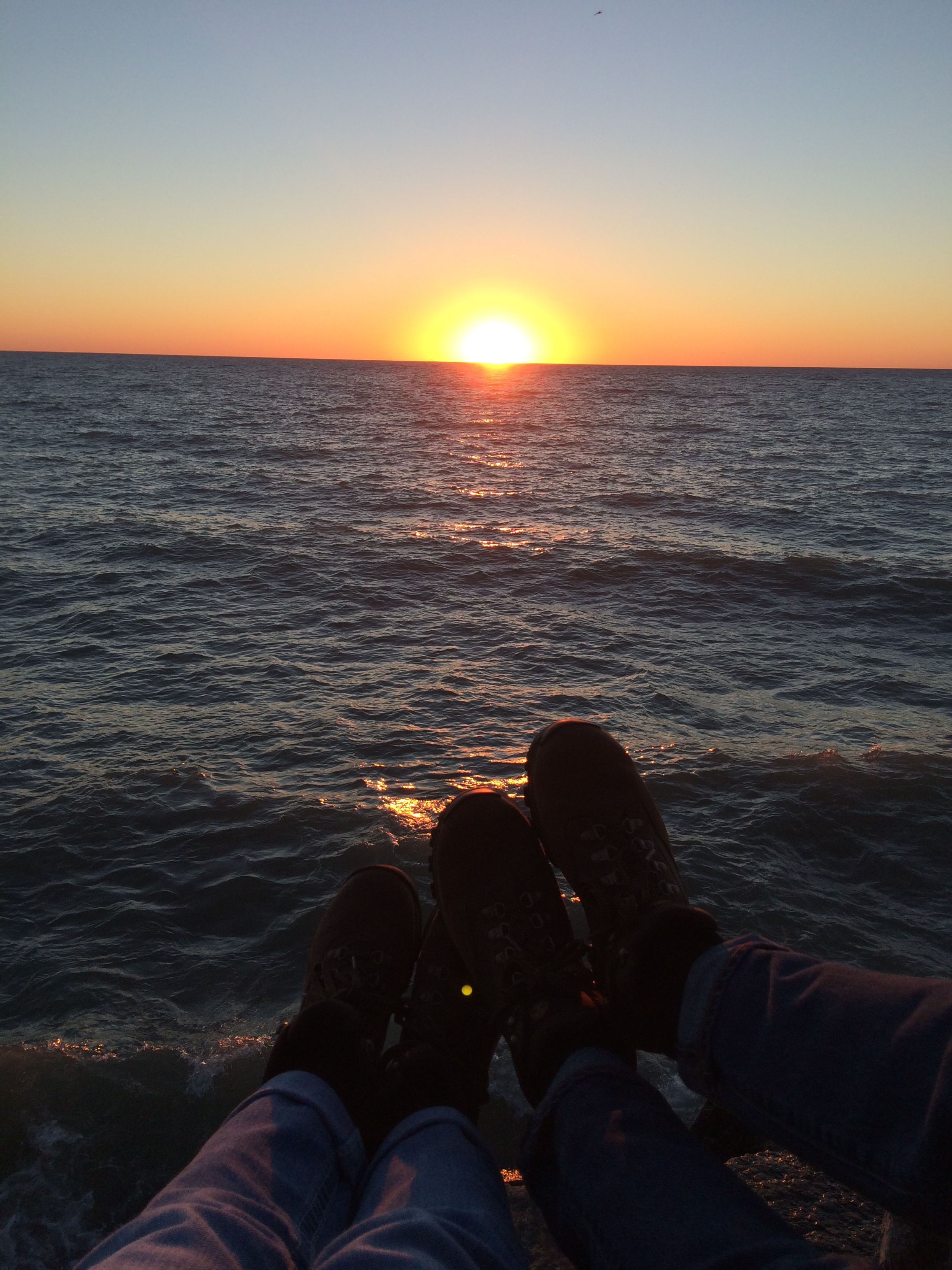
See The Sacred

First Anniversary Sunrise

First Anniversary Sunrise

“…it seems to me absurd to consider problems about other beings while I am still in ignorance about my own nature. Phaedrus by Plato

I’m sitting alone in a sanctuary and thinking about sacred spaces. Here’s the thing I’ve come to understand about sacred spaces: slower motion is required to experience the power of the place. People in a hurry to get somewhere have little or no access to the sacred. Race through a meadow and you will miss it. Sacred spaces do not lose their power; people lose their access to the power of the space.

Once, many years ago in Bali, I made it a practice to walk the same pace as my Balinese hosts. To me, they moved at an impossibly slow pace. As an American, patterned to be forever in a hurry, I walk quickly “to get” somewhere else. There must always be a goal to achieve, a destination to reach. The Balinese were not patterned for transit but for presence. Over time, as I picked up their rhythm of movement I also picked up their pattern: it is possible to walk in presence. It is possible to be where you are with no imperative to get somewhere else – even while walking. It is possible to be in your life instead of racing through it.

A most amazing thing happens when “being here” becomes primary to “getting there”: everything becomes sacred space. Slow down enough and it is possible that you will recognize yourself as a sacred space.

After returning home from Bali I was able to sustain my capacity to move slowly for only a few months. It is easy to move slowly and be present when the culture you are in is patterned for presence. It is an entirely different challenge to move slowly and be present in a fast moving river. In the months after returning home I was either trampled or the cause of others (trying to navigate my slow movement) being trampled. We are not nearly as separate as we think we are. As I resumed my American pace I also dropped my capacity for presence and lost my lens on the sacred.

A recent surgery has necessitated slower moving. I have, in these past few weeks, found myself walking once again like a Balinese. I’ve stepped out of the fast moving river. Yesterday, standing on the back deck, I watched Dog-Dog delight in chasing squirrels. I listened to Kerri talk on the phone with a friend. I felt the sun on my face. There was no other place on earth I would rather be. There was nothing necessary to achieve.

Sit In The First Seat


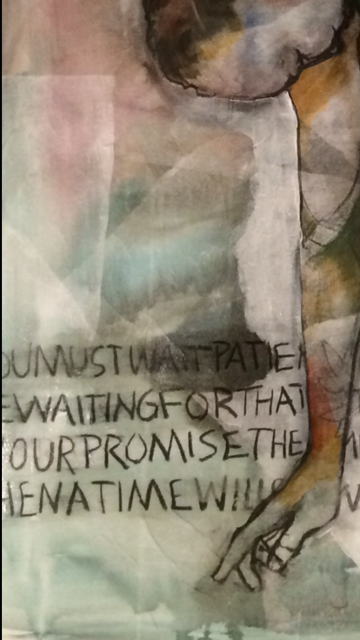
a detail from my latest painting

a detail from my latest painting

I am living this story, as are we all. I am a lover of story so I count myself fortunate enough to know that I am living it. It’s one of the grail stories. Here’s the section of the story that I am now living:

The knight who cannot be beaten (he has a magic sword) is knocked from his warhorse. A warrior, a man with no armor or shield, no protection, emerges from the woods, challenges the knight, and in a single blow, unseats him. That’s not the worst of it: the knight’s magic sword shatters. And, that’s not the worst of it. His armor, his trusty protection through the many wars in the wasteland, pins him down. Like a turtle on its back, he is defenseless. His magic sword, his trusted armor, all that he has relied on, all that he’s built his identity and purpose upon, betray him. He is stunned. He is lost. He closes his eyes and awaits his death.

Death does not come. Well…

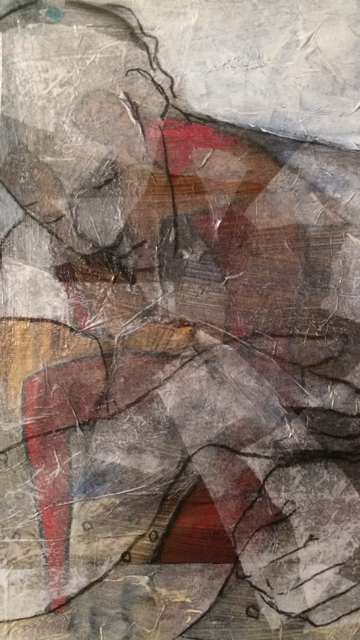
another detail

another detail

The warrior, the man with no armor, does not finish the job. He disappears without a trace leaving the knight stranded but alive. The knight opens his eyes and somehow manages to sit up. He weeps because his endless efforts to save the world have come to naught. In fact, fighting ogres seemed to produce more ogres! He removes his armor. He is no longer a knight. He is no longer capable of saving the world. He is, for the first time since his childhood, unprotected. He is, at last, purpose-free.

Nothing is more frightening – or useful – than to drop the armor of purpose and take a good hard look at what lives beneath all that forged metal.

...and another

…and another

At first his lack of identity drives him crazy. He has no answer to the cocktail party question, “So, what do you do?” He feels naked and exposed. Fortunately, a teacher, a hermit, emerges from the woods to help him navigate the crazies. Namely, the hermit helps him by not answering his endless questions. The hermit helps him understand that the world never really needed him because the world was never really broken. The hermit helps him relax and see beyond all of his thinking. He realizes that the wasteland came, not because the world was broken, but because he believed himself to be broken, somehow lacking.

In a life of chopping wood and carrying water he sees that his purpose has nothing at all to do with doing – or roles or achievements. He sees that the road to the grail castle is blocked so long as he believes he is defined by a role or a bank account or lost in a made-up purpose. When he drops his need for importance the grail castle appears.

...and another

…and another

Satori, in all the stories, knocks seekers from their ponies. It stops all pursuits. It pops the illusion of a purpose-driven life. It necessarily strips the seeker naked.

We are all seekers at some point.

When you are required in the workshop to write your epitaph or are somehow forced to articulate what was most important in this life, the doing, the list of achievements, the purpose-drive will always take second seat. HOW you did what you did, the relationships you tended or ignored, the moments you appreciated or missed, will sit squarely in the first spot.


as yet unnamed

as yet unnamed


Save

Save

Let Go

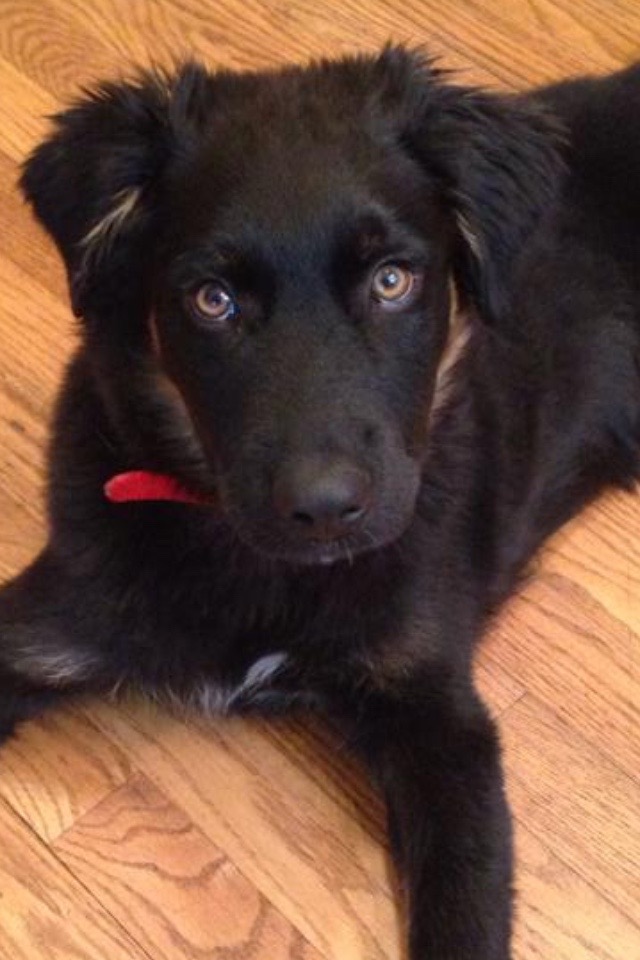
Dog-Dog three years ago

Dog-Dog three years ago

Tripper Dog-Dog-Dog is now three years old. His birthday is July 4th so he believes all the ruckus and fireworks are for him. Of course, we do not dissuade him from his delusion. Country-wide festivities seem appropriate for the birth of any creature. It is a miracle no matter how you story it and ought to be outrageously celebrated.

Marilyn invited us to her family picnic. It was a riot of volleyball and bag toss, not to mention the best cheeseburger I’ve ever eaten. It was a great time! We sat at the table for elders. In the midst of feeling honored to be included at the grown-up table (I feel like I ought to be seated with the kids at the card table), I was shocked to realize that I was sitting with my peers. I am now of a certain age…. Some delusions pop themselves.

On Sunday at the holiday carnival as we watched the Pier Pups distance jump into a pool, Brad and I had one of those broad and deep conversations that keep me thinking for days. Among many things, we rolled around the idea of what it means to achieve, what it means to be successful. I’ve discovered, as my teachers told me I would, that ideas of success and fulfillment are different at each stage of life. Now, I’m successful if I’m quiet inside, if I do not let one of these too-fast-days slip by unappreciated. Some delusions are shed like too-much armor.

There is the moment that the unbeatable knight is knocked off his horse, the moment when Sisyphus, so strong, knowing and independent, doesn’t know what to do and his only recourse is to ask for help. His life depends upon it. To gain all, so the stories remind me, we must first lose it all. Like them, each time I think I have control of my destiny, I am summarily reminded of my delusion. Control is nothing more than just another story. Let go.

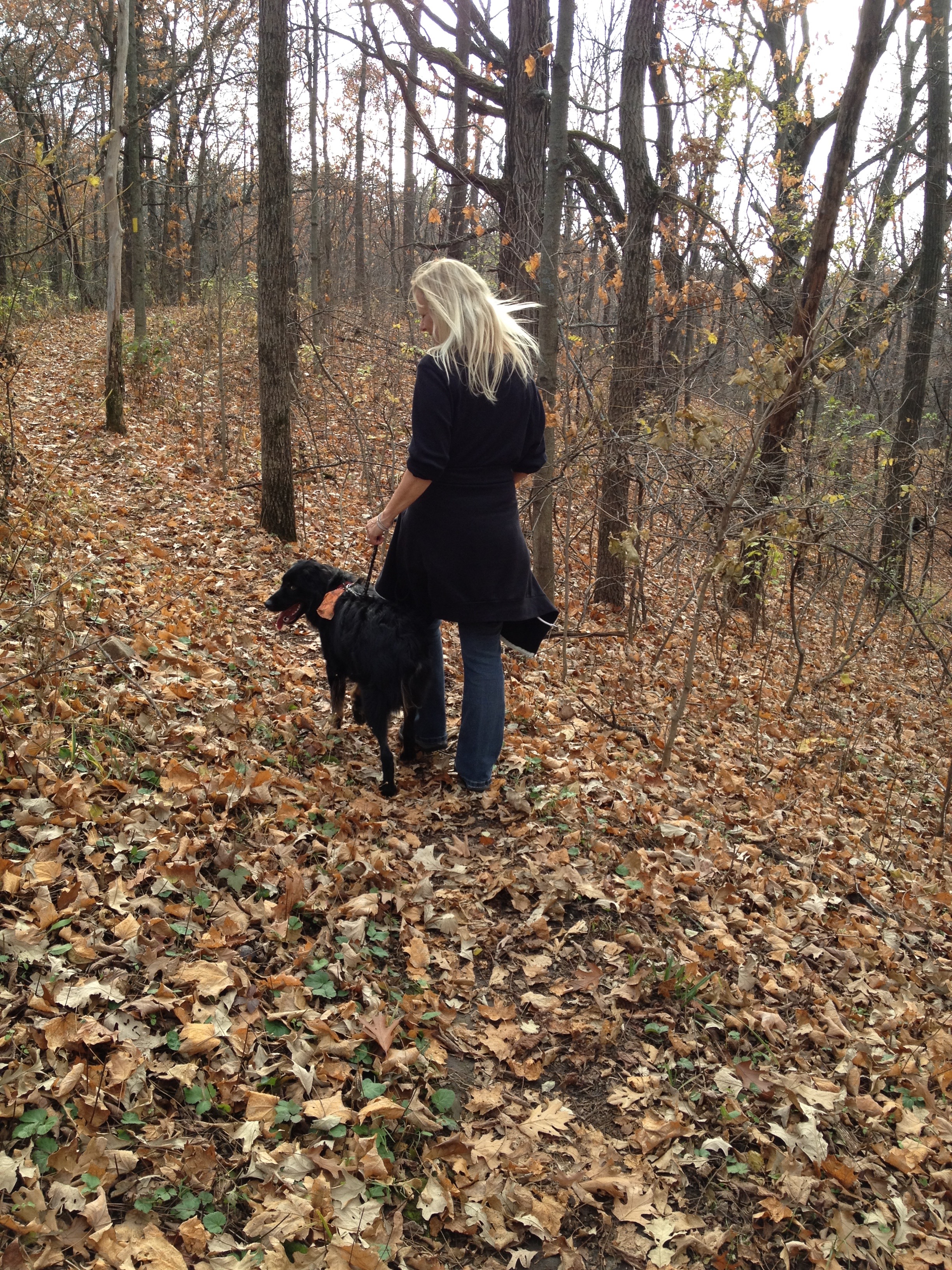
My greatest teachers in one pix

My greatest teachers in one pix

This morning, talking about all that has happened in three years, my wife looked at me through the steam of her coffee and said, “Time just keeps moving. You’d think it would slow down or take a vacation every once in a while.”

Dog-Dog now-a-days

Dog-Dog now-a-days

Unify

a watercolor from 2003, House On Fire

a watercolor from 2003, House On Fire

Stay with me. I actually have a point.

If ever I teach actors again, or coach people in any endeavor, or communities/businesses seeking betterment, I will only have two things to teach: 1) Grounded-ness and 2) Focus placement on the unifiers. These two concepts are really  one looping concept but for ease and the sake of being understood, I will offer them independent of one another.

As focus placement goes, an actor on the stage has two options and depending on the focus placement they choose, they will either create the play or destroy it. A focus on how they look or sound or feel destroys the play. It is a self-focus in an art form of relationship (all art forms are made vital in relationship). A self-focus breaks the relationships and effectively locks the audience out of participating in the story. It makes the actor giddy with fear, easily distracted, alone. Conversely, the actor can focus outside of themselves, on the other actors on the stage, on the energy between, on their pursuit. An outer-focus creates relationships and serves as a magnet that pulls audiences into the story. It facilitates participation, creates relationship, and shared experiences. It unifies. Literally.

The actor who listens to him/herself pulls up their root. They unground themselves. The actor whose focus is outward, who is actively pursuing relationship, creates grounding. In fact, they must be grounded to create vital relationships. It is a first principle. Grounded-ness begets grounded-ness; it unifies. It strengthens. It invites. It clarifies truth.

The same principles apply off the stage or out of the studio. It is, however, more complex off the stage. It is much, much, more sticky.

And here’s the point: It has been said that nothing is better at uniting a community than having an enemy. It’s true. A common enemy provides an outer focus. It provides another team to defeat. It works so well that leaders across the ages, leaders who would otherwise look insipid, leaders who, like a bad actor, have a self-focus, a control need, have concocted all manner of enemies. It is a deflection. It works for a short while but what starts as false unity strips a community of its true binder. It separates and splits. It diminishes. It destroys.

Here’s the sticky part. One of the oldest tricks in the book for controlling a community is to split them, to locate the enemy within the community. And then, for good measure, magnify the split. In the early colonies – that ultimately became The United States of America – it was a strategy known as The Giddy Masses (see Ronald Takaki’s excellent book A Different Mirror). Make the people giddy with a false enemy. Uproot them. Deflect them so they cannot join in relationship and be strong as a community. Self-focused leaders cannot survive a unified, healthy populace. It is a strategy: separate the people so they cannot see the movement of power.

Today I started to read the news but stopped after only a minute. Building walls. Expelling Muslims. Enemy creation everywhere! Fox news and MSNBC are great giddy creators. It’s a bad story poorly told. It weakens all players. The primary actors do harm to their audience. Grounded-ness, a first principle, can only come to all when the actors choose to focus on the relationships, see the unifiers, to create rather than destroy. Groundedness comes when the audience engages, questions what they are being told and open (rather than close) their minds.

Grounded-ness. Focus placement on the unity. The principles that make great art also make great society. Fear, the province of the bad actor, the lot of a passive audience, although temporarily effective, can only destroy the play.

Save

Save

Have A Conversation

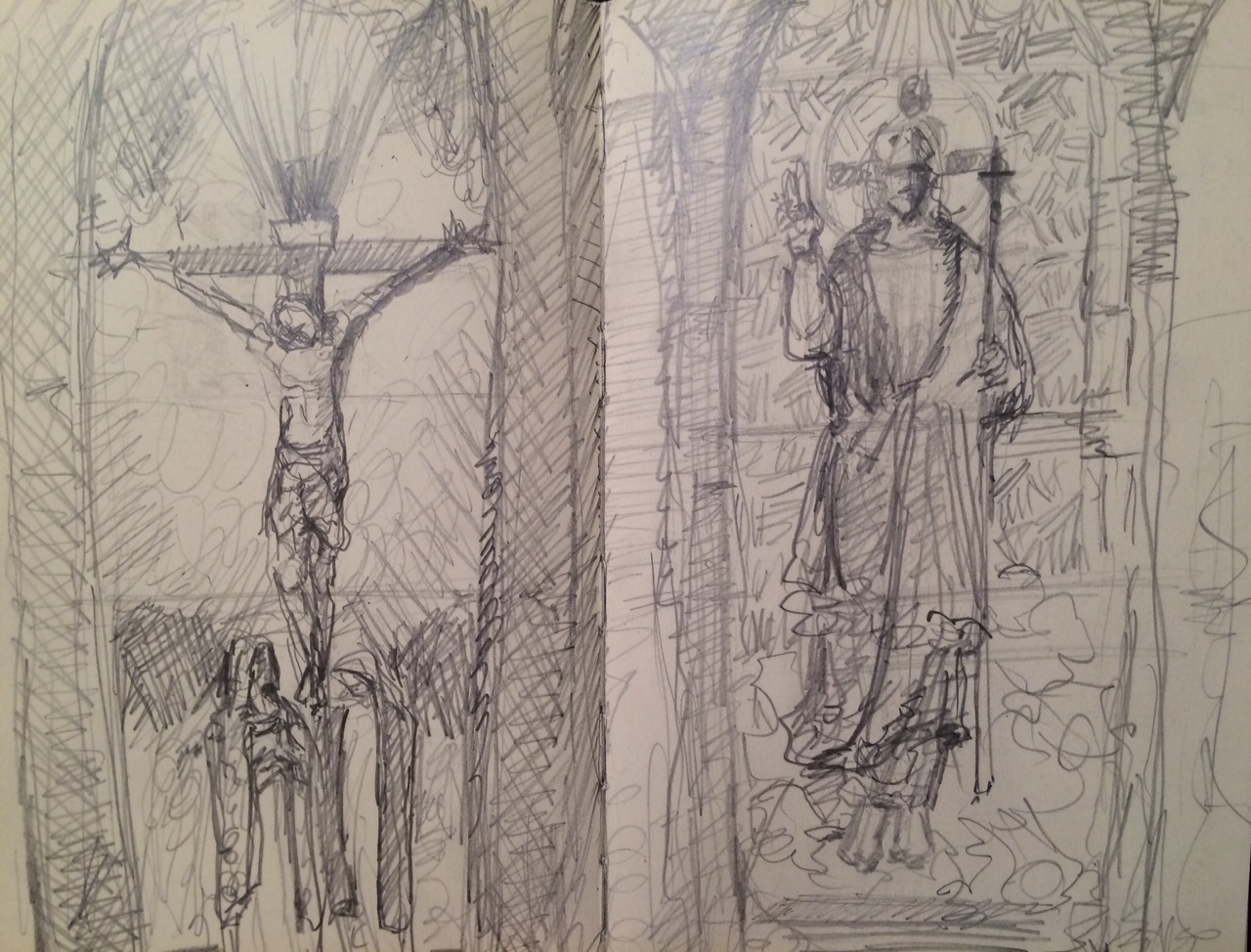
my quick sketches of two of the stained glass window panels

my quick sketches of two of the stained glass window panels

Yesterday I learned that my conversation with the stained glass window was only on hiatus. Several months ago we simply stopped talking. In the silence I thought the conversation was complete. For almost two years we had a weekly chat. I took lots of notes.

I recognize that one is not supposed to have chats with windows – at least not admit to it. Master Marsh teased me saying, “There’s help for things like this.” I’ve decided that my conversation with the window is more ordinary than odd: plenty of people around the world talk to statues. Most of us have had silent reckoning with the sky. I’ve witnessed mechanics talking to their tools and bakers wooing their dough. Who hasn’t cursed the object of a home fix-it job-gone-wrong (plumbing regularly gets a tongue lashing from me!) or praised a project done well? Traffic gets a regular talking to. In this region, at this time of year, more than a few brides make deals with the weather. A soul in exchange for sunshine.

Who hasn’t, in a moment of turmoil, looked inside themselves and asked for help? Who hasn’t uttered a quiet thank you or asked for guidance or made an appeal? Call it prayer, meditation, epiphany, catharsis, intuition, gut instinct, reading the signs, hearing the call, or communing with nature, it’s a conversation.

I’m not the only artist – or scientist for that matter – that, in moments of flow, feels as if something bigger is coming through. In that sense, all of my paintings might serve as the record of a conversation with something bigger. Writers often speak about having the experience of the characters writing themselves, of following rather than creating. Following, surrendering, allowing, listening, responding, getting out of the way. Play the chords long enough and you no longer need to think about them. In the land beyond thinking about it, music becomes possible. It’s a conversation.

Sitting on the chancel, listening to Kerri play, I stared as I often do at the morning light pouring through the colored glass. I studied the symbols. Birth and death. Tree of knowledge, Tree of Everlasting Life. The Grail standing between two flames. It’s a repetition in symbol of the same idea. Born into an experience of duality and distinctions, a world fighting over its differences, we have the opportunity to walk the middle path, the unity consciousness, the “something bigger.” “Between the two, one,” I the heard the window whisper. “It’s simple, really.”

a quick sketch of all three panels: birth, death, and the middle way.

a quick sketch of all three panels: birth, death, and the middle way.

Save

Go Slow

Our feet at Montauk

Our feet not rushing at Montauk


Years ago Quinn gave me a book by George Leonard called Mastery. I revisit it from time to time when I feel, as I do now, that I know nothing. In truth, the older I get, the more experiences I have, the more certain I become that I know nothing at all. If George Leonard was still living I imagine he would approve of my not knowing. “Finally, we are getting somewhere!” he might declare.

Here’s a bit from the book’s introduction:

“The many comments and inquiries that I continue to receive have convinced me more than ever that the quick-fix, fast-temporary-relief, bottom-line mentality doesn’t work in the long run, and is eventually destructive to the individual and the society. If there is any sure route to success and fulfillment in life, it is to be found in the long-term, essentially goalless process of mastery.”

Although in the quarter of a century since Mastery was published the pace of life has, if anything, shifted into hyper-drive, the truth of George Leonard’s assertion remains constant. Fulfillment is found in the long-term. It is found in the goalless processes like friendship or love or a walk in the woods. Fulfillment is a relationship and not an achievement. Learning is a relationship and not an achievement. Spirituality is a relationship and not an achievement. Artistry is a relationship and not an achievement.

All the things we think we know, the things we argue for or against, the righteous territories we claim, the belief flags we plant in the sand, the battle lines we draw, the hills we die on, the idea-wars we wage,.., make muddy the life crackling right before our eyes. After all, what do we really know?

On Sunday I witnessed a baptism. The next day I attended a funeral. These two back-to-back rituals left me with a question: What’s the rush?

I have absolutely no idea.

Stand In It

photo

a detail from a recent painting

A surprise package came in the mail. It was a gift from David, my artist’s artist. He sends me things to feed my artist soul, to stir my pot or help me sort out my dilemmas. This gift is more timely than most; it is especially relevant for me now. It is a book of photographs and essays by Walter Kaufmann called Time Is An Artist. I’ve barely cracked the cover and already know it carries the wind that will fill my becalmed life-ship.

This is a quote from the first essay: We always live at the limits, but we are rarely aware of it.

I woke up this morning awash with gratitude for a man who stood in line behind me at an airport ticket counter over 30 years ago. I was returning from Europe. I had a hundred dollars and some lose change in my pocket. I was exhausted. I’d flown from London and landed in a blizzard. My connecting flight from D.C. to Denver was cancelled. Because I was traveling on a cheap open-ended student ticket, the cancelled flight meant I was stuck with no way home. I didn’t know what to do and was too tired to sort it out. I was desperate and lost in my desperation. That’s when the man tapped me on the shoulder. He was a guy in a rumpled business suit. That’s all I remember about him. He was also trying to get home. He’d just heard someone mention an airline offering a cheap flight to Denver. It was $89.00 ($100 with tax). I ran for the ticket counter and snagged one of the few remaining tickets.

That’s it. That’s what I remember about this man who tapped me on the shoulder. To him it was probably a little thing. To me it was enormous. I needed hope beyond desperation. I was investing in a story of limitless problems and was met with a moment of generosity.

It seems that I am in a life course, a graduate school for detachment. Last night P-Tom shared a quote that was important to him when he was doing his chaplaincy in a hospital: Don’t’ just do something, stand there (a reversal of the known quote). Stand there. Amidst the grief and the loss and the mess, sometimes it is essential to do nothing but offer presence. The man at the airport gave me his presence. Beyond his situation he was listening to my struggle.

Detach from your story and the gift will be gratitude. What rolls through our minds is nothing more or less than a story. Eckhart Tolle tells us the story is a force that pulls us out of the Now. Carlos Castaneda writes that Don Juan taught him 3 steps on the warrior’s path: Detach. Make a choice. Own the choice. One of the primary reasons people meditate is to quiet the mind. In the quiet it is possible to see the story as just that, a story. Detachment, in this sense, is not disengagement from life or cold aloofness from reality. It is the doorway to life. Stand in it and not the story of it.

Gratitude lives in the Now. Where else?

photo-2

another detail from another painting. kerri says this one looks like gratitude

The man at the airport was on my mind because I have learned in this life-course that gratitude is best served in thimbles: the taste of the pear, the sun on your face. The man tapping your shoulder, “Hey, I just heard….” I thanked him before running but the real gratitude came later. Gratitude came again this morning because I was telling stories of the good angels who’ve populated my path.

Real gratitude for this life lived perpetually on the edge is often lost when the expectation-bar is set too high. To be grateful for your life – your whole life – is… an abstraction. It requires a story that pulls you away from this bite. It is a bucket too big. Savoring is a slow affair, available in the smallest taste, right now.


Be Clumsy

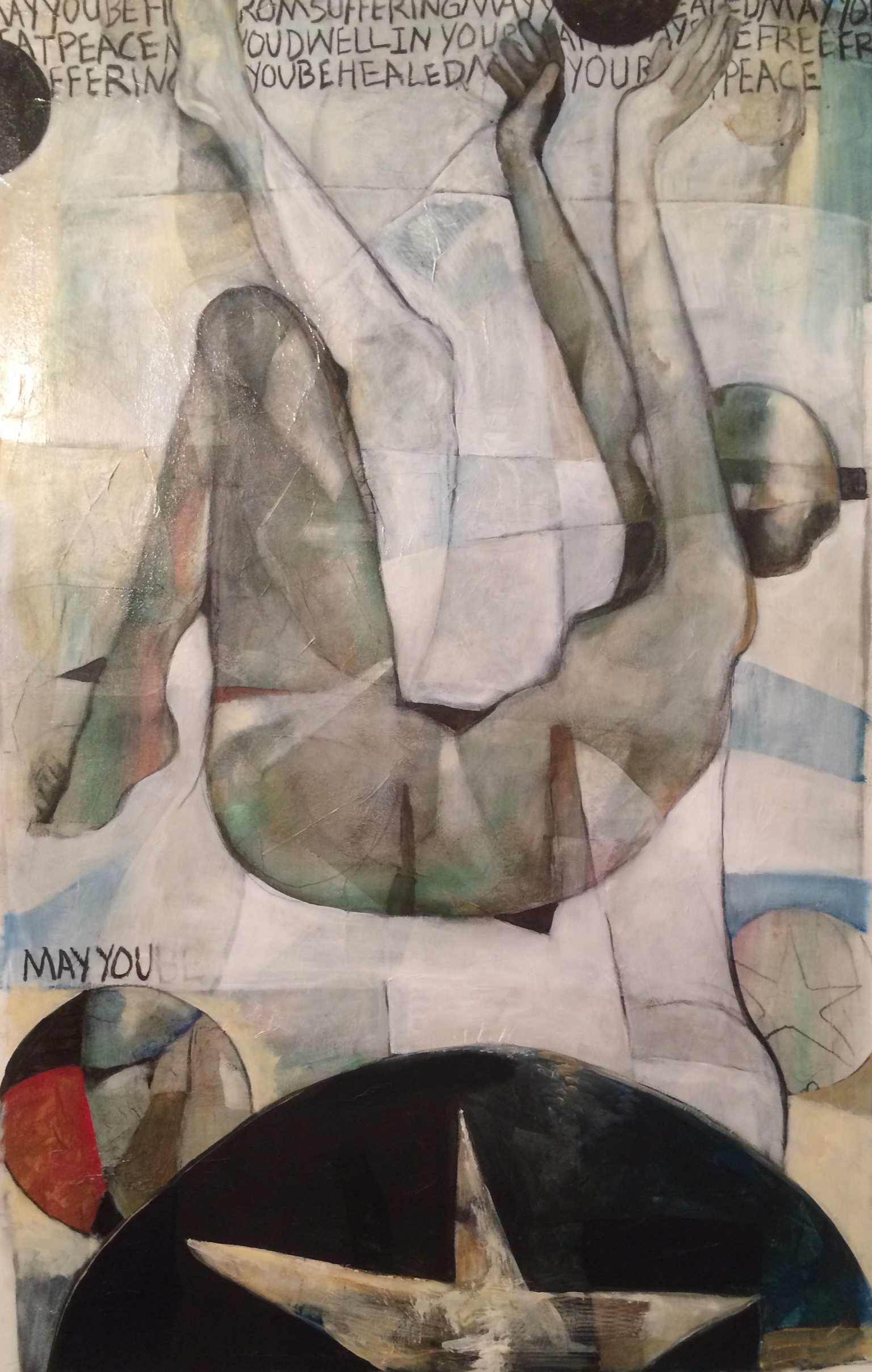
a detail of my painting, May You Be.

a detail of my painting, May You Be.

Clumsy (klum’ ze) adj. 1. lacking dexterity, grace or skill; awkward. 2. ungracefully shaped or made; unwieldy. 3. awkwardly or unskillfully said or done, ill-contrived.

“We don’t allow ourselves to be clumsy,” Kerri said. “Life is clumsy.”

Many years ago I read a commentary that suggested we moderns have a harder time of feeling good about ourselves than people of ages past. The argument went something like this: we have an impossibly high standard to meet and it is mostly illusory. For instance, our predecessors compared themselves and their successes against a relatively small village populace. We are swimming in pool that stretches around the earth. The athletes in our ancestral villages ran against their neighbors, the artists created for a specific purpose that served a tangible need in their community. Our young runners know to the hundreth-of-a-second what greatness requires. They run against the world. Our artists rarely know outside of their own inner imperative why they are creating. With no outer limit they spend a great deal of time wondering if their work has any impact or greater significance. With no outer limit it has no defined audience or community. Stephen, a gifted and prolific artist, used to ask, “Why don’t people recognize the value of art?”

The argument is largely a question of access. Our predecessors had limited and very abstract access to the news of the day, to the happenings beyond their region. We have a 24-hour global news cycle that comes to us on multiple devices that are designed to grab and keep our attention. It is not passive. On our multiple devices we are bombarded with images and messages of what we should look and feel like. Yet, almost all of the images populating our personal measuring stick are constructed. They are manipulated, retouched, powdered and Photoshopped. Legs are stretched. Wrinkles are removed. Sunsets are filtered. We measure ourselves against illusions.

Thus, intermediaries are everywhere. Interpreters abound. I rarely go into a gallery without a curator telling me why the work on the walls is important. The news of the day makes us the rope in a tug-of-war of interpretation.

Art, like life, like deep spirituality, requires direct engagement. It is made rich in the rough draft and the mistake. The broken road is interesting, vital. Learning is a process that takes time. It is messy. It is clumsy. It is not straight, paved, and has no road signs. And, it cannot be walked alone.

There is no forgiveness (of self or other) on the path of perfection; forgiveness is in short supply when the standard is both impossible to attain and an illusion. On the clumsy path, on the messy and muddy road, lives grace, generosity of spirit and deep forgiveness.

Clumsy (klum’ ze) adj. 1. Human

May You Be

May You Be


Taste It Fully

ice circles on the lake

ice circles on the lake

We heard the angry barking of crows before we saw them. They were haranguing an owl. It flew into a tree only a few yards in front of us. For several moments, through the ruckus of the crows, we stared at the owl and it stared at us. Time stopped. Nothing else existed. The owl’s eyes, our breathing, the crow’s chorus.

For our wedding gift, H and Teru sent several collections of poetry, “Manuals on marriage,” they wrote in the note that came with the poems. Kerri and I are savoring the poems, reading one or two aloud to each other every day. They are a source of warmth and inspiration during these cold dark winter months. A poem cannot be rushed or read merely. It must be slowly tasted. It is meant to be entered like a meadow; to be experienced. Try to make sense of a poem and you will miss it. Just like life.

She said, “inner quiet is low maintenance,” and I laughed. Yes it is. The trick is in getting quiet. It is not something that can be found or achieved. It is not a place or a state-of-being. It is what happens when you stop looking for it. Like the hermit says to Parcival when the Grail Castle suddenly reappears, “Boy, it’s been there all along.”

For years Sam the poet was afraid of his poems. Like all great art, his poems, his art, revealed the artist, and so he kept them locked up, un-tasted. He came alive and supremely dissatisfied when he finally unleashed his poetry. He let himself want more but also refused to let himself experience more; one foot on the gas, one foot on the brakes. To taste fully one must be willing to be tasted.

A snippet of a poem (a koan imbedded in a poem), RELAX by Ellen Bass:

The Buddha tells a story of a woman chased by a tiger.
When she comes to a cliff, she sees a sturdy vine
and climbs halfway down. But, there’s also a tiger below.
And two mice – one white, one black – scurry out
and begin to gnaw at the vine. At this point
she notices a wild strawberry growing from a crevice.
She looks up, down, at the mice.
Then she eats the strawberry.

Taste your moment. Taste it fully.

I wrote in my black and red notebook a simple recognition. The field of possibilities cuts both ways: in your despair you must remember that anything is possible. In your joy you must remember that anything is possible. Tiger above (the past), tiger below (imagined future). Do not reject your moment or attempt to hold on to it – both are methods of missing the moment. Taste it regardless of the circumstance. Taste it fully.


Let’s Be Us

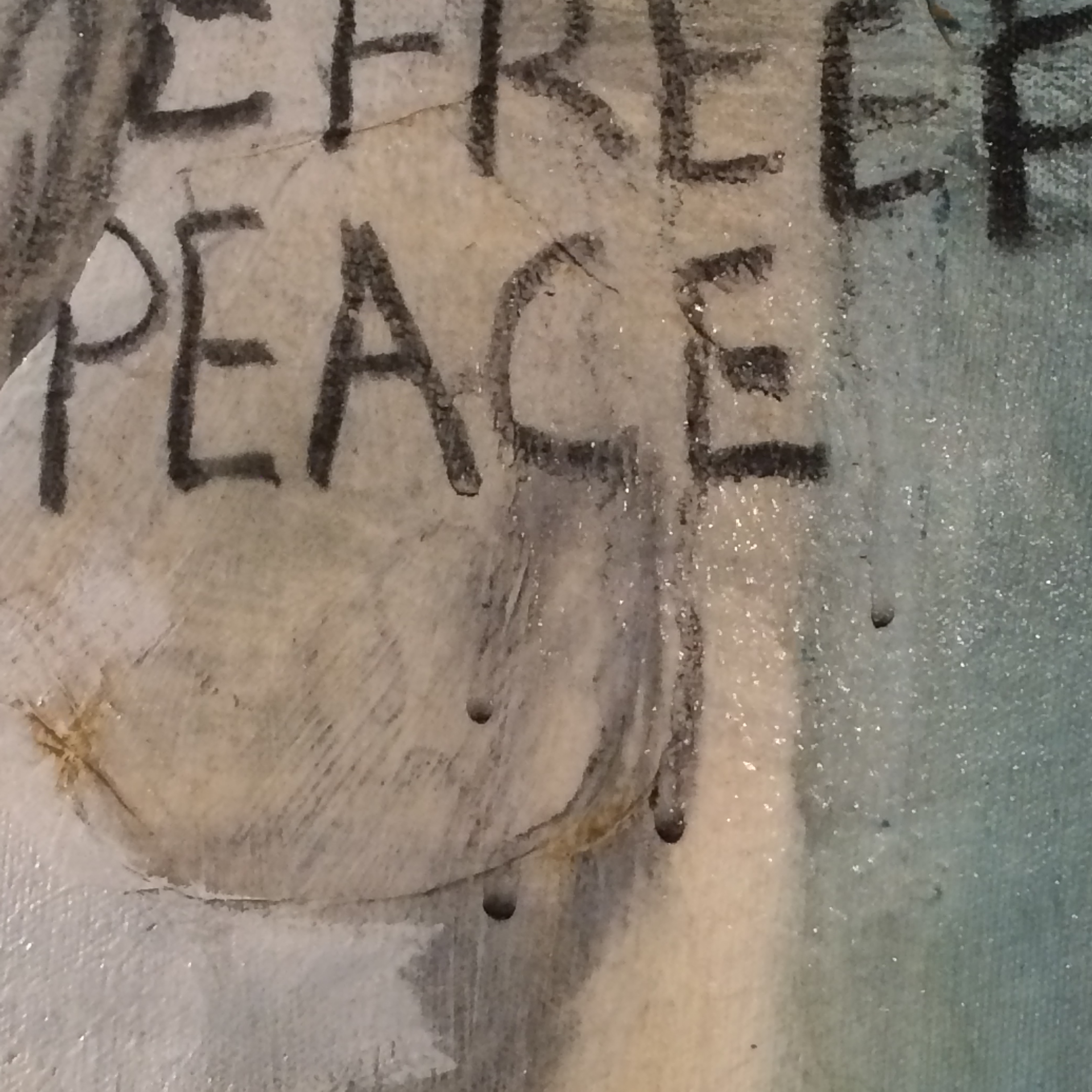
a detail from my painting, May You Be

a detail from my painting, May You Be

[continued from Put Down The Hammer]

It is night and I am sitting alone in the sanctuary. I’ve been setting up chairs for a performance and now that the job is complete I’m taking a moment to savor the silence and review this day.

The temperatures have been unseasonably warm and when I opened the back door this morning for Tripper Dog-Dog-Dog I was greeted by the sound of birds singing. It was an April sound in the middle of December. I was so taken by the sound that I called Kerri, “Come and listen to this!” We stood in the doorway for many minutes. It was beautiful as well as a little disconcerting. “El Niño or global warming?” I asked.

Arnie wrote a comment to my last post. He asked: Can it be that we don’t want the ‘we’ in our society – we aren’t comfortable with the ‘we’ and only feel our identity by living out the “us and them”? I am an idealist but, of course, he is right. David Berreby wrote a terrific book called, Us and Them. We are hardwired to perceive the world through a lens of Us and Them. It’s a survival imperative to distinguish between friend and foe. However, a point that is most salient to me: the delineation of Us is mutable. It is not a fixed state but largely circumstantial. That is especially true in this modern age. There is an out of fashion phrase used to describe these United States: a melting pot. There could not be a better metaphor for an ever fluid definition of US. We need not melt but we do need to acknowledge that we are in the same pot. “Give us your tired, your hungry, your poor,…” is central to our national identity (not always central to our national rhetoric) and is a sacred, central statement of an ever-changing US.

We are among the first humans in history to have the pleasure of seeing our planet Earth from space and, as it has been said, from space there are no visible borders. The definition of US depends upon how far out we pull the camera. From space WE are the human race. There are a bevy of alien invasion movies that carry a common theme: when attacked WE inhabitants of Earth will pull together. Or, said another way, until there is a THEM that invades from another planet, WE will be incapable of recognizing full inclusion in the Earth pot.

To Arnie’s point, there is a lot of responsibility that comes with WE. A few months ago, Kerri and I were in Chicago for the day and passed a homeless man, holding a filthy cardboard sign asking for help. He was young, in his early 20’s, and more filthy than his sign. He was suffering. We walked by him. On the train home we had a long conversation about our responsibility to that young man or to any member of our community that is suffering. Many years ago I was with a student group in Bali. We were invited to Udayana University and one member of our group gave a talk about homelessness in America. Our Balinese hosts were shocked. “How could a member of your community be without a home?” they asked. The concept was abhorrent to them, unthinkable. “You are the wealthiest people on Earth…,” they stammered. Later, a Balinese professor said to me, “When you came here today, we wanted to be like you Americans. As you leave, we are proud to be Balinese.”

Us. Them. We. Like me. Not like me. Me. Little words with far-reaching impact. I am not the same person I was only a few years ago. I find it infinitely hopeful – especially now – that, just like me, the delineation of US is mutable, ever changing. It begs the question, Who are WE? And, to another of Arnie’s points, the answer to the question depends upon where we decide to place our focus.