Ready The Wings [on KS Friday]

“Yes, I’m being followed by a moonshadow/Moonshadow, moonshadow/Leaping and hopping on a moonshadow/Moonshadow, moonshadow” ~ Cat Stevens, Moonshadow

An appreciation of life, no matter what comes. It is the meaning of this lyric, this song – or so I’ve read. It seems obvious. I’m having many, many conversations about loss these days. This has been an era of loss and, so the cliche’ goes, with loss new opportunity arrives. It’s true though one must move through the loss in order to arrive at the new. On the way, there is weeping and fear and anger and disorientation. Chrysalis. The trick, we are told, is about focus placement. One day we shift our eyes and see what we have instead of what we no longer possess. We move toward rather than look back.

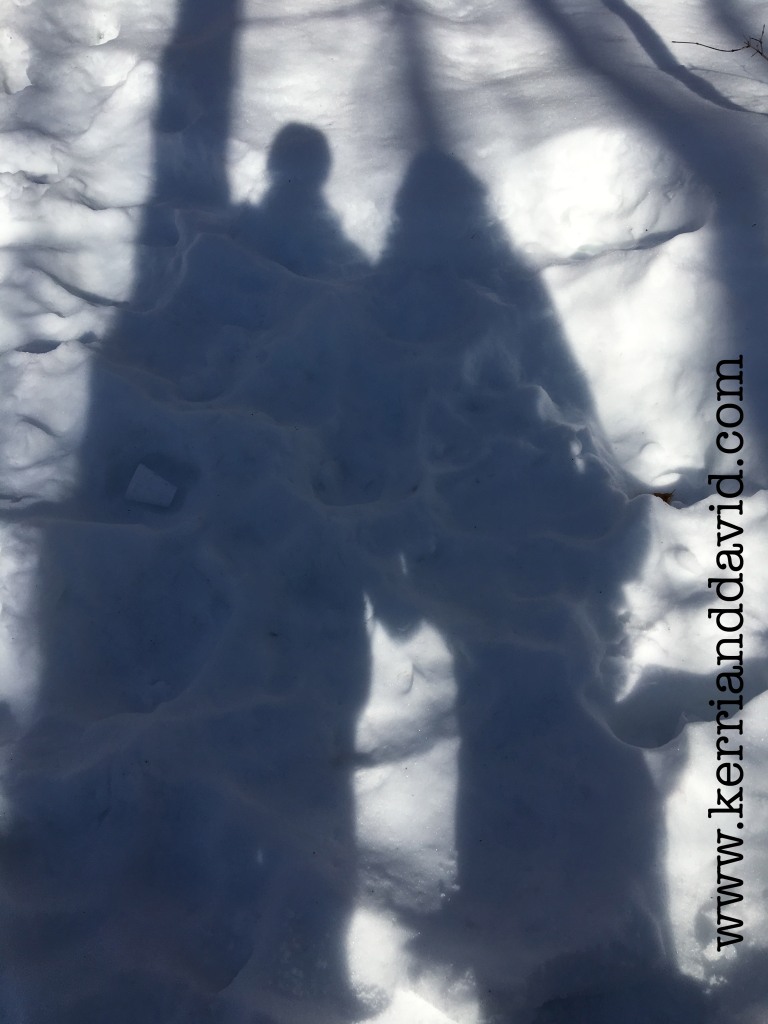
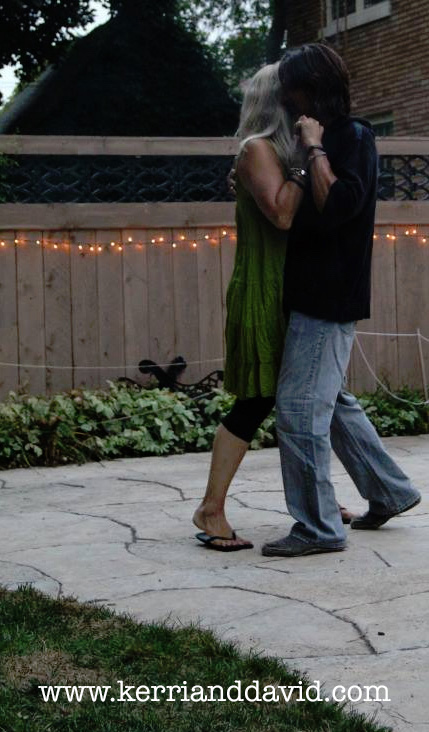
Kerri has, for years, surrounded herself with symbols of peace. They are on our walls, on rings that she wears, on chains draped on the corner of our bathroom mirror. She draws them in the sand on the trail. A prayer for the world she desires to create. Inside and out. Since she fell, my solo-piano-playing wife has lost more than mobility in her wrists. Strange stuff is happening. Fingers that sometimes refuse to respond. Pain that shoots, seemingly from nowhere. After a photograph – a wish for the world, a peace sign in shadow – she said, “Come look at this. Look how much my finger is bending!” Strange stuff.

What is most remarkable about this shadow is, a year ago, it would have been cause for frustration. A reminder of loss. Full of fear. Today, it was a curiosity. She looks back, she looks forward. Each day she writes lyrics and poetry and wisdoms. She hums the music running through her mind and heart and, sometimes, she dances. Standing at the crossroads of what was and what is to become. Peace replaces pain. All in good time. Good time. Wings readying to unfurl.

[peace. this is one of my favorite pieces of Kerri’s]

Kerri’s albums are available on iTunes and streaming on Pandora

read Kerri’s blogpost about PEACE

peace/as it is © 2004 kerri sherwood

Care For Your Space [on Not So Flawed Wednesday]

It seems like such a simple concept. Tom taught it. So did Paul. And, since I was one of their students, I taught it, too. How you treat your space is a reflection of what you think of your art. The concept is universal. Replace the word “art” with “work” or “life.” You and your space are not separate. We worked hard at the theatre to become better artists and produce better plays and a significant part of that work was bettering and maintaining our artistic “home.” We were proud of our work and it showed -everywhere. Our “space” included our community and our art was meant to make it better.

Yesterday it was warm so we took a walk on a favorite loop. As we returned to the car we watched a man clean out his truck. He’d come to the park, not to walk or appreciate the quiet. His purpose was to dump his trash onto the paved lot. In an earlier time, pre-gun-gun-everywhere, we might have said something. Instead, we stared in disbelief. His space,I thought, does not extend beyond his truck. Neither does his community.

Yesterday, after the walk I received a text from Mike. He was a big part of my long-ago theatre. He’s realizing a dream and opening his own theatre. He’s led a company for a few decades but they didn’t have their own space. Now, they do. He – the artistic director – was mopping the floor and paused to send me a text. It’s the other part of the lesson from Tom and Paul. And Demarcus. And Quinn. There’s no hierarchy. There’s no above and below. Loving the space, loving the art that happens in the space: no separation. One and the same for everyone involved and everyone needs to be involved.

You and your space are not separate. The care you take of your outer space is equal to the care you give to your inner space. And, vice-versa.

[visit Justin’s to see how a company can make a better world]

read Kerri’s blogpost about NEAT EARTH

What’s Now? [on Two Artists Tuesday]

After a fairly contentious conference I co-facilitated in The Netherlands, Kerri and I took the bullet train to Paris. It was early in our relationship and our first time abroad together. We couldn’t afford to get to Paris otherwise, so tagging a small vacation onto a work trip seemed foolish not to do. It was the perfect place at the perfect time. I released the conference friction the moment we stepped off the train. I didn’t know it at the time but on the streets of Paris I left behind a skin that I’d badly needed to shed.

We had limited funds so we bought baguettes and Camembert cheese, fruit, tarts from vendors and bottles of wine. We ate in parks. We wandered the streets. Climbed the hill to Sacre’- Coeur, visited Rodin, and tried to get lost. We fell exhausted into bed each night, full of art and sound and color and delicious wandering. One night we sauntered to the Arc de Triomphe and barely escaped a riot. Bus loads of police in riot gear appeared on the street and, wide-eyed, we slipped out of the crowd and hustled to find more peaceful rues. Paris now serves as a marker. There was before Paris. And after.

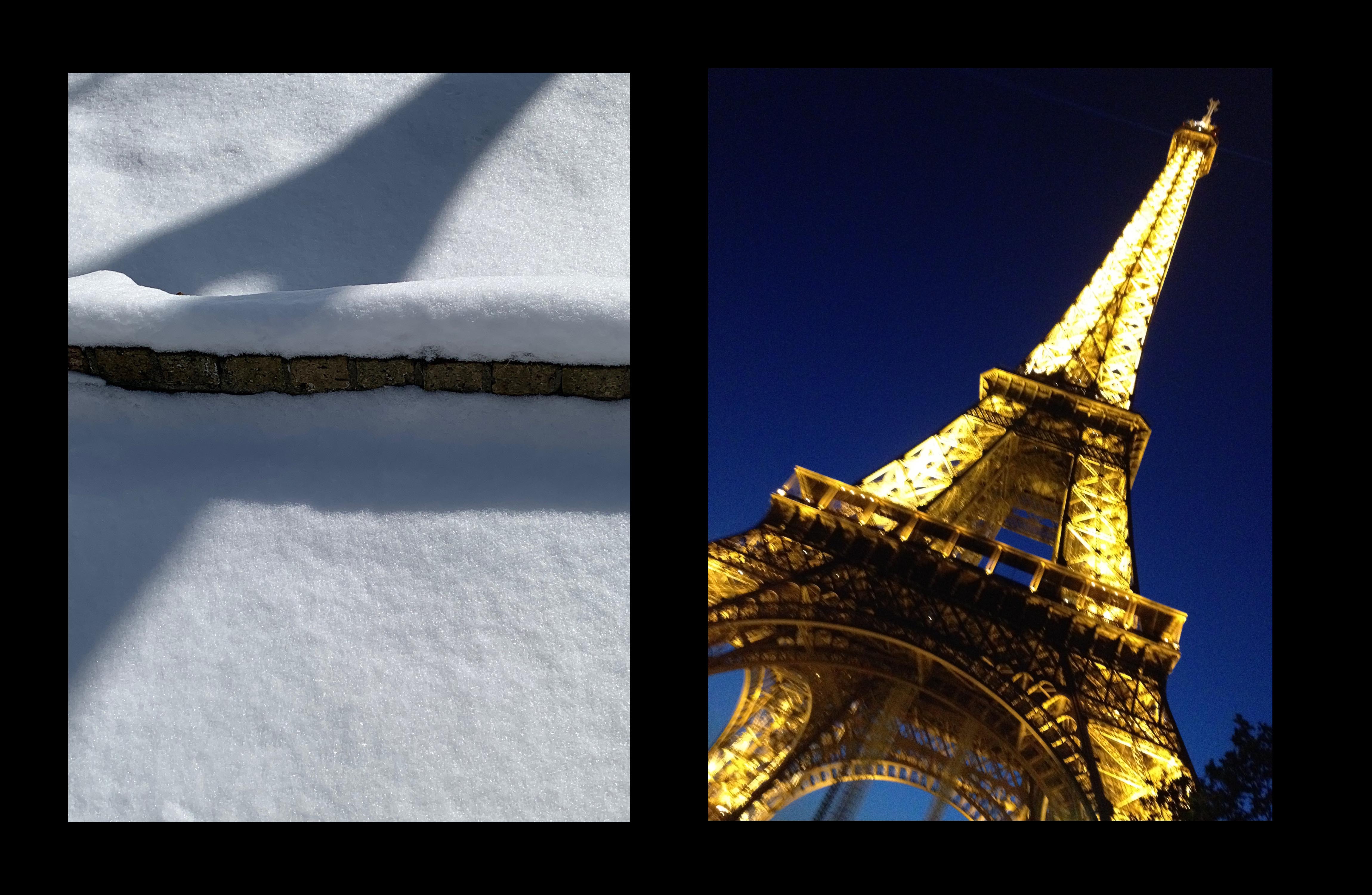
“This shadow looks like that picture I took of the Eiffel Tower,” she said, showing me the photo of the shadow. The angle is perfect. The shadow is appropriate. Shadows. What was. An outline of the people we were, reflected on the snow. And, the series of photos, shadows along the way, the surprising people we have lived-into since we wandered those streets, shedding old skin, and boarded a plane home with a a question, “What’s next?” What’s now?

read Kerri’s blog post about SHADOWS

Use A Bag [on DR Thursday]

To Chris Crites, grocery shopping day is a feast. To Chris, these sacks are more than functional. They are more than ordinary shopping bags. These bags are canvas. They are opportunities for art. They are surfaces meant for brilliant mugshots. The underbelly of society made beautiful on brown paper sacks.

I’m not sure if it was Chris or the other artists in my Seattle pod that prompted me to experiment. One of my forays into “where will this take me” required paper sacks. Lots of paper sacks, torn to bits and pasted on a canvas. I drew and painted on top of the bits.

I forgot about my experiment until I met Kerri and one day unrolled all the canvas to show her what was in the pile. She cooed at my paper bag experiment. “This should be a series,” she said. “It should be called Earth Interrupted.” And, so it was.

I have (mostly) been a painter of people. I’ve learned that art – and theatre – for me are a means and not an end. In other words, I don’t paint because I want to master the craft of painting or make brilliant paintings. I paint to study people. I paint because it is a meditative space. I paint because I lose myself and enter someplace bigger. I paint because it helps me “to see.”

I completed six additions to the Earth Interrupted series and then stopped. I lost my way. That’s always been my experience when I abstract- when I leave the figure and mess with texture and shape. I know I’m not finished with it. Getting lost is part of the process.

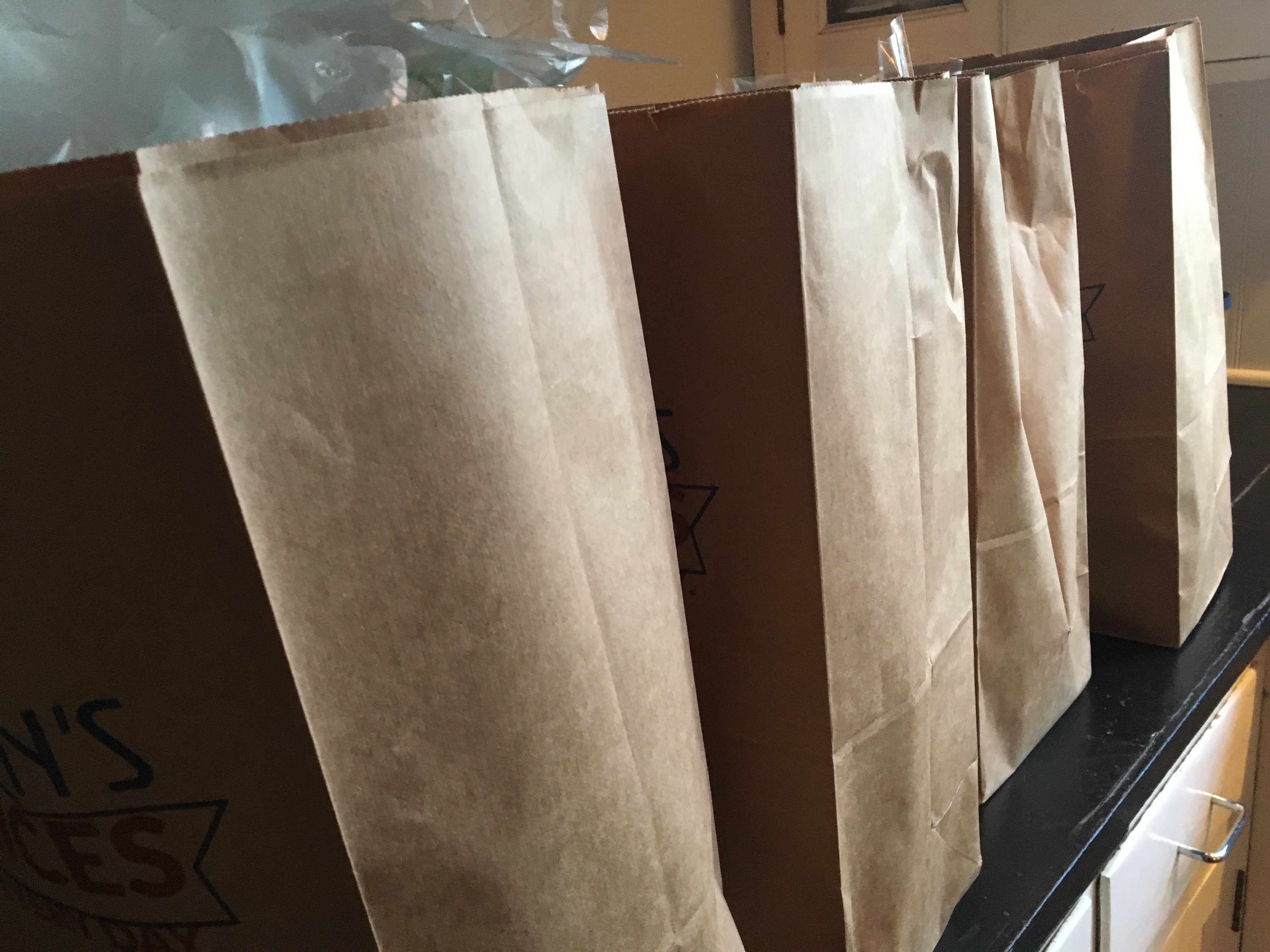
Unloading the groceries last week brought me up short. I felt like Chris Crites. So much possibility sitting on the counter. So much material begging to be transformed.

Earth Interrupted I, mixed media, 48x53IN

read Kerri’s blog post about BAGS

earth interrupted I © 2012 david robinson

Step Out Of Line [on Merely A Thought Monday]

“…the fountain of creative work is an intelligent questioning of the rules.” ~Alan Watts, Tao: The Watercourse Way

“If someone tells you they know, they most certainly do not.” It’s not a direct quote from Quinn but it’s close enough. Art school almost snuffed the art in me; there were so many rules and nary a hint of curiosity allowed in the studio. I fled into the theatre after a single year for fear of losing my heart to a book of rules. My theatre professors were explorers of nature. Their refreshing mantra was, “Well, let’s find out!”

What if…? What happens if…?

Nature is boundless expression. Boundless expression is human nature, too, until it is taught otherwise. Boys don’t cry. Be a good girl. Sit in your desk. Follow the rules. There’s a right way. My way or the highway…So much effort to force nature – your nature, your curiosity, to stand on a line.

Einstein revolutionized our world because he dared to posit that Newton had it upside-down. Thank goodness, as Alan Watts observed, “The scientist and the mystic both make experiments in which what has been written is subordinate to the observation of what is.” In other words, they look beyond established belief, expectation and entrenched norms into what is.

What is? Curiosity. A desire to know what’s over that hill. No child begins their life-walk by desiring to color within the lines. Lines are a learned thing. The word “wild” was invented by people whose ancestors emerged from the woods and who have forgotten that they, too, are part of nature – so have become afraid of stepping into the woods. What might they – we – find there?

“It’s not an idea problem,” David Burkus wrote in the HBR, “It’s a recognition problem.” Stepping beyond the known – a great definition of curiosity – is too often seen as an aberration or an assault upon authority. Nip it in the bud. Forcing flow into a fixed state invariably causes idea-blindness and the imperative to think-outside-of-the-box. Innovations are too often smothered in the crib by “What we know,” or “We don’t do it that way.” Coloring in the lines, once ingrained, is a life-long-book-to-follow.

I wish I had a nickel for every time I’ve been invited into an organization or hired by a client to help them “see what they cannot see,” and then subtly or not-so-subtly, been rebuked for opening their eyes to what is in plain sight…or the availability of alternative paths. “We want a vital arts program but we only want art that entertains,” said the school board after the student play asked a serious question of their audience. “…the scholastic theologians would not look through Galileo’s telescope because they considered that they already knew, from Scripture, the order of the heavens.” (Alan Watts)

Think outside the box – as long as you stay within the model or the expectation or the rules. So many models. So many lines. So in love with the struggle and afraid of the simple, natural joy of curiosity. Bend your will to the line. See what you are supposed to see and look no further. What, exactly, are we trying to control?

read Kerri’s blog post about CURIOSITY

Arrive At The Essence [on Two Artists Tuesday]

This past Saturday we passed a milestone. We began writing our Melange on February 12, 2018, four years ago. We’ve published 5 days a week, every week, no matter what chaos or crazy storm blew through our lives.

Our Melange has moved through many phases. Originally, we wanted to regain some control over the publication of our music, paintings, plays, children’s books and cartoons. In our first post I called it our “pile of creative perseverance.” Also, we wanted to make a living from our mountain of work so we set up Society6 storefronts and spent hours each day developing products based on what we published. It was a blast and a total bust.

Eventually, the stores fell off, the daily themes changed, and we arrived at a pure essence: we love to sit together and write. Each day. There’s always a visual prompt, mostly from photos Kerri’s taken during the week. There’s only one rule: we can’t read or know what the other is writing about until we’ve completed our drafts. And then we read to each other, talk about our posts and clean them up. It’s my favorite thing to do. It feeds our hearts, energizes our artistic souls and that is more than enough.

Somedays I feel as if we are writing ourselves into existence. Our Melange is the story we tell each other – and you – of our life together. It’s a continuation of the Roadtrip, the daily emails we wrote to each other before we met. And, if the Roadtrip was a narrative offering of “this is me,” the Melange is a narrative offering of, “this is us.”

We launched the Melange with this Chicken Nugget (below). I wrote, as an introduction in the inaugural post, that this Nugget – and the Melange – was “a quiet reminder that the universe of feelings was – and is – so much bigger than words can possibly contain.” Ironic, yes? Coming from two people who, each and every day, write words as their way of reaching into this vast universe of feelings.

Thank you for reading what we write. We appreciate every step you take with us on our journey.

read Kerri’s blog post about 4 YEARS

chicken marsala © 2016 kerri sherwood & david robinson

the melange © 2018-22 kerri sherwood & david robinson

Gurgle On! [on DR Thursday]

I’m certain the first time I tried to walk I was not successful. A few stumble-steps and a return to the floor. My first attempts at speaking the English language did not receive a passing grade. As I recall (and I don’t recall), I made some gurgling sounds into which the adults surrounding me projected meaning. I’m certain they cheered and encouraged me to gurgle-on.

Learning is not a terribly difficult thing to do when 1) there’s a reason to do it, and 2) judgment, including words like “success” or “failure” are absent from the experience. Thank goodness my first art teacher treated me like an infant and, rather than critique my mess, she encouraged me to gurgle-on. Consequently, I associate my artistic impulses with fun and exploration instead of the thousand shades of rignt-and-wrong that most people are subjected to.

Recently Skip wrote and asked, “What’s the second rule?” Suspend your judgment and learn.

We just bought a mandoline. It slices and dices and chops and cuts. “The first thing we’re going to make is potato chips!” Kerri proclaimed. And, then, her brow furrowed. “What if we do it wrong?”

“We’ll learn something and make another batch.” Trial and error. Both “trial” and “error” are essential ingredients in the learning process and, since all of life is a learning process, you’d think someday we’d learn to value the “error” portion of the experience. We do ourselves a great disservice placing so much emphasis on passing the test and having the “right” answer. The essential ingredients of trial and error can’t breathe in brains fogged by so much right-and-wrong-ness.

Our first batch, like our first baby step, was a stumble. But more delicious. We stood over the pan eating our result and discussed second steps. What should we do differently next time? Less heat or more? Thinner slices or thicker? This is all I know. I love to learn, especially when food is involved and judgment is not.

read Kerri’s blogpost about POTATO CHIPS!

flawed cartoon © 2016 david robinson

Feed It [on KS Friday]

“The devaluation of music and what it’s now deemed to be worth is laughable to me. My single costs 99 cents. That’s what a single cost in 1960. On my phone, I can get an app for 99 cents that makes fart noises – the same price as the thing I create and speak to the world with. Some would say that the fart app is more important. It’s an awkward time. Creative brains are being sorely mistreated.” ~ Vince Gill

I am the first in line to tell you that everyone has a creative mind. Everyone. That river of ridiculousness running between your ears is nothing other than creativity-run-amok. What else? Telling yourself that you are not creative is, in itself, a creative act. Seeds planted early in life grow into mighty obstructions. Creative wastelands are created. If you want to hear a terrific appeal to educators to nurture rather than stifle the creative mind, listen to Sir Ken Robinson’s 2006 Ted Talk. It’s appropriately titled “Do Schools Kill Creativity?”

I’ve listened to numerous school boards tell me how much they truly value the arts – until it’s time to pay for it. Sadly, it’s not a question of whether or not they value the arts; it’s that the arts, the creative minds, do not fit any of the standards of valuation against which all things are measured. They do not know how to value the creative minds that they steward. Arts organizations and artists, mostly, are not money makers. Creative minds, creative acts, do not fit in the boxes and are not measurable on standardized tests. Thinking outside of boxes is, after all, the point of a creative mind. Metrics and goals stop a creative mind and heart in its tracks. The cruelest thing you can ask any artist to do is write a grant.

And yet, an artist has to make a living. Yaki asked me if I had to choose between making a living and making my art, which would I choose? I answered, “Art, of course,” but that it was really a question of Maslow’s hierarchy: it’s hard to make art when you are not surviving. What I didn’t say is that his question perfectly captured the reason schools kill creativity and creative brains are sorely mistreated: it is assumed one must choose between. Making a living and thriving creativity are understood as oppositional.

How many parents have tried to dissuade their children from following their passion for the arts? How many times have I heard Kerri say of the stacks of music on her piano waiting to be recorded, “What’s the use?” How many times have I sat in my basement studio looking at my stacks and rolls of paintings and wondered, “Why bother?” We do it to ourselves, too.

And then, the phony metric falls and we breathe, pick up our brushes and sit at our keyboards. There is a river of riches that runs deeper than money. It is, after all, a creative act to kill a passion. It’s also a creative act to feed and nurture an artistic soul. Both. It’s what the school board doesn’t understand: the choice is not between making a living or living as an artist, the choice is between feeding inspiration, expanding a creative mind, or smothering it.

read Kerri’s blogpost about CREATIVE MINDS

Kerri’s albums are available on iTunes and streaming on Pandora

watershed/as it is © 2004 kerri sherwood

Jump Out Of Your Chair [on KS Friday]

If I want to think clearly – or clear my thinking – I walk. Sitting still has always been and continues to be an invitation for thought-log-jams. It was a problem when I was a student. Classrooms come with desks and an expectation that the learner will sit still. I became a master of the controlled wiggle, not because it broke the logjam but because it helped maintain my sanity. For me, sitting still is like a hair shirt with an itchy tag. Sitting still makes my IQ plummet several points. Sitting still interrupts my synapses.

Tom Mck told me that the alternative schools were populated by artists. I intimately understood his observation. Artists need to move to think. They thrive in an alternative to still-sitting.

I’ve made sure that my work throughout my adulthood included movement. Directing plays. Painting big paintings. Facilitating workshops. Even as a teacher I cleared the room of desks. This morning I saw a headline in Forbes Magazine declaring that children learn more through play than through guided instruction. It was curious to me that this was a headline. Sugata Mitra’s been shouting the news for decades. Neil Postman spent his life reading the research and advocating for what the research implied: turn little people toward a passion and get out of the way. Curiosity and desire are an unbeatable team. They will move faster than you might imagine. Move, move, move. Dance. Paint. Sing. Construct. Act. Play. They will let you know when they need you.

I’m learning the lesson again. My work places me squarely in front of a computer for hours each day. Flow. Eddy. Logjam. Wiggle. Move. Sigh, as the synapses start firing up again. Repeat. At this advanced stage of earth-time, you’d think I’d have grasped the full understanding that, for me to be effective, I have to move around. Each morning I review the previous day’s work and immediately know whether or not I found a movement/sitting-still balance.

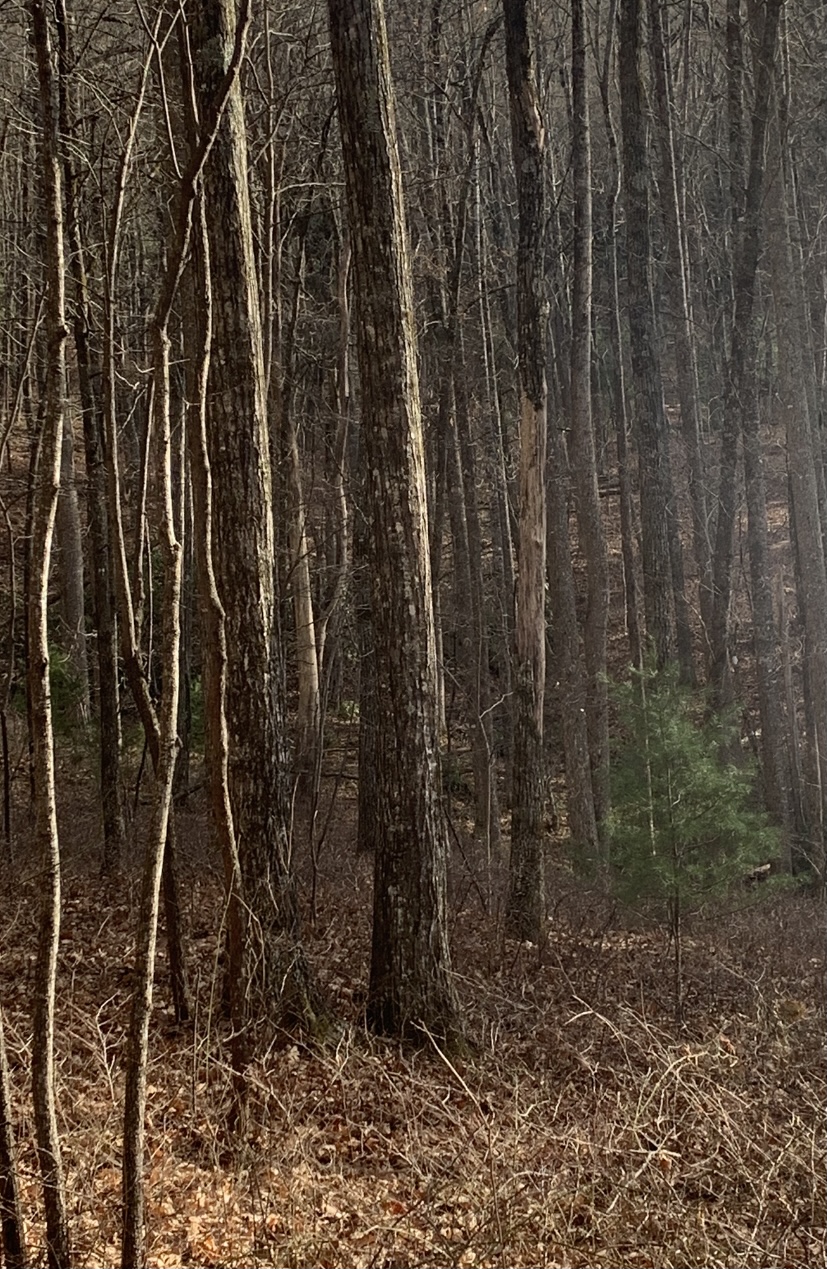
When we stepped on the trail and entered the woods in North Carolina, my mind was chock-full-of-thought-logs. Like everyone else, I stare at the screen and lose track of time. A day can pass me by and I never leave my swivel chair. I swivel for survival. For months, I’d been swiveling and forgetting to stand up and dance my ideas. Fifteen minutes into our hike, the jam broke free. My mind cleared. I could see the subtle landscape inside and outside. I breathed a deep breath. The forest was gorgeous. My mind was spacious and flowing! I resolved, once again, yet again, to attend to the necessity of movement that keeps my mind and heart flowing. Wiggling is maintenance, merely. Swiveling is not a solution. The real game, the full flow, is only available when I jump out of my chair and move-it.

read Kerri’s blog post about THE FOREST

Kerri’s albums are available on iTunes and streaming on Pandora

meander/as it is © 2004 kerri sherwood

Step Out Of Time [on DR Thursday]

The color was other-worldly. The morning was cool. Low clouds hung in the valley. We walked on a deep carpet of leaves through a white oak forest. We chatted. Periodically, Linda and Bill stooped to move branches off the path. I couldn’t take my eyes off the beech trees. The leaves of the beech were paradoxically soft yet electric, quietly luminous. I felt as if they were guardian spirits. Forest creatures. I could have watched them all day.

The path led to a tiny cemetery. Bill told stories of the man who owned the forest, now the newest resident in the grave yard. There were stones so weather-worn that the names and dates had vanished into time. The 19th century. We wandered. “Look at this one,” and we’d gather. Speculate on a life lived before electric light and power tools. The beech trees holding vigil. Another paradox: time made timeless.

I will paint my entire life and never be capable of capturing the color of the beech leaves. I have no name for the hue. Not to worry: the camera could not capture it, either. It was like attempting to photograph a specter. The life of the spirit dodged the lens.

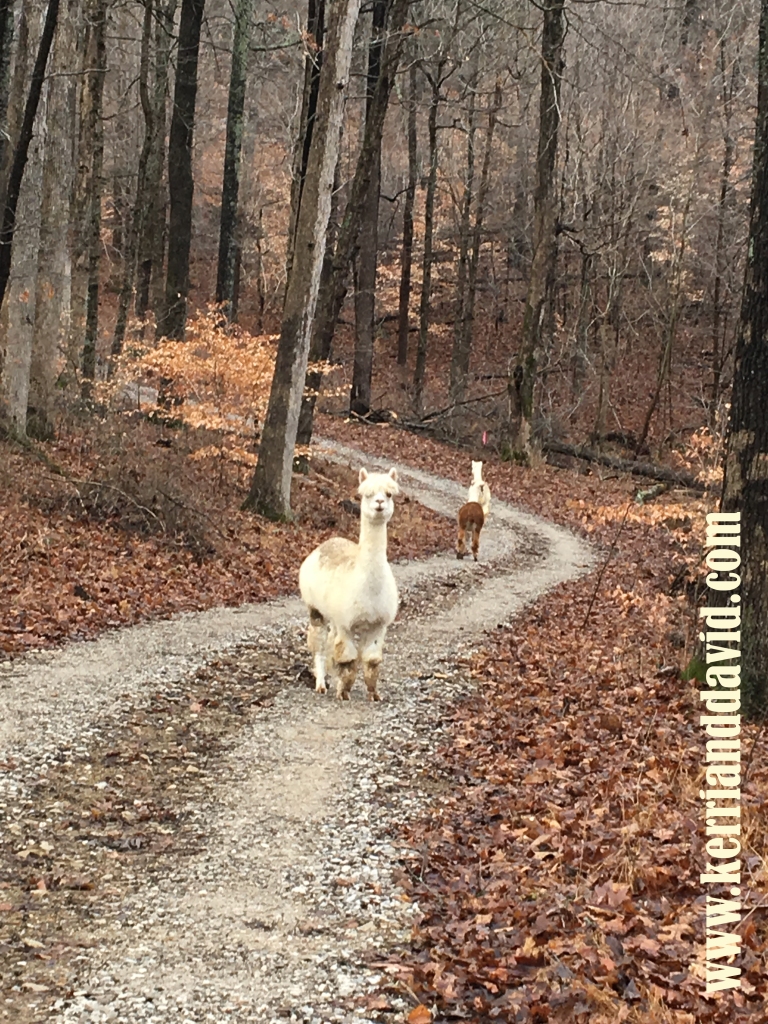
The path led back to the road. The alpaca led the way. Stepping onto the asphalt felt like waking up after a long quiet sleep; blinking into time. Rip Van Winkle. I stood for a moment and wondered about the world we’d find, now that we were re-entering time. I was disoriented.

“Are you okay?’ Kerri asked, taking my hand.

“Yeah,” I said, “I just can’t stop thinking about those leaves.”

read Kerri’s blog post about THE LEAVES

Three Graces © 2012 david robinson