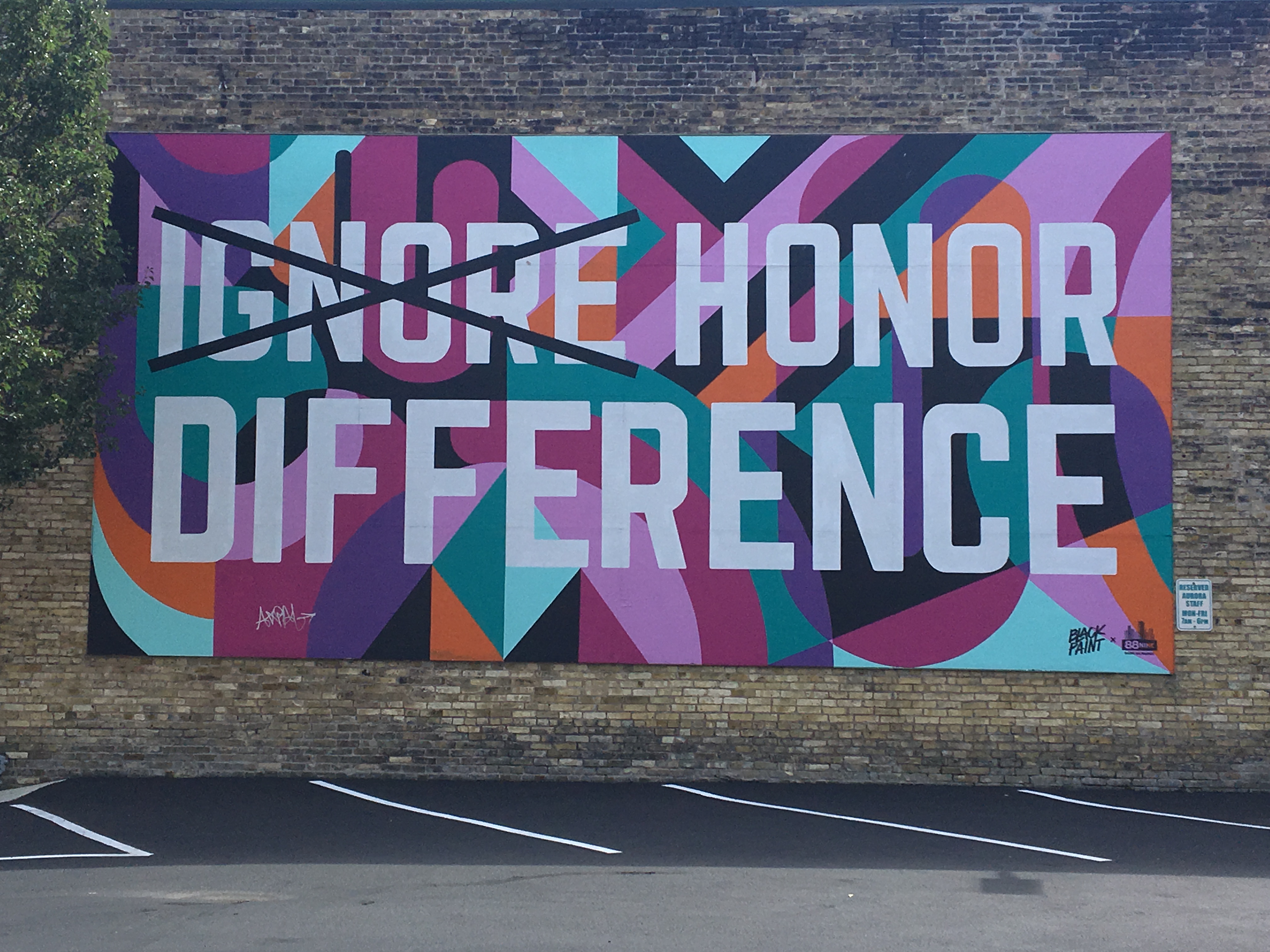
Turn Out The Lights [on Two Artists Tuesday]

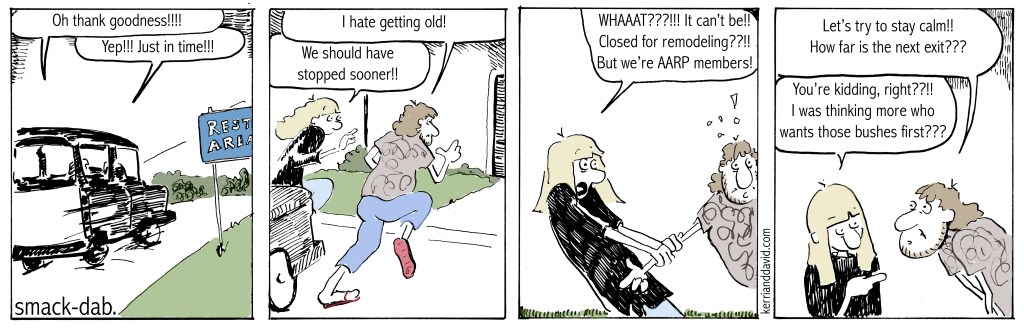
There are first-times and there are last-times. I occurred to me, as we sat on the back porch of the house where I grew up, watching the sun go down, that this night would be a last-time. In the morning we would drive away and never again come back to this place.

We’d driven to Colorado to move my mom into an independent living community. The move was complete. The house nearly empty. My sister was coming to finish the clean-out and clean-up and then the house would be sold.

Kerri is much more “thready” than I am. She leads with her heart and feels deeply the story-threads that extend back through time. With the sun beneath the horizon, the light of the house beckoning, we talked of what it must feel like for my mom to leave this house after 54 years. We talked of the turtle that buried itself in the window well each fall and would claw its way back into the sunlight each spring. Climbing the crab apple tree when it, too, was young. Camping in the back yard in a musty green canvas tent. Riding bikes around the driveway in mock stock car race fashion. The Irish mail. Volleyball, basketball, and cranking ice cream on hot summer days. The small rituals that largely go unnoticed until the last-times, the experiences that fill life full-to-bursting.

These rich, amazing moments that we call ordinary, that happen with ease every single day, that pass unnoticed or unappreciated until the-last-time.

She asked me what I felt and my answer surprised me. “Relieved,” I said. “Just relieved.”

Tired, we went into the house, closed the back door, and turned out the lights. Last time.

read Kerri’s blog post about THE LAST TIME

Care Enough To Question [on Merely A Thought Monday]

“Have you noticed that people all over the world are divided into groups, calling themselves Hindus, Muslims, Buddhists, Christians, and so on? What divides them? Not the investigations of science, not the knowledge of agriculture, of how to build bridges or fly jet planes. What divides people is tradition, beliefs which condition the mind in a certain way.” ~Krishnamurti, Think On These Things

John helped me carry a treadmill downstairs into the basement. It was a beast, a one-step-at-a-time affair. After the job was done we fell into a conversation about how baffling we find our divided nation. He confided that, of late, he’s completely unplugged from the news. “I’m happier, less anxious,” he said, though somewhat conflicted about his decision.

I told John about my dear friend whose strategy for navigating the division and the noise was to read only The Wall Street Journal. It aligns with his conservative values and provides the business and financial news that he enjoys. For his mental health and well being, he’s eschewed all other sources.

On our drive from Wisconsin to Colorado and back again, Kerri and I were amazed by the rabid roadside proclamations of belief. A bumper sticker trumpeting Extreme Right Wing, a pick up truck, weaving through traffic, flying a Confederate flag. We stopped to get gas and went into the convenience store to use the restroom. We were wearing masks which apparently was an affront to the other patrons; I literally locked myself in a stall to avoid being assaulted.

I thought all night about my conversation with John. What are our strategies for surviving the toxic noise? Note the word, “survive.” John suggested (and I agree) that the division is intentional, a strategy. “They’ve learned to monetize hate,” he said, “Both sides.” Our strategies of survival are indications of the problem. Like my dear friend, we seek a source of information – a single source – based on our belief, what we align and are comfortable with, and not based on any measure or expectation of truth.

This is not a new revelation. We’ve been talking about the problem with info-bubbles for years. John’s question, “Why don’t people care enough to ask questions of what they are being told?” is, I think, exposes the root of the challenge. People have to want the truth, expect the truth, before they care enough seek it.

Questioning is the basis of education. Curiosity is what drives progress. Belief asks adherents to stop questioning. We are, apparently – at least 50% – a nation of believers. Not a question in sight. Witness the circus in Arizona, the implosion of the GOP, the restrictive voting laws sweeping our nation, the undying support of a lie that undermines the pillars of our democracy. Belief without question is a toxic soup.

It’s become a metaphor that is easy to grasp: the Kansas billboard read, “Don’t Let Pigweed Creep Back.” A warning to vigilant farmers, pigweed strangles crops. It is toxic to farm animals. To keep the fields and the farm prosperous, a farmer must wage a consistent and conscious battle to keep the invasive weed from overrunning their fields. Our nation is no different than the farmer’s field. We are overrun with pigweed. It seems our information sorting mechanisms are out of whack. We no longer know – or care – to sort out what is edible and what is toxic.

We eat the weed and ignore the vegetable. John’s question is more and more relevant, “Why don’t people care enough to ask questions about what they are being fed?”

Belief without question. Conditioned minds. Mental farms overrun by pigweed.

read Kerri’s blog post about PIGWEED

Take It Home [on KS Friday]

A Double Haiku

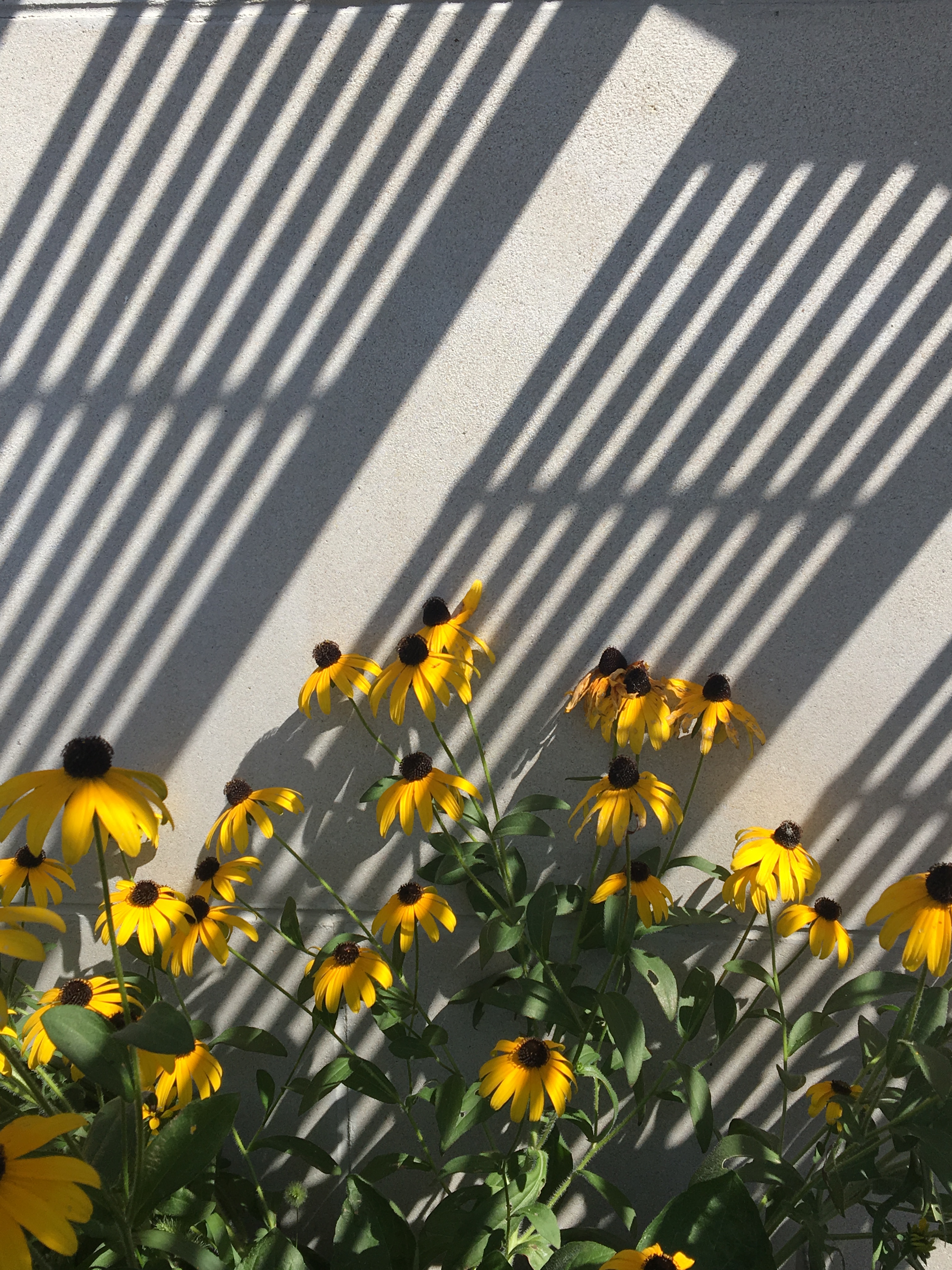
“It smells like mountains,”

she said, nose deep in blankets.

“Can we take it home?”

Mount Sopris’ towers

above nose, bed, and blanket.

A coyote howls.

read Kerri’s KS FRIDAY HAIKU

Touch The Walls [on DR Thursday]

A Haiku

I wander the house

touching boyhood memories.

Stories pour from walls.

read Kerri’s DR Thursday Haiku

Make Good Mistakes [on Not So Flawed Wednesday]

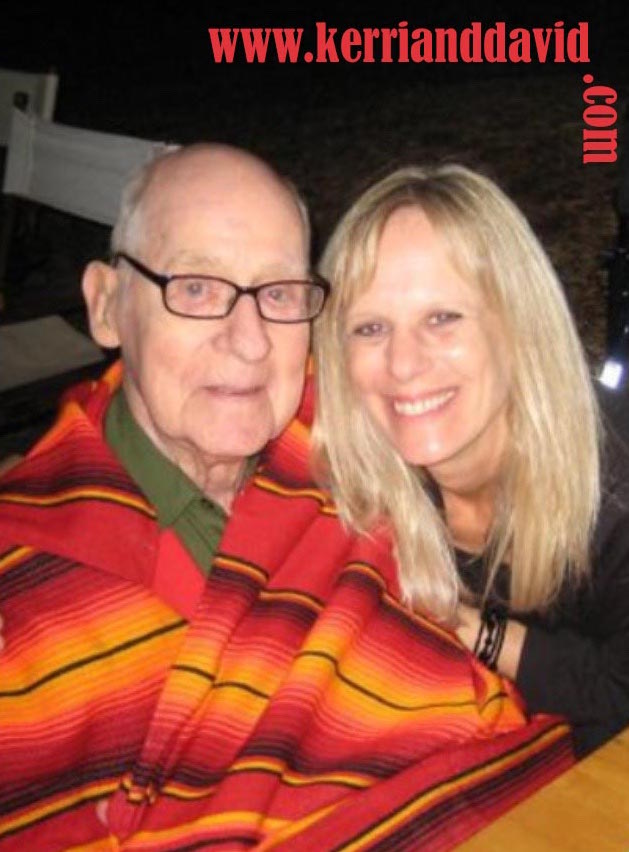
At the front desk, we answered a long series of questions about our recent health, had our temperatures scanned and recorded. A ritual of the COVID era. Name tags rolled from a printer and, with masks on, the door clicked open and we entered the memory care facility. It was the first time visiting my dad in his new home.

We found him in his room, number 110. His bed was sharply made, something he’d done all his life. He was sitting in a cranberry colored easy chair and was, in his mind, tending the store. He breathed an audible sigh of relief when we came in. “Finally!” he said, “I’ve been watching the store all day and haven’t had a single customer.”

I learned long ago to jump into his reality rather than try and pull him into mine so we talked about his business. He was especially excited about the television and radio spots promoting the shop. He pointed to the door to the bathroom and told us it was the library and confessed that he’d started to organize it but had been interrupted so it was a fantastic mess. He laughed and the old sparkle, for a moment, returned to his eyes.

I told him I was really good at making messes. He leaned in, adjusted his oxygen tube, and spoke a lovely wisdom, a lesson from the very old that, in my opinion, should be taught to the very young, “I can make as good a mistake as anybody.” We laughed.

He was always a good teacher. Making good mistakes was, and still is, even deep in his dementia journey, the epicenter of his good teaching. Make mistakes freely and learn from what you find in the mess. Remove failure from the equation.

He walked us to the door when it was time to go, and, for a moment, he knew who we were. He looked at Kerri and said of me, “I’m sorry you have to look at that all the time. Damn, is he ugly.” In my clan, to tease is to love. “I get my looks from my father,” I replied. More sparkle.

“Keep making those mistakes,” I said, hugging him goodbye.

“I don’t think I can avoid it,” he smiled and, he turned down the hall. “Guess it’s time to close up the shop.”

read Kerri’s blog post about GOOD MISTAKES

Step Into The Next [on Two Artists Tuesday]

There is a plot of ground in the backyard of my growing-up-home, as Kerri calls it, that for many years served as my father’s garden. He has not tended it nor planted it for quite some time and yet, a few intrepid carrots have pushed their green shoots up through the crusty soil. The impulse to life never ceases to amaze me.

In the back of our refrigerator we found a red onion. It was not ancient and forgotten. We used half of it in a new recipe a month ago and laughed aloud when we pulled it out and found it sprouting. In the dark and cold recesses of the refrigerator drawer, it sent out explorers to find the sun. It looked like an alien creature, these pale arms reaching, reaching from a purple half-orb.

Before we drove away, I walked through the empty rooms of my growing-up-home, touching walls, gathering memories, shedding the skin of my childhood. We’d already moved my dad to a memory care facility. Now, my mother is settling into her new apartment. Closing a chapter as another opens.  All are reaching through a necessary uncertainty for what is next.

We left Denver and drove up the mountain into and through a furious snowstorm. Cresting the continental divide, we descended again into spring. There was snow and then, within a mile, there was a blanket of green climbing the hillside. This morning, outside of our door, the birds are in full chorus. The dandelions are in a heated competition with the grass and it’s anyone’s call which will win, though, left to their own devices, I’d put my money on the dandelions.

We think we are in control of nature but the last laugh is always on us. We are nature. Our control fantasy crumbles with age, making space for new life and next seasons. Whether we want to or not, we send out new shoots of pale green from our dark purple skin, hoping to punch through crusty soil to find the sun. Either way, we change form, stepping into the next, leaving well-known houses and used skin, filled with rich remembering, opening to welcome the new. The impulse to life.

read Kerri’s blog post about THE ONION

Reveal Otherwise [on Merely A Thought Monday]

“The TuringTest, originally called the imitation game by Alan Turing in 1950, is a test of a machine’s ability to exhibit intelligent behavior equivalent to, or indistinguishable from, that of a human.” ~ Wikipedia

I’m not sure that behavior equivalent to or indistinguishable from a human is something to be desired. For instance, as a gay man in 1952, Alan Turing, a brilliant scientist, was convicted of “gross indecency” and was chemically castrated for the high crime of loving another human being.  He committed suicide in 1954.

Too often in human history, the grossly indecent claim moral superiority and enact horrors on other people in the name of decency. I do not desire my technology to emulate that trait. We’ve seen too many examples of this human behavior of late.

I’m not sure that we want our machines to think like we do. I doubt we want our computers to be as gullible and easily led as are we. Truly, I don’t want anything with artificial intelligence to operate out of fear or notions of supremacy or any of the other ugly agendas washing over our nation. I want my technology to open new worlds and point to infinite possibilities and not to close minds or revel in ethnocentric fantasies.

So, it came as some comfort to me when, the other day, the computerized female voice on our voice mail rejected us because we did not reveal ourselves to be human. I thought, with perhaps too much satisfaction, maybe I am making some progress as I journey through this life.

read Kerri’s blog post about BEING HUMAN

Go Home [on KS Friday]

Haiku From The Road

The blue mountains rise,

Like phantoms from the prairie.

Cairns to the way home.

Read Kerri’s blog post about THE WAY HOME

Catch His Hand [on DR Thursday]

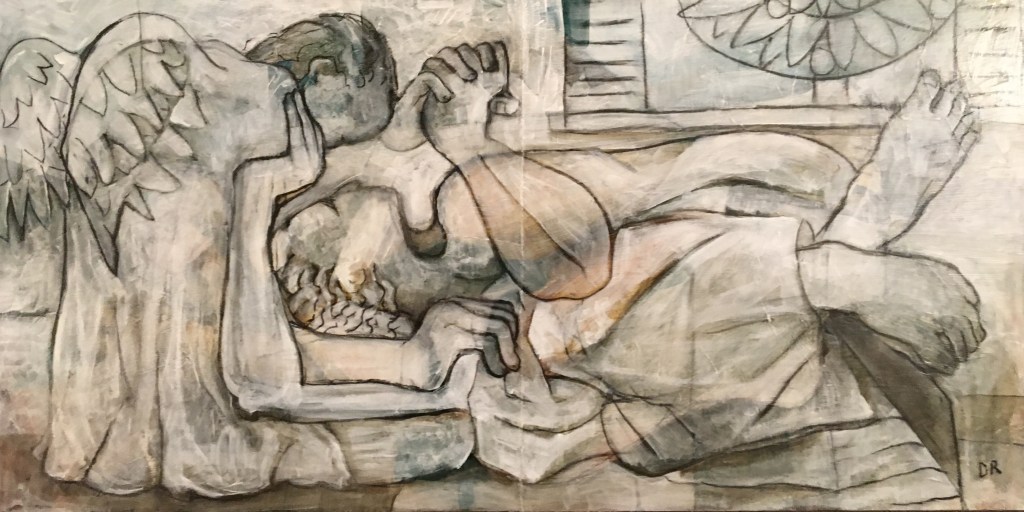
Many years ago, somewhere in the middle of the 1990’s, I painted a portrait of my dad. It is monochromatic and a fairly quick study. In the painting, he is either emerging or returning to the corn. Or both. I can’t remember why I painted him in the corn except that he was born in Iowa and wished his entire adult life to return to the small town where he grew up. Perhaps this is a painting about yearning. Perhaps it is a painting about returning home.

It occurred to me, when I found it while re-stacking paintings after the great studio flood, that I painted this when he was roughly the age I am now. For a fleeting moment I wanted to paint a monochrome self-portrait simply so I might place it across the room. We’d have a staring contest that reached beyond both of our lives.

I chucked the idea for many reasons but mostly because I had no idea what “field” I might emerge from or into? My symbolic return home would be…what? I am not connected to a single place, a tiny town in Iowa or, like Tom Mck, a ranch in California. I have been a wanderer.

I’ve always loved hands. They are, in many ways, more expressive than faces. They are not as guarded and rarely put on airs. My dad was a working man and has working man hands. He was proud of the work he did. It was hard and broke his body but he loved it. It was out of doors under the open sky. He started his career as a teacher and, although he never confessed as much, I think he hated teaching. The classroom was suffocating. He needed to get his hands in the dirt, feel the sun on his face. Even after he retired, as he aged, he sat on the porch in the mornings, he worked his garden or clipped his grass or cleaned his gutters; anything to be outside.

I had a dream many years ago that has stayed with me. My dad and I were free-falling through time. As we fell, he reached out his hand. I stretched out my arm, tried to grasp his hand, but in falling, we were just out of reach. In the dream I stared intently at his hand as I tried to extend my arm, tried to grasp his hand. I knew, if I was successful, if we could catch his hand, it might not stop our fall, but we, neither of us, would fall alone.

read Kerri’s blog post about COLUMBUS HANDS

See The Story [on Not So Flawed Wednesday]

Inosculation is a natural phenomenon in which trunks, branches or roots of two trees grow together. ~ Wikipedia

I’m re-writing my Creatures of Prometheus script. Yaki, the conductor of the symphony, asked that I re-imagine it so the story-within-the-music might better speak to the issues of our day. The original performance was in 2008 and the world has changed mightily since the last time we performed it.

Beethoven wrote his ballet, The Creatures of Prometheus, as a creation story. Zeus ordered Prometheus to fashioned a human male and female. Zeus wanted them to be crudely made, their sole purpose, as he imagined them, was to worship the gods. Instead, Prometheus created something more powerful, more beautiful, more god-like. He knew Zeus would never allow something so beautiful to exist so Prometheus stole the spark of life so he might ignite the hearts of his creatures. That’s how the story begins; Prometheus steals fire to bring life to his beautiful creatures. The rest of the story is biblical. The creatures gain knowledge (separation). The gods corrupt the creatures and teach them division and the game of war, essentially booting them out of the garden. The gods like to watch war games like humans like to watch football on the weekends. It is a story of Prometheus’ punishment for daring to create something so beautiful, so capable, as human beings: he must watch them corrupt themselves for all eternity.

It’s a big story in a big ballet.

I take back what I wrote a paragraph ago. The world hasn’t changed so much. Our ancient and epic divisions and challenges have surfaced. They’ve bobbed to the top. The story Yaki asked me to specifically address is the black-white racial divide in these un-united-united-states. I have more thoughts on this story than I care to admit. And the story I will tell – so similar to the original – is a story of unity corrupted. The revision is a gift from Plato, a seed from The Symposium.

It was a common practice in colonial times, when the wealthy were vastly outnumbered by the locals and laborers – and the King’s army was an ocean away, to divide the commoners along some imaginary line. In the American colonies, the imaginary line was a color line. It’s explicit in our colonial logs and legislation. The fear. The solution. The cleaving. Any gain made by blacks is an automatic threat to white power. It’s a game the gods love to watch, like football on the weekends.

I have long thought that our division is impossible to heal when approached through a racial lens. It acts – and has always acted – as a trigger. Just as it was intended to do. The trigger is built into the system: approaching the racial divide as a racial divide will only serve to reinforce the divide. The division is knit firmly into our national DNA.

A systemic flaw must be addressed systemically. The division was designed in our colonial history because the colors united. For a brief moment the united colors were more powerful than the ruling class. The colors were cleaved and then knit back together through inequity. Keep ’em fighting. The dance of supremacy and suppression. United in discrimination. Unnatural inosculation.

Epic stories always end on a promise. There will be an awakening. The lost brothers will find each other. The Creatures of Prometheus, black and white, divided for the security and sport of the gods, will recognize that they are being used, distracted from their original state, and will join hands and together walk off the field. And only then will the natural inosculation, the branches and roots growing stronger together, become possible.

read Kerri’s blog post about INOSCULATED