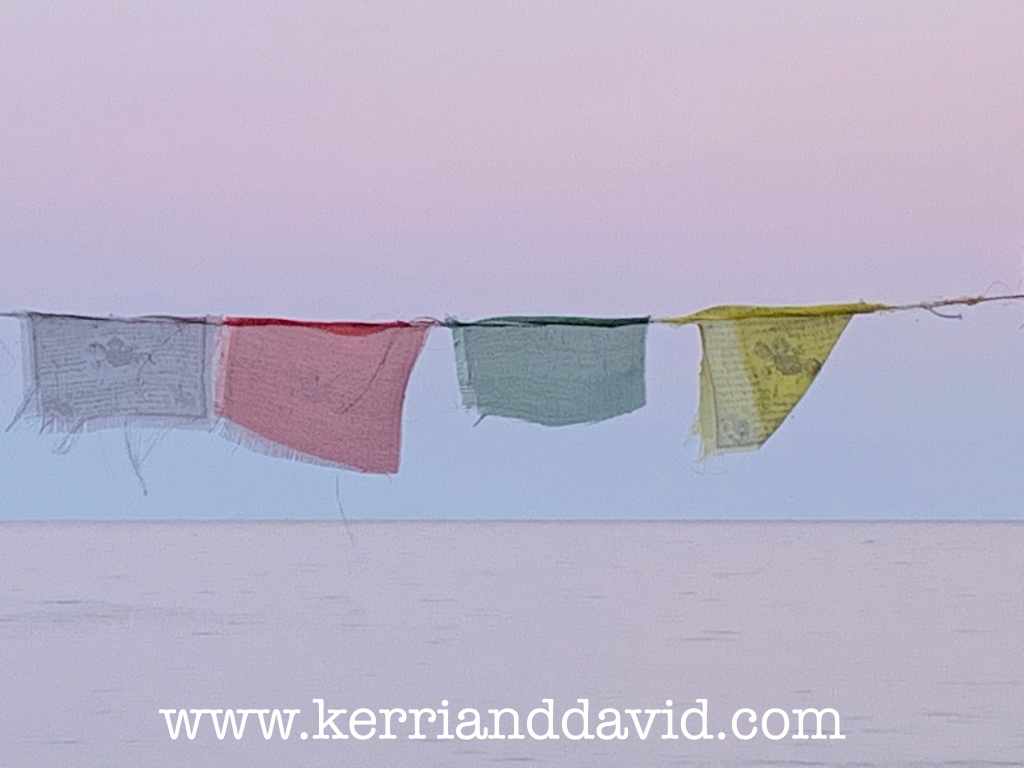
Surface The Pattern [on DR Thursday]

Steve read my book and said he didn’t really understand the thing about pattern. His comment at first surprised me but then I realized he was actually reinforcing the point: we are unconscious to our patterning. We think in patterns. We see in patterns. Culture is pattern. Pattern is invisible and making it visible is a necessary first step in change processes.

The people who surface pattern are often seen by the mainstream as deviant or rebellious. Women demanding equal pay are attempting to make a pattern visible. The BLM movement is attempting to make a cultural pattern visible. Shining a light on longstanding oppression is never welcome in the halls of power.

The people who work to repress the visibility of cultural pattern, conserve the norms, generally claim a righteous superiority. They are keepers of the culture and feel threatened, even victimized, by the sudden visibility of cultural pattern. Exposure is always a threat to the existing pattern and no one relinquishes power or privilege without a fight. The current raft of voter suppression laws – made possible by the fantasy of a stolen election – is a great example. The Big Lie is a textbook example of how far people in power will go to hide a privilege-norm. It is, for us in these un-united states, not a new phenomenon; it is a longstanding well-guarded pattern.

Change happens when the patterns are surfaced. There will always be a tide that rises to extinguish the light of exposure. In the long run, those hardy voices that were, at first, branded as deviant or dangerous, we come to honor and respect. They refused to be silenced. We claim them as our heroes. MLK. Gandhi. Rosa Parks. Cesar Chavez. Susan B. Anthony. There are so many. It is no easy task to surface the patterns. The path of a light-shiner is dangerous and difficult.

John Lewis gave great advice for those dedicated to surfacing unconscious patterns: “Get in good trouble, necessary trouble, and help redeem the soul of America.” He also said that, “…transformation will not happen right away. Change takes time.”

Opening eyes to unconscious pattern, to what is obvious yet unseen, is an artist’s path. Seeing beyond what you think you see…seeing beyond your field-of-dedicated-belief, being curious enough to question what you are being told – can you imagine anything more necessary – more vital – in our age of rabid-misinformation and desperate-pattern-suppression?

read Kerri’s blog post about PATTERN
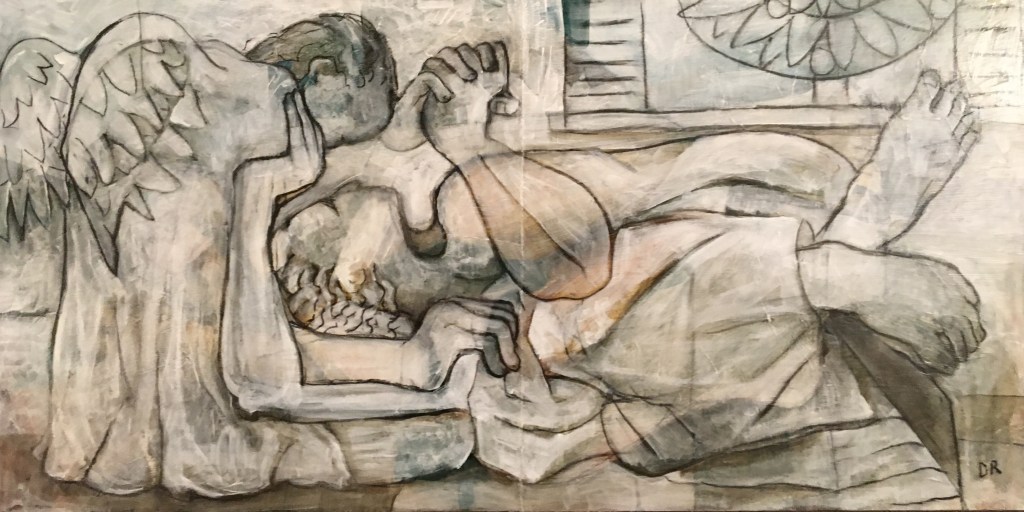
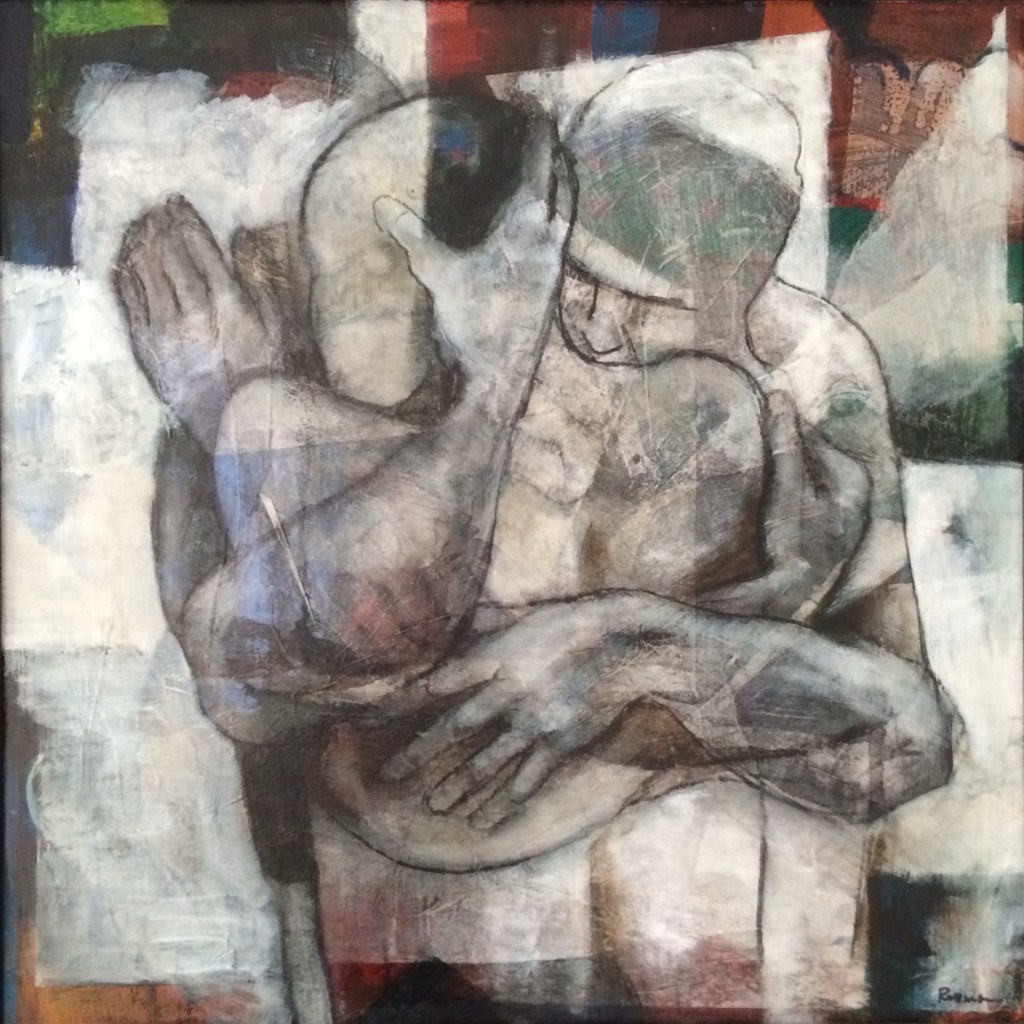
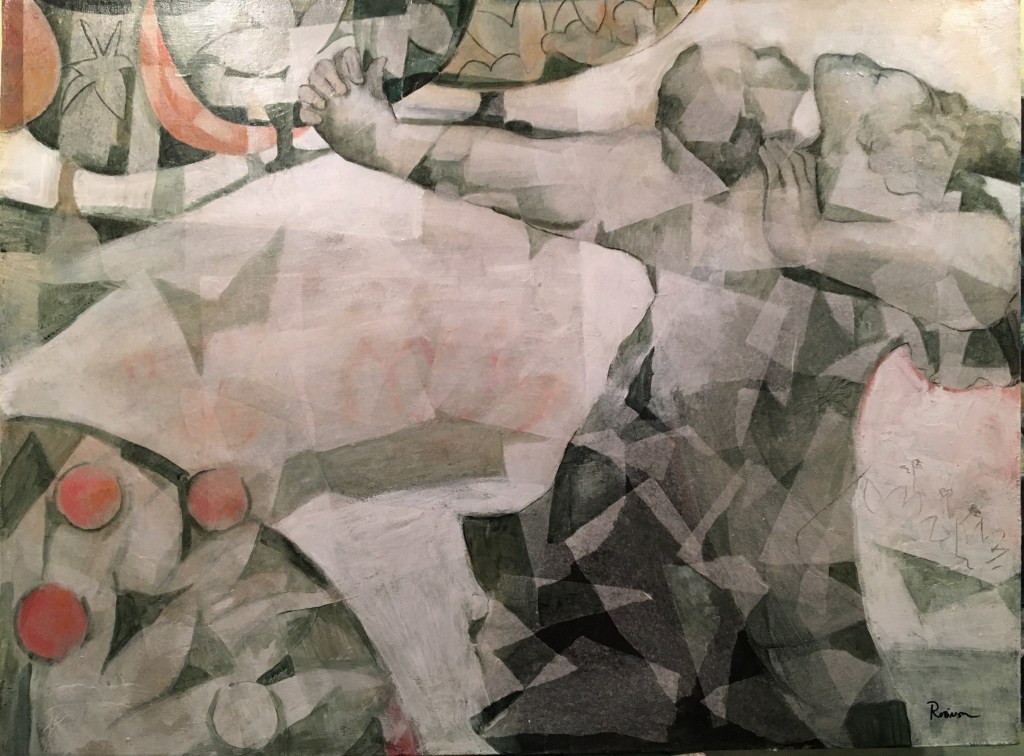
in dreams I wrestle with angels ©️ 2018 david robinson

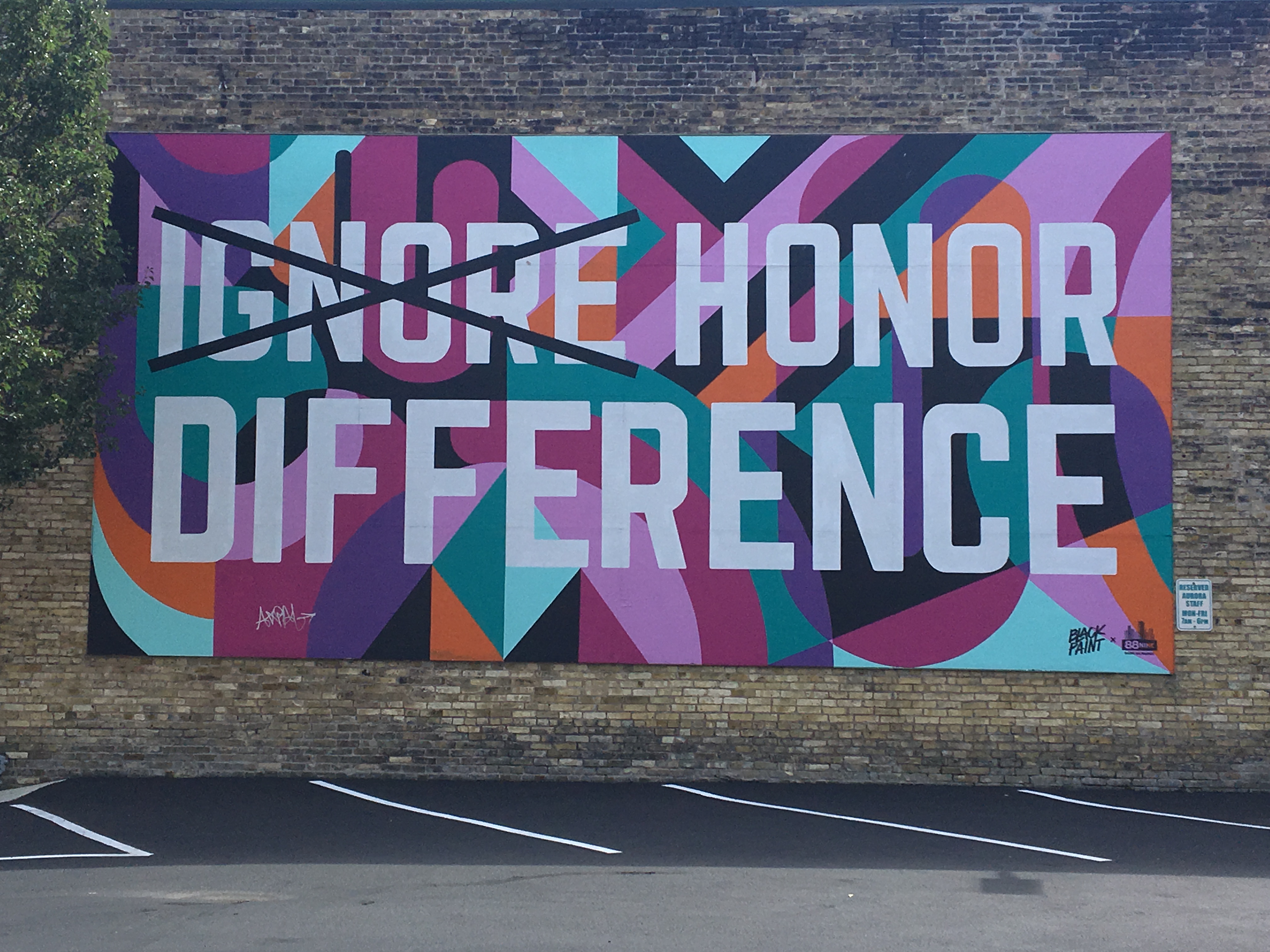
Honor Difference [on DR Thursday]

A Double Haiku:

Honor Difference.

A mural in Milwaukee.

Heart of the ideal.

Infinite palette,

Many hands, many painters,

Eyes that choose to see.

Read Kerri’s blog post about Honoring Difference

helping hands ©️ 2012 david robinson

Compose [on DR Thursday]

Many years ago I attended a workshop facilitated by Sam, a brilliant landscape painter. I was delighted and amused when he demonstrated his technique. Rather than paint what he observed, he took great pleasure in rearranging the elements. He moved the trees, altered the hills, relocated the barn. He laughed while mixing up his elements. His eyes sparkled with mischief. Rather than a workshop on painting, the day became an exercise in joy-in-art. Seeing and playing with what we see.

This morning I read that the word ‘composition’ means “putting together.” Definers-of-art-terms associate composition with freedom. “The artist has freedom when choosing the composition of their artwork.” It is a mistake to believe that compositional freedom is the sole province of an artist. If the mind is a canvas then thought is a composition. It is patterned and composed. Arranged and rearranged. We choose where we place our focus. Point-of-view is cultivated, it is not a default setting. We design the story-we-tell-ourselves-about-ourselves. And, then we project it onto the world.

The trick in both art and thought composition is not to wear ruts in the road. Sam was joyful in his art because he was constantly challenging and engaging with what he saw. Art was fun, not morbid tradition. Art was delight-full, not rule-bound or laden with the pressure to capture. Recall that stepping out of the rut was the first lesson in Julia Cameron’s The Artist’s Way. Morning pages and artist’s dates are meant to both see the ruts and open new paths. The same process applies to the thought-canvas. See the rut. Step out of it.

As Sam taught me so many years ago, seeing and playing with what we see begins with letting go of what we think we see. It begins with a blank canvas, an unfettered mind, and the freedom to choose the composition.

read Kerri’s blog post about COMPOSITION

Unfettered ©️ 2018 david robinson

Light The Dark [on DR Thursday]

Strong contrast between light and dark: chiaroscuro. Renaissance painters loved it. The word ‘chiaroscuro’ literally means light-dark.

Today is Stephen’s memorial service. It is across the country or I would be there. I confess, I am haunted by Stephen’s death. When Mike wrote to tell me of Stephen’s passing, he told me that he was at peace when he died.

I’m not sure why his passing has hit me so hard. The last time I saw Stephen was 1998. He was following MM like a puppy. They were working on a set construction project. That’s what I remember. He was 14 years old, so, in my mind, he is frozen at 14. He was one of a pack of brothers that formed a solid core of Dimension’s Theatre Project, a theatre program that I spent more than a decade resurrecting and nurturing into artistic vitality. Stephen and his brothers were present in its heyday. For me, it was an artistic and learning laboratory, a place of spirited artistic creation. I loved every minute of it.

Of the brothers, I knew Stephen the least. I worked most directly with his older brother, Greg. I prided myself that Dimensions was a safe space. Artists, especially young artists, are vulnerable. They need to know that they can make strong offers, take chances, find their edges, without shame. That means living in and creating a culture of mutual support. The person selling the tickets mattered just as much as the actor on the stage. Every member of the community was directly responsible for the health and well-being of every other member. It is the philosophy I inherited. It is the philosophy I carried forward.

Mike took the reins of Dimensions when I left. He carried on the tradition, made it his own, Changing Faces Theater Company. Mike knew the artist that Stephen would become. The musician. The designer. The man who cared for the health and well-being of others, artistic and otherwise. Mike knew the dark and the light of Stephen’s short walk on the earth.

Usually, when I am confused or need to sort out my heart, I take a break and visit the pond. Magic, the frog, lives there. He’s a good hider but every few days comes out for a visit. After Mike’s news, confused at the depth of my confusion, I went to the pond and hung out for a few minutes with Magic. Dogga was running circles, making my visit safe from marauding squirrels. The sun was down.

“Look at this picture!” Kerri smiled. She’d caught Magic in chiaroscuro, made more dimensional and full in light-dark.

“It’s beautiful,” I said, looking at the photograph.

Light-dark. The Renaissance masters loved it. I smiled this morning when I read Stephen’s obituary. It began with a quote, something he must have often said. His words brought to me what I couldn’t find at the pond. Peace for Stephen. “Proper lighting can change the world.”

read Kerri’s blog post about MAGIC

surrender now ©️ 2016 david robinson

Look Again [on DR Thursday]

I’m not sure when I started using floral shapes and imagery in my paintings. There was Sam The Poet and Eve, trees as symbol.

Sam The Poet, acrylic, 48 x 48IN
Eve, acrylic on hardboard, 48 x 48IN

I know my sketchbooks began filling up with flower shapes and symbolic landscapes. Petals appeared throughout my Yoga Series. Leaf and flower shapes found their way into the bodies as well as the surrounding spaces.

Joy, mixed media, 50 x 56IN

I played with tissue paper over color as a ground for the images. When Tony recently visited my studio, he said my paintings were sculptural, visually commanding. I wrote his words on a scrap of paper since artists are mostly terrible at describing their work. He is an artist so he knows that the proper answer to the question, “Tell me about your work?” is “Go look at it and then you tell me about my work.” He didn’t ask the question; he went straight to the looking.

Tango With Me, mixed media, 39 x 52IN

We walked down a path at sunset. Kerri saw the sunflowers and I knew a photo op had arrived. “You should use this as your Thursday post,” she said, showing me her photo, “because your paintings always have flowers in them.”

Well, good enough, then. Sunflowers, shape and symbol, will find their way into the next painting, I’m sure of it.

read Kerri’s blog post about SUNFLOWERS

copyrights for all paintings in this post, 2010 – 2021, david robinson

Recognize The Greater [on DR Thursday]

strange sky

“Can a shallow mind appreciate beauty?…When the mind is merely concerned with itself and its own activities, it is not beautiful; whatever it does, it remains ugly, limited, therefore it is incapable of knowing what beauty is.” ~Krishnamurti, Think On These Things

What accounts for the strange color of the sky? Smoke from the fires? A coming storm?

The quote above is only half of the thought. It is the set up for the real point to be made. A shallow mind is concerned only for itself. And, while consumed with the lesser, it misses the greater. It is the unintentional theme that emerged for me this week: losing the greater for the lesser. The baby goes out with the bathwater.

It is a matter of perception, of focus placement.

Yesterday I wrote about the judge questioning the potential juror about his capacity to experience hardship in order to keep the system going and growing. The juror entered the exchange with a self-focus and exited, admonished, with perhaps the possibility of seeing something beyond his own agenda. Perhaps.

I read that Rome fell when the luxuries became more important than the essentials. Societies fall when they can no longer discern between what is important and what is not, when the lesser is protected at the expense of the greater.

Years ago, during a facilitation, a young woman pulled herself from and exercise. She sat on the sidelines and brooded. After the exercise, during the debrief, she claimed that she was discriminated against because her team did not listen to her ideas. Initially, her team scrambled to apologize – one does not want to be accused of discrimination. We asked the team to explore the situation a bit further. Because the young woman’s idea was rejected, was she truly a victim of discrimination? It was an illuminating conversation. The problem – the real problem – arises when we can no longer discern between what is discrimination and what is not? There is terrible discrimination in our world and needs to be addressed. It can’t be seriously confronted if we are incapable of distinguishing between the rejection of an idea and laws that prevent citizens of color from voting.

In a pandemic, a mask is not a breach of personal freedom. It is not the state ripping away control of your body. It is a minor inconvenience to ensure the mitigation of a virus that is killing scores of fellow citizens. Despite the rhetoric otherwise, the fearmongering and tribe-building, wearing a mask is something done for the health of the whole. It is not unlike jury duty.

It is a matter of perception. Of focus placement. Self or other? Lesser or greater?

The rest of the quote: “Whereas, a mind that is not concerned with itself, that is free of ambition, a mind that is not caught up in its own desires or driven by pursuit of its own success – such a mind is not shallow, and it flowers in goodness. Do you understand? It is this inward goodness that gives beauty, even to a so-called ugly face.”

Pay attention to the verb. Beauty is given. Concern for the well-being of the other is a sentiment expressed and championed in every corner of the world, by all the figures we quote, elevate, and sometimes emulate. Martin Luther King, Ghandi, Abraham Lincoln, Mother Teresa,…it’s a very, very long list.

Communities thrive when they are capable of enduring hardship for each other, for the benefit of the whole. They also thrive when they hold boundaries and protect the rights of the individuals. Those two seemingly different actions are, in fact, one and the same.

Societies fall when shallow minds prevail, when they can no longer discern between essentials and luxuries, privileges and responsibilities. When personal comfort takes precedence over enduring ideals.

It’s a matter of perception. Of focus placement, and make no mistake, focus is easily led. Just like a package of pastrami mistaken for a strange colored sky.

read Kerri’s blog post about PASTRAMI SKY

shared fatherhood ©️ 2017 david robinson

See The Spaces [on DR Thursday]

The space around and between. Shapes that share edges. Emptiness that provides definition. In art it is called negative space. Not-the-object. In art classes, students draw the negative spaces in order to see or to learn a new way of seeing. Try it. See the holes and the space around the leaves as primary. It’s not as easy as it sounds.

Some folks use the term “air space” because they get snagged on the word “negative.” It’s a term of opposition when set next to “positive.” Yet, just as there is an electric field that flows between negative and positive ions, electrons and protons, there is a field that flows between negative and positive space. Yin and Yang. A dynamic polarity. A creative field of movement and energy. The air space is alive because of the perceived opposition. The positive space is not visible without the negative.

When I was a consultant, I used the phrase “the space between” to imply relationship. There are people. There is the space between people. Relationship is invisible but it defines the people. Relationship illuminates the otherwise unknowable individual. They are impossible to separate. In a community obsessed with nouns, bottom lines, test scores and individual rights, the verbs and the relationships often go unnoticed and unappreciated. As if the negative space didn’t matter. The space between is where the movement lives and the problems are solved. It is where new seeing is possible. It is created and creative. The word “community” lives in the space between.

Try it. Take a day and focus on the space between. See relationship as primary. You may experience a whole new way of seeing.

20 sent this image,a memorial. It makes the point.

read Kerri’s blog post about NEGATIVE SPACE

iconic ©️ 2010 david robinson

Sit On The Curb [on DR Thursday]

As much as our wily-ole brains would like us to believe otherwise, we can be nowhere else but in the present. Everything else is imagination.

Years ago I belonged to a support group of independent consultants. We met once a month to discuss our business challenges, insights, and to give and receive some advice. One of the members of the group was a Byron Cady coach. I have no memory of the discussion that prompted her to offer this Byron-thought-metaphor: “If your house burns down, rather than race around in panic, the best thing you can do is sit on the curb and appreciate the moment.”

To the consumer-mind, wisdom often sounds like bad advice. That you are alive, that you have this moment, means that no real possession was lost. The question is, in the face of calamity, what will you make of the moment?

Brother Joseph told the story of holding a woman wearing expensive furs, each finger was diamond encrusted, as she died on the street. He was, in the moment, overwhelmed by the worthlessness of her stuff. The illusion of value once life has gone.

Life. This moment. Calamity is certain to come. Sit on the curb and see what is there, beyond what you think is there.

We’ve had our share of adversity these past few years. I would like to report that we laughed heartily in the face of lost jobs and broken wrists and pandemic madness and civil unrest. We did not. We shook our fists at the sky. We made up words and ran loops like Chicken Little. We invested in all manner of fear-of-the-future and ran from monsters-of-the-past. None of our racing around or fist-shaking brought comfort or change.

But, the moments that we took a breath, walked a trail or sat on the back deck and listened to the cardinals and crows, sipped hot coffee on cold mornings, held hands – sat on the curb and appreciated the undeniable truth of our moment: we have everything. We have this moment – the only moment of life that we’ll ever inhabit. We have each other. The rest, the fear of future, demons of the past, are pure imagination. In those moments, wrapped in a circumstance of calamity, we laughed at the beauty of it all.

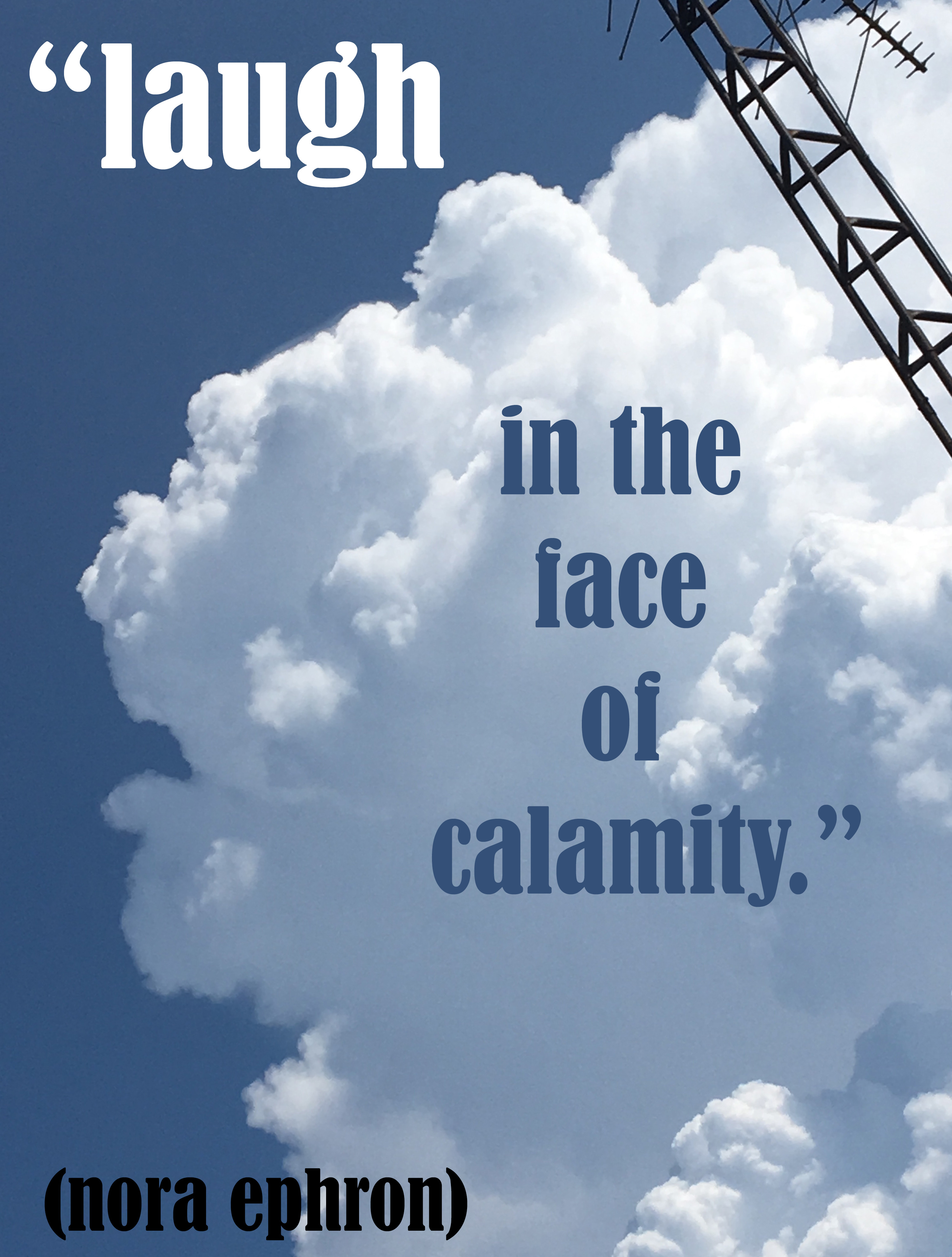
read Kerri’s blog post about LAUGH IN THE FACE OF CALAMITY

Meet The Frame [on DR Thursday]

“There are people who prefer to say ‘yes’ and there are people who prefer to say ‘no’. Those who say ‘yes’ are rewarded by the adventures they have. Those who say ‘no’ are rewarded by the safety they attain.” ~ Keith Johnstone

A violent storm blew through so we spent the night hunkered down in the basement. We had very little sleep. Sleeplessness always leads me to moralize and for that, I apologize.

A frame of reference is a powerful thing. Experiences are interpreted through a frame of assumptions. We are witness to a time in which verifiable reality is denied because it doesn’t jive with the tribal frame.

Master Marsh passed along this quote from E.O. Wilson’s Sociobiology: “(Humankind) would rather believe than know.”

Knowledge often challenges the frame. That is the point of knowledge. Growth. And growth is always a challenge to what was formerly believed possible.

It is somehow easier to lapse into a conspiracy theory, demonize an other, deny what is indisputable, than it is to allow that the frame is just that, a frame. It’s not a truth. It’s a context. It’s a binding agent. Culture is a frame of reference. Religion is a frame of reference. What we believe of ourselves is not a fact. Identity is a frame of reference. Democracy is a frame of reference. Autocracy is a frame of reference. Supremacy is a frame. Equality is a frame. Every-man-for-himself is a frame. Brother-and-Sister’s-keeper is a frame.

None are truth. Frames are creations. Agreements. Aspirations.

Frames that allow for challenges, for growth, are sustainable. Those that do not, those that deny insight, fact, data, new knowledge, those that are threatened by opposing-point-of-view, inevitably collapse in their denial.

The fire burns. A garden hose is not an effective defense, regardless of belief. Temperatures rise relative to emissions. Rain forests disappear. A lie undermines the foundations of democracy. Believe it or not. Harry Truman sat in his cabin nestled into the mountain called St Helens. Despite repeated appeals from fleeing neighbors, repeated rumbles and tremors, warnings from scientists and safety personnel, he believed he would be safe, that his mountain would never erupt. Traces of Harry have never been found.

So it goes with the denial of believers. Frames held too tightly blind rather than reveal.

Every artist knows the transformative power of a frame. A frame can make almost any scribble look substantial. A cheap frame can diminish the greatest masterpiece.

New knowledge meets an old frame. Growth or entrenchment? Blind acceptance or emerging possibility? Yes? No? Both?

read Kerri’s blog post about FRAMES

held in grace: surrender now ©️ 2016 david robinson

Come To The Table [on DR Thursday]

Duke and Eileen sat at this table for many years. And, because St. Vincent de Paul wouldn’t take it for second hand sale because the top had dings in it, it rode around in the back of Big Red for many months. We forgot it was there.

When Covid roared in and the world shut down, we wanted to put a table in our sun room. That way, we could sit and look out at the day. We thought it would help buoy our spirits while in isolation. In the middle of wondering-out-loud where we could possibly get a table in a world-shut-down, we remembered that Duke and Eileen’s table was camping out in the back of Big Red. It was a perfect fit.

It began the transformation of a room that has become our favorite place in the house to sit and hang out. We’ve populated our former work table with plants. Duke and Eileen’s table is also home to many succulents and a Bonsai Gardenia sent as a birthday present from Kirsten and Chris. We resurrected an old fountain so the sound of peace is the sound of gurgling water. There are candles. Special rocks from special places. Water, earth, fire, and air; lots of air. We’ve created a sanctuary.

Watching Kerri and 20, Duke and Eileen’s son, sit at the table filling out paperwork for Eileen, I was struck by the circle coming back around, the story that this table might tell. 20, sitting at his mom and dad’s table, now center to our sanctuary, doing the work of a son to care for his mom.

It also occurred to me, standing outside, looking in at these two siblings-from-different-mothers sit at the table filling out forms (Kerri and 20 are truly brother and sister), that in the midst of “living in interesting times,” our response to the pandemic, to civil unrest, to our town literally being on fire, amid job losses and wrists breaking, has been to create a place of peace. A center of quiet around which the chaos spins.

“Make all the world your studio” was once – and still is – a mantra for me. And, now at the center of my spinning-world-studio is an intentional space, a bright and happy room bringing together all of the elements, built around the long history of comfort etched in the top of Duke and Eileen’s table.

read Kerri’s blog post about THE TABLE

meditation, 48x48IN, mixed media, 2012

meditation ©️ 2012 david robinson