Extend The Peace [on KS Friday]

Most of my life I’ve been an apartment dweller. A studio liver. Since moving to Wisconsin, into a house, I’ve had a yard to tend. I’m not very good at it but I confess to enjoying the work. I like being outside. Pulling weeds has, I’m slightly worried to admit, become a meditation.

Since Dog-Dog is a gifted destroyer of backyards – digging holes, wearing multiple velodrome paths in the grass – tending the yard has mostly been reactive. My actions are determined by his actions. Let’s just say I don’t worry too much about winning the lawn Olympics. I doubt that I’d qualify.

In the past year, in addition to the inside of the house being wrecked by interior waterfalls and other surprises, outside our yard, front and back, has also been blown to smithereens. We are slowly digging out. We are slowly putting the pieces back together again. And, we’re doing it at a time that Dog-Dog is slowing down. These days he’d rather sit in the shade than cut a new velodrome.

So, we’re designing our space. We’re extending the peace we created in our sunroom into the yard. Last year, our peace spilled out onto the deck. Now, with the addition of the back fence, our peace is pressing the lot line.

I was surprised to learn that Kerri has hosta preferences. She’s not a fan of the variegated variety that lined our yard. Bert and Sue gave us those plants from their yard. We were trying to get something – anything – to grow. Sally gave us ferns and day lilies. We rolled those down third avenue in a wheelbarrow. Now, with everything in disarray, we have a blank canvas.

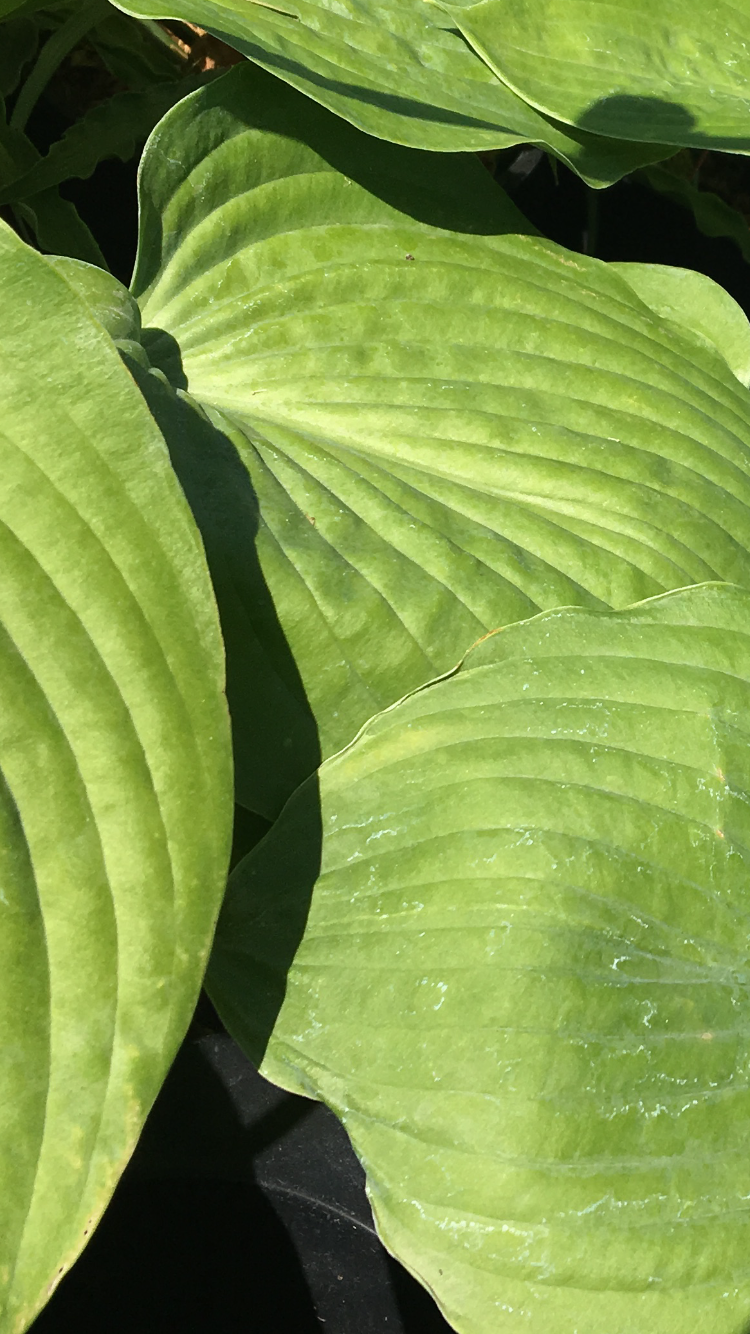
With tall grasses as the center of her design, she pulled me across the nursery to see “the right hosta.” There’s a certain shape of leaf. A certain color of green. “Look,” she said, pointing out the differences. “Don’t you love that?”

What I love is the specificity of her compositional eye. She tells me that the grasses will dance and pop against the white fence. The green – not any green – but the specific green of the hosta will sing next to the swaying grasses.

Hosta singing. Grasses dancing. Out of the ashes…design, and peace that reaches all the way to the fence.

read Kerri’s blogpost about THE RIGHT GREEN
Kerri’s albums are available on iTunes & streaming on Pandora

longing/as it is © 2004 kerri sherwood

Protect The Heartwood [on DR Thursday]

Conk!

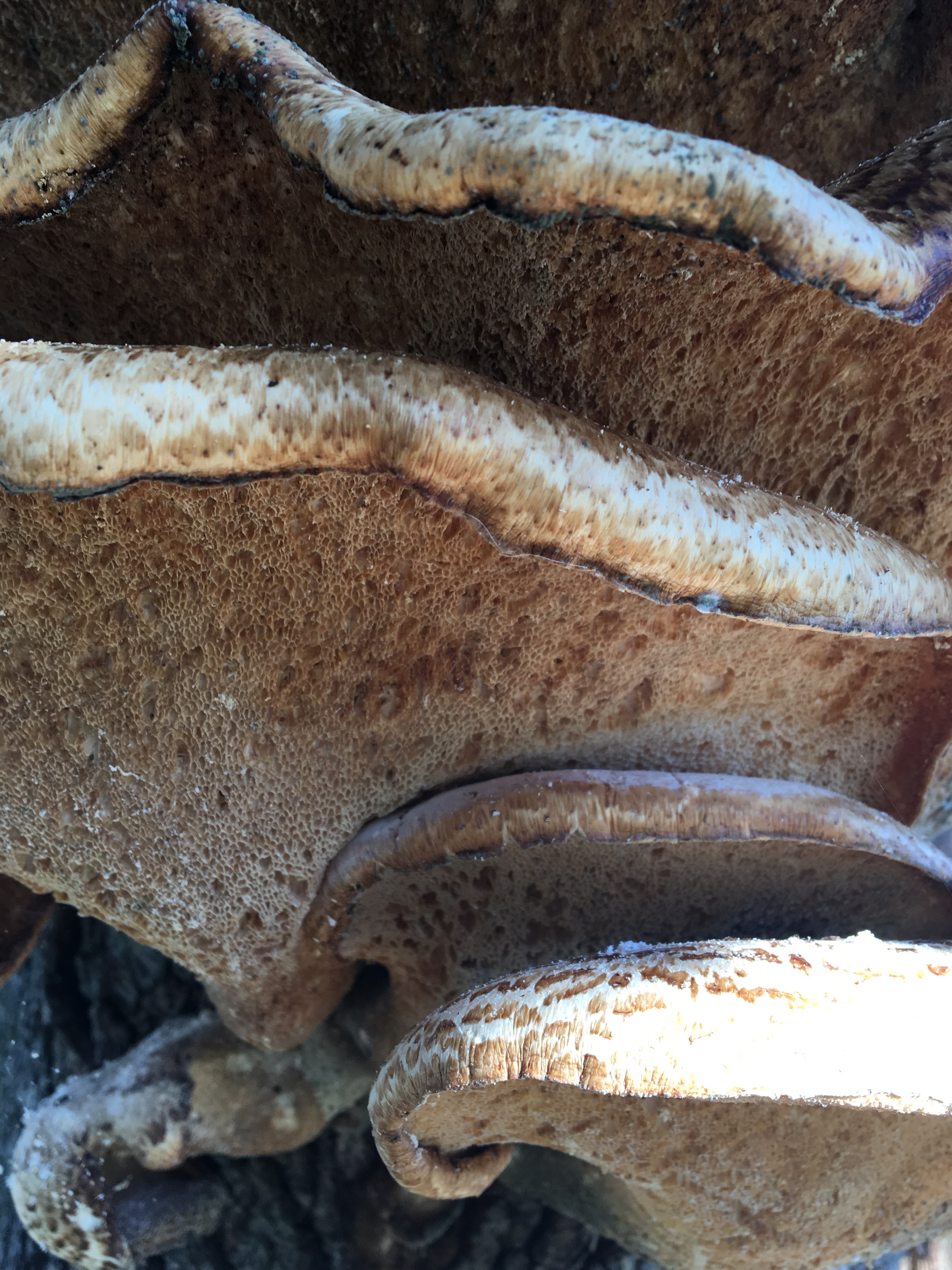
No, that is not cartoon-speak for being hit on the noggin. It’s a formal name, the body-shape of the shelf-fungi that grows on local trees. Not having grown up here, the first time I saw them, I thought they were aliens. Trees with tongues. A Little Shop of Horrors; Audrey II. Get too close and tree-Audrey would feed on me. Conk! Chomp! (burp).

Polypores. Now, there’s a word that rolls trippingly off the tongue – and is made more fun because polypores actually look like a tongue. Shelf-fungi (a polypore) is not a good thing if you are a tree. In fact, it has no interest in feeding on me but consumes the heartwood of its host.

Heartwood.

I’m not kidding when I admit that, in passing this shelf-fungi, I imagined the conks to be visible stories. Each conk represented a story of insecurity or fear. The stories that feed on our heartwood. What would we look like if our conk-stories where visible on our trunks?

If the rot-story was visible, what might we do to tell a self-tale intended to protect our heartwood and eliminate the conks? How might we help our children tell life stories of self-love, knowing they’d wear their conk-stories? How might we address our neighbors? What would we do to protect the heartwood of the forest from wearing rot-stories?

I think I’ll stop there. Conk!

read Kerri’s blogpost about SHELF FUNGI

shared fatherhood © 2018 david robinson

Discern [on Not So Flawed Wednesday]

It’s a little over two miles to Steve’s garage. When we drop the car for a repair, especially in the early morning, we like to walk home. The route takes us by the lake. We take our time, more stroll than stride, and breathe in the early morning quiet.

We are dedicated walkers. We’ve become dedicated seekers and creators of quiet. It’s as if we are counterbalancing the crazy-noise-of-the-news with a stalwart sanctuary that we take with us wherever we go. We walk slow enough to notice. We walk slow enough to appreciate.

There is, of course, a direct correlation between pace-of-movement and paying attention. It’s hard to smell the roses when racing through the day. Lately, much of my work-in-the-world involves addressing information overload. The pace-of-movement need not be physical, it also applies to the river of information rushing across our screens. It’s no wonder we’re angry and anxious and aggressive. I’ve adopted a phrase from my colleague, Greg; he calls the info-torrent More/Faster. We live in the age of info-gluttony and have difficulty discerning between what has nutritional value and what is dross.

Until we slow down. There is a correlation between the pace of movement and peace-of-mind. There is a correlation between pace and the capacity to determine relevance.

It’s why we walk to or from Steve’s Garage. It’s why we end the work day holding hands and walking the neighborhood. It’s why we begin each day sitting side-by-side writing. To slow it down. To discern relevance in a fast moving info-river of dedicated draff. To see what matters in a More/Faster world racing too fast to see anything at all.

We smell flowers. Feel the dew on leaves. Turn our faces to the sun as it reaches through the morning clouds. Real stuff. Stuff of the moment. The small discoveries available when racing to the next thing is the last thing you want to do.

read Kerri’s blogpost about MORNING SKY

Make [on Two Artists Tuesday]

“The origami crane has become a symbol of peace.”

Fold 1,000 cranes and your heart’s desire will come true. Legend will have it so. In Japan, the crane is a symbol of good luck and long life.

Making something into something else. Folding paper into cranes. It is, perhaps, the quality that defines us, makes us human. We turn the flow of water into the force driving the mill. We study patterns in stars and translate it into navigation. We smelt ore and hammer the elements again at the forge to make iron. We use the iron to make trains.

We make.

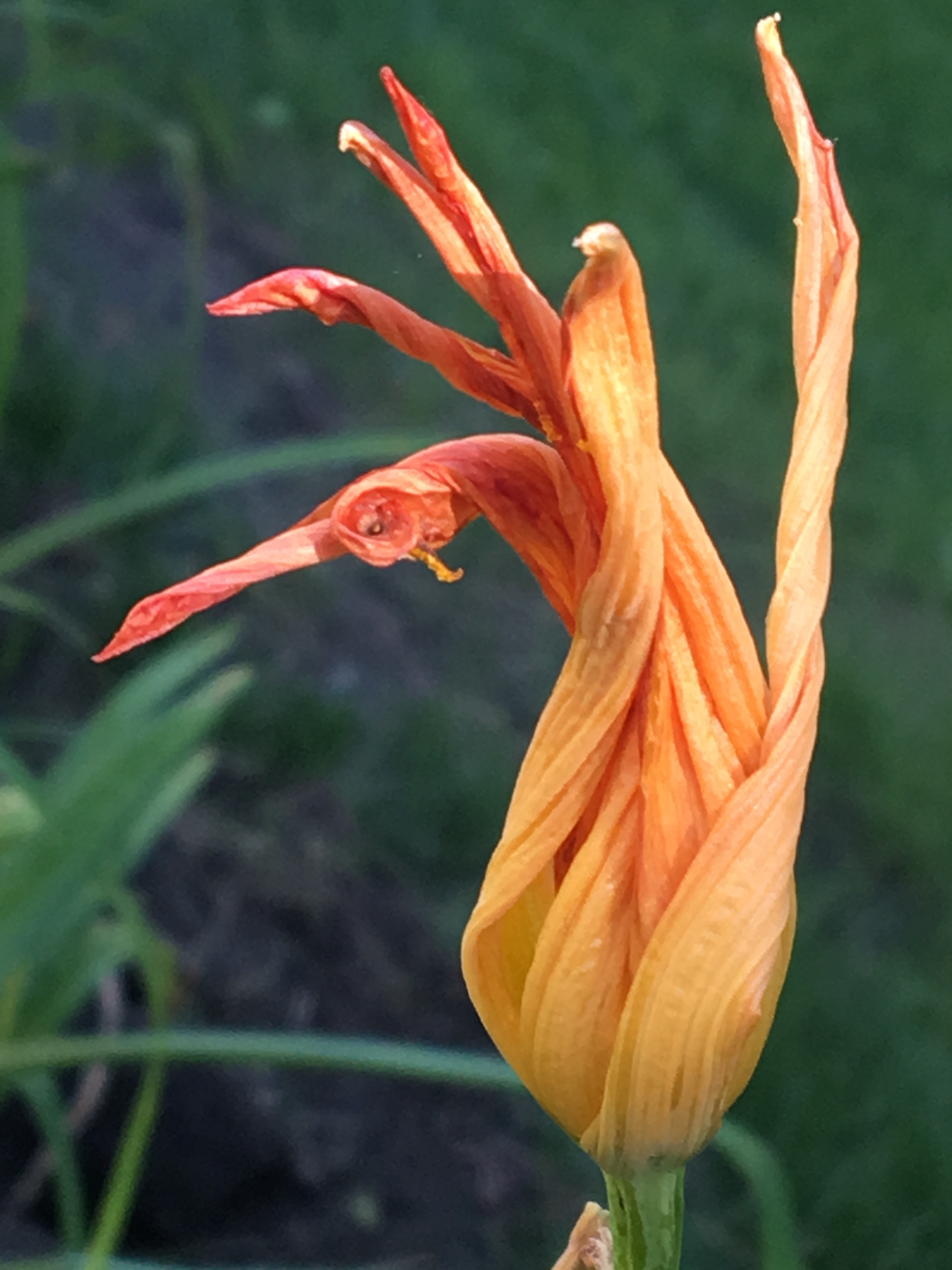
We look at flowers and see cranes. We look at clouds and see wild horses. We look at blank canvas and see possibility.

We make stories.

Our storymaking cuts both ways. We look at others and see friends; we look at others and see enemies. Either way, our looking is not passive. We make stories. We make connections. We make divisions.

We make wishes. Fold 1,000 cranes and your heart’s desire will come true.

Reach your hand to help. Slap a hand away. Either way, it depends on what story you see. What you want to make.

The story we create.

Folded paper. A symbol of peace.

read Kerri’s blogpost about CRANES

Teach The Full Story [on Merely A Thought Monday]

Viewed from space, the earth is round.

That simple fact has led some truly dedicated reality-deniers to the startling conclusion that the earth is flat. They argue that it’s absurd to think that half the population of the earth lives upside-down. Of course, no one has yet been able to prove that there is a top or bottom to the universe so it’s anyone’s guess which hemisphere of the earth is right-side-up and which is up-side-down. Be careful on those vacation cruises not to sail too close to the edge.

The Republican party in these un-united-united-states have become the political equivalent of flat-earthers. Cherry-picked half-data spun by a dedicated-nonsense-media into a Flat Stanley reality. Two-dimensional thinking in a three-dimensional world. It’s a problem. It’s a scary problem. The good ship USA is on course to meet the edge while the captains on the bridge wrestle for control of the steering wheel.

What is the steering wheel? The story we tell ourselves about ourselves. Our history. The Manifest Destiny story is meeting the realities of demographics. The party of white-dominance is in a panic to maintain its story of supremacy. They’d rather run us over the edge than let this richly diverse nation fulfill its promise. Fulling the promise begins with telling the full story. In Florida, the governor has literally banned the schools from telling the full history of this nation.

In other times, more clear-headed times, these laws would be acknowledged as authoritarianism. In our times, it’s marketed as the Republican response to “woke-ness.” In other words, education is the enemy. Stick your head in the sand. Hear-no-evil-see-no-evil. Proclaim the earth is flat or be prosecuted.

It was inevitable. The rhetoric of “All men are created equal” would someday need to reconcile the reality of a system built on the institution of slavery. Our forefathers wrote about it as the single greatest threat to the survival of our nation, this vast difference between our rhetoric and actions. In a school – capable of teaching our history – that would seem to be a very important and timely history to explore.

Systems do what they are designed to do and ours has performed as intended, elevating one group while suppressing others. It’s in our legislative record. It’s in the writing of our founders. It’s history.

For the second time this week I’m using this phrase: As I learned in school, systems are living things and will fight to the death to maintain themselves. We are watching a system – our system – fight to the death to maintain itself. In this fight, it will lie, cheat, scratch, steal, bite and squeal. It will incite fear. It will turn citizens against other citizens. It will whip up division and demonize those it brands as “other.” It will toss away all ethic and morality to maintain itself. It will make laws to protect itself. We are witness to it. We are participants in it.

The national story will maintain itself as flat, or, at long last, take a hard look at itself and change.

I was truly alarmed when I read that teachers in Florida are afraid to teach the history of the United States.

Our nation is round. Plump and full of rich diversity with a rich complex history. It is, after all, the reality of our nation, the story we are living. It is the reason for our successes – cultural crossroads have always been places of innovation. Perhaps it should be the story we at long last embrace. Perhaps, rather than muzzling our story, legislating for white-fragility, we will someday – as a nation – be proud of our iridescence and work to tell our full story rather than the flat-lie the reality-deniers are asking us to swallow.

read Kerri’s blogpost about BE

Remember [on saturday morning smack-dab.]

It’s taken some time but Kerri has, at last, taught me a hard-to-learn-lesson: when I am to listen versus when I am to listen and give voice to a thought (sometimes known as “Offer advice”).

The challenge: the cues are not readily apparent. To misread the cue is to unleash certain havoc.

This, in a nutshell, is what I’ve learned: In 100% of the cases, listen and nod. Say nothing that is not the verbal equivalent of a nod. These moments that seem-to-my-eyes like problems-to-be-solved are never what they appear.

Boil the nutshell down to its essence: nothing needs solving. There are no solutions required so don’t offer any. There are only four words that are universally useful. It. Will. Be. Okay. (variation: We. Can. Do. It) (Bonus word: Together).

Now, if only I’d remember my hard-learned-lesson when I most need it. Remembering is not so easy.

read Kerri’s blogpost about ZEN-GEN!

smack-dab. © 2022 kerrianddavid.com

Learn A Thing Or Two [on KS Friday]

A decade ago I wrote and self-published a book. I called it The Seer. The see-er. A few days ago I pulled it off the shelf and began a slow-read-through. It’s a good book! I’m actually learning a few things from my younger self.

Yesterday I made a spreadsheet (I’ll never again confess to making a spreadsheet so appreciate this moment). The purpose of my spreadsheet was to build a database for Kerri of the cartoons that I’ve drawn for work. She takes my pencil drafts and digitizes them, colorizes them, and adds some quirky dynamics. They begin as mine and complete as ours. To finish my database it was necessary to open every file and look at each cartoon. They made me laugh. I’m proud of those cartoons, our work. I’m excited to share them beyond the small circle of eyes that currently see them. I know I’ve learned a few things because they are so simple.

We have a few sparse analytics on our blogs so can see when someone reads a post from the deep past. Lately, when someone reads a post from several years ago, we read it, too. “Where did that thought come from,” Kerri asked herself after rereading her long-ago-post. Often, after I dive into the archive, I want to rewrite what I read. I’m a much better writer now that I have a great editor reviewing my posts every day. The grammar police should have sent me to the gulag years ago. I am fortunate now to have a daily read through and revision with the-daughter-of-beaky-who-won’t-tolerate-improper-grammar. It’s too soon to know but I might be learning a thing or two.

We had occasion to revisit 2015. We didn’t mean to but were looking for a picture of a lanai and a pizza. It was the year we produced and performed The Lost Boy, illustrated and produced the first of Beaky’s books, we lost her a few weeks after the book release party, we were married in the fall of that year, we inadvertently created our first cartoon character, Chicken Marsala. “We’re content-creating monsters,” I said during our reminiscence. “We’ve learned a few things,” Kerri replied.

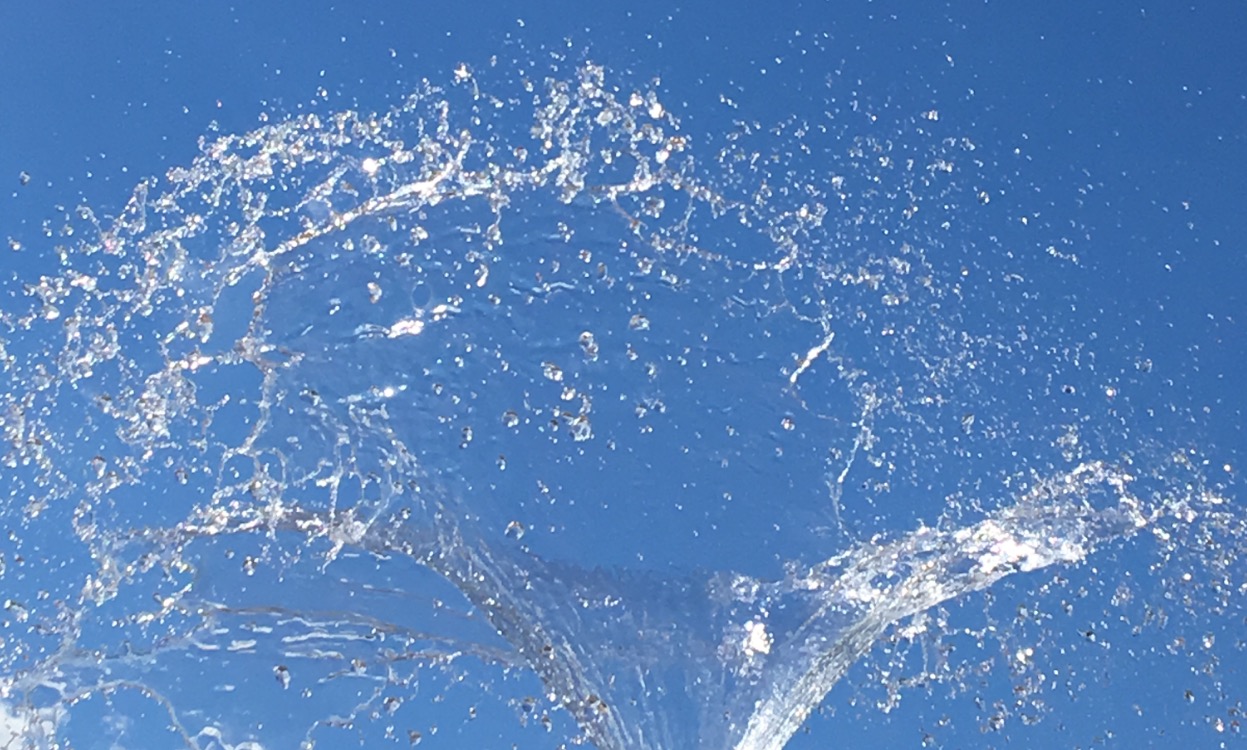
We walked to the channel. The last time we took this walk was before Covid. It seemed like a stroll into the past. A walk into a former life. So much has changed. We stopped at the waterpark to take some photographs. Children danced in the fountains. Parents smiled. Innocence at play. Elders occupied benches.

“Look at this,” she said, showing me the picture of the fountain. “I think maybe I’ve learned a thing or two.”

read Kerri’s blogpost about THE FOUNTAIN

kerri’s albums are available on iTunes & streaming on Pandora

good moments/this part of the journey © 1997/2000 kerri sherwood

Find The Universe [on DR Thursday]


“There is nothing more truly artistic than to love people.” ~ Vincent Van Gogh

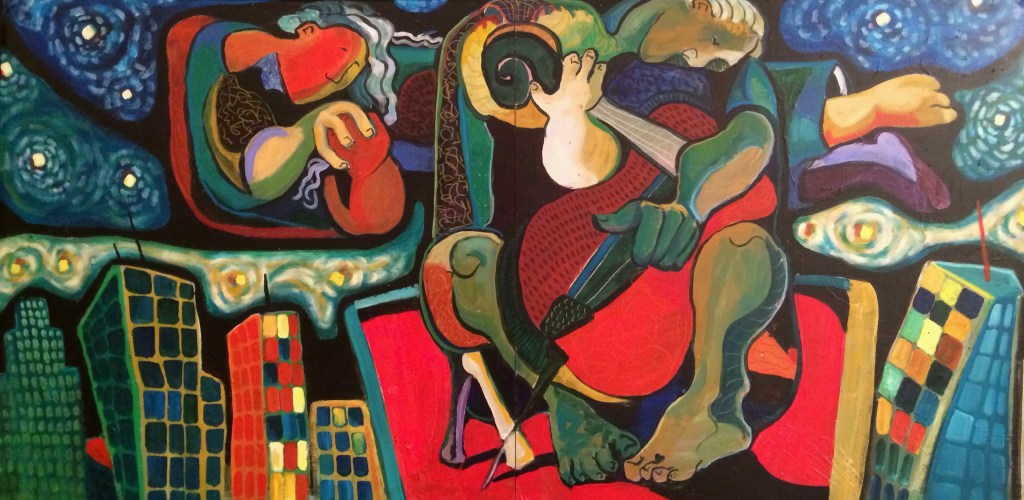
I don’t know why but Van Gogh is lately on my mind. He died at age 37. Most of his paintings came through him in the last few years of his life.

He wrote letters to his brother. That’s why we have so many of his words. His contemporaries thought he was mad. They had plenty of evidence of his mania so that was what they saw. Crazy Vincent making crazy paintings. Nothing serious. Swirls of color in an age of dreary.

Only a crazy man would assert that artistry is to love other people, right?

As a young man he was an art dealer and his experiences in the market drove him to become a missionary in Belgium. The art market drove him to religion and he found religion so depressing that he started to paint. This, of course, is my telling of the tale.

Like Vincent, run to the edge of society. Run to the very margins, turn around and look. What do you see?It’s enough to make anyone turn away from sane society and start painting swirls of color. You’re certainly crazy if you consider society and its politics sane. Right?

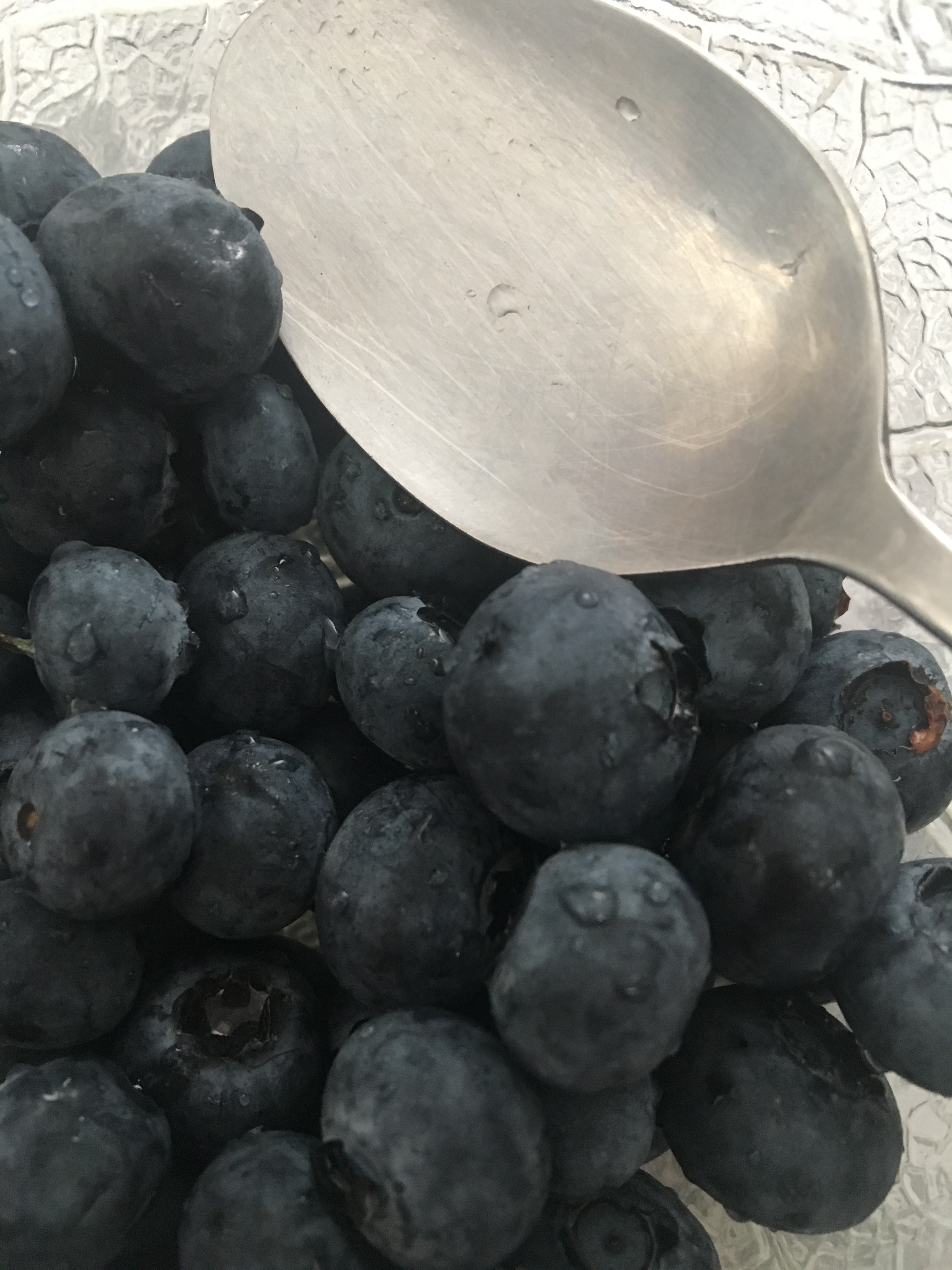
Vincent painted and moved further out, beyond the margins. Beyond the power games and posturing. The pretending-to-be. He left behind the Joneses. He found entire universes in simple things: sunflowers, the night sky. Bowls of blueberries.

He must, at the very end, have turned and looked back, again. This time seeing through the eyes of a painter. Was it wishful thinking that he saw artistry as love? Was it a prayer for humanity?

Oscar Wilde, Vincent’s contemporary, a man brutalized by the society that once adored him, wrote, “Art is the only serious thing in the world. And the artist is the only person who is never serious.” Oscar tried to live on the margin and in the center, all at the same time.

Love makes us giddy. It helps us drop our pretense and gaming. I think Vincent saw, not through the lens of madman, but life without a lens., into pure life, pure love. Swirls of color. Entire universes in bowls of blueberries and in other people. Artistry.

read Kerri’s blogpost about BLUEBERRIES

bass player © 2002 david robinson

Take One More Step [on Not So Flawed Wednesday]

Tom and I spent many hours on the deck of his cabin at the ranch watching sunsets. It was during those moments of waning light that he’d reminisce about his life in education and the arts. “To this day I am in awe of what many of my students taught me about perseverance.”

The teacher as student. The lesson – both ways – was tenacity in the face of monumental difficulty. Tom climbed metaphoric mountains in a system dedicated to hurling avalanches against his progress. His was an innovator’s path. He kept climbing, I learned during our sunset talks, because his students inspired him. Some achieved their mountaintop against all odds. In many cases, the mountaintop was – to other eyes – as seemingly simple as showing up for one more day. They kept climbing so he kept climbing. Showing up for each other. A feedback loop of tacit encouragement. They kept climbing because he was present on the metaphoric mountainside every day.

His students inspired him. He inspired me. An ancestry of inspiration.

I might have imagined it. The chipmunk butted in line at the bird feeder, sending the toddler cardinal fleeing to the safety of the Adirondack chair. More birds gathered while the chipmunk gorged. In a moment of chipmunk consciousness, he turned, looked at the growing assembly of hungry beaks, turned back to the feeder and, like Santa Claus, began kicking mounds of seed to the ground. Chipmunk potlatch. Bird extravaganza. Every critter had their fill.

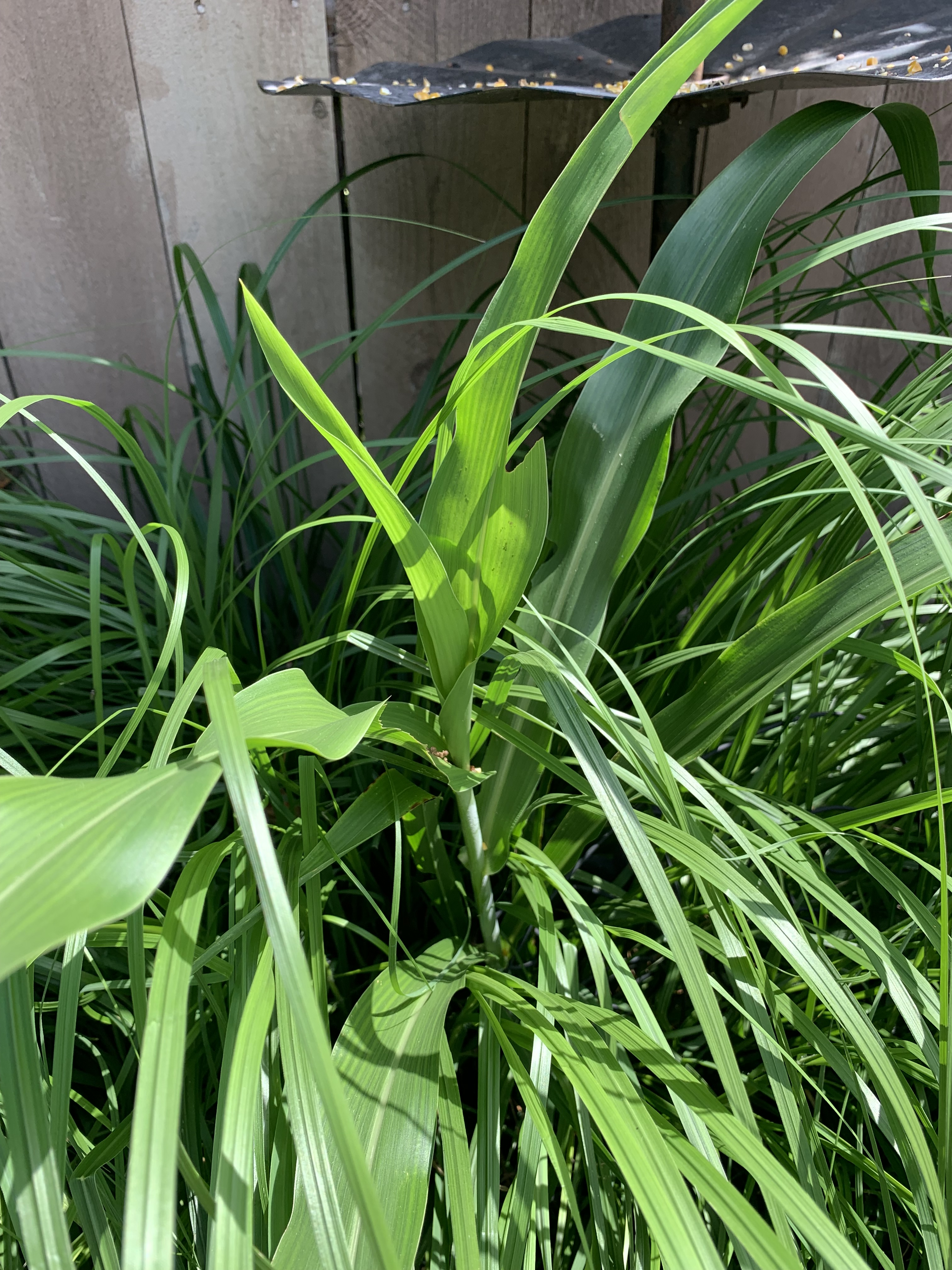
Weeks later, while weeding the garden, Kerri called across the yard: “I think we’re growing corn.” she said. I joined her at the row of dense grasses growing beneath the bird feeder. A tender stalk, against all odds, found enough sun and water to reach through the thick resistance. Nature amazes me. The impulse to life, from chipmunk-seed-toss to corn stalk pushing through impenetrable grasses.

It brought thoughts of Tom. Seeds planted. Mountains to climb. The sunset, glowing orange and pink across his face, he’d smile, “Often the secret is nothing more or less profound than taking the next step, showing up for each other one more day.”

read Kerri’s blogpost about CORN

Drink It In [on Two Artists Tuesday]

…and then, I have nature and art and poetry, and if that is not enough, what is enough?” ~Vincent Van Gogh

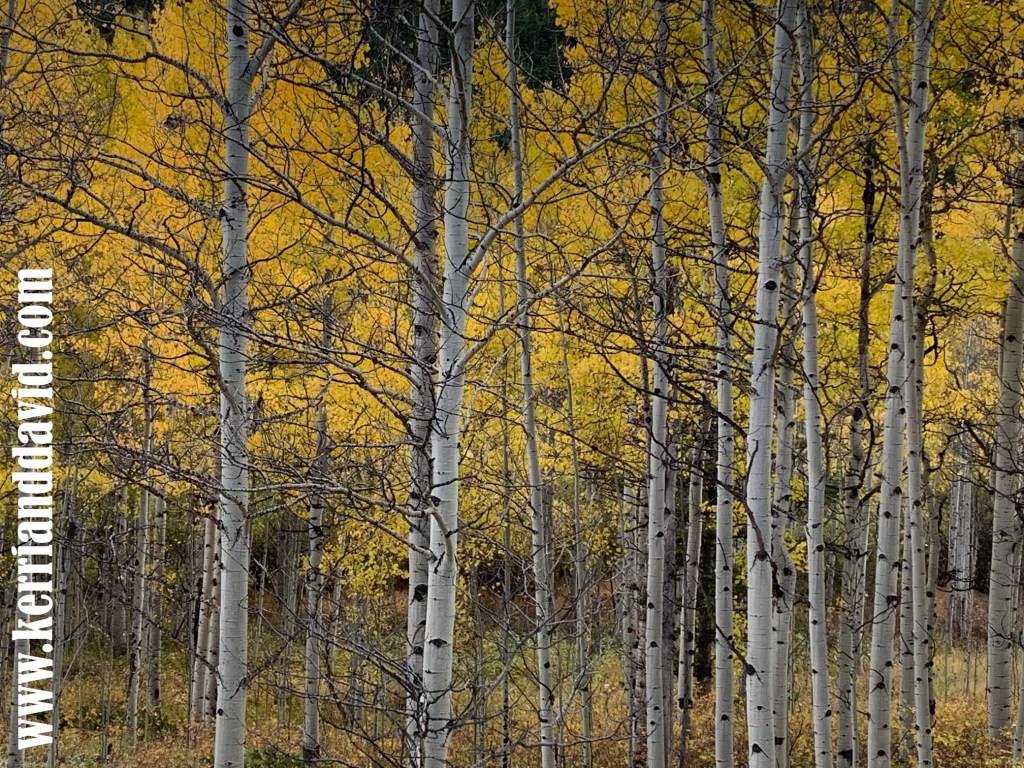
We stood for a long time staring at the quaking aspen trees. Initially, we went to the nursery to look at grasses to plant against the fence. Tall grasses. Pampas. Oddly, Colorado called and we were drawn as if hypnotized by the siren song of the aspen stand. In the breeze, the leaves make this sound…

Like all things in our life, our backyard has been blasted to bits by the force of the events of past few years. We are now, slowly, pulling the pieces back together again. We’re working our way toward blank canvas, clawing our way back to zero. We are, at long last, beginning to dream the dreams that percolate beyond mere survival. To design life with more than duct tape solutions.

The aspen quaked for us and we quaked for it. We exchanged a silent promise. Not yet. There are too many things on the list that need to be done. But the promise is made and a design is taking shape.

The gift of free fall is that it indelibly sears appreciation of the small moment, the passing kindness into your soul. It’s a great perspective giver. Precious life is the thing that passes while wishing and moaning to be safe and secure somewhere else. If you’re lucky, as we are, you hold hands and experience the full palette of life experiences.

“The grasses remind me of the beach and Long Island,” she said. “Someday, we’ll bring the aspen and the grasses together. Both of our birthplaces in the backyard.”

A design intention. A new experience. A promise to a vibrant stand of trees made on a sunny day in a quiet nursery. Drinking it all in. Beautiful.

It is enough. More than enough.

read Kerri’s blog post about the ASPEN STAND