Definitions [David’s blog on Merely A Thought Monday]

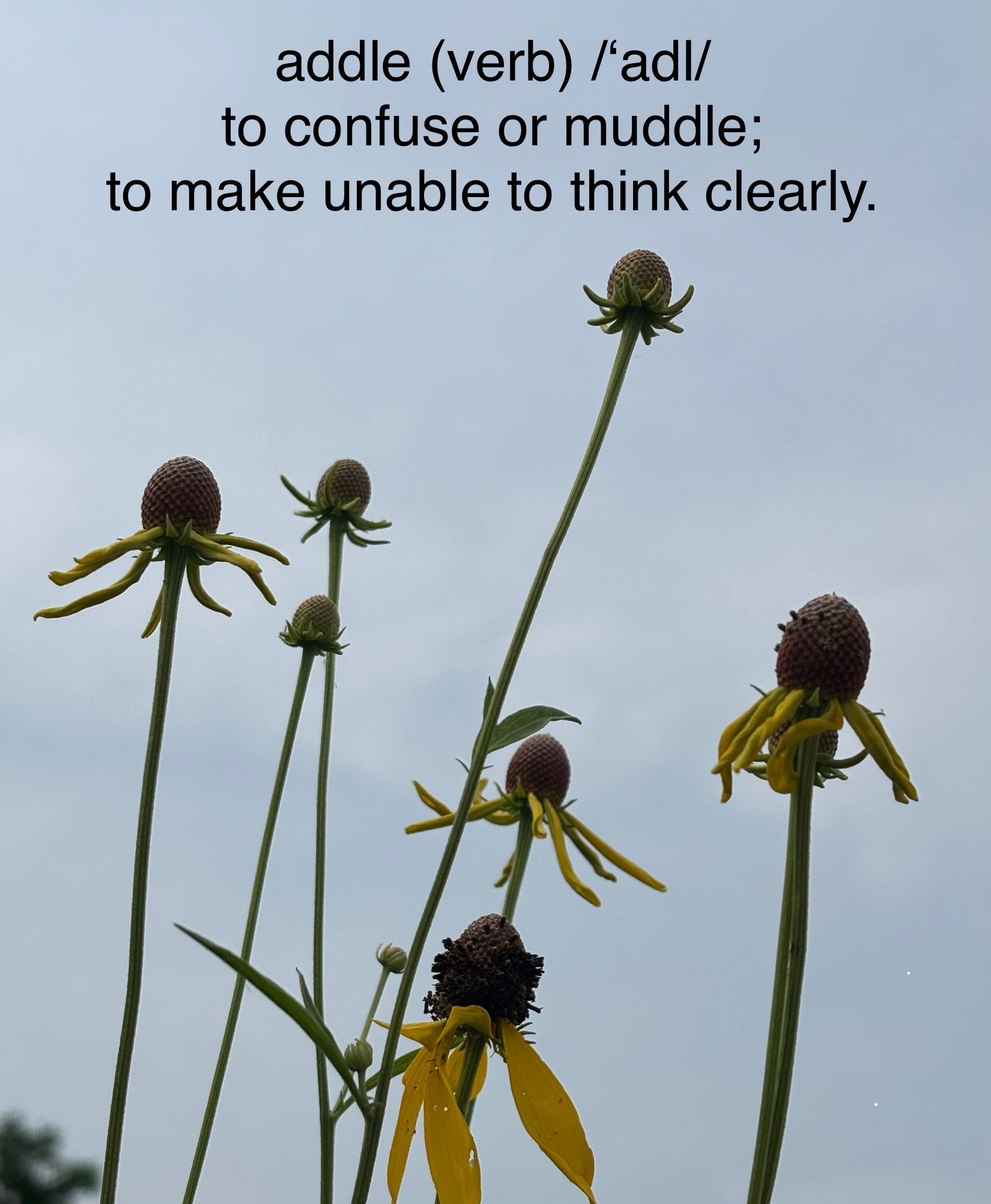
I’m a big fan of secondary definitions. Not only does the word addle mean to confuse, it also means to make an egg rotten. In my mind the two definitions are connected: addle a brain too long and it will rot.

A case in point: while forwarding our smack-dab cartoon on Saturday I happened upon a disturbing comment thread. Members of the maga-cult were abusing a woman who dared to defend the plight of immigrants.

2. Abuse (verb): treat (a person) with cruelty or violence.

The harangue included demands that the woman “get her facts” straight, which I found particularly obscene since the maga-abusers were astonishingly-fact-free while the woman was rooted in reality. The maga-big sticks included two easily debunked claims: 1) The Biden administration paid millions of social security dollars to “illegals*”, and 2) the “illegals” were bleeding the system without paying into the system.

This took less than a minute to fact check: Can undocumented immigrants collect social security? No.

Are undocumented immigrants eligible for Medicaid? No. (bonus fact: Is misinformation rampant? Yes).

And, here’s the kicker for anyone who cares to live in a world of easily checked facts: Undocumented immigrants paid more in taxes than Amazon, GM, IBM, and Netflix combined.

I recognize – as I believe we are all coming to recognize – that the maga-mind is particularly resistant to any bit of data or fact that contradicts their fever-fantasy. Their adamant defense of the indefensible has little to do with truth or fact or historical accuracy or hard science – they hold fast to their absolute right to muddled minds because it gives them license to abuse. They mimic their dear leader. The bully-impulse is the bond that unites them.

*Take, for instance, the fox-generated-and-now-widely-maga-touted-term “illegals”:

Illegals (plural noun. derogatory. north american): a person present in a country without official authorization.

In the fascist handbook it is a hard and fast rule to first dehumanize a group of people before subjecting them to inhumane abuse. For instance, making people wear yellow stars before herding them into train cars and disappearing them into concentration camps or – as is currently happening – calling people illegals en route to suspending their (and our) constitutionally protected right to due process – so that masked agents of the government can pluck people off the streets and disappear them into…concentration camps.

inhumane (adjective): without compassion for misery or suffering; cruel.

I hope we can all agree that the sadistic treatment of other people is barbaric. Well…if you are maga, your mind is so addled that your moral compass no longer functions, as is evidenced in daily celebrating ruthless savagery – like ICE – while claiming to be ethical, christian, and upstanding.

Addle a brain too long and more than the mind will rot.

read Kerri’s blogpost about ADDLE

likesharesupportcommentsubscribethankyou

How To Harmonize [David’s blog on Not So Flawed Wednesday]

“Nature, in the intimate and in the vast, is not designed. It is designing. Our own nature confirms it.” ~ N.J. Berrill, You and the Universe (via The Marginalian)

 In one of our famous conversations, Horatio suggested I read Ernest Becker’s Pulitzer Prize winning book, The Denial of Death. So, I did. Horatio has never led me astray. Boiled down to an essence, as a unifying principle for religion and science, it unpacks the human dilemma of being a finite animal with an unlimited imagination. We are unique among creatures because we know we will die yet we have the capacity to imagine ourselves infinite. And so, to live beyond the veil, we think we must leave a mark, to serve a greater purpose. We must seek or give meaning to our limited time. No other animal carries so great a burden, this split-dance of separation and unity.

It is an understatement to suggest that it has set me to thinking. It is the ultimate in creative tension.

For ages, artists have painted the Danse Macabre. Some are a painting a warning: it’s coming so be ready! Some are painting an appeal: it’s precious so live every moment of it!

And this is what Horatio’s recommendation has me thinking: It’s a cycle of movement, like the tides or the cycle of the seasons, the movement of the earth, spinning around the sun…It is movement. Life is movement.

I was hired at the software start-up, not because I know anything about technology or coding, but because I see movement. Dynamic whole systems. In my brief foray into the start-up, I learned that, in order to be successful, software has no end. It is never finished. It must constantly iterate. It must never assume a completion. It is, in that way, like a human being, constantly becoming, cycling through periods of stability and periods of chaos, through lostness and found-ness, each generation supporting the cycle of the next generation.

We confuse ourselves by seeking an answer to our end, as if the design is finished. As if we are complete. That is a statement of our denial. We are movement. Relationship. Cycle. Never complete.

She knelt to take a photograph of the daisies, each at various points in their life cycle. A perfect visual for the single question-with-no-answer at the core of our short season on earth:

“…how to harmonize our cosmic smallness with the immensity of our creaturely experience…” ~ N.J. Berrill

read Kerri’s blogpost about DAISIES

like. support. share. subscribe. comment…thank you.

Open The Tiny Measure [David’s blog on KS Friday]

My first question: when did UFO (unidentified flying object) become UAP (unidentified anomalous phenomenon)? I know I am late to the party on this one. Like you, I’ve been reading the UAP headlines for a few years and, each time, ask myself the same question: Why the moniker change?

I did a little research this morning and came upon this phrase from Bill Nelson at NASA: “We want to shift the conversation about UAP’s from sentimentalism to science.” Apparently, George Lucas and Steven Spielberg have our space-alien-sentimentalism dialed to an all-time high. Human imagination runs amok with unidentified flying objects and not so much with unidentified anomalous phenomenon.

Language matters. Since our reference point is…us…a flying object, like an airplane or a spaceship implies a pilot, a “being” at the controls. An anomalous phenomenon? It’s another way of saying unusual occurrence and what, exactly, is an occurrence? If it’s unusually amorphous, there is nothing to hang your hat on. The only thing to do is call a scientist or artist since the imagination needs a few parameters to light its fire.

There was another sad-ancient-yet-contemporary-cautionary-tale that popped up in my reading: “NASA recently appointed a director for UFO research, but is not divulging the identity to protect them from the kind of threats and harassment faced by the panel members during the study.” Science and art are -and always have been – dangerous business. Galileo spent his last years on earth under house arrest for publishing his science; it contradicted the firmly-held belief of the day. He was forced to recant his findings or face the fate of heretics.

Belief does not appreciate being contradicted, especially when there is evidence involved – or as is true in the current example – no evidence at all. Belief has a wonky relationship with evidence. We are witness to that all-too-human phenomenon in our times, just as was Galileo. Protecting poll workers and UAP scientists from the violence of those who are unshakable in their faith and/or “news” source (their reference point).

We do not need science (or maybe we do) to see our absurdity.

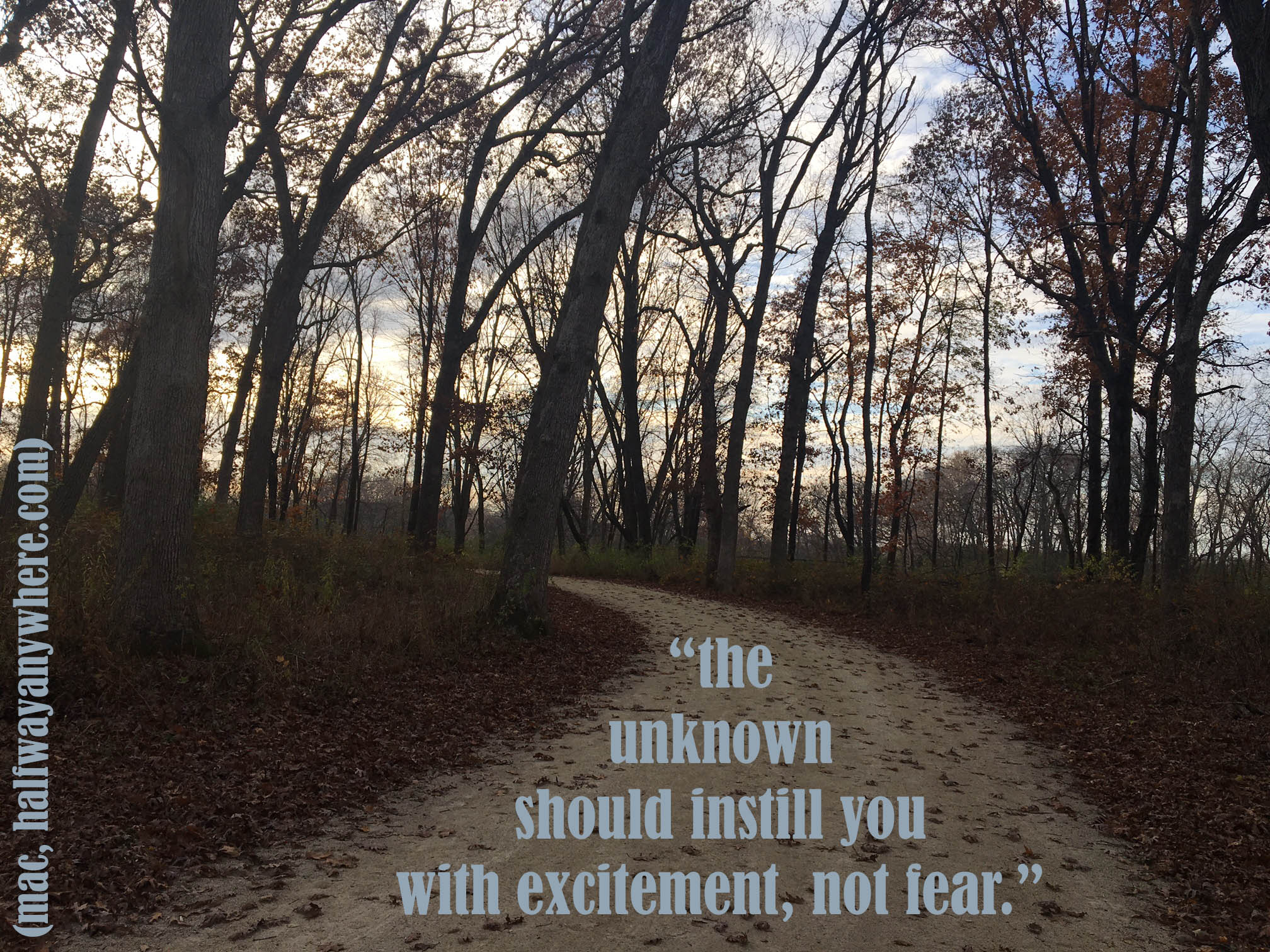
We have the capacity to exercise our imaginations in this vast universe of possibilities. We have the ability to question if we desire to use it. We have the gift of unbridled curiosity and need not go off the rails into rootless belief if we allow that, “There are more things in heaven and earth than are dreamt of in [our] philosophy”. We can be afraid of ideas, run from progress, or threaten the artists and scientists that force us to open our smallish belief and tiny measure of “normal”. Growth is always preceded by an uncomfortable step into the unknown. A challenge to what we think we “know”.

And then, after the upset, we need to find language to describe the new world that we discover there.

Time Together/This Part of the Journey © 1997 & 2000 Kerri Sherwood

Kerri’s albums are available on iTunes and streaming on Pandora and iHeart Radio

read Kerri’s blogpost about UFO and UAP

like. share. support. subscribe. comment. thank you.

See Beyond [on DR Thursday]

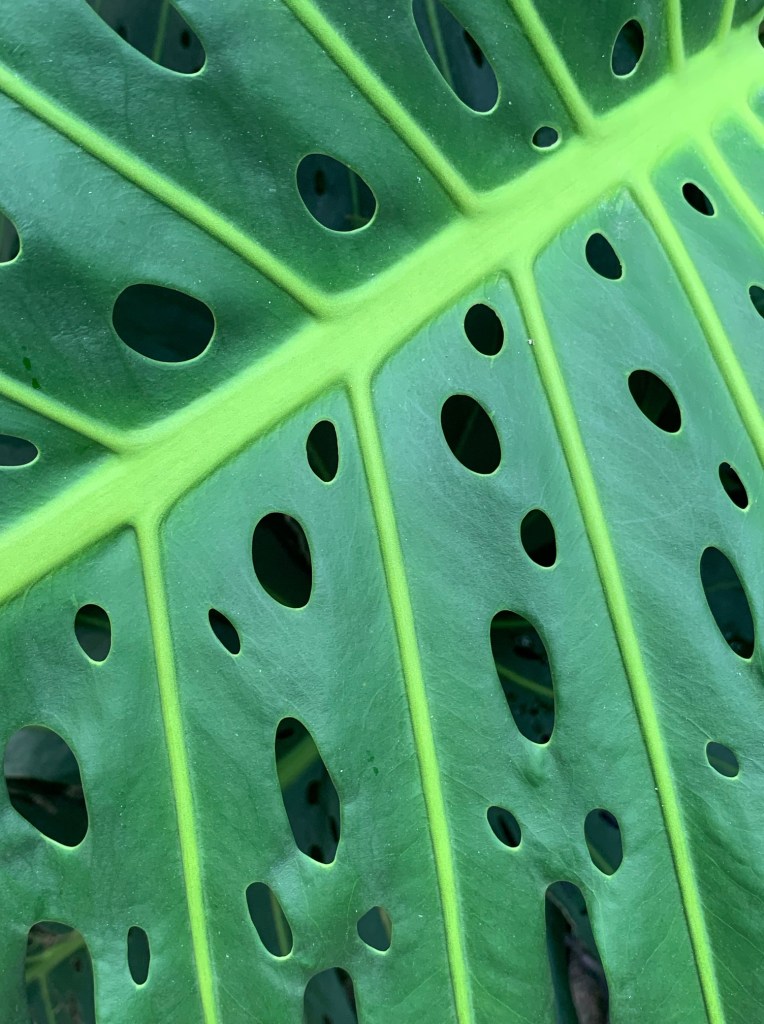
I am amazed by nature. We learned in our visit to the botanical gardens that plants in tropical climates are a study in waterproofing. Waxy leaves prevent excess water from accumulating. Holes allow water and sunlight to pass through. It’s a masterclass in protection from algae. Adaptation, not resistance. Working with rather than fighting against.

My adult life has been a meditation on whole systems – which is quite simply a study of perception. It takes a human mind to separate the leaf from the branch from the trunk from the root. Separation and categorization is how we make sense of things. Analysis requires breaking-it-down. It’s easy to forget that those distinctions are in our minds and not in the world we observe. There is no separation of leaf from rain, not really. There is movement. Concert. Equilibrium.

Understanding requires reassembly.

To live creatively is to discover rather than invent. Thank goodness for the scientists teasing apart, deconstructing, uncovering, analyzing. I would not be alive today without their passionate pursuit.

And, while the scientist dissects, the artist reassembles. The reach for wholeness, the pull toward universal experience that cuts across division…I thank goodness each day for eyes that see beyond the separations, the capacity for utter delight and awe – standing in a garden – staring at a leaf made colander over eons of time.

read Kerri’s blogpost about HOLES IN LEAVES

eve © 2006 david robinson

Dowse Your Data [on Merely A Thought Monday]

My favorite question of the week: What is the science behind divining?

I admit to laughing out loud when I read the question. In a world run amok with science-deniers and rabid propagandists, we might as well answer the question with a qualifier: it depends on what you decide to believe. Or, answer a question with a question: do you really want to know what the science says?

Since belief-divining is all the rage these days, the best available advice for adherents of critical thought is, “Don’t waste your breath.”

I took a peek at ‘dowsing’ in wikipedia. Divining is generally attributed to “ideomotor phenomena.” A psychological response. An accidental movement. Science reports dowsing is projection.

What is the science behind love? What is the love behind science? A moment ago Kerri frowned when I told her she was the sole-object of my ideometric phenomena. She’s learned not to ask and has developed a keen ability to move on from my thoughts to thoughts with more substance.

Science doesn’t prove. Science hypothesizes, gathers data, and then reports findings. Science is objective. It is both rooted in data and is open-minded. New data always come in. It takes an open mind to successfully roll with the theory of relativity. It takes an open mind to open to the data. Excessive carbon in the air is heating the planet. We are simultaneously cutting down the earth’s lungs to make room for more cattle production.

What’s your hypothesis of our recent spate of 1000 year storms year after year? Science is offering a fairly clear picture.

What’s the science behind divination? The science of seeing into the future? Projection?

I was delighted when I stumbled on an NPR story about U.K. Water Companies Sometimes Use Dowsing Rods. The companies admitted to the use of divination but were quick to add, that it’s not a company-wide policy. And then reinforced their disclaimer with the only disclaimer that we universally and wholeheartedly accept: it doesn’t cost money. If it cost money, we’d take it seriously. Like pet rocks. Or reality tv.

Deloitte (using scientific methods) reports the cost of climate change to the U.S.A. economy will be 14.5 trillion dollars over the next 50 years. We can expect to lose 900,000 jobs each year. Ideometric phenomena? Scientific divination? Data-dowsing?

For adherents of critical thought, it occurs to me to update the best available advice with another question: How much time do we have to waste?

read Kerri’s blog post on Y

Step Out Of Line [on Merely A Thought Monday]

“…the fountain of creative work is an intelligent questioning of the rules.” ~Alan Watts, Tao: The Watercourse Way

“If someone tells you they know, they most certainly do not.” It’s not a direct quote from Quinn but it’s close enough. Art school almost snuffed the art in me; there were so many rules and nary a hint of curiosity allowed in the studio. I fled into the theatre after a single year for fear of losing my heart to a book of rules. My theatre professors were explorers of nature. Their refreshing mantra was, “Well, let’s find out!”

What if…? What happens if…?

Nature is boundless expression. Boundless expression is human nature, too, until it is taught otherwise. Boys don’t cry. Be a good girl. Sit in your desk. Follow the rules. There’s a right way. My way or the highway…So much effort to force nature – your nature, your curiosity, to stand on a line.

Einstein revolutionized our world because he dared to posit that Newton had it upside-down. Thank goodness, as Alan Watts observed, “The scientist and the mystic both make experiments in which what has been written is subordinate to the observation of what is.” In other words, they look beyond established belief, expectation and entrenched norms into what is.

What is? Curiosity. A desire to know what’s over that hill. No child begins their life-walk by desiring to color within the lines. Lines are a learned thing. The word “wild” was invented by people whose ancestors emerged from the woods and who have forgotten that they, too, are part of nature – so have become afraid of stepping into the woods. What might they – we – find there?

“It’s not an idea problem,” David Burkus wrote in the HBR, “It’s a recognition problem.” Stepping beyond the known – a great definition of curiosity – is too often seen as an aberration or an assault upon authority. Nip it in the bud. Forcing flow into a fixed state invariably causes idea-blindness and the imperative to think-outside-of-the-box. Innovations are too often smothered in the crib by “What we know,” or “We don’t do it that way.” Coloring in the lines, once ingrained, is a life-long-book-to-follow.

I wish I had a nickel for every time I’ve been invited into an organization or hired by a client to help them “see what they cannot see,” and then subtly or not-so-subtly, been rebuked for opening their eyes to what is in plain sight…or the availability of alternative paths. “We want a vital arts program but we only want art that entertains,” said the school board after the student play asked a serious question of their audience. “…the scholastic theologians would not look through Galileo’s telescope because they considered that they already knew, from Scripture, the order of the heavens.” (Alan Watts)

Think outside the box – as long as you stay within the model or the expectation or the rules. So many models. So many lines. So in love with the struggle and afraid of the simple, natural joy of curiosity. Bend your will to the line. See what you are supposed to see and look no further. What, exactly, are we trying to control?

read Kerri’s blog post about CURIOSITY

Connect [on Merely A Thought Monday]

Last night we watched a documentary on the launch of the James Webb telescope, The Hunt for Planet B. One of the scientists said (I scrambled for a pencil but didn’t get the direct quote), “There’s something deeply human that needs to connect.” True. So true. So, we launch a miraculous telescope into space, far beyond the moon, and aim it at planets that might, just might have life forms capable of looking back at us. Not science fiction. Science. To connect.

There’s a prerequisite to connecting: an intentional step into the unknown. It is as true when shooting telescopes into space as it is when trying to grasp “Who am I?” “Lao Tzu wrote, “When I let go of what I am, I become what I might be.”

Our ancestors painted the walls of caves, not for decoration, but for connection to “something greater”. It is the same reason folks fill up synagogues and mosques and churches and temples. To connect.

Art, science, and religion all serve the same deeply human impulse. To connect. To reach across time, to reach across space, to plumb the depths of inner and outer space, in order to connect. Legacy and imagination. Identity, tradition, progress toward…connection to something bigger, something better. We reach to grasp and breathe life into our best ideas, both future and past.

The first step of the entrepreneur, the artist, the scientist, the explorer, the dreamer…the human, is a step into the unknown, to question the limits of the known. What else? Leeches were once believed to be good medicine until some bright inquiring mind observed and asked, ‘I wonder it that is really true?”

Einstein dreamed a dream and, so, he reached through the math to connect to the inconceivable: light is the only constant. Time and space are malleable. Picasso, initially, hid his first cubist painting, not yet ready risk ridicule. And then, needing to connect to “what might be”, he turned it around, stepped into new unknown territory, and invited the world to see.

read Kerri’s blog post on the UNKNOWN

Let The Outside In [on Merely A Thought Monday]

Civilization excels at manufacturing anesthetics.” ~Declan Donnellan

“What are you waiting for? Snow?” 20 was sweating. It was July, hot and humid, and he wondered why we had yet to put the air conditioner units in the windows. Our house was built in 1928 and central air is something we can only imagine. In truth, we’d been asking ourselves the same question all summer. Why are we suffering the heat and, yet, so resistant to putting the ac units in the windows?

Finally, the penny dropped. We realized why we had no desire to plug up the windows, shut the door, and manufacture cold air. Last summer, as the pandemic numbers soared, as our city burned with civil unrest, we shut the world out. We isolated. We turned on the cold air and made certain we felt as little of the heat as possible. This summer, even though we are still keeping our circle small, we want to feel the summer. We want to breathe the real air, not the manufactured stuff.

The real air is hot. Humid. Uncomfortable.

I made breakfast after reading the news. Poor Kerri had to listen to my epiphany-rant: While cracking eggs I realized that the horror story of the GOP wouldn’t be able to perpetuate their pandemic-denial-march if the people listening to them wanted to hear truth. “If I was born in 1700,” I said, “I’d have an excuse for being ignorant. I’d be illiterate and have very limited access to information. I’d be easily led because I wouldn’t have the capacity to check the story that I was being fed. That’s not true today.” We have, unlike any time in human history, immediate access to information. I rarely participate in a conversation that doesn’t involve someone pulling up information on their phone, checking a fact or the veracity of a story being shared. How then, in the middle of the national pandemic hot spot, can the governor of Florida block every science-based mitigation measure and whip up a fruit smoothie of fear – how can he manufacture so much empty air – without his constituents crying foul? The answer is easy: they would rather not feel or know what’s really going on outside their comfort-bubble. They are choosing fluff over fact, anger over curiosity.

In our day and age, ignorance is a choice. Denial is a choice. Plugging the windows is a choice. Insular is a choice. The device carried in every pocket could, in a heartbeat, puncture the gasbag-foolishness.

Reading this post, MM will be compelled to once again send me this quote, so I will preemptively include it: “(Humankind) would rather believe than know.” E.O. Wilson, Sociobiology.

I know. I know.

Belief, like sugar, is easy to consume. Knowledge takes some effort and self-reflection. Anger and fear and division are easy, too, especially when the target audience of the fearmongers has no desire to challenge the narrative. It is the great paradox of our times that those waving their flags and screaming the loudest about their freedoms are so ready and willing to abdicate their freedom of thought. They parrot the fox. They inhale the anesthetic, the manufactured air.

Last night we watched a great short documentary, Lessons From The Water: Diving With A Purpose. Black divers searching for the shipwrecks of slave ships. One of the founders of the projected said,“Here in the US, our (African American) history has been ignored,” he adds. “They don’t really teach anything about slavery in schools. And I think if you don’t teach your history, you’re bound to repeat it.”

They dive to find the artifacts, to tell a fuller story. They dive. They look for artifacts. Facts. A complete narrative.

It made me think about the enormous resistance to critical race theory, the intense counter-narrative to climate change, the ferocious dedication to perpetuating The Big Lie, the ubiquitous conspiracy theories and global rise of authoritarian voices…all of it an appeal to an insular story. Close your eyes. Trust without question what you are told.

The real story is uncomfortable. It is hot. It needs telling. Fingers out of ears, eyes wide open. Forward movement, growth, health, is never the result of suppression, distraction or numbness. Health, equilibrium, always follows the revelation and acceptance of the full story. It’s open windows. It’s letting the outside in.

read Kerri’s blog post about LET THE OUTSIDE IN

Choose [on Two Artists Tuesday]

“It’s a serious thing just to be alive on this fresh morning in this broken world.” ~ Mary Oliver

Were I to have been born in an earlier century I would not be alive today. Twice on my life-path doctors have declared that, “You are now a miracle of modern medicine.” Leeches and blood-letting would not have cured what ailed me.

This thing called ‘science’ is what gave me more days of life. It is the same science that developed vaccines for a pandemic but also made possible the technology that makes mass-media-misinformation possible. Here is the medicine. Here is the disease. It is exactly as Sophocles wrote: Nothing vast enters the life of mortals without a curse.

One morning, deeply tired, I arose to go do a job that I did not like. It was a means to an end and I dreaded the day ahead of me. Stepping out the door, the cold morning air stopped me in my tracks. It slapped me awake. The air was crisp and clean, the neighborhood was quiet. The light in the sky was brilliant. I drank it in. I vowed never again to dread a day of my life. In truth, I had no idea what the day held for me. Why then, would I story my day with a frame of dread? Why tell myself a tale of just-getting-through-it? Why not open to the possibilities of surprise and miracle? Why not embrace the already-stated-obvious-thing: I had no idea what the day held. That simple fact would be true every single day of my life. Dread was a choice, not an inevitability.

To be alive on this fresh morning. It is a serious thing. In this world, broken by the little story of us-and-them, the tiny tale of power-over. Choices. The miracle of the new day is present whether it is seen or not. We can cloak it in dread or gratitude, in support or division. It doesn’t care either way. The miracle of the new day, the gift of being alive on this fresh morning in a world that is broken or healed, whole or fragmented – it all depends upon the story-frame we wrap around it. The story we tell is a choice, not an inevitability.

read Kerri’s blog post about JUST TO BE ALIVE

Prove It [on Merely A Thought Monday]

I am about to prove that I am guilty of everything I accuse others of being. I am just as capable of surrounding myself with like-minded people as the next person. Let me explain:

I cheered when I read Marc’s response in the conversation chain. It was an appeal, an attempt to puncture a dedicated delusion, an untethered ideology. But, as is always the case when fantasy is met with fact, the holder of the fantasy vehemently defended and further retreated into their illusion. Confirmation bias.

Among my favorite phrases this week comes from a New Yorker article, Why Facts Don’t Change Our Minds. The phrase: the illusion of explanatory depth. Here are two quotes from the article:

“People believe that they know more than they actually do. What allows us to persist in this belief is other people.” In other words, we ally with people who hold a similar belief rooted in the same lack-of-knowledge. Apparently, as a species, we’d rather be reinforced in our ignorance than consider the possibility that we don’t know what we are talking about. Purple Kool-Aid is easier to drink than wondering if what we’re being told may or may not be truth. It explains the current GOP, Fox News, OAN, Ron Johnson, and the rest of the dangerous-national-clown-car.

Quote number 2: “As a rule, strong feelings about issues do not emerge from deep understanding.”

Strong feelings. Deep understanding.

In the canon of human self-aggrandizement, we delight in the narrative that we are primarily rational, that our reason, like a good border collie, has driven our emotions into safe containment. The opposite seems to be the case. Or, at best, we are a mass of contradictions.

There is a flip-side, a necessity woven into our contradiction that gives me hope. Strong feelings and deep understanding are not natural enemies and need not be pitted against each other. Think of it this way, no firefighter, in his or her right mind, would run into a burning building to save a life, if we were as rational and reasonable as we like to believe. They do, however, study fires beforehand to know how to run in, how to reach. They study the science. For every exploiter there is a matching story of a giver, someone whose strong feelings combines with their deep understanding in an effort to better the world, save a life, make things easier.

That which makes us crazy also makes us compassionate. How’s that for a statement of contradiction? Families fight each other until the forest fire threatens their house. Common cause and education are a great poppers of confirmation bias.

Some fires are manufactured with the sole purpose of exploiting confirmation bias. This kind of exploitation is dependent upon – and feeds upon – strong feelings with shallow roots in understanding. Ignorance. The big lie. Vaccine misinformation. Divide and conquer is always reliant on strong feelings intended to create blindness.

Some fires are real. And, the test of a real fire: divisions fall, eyes open, and people run toward the flames to help other people. It remains to be seen how hot and close the flames need to come before the confirmation bias burns off and we realize that we’re in real trouble, that science is real, and that the big trough of purple (red) kool-aid being proffered is doing the opposite of what it professes to do.

It may be in our nature to believe that we know more than we do, but, it is also in our nature, without concern or thought for our own safety, to reach for the drowning person. Deep understanding allies with strong feelings when people cared enough to learn how to reach, how not to become the person drowned by the drowning person.

Do you see it? I am an idealist. I want to believe in the goodness of humanity and the necessity of shared truth. Yet, despite powerful evidence to the contrary, I hold fast to my dedicated belief that we are capable of tipping toward love rather than falling toward hate, that, when faced with undeniable data, that we are capable of questioning our strong feelings en route to a deeper, shared understanding. We are capable of recognizing that the science that brought us the cell phone, satellites, allergy medicine, and electric light is the same science that brings us the data of climate change, and the best way to beat this pandemic. Cherry picking belief in science is…absurd and currently dangerous. Cherry picking news is equally as absurd and currently dangerous. From my idealistic mind, it is a necessity to ask questions, check sources, doubt belief.

We are certainly capable of knowing the real fires from the those fanned by the thought-arsonists. We are capable of questioning, of suspending our delusions. At least, I like to believe that we are. I, like you, surround myself with like-minded believers.

We’ve proven it again and again and again. When we recognize that the fire is real, our dedicated illusions burn the filters from our eyes, we transcend our little stories, and reach our hands with no thought of political alliance or other exploitative non-sense, to help dig our neighbors from the rubble.

read Kerri’s blog post about BASIC LOGICAL REASONING