As If [David’s blog on Two Artists Tuesday]

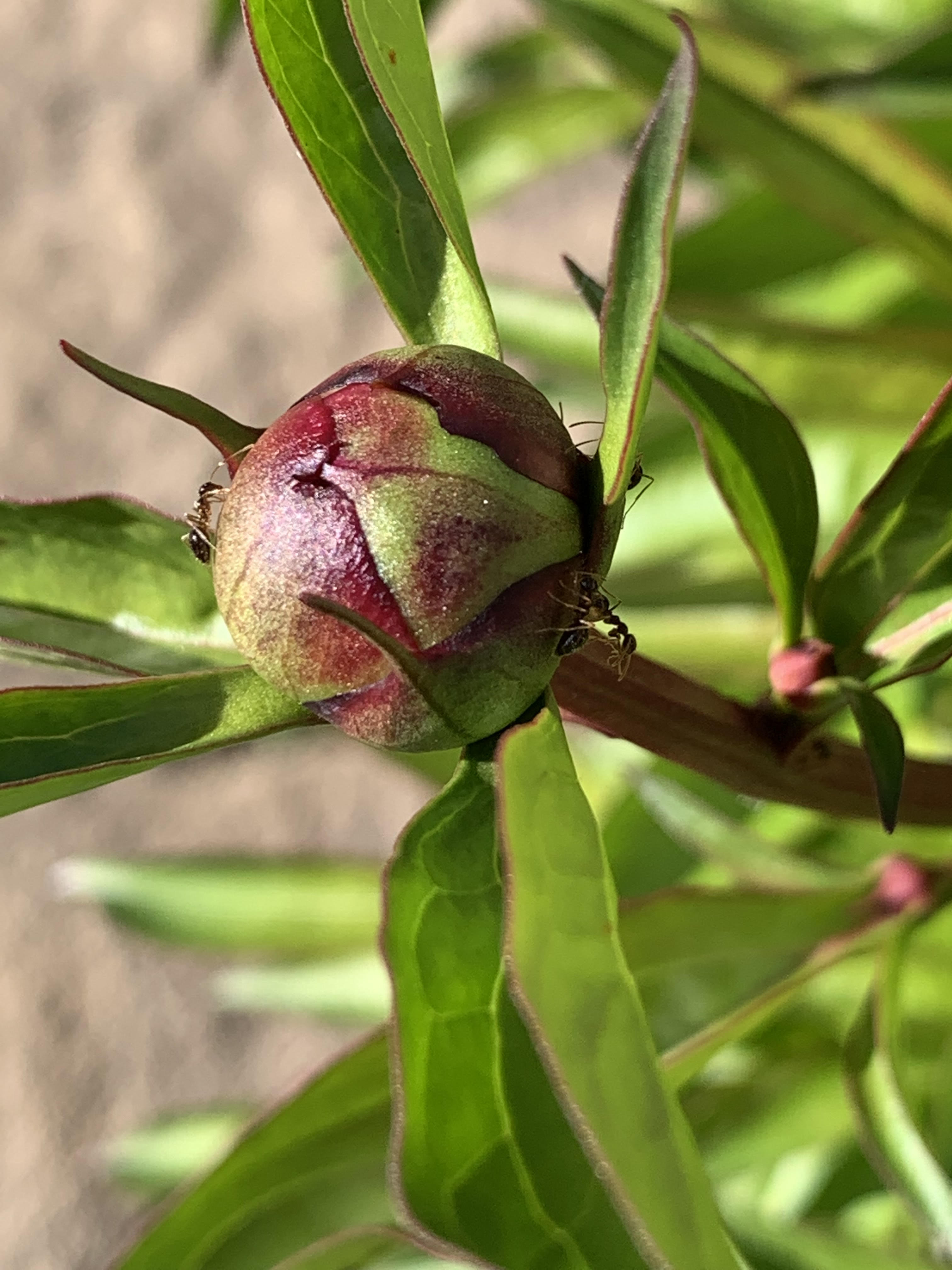
In a festival of irony, the moment we sat down to write about our peony, our harbinger of summer sun and the return of good weather, the sky darkened, the lightning flashed, the thunder clapped, and the rain is now dropping in buckets. The weather alert screeched with a warning for hail and possible tornadoes.

I delight in how readily my superstition-gene leaps out of the murky depths of my subconscious pond and concocts fabulous explanations about current circumstance. That is, as a human-being, a maker of stories – I am quite capable of connecting the rush of the sudden storm with our attempt to write about peonies. As if our attempt to write about peonies somehow invoked the storm!

This is not surprising. It is nothing new. My ancestors – and yours – created all manner of rituals in an attempt to appease the angry thunder-hurling god. To influence the powers of dark and light. To invite good fortune. To bring rain to crops. We have always personified nature and then imagined it is responsive to our behavior. Our behests. All around the globe, in many varied and culturally diverse forms, we do it in houses of worship to this day.

It might seem that I am making fun – and I am – but more than that, I am marveling at our genuine desire to be connected to “something bigger” and yet how rarely we recognize that we already are. We are as the peony, not separate from but a part of the pulse of life. We are of nature – not separate from it. My theory is that we have a hard time recognizing it because we imagine that we can control it. We use it to explain what we experience. We use it to justify our abuses to each other. Chosen people; Manifest Destiny and all of that ugly business. The personality we project upon it is at once beatific and horrific. We wonder why it blows our house away. We thank it for our good fortune.

In truth, we do influence Mother Nature and Father Sky, just not in the magical ways we imagine. Carbon emissions. Tapping mighty rivers dry before they reach the sea. Dumping our trash in the oceans. Fracking. It turns out that our behaviors are powerful and, perhaps, our destiny is in our hands. We need not pray to the gods for intervention and salvation, perhaps we need to be the gods of intervention that we desire to be, recognize and behave as if are not above it all, giver of names, but integral, intrinsic, no more or less essential than the peony.

read Kerri’s blogpost about THE PEONY

like. support. share. subscribe. comment. or not – it’s all good.

Pull The Thorns [David’s blog on Merely A Thought Monday]

Matthew and Rumi agree: “You hypocrite! First take the beam out of your own eye, and then you will see clearly to remove the speck from your brother’s eye.”

 The Buddha is purported to have said: “The faults of others are easier to see than one’s own.”

The message is ubiquitous. The teaching is universal. If you wish to wander in the fields of flowers, pull the thorns from your heart. And, like all simple truths, it’s easier said than done.

History is riddled with the greatest persecutors loudly proclaiming themselves victims. It’s a pattern. Sometimes the odor of hypocrisy is faint. Sometimes it stinks to high heaven. Currently, we are watching this age old drama play out on our political stage. No-self-awareness. Not-an-iota-of-personal-responsibility.

It’s worthy of Aeschylus. It’s a theme that runs through the greatest works of Shakespeare. Othello. Hamlet. MacBeth. Lear. Tortured thorny hearts with split intentions. It’s ever-present because it’s a bear-topic that every human has wrangled. Psychologists call it “projection.”

There is no path to inner peace that does not begin with dedicated self-reflection, self-revelation, and a subsequent healthy course of eye-beam-removal. A good honest look at the thorns carried within the heart before the plucking. What’s true of an individual is also true of a community.

And, if we are lucky and brave and honest, “…at length, truth will out.” A good test of truth is the flood of peace that ensues. A wander through the fields of flowers.

read Kerri’s blogpost about PULLING THORNS

like. share. subscribe. support. comment. thank you.

See Like Seuss [David’s blog on KS Friday]

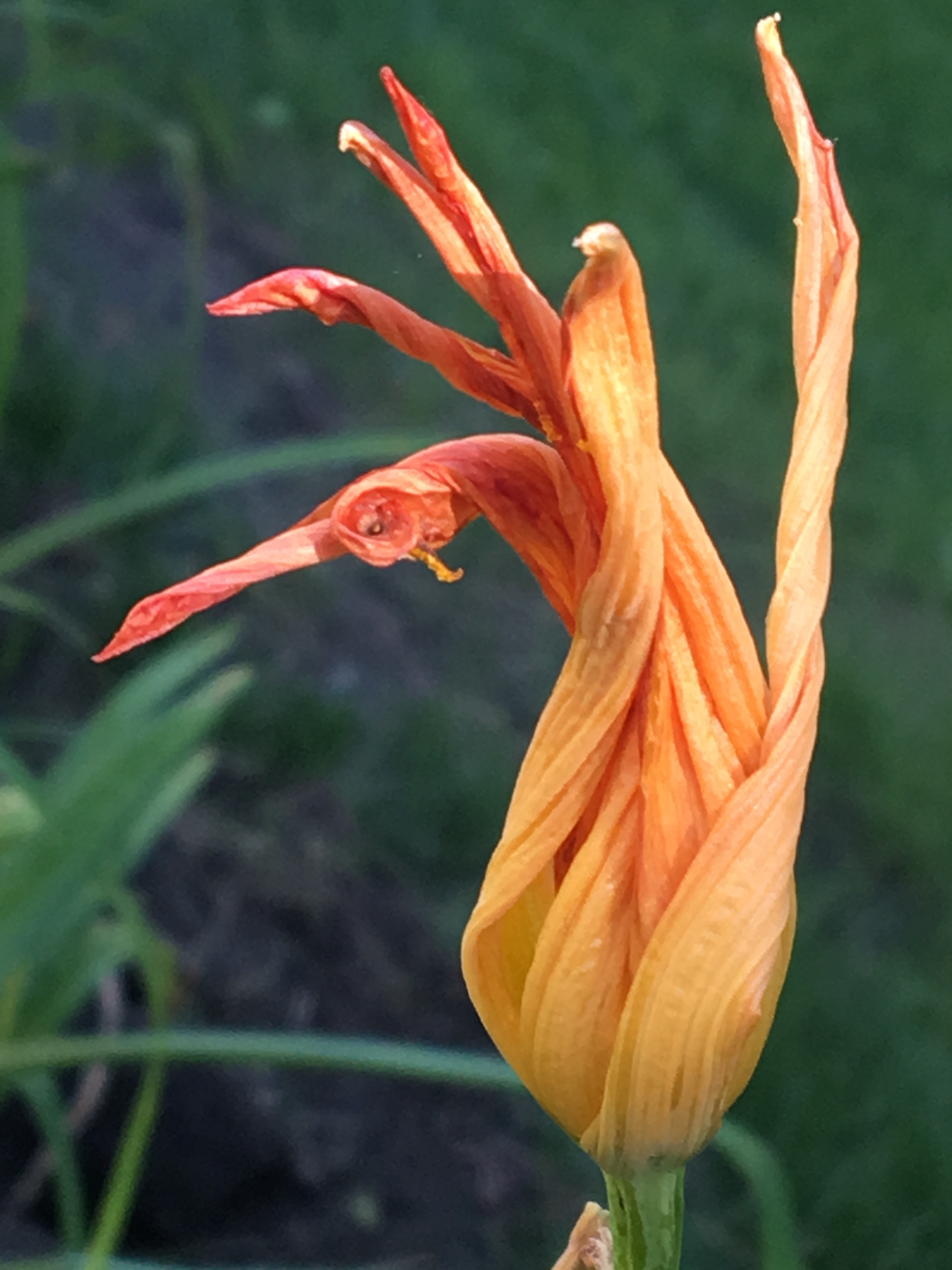
If you’ve ever pondered where Dr. Seuss got his idea for the fabulous hairstyles on many of his characters, look no further than the dried flowers in the field. Thing One and Thing Two wave to us as we walk by. The Grinch wrinkles his nose and grins.

Of course, I made that up. I have no idea where the good doctor found his inspiration. It’s a good bet that he, like most creators of characters, found a visual spark from the crazy shapes and wild styles in nature. I look at the zany filaments of this yellowing pod and see a cartoon henchman, narrowing eyes beneath a spiky do. Of course, my henchman, like all good cartoon thugs, has no real power. He likes to think he can intimidate, an omega with alpha delusions. It’s what makes him lovable. I’ll name him Thistle.

I personify everything. Projecting my human-ness on everything is a quality that identifies me as uniquely human. We see angry volcanoes. Trees that talk. Cartoons animals are a festival of personification. Wily Coyote. Humorless gods in the sky. A cat in a hat. Mother Earth.

We are a miracle of creativity, whether we recognize it or not. Projecting ourselves, infusing our fears and fantasies, the sacred and profane, on every mountain, rock and weed. Even on other people. What we see is…what we see. A creative lens. Is it any wonder we’ve filled volume after volume seeking but never finding truth? Agreement is the best we can do.

Now, if you’ll excuse me, I think I just saw a fox in socks…

transience/right now © 2010 kerri sherwood

Kerri’s albums are available on iTunes and streaming on Pandora and iHeart Radio

read Kerri’s blogpost about THISTLE

like. share. support. comment. see like seuss. imagine the possibilities. we thank you.

buymeacoffee is an animated feature length movie comprised of characters drawn from nature who unwittingly support the artists that drew them. It’s a must see.

Sun Dry [on DR Thursday]

“…people find what they are looking for. If you’re looking for beauty, you’ll find beauty. If you’re looking for conspiracies, you’ll find conspiracies. It’s all a matter of setting your mental channel.” ~ Roger von Oech, A Whack On The Side Of The Head

Our time on Washington Island was multi-layered. Half of the people on the island saw us as invaders. The other half saw us as welcome progress. We were hired to manage the performing arts center which, out of the chute, served as a divisive symbol for the local community. We were the first “non-islanders” to manage the TPAC. Division upon division. And, although we were the focal point of the contention, none of it had to do with us, not really. Our status as invader or progress originated in the eye of the beholder.

Because the actual job was a festival of landmines, I especially appreciated the simplicity – and sanctuary -of our little house, a home provided to us for the summer-on-island-months. Our refuge sat on the shore of Lake Michigan. It was as peaceful as the job was contentious.

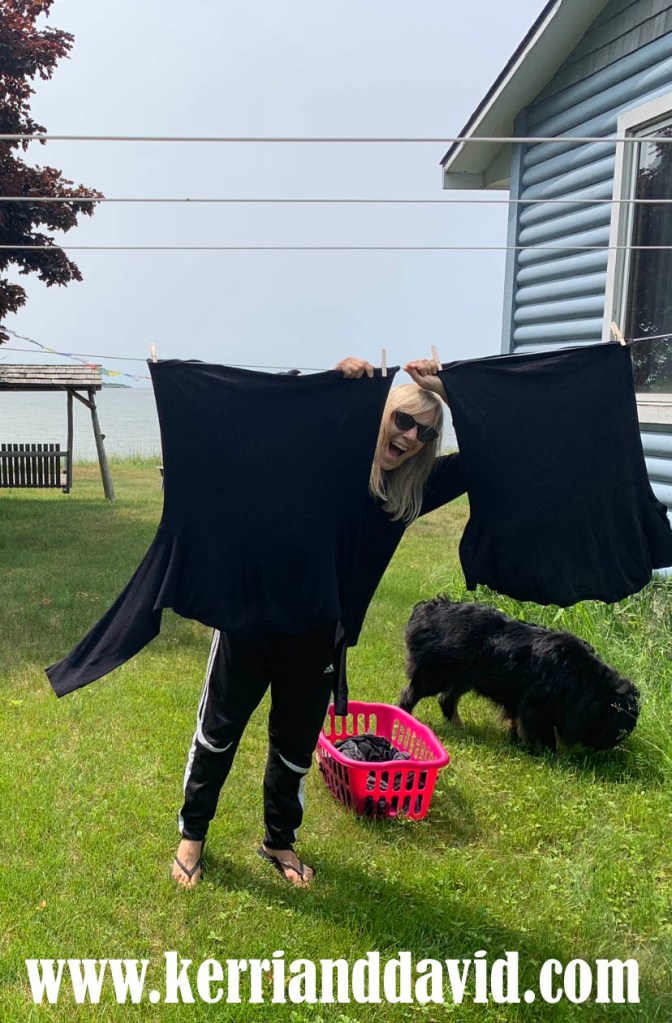
My favorite symbolic act at the little house was hanging the clothes to dry. When we arrived the clothesline was in disrepair. We re-strung the poles with new line purchased at the local hardware store. We quickly grew accustomed to carrying the wet clothes outside. We learned that the wind off the lake sometimes required strategy to what-is-pinned-in-front-of-what. Double clothespins on sheets and shirts was always a good idea. Mostly, I appreciated how the clothesline slowed our pace. It brought us into the sun and in relationship with the wind. The real stuff.

It helped set our mental channel. Hands on, tactile, slow-paced, generous, the power and presence of the lake filled us with awe. So, to our work, we brought awe. Literally. We were in awe of these people that cared so much for their community. Like most communities, they had more than one idea of how to protect it. Progress or conservation.

We understood that these two paths-to-the-same-goal need not be oppositional.

We learned that our job was to build bridges where they had fallen. We understood that, in this divided community, we had to pay attention to what-is-pinned-in-front-of-what. We learned that double pins on big ideas was sometimes a good idea because ideas often generated big wind. Listening was the best idea of all. We understood that if we brought our awe to both sides of the coin, we might one day build a single bridge that could not be burned.

We learned that there was no rushing the process, just as there is no way to rush the clothes drying on the line.

a day at the beach, mixed media, 38x52IN © 2017

my site. yes. as yet incomplete. a testament of continued indecision of my purpose and intention.

read Kerri’s blogpost about the CLOTHESLINE

like. share. comment. support. many thanks for all.

Cross Check [on Two Artists Tuesday]

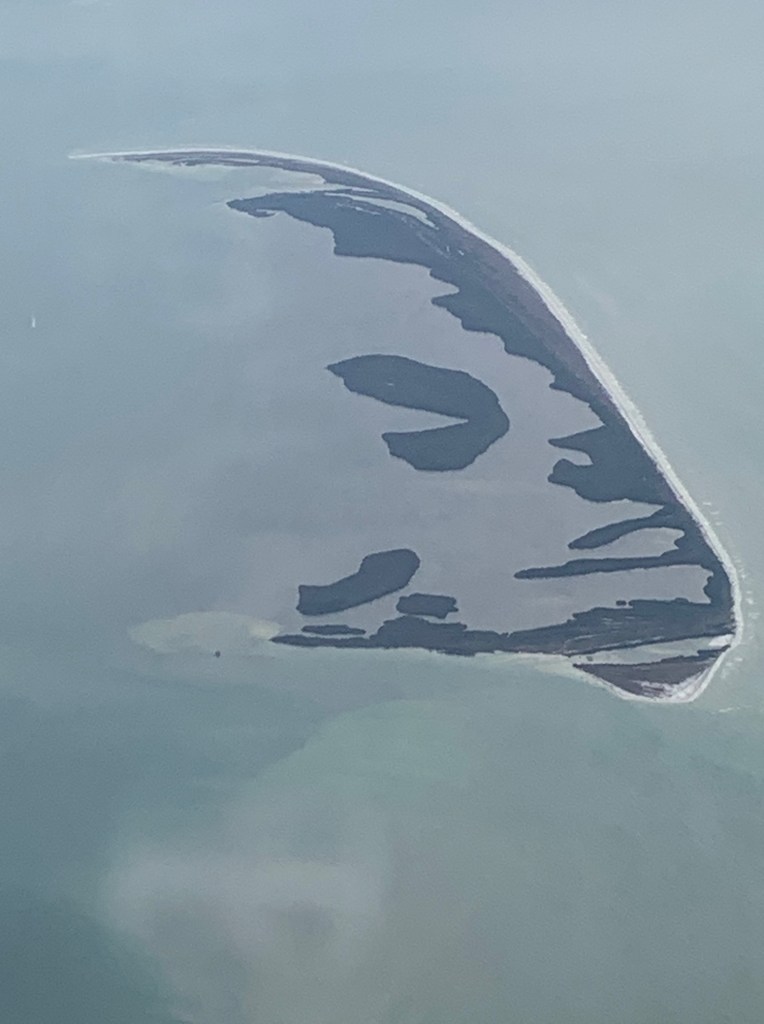
“It looks like a horses head,” she said, snapping the photo from her window seat on the plane. We were on approach to land, coming in over the bay.

I remember teaching myself to draw horses. I had (and still have) a passion for drawing people so my foray into horses was more an academic exercise than an inner need. I thought I should expand my horizons so the 8-year-old-version-of-me acquired a “how to draw animals” book. It suggested beginning with geometric shapes. Two connected circles defined the torso, the head – a circle and a trapezoid.

It was the same technique used by the teacher in my very first art class. See shapes. Arms are two tubes connected by a circle/elbow. Knees are circles, too! Foreground and background, what’s in front and what’s behind was taught using spheres and cylinders. Perspective was taught using a box. Transform a circle into a sphere through proper shading and you’ll know forever the magic secret of artistry. See a dragon in the clouds and you’ll know forever the magic secret of the human mind. It projects. It seeks sense from chaos. It projects order onto nature.

All the while Kerri is snapping photos of the island that looks like a horse’s head, I am pondering the normalization of hurtling through the air in a tube. People chat. Some are reading. The man across the aisle is asleep. “Prepare to land” is ordinary, uttered thousands of times each day. It’s the flip side of seeing dragons in clouds, another key to the human mind. Miracles made commonplace through repetition.

One human child is a miracle. It’s why we are making the trip. To meet a miracle. Yet, 7 billion miracles walking on earth?

“We’re flying,” I said.

“It’s been a long time,” she replied, showing me the picture on her phone, “Look! Doesn’t it look like a horse’s head? Well, like horse heads that I draw. No ears,” she qualified and smiled.

Miracles and magic. All the way around. Seen and unseen. Cross check. Wheels down. Prepare to return to the ground.

read Kerri’s blogpost about the HORSE HEAD

Flip It [on Two Artists Tuesday]

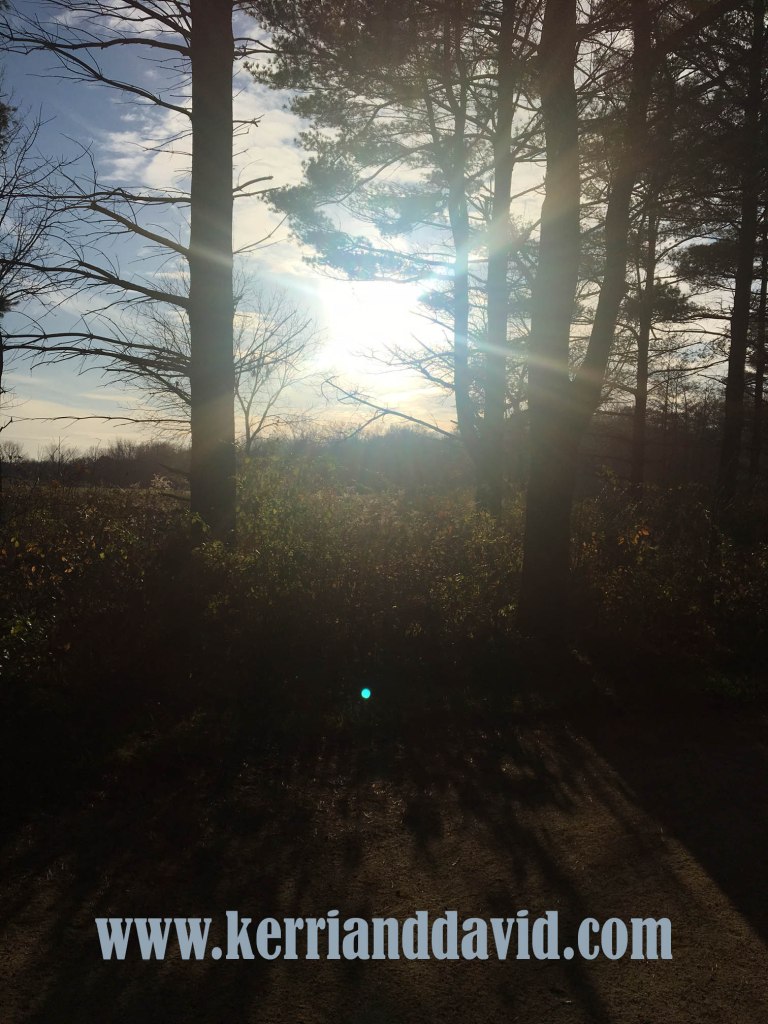
Standing on the trail, the cold breeze stinging my face, I stared at the trees in silhouette. I was overcome with the illusion that I was observing the trees upside-down. I was seeing their tangled root system, reaching. My illusion made me dizzy. What’s top is bottom. What’s bottom is top.

I’ve been pondering things like “leadership” and “power”. My belief of these concepts is the reverse of most peoples. I think leadership is a team sport and that power is created with others, not wielded over them. Roots to the sky.

Before the software start-up went away I pondered things like the abundance of content with no relevant context. Information without a home. Information sans application. Information run amok. It requires people to make-up context for the rootless material crossing their screens. In contemporary discourse, we call this made-up context “bubbles.” It’s an apt term since popping is the destiny of every bubble. No substance. The Villages.

Thank goodness for the cold wind. It snapped me out of my flip-flop illusion. The silhouette was righted. I remembered the shadow puppets in Bali. What we see is projection on a screen. Silhouettes. The real stuff, ripe with dimension and color, the massive system of roots and vibrant moving energy, stars and flow, creating forms and taking them down, happens whether we see it fully or not.

read Kerri’s blogpost about SILHOUETTES

Call Awe [on Merely A Thought Monday]

“The love you take is equal to the love you make.” ~ The Beatles, The End

Last week was unusual in that I had a sneak-peek at my end-of-life-review. When a trusted doctor looks at you and says, “This is bad,” when tests that ordinarily might be scheduled a few weeks out are rushed into the next few hours, when the palette of available options are mostly shades of black and all include the word “dire,” the life-movie-reel begins to roll. Mine did.

I’ve known for years that among the few choices we really have is 1) where we choose to focus, and 2) where we choose to stand as we focus. Point-of-view, labels slapped onto experience, the story we tell is a story we project onto the world. Rolling through the CT-scan doughnut, I looked at the story I’ve called into the forest. I listened for the story it reflected back at me, as me.

“Take a deep breath,” the machine instructed, “and hold it.” Holding my breath, I saw a single story comprised of many, many chapters. There are the life-pages that I lived in confidence, and pages that I wrote confusion. The shattering, the story of the pieces of my life scattered in four directions. Kintsugi. The pages of the phoenix. Pages written running from my art and the matching pages of running toward it. The chapter of standing still. The pages of betrayal and the balance pages of being betrayed. “Release your breath,” the machine chirped. “Breathe naturally.”

The forest will show me fear. The forest will offer grace. The forest will reflect back to me peace if peace is what I bring to it. Someday, rather than project onto the forest, I will walk into it, become it. A reflector of projections.

Take a deep breath. I’ve never been so appreciative of breath. Hold it. What a gift. Breathe naturally. Call awe into the forest.

read Kerri’s blogpost about THE FOREST

Dowse Your Data [on Merely A Thought Monday]

My favorite question of the week: What is the science behind divining?

I admit to laughing out loud when I read the question. In a world run amok with science-deniers and rabid propagandists, we might as well answer the question with a qualifier: it depends on what you decide to believe. Or, answer a question with a question: do you really want to know what the science says?

Since belief-divining is all the rage these days, the best available advice for adherents of critical thought is, “Don’t waste your breath.”

I took a peek at ‘dowsing’ in wikipedia. Divining is generally attributed to “ideomotor phenomena.” A psychological response. An accidental movement. Science reports dowsing is projection.

What is the science behind love? What is the love behind science? A moment ago Kerri frowned when I told her she was the sole-object of my ideometric phenomena. She’s learned not to ask and has developed a keen ability to move on from my thoughts to thoughts with more substance.

Science doesn’t prove. Science hypothesizes, gathers data, and then reports findings. Science is objective. It is both rooted in data and is open-minded. New data always come in. It takes an open mind to successfully roll with the theory of relativity. It takes an open mind to open to the data. Excessive carbon in the air is heating the planet. We are simultaneously cutting down the earth’s lungs to make room for more cattle production.

What’s your hypothesis of our recent spate of 1000 year storms year after year? Science is offering a fairly clear picture.

What’s the science behind divination? The science of seeing into the future? Projection?

I was delighted when I stumbled on an NPR story about U.K. Water Companies Sometimes Use Dowsing Rods. The companies admitted to the use of divination but were quick to add, that it’s not a company-wide policy. And then reinforced their disclaimer with the only disclaimer that we universally and wholeheartedly accept: it doesn’t cost money. If it cost money, we’d take it seriously. Like pet rocks. Or reality tv.

Deloitte (using scientific methods) reports the cost of climate change to the U.S.A. economy will be 14.5 trillion dollars over the next 50 years. We can expect to lose 900,000 jobs each year. Ideometric phenomena? Scientific divination? Data-dowsing?

For adherents of critical thought, it occurs to me to update the best available advice with another question: How much time do we have to waste?

read Kerri’s blog post on Y

Make [on Two Artists Tuesday]

“The origami crane has become a symbol of peace.”

Fold 1,000 cranes and your heart’s desire will come true. Legend will have it so. In Japan, the crane is a symbol of good luck and long life.

Making something into something else. Folding paper into cranes. It is, perhaps, the quality that defines us, makes us human. We turn the flow of water into the force driving the mill. We study patterns in stars and translate it into navigation. We smelt ore and hammer the elements again at the forge to make iron. We use the iron to make trains.

We make.

We look at flowers and see cranes. We look at clouds and see wild horses. We look at blank canvas and see possibility.

We make stories.

Our storymaking cuts both ways. We look at others and see friends; we look at others and see enemies. Either way, our looking is not passive. We make stories. We make connections. We make divisions.

We make wishes. Fold 1,000 cranes and your heart’s desire will come true.

Reach your hand to help. Slap a hand away. Either way, it depends on what story you see. What you want to make.

The story we create.

Folded paper. A symbol of peace.

read Kerri’s blogpost about CRANES

Look At You Look At Me [on Merely A Thought Monday]

It’s taken me this long to discover the source of all cartoon characters: orchids. I’m not kidding. At a recent field trip to the Chicago Botanical Garden’s Orchid Exhibit, I was surrounded by brightly colored fantastic faces, playful and chuckling. “Look at this one!” Kerri exclaimed. “It’s the Imperial Margarine guy!” I thought it was a whacky Pope or funny Cardinal, but the idea was the same.

“The earth laughs in flowers.” Emerson’s quote was stenciled on the wall as we exited the exhibit. And the laughing flowers made me laugh. Truly. I felt like a little kid at Christmas. Surrounded by color and delight and whimsy, I found myself more than once pointing, “Look at this one! Oh My God!” And, I felt like the colorful faces were staring back at me, thrilled to tears by the odd looking human standing before them. I-look-at-you-look-at-me. “Look at that face!” they snickered.

The thought stopped me in my tracks and filled me with wonder. We personify everything, projecting our humanness into everything. The art of animation, the world of Disney, is rooted in our desire to project ourselves onto and into the world. Talking mice. Dancing candlesticks. Humpty Dumpty. Wise old trees. Wouldn’t it be lovely, and isn’t it hopeful, to think the world projects itself into us? I want the orchids to fill me with color and awe. To project themselves into me. I know the forests I walk through infuse me with quiet. I know Dogga pulls love from my deepest soul.

Participants. Relationship, rather than controllers. Dancers rather than dominators. Would we be so invested in killing each other for imagined supremacy if we allowed ourselves to laugh the laugh of the flowers? If we actually understood that nothing is forever, that our warmongering was at best delusional? That the single trait that makes us human is to turn and help someone in need? The very capacity that allows us to project ourselves into the orchids is the same capacity that makes it possible to stand in the shoes of the other. Empathy is a two-way street.

If the earth laughs in flowers, these days it certainly cries in humans. Yet, standing amidst the orchids, I looked at all the human faces, hundreds of people wide-eyed with wonder and alive with astonishment. The laughing orchids looking back at the astonished faces, open and vulnerable, and they were evoking those qualities from the crowd. Earth’s tears. So hopeful, these faces, drinking in each other’s beauty.

read Kerri’s blog post about FACES