Tacit Teachers [David’s blog on Not So Thawed Wednesday]

“Rilke recommended that when life became turbulent and troublesome, it was wise to stay close to one simple thing in nature.” ~ John O’Donohue, To Bless the Space Between Us: A Book of Blessings

For my one simple thing this winter, in these turbulent and troublesome times, I choose icicles. Or, perhaps it is more accurate to say that icicles have chosen me. We are spending an inordinate amount of time together.

When one is as up-close to icicles as I have been in these past weeks, it is impossible not to notice their unique self-expression; each has an individual personality, a beauty all their own. They are sculptural wonders. And yet, follow them back in drip-time and they originate from a single formless origin.

With hot water or Dan’s heat gun I attempt to alter their form and they laugh. I call myself an artist but am no match for their sculptor. That is why it is wise to stay close to them. They are tacit teachers. They put me and these troubled times into perspective.

They are a temporary map of the path of least resistance. And they are gloriously impermanent. Even in seeming stillness, they are moving, changing. Worthy reminders and ample reasons to keep them close. I am glad that they chose me for remedial instruction.

read Kerri’s blogpost about ICICLES

likesharesupportcommentthankyou

Be-Longing [David’s blog on Two Artists Tuesday]

“Be yourself; everyone else is already taken.” ~ Oscar Wilde

I am spiraling down a rabbit hole of thought. This morning I read that many Indigenous languages have no verb form of “to be”.

It might seem like a small thing but it is not. We make sense of our world – and ourselves – through the language we use.

“To be” is a verb of separation. It is a verb of identity, placing primary emphasis on the individual, emphasizing difference rather than similarity. It places the identity-accent on “I”. A present tense of “to be” is “I am”. To be is to be alone.

“To be” fosters “be-longing“; the longing to find and express the unique self, and then “to be” accepted, paradoxically through differentiation. Our “to be” imperative requires us “to be” removed, above it all, accenting the ego, so that the highest achievement, the most celebrated “being” is the one who rises above the crowd. The one who successfully separates.

Is it no wonder that the three “great” western religions place humans atop a hierarchy, high above and removed from nature? Our notion of original sin stories us as born bad to the bone; we kick ourselves out of the garden of our own nature so we might strive “to be” better than we are.

Our language, rooted in “I am”, is incapable of storying us as belonging to nature, being a part or expression of nature. We must strive to return to the garden in order to find the tree of everlasting life.

Our language requires us to story a god living remotely in the sky. The god promises an exclusive resort called heaven if-and-only-if we elevate ourselves above our original nature. Separate to belong.

To this day I ponder a conversation I heard again and again in graduate school: people, living in a city of 1.8 million, yearning for community, discussing over and over the need to create community. How is it possible for nearly two million people to live together in a city without feeling a sense of community? It was not community they yearned for, it was belonging. Connection. An identity of inclusion.

Recently Kerri asked me, “I wonder what it would feel like if…?” I carried her question into our hike. I wonder what it would feel like if I did not story myself as separate? What would it feel like if I knew belonging as a given? Not just belonging to a community of people but intrinsically belonging to all of creation.

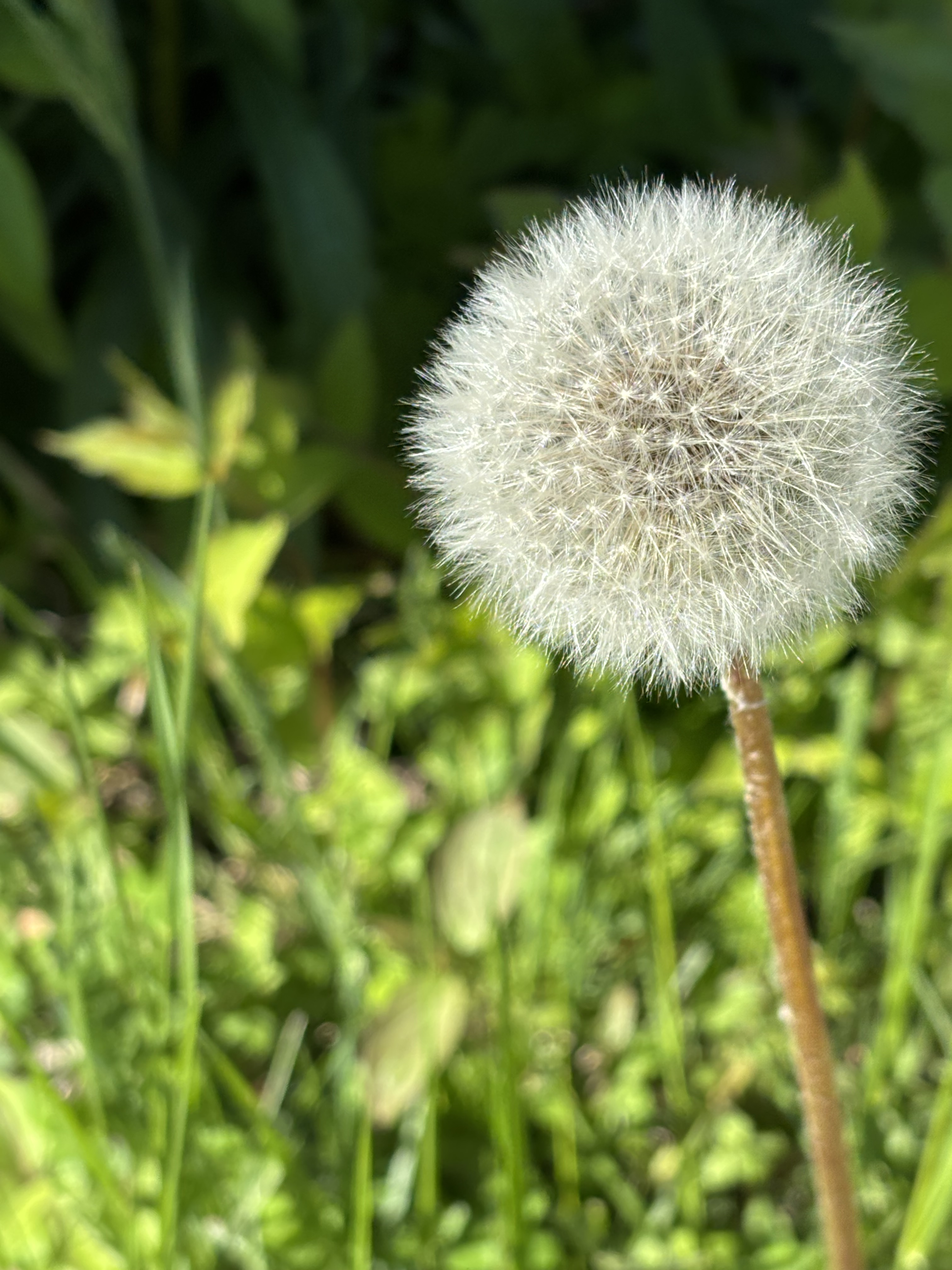
“Lookit,” she said, showing me the photograph that she’d just taken of the dandelion. “Isn’t it perfect?”

Perfect (adjective): flawless. ideal. magnificent. A word of unity. Belonging.

“Yes,” I said, aware of the story-limits of my language. I wondered what it might take for us “to be-ers” to see ourselves as perfect – as a given- to be as perfect as the dandelion.

read Kerri’s blogpost about THE DANDELION

likesharesupportcommentsubscribe…thankyou.

A Refresher [David’s blog on DR Thursday]

Jim E guided us – actors and directors – through an exercise he called The Spirit of Play. He was a master teacher. Afterward I made copious notes so I, too, might lead others to their spirit of play.

Through my time in the theatre I guided many groups through the sequence. Later, in the corporate world, finally understanding the essence beyond the progression of steps, I led lawyers, business folk, teachers, coaches, consultants…through variations of Jim’s original workshop, all meant to bring people back to themselves, back to their spirit of play. It was my north star, “People just want to play,” I assured my doubtful collaborators.

Play is an umbrella big enough to safely contain the serious stuff. The serious stuff by itself is too small a container to allow for play. The inspiration-well will always run dry if play is banished from consideration. Unfettered imagination, freedom of exploration and expression, so natural as a child, is shackled when the spirit of play is burdened by a purpose called win or lose.

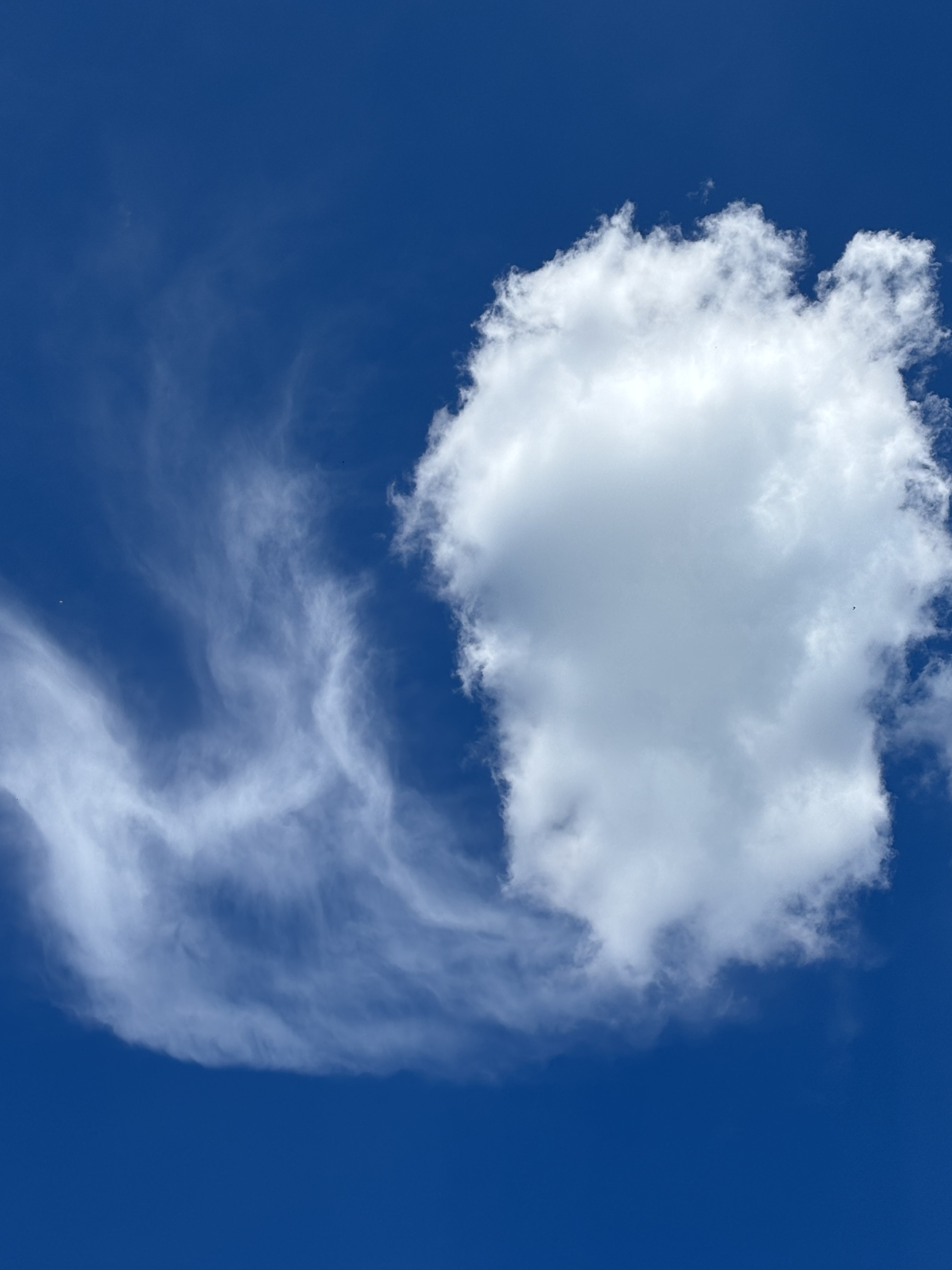
I recently reminded myself that cloud gazing feels good and requires no other purpose for doing it.

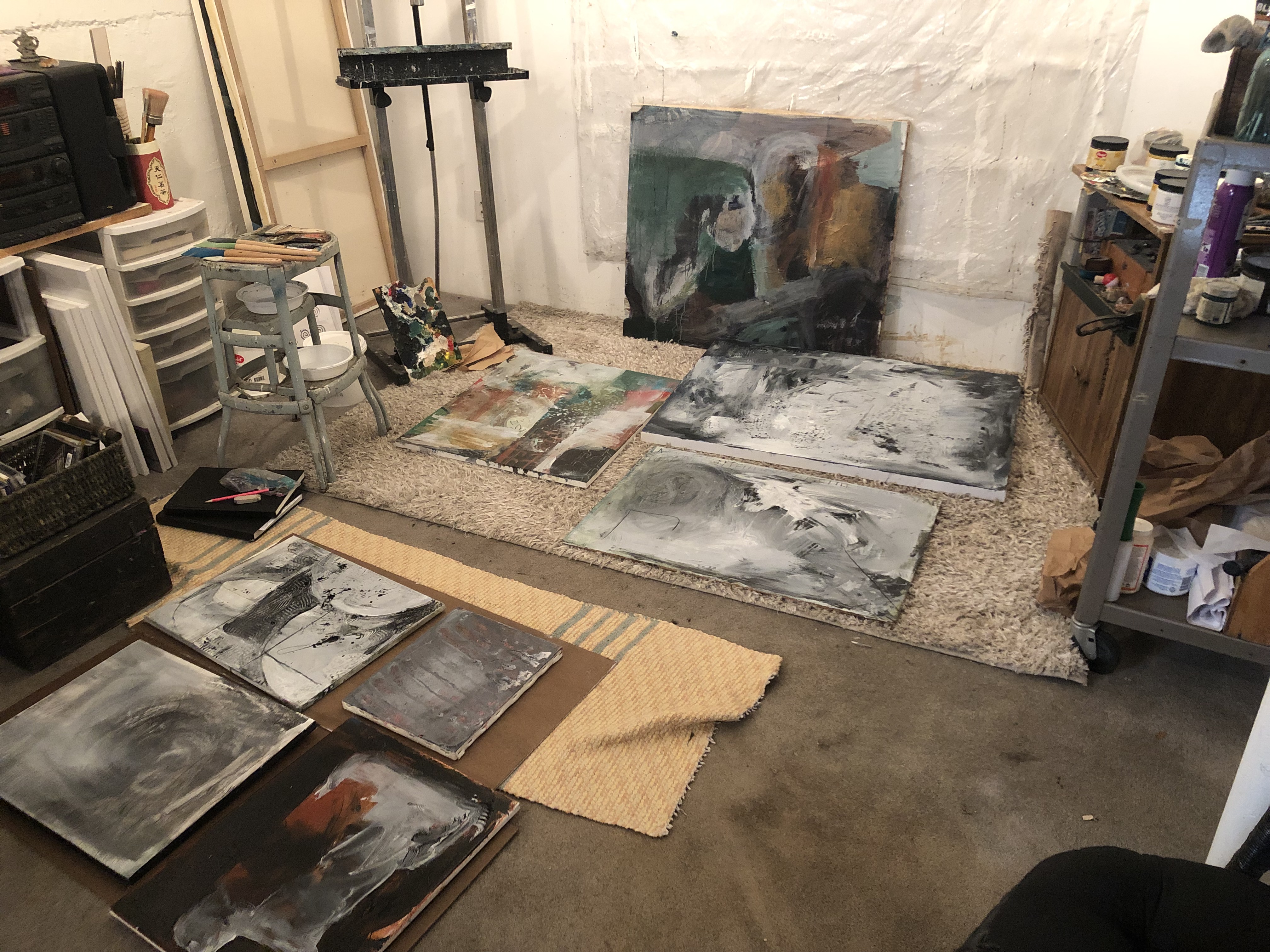
Clearly needing a refresher for my own spirit of play, I went into the studio, pulled out eight canvases, mixed a bucket of paint, grabbed several big tools, scrapers and rags, and to the tunes of Jerry’s jazz band, I spattered, pulled, rolled, scraped, smeared. No thought was allowed, not goal was considered. Nothing serious was entertained. I dropped my very-important-role of “artist” and laughed and laughed.

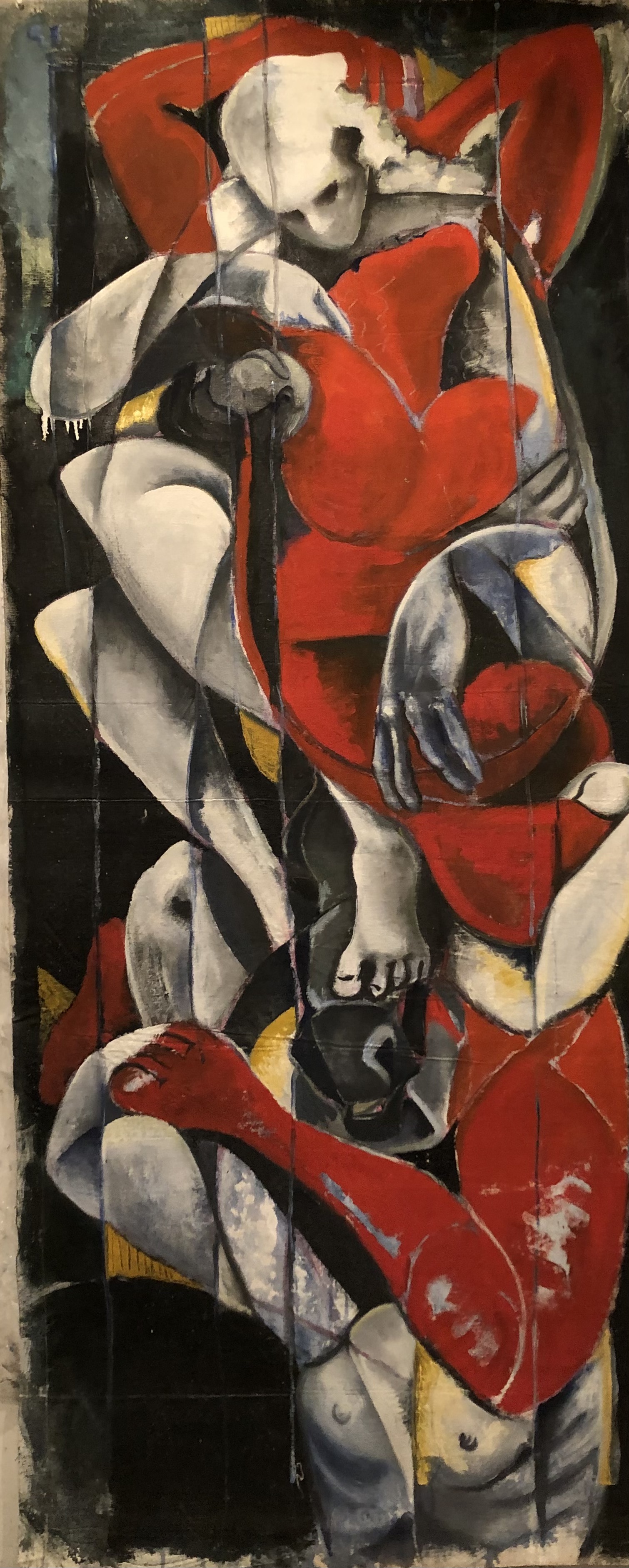
KDot & DDot See An Owl, 24″x48″, acrylic

read Kerri’s blogpost about CLOUDS

likesharesupportcommentsubscribe…thankyou.

Howling Inside! [David’s blog on DR Thursday]

“A great fire burns within me, but no one stops to warm themselves at it, and passers-by see only a wisp of smoke” ~ Vincent Van Gogh

It’s become an inside joke. She always protests when I write the phrase, howl-with-laughter. “You do not howl,” she insists, “You use the word ‘howl’ but it’s never true!” She’s a tough editor, demanding truth. I insist that I am howling with laughter on the inside and what hits the surface only looks like a giggle. It’s really a howl.

So far she isn’t buying it. Now, when we are in public and I find something amusing, I am quick to point out that my grin is really a howl. “Did you see that!” I exclaim, “That’s me howling.” She rolls her eyes.

It’s also true when that when we are out-and-about and I see something that irritates me and I scowl, I say, “Did you see that! That’s me howling.”

“Me, too,” she says.

She is more apt to accept the truth of my inner-editor-claim when I am suppressing a howl of disdain.

When I was in the first phases of my artist-life many of my paintings were howls that hit canvas. Howls of pain. Howls of resistance. Howls of fear. Even now I am not sure what a howl of laughter would look like on a canvas but I’d like to find out. I’m ready for a full spectrum howl.

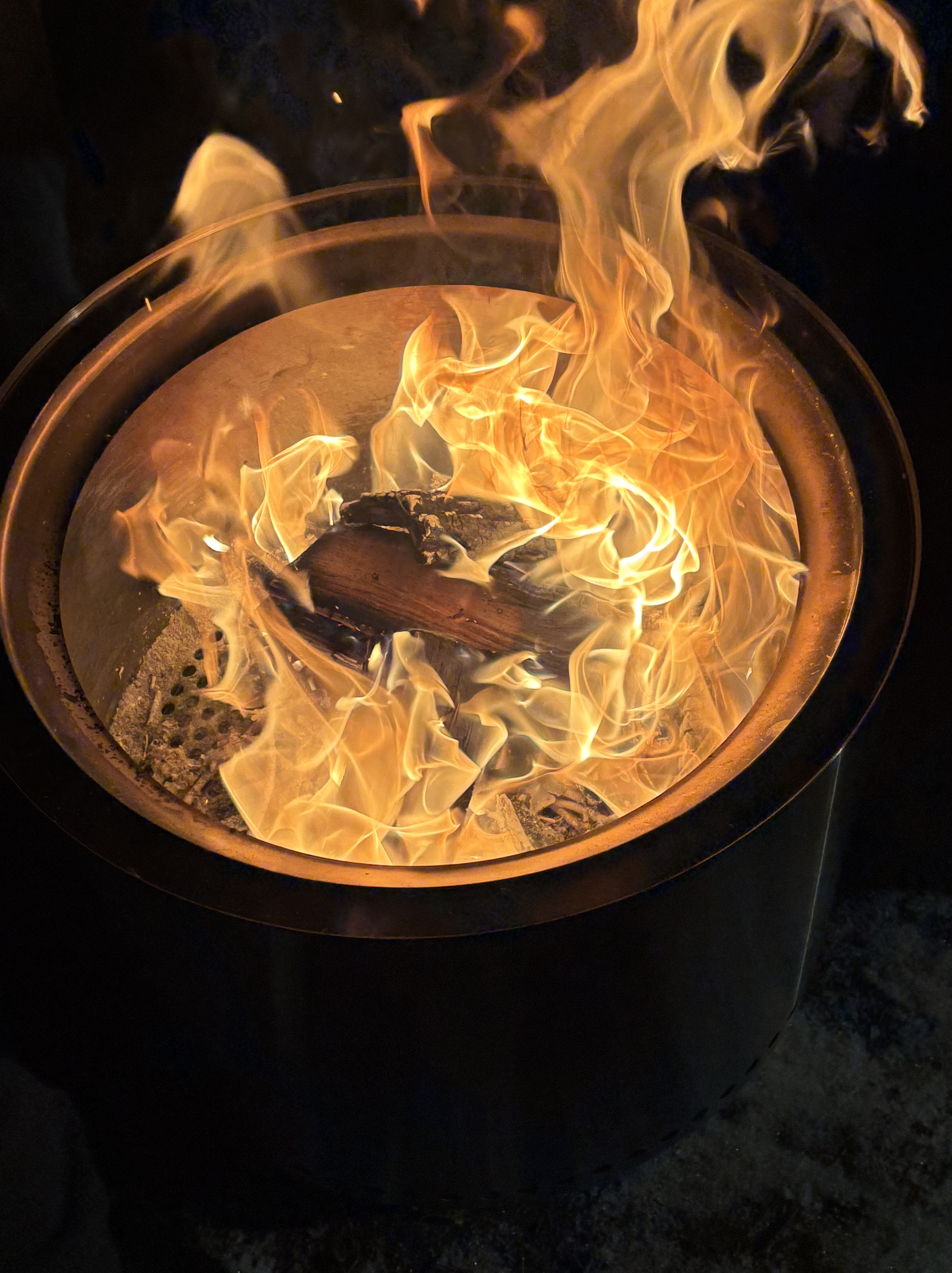
Weeks ago Horatio suggested that I let myself paint “crap.” He meant that I should howl on canvas without discernment or restriction. Howl with abandon. A few days ago he attached one of Kerri’s photos in an email – sending it back-at-me – and wrote: “Dude. Make some crap from this absolutely stunning photo. Riff on it. Mess with it. Do it more than once. There’s juice in this image.” He’s working for my muse, stoking my fire, and I hope she’s paying him appropriately.

Of course, Kerri said, “Did you see what he wrote about my photo?” she gloated, “He said it was absolutely stunning. Stunning. Absolutely. Stunning. There’s juice in it. Juice!”

I maintained my best poker face. I allowed no expression to hit the surface. I did not want to feed her swagger. She smiled, saying, “I know. I’ll bet inside there you are just howling!”

one of my howls, a totem circa 1990

Visit my gallery site

read Kerri’s blogpost about THE FIRE

likesharehowlsupportsubscribecommentpaintcrap…thankyou!

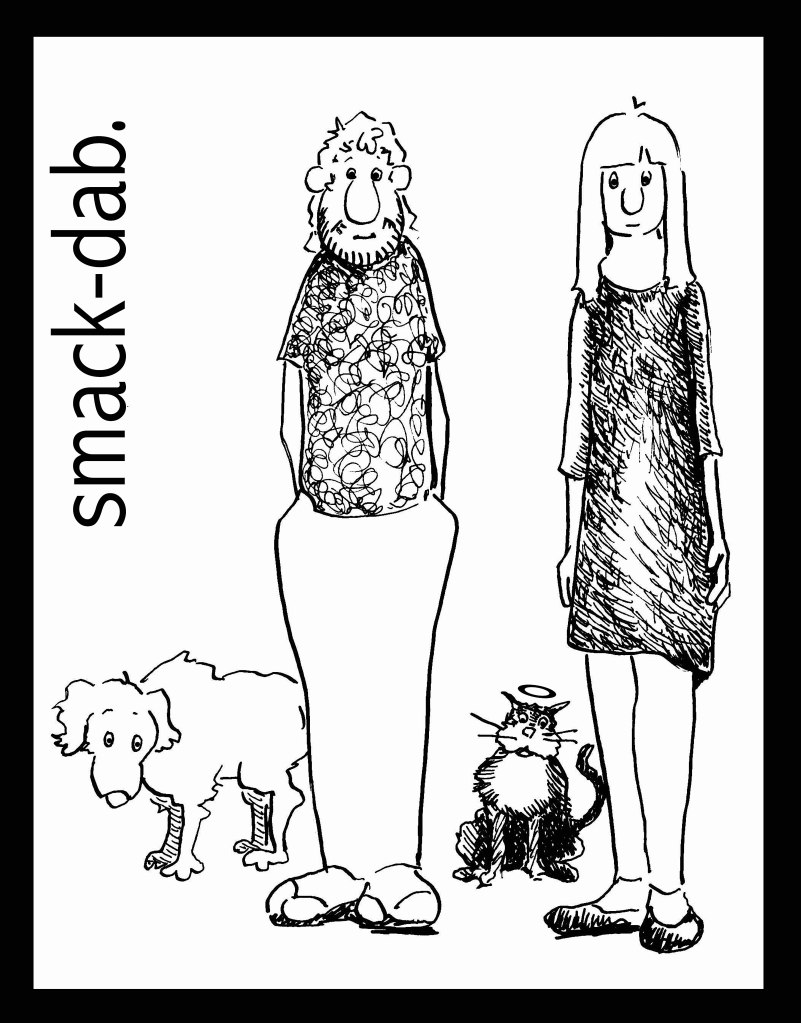
Predictable [David’s blog on saturday morning smack-dab]

Humans 300 years from now will look on our times as the nadir of human expression. They will marvel at our creation of something so ingenious as social media and then wrinkle their noses at how we used it.

“Predictable,” they will sigh. “If anyone can say anything in a medium driven and magnified solely by popularity – then it should have come as no surprise that some people will-in-fact say anything to hoard popularity.” Likes. “They must not have known that people will do anything for attention,” they will roll their eyes.

“Our ancestors enjoyed free speech,” they will scribble in their notes, “but were a people with no sense of decorum.” Their discovery will spur a new field of research: when in human development did people evolve enough to place decency above their need for approval? When did people evolve enough to consider the impact of their words, to understand that that their actions affect the greater good?

read Kerri’s blogpost about SAYING AND DOING

smack-dab © 2024 kerrianddavid.com

like. share. subscribe. comment. support…thank you.

ILY [David’s blog on Merely A Thought Monday]

Shapes become symbols. The alphabet is my evidence. Or the silhouette of a dove carrying an olive branch. Two equilateral triangles merged into a star, once the property of Venus and now under the stewardship of David.

Occasionally I incorporate calligraphy-like strokes in my paintings. The marks resemble the Chinese alphabet. Patrons have asked me what the symbols mean? I’ve learned to smile as if keeping a secret. They want the lines, the symbol, to have a meaning. I’ve learned not to rob them of their wanting. “What does it mean to you?” I ask. A question answered with a question.

Kerri saw this marking in a felled tree. “It’s I love you in sign language!” she exclaimed. ILY. Her family flashes the hand sign for I Love You when it’s time to depart. It’s the last thing we see as we drive down the street, turn the corner.

Lately, our world is populated with emojis. Heart, heart, heart. So many yellow faces with so many possible expressions. Symbols adding nuance to symbols. “What does this one mean,” I sometimes ask. I am a clumsy user of emojis. It’s yet a foreign language and I have been reprimanded for symbolizing the wrong thing; sending the wrong message. “But I love this whacky face!” I insist. I like using the wrinkled face, one eye open, tongue sticking out.

She rolls her eyes. I flash the I Love You sign. She rolls her eyes again only this time it is followed with a warm hug.

A hug. It’s universal. The best of all symbols.

read Kerri’s blogpost about ILY

like. support. share. comment. ponder. query. skip. swing. dance.

buymeacoffee is a symbolic offer to the creators of symbol in sound, on paper, and in other not-yet-named dimensions.

Whack! [on Merely A Thought Monday]

This is a tale of coincidence.

If you want to learn some great Italian recipes – or just simply want to pick up some great cooking tips, visit Sip-And-Feast. We stumbled on their YouTube channel a year ago and have been desperately hungry ever since. We fantasize about making a trip to Long Island and showing up on their front stoop just in time to taste test their latest recipe. We don’t care what’s cooking since everything they make looks delicious.

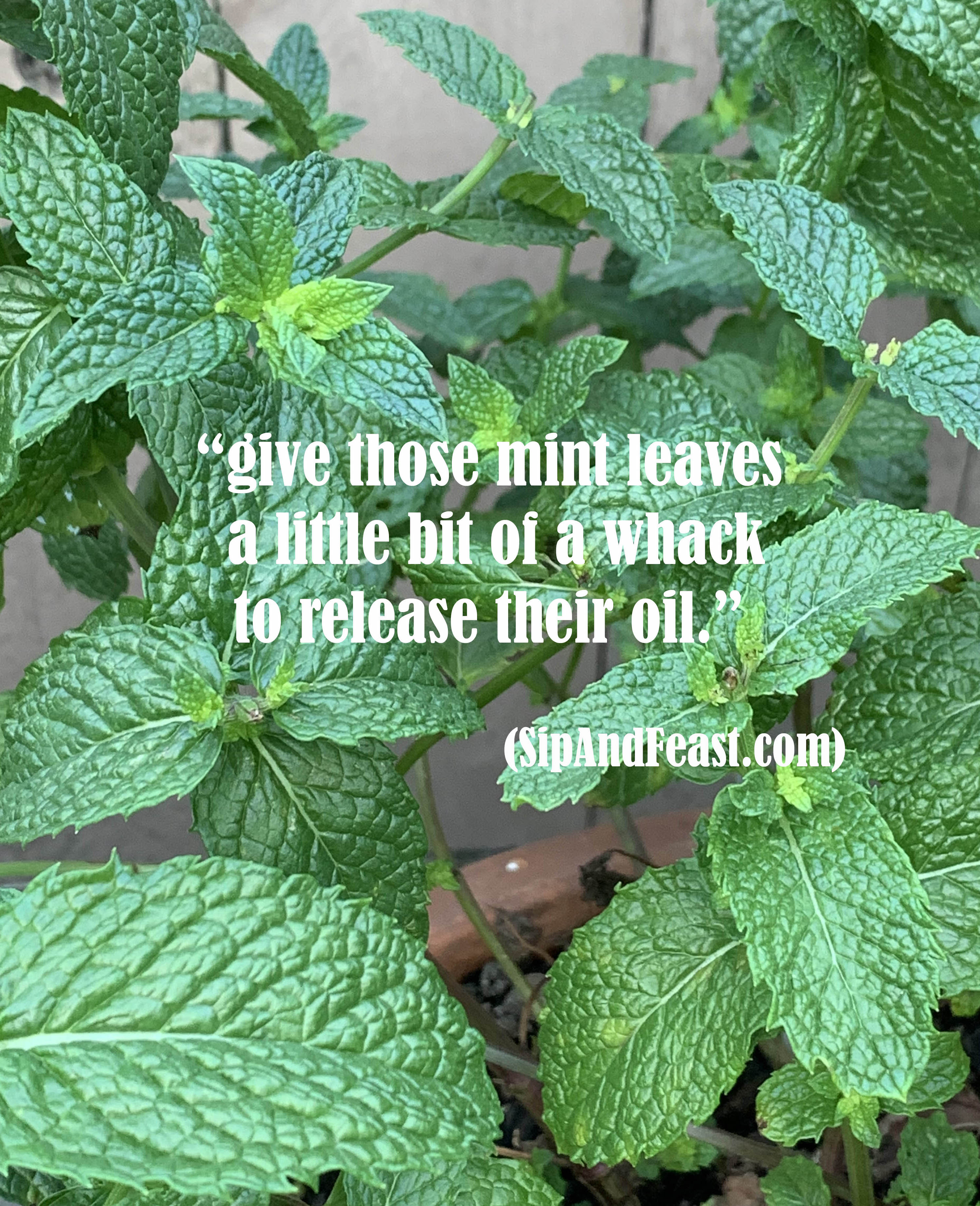
I howled with laughter in a recent installment when Tara Delmage suggested whacking mint leaves to release their oil. My current two-pages-a-day-book is called A Whack On The Side Of The Head: How You Can Be More Creative. In an instant I imagined people as mint leaves needing a whack to release their creative-impulse-oil. It was a hilarious image.

It was an accurate image, too.

I’ve coached a lot of people in my life. The pattern is explicit. Erecting barriers against creative impulses comes standard in all human beings. As social animals, conformity is a vital skill. Fitting-in equates to survival. The dark-side of fitting-in is the requirement of walling-off natural expression. It’s why so many people seek their voice or try to find the time but never find the time to write their book or paint their painting. It’s scary to step out of line.

It’s the reason artists are often seen as wild or dangerous: they exercise the muscles of free expression. It’s also why artists are essential: they counter-balance the conformity. They open doors in the wall. They serve as a gravitational pull toward the mint-oil of natural creativity. They know the secrets of a good whack on the side of the head. They know the right moment to deliver the shock. They know when to encourage chaos and when to infuse some order. The push-me-pull-you of progress.

From the wisdom of Sip-And-Feast I can now offer this piece of solid advice: go make yourself a nice limoncello spritzer. The recipe for the spritzer will provide you all the information you need to pop open your creative flow.

Bon appetit!

read Kerri’s blogpost about MINT LEAVES

share. like. support. comment. many thanks!

Sail Toward It [on Not So Flawed Wednesday]

Gordon MacKenzie ends his wise little book with this: “You have a masterpiece inside of you, too, you know. One that is unlike any that has ever been created, or ever will be. And remember: If you go to your grave without painting your masterpiece, it will not get painted. No one else can paint it. Only you.”

His analogy – his encouragement – is to let go of others’ expectations and paint your painting, not the paint-by-number painting that you think is required of you.

I wrote this note to myself over ten years ago: you do yourself a terrible disservice to doubt what you know.

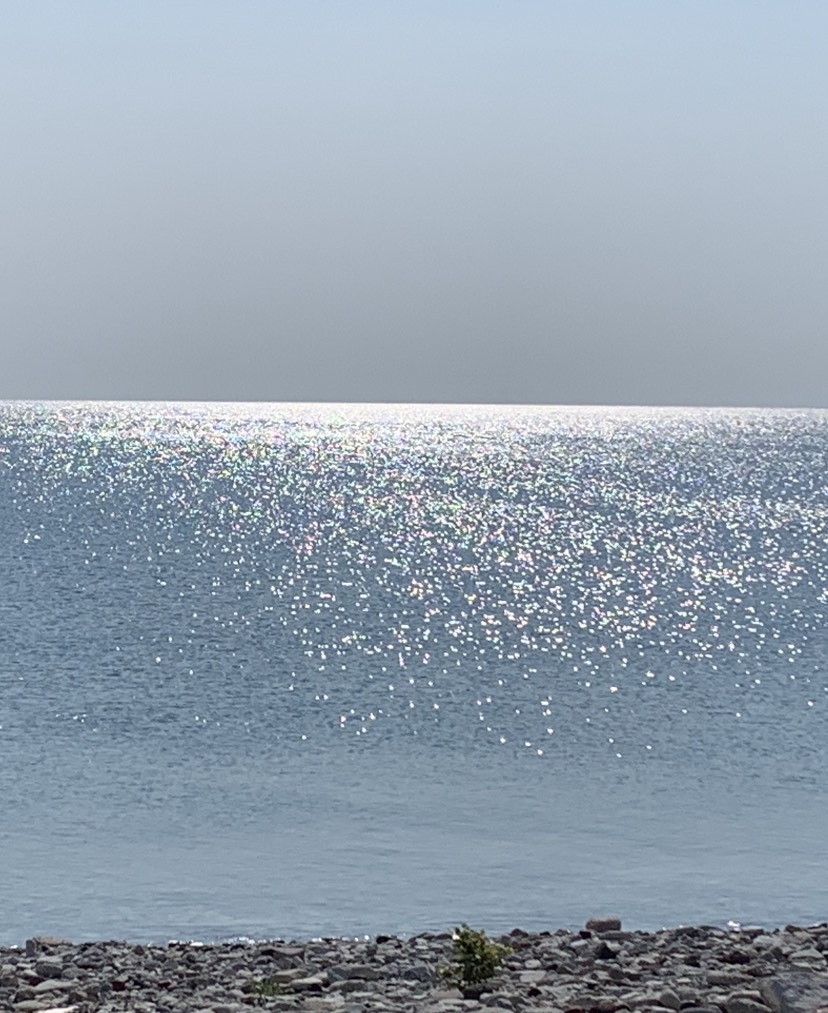
I know the world is round. If I set off on an adventure to the unknown I will never touch the horizon. It will always call to me. And, if I sail toward it long enough I will arrive back where I started. Home.

If I believed the world was flat, I would delude myself into thinking that I could catch the horizon – and touch it – merely a moment before I sailed over the edge and into the dark abyss. I know this: no one holding a flat world belief will knowingly sail toward the horizon, the great unknown. That would be crazy! No one willingly sails into the abyss. Better stay safe in the harbor! Color within the lines!

Masterpieces are made by sailing into unknown territory. Releasing control and discovering what’s just over the horizon. And, what’s just over the horizon is more horizon! More questions. More experiences. More discoveries. More tastes. More textures. More sounds. And, to sail toward the horizon with abandon first requires an understanding that the world is round. It is all horizon.

Paint-by-expectation is the road of a flat-earther. Perfection is a false horizon. Try to touch it and the abyss is yours.

Young artists jump back and forth between the flat and the round earth philosophy. They have to. Vulnerability is a learned skill and comes easily when the quest to touch the horizon is abandoned. In other words, painting a masterpiece comes when the quest for a masterpiece is ditched. When making a mess takes precedence over “doing it right.” When following your bliss determines the rules you uphold.

It’s counterintuitive. There’s a place where control and freedom blend into one. You’ll find it when you aim at the unattainable horizon.

read Kerri’s blogpost about THE HORIZON

like it. share it. support it. comment on it. we appreciate it.

Name It [on Merely A Thought Monday]

The artist, Joe, had us write our names again and again until the lines lost their meaning, until we realized the lines were…lines. And shapes. Until we realized that our names were drawings. Unique and easy. His message? Everyone draws. And, more importantly though less obvious, the lines do not carry the meaning, the person infuses the line with meaning.

Visiting a pal in the hospital, I watched a heart monitor. More lines. Pattern. Waves. Visual indications of the drumbeat of the body. The drumbeat of the body propels the rhythm of the poet’s pen. Iambic pentameter. Short, loooong. Short, loooong. The poet’s lines reach through time and space, heart-meaning yearning to pulse through another person, to perhaps synchronize with their heart-wave pattern. Centuries may have passed between the inky scribbles from the poet’s pen to the person absorbing the meaning into their beating heart. Time travel. Ancient heart touches the living. “When to the sessions of sweet silent thought/ I summon up remembrance of things past…”

Watch a child learning to “write” their alphabet. Assigning meaning to shape. Crayon fist making lines. The refined adults see the shaky line as crude. Cute. Titanic imagination squeezes itself into alphabetic parameter. The little hand becomes a giver of meaning to shape and line. Expression. Learning to combine the limited shapes for greater and greater complexity. The conundrum: among the first lines we learn to scrawl are our names yet these few lines carry a question that can never be answered. Who am I?

The artist, Joe, had us dash off our names again and again until the lines seemed nothing more than a doodle. The meaning is not found in the lines; the lines and shapes merely point the way to the question.

read Kerri’s blogpost about THE CONTRAIL LINE

share or like or buyusacoffee.com. better than all, let us know you are out there.

Make A Unique Mark [on Not So Flawed Wednesday]

Take a moment and write your name on a piece of paper. Your name, captured in lines made by your hand. No other hand in the universe will make those lines in exactly the same way. No other hand will have the connection to the scribbled name quite like you do. It’s yours. It’s you, expressing your unique signature, done so often as to be unconscious. Do you remember the first time you made those lines?

Expression. That connects. You.

My parents kept a box for me. It has samples of my first quaky lines. It has crayon drawings, scribbles that had yet to meet the notion of containment. No knowledge of should.

I have many, many times been asked to make a case for the arts. Make a case. Amidst the assumption of no-value. I ask the people sitting behind the big table if they have children or grandchildren. I ask them if they ever giggled with pleasure to watch their child smoosh paint with their fingers. Why? Did they tape the smoosh-mess to their refrigerator? Why? Did they store the first scribbles, the first crayon drawing, the first finger painting in a box? Why? Are they hoping that their someday-or-now-adult children will remember their march to unique expression? What price would they, sitting behind the big table, place on those little hands making prints on paper? What is the value of the infinity that those little hands find?

The freedom of expression. Yet unhindered by a life-message that your unique and personal expression must achieve some-thing. What is the value of finding that freedom again, as an adult? Expression sans hinder. No fences. No expectation. What is available when adult fingers are free-like-a-child to wildly smoosh through paint or sing with abandon? What is the value of expression?

I remember the first time I sat in the audience of a theatre and sucked back my sobs. I was so deeply moved by the performance yet aghast at how freely (and loudly) I was about to express my feelings.

I remember the day the woman came into the gallery, saw my painting, and stood before it as if slapped. She cried. And cried. And cried. I cried seeing her see me-in-my-painting.

Have you ever stood on a mountaintop and felt a part of something bigger? Have you ever closed your eyes and let the aria wash over you? Have you ever, driving to somewhere, turned up the volume and sang loud and passionately, the song stirring your soul? Have you ever watched a child play with abandon and feel with utter certainty life stretching beyond your time-on-earth?

Have you ever not given voice to your questions? Silenced your thoughts? Withheld your voice? What would you give, in those moments, to understand the power of playing the fool? The necessity of not-needing to-know-the-right-answer? What would you give to know the courage of taking a step simply because your footprint, your unique print, might help someone, someday, do as you are doing, take a new path that will guide them back to themselves? Back home? What would you give to smoosh your hands with abandon through the metaphoric paint?

What exactly is the value of making the unique mark on the page? Yours? Or the song played that lifts you out of your despair and fills your heart with light and hope?

read Kerri’s blogpost about ART

If you like this post, pass it on. Or let us know your thoughts. Or buymeacoffee.com. All are greatly appreciated.