This morning it occurred to me that, since the sitting president likes to slap his name on everything, we ought to lean into his need and help him out. Trump Cyclospora. Trump Measles. Trump SNAP Elimination. Trump Healthcare Calamity. Trump Food Chain Collapse, Trump Housing Crisis. Trump Un-Affordability Campaign. Trump D.C. Defilement, Trump Superpower Suicide, Trump Military Misuse…There are so many! More and more every day. Trump Global Humiliation.
I learned in kindergarten that it was appropriate to give credit where credit is due.
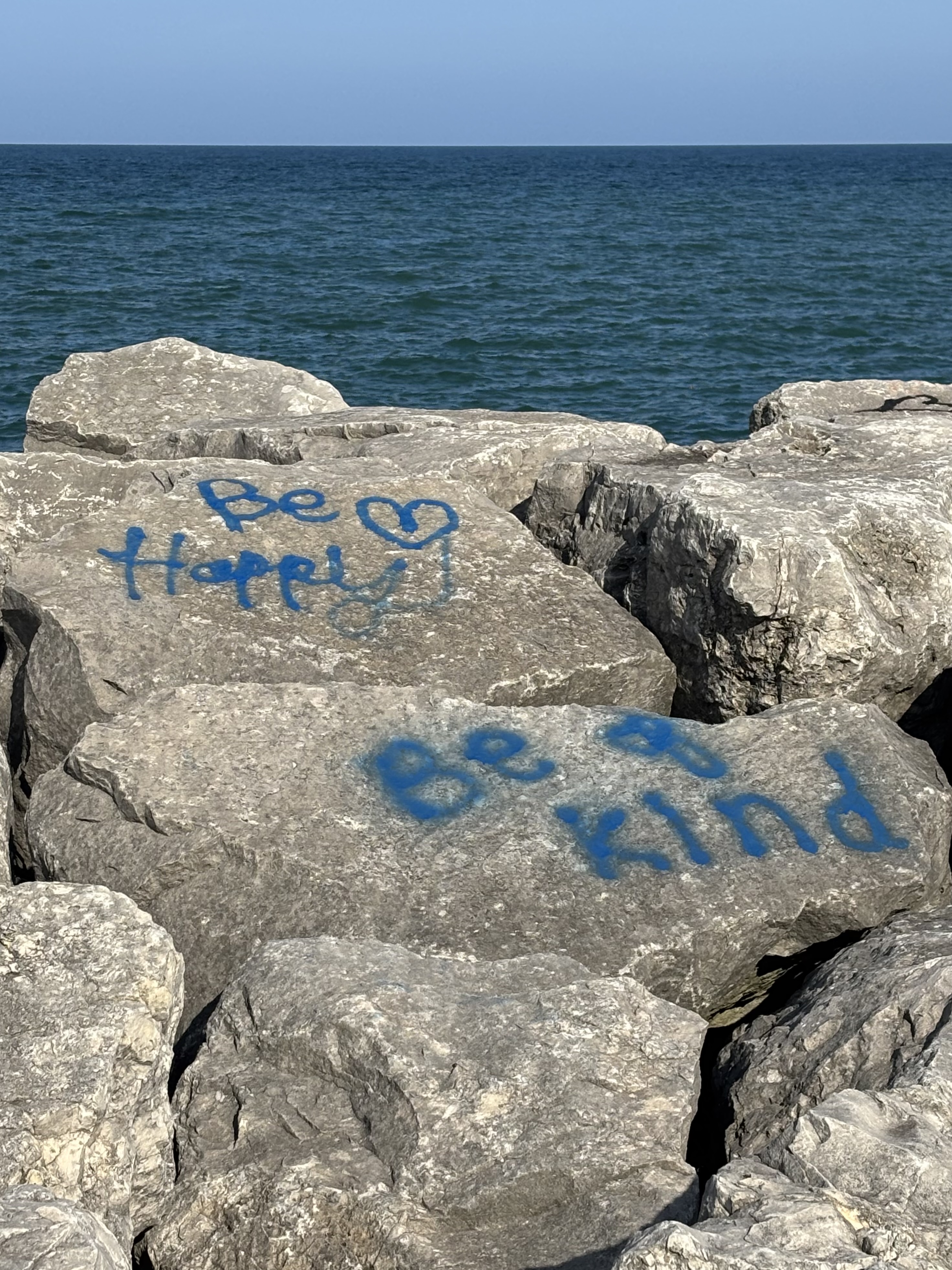
Walking the path that connects the marina to the channel, the rocks of the seawall are periodically painted with slogans and messages. I saw, “NO KINGS!” “Be Happy!” and “Be Kind.” All messages were the same color so I’m assuming they came from the same graffiti writer. The NO KINGS rock was directly related to the Be Kind and Be Happy rocks.
To be (verb): to exist, to have a specific identity or quality, or to occupy a place. “To be” is a verb. It is an action. We are what we do. To be kind is to do acts of kindness. Same-same.
Kindness is a choice.
Viktor Frankl wrote that happiness follows: chasing happiness is folly since it is the blossom of acts of kindness or generosity. Happiness arises when we focus on something outside ourselves, like helping another person, or committing action to a greater purpose (service to others). To be kind is a doorway to being happy.
If you have not read Heather Delaney Reese’s post (8.26.26) comparing the 80 years of actions, the 80 years of choices, made by Dolly Parton with the 80 years of actions and choices of Donald Trump, it’s worth a read. Dolly’s being was kind and happy because her actions were considerate and generous. The other guy, the sitting president, accumulates stuff while stamping his name on everything. His being is mean-spirited and selfish. He can’t seem to find the happiness he’s looking for.
It’s a comparison that illuminates the gap between our nation’s rhetoric and our current actions. It is a comparison that begs the question who we’d rather model, whose example we’d rather follow?
“If one speaks or acts with a pure mind, happiness follows like a shadow.” The Dhammapada
Happiness followed Dolly like a shadow. The other guy? Well…
I don’t know about you but I’d rather walk in Dolly’s shadow.
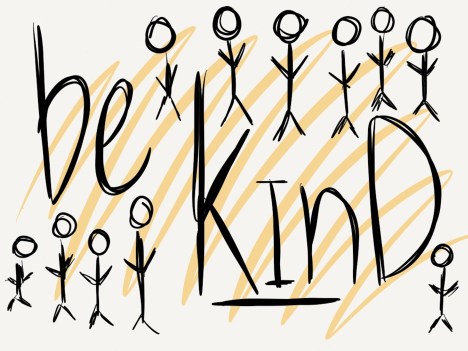
read Kerri’s blogpost about KINDNESS
likesharecommentsupportthankyou!

Filed under: Identity, Language, Merely A Thought Monday, Uncategorized | Tagged: actions, artistry, david robinson, davidrobinsoncreative.com, Dolly Parton, happiness, Kerri Sherwood, kerri sherwood itunes, kerrianddavid.com, kerrisherwood.com, kind, kindness, service, story, studio melange, the melange, to be, Viktor Frankl | Leave a comment »