Have A Conversation

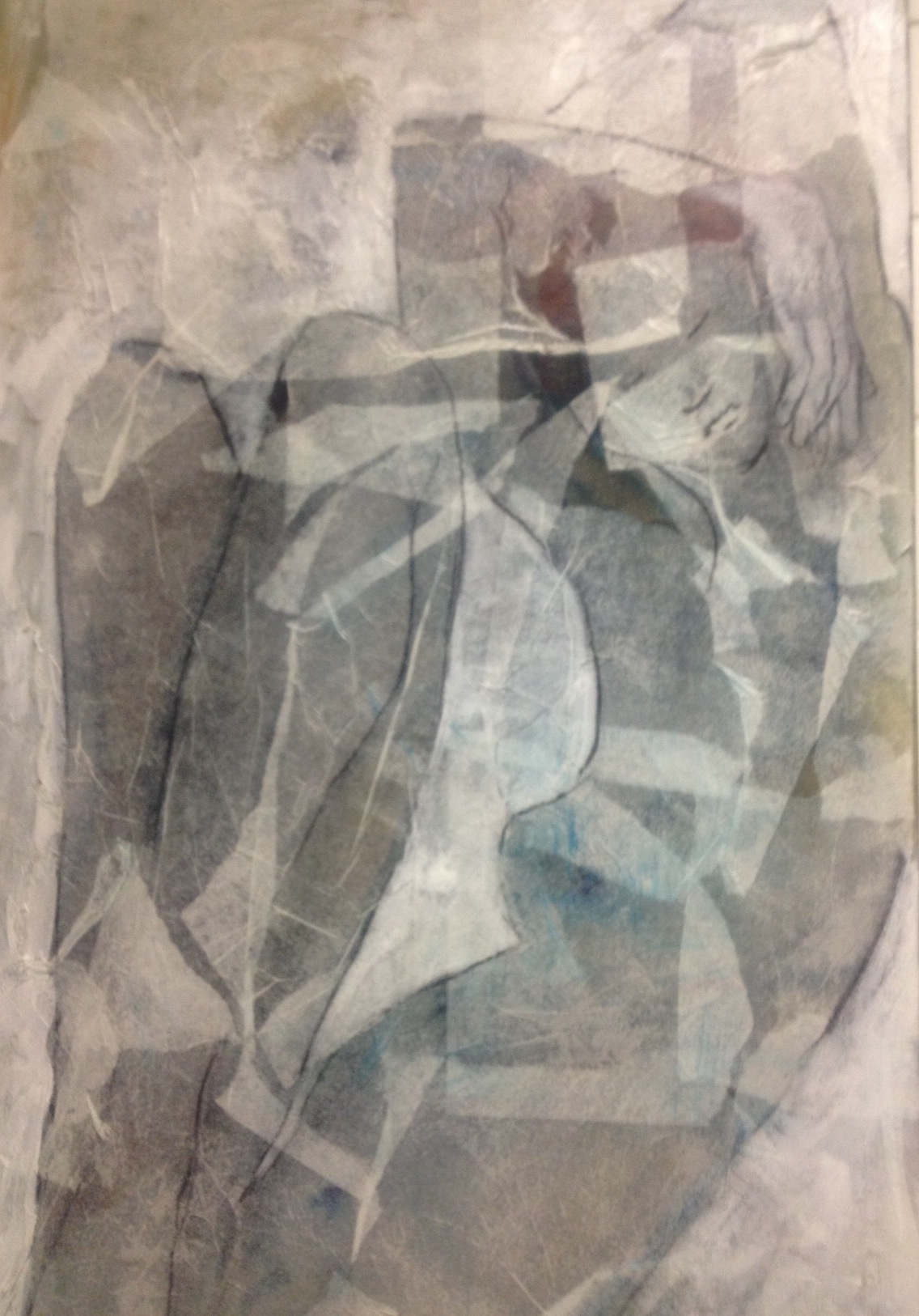
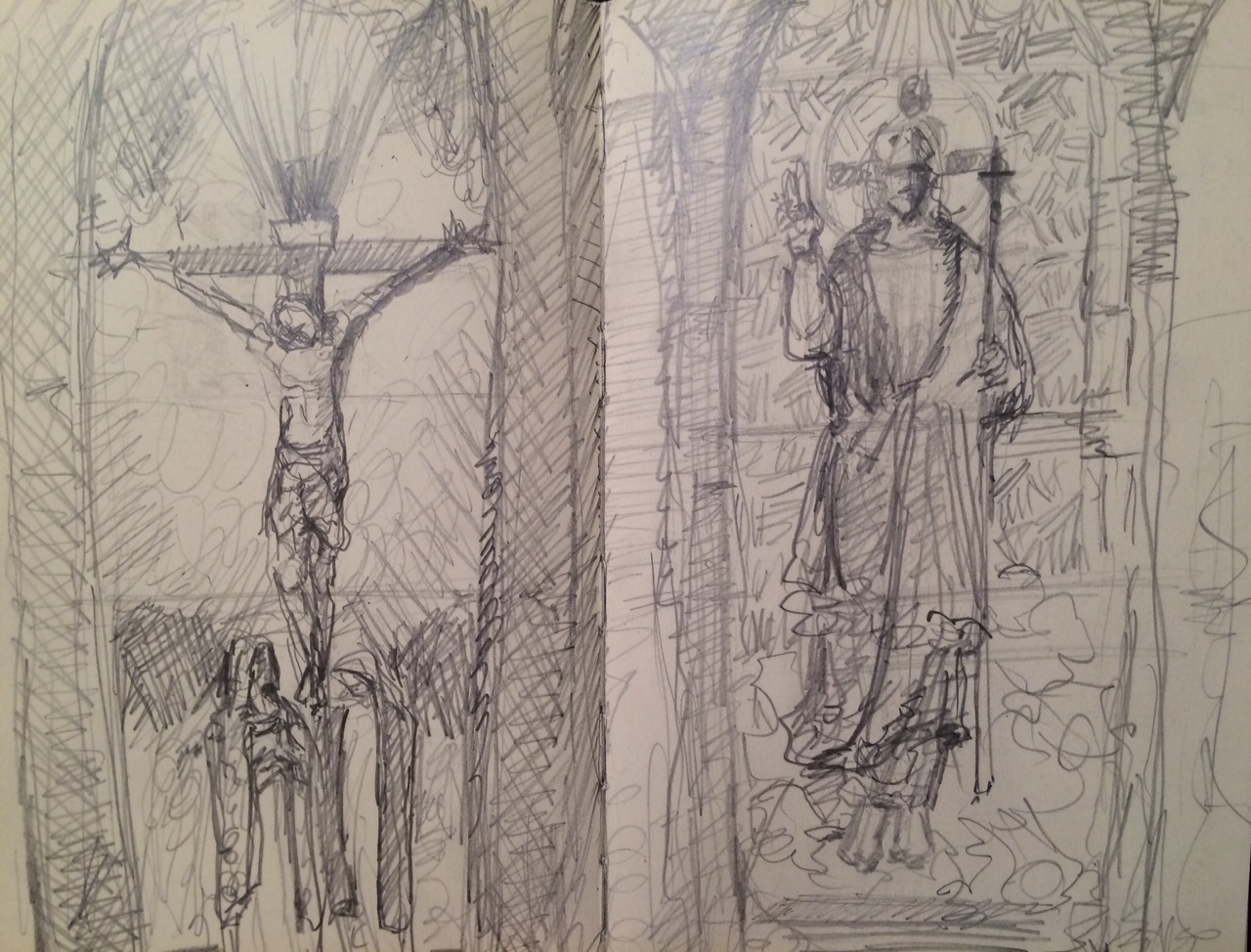
my quick sketches of two of the stained glass window panels

my quick sketches of two of the stained glass window panels

Yesterday I learned that my conversation with the stained glass window was only on hiatus. Several months ago we simply stopped talking. In the silence I thought the conversation was complete. For almost two years we had a weekly chat. I took lots of notes.

I recognize that one is not supposed to have chats with windows – at least not admit to it. Master Marsh teased me saying, “There’s help for things like this.” I’ve decided that my conversation with the window is more ordinary than odd: plenty of people around the world talk to statues. Most of us have had silent reckoning with the sky. I’ve witnessed mechanics talking to their tools and bakers wooing their dough. Who hasn’t cursed the object of a home fix-it job-gone-wrong (plumbing regularly gets a tongue lashing from me!) or praised a project done well? Traffic gets a regular talking to. In this region, at this time of year, more than a few brides make deals with the weather. A soul in exchange for sunshine.

Who hasn’t, in a moment of turmoil, looked inside themselves and asked for help? Who hasn’t uttered a quiet thank you or asked for guidance or made an appeal? Call it prayer, meditation, epiphany, catharsis, intuition, gut instinct, reading the signs, hearing the call, or communing with nature, it’s a conversation.

I’m not the only artist – or scientist for that matter – that, in moments of flow, feels as if something bigger is coming through. In that sense, all of my paintings might serve as the record of a conversation with something bigger. Writers often speak about having the experience of the characters writing themselves, of following rather than creating. Following, surrendering, allowing, listening, responding, getting out of the way. Play the chords long enough and you no longer need to think about them. In the land beyond thinking about it, music becomes possible. It’s a conversation.

Sitting on the chancel, listening to Kerri play, I stared as I often do at the morning light pouring through the colored glass. I studied the symbols. Birth and death. Tree of knowledge, Tree of Everlasting Life. The Grail standing between two flames. It’s a repetition in symbol of the same idea. Born into an experience of duality and distinctions, a world fighting over its differences, we have the opportunity to walk the middle path, the unity consciousness, the “something bigger.” “Between the two, one,” I the heard the window whisper. “It’s simple, really.”

a quick sketch of all three panels: birth, death, and the middle way.

a quick sketch of all three panels: birth, death, and the middle way.

Save

Cut A New Path

ComfortNow

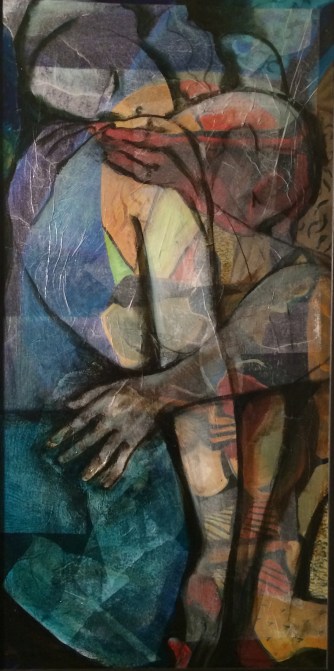
The latest in my Held In Grace series. This is Comfort Now

It seems to me that most of our days on this earth are spent moving through patterns, conscious or unconscious. These patterns are the rituals of our lives. Some of the rituals are easy to see. For instance, what is the sequence of actions you perform before going to bed each night? What about your ritual of rising each day? The care and feeding of Tripper Dog-Dog-Dog and Babycat are central to my rising and retreating rituals each day. We move through the same actions every morning and evening and I delight in the warmth of the ritual.

Some of the rituals are not so easy to see. Researchers tell us that most of the thoughts we think every day are the same thoughts we had yesterday. We mostly think in patterns (it makes sense once you recognize that language is constructed of category and pattern). We talk to ourselves, cutting paths through the forest of our minds and, once we’ve established a trail, we like to stay on it. Easy is often unconscious. There’s nothing wrong with staying on the easy trail if the path you’ve cut, your repetitious thought-ritual, is self-loving. The rub: ritual paths of self-loathing and self-limitation are also easy, well-worn paths and that makes them both unconscious and hard to leave.

Cutting a new path through the mind forest begins with recognizing that new paths are always available. They just aren’t easy to establish. They require new practices. They require surrender and the first bit of surrender necessary for cutting a new path is the ritual giving-over of needing-to-know-anything; new paths, by definition are unknown.

New paths are not comfortable precisely because they require attention, consciousness.

My teachers taught me that all stories worth telling are stories of transformation. The main character or characters will know something at the end of the story that they did not know at the beginning and the new knowledge will be hard-won. That’s what makes the story worth engaging. Hamlet is a much different character in Act 5 than he was in Act 1. His peace was difficult to come by. He had to learn to surrender. To cut a new path he had to make a practice of peace.

The same ideal applies to the stories we live off the stage.


Stand In It

photo

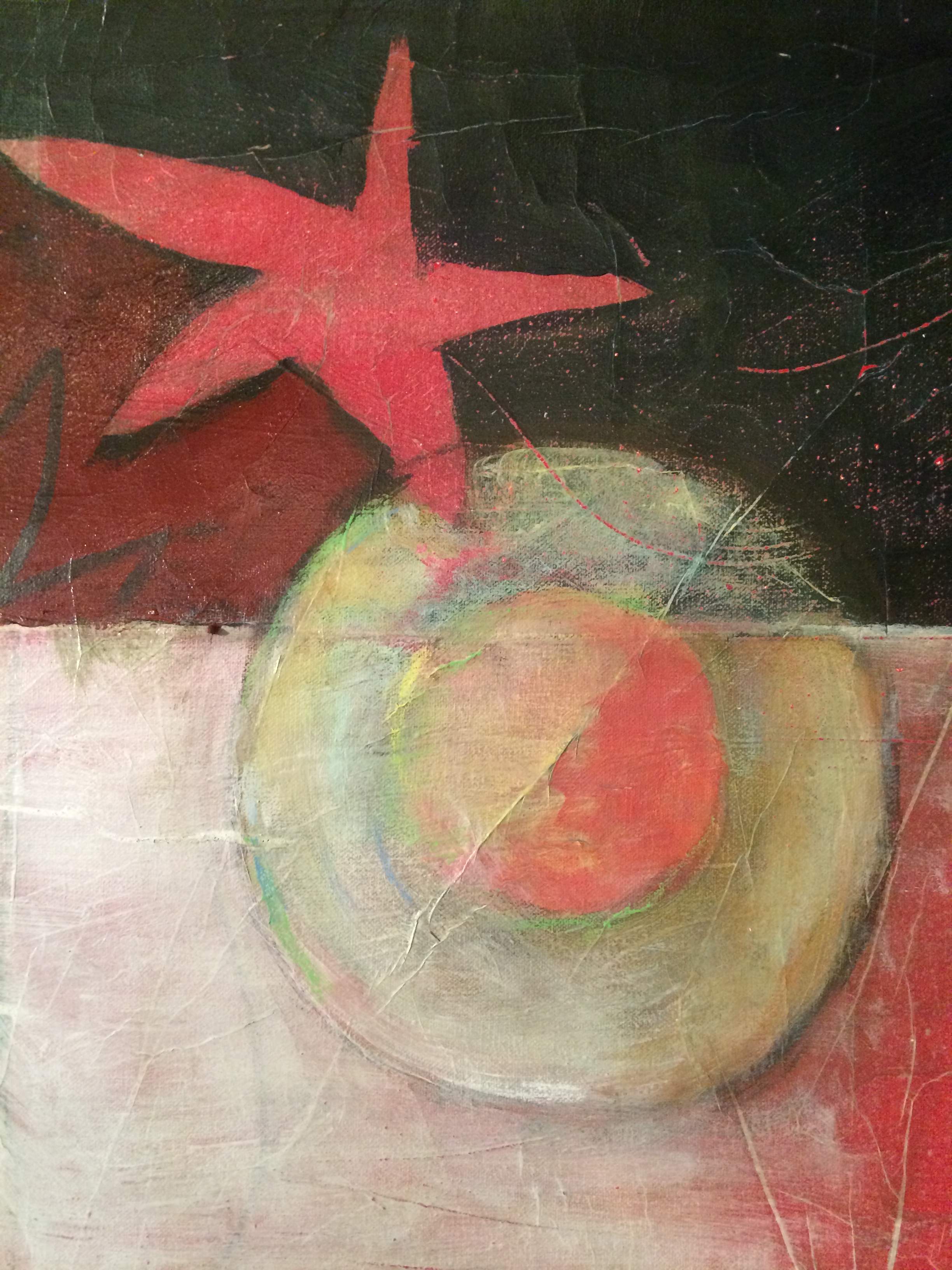
a detail from a recent painting

A surprise package came in the mail. It was a gift from David, my artist’s artist. He sends me things to feed my artist soul, to stir my pot or help me sort out my dilemmas. This gift is more timely than most; it is especially relevant for me now. It is a book of photographs and essays by Walter Kaufmann called Time Is An Artist. I’ve barely cracked the cover and already know it carries the wind that will fill my becalmed life-ship.

This is a quote from the first essay: We always live at the limits, but we are rarely aware of it.

I woke up this morning awash with gratitude for a man who stood in line behind me at an airport ticket counter over 30 years ago. I was returning from Europe. I had a hundred dollars and some lose change in my pocket. I was exhausted. I’d flown from London and landed in a blizzard. My connecting flight from D.C. to Denver was cancelled. Because I was traveling on a cheap open-ended student ticket, the cancelled flight meant I was stuck with no way home. I didn’t know what to do and was too tired to sort it out. I was desperate and lost in my desperation. That’s when the man tapped me on the shoulder. He was a guy in a rumpled business suit. That’s all I remember about him. He was also trying to get home. He’d just heard someone mention an airline offering a cheap flight to Denver. It was $89.00 ($100 with tax). I ran for the ticket counter and snagged one of the few remaining tickets.

That’s it. That’s what I remember about this man who tapped me on the shoulder. To him it was probably a little thing. To me it was enormous. I needed hope beyond desperation. I was investing in a story of limitless problems and was met with a moment of generosity.

It seems that I am in a life course, a graduate school for detachment. Last night P-Tom shared a quote that was important to him when he was doing his chaplaincy in a hospital: Don’t’ just do something, stand there (a reversal of the known quote). Stand there. Amidst the grief and the loss and the mess, sometimes it is essential to do nothing but offer presence. The man at the airport gave me his presence. Beyond his situation he was listening to my struggle.

Detach from your story and the gift will be gratitude. What rolls through our minds is nothing more or less than a story. Eckhart Tolle tells us the story is a force that pulls us out of the Now. Carlos Castaneda writes that Don Juan taught him 3 steps on the warrior’s path: Detach. Make a choice. Own the choice. One of the primary reasons people meditate is to quiet the mind. In the quiet it is possible to see the story as just that, a story. Detachment, in this sense, is not disengagement from life or cold aloofness from reality. It is the doorway to life. Stand in it and not the story of it.

Gratitude lives in the Now. Where else?

photo-2

another detail from another painting. kerri says this one looks like gratitude

The man at the airport was on my mind because I have learned in this life-course that gratitude is best served in thimbles: the taste of the pear, the sun on your face. The man tapping your shoulder, “Hey, I just heard….” I thanked him before running but the real gratitude came later. Gratitude came again this morning because I was telling stories of the good angels who’ve populated my path.

Real gratitude for this life lived perpetually on the edge is often lost when the expectation-bar is set too high. To be grateful for your life – your whole life – is… an abstraction. It requires a story that pulls you away from this bite. It is a bucket too big. Savoring is a slow affair, available in the smallest taste, right now.


Be Clumsy

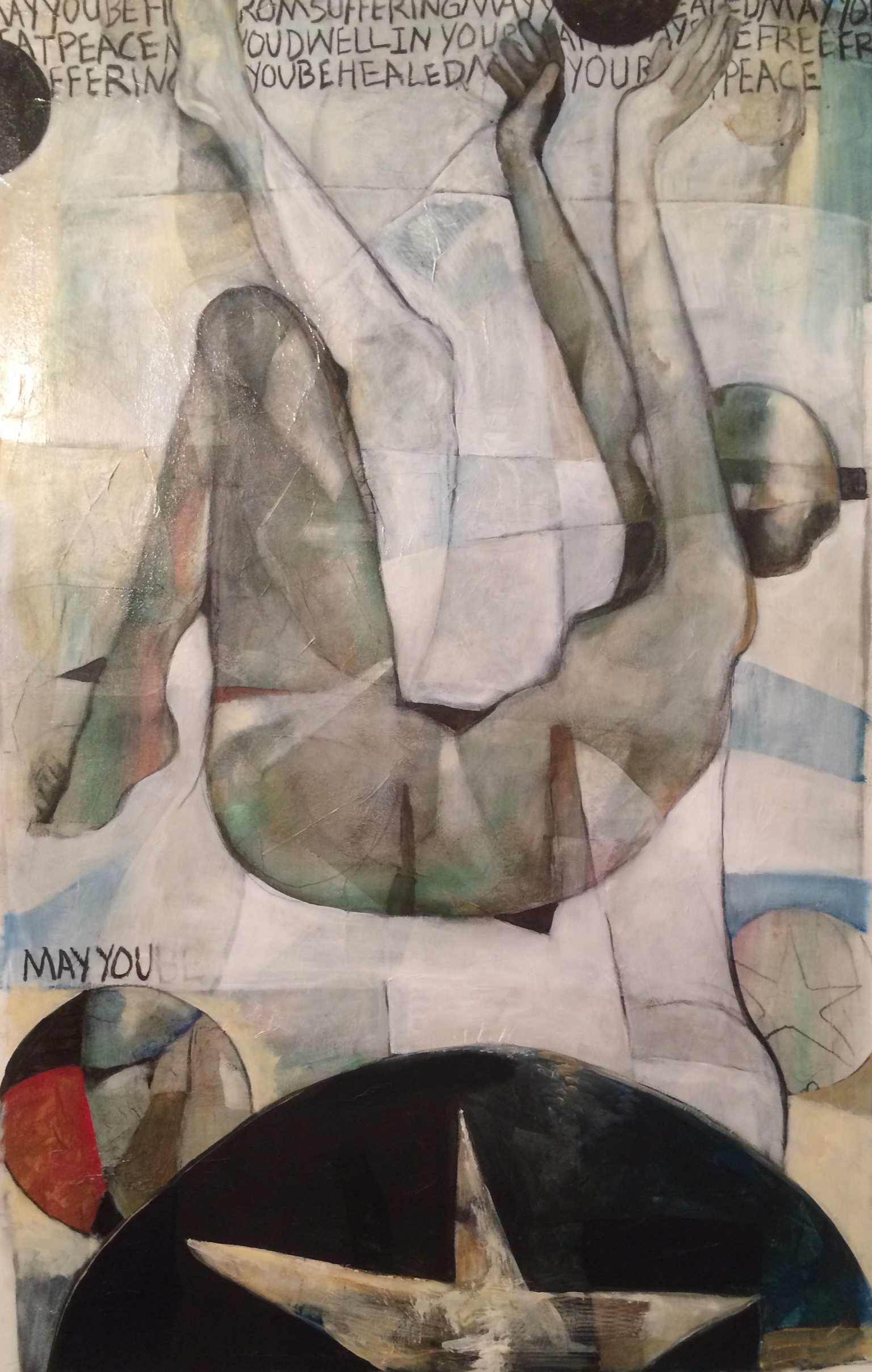
a detail of my painting, May You Be.

a detail of my painting, May You Be.

Clumsy (klum’ ze) adj. 1. lacking dexterity, grace or skill; awkward. 2. ungracefully shaped or made; unwieldy. 3. awkwardly or unskillfully said or done, ill-contrived.

“We don’t allow ourselves to be clumsy,” Kerri said. “Life is clumsy.”

Many years ago I read a commentary that suggested we moderns have a harder time of feeling good about ourselves than people of ages past. The argument went something like this: we have an impossibly high standard to meet and it is mostly illusory. For instance, our predecessors compared themselves and their successes against a relatively small village populace. We are swimming in pool that stretches around the earth. The athletes in our ancestral villages ran against their neighbors, the artists created for a specific purpose that served a tangible need in their community. Our young runners know to the hundreth-of-a-second what greatness requires. They run against the world. Our artists rarely know outside of their own inner imperative why they are creating. With no outer limit they spend a great deal of time wondering if their work has any impact or greater significance. With no outer limit it has no defined audience or community. Stephen, a gifted and prolific artist, used to ask, “Why don’t people recognize the value of art?”

The argument is largely a question of access. Our predecessors had limited and very abstract access to the news of the day, to the happenings beyond their region. We have a 24-hour global news cycle that comes to us on multiple devices that are designed to grab and keep our attention. It is not passive. On our multiple devices we are bombarded with images and messages of what we should look and feel like. Yet, almost all of the images populating our personal measuring stick are constructed. They are manipulated, retouched, powdered and Photoshopped. Legs are stretched. Wrinkles are removed. Sunsets are filtered. We measure ourselves against illusions.

Thus, intermediaries are everywhere. Interpreters abound. I rarely go into a gallery without a curator telling me why the work on the walls is important. The news of the day makes us the rope in a tug-of-war of interpretation.

Art, like life, like deep spirituality, requires direct engagement. It is made rich in the rough draft and the mistake. The broken road is interesting, vital. Learning is a process that takes time. It is messy. It is clumsy. It is not straight, paved, and has no road signs. And, it cannot be walked alone.

There is no forgiveness (of self or other) on the path of perfection; forgiveness is in short supply when the standard is both impossible to attain and an illusion. On the clumsy path, on the messy and muddy road, lives grace, generosity of spirit and deep forgiveness.

Clumsy (klum’ ze) adj. 1. Human

May You Be

May You Be


Chase The Butterflies

a detail from my painting, John's Secret

a detail from my painting, John’s Secret

Wisdom butterflies that have recently fluttered across my path:

Soaking up the morning sun and drinking coffee from the deck of Common Grounds, 20 said, “You’ve heard this one, right? There are three sides to every story.”

Standing on the side of the road peering into Judy’s car, she gave us some sage relationship advice. She said, “That’s the secret to life, you know: listen before you talk.”

Kerri was composing a song. I asked her how she starts, how she knows where to start. She said, “I don’t know. Sometimes you just need to put your fingers on the keys and follow the music.”

There is an aging pink post-it note stuck (permanently) to the desk. It reads, “Make The Adventure.”

On a recent phone call, Skip offered wise counsel about how I see my role in a new business, “Find your own metaphor,” he said. ”What is the metaphor that will keep you energized, that taps into your 10,000 hours?”

Sitting behind his drum set, waiting for rehearsal to begin, John said, “Our job is to make the art, not to determine its reception.” And then he said, “What do you think?” and laughed.

Josh took a belly punch from the universe yesterday. He said, “I want to be angry but anger does me no good. I have better things to do with my life than get angry.”

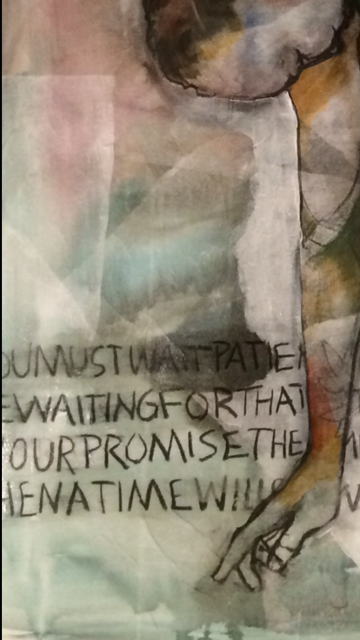
A detail from my painting, An Instrument of Peace

A detail from my painting, An Instrument of Peace

P-Tom weighed in with this: “Faith is scandalous,” he said, “It pushes back against everything we experience.”

Dog-Dog raced across the yard in hot pursuit of a butterfly. I’m wagering that he knew he would never catch it, but the chase was glorious.

Change Your Focus

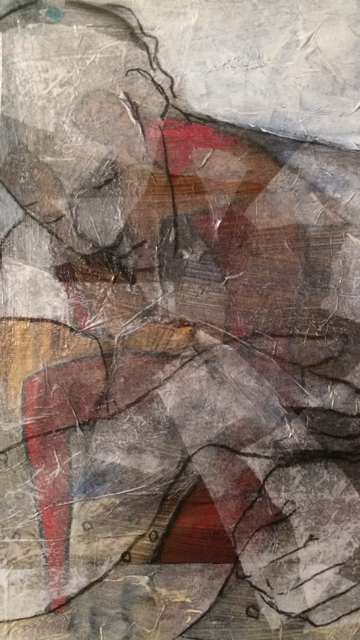
a watercolor from 2003, House On Fire

a watercolor from 2003, House On Fire

Life can change in an instant. There are collective moments. There are personal moments. For years, my dad kept articles about the conspiracy theories swirling around the Kennedy assassination. It was the moment that marked the end of things as he knew it. Life would never be the same. For many years I shared his fascination because my first memory is an image from John F. Kennedy’s funeral which we watched on black and white television: a soldier leading a horse with empty boots reversed in the stirrups. I suspect that the image was potent for me because it was potent for the adults caring for me as they watched the funeral of the president.

Many years later, on a beautiful September morning in 2001, I sat in front of another television set and watched the Twin Towers fall. I thought, “Life will never be the same.”

With the recent anniversary of that day, on another beautiful September morning, Kerri and I read aloud to each other a book, 102 MINUTES: The Untold Story of the Fight To Survive Inside the Twin Towers. I was surprised by my reaction to the book. It felt a return to the place where we got lost. Like my dad, I missed the innocence that vanished in a single day (doesn’t each generation experience this loss? I imagine my grandfather yearned for a world before the atom bomb).

Throughout the reading, two potent and related metaphors would not let me go. First, a two-part metaphor for what I believe ails our nation. With a hyper focus on profitability, many long standing high rise safety precautions were minimized in the Towers. Less escape stairs meant more rentable space. Structural fire prevention measures are costly so they were either written out of the code or ignored. No one believed these twin Titanics could fail and when they did, the greatly reduced escape routes were either severed by the planes that hit them or were inadequate to accommodate the evacuation of the buildings. Additionally, communication between the police and fire departments was broken – they had the capacity but lacked the will. They did not use their updated systems because they were fighting over who would be in control. Their polarization crippled them on the day that they most needed to communicate.

So, the metaphor. One of the themes of my life (and, therefore, this blog) is the importance and necessity of a conscious placement of focus. Where you focus matters. Focus is a creative act. Our hyper focus on profitability took down the world’s economy in 2008. We’ve deregulated our financial institutions, removing all the safety precautions so that we might, as my pals in the financials services once told me, “Print money from nothing.” And the structure weakens. The wealth of the nation is in the hands of a shrinking few even though, as I learned in Economics 101, a healthy capitalist system is built upon a healthy middle class. No one believes this Titanic can sink. Communication between those who are supposed to be looking out for our safety, The House, The Congress, etc., are famously polarized. They have the capacity but lack the will and do not exercise their communication in the fight over who will be in control. In the meantime, we need them to communicate; waiting until the Tower falls will be too late to start. Our focus is on the wrong stuff.

 A sketch working out some details for House On Fire

A sketch working out some details for House On Fire

Which, brings me to metaphor number 2. This is the metaphor that cures us. The other story of those 102 Minutes is a story of kindness. People reaching for other people. When the disaster struck, the gap between custodian and CEO disappeared. The social divisions were irrelevant. People helped people simply because they needed it. They recognized that they were living a common story, a shared story, not the story of division that predominated a single moment before the planes struck the buildings. Everything changed in a moment. Or, perhaps everything became clear. People died to help other people. Their focus changed.


Answer The Question With A Question

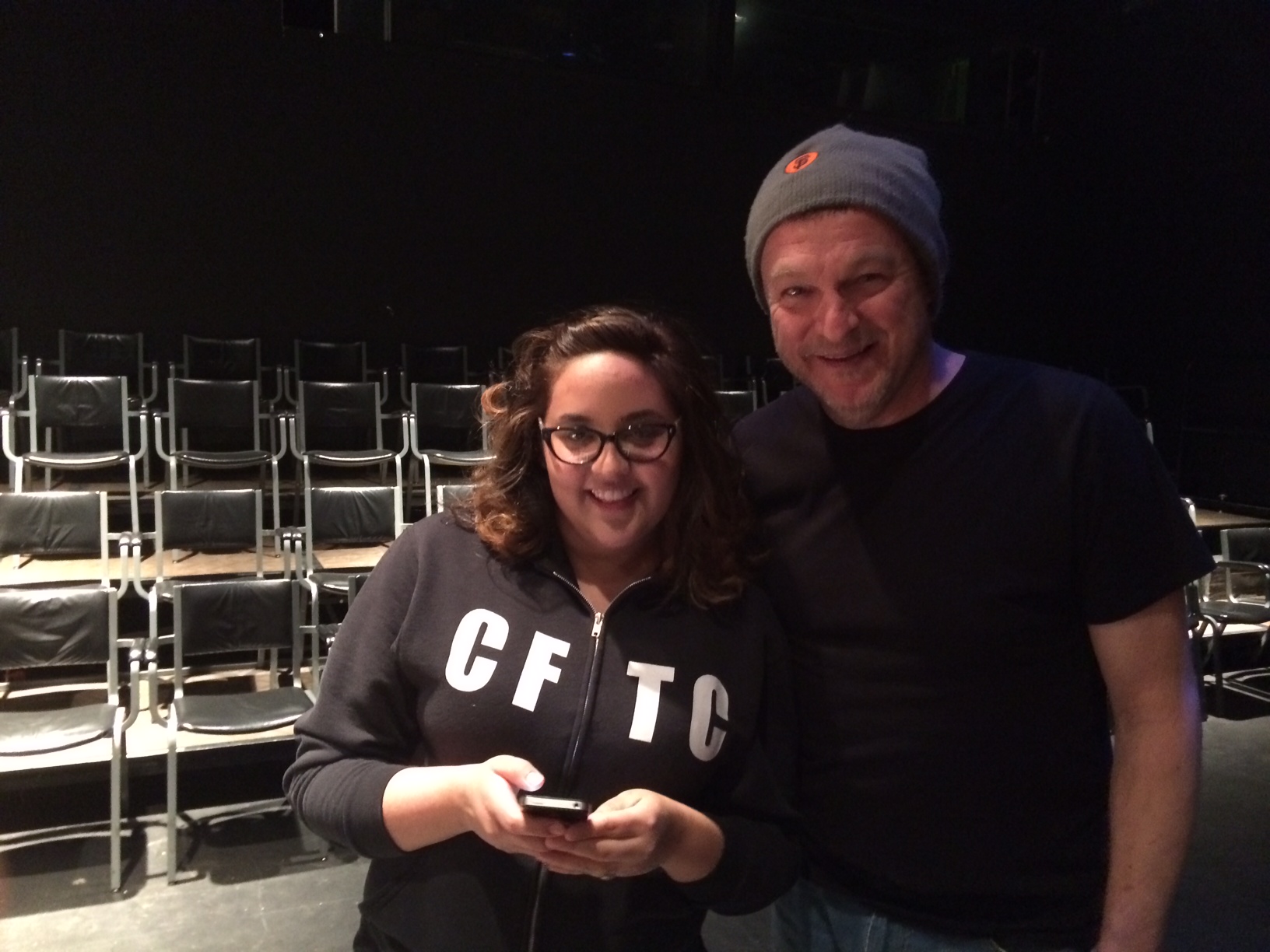
carrying on the tradition (and my heroes): mike and sabrina bartram

carrying on the tradition (and my heroes): mike and sabrina bartram at Changing Faces Theatre Company

Many years ago at the start of my career I bumbled into running a summer theatre company. It would become one of the great gifts of my life. At the time I decided that it would be my laboratory. I’d be able to experiment with directing processes and actor training techniques. What I didn’t realize until much later was that I would also be running an experiment in business and, more importantly, how to create a community mindset of support and empowerment (and, therefore, achievement). I was free to succeed because I gave myself permission to focus on the quality of the process instead of worrying about hard and abstract words like ‘achievement.’ My bottom line was the inner growth of everyone in the company, the inner growth of the community that we served.

When the company was up and running, when it was mature, company members swept the parking lot because they knew it would make the play better (improving the audience experience always impacts the performance). The people running the box office prided themselves on their kind service and efficiency because they knew that it would make the play better. The actors understood that they were in service to the play and not themselves. In fact, everyone in the company was in service to something bigger than themselves. That was the culture of the company. When pushed to articulate the success of what we created together, I’d say, “We’re focusing on the important stuff.”

Yesterday with great intention I sent that phrase (focus on the important stuff) out into the e-stratosphere. I lobbed it in association with the company that Kerri and I are in the process of creating to see what would come back at me. Like the summer theatre company, this new venture is our laboratory. What came back was the question, “What’s the important stuff?”

Sometimes the only way to answer a question is with another question. Take a look around your world. Take a moment to look at the difference between what you say and what you do. What do you see? What do you want to see? Big power comes to people when, like my company members (students) of so long ago, they realize that their “seeing” isn’t passive. The greatest single power any human being has is to choose where they place their focus. The greatest single revelation any human being has is to recognize that what they see impacts everyone around them. No one does this walk alone.

the very first painting in the Yoga series. It was an experiment, a walk of discovery. It's also about being alone

the very first painting in the Yoga series. It was an experiment, a walk of discovery. It’s also about being alone.

It’s easy to place a focus on an obstacle. It’s very easy to fix a gaze on the problems. It’s easy because, left alone, believing we are alone, that’s where most people default. Place yourself in a community that knows there is something bigger, something more important to see and serve, and the field of possibilities becomes easy. My company members of so long ago didn’t know what they couldn’t do so they did everything they imagined. That was only possible because they imagined it together. So, answering a question with a question, to you, what’s the important stuff?


Focus On The Important Stuff

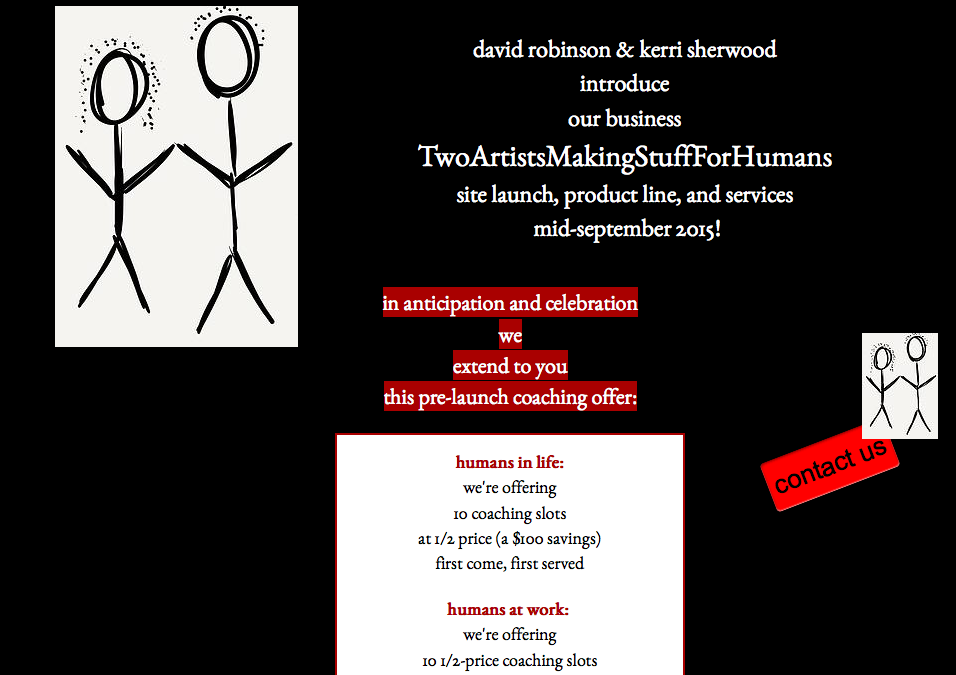
an offer from TwoArtistMakingStuffForHumans

an offer from TwoArtistMakingStuffForHumans

A note from the temporary site of TwoArtistsMakingStuffForHumans:

The waxing moon was muted with fog. It made the air shimmer. Avalon was near. Although it seemed too soon, there was a hint of autumn in the air. We sat next to a chiminea talking to friends. Monica told us of her daughter working in villages in South America. She told Monica that, by our standards, the people there have nothing. They are possession poor. But, they were happy, genuinely happy. They didn’t have much money or stuff but they had the essential thing that many of us lack: peace of mind. They focus on different, more important stuff.

It brought to mind my experiences in Bali. When I arrived all I could see was the poverty. By the time I left several weeks later, I’d have given everything I own or will ever own to have what they have: presence. Ease of mind. They weren’t looking for fulfillment, status, or living for retirement. They were living. Life was fulfillment. In a world where all things are sacred, status is gained by the quality of your giving and not by the size of your piece of the limited pie. It is a different focus.

There is a hidden cost to what dominates our focus, the things that take our attention…as opposed to the things we pay attention to.

As artists, both Kerri and I believe the work of our lives has been, one way or another, to help people focus on the important stuff, to see the extraordinary in the ordinary moment, to find inside what people seek outside. We’ve both worked across the boundaries of business, art, and the fine art of living everyday, there is no lack of necessity to refocus the eye, mind, and heart.

In a few weeks we will be launching our business (details to follow). All the many aspects of our work – if you can call art a product and performing a service – are intended to support, exercise and pay forward a focus on the important stuff, the important moments…sometimes the teeniest things that in the chaos pass unnoticed.

We want to do for others what we do for each other. Check out our pre-launch coaching offer. Take us up on it! Or, if you know someone who might benefit from working with us, pass it on, pay it forward.

Change They to We

photo-2

the next step in my painting, The Weeping Man. He’s nearly complete

The word that’s captured my recent attention is the word “they.” I’m captivated by language choices that might at first seem insignificant but, once unpacked, are profound. “They” is one of those words.

“They” caught my attention when 20 was making us dinner. His recipe included fennel and, until we googled it, we thought anise and fennel were the same thing. While we Googled for truth, Kerri asked, “Why would they name something twice?”

“Good question!” I replied and then asked, “Who are ‘they?'”

“Good question!” she echoed as the Google oracle brought us clarity about our fennel/anise confusion (as it turns out they are two different plants). Google was not very useful in clarifying who “they” were.

So, this week I listened for samples. Some of what I heard: “Why would they do that?” (a conversation about women in another culture). “They don’t care about us.” (what else, politics). “Don’t you think they cause their own problems?” (referring to a situation in a local minority community).

“They” can be a word of distancing, a word of exclusion. If you want to mess with the meaning, simply change the pronoun. For instance: why would we do that? We don’t we care about us. Don’t you thing we cause our own problems? “We” is inclusive. “We” makes us participants. “We” makes us culpable.

a detail of Weeping Man.

a detail of Weeping Man.

What if, in our current state of mis-education for instance, we stopped asking about our policy makers, “What are they doing?” And, instead, asked, “What are we doing?” What kind of action or meaningful discussion might ensue if we simply refused to use the word “they?” What if, as artists, we stopped asking, “Why don’t they get it?” and instead asked, “What don’t we get?” Artists do not create in a vacuum. Our expression might be individual and unique but without a community to receive, debate, appreciate, revile and otherwise engage it, has little purpose. After all, “they” are “we” if our language will allow us to see it.

the previous photo/stage I posted

the previous photo/stage I posted

The Way You Frame The Question

TODAY’S FEATURED REMINDER FOR HUMANS

The way you frame the possibilities

There is a vast difference between the questions, “Why is this happening to me?” and, “What’s the opportunity in this?” Both questions are frames that we place on our experiences. Both questions determine the range of possibilities and choices we see in our lives. Why not place a frame that opens a vast range of possibilities instead of placing a frame that closes most of the doors?

Screen Shot 2015-08-22 at 2.41.31 PM

FOR TODAY’S FEATURED REMINDER FOR HUMANS, GO HERE.