Shape The Vessel [on Two Artists Tuesday]

George Ohr was one of the great ceramic artists of the late 19th and early 20th century. Like Van Gogh, he died unknown, never experiencing the success of his work. Robert reminded me of George Ohr’s story and I reminded Robert that Ohr would be a terrific story for him to tell through a one-man play.

What is it to follow your art-call with heart and dedication with nary a hint of financial reward or success on the horizon? Vincent Van Gogh would have been called an amateur during his life since the making-of-money is the flag we plant in the sand marking the line between being a professional and a dilettante. Those lines do not exist for artists with a deeper call. The money does not the artist make.

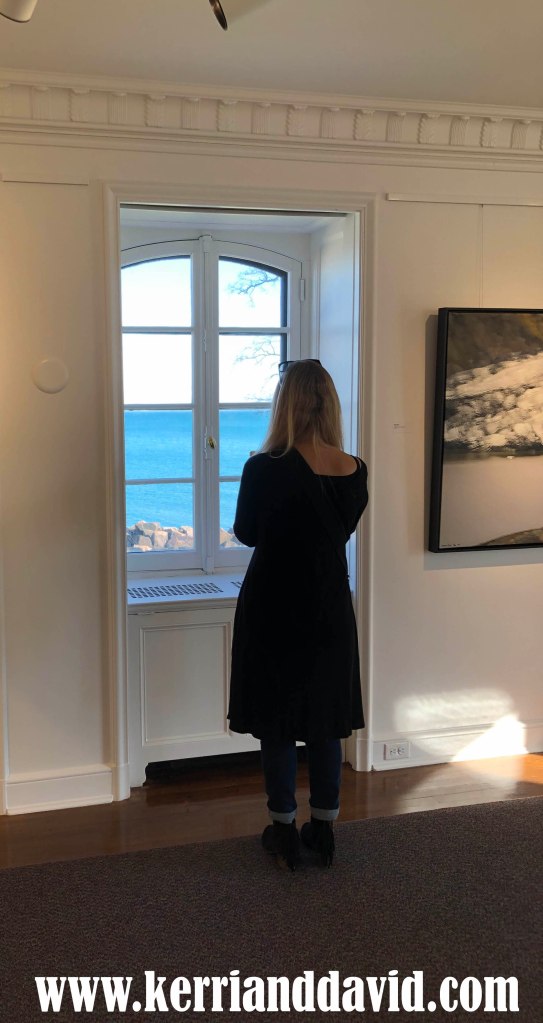
The Ohr-O’Keefe Museum of Art was designed by renowned architect Frank Gehry, quite a journey for the unseen work of George Ohr’s life to find so much vibrant admiration after his passing. Had he known it would have changed nothing. He’d have spent his days at the potter’s wheel either way.

“Shape clay into a vessel; It is the space within that makes it useful. Cut out doors and windows from a room; It is the holes that make it useful. Therefore, profit comes from what is there; Usefulness from what is not there.” ~Lao-tzu

Profit and usefulness. Shape and space. Mary Oliver asked the question: What will you do with your one wild and precious life? It hits the nail squarely on the head. It was not the pots that George Ohr made or the paintings that Van Gogh painted, it was the space they entered while throwing pots and painting paintings. It was the world they entered through their artistry, more expansive than financial success, more necessary than renown. A wild and precious life lived wildly and with avid appreciation.

Standing amidst the brilliant orchids, some of the flowers were in their last days. Their beauty fading, they cared not a wit. It is not in their nature to stretch their faces and pretend that the cycle of life is more valuable in the early bloom than it is in the late retreat. All is treasured, beguiling. Every last moment, not to be stalled or held onto. The root as necessary as the bloom, the winter as indispensable as the spring.

read Kerri’s blogpost about FIREWORKS

Look At You Look At Me [on Merely A Thought Monday]

It’s taken me this long to discover the source of all cartoon characters: orchids. I’m not kidding. At a recent field trip to the Chicago Botanical Garden’s Orchid Exhibit, I was surrounded by brightly colored fantastic faces, playful and chuckling. “Look at this one!” Kerri exclaimed. “It’s the Imperial Margarine guy!” I thought it was a whacky Pope or funny Cardinal, but the idea was the same.

“The earth laughs in flowers.” Emerson’s quote was stenciled on the wall as we exited the exhibit. And the laughing flowers made me laugh. Truly. I felt like a little kid at Christmas. Surrounded by color and delight and whimsy, I found myself more than once pointing, “Look at this one! Oh My God!” And, I felt like the colorful faces were staring back at me, thrilled to tears by the odd looking human standing before them. I-look-at-you-look-at-me. “Look at that face!” they snickered.

The thought stopped me in my tracks and filled me with wonder. We personify everything, projecting our humanness into everything. The art of animation, the world of Disney, is rooted in our desire to project ourselves onto and into the world. Talking mice. Dancing candlesticks. Humpty Dumpty. Wise old trees. Wouldn’t it be lovely, and isn’t it hopeful, to think the world projects itself into us? I want the orchids to fill me with color and awe. To project themselves into me. I know the forests I walk through infuse me with quiet. I know Dogga pulls love from my deepest soul.

Participants. Relationship, rather than controllers. Dancers rather than dominators. Would we be so invested in killing each other for imagined supremacy if we allowed ourselves to laugh the laugh of the flowers? If we actually understood that nothing is forever, that our warmongering was at best delusional? That the single trait that makes us human is to turn and help someone in need? The very capacity that allows us to project ourselves into the orchids is the same capacity that makes it possible to stand in the shoes of the other. Empathy is a two-way street.

If the earth laughs in flowers, these days it certainly cries in humans. Yet, standing amidst the orchids, I looked at all the human faces, hundreds of people wide-eyed with wonder and alive with astonishment. The laughing orchids looking back at the astonished faces, open and vulnerable, and they were evoking those qualities from the crowd. Earth’s tears. So hopeful, these faces, drinking in each other’s beauty.

read Kerri’s blog post about FACES

Dance The Future [on DR Thursday]

“There are more things in heaven and earth, Horatio, than are dreamt of in you philosophy.” William Shakespeare, Hamlet

We opened the oat milk ice cream container and read the message printed on the protective cover. It made me laugh. I appreciate marketing messages with a sense of humor. The best news, beyond the giggle-inducing package, is that the ice cream was delicious. Coffee. The woman in the store recommended Salted Caramel but we were on a mission to find some coffee ice cream.

We watched some of the events at the recent winter Olympics. I always appreciate watching the athletes, prior to their competition, imagine their path down the mountain or performing on the ice. They quietly dance the future they envision. They “see” themselves perform. Actors do it, too. Jim taught me, rather than push my voice so I might be heard by the people sitting in the back of the hall, to walk to the edge of the stage and imagine that every person in every seat is included in the embrace of my voice. Not push or reach. Include. Draw in.

Have you ever said, “I just knew it was going to happen!” Or, “My gut told me…” Or, “I knew in my heart.” Even the most hardened scientist follows their intuition. Happy accident, good luck, serendipity, right-place-right-time. Where preparation meets opportunity. Luck of the draw.

Hamlet saw a ghost. His pal from the university had doubts. Reason draws a wide circle but, despite what it thinks of itself, does not encompass all things. Accidents happen. “It’s as if it was meant to be.” Kismet. Follow your heart.

Kerri and I talk of our meeting as destiny. “What are the odds?” we ask. I’m filled with stories of “knowing.” Aren’t we all? And, isn’t it also true, the most oft used phrase following, “I knew it,” is “I can’t explain it.”

And, isn’t that where the wonder lives? In the land beyond explanation?

read Kerri’s blog post about SEEING THE FUTURE

With Fresh Eyes, See [on Merely A Thought Monday]

In retrospect, many of the experiences I used to facilitate were meant to pop people – even for a moment – out of the fog of their life story. It’s a curious intention for a guy whose career was/is centered around the telling of stories.

I loved working with masks, especially with people in corporate settings or lofty educational towers. They feared the exposure that a mask might bring so they approached it with eye rolling and whatever-ego resistance. Yet, in every case, they put the mask on with reverence. There is a sequence, after donning the mask, that the wearer “wakes up” and looks at the world for the first time through fresh eyes. Everything is new. Everything. Their hands. The movement of their arms. The color and feel of the carpet. Jaded people, blunted with puffy assumption, through the eyes of the mask, are astonished by the miracle of their fingers. And then, imagine the moment that they discover each other. Their discussion during the debrief would make you weep. It was quiet. Respectful to the point of sacred. In every case the people, newly out of the mask, had to tell of their astonishment and discovery. Their eyes wide with the utter beauty of the world in and around them. And, their new eyes never carried further than the next day. The old mask, the one worn daily, the one full of fear and inflated self-importance, is powerful, too. As they say, masks reveal and masks conceal.

Masks reveal and masks conceal. The phrase refers to the wearer but it also applies to the world seen or not seen through the mask. New eyes are astonished with the ubiquitous beauty of the world newly revealed. Eyes fogged through been-there-done-that stories are dulled to the point of inattention. The magical world is concealed from their sight.

I am working on a script for a piece that I’ll perform in the fall. I realized in my latest draft that it is really about masks. The astonishment of seeing – and seeing is nothing more than or less than the revelation of connectivity. Paying attention is a step toward the eyes that see crackling vibrant color, ears that hear the birdsong. When the dull eyes open, even for a moment, the next impulse is to reach, to “call attention” to the connectivity. “Do you see that?” “Listen, isn’t it gorgeous!”

read Kerri’s blog post about PAYING ATTENTION

Trip And Trip Again [on KS Friday]

One of the advantages of having stepped in every pothole, tripped on every cobble, and made every mistake at least twice, is that I’ve learned about potholes, cobbles, mistakes, tripping and stepping where I ought not step. If I could boil down to the essence the single thing I’m beginning to grok it is this: life is not elsewhere.

I laughed aloud when I at last I realized the absurdity of “practicing mindfulness” as if it was something to achieve. Mindfulness arrives when the practice stops. Of course. Meditating for self-improvement, I’ve read, is a uniquely Western oddity. “Trying” to be present is ridiculous if you think about it. You are present. What else? Because your mind is running amok does not actually magically transport you to the past or the future. You are present with a mind that is running amok. Minds are like puppies: chase them and they run away. Stand still and they will eventually come to you.

Is any of this pothole wisdom helpful? Absolutely not. Like mindfulness, wisdom arrives when the obsession with knowledge-for-betterment ceases. I’ll let you know what that looks like when I stop trying to attain it. There’s no end to the tripping stones. I’ve learned that, too. Again and again. And again.

The best things in life are not achievements. They are relationships. Me to you. Me to me. Me to the world I am passing through, one moment at a time. With you. Stand still in the moment – you might as well since it is where you are – and you’re libel to experience all manner of beauty.

read Kerri’s blog post about SNOWFLAKES

Kerri’s albums are available on iTunes and streaming on Pandora

kindred spirits…away/released from the heart © 1995 kerri sherwood

What’s Now? [on Two Artists Tuesday]

After a fairly contentious conference I co-facilitated in The Netherlands, Kerri and I took the bullet train to Paris. It was early in our relationship and our first time abroad together. We couldn’t afford to get to Paris otherwise, so tagging a small vacation onto a work trip seemed foolish not to do. It was the perfect place at the perfect time. I released the conference friction the moment we stepped off the train. I didn’t know it at the time but on the streets of Paris I left behind a skin that I’d badly needed to shed.

We had limited funds so we bought baguettes and Camembert cheese, fruit, tarts from vendors and bottles of wine. We ate in parks. We wandered the streets. Climbed the hill to Sacre’- Coeur, visited Rodin, and tried to get lost. We fell exhausted into bed each night, full of art and sound and color and delicious wandering. One night we sauntered to the Arc de Triomphe and barely escaped a riot. Bus loads of police in riot gear appeared on the street and, wide-eyed, we slipped out of the crowd and hustled to find more peaceful rues. Paris now serves as a marker. There was before Paris. And after.

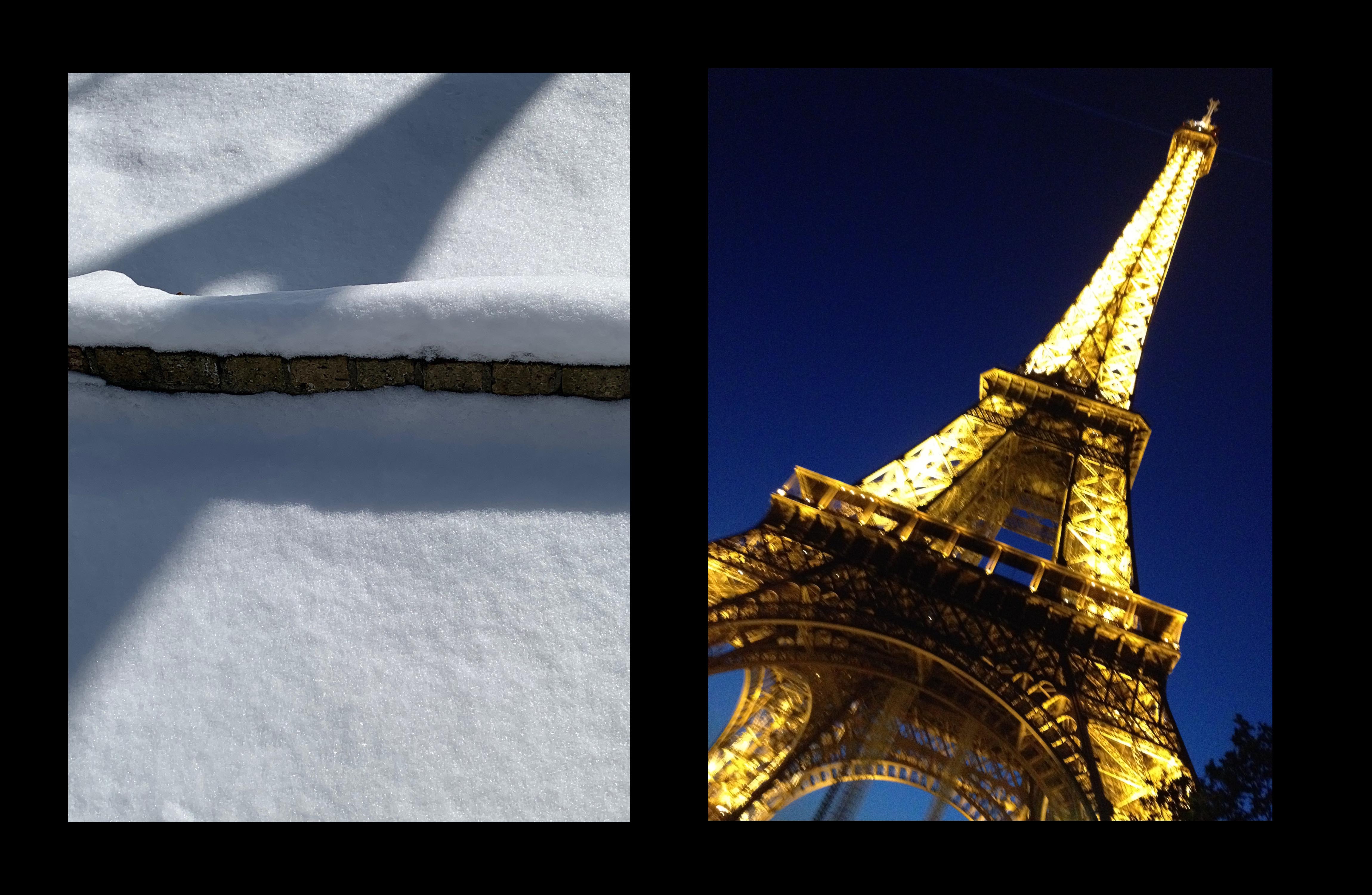
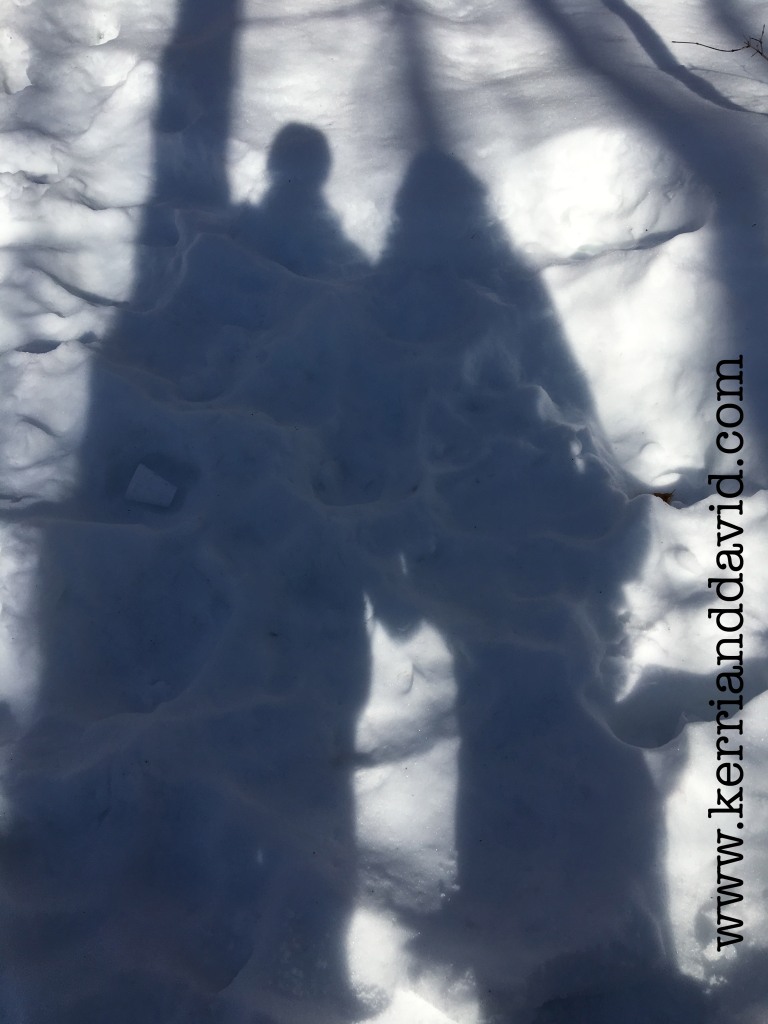
“This shadow looks like that picture I took of the Eiffel Tower,” she said, showing me the photo of the shadow. The angle is perfect. The shadow is appropriate. Shadows. What was. An outline of the people we were, reflected on the snow. And, the series of photos, shadows along the way, the surprising people we have lived-into since we wandered those streets, shedding old skin, and boarded a plane home with a a question, “What’s next?” What’s now?

read Kerri’s blog post about SHADOWS

Use A Bag [on DR Thursday]

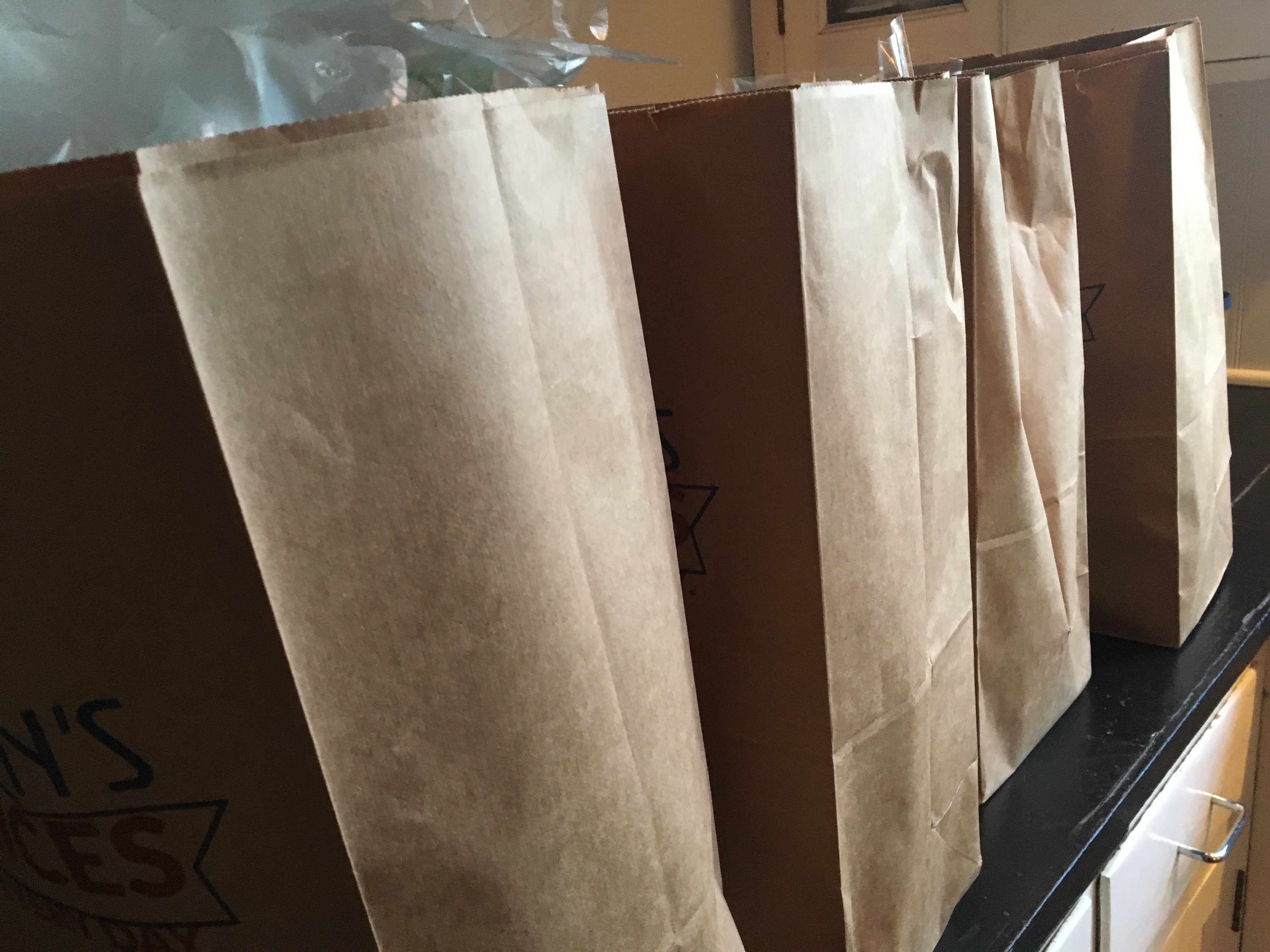
To Chris Crites, grocery shopping day is a feast. To Chris, these sacks are more than functional. They are more than ordinary shopping bags. These bags are canvas. They are opportunities for art. They are surfaces meant for brilliant mugshots. The underbelly of society made beautiful on brown paper sacks.

I’m not sure if it was Chris or the other artists in my Seattle pod that prompted me to experiment. One of my forays into “where will this take me” required paper sacks. Lots of paper sacks, torn to bits and pasted on a canvas. I drew and painted on top of the bits.

I forgot about my experiment until I met Kerri and one day unrolled all the canvas to show her what was in the pile. She cooed at my paper bag experiment. “This should be a series,” she said. “It should be called Earth Interrupted.” And, so it was.

I have (mostly) been a painter of people. I’ve learned that art – and theatre – for me are a means and not an end. In other words, I don’t paint because I want to master the craft of painting or make brilliant paintings. I paint to study people. I paint because it is a meditative space. I paint because I lose myself and enter someplace bigger. I paint because it helps me “to see.”

I completed six additions to the Earth Interrupted series and then stopped. I lost my way. That’s always been my experience when I abstract- when I leave the figure and mess with texture and shape. I know I’m not finished with it. Getting lost is part of the process.

Unloading the groceries last week brought me up short. I felt like Chris Crites. So much possibility sitting on the counter. So much material begging to be transformed.

Earth Interrupted I, mixed media, 48x53IN

read Kerri’s blog post about BAGS

earth interrupted I © 2012 david robinson

Step Out Of Line [on Merely A Thought Monday]

“…the fountain of creative work is an intelligent questioning of the rules.” ~Alan Watts, Tao: The Watercourse Way

“If someone tells you they know, they most certainly do not.” It’s not a direct quote from Quinn but it’s close enough. Art school almost snuffed the art in me; there were so many rules and nary a hint of curiosity allowed in the studio. I fled into the theatre after a single year for fear of losing my heart to a book of rules. My theatre professors were explorers of nature. Their refreshing mantra was, “Well, let’s find out!”

What if…? What happens if…?

Nature is boundless expression. Boundless expression is human nature, too, until it is taught otherwise. Boys don’t cry. Be a good girl. Sit in your desk. Follow the rules. There’s a right way. My way or the highway…So much effort to force nature – your nature, your curiosity, to stand on a line.

Einstein revolutionized our world because he dared to posit that Newton had it upside-down. Thank goodness, as Alan Watts observed, “The scientist and the mystic both make experiments in which what has been written is subordinate to the observation of what is.” In other words, they look beyond established belief, expectation and entrenched norms into what is.

What is? Curiosity. A desire to know what’s over that hill. No child begins their life-walk by desiring to color within the lines. Lines are a learned thing. The word “wild” was invented by people whose ancestors emerged from the woods and who have forgotten that they, too, are part of nature – so have become afraid of stepping into the woods. What might they – we – find there?

“It’s not an idea problem,” David Burkus wrote in the HBR, “It’s a recognition problem.” Stepping beyond the known – a great definition of curiosity – is too often seen as an aberration or an assault upon authority. Nip it in the bud. Forcing flow into a fixed state invariably causes idea-blindness and the imperative to think-outside-of-the-box. Innovations are too often smothered in the crib by “What we know,” or “We don’t do it that way.” Coloring in the lines, once ingrained, is a life-long-book-to-follow.

I wish I had a nickel for every time I’ve been invited into an organization or hired by a client to help them “see what they cannot see,” and then subtly or not-so-subtly, been rebuked for opening their eyes to what is in plain sight…or the availability of alternative paths. “We want a vital arts program but we only want art that entertains,” said the school board after the student play asked a serious question of their audience. “…the scholastic theologians would not look through Galileo’s telescope because they considered that they already knew, from Scripture, the order of the heavens.” (Alan Watts)

Think outside the box – as long as you stay within the model or the expectation or the rules. So many models. So many lines. So in love with the struggle and afraid of the simple, natural joy of curiosity. Bend your will to the line. See what you are supposed to see and look no further. What, exactly, are we trying to control?

read Kerri’s blog post about CURIOSITY

Look Again [on DR Thursday]

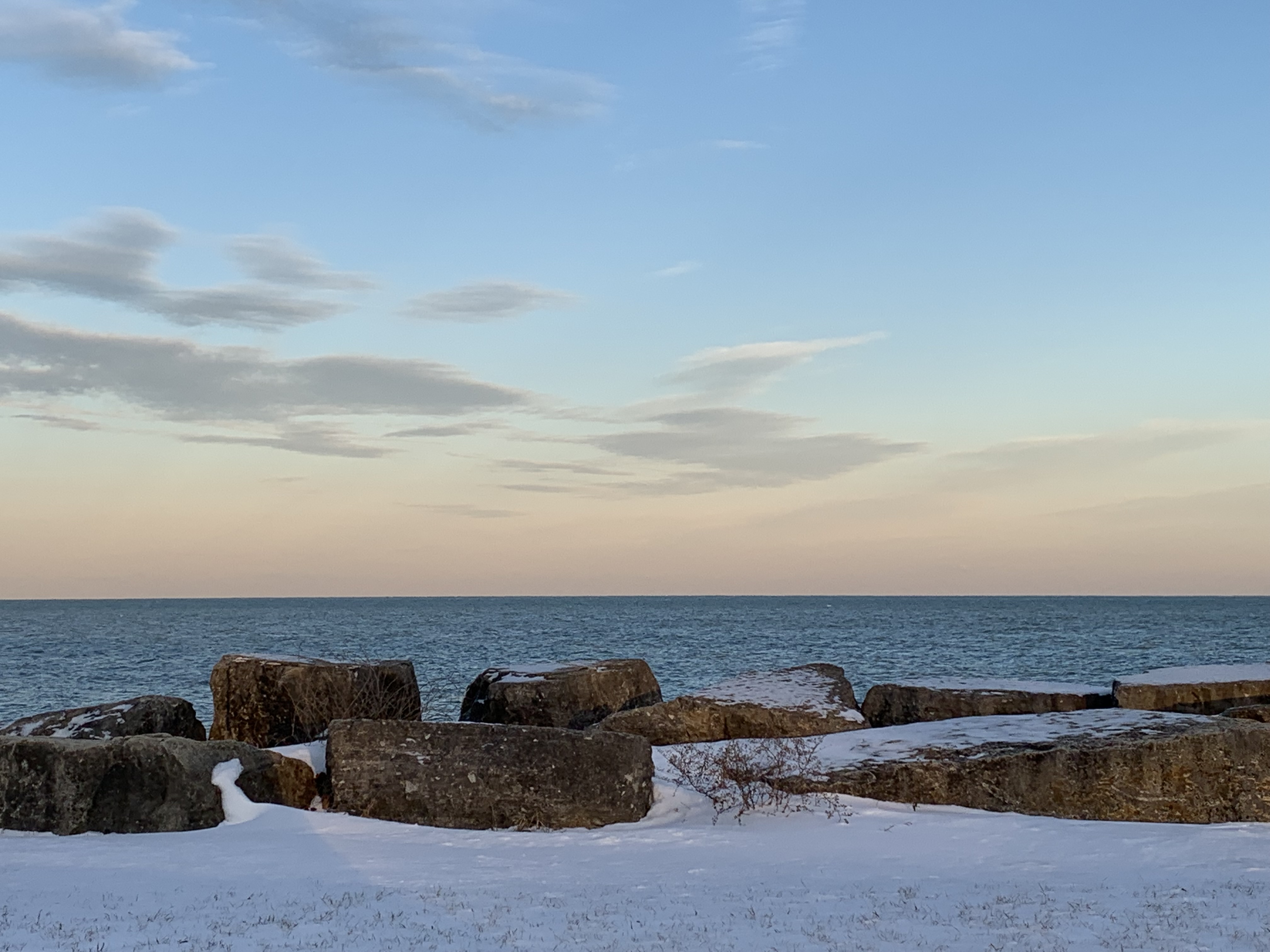
When I first moved by the lake I was astounded by the colors of the water. From deep turquoise to chocolate brown, azure with the sky, and foreboding green, it took my breath away. It changed every day and many times during the day. The lake is a festival of color.

When we stopped the car to take a picture I realized that I’ve stopped looking at the lake. It’s become normalized so I no longer see it. The day was frigid. I rolled down the window and the cold air stung our faces and made my eyes water. And, there it was. This vibrant lake, alive with color. Had the cold air not wrung water from my eyes, the beauty and power of this lake would have. Double tears.

There’s a moment in the Parcival tale that I appreciate. The knight has stripped off his armor and spent years in the woods with a hermit-master, chopping wood, carrying water, forgetting that he ever had a purpose. One day, he turns and sees the Grail Castle standing in the meadow. He’s shocked. He thinks he’s imagining it. The hermit laughs at him and says, “Boy. It’s been there all along.”

That’s how I felt looking at the lake. I rolled down the window and was bowled over by the color that has been here all along.

read Kerri’s blog post about THE LAKE

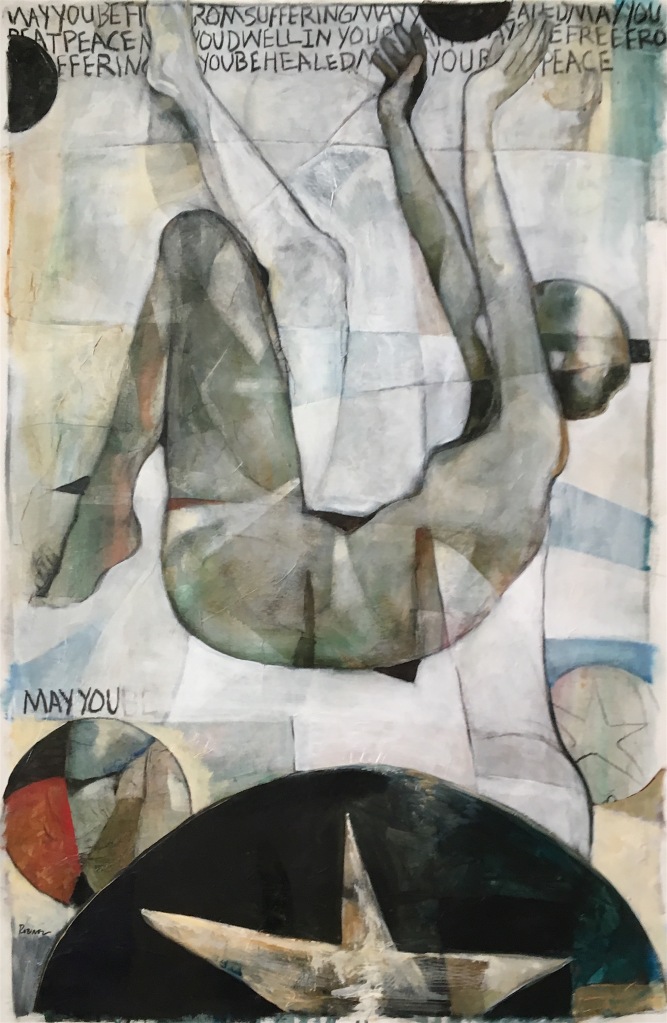
may you © 2015 david robinson

Find The Treasure [on Merely A Thought Monday]

Every so often in the grocery store I am struck by how many people are involved in making sure I – we – have food to eat. Pick any item from the shelf and work backwards. It was carried, priced, stocked, delivered, warehoused, produced, picked, manufactured, marketed, accounted, inventoried, scheduled. Imagined. And, I wonder, how many of the hundreds of people involved realized that their labor makes my life – our lives – better?

Sitting in front of my computer yesterday I was swirling in a thought-eddy. Attempting to map a workflow, the mechanics of a process, I was befuddled. There were too many variables. As is my practice when perplexed, I stood up and walked away. Halfway down the stairs my mind jigged. I re-remembered that the only thing that mattered in my silly map was the desire to make someone’s life better, someone I would never meet. I realized (again) that I didn’t need to figure it out. I shouldn’t figure it out. There was and is no single answer. Too many variables simply means I cannot know – but I can intend. I will “know” how it all works after the fact. I know that, if I keep focused on my north star, making a life better, then, at this phase, that is all I need to know. It’s an unbeatable criteria for clarifying what to do.

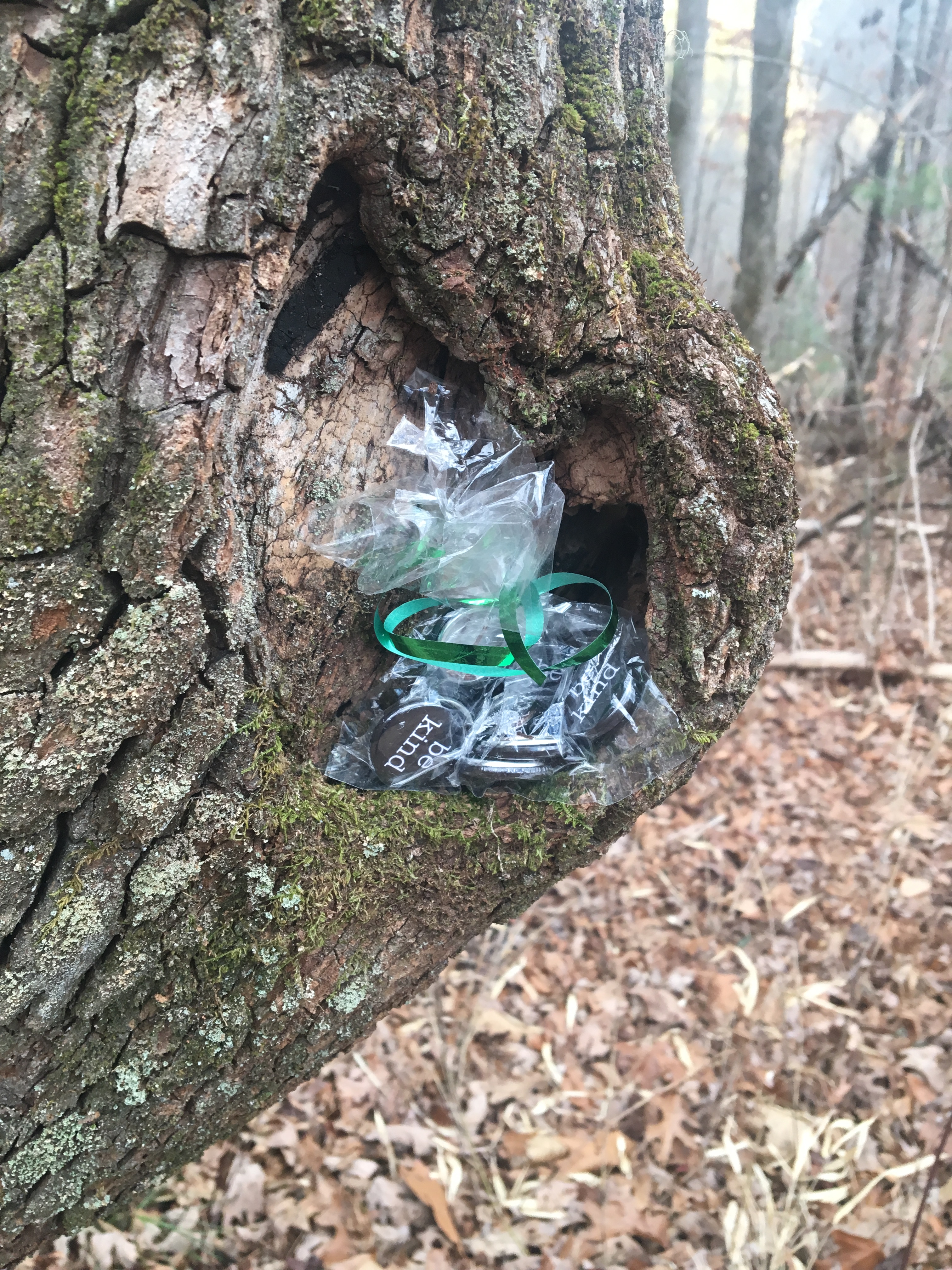
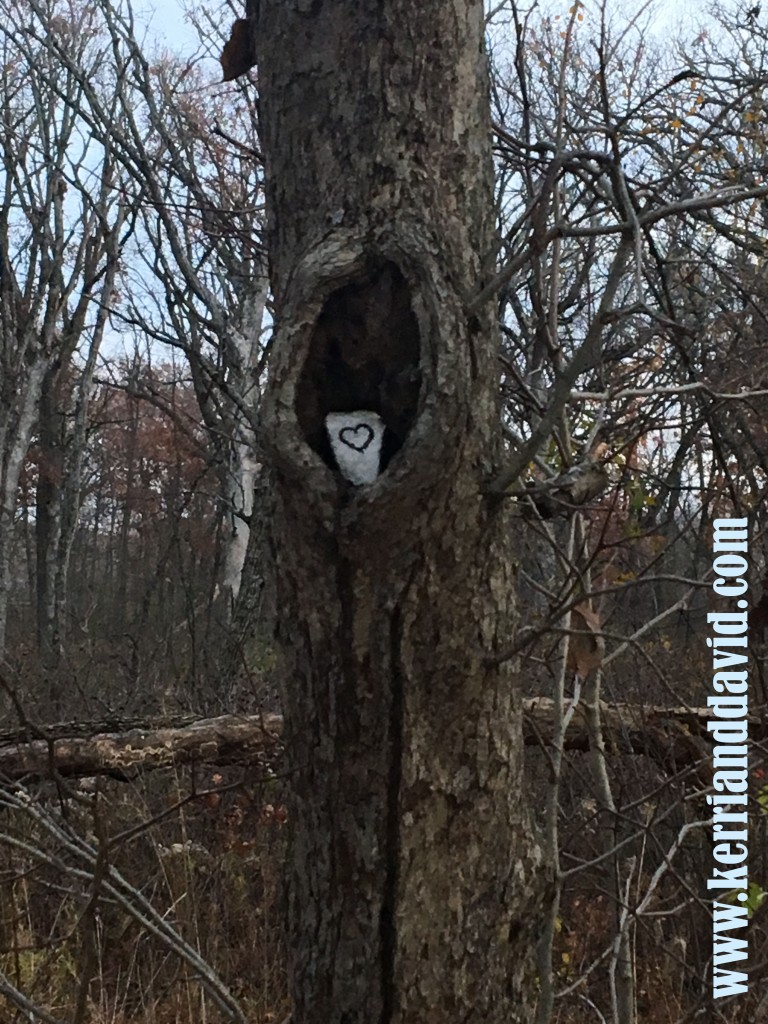
“Do you think someone found our buttons?” she asked. “Do you think they liked them?” On our last hike in North Carolina, she left a small sack of Be-Kind buttons in the knot of a tree. “I wonder who found them,” she giggled.

A small treasure left in the knot of a tree. A sack of potatoes found in the grocery store. Kindness. We get snarky when we divorce our actions – even the smallest action – from the very thing that makes them matter. We get lost when we forget how deeply interrelated are our every action and thought. Cause and effect, as Alan Watts wrote, are not sequential but simultaneous. If you think your actions do not matter or have no purpose, think again. If you think it does not matter how you treat others or that bottom lines are more potent than people, think again. It’s the miracle of a circle or a cycle: where does it begin? Where does it end?

read Kerri’s blogpost about BUTTONS IN A TREE