See The Signs [on KS Friday]

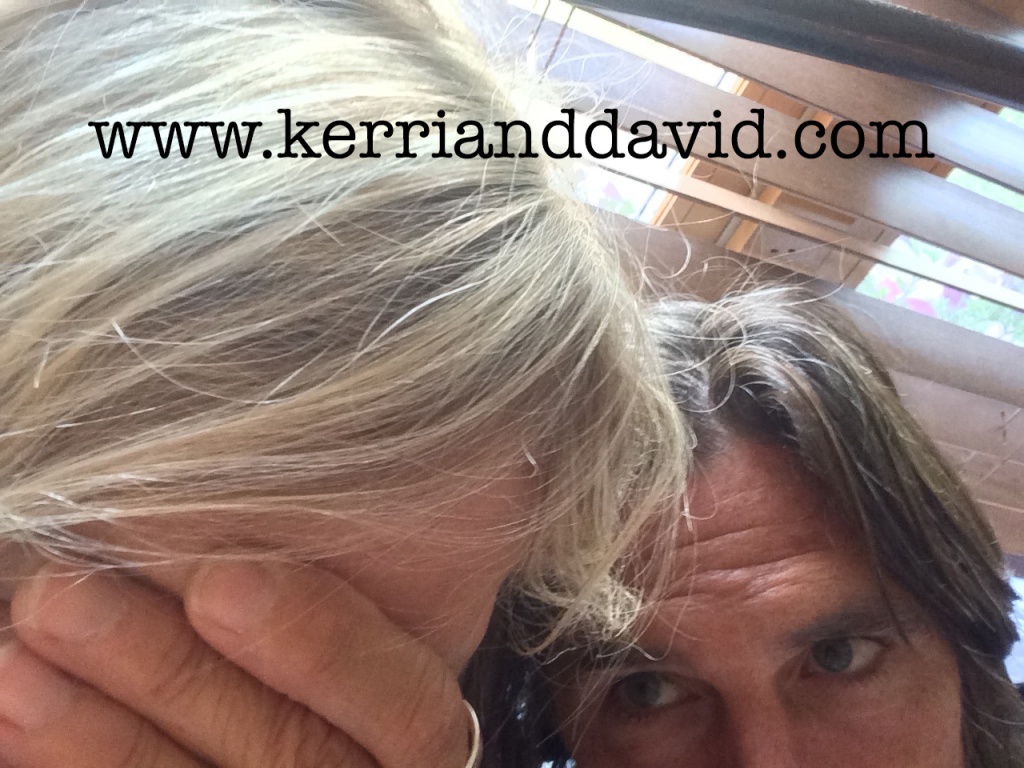
Although it is not quite here, I know spring is coming. How do I know? The blinds are open on one side of the room. They are closed on the other side.

During the winter, the blinds are closed on both sides of the room. During the winter, we turn in. We close out the world. All of the energy goes to the root, beneath the soil, to recharge our lives. Hibernation. And then, one day, though it is still cold, the birds return, we wake to their song, the sun plays hide-and-seek. In the morning, well rested, we open the blinds to the east.

We’re watching the squirrels. They gather the fallen leaves in their mouths and adeptly climb the maples and oaks to high notches, deposit their load, and return to the ground to gather more. Up and down. Over and over. Preparing their nests. The birds are courting. It looks like a hearty game of chase but we know the females are dodging the insistent pesky males.

Life is returning from the deep. Preparation for Persephone’s homecoming. Restless buds appear on branches. It’s close, but not quite yet.

Not quite yet. The third covid springtime. We are not yet past it and are fidgety.

We sat in the car staring at the door to the store. “I’m so goddamn tired of putting on this mask, ” I said as I put it on. We know we’ll be among the few wearing masks as we shop. No matter. It’s not over yet, this long winter of pandemic. As much as we want it to be spring, as much as we can see the signs, it’s not here yet. Not yet. Blinds open on one side of the room. Blinds closed on the other side.

kerri’s albums are available on iTunes and streaming on Pandora

read Kerri’s blog post about BLINDS

that morning someday/blueprint for my soul © 1997 kerri sherwood

Make ’em Laugh [on Not So Flawed Wednesday]

“I know what I want!” she exclaimed. “I just saw it.” Little-Baby-Scion whipped a sudden u-turn and we drove back into the park. We’d just finished a hike around our favorite loop and were discussing the choices for this week’s Melange. We had a problem day, a prompt that could only go one way: a rant. It would evoke a topic we’ve already beaten to death.

The car screeched to a halt in front of the stop sign. “It’s not possible!” she said. “You can’t stop and go one way all at the same time!” She jumped out to take a photo of the sign. I smiled at the irony. We were about to replace a problematic blog-prompt, an image/topic that could only go one direction, with a stop-one-way combo sign. Our new replacement prompt would be the universe’s message to us.

I’ve received – we’ve received – this message more than once and at times far more weighty than an upcoming blog prompt. Stop. This can only go one way. Or, the more hopeful variety: Stop. There is only one way to go.

As Kerri likes to say, “We have good angels.” Our good angels employ a special hammer on our heads when we need to stop. It is a full abrupt stop. Those whacky angels have great senses of humor. They giggle to see us mistake the wall for a door. I’ve quietly suggested to our angels that they consider using airbags with us but so far they are sticking to the hard-stop-no-cushion strategy.

And, the door that opens is never subtle. We sit in the hallway for a long time. No doors to be found. We lose all hope of doors, resigning ourselves to life in the hallway. Suddenly, out of nowhere, a door pops open. It’s a definitive, “Take this door or continue to sit where you are.”

Those whacky angels. All of those Renaissance painters led us astray, portraying gentle, harp playing, soft robe wearing winged guides. I suppose some people might have that variety. Not us. Our good angels are pranksters. Billiard-playing-Harley-riding-pastrami-eating-blue-jeans-wearing-tricksters who let us run blind toward the cliff and hit us with a stop sign at the last possible minute. “Hold on there, artists-types,” they snicker. “Stop. This can only go one way.”

An angel in the back row whispers, “That looked like it hurt.” The entire chorus of angels guffaws.

read Kerri’s less random blogpost about STOP!

Step Off [on Two Artists Tuesday]

“A tree is not made of wood, it is wood.” ~ Alan Watts, The Watercourse Way

Language is powerful. It’s a drum I have beat for a long time, the notion that we insist that the narratives we wrap around ourselves are somehow “reality.” We are told that 50% of Russians believe the hell wrought on the Ukraine is merely propaganda. A made-up story. Not true. It is the narrative they are fed and, in order to eat it, they must ignore any evidence to the contrary. Their economy crumbles. The ruble falls. How could they not see it? Don’t laugh. 40% of USAmericans still believe the last presidential election was stolen, a plausible story only if wearing blinders with fingers placed firmly in ears. Burying your head in the sand is not a Russian or American trait, it’s uniquely human. We see what we believe, not the other way around. Our language makes it so.

Years ago I read that the word “wild” could only come from a people who believe all things must be tamed. Wild makes no sense without the concept of tame. Wild, bad. Tamed, good. So, a people afraid of their own “nature” must become tamers. A people who think “nature” not only can be but must be managed. To be “above” it all, in charge and atop the pyramid, giver of names. It is the necessary narrative for such tamers of the wild, those who story their very nature as corrupt. Tamed, good. Above it all. Separate. Is it any wonder the intrinsically conflicted human world rarely embraces peace? Our narrative leads us to believe, amidst so much inner and, therefore, outer conflict, peace is something to be created because we are naturally conflicted. What else?

Where, exactly, does wild end and tame begin? Where’s the line that delineates nature from civilization? What if nature is neither good nor bad? What if your nature was neither good nor bad? Perhaps self-love would be within reach and, as a natural extension, the love of others, too. It’s an alternative narrative though not possible in a belief-story that fears the wild. Wholeness begins with a step off the pedestal.

It’s in the language. Somehow separate from the world in which we live, not “in” nature or “of” nature , we are deluded to believe we are made of different stuff. Above it. Divinely manufactured. Made.

Manufactured. Made. Trees made of wood.

And, just what are we made of? I guess it depends on the story we decide to tell. Wild stuff.

read Kerri’s blogpost about TREES

Wag-A-Wag [on DR Thursday]

We call it his wag-a-wag. Dogga came to us with his tail docked, and as an exceptionally happy pooch, his stumpy little tail is often in full expression. He leaves no doubt about his anticipation and enthusiasm. Walk into a room and the wag-a-wag of the supposedly sleeping Dogga will start to flutter. “It would be so good for you to love on me!” And, the wag-a-wag is always right.

Sometimes it seems so simple, this art of living. If I had ten Academy Awards and a Pulitzer Prize or two that would be great, but I wouldn’t trade a single sweet moment with the wag-a-wag for a plaque to hang on my wall or a statue to put on my shelf. Don’t get me wrong, I’d delight in a degree of success, but I know at the end of the day, in my last few moments, I will treasure my life with the wag-a-wag, the mornings on the raft with the sun streaming in the window, drinking coffee, talking about the day, and Dogga rolling over just-within-reach (he’s an Aussie and has a spatial quirk) for his morning belly-belly.

It’s the rule of the wag-a-wag. Walk into the room and signal simple enthusiasm, an expectation of mutual generosity. Not only is it so good for me to love on you but it is so good for you to love on me. One-and-the-same-action.

read Kerri’s blog post about COZY

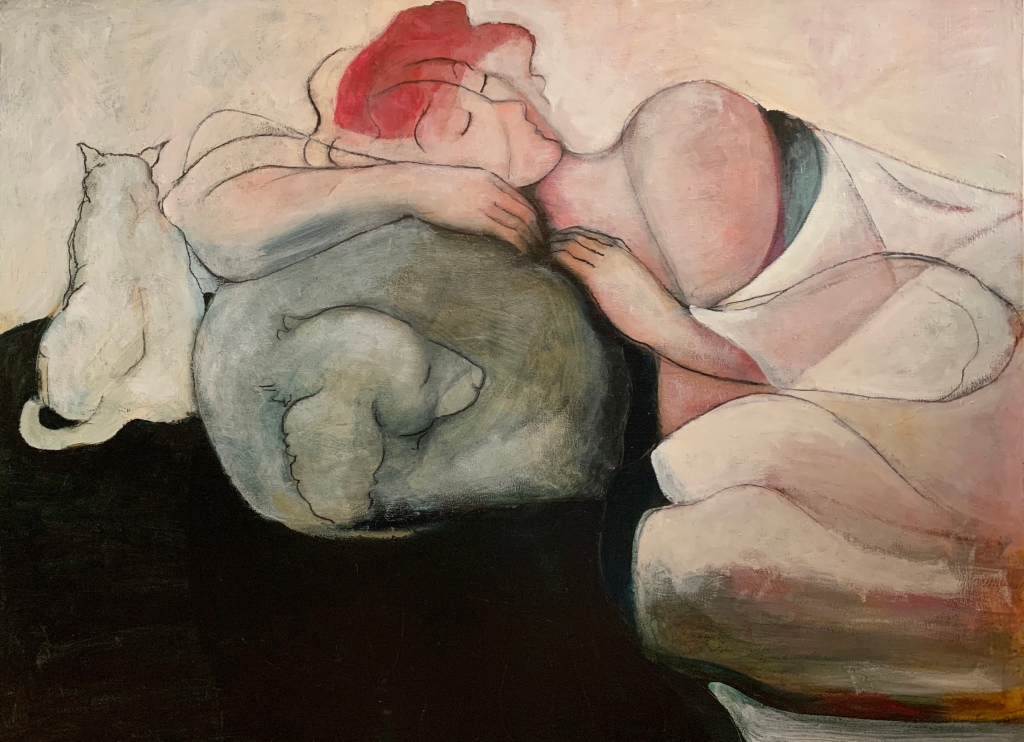
nap with dog-dog & babycat, 36×48, 2020

nap with dog-dog & babycat © 2020 david robinson

Let Fly [on Two Artists Tuesday]

“We have to continually be jumping off cliffs and developing our wings on the way down.” ~ Kurt Vonnegut, If This Isn’t Nice, What Is?: Advice For The Young

It is now my opinion, based on life’s experience, that it you don’t find the cliff, the cliff will find you. Wing development is the name of this game. Hide in the closet, bury your head in the sand, drink yourself to oblivion, pretend the monster is not at the door, and you’ll discover in your last moments that looking the other way was, in fact, your cliff.

Master Marsh once asked me why I had the need to run and jump off every cliff. At the time I said, “I don’t know!” My latent response comes straight from Vonnegut: wing development. Apparently my wings took their sweet time developing and needed some extra cliff-age. And, as we all know but are too polite or arrogant to admit, wing development never ceases. There’s always another cliff until there’s not.

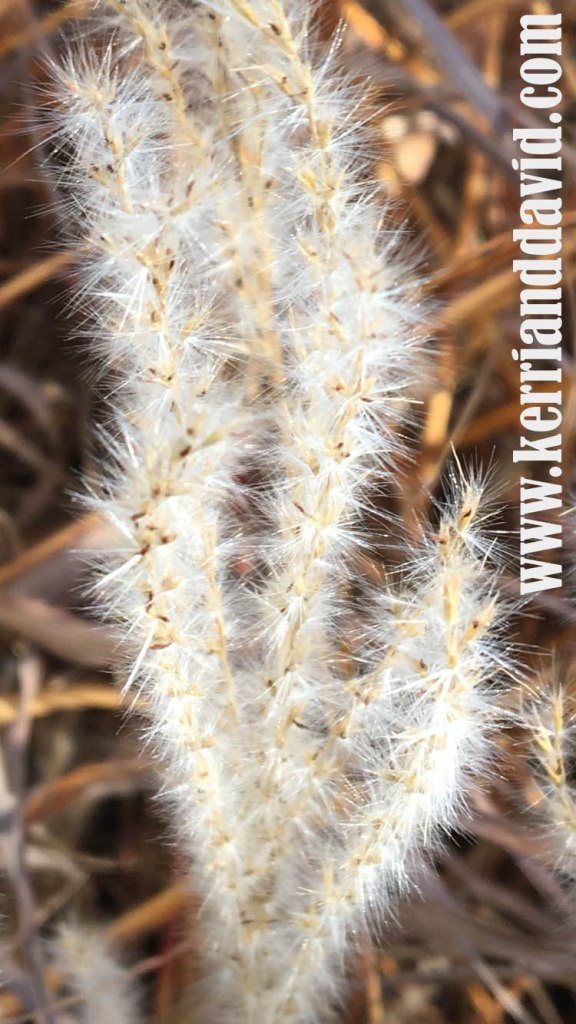
We had a rare warm day so took a walk on our favorite trail. The brilliant raw sienna of the empty pod caught Kerri’s eye. While she took photos of the pod I thought about the thousands of seeds it once held that took flight on the wind. A few certainly found fertile soil. Most did not. That’s the idea behind Kurt Vonnegut’s advice. Don’t hoard your idea seeds. Put them out. Audition for the play. Submit your story. Offer your idea. There’s great truth to the advice: your job is to put it out there, not to decide whether or not it is good enough. Explode the pod rather than protect the seed.

Greg recently told me said, “it doesn’t have meaning until it’s published.” He wasn’t speaking about publishing in a newspaper or by Random House. Sending an email is an act of publishing. To text is to publish. Greg was referring to sharing. It has no meaning until it is shared. And, sharing your creations can be -and often is – vulnerable and scary. Giving a speech is terrifying to most people. Dancing, painting, composing a song, playing a solo, offering your idea in a meeting…all are acts of publishing. All are potential cliffs to jump off.

Explode the pod. Let the seeds fly. The wind will carry them. Some will find fertile soil. Most will not. Wing development is easier when you realize that you are a pod of ideas and not a judge of worth or value.

read Kerri’s blog post about THE POD

Peek Behind The Scenes [on Not So Flawed Wednesday]

I’ve tried to keep notes on my computer. I know that typing my notes into the digital world will make them searchable. Easier to find. It just doesn’t work for me. If I write with a pen on paper, I remember. Marking an important page with a Post-it note makes finding my notes faster than a search engine. It’s not that I am old school. I’m kinesthetic.

I’ve always kept notebooks. At this moment there are two within my reach. The Melange notes. On the desk in my office a is a notebook and three yellow pads. The yellow pads are a task-capture strategy. The notebook is idea capture. Quote capture. Thoughts-in-progress. The notebooks are like my sketchbooks, a place to work out my thought-compositions. They are the history, the breadcrumb trail of a project. For me, the riches are never in the outcome. The real treasures are alive in the notebook process paths.

I’d rather look at an artist’s sketchbook than the finished painting. I have a book of Picasso’s sketches that I treasure. Spend a few moments in Leonardo’s sketches or Michelangelo’s scribbles and you’ll forever toss away the notion of a mistake. Look behind the scenes at the process. A dancer will spend hours in repetition to incorporate a move into their body. The playwright will write hundreds of pages to arrive at a few, yet, those hundreds of pages are nothing less than reduction to essence. Refinement on the path of saying more with less.

Look behind to see the structure. Turn it over to see the pattern. I am, to this day, in awe of the Wayan Kulit master. I looked behind the shadow puppet screen to see the artist at work and, what appears in simple two-dimensions in front of the curtain, is a symphony of structure and improvisation. The man wore an oil lamp on his head to cast the light for the puppets, held a rock between his toes to tap, keeping time for the musicians seated behind him, all the while manipulating and voicing multiple characters, telling with simple clarity an epic tale. A lifetime of trial and error, complexity made simple, like a dancer, the story was deeply choreographed in his body. I wished I could have seen this elder storyteller-priest when he was young and developing his mastery. I’d love to see his notebooks.

I’ve recently had cause to return to my old notebooks. I marvel at the thought cycles coming back around. I’m taken again and again by the questions that still linger, and by those that seem antiquated. “How could I have not seen it!” I smile, knowing in just a few more drafts, a notebook or two down the road, the clarity would arrive.

A peek behind the scenes. It is for me, where the real beauty shines.

read Kerri’s blogpost about THE FLIP SIDE

Look At You Look At Me [on Merely A Thought Monday]

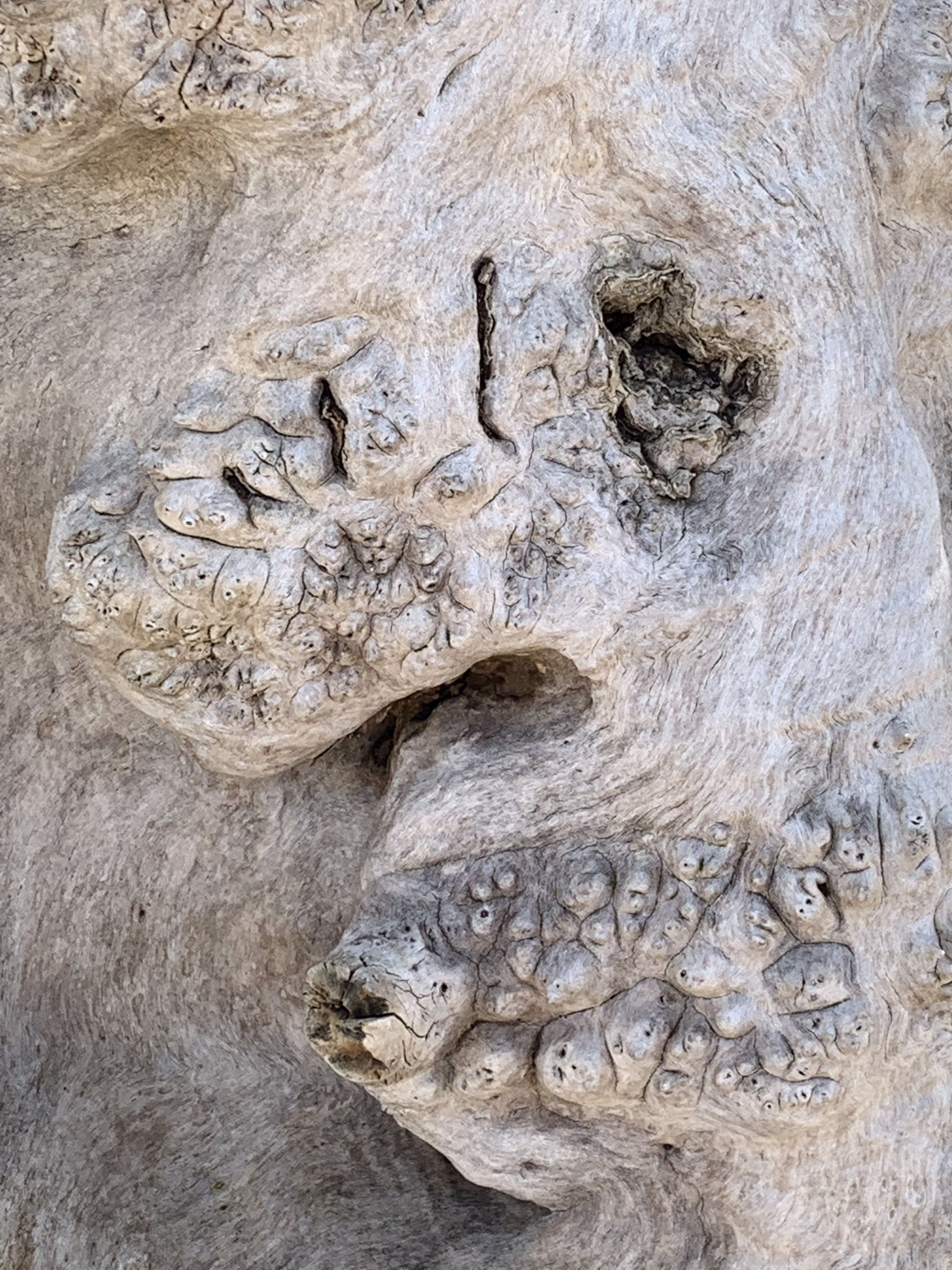
It’s taken me this long to discover the source of all cartoon characters: orchids. I’m not kidding. At a recent field trip to the Chicago Botanical Garden’s Orchid Exhibit, I was surrounded by brightly colored fantastic faces, playful and chuckling. “Look at this one!” Kerri exclaimed. “It’s the Imperial Margarine guy!” I thought it was a whacky Pope or funny Cardinal, but the idea was the same.

“The earth laughs in flowers.” Emerson’s quote was stenciled on the wall as we exited the exhibit. And the laughing flowers made me laugh. Truly. I felt like a little kid at Christmas. Surrounded by color and delight and whimsy, I found myself more than once pointing, “Look at this one! Oh My God!” And, I felt like the colorful faces were staring back at me, thrilled to tears by the odd looking human standing before them. I-look-at-you-look-at-me. “Look at that face!” they snickered.

The thought stopped me in my tracks and filled me with wonder. We personify everything, projecting our humanness into everything. The art of animation, the world of Disney, is rooted in our desire to project ourselves onto and into the world. Talking mice. Dancing candlesticks. Humpty Dumpty. Wise old trees. Wouldn’t it be lovely, and isn’t it hopeful, to think the world projects itself into us? I want the orchids to fill me with color and awe. To project themselves into me. I know the forests I walk through infuse me with quiet. I know Dogga pulls love from my deepest soul.

Participants. Relationship, rather than controllers. Dancers rather than dominators. Would we be so invested in killing each other for imagined supremacy if we allowed ourselves to laugh the laugh of the flowers? If we actually understood that nothing is forever, that our warmongering was at best delusional? That the single trait that makes us human is to turn and help someone in need? The very capacity that allows us to project ourselves into the orchids is the same capacity that makes it possible to stand in the shoes of the other. Empathy is a two-way street.

If the earth laughs in flowers, these days it certainly cries in humans. Yet, standing amidst the orchids, I looked at all the human faces, hundreds of people wide-eyed with wonder and alive with astonishment. The laughing orchids looking back at the astonished faces, open and vulnerable, and they were evoking those qualities from the crowd. Earth’s tears. So hopeful, these faces, drinking in each other’s beauty.

read Kerri’s blog post about FACES

Name Your Wine [on Two Artists Tuesday]

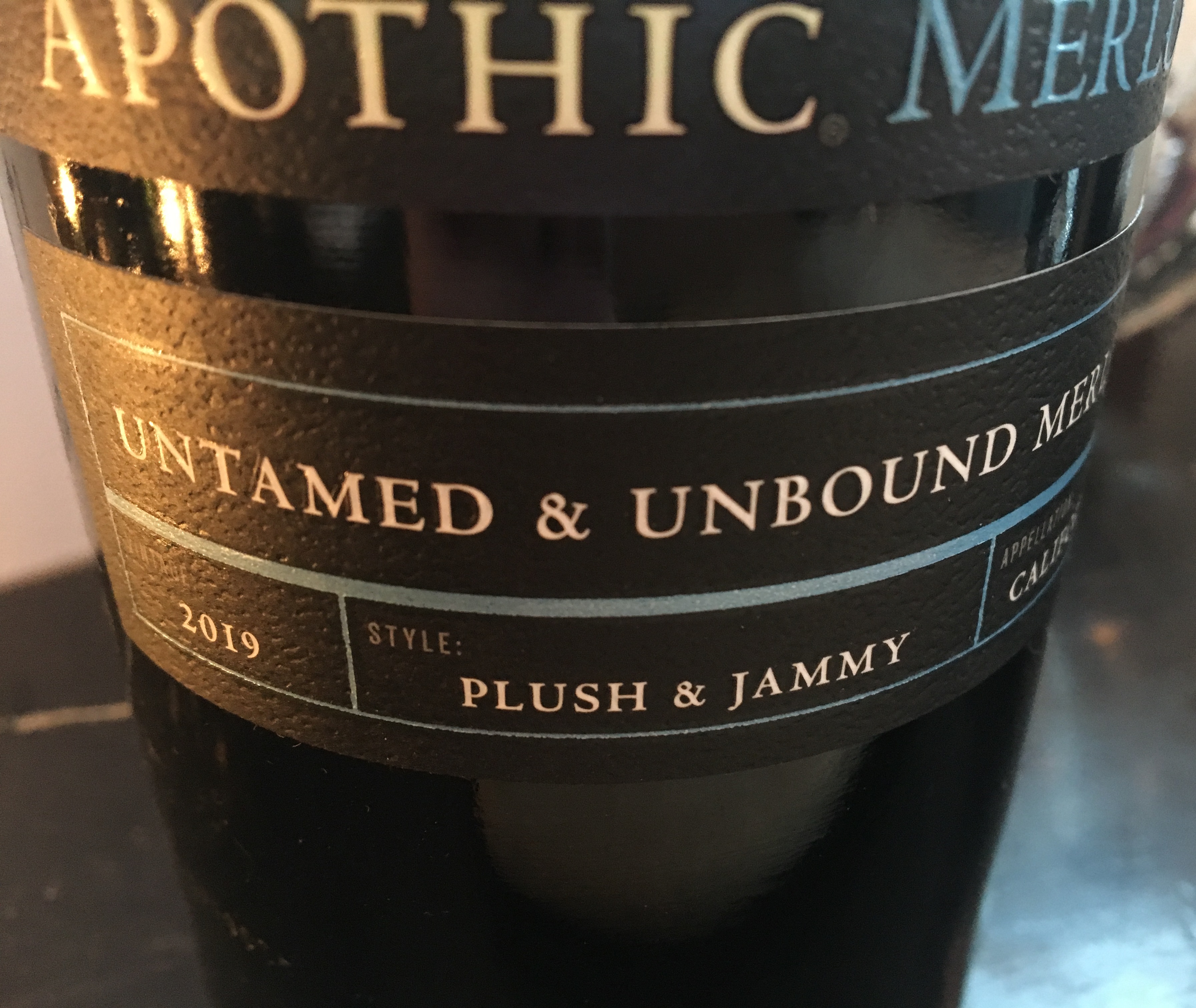
“Ooooh,” I said, reading the bottle, “I want to be untamed and unbound. Plush and jammy!” She rolled her eyes. I won’t tell you what she said. There might be children reading.

As wine bottles often do, it inspired an interval of time paying attention to the phrases I paste on the labels of my life. What if I described my days with wine-label terminology? Last week was definitely earthy and robust. Crusty with hearty notes of calamity.

In my work life, I’m hearing with alarming frequency the word taxonomy. We need to create a taxonomy. We are approaching a taxonomy. The study of naming. The science of definition. With what classification will we identify, and therefore label, our creation? If our product was wine, what would we say of it? Bold and expansive, yet subtle and refined? Are we talking about what it is, what it does, or defining it so it will sell? Those levers are never mutually exclusive. A written language is always an abstraction. Reaching yet never hitting its mark.

Aren’t we living in an age where the world is seeking a new-ish taxonomy? Spin your news channels and hear the same story-wine described in remarkably contradictory terms. What is fruity to one audience is classified as filthy to the other. Two labels, one wine. One team refusing to taste for themselves. We brand ourselves “divided.”

William Shakespeare either created or wrote for the first time in the English language over 1,700 words. I want him on my taxonomy team. I want him to lead my wine-life-labeling committee. Though, I imagine he would be amused to tears at our wild word-world of marketing, our reality-wielding-“news” channels, he wouldn’t be at all surprised that the power of a label pasted on an experience. “Call it what you will,” he might say, “It’s a sorry sight.” No matter. Words, words, words.

Sorry sight! A great name for a wine. A bold red blend for a brave new world. William gives it two thumbs up. Edgy and energetic, nutty and dippy with hints of crackers.

read Kerri’s blog post about WINE LABELS

Trip And Trip Again [on KS Friday]

One of the advantages of having stepped in every pothole, tripped on every cobble, and made every mistake at least twice, is that I’ve learned about potholes, cobbles, mistakes, tripping and stepping where I ought not step. If I could boil down to the essence the single thing I’m beginning to grok it is this: life is not elsewhere.

I laughed aloud when I at last I realized the absurdity of “practicing mindfulness” as if it was something to achieve. Mindfulness arrives when the practice stops. Of course. Meditating for self-improvement, I’ve read, is a uniquely Western oddity. “Trying” to be present is ridiculous if you think about it. You are present. What else? Because your mind is running amok does not actually magically transport you to the past or the future. You are present with a mind that is running amok. Minds are like puppies: chase them and they run away. Stand still and they will eventually come to you.

Is any of this pothole wisdom helpful? Absolutely not. Like mindfulness, wisdom arrives when the obsession with knowledge-for-betterment ceases. I’ll let you know what that looks like when I stop trying to attain it. There’s no end to the tripping stones. I’ve learned that, too. Again and again. And again.

The best things in life are not achievements. They are relationships. Me to you. Me to me. Me to the world I am passing through, one moment at a time. With you. Stand still in the moment – you might as well since it is where you are – and you’re libel to experience all manner of beauty.

read Kerri’s blog post about SNOWFLAKES

Kerri’s albums are available on iTunes and streaming on Pandora

kindred spirits…away/released from the heart © 1995 kerri sherwood

What’s Now? [on Two Artists Tuesday]

After a fairly contentious conference I co-facilitated in The Netherlands, Kerri and I took the bullet train to Paris. It was early in our relationship and our first time abroad together. We couldn’t afford to get to Paris otherwise, so tagging a small vacation onto a work trip seemed foolish not to do. It was the perfect place at the perfect time. I released the conference friction the moment we stepped off the train. I didn’t know it at the time but on the streets of Paris I left behind a skin that I’d badly needed to shed.

We had limited funds so we bought baguettes and Camembert cheese, fruit, tarts from vendors and bottles of wine. We ate in parks. We wandered the streets. Climbed the hill to Sacre’- Coeur, visited Rodin, and tried to get lost. We fell exhausted into bed each night, full of art and sound and color and delicious wandering. One night we sauntered to the Arc de Triomphe and barely escaped a riot. Bus loads of police in riot gear appeared on the street and, wide-eyed, we slipped out of the crowd and hustled to find more peaceful rues. Paris now serves as a marker. There was before Paris. And after.

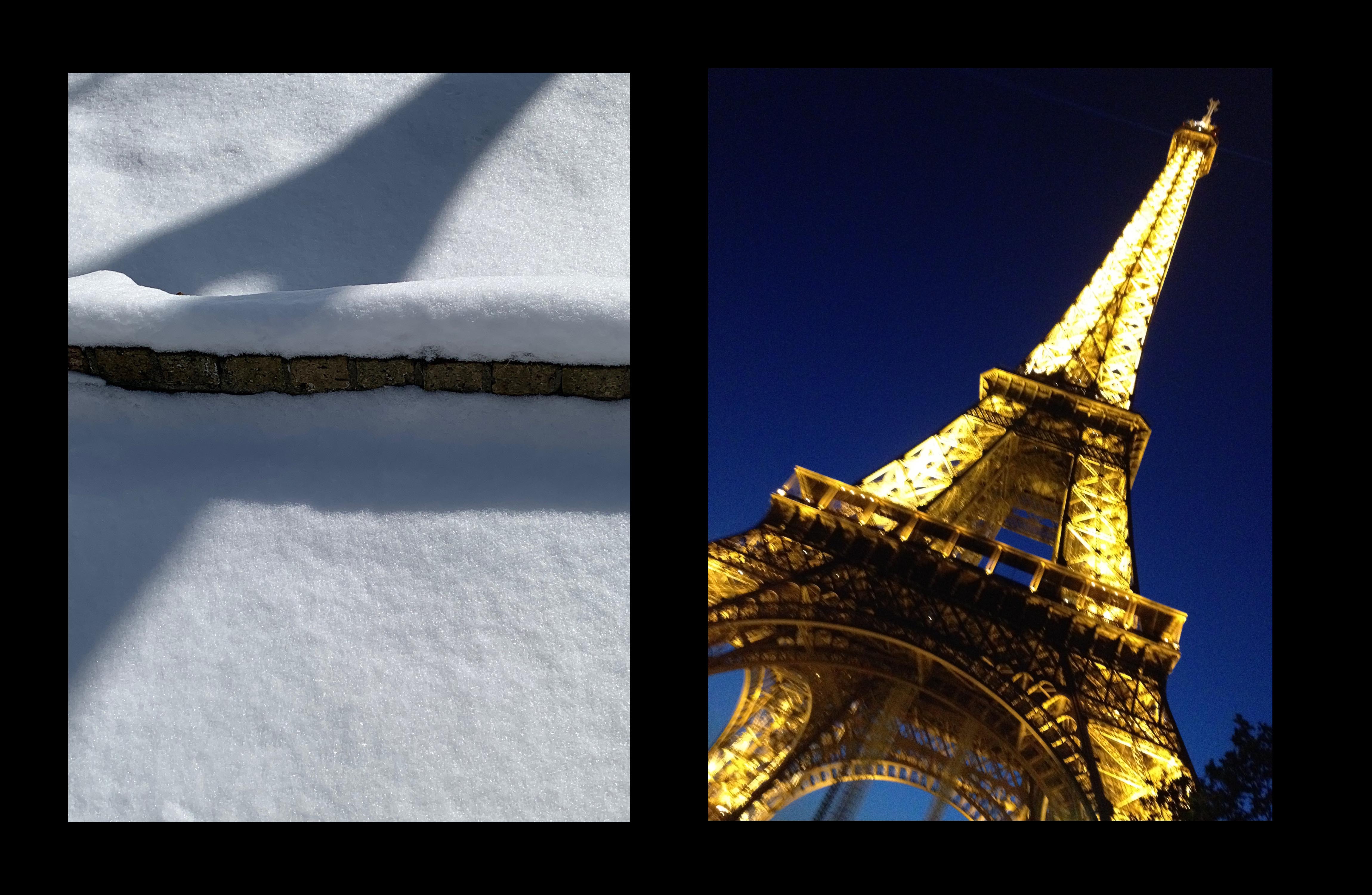
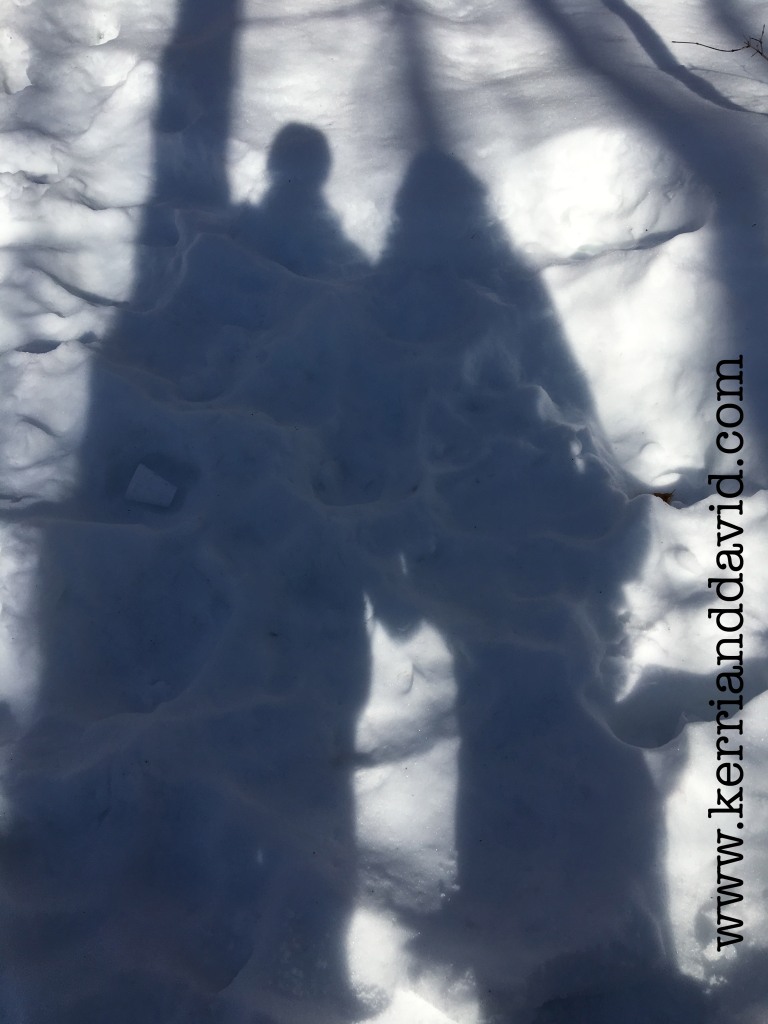
“This shadow looks like that picture I took of the Eiffel Tower,” she said, showing me the photo of the shadow. The angle is perfect. The shadow is appropriate. Shadows. What was. An outline of the people we were, reflected on the snow. And, the series of photos, shadows along the way, the surprising people we have lived-into since we wandered those streets, shedding old skin, and boarded a plane home with a a question, “What’s next?” What’s now?

read Kerri’s blog post about SHADOWS