Focus On The Important Stuff

an offer from TwoArtistMakingStuffForHumans

an offer from TwoArtistMakingStuffForHumans

A note from the temporary site of TwoArtistsMakingStuffForHumans:

The waxing moon was muted with fog. It made the air shimmer. Avalon was near. Although it seemed too soon, there was a hint of autumn in the air. We sat next to a chiminea talking to friends. Monica told us of her daughter working in villages in South America. She told Monica that, by our standards, the people there have nothing. They are possession poor. But, they were happy, genuinely happy. They didn’t have much money or stuff but they had the essential thing that many of us lack: peace of mind. They focus on different, more important stuff.

It brought to mind my experiences in Bali. When I arrived all I could see was the poverty. By the time I left several weeks later, I’d have given everything I own or will ever own to have what they have: presence. Ease of mind. They weren’t looking for fulfillment, status, or living for retirement. They were living. Life was fulfillment. In a world where all things are sacred, status is gained by the quality of your giving and not by the size of your piece of the limited pie. It is a different focus.

There is a hidden cost to what dominates our focus, the things that take our attention…as opposed to the things we pay attention to.

As artists, both Kerri and I believe the work of our lives has been, one way or another, to help people focus on the important stuff, to see the extraordinary in the ordinary moment, to find inside what people seek outside. We’ve both worked across the boundaries of business, art, and the fine art of living everyday, there is no lack of necessity to refocus the eye, mind, and heart.

In a few weeks we will be launching our business (details to follow). All the many aspects of our work – if you can call art a product and performing a service – are intended to support, exercise and pay forward a focus on the important stuff, the important moments…sometimes the teeniest things that in the chaos pass unnoticed.

We want to do for others what we do for each other. Check out our pre-launch coaching offer. Take us up on it! Or, if you know someone who might benefit from working with us, pass it on, pay it forward.

Change They to We

photo-2

the next step in my painting, The Weeping Man. He’s nearly complete

The word that’s captured my recent attention is the word “they.” I’m captivated by language choices that might at first seem insignificant but, once unpacked, are profound. “They” is one of those words.

“They” caught my attention when 20 was making us dinner. His recipe included fennel and, until we googled it, we thought anise and fennel were the same thing. While we Googled for truth, Kerri asked, “Why would they name something twice?”

“Good question!” I replied and then asked, “Who are ‘they?'”

“Good question!” she echoed as the Google oracle brought us clarity about our fennel/anise confusion (as it turns out they are two different plants). Google was not very useful in clarifying who “they” were.

So, this week I listened for samples. Some of what I heard: “Why would they do that?” (a conversation about women in another culture). “They don’t care about us.” (what else, politics). “Don’t you think they cause their own problems?” (referring to a situation in a local minority community).

“They” can be a word of distancing, a word of exclusion. If you want to mess with the meaning, simply change the pronoun. For instance: why would we do that? We don’t we care about us. Don’t you thing we cause our own problems? “We” is inclusive. “We” makes us participants. “We” makes us culpable.

a detail of Weeping Man.

a detail of Weeping Man.

What if, in our current state of mis-education for instance, we stopped asking about our policy makers, “What are they doing?” And, instead, asked, “What are we doing?” What kind of action or meaningful discussion might ensue if we simply refused to use the word “they?” What if, as artists, we stopped asking, “Why don’t they get it?” and instead asked, “What don’t we get?” Artists do not create in a vacuum. Our expression might be individual and unique but without a community to receive, debate, appreciate, revile and otherwise engage it, has little purpose. After all, “they” are “we” if our language will allow us to see it.

the previous photo/stage I posted

the previous photo/stage I posted

Be An Avid Catcher Of Your Thoughts

TODAY’S FEATURED IDEA FOR HUMANS

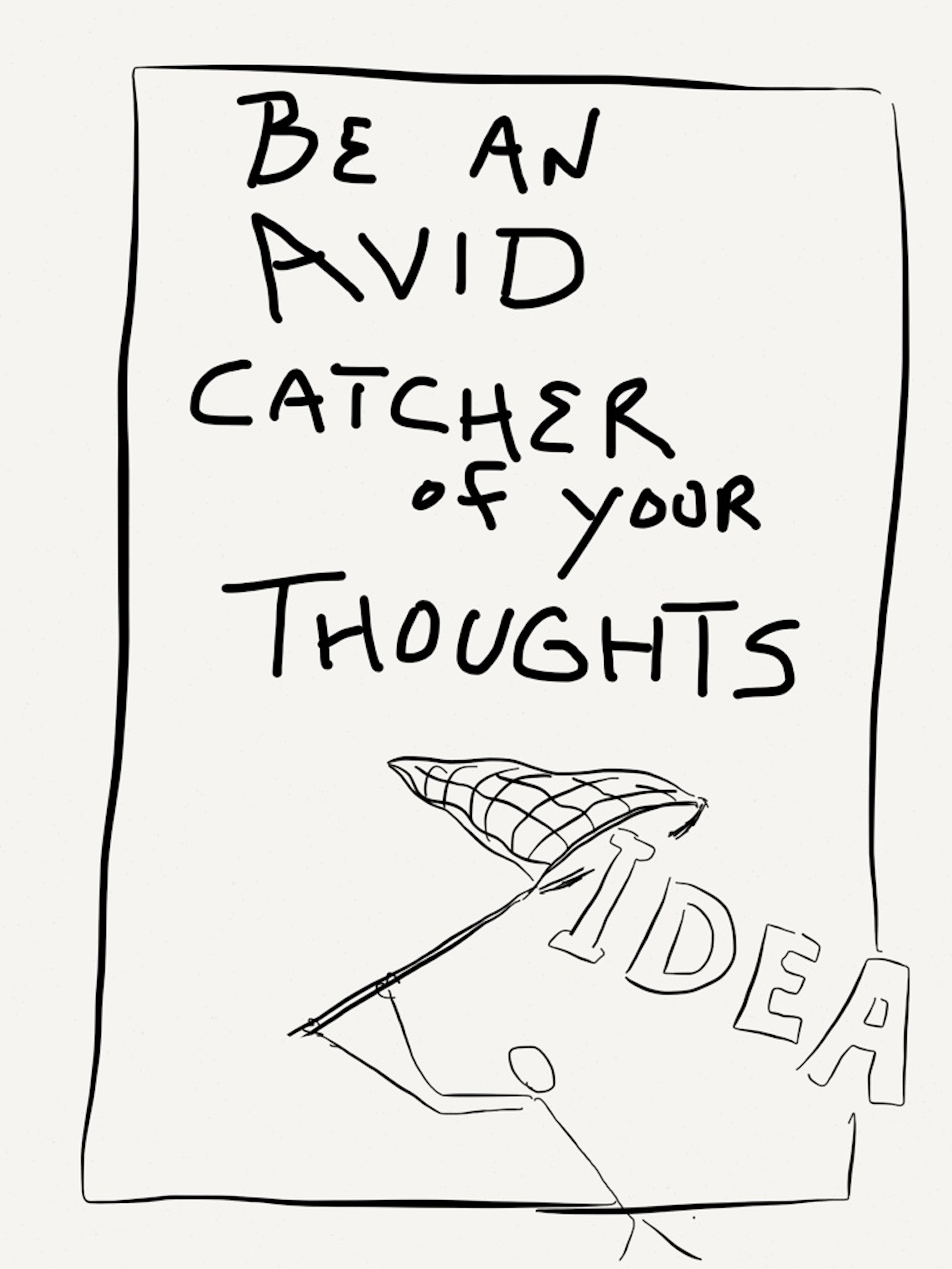
Be an avid catcher of your thoughts

This notion is the heart of change. It is the practice of self-awareness. Listen to the story you tell yourself about your self.  It is ripe with ideas, dreams, and yearnings. It is also ripe with fears, doubts, and comparisons. Capture the ideas. Listen to the dreams. Follow the yearnings. It’s a muscle. Develop a focus for the creative. Capture what’s useful and let the other jabber go.

Screen Shot Avid Catcher

TO GET TODAY’S FEATURED IDEA FOR HUMANS, GO HERE

Everyone Has Their Heaven

TODAY’S FEATURED PRINT FOR HUMANS

everyone has their heaven

FOR TODAY’S FEATURED PRINT FOR HUMANS, GO HERE.

You Are The Giver Of Meaning

TODAY’S FEATURED PRINT FOR HUMANS

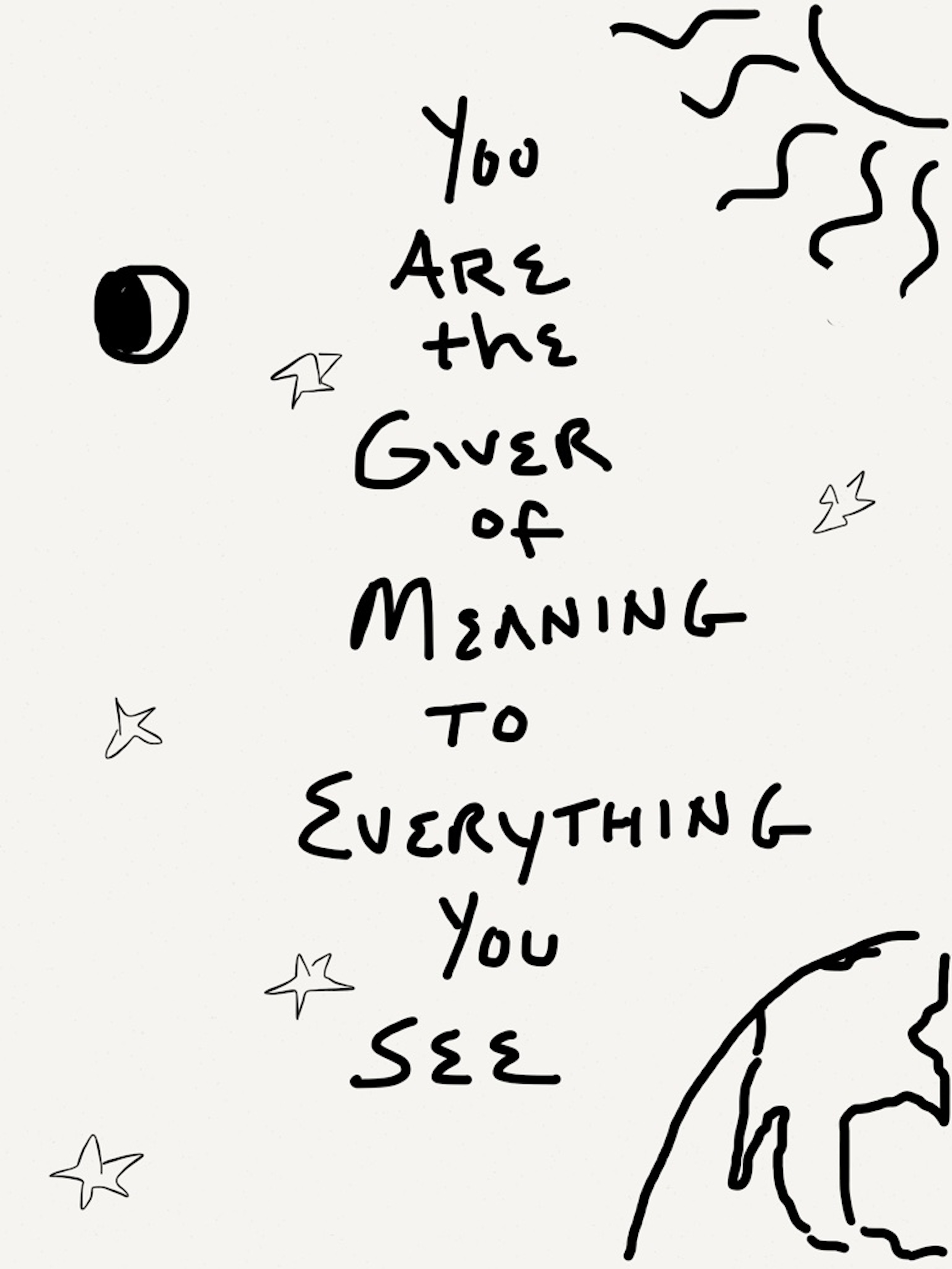
You Are The Giver of Meaning

FOR TODAY’S FEATURED PRINT FOR HUMANS, GO HERE

Experience The Miracle

From the archives: Pidgeon Pier. This painting is about paying attention

From the archives: Pidgeon Pier. This painting is about paying attention

“It has become my view–my faith–that all elements of nature have that power to produce peace. It is surely why so many are drawn away from their urban lives and back to natural places. But those places need not be grand scenic vistas. The same peace can be found in the dandelion growing in the nearest vacant city lot.

It is, in the end, a choice either to “shut up and listen” to these sources of strength–no matter how great or humble or where we encounter them–or to hurry on by.”

~Master Jim Marsh in a comment about my post, Sit By The River

There was a cool breeze off the lake this morning that slowed the mounting humidity. We were a mile into our usual morning walk, rounding the path to the rocky lakeshore, when we entered the storm of dragonflies. There were hundreds of them, hovering just above our heads, occupying a narrow band that stretched as far as the eye could see!

I gasped and stopped! Never in my life had I seen so many dragonflies. Kerri said, “They come out when the weather has been hot and without rain.” Before continuing on our way, we stood for a few moments appreciating the hovering, the methodical zigging-and-zagging. Until our path deviated from the coast, they were with us, green and purple spirits, riding the air-line where earth meets water. For me it was pure magic.

Many years ago, as a way of ending our relationship, a woman told me that it was too hard to be with a mystic. I’d never before (or since) thought of myself as a mystic so I looked it up to make sure I understood why a mystic might not be easy to live with:

Mystic (noun): a follower of mysticism.
Mysticism (noun):
1. Belief in intuitive spiritual revelation,
2. Spiritual system,
3. Confused and vague ideas.

I laughed aloud when I read the three definitions of mysticism; the third definition applied to the previous two! I left my dictionary with two beliefs:

  1. All human beings are mystics if they simply slow down and pay attention. There’s no trick to it. And, that was certainly the problem in my relationship: I have always liked walking slowly in a world drunk on racing to the next big thing. That is hard to live with!
  2. The line between a spiritual revelation, a cathartic experience, a scientific eureka, or an artistic visit from the muse, seems to me, to be semantic. In our age of the intellect we generally run from the word intuition unless we apply a label like “gut instinct” (transforming a feminine energy to a masculine gut) or “I just knew it!” (transforming the scary clarity of an intuitive feeling into a safe clarity of an intellectual experience). It’s all wordplay.

Hearts know. Thoughts babble. And the only way to sort it all out is to stand still, stop the babbling, and see the miracle.

Make It So

Pasta. Meat sauce. Warm Bread. Wine.

Pasta. Arugula salad. Wine.

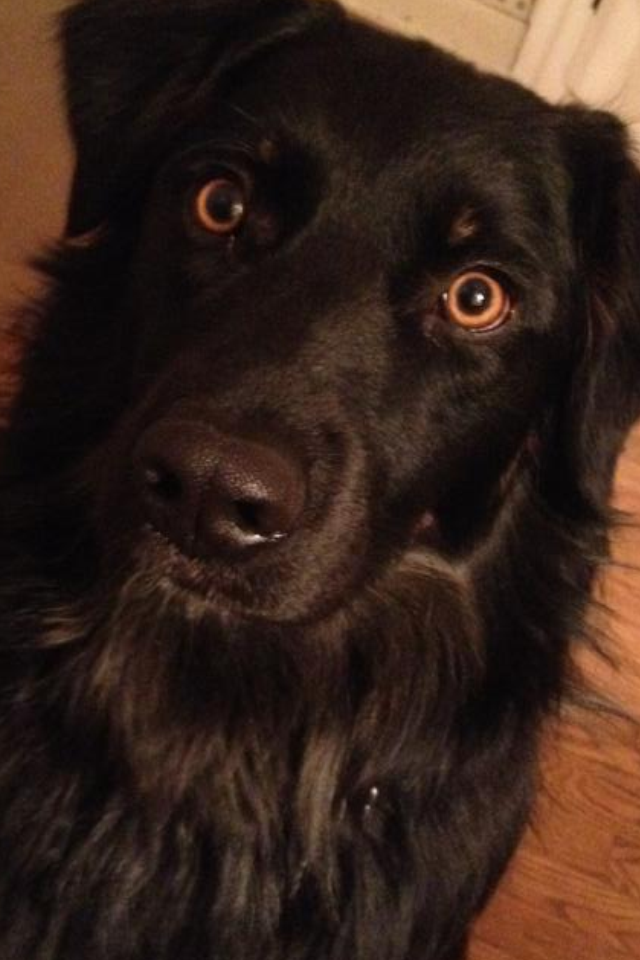
Tripper Dog-Dog-Dog knows the world through his nose. He sniffs everything. It is not uncommon after we finish a meal to come face-to-muzzle with a scent-curious Dog-Dog. Lately, as the objects of his sniffer, we’re given to staring into his amber eyes and offering the menu, saying something like, “Pasta. Arugula salad. Red wine,” or “English muffin. Peanut butter with black cherry jam. Banana. Coffee.” Satisfied with our description, he moves on to the next smell-enticing investigation.

I delight in our Dog-Dog food reports. They’ve become commonplace and matter of fact; “Chocolate chip cookie. Espresso.” Our reports never contain qualifiers, so, for instance, we never say, “A great chocolate chip cookie. Delicious espresso.” We provide the minimum, the noun.

Our Dog-Dog reports have rekindled an age-old fascination of mine: the power of words, specifically, the enormous power of the labels we attach to our experiences.

Language is a sword that cuts both ways. It can liberate and it can imprison. The difference is in how it is used. Language is the primary tool we use to make meaning. Big magic happens the day a person realizes that meaning is not something that is found, rather, it is something that is given and it is given the moment we apply a word-label to an experience. Nothing is good/bad, hard/easy until our label makes it so.

Applying a label to an experience is an act of creation. It is not passive. Take note of the word-judgments you apply to yourself or to others. For a week make a game of flipping them over and applying the label “beautiful” to where you usually apply a judgment. So, for instance, instead of, “I am fat,” why not say to your self, “I am beautiful.” Both are labels. One imprisons while the other liberates. The difference is a single word.

The label determines the possibilities we see (or don’t see). In a past life I used to facilitate organizational change and I came understand that my role was to help my clients ask better questions (use different language). They always came to the table with a “how” question: how do we change without feeling any discomfort? Response: what might you see if you stopped pre-labeling what you might feel as “discomfort?”

The mantra: have the experience first, make meaning second. And then, recognize the great capacity and opportunity you have to make meaning. Why not make a better meaning? Why not take a step and let it be a step merely?

Try this: do the Dog-Dog and, for one week, eliminate the qualifiers so that nothing is good or bad or right or wrong. It just is because you choose to make it so.

Step Into The Field

photo-5[continued from “Jump!]

I wrote this phrase: “The one facilitates the journey for the many.” And, today, I would add: the one facilitates the journey for the many so that the many can experience the one. This little phrase is the point and the purpose of the theatre.

I’ve come to believe, at this stage in my artist life, that all processes of art-making are actually exercises in presence. And, presence, for me, has come to mean transcending any experience of separation. For instance, when I am fully engaged with painting a painting, “I” am nowhere to be found. Time disappears. There is only rolling creation. To use a cliché: something comes through me. Language is incapable of grasping what really happens and all we are left with is “something comes through” – a statement of separation.

A week ago today we were preparing to perform the closing of The Lost Boy. This play is unique in my experience for many reasons (it would require a book or two to explain the many layers of this cake), one of which was that we only had two performances: an opening and a closing. We hit our stride on the closing – and by that I mean we let go of thinking, preparing, adjusting…, and entered presence. We stepped onto the stage with no thought of “what’s first” and “what’s next.” The play happened with no effort. The Chili Boys played like never before. We were, to use another cliché, in the flow. I have never felt more alive, more connected, more present. It was fun!

50 minutes before stepping onto the stage

50 minutes before stepping onto the stage

Years ago, I had the opportunity to assist Jim Edmondson in a series of plays and I riddled him with questions. He introduced me to the notion that the art of acting was the art of presence (though he used a different language). He taught me that words like “focus” and “intention” are merely tools for cultivating the capacity to be present. Presence is the portal and the actors’ (artists’) job is to step into presence so the audience can join them. Literally, join with them in the field of the present, the place of common story. To be. Together, in a single story. And, although he did not say it this way, he taught me that “to be” is infinitely more powerful than “to become.” “To be” is not an arrival platform; it is an experience of the many recognizing itself as the one [could you ask for a better definition of art!].

Mike, our stage manager extraordinaire, came down from the booth and told us that our performances were different than the first night. We were more potent; we found nuance and greater depth. He was right. We were finally able to surrender to the work, get out of our own way, and step into the field of shared story.

Hear The Voices

photo-2This is the most unusual rehearsal process I’ve ever navigated.

First, I wrote the play and in preparing to perform it, I’m discovering it anew as if someone else wrote it. There have been brilliant and funny moments when I ask myself, I wonder why he wrote that? The good news is that I remember whom to ask.

Second, the play was originally meant for Tom to perform and since the story is Tom’s family narrative, I wanted the language and syntax to be Tom’s. In development, I recorded hours of conversation with him. Much of the first draft was a transcription so that I might capture word-for-word his language choices and speech patterns. Those structures survived the several rewrites that happened after Tom’s death. In preparing to perform the play I’m wrestling with the language. I’m wrestling with his language. It is almost as if I am discovering my own speech patterns and syntax – in telling Tom’s story I’m finding it necessary to tell it my way, not his. Essentially, as is true in all good storytelling, I am finding myself, my voice, through his story.

Tom and me a long time ago.

Tom and me a long time ago.

Finally, the music is a character in the play and the musicians, Mom’s Chili Boys, are madly rehearsing in California while the actors (Kerri and I) are rehearsing in Wisconsin. The internet is a beautiful thing as, each day, we pass notes, record voices, email questions; we will only be together in the same room 3 days before the first performance. We’re essentially workshopping the play from two locations. It is akin to rehearsing a symphony in parts and the parts only come together in the final day. They get to experience the whole symphony, the fullness of their music as played through all of the voices, only in the final hour. And that will be true of this play.

Each day I rehearse and I hear Tom’s voice in my head, telling me the stories that comprise the play. I am reminded that, whether artist or audience, art is a living thing. It is a relationship and ultimately that relationship is with your self.

title_pageGo here to buy hard copies (and Kindle) of my latest book: The Seer: The Mind of the Entrepreneur, Artist, Visionary, Innovator, Seeker, Learner, Leader, Creator,…You.

For all digital versions, go here (Leanpub)

Untitled by David Robinson

Untitled by David Robinson

Go here for fine art prints of my paintings.

Move Your Words

My friend, Mark, made this Wordle of my blog

My friend, Mark, made this Wordle of my blog

I am working with words again today but in another aspect entirely. Now that The Lost Boy has the minimum funding necessary for a production I am working on the play in earnest. Tripper Dog-Dog-Dog cocks his head and wrinkles his brow in wonderment as I talk to myself or dance the words. Sometimes he confuses my work method as an invitation to play and he leaps, catching the cuff of my shirt and pulls me to the ground. “Not now!” I cry out as Dog-Dog stretches my sleeve so that it might fit a giant (a side note: Dog-Dog has altered all of my shirts – he regularly mistakes my work for play. If I do not roll them, my shirt sleeves look as if I am small child wearing an adult extra-large).

I am a kinesthetic learner and realized years ago that working on a script was easier and more productive if I moved or danced the words as I worked with them. To borrow a phrase from a lost friend, my years at school were “fresh hell” because sitting in a desk was painful, it hampered my learning. If I want to have an insight or gain an understanding of something, the best thing for me to do is take a walk. If I move it, I can break down a script in no time. I can memorize anything if I can physicalize the intentions. For me, language, word use, and sense-making are a physical affair.

It is a physical affair for everyone. Try to speak without breathing (an impossibility); breath is movement. Speech is physical. For a real laugh, try to communicate without gesturing. Limit your movements and you will inhibit your capacity to communicate. For more fun, Google the latest statistic about how much of our communication is really non-verbal (we primarily read body language; listening to what is being said is a distant second). The deep mastery of a storyteller is found, not in the words, but the punctuation of a moment: the turn of the head, the intake of breath, the smallest of gesture, the connection made through the eyes; the fire of imagination is fanned when the storyteller, no matter how subtle, dances the story.

Last night I was reminded again of the power of language – the real kinesthetic of it. B is disturbed by the violence and darkness she sees in the world and asked, “How do we push back on it.” I challenged her verb. When we choose our language we also choose a “metaphor path”. Language choices come with images and images are not passive. They define what we see. They define the available options. They are a root for movement. To push back is a verb of resistance. It is counter force, a choice of aggression. “Why push against what you don’t want?” I asked. “Why not put your energy, effort, and imagination into creating what you actually want?”

To push. To create. Which verb will move you?

title_pageGo here to buy hard copies (and Kindle) of my latest book: The Seer: The Mind of the Entrepreneur, Artist, Visionary, Innovator, Seeker, Learner, Leader, Creator,…You.

The PoetFor fine art prints of my paintings, go here.