On The Day of “How?” [David’s blog on KS Friday]

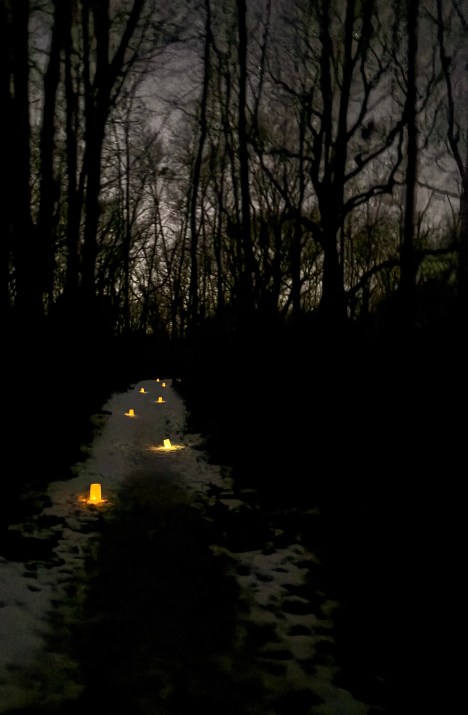
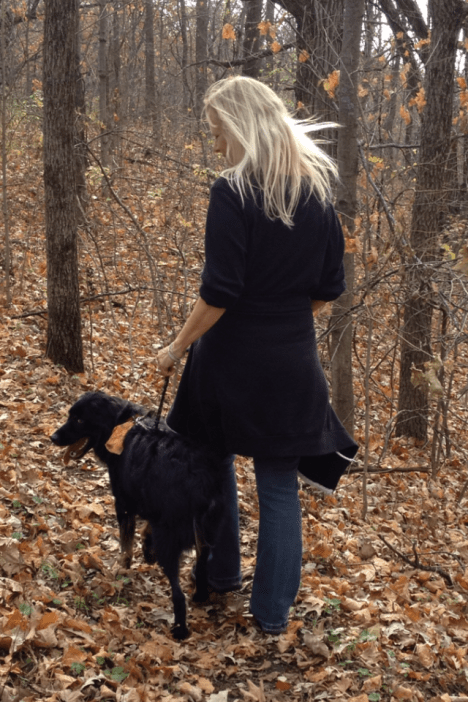
Thoughts from the trail on day number 2 of a new year:

In my distant past I led workshops and retreats. Attendees, after having a significant revelation, would inevitably ask, “How do I take what I now know back into my day-to-day life?” At the time I generally threw the question back at them. “How do you take it back?” There is no formula.

How do we integrate new wisdom into ancient patterns? How do we weave our dreams into our white-knuckle-grip on reality?

There are ubiquitous platitudes that offer not-very-helpful-advice: “Out with the old and in with the new.” “Just do it.” “Pull up your bootstraps.” “Put on your big-boy pants.” These bromides are built upon faulty notions that 1) change is a one-and-done achievement rather than an ongoing process, 2) change is a linear path, and 3) change is something done all-by-yourself in a vacuum.

We only know ourselves in relationship to others. There is no arrival platform in this ever-changing life. Although we would like it to be otherwise, learning (change) is cyclical – it is never linear – and has no end (well, there is one definitive hard-stop).

I could have responded to my attendees with a question like this: To what story are you married? What makes your new insight a threat to the old story? Can you relax, breathe and detach from parts of the old story? I might have suggested that the question “how” presumes needing to know before acting. Is it possible that knowing “how to do it” is something seen after the fact? What if the “how” of taking a revelation back into life can only be understood after it is experienced? And what if “how” is a series of discoveries that never end?

I worked with a man who preached that people only change when, “The pain of staying the same becomes greater than the pain of making the change.” There is some truth to his belief. Pain is a potent motivator. Not-knowing can be unpleasant and very few people willingly walk into discomfort. Discord is a prerequisite of concord. And, vice versa.

Yearning is painful. Holding a dream can be excruciating. Stepping toward a vision can be scary as well as exhilarating. Staying the course in the face of internal opposition is a choice that is made again and again with each new step. And, each new step reveals previously unseen possibilities.

Revelations create new images, updated visions. What if the only thing that matters is stepping toward the vision – especially knowing that each new step will inform and alter the vision? And, what if standing still or temporarily turning away is actually an action: moving toward rather than running from? There is grace in recognizing readiness.

Thoughts to myself from the trail on day number 2 of a new year. It is the day that the fog of holiday celebrations clear and we begin to doubt our resolutions and question the strength of our revelations. It is the day we ask, “How?”

BLUEPRINT FOR MY SOUL on the album BLUEPRINT FOR MY SOUL © 1995 Kerri Sherwood

Kerri’s albums are available on iTunes and streaming on Pandora

read Kerri’s blogpost about THE BRANCH

likesharecommentsupportthankyou

Fall Into Togetherness [David’s blog on KS Friday]

“We have fallen out of belonging. Consequently, when we stand before crucial thresholds in our lives, we have no rituals to protect, encourage, and guide us as we cross over into the unknown.” ~ John O’Donohue, To Bless the Space Between Us: A Book of Blessings

What does it mean to fall out of belonging?

This season brings us Christmas and Hanukkah and Rajab. Since they are rituals of identity they are cycles of renewal. They affirm these are my people and with them I know who I am and what I value. Each year, through our rituals, we reaffirm who we are and what we believe. It is one way – perhaps the most important way – of understanding the return of the light.

To fall out of belonging means that the rituals are enacted but their purpose has collapsed. They are no longer the glue that binds but have dissipated to become merely economic. To fall out of belonging is to be alone together. It is to be valueless since value is an aspect of relationship-with-the-whole. To fall out of belonging means there is no whole – and no way personally or communally to be whole.

That seems like an apt description of this nation once again at war with itself, dismantling every value, trying to sort out whether belonging is inclusive or exclusive. Are we equal under the law or unequal members in an ever uglier caste system? Who are we and where are we headed?

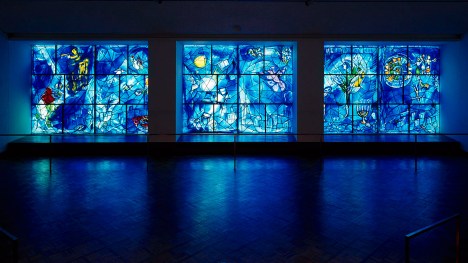
The glass blocks on the stairway seemed an appropriate metaphor for this threshold we are about to cross into the new year. The image is murky at best.

I used to be certain that I did not belong until an unlikely voice challenged my certainty. “Belonging is not an issue,” she said. I realized how wedded I’d become to my story of not-belonging. Not belonging was central to my identity as an artist. My culture defines artists as deviant. I laughed aloud when I realized that my place on the margin was my role in the society, it was how I belonged.

I also realized that It was not so much that I didn’t belong to my society but that I did not want to belong to it. It frightened me, this community that regularly conflates money with morality. This society that fears facing the totality of its history.

What I learned then is more true now: belonging is not the issue. The issue is to what kind of society do we want to belong. It’s the relevant question – the only relevant question – we need to ask ourselves as we stand on this threshold, preparing the ritual parties and fireworks, as we decide where we will be and what we will do at midnight of the 31st, as we make resolutions that will carry us into the new year and into who we want to become.

Belonging is not passive. It is not a given but requires our participation and commitment to renewal of what we value.

To what kind of society do we want to belong? The answer to that question will determine the society that we will create. It is up to us to determine which unknown we will cross into, whether we will continue to fall out of belonging and further into the dark divide – or whether we will choose to fall into togetherness, as our rituals of renewal, when truly valued, have always aspired: out of many, one.

TIME TOGETHER on the album THIS PART OF THE JOURNEY © 1998 Kerri Sherwood

Kerri’s music is available on iTunes and streaming on Pandora

read Kerri’s blogpost about GLASS BLOCKS

likesharesupportcommentthankyou

Magic Things [David’s blog on KS Friday]

“The world is full of magic things, patiently waiting for our senses to grow sharper.” ~ W.B. Yeats

Standing at the back of the theatre watching a performance of a play that he’d directed, Roger whispered a frustration that most artists whisper at some point in their career: the audience will never get all of the layers of story. Very few will appreciate the totality of the hard work, the heart, the intention, the nuance…So much goes unseen, un-felt.

There is, of course, only one response to his whispered frustration. They may not get it all but you – the artist – does. Sometimes I think the skill of the artist is to slow the world down so that they can more fully see it. Or, more accurately, slow down so they can see the magic in the world. And then their work is to help their community see it, too. The great gift of artistry is that the work is never finished. The process – the capacity to perceive and share more of the magic – is never ending.

I regularly ponder the impact of the pace of work and life in the age of the internet. It’s a raging river of information that never slows. In fact, “progress” is understood as an increase of speed. We worship at the business alter of efficiency-and-effectiveness; people are rewarded for striding at an ever faster pace – so anything, like artistry, that suggests slowing down might be beneficial, is radical. There is a reason that an audience might not “get it”.

I’ve been aware this week, as we deal with the impacts of the snow and cold on our house and car, that we’ve mostly unplugged. Necessity has made us present. It is not an accident that the prompt-photos for this Melange week are mostly close-ups. Detail. We’ve been staring at the miracle of the icicles. The patterns in the snow clusters on the Adirondack chairs have captivated us.

Yeats knew only pen and ink. He stared at blank pages and not at flickering dynamic screens that pulled his attention this way and that and filled his mental bucket with information. He did not sort through hundreds of emails each day or navigate the mind numbing onslaught of social media. Yeats took walks and stared out windows to clear his mind. He sought other poets and thinkers, he spent time with them so he might challenge and expand his ideas, his perceptions, his capacity to see and feel.

The world of magic things, patiently waiting for our senses to grow sharper, knows that our senses are so inundated with information and noise and stimulus that we are less and less able to sense anything at all, especially the magic things. We are distracted, often misinformed and thoroughly entertained – and less and less capable of sustaining a span of attention, let alone sharpening our senses.

Sharpened senses – otherwise known as presence – opens the door to the ubiquitous magic things, things that patiently wait for us to slow down enough to fully appreciate them.

BLUEPRINT FOR MY SOUL © 1997 Kerri Sherwood

Kerri’s albums are available on iTunes and streaming on Pandora

read Kerri’s blogpost about SNOWFLAKES

likesharesupportwethankyou

Holding On. Letting Go. [David’s blog on KS Friday]

The story of the BabyCat chair is the story of the tides of human emotional life. Holding on. Letting go. Holding on. Letting go.

After a titanic struggle with all that it represents to us, we let it go. We took it to the curb where it sat for a few days with no takers. We discussed chopping it up but couldn’t bring ourselves to do it so decided to wait. We decided to not-know what to do with it. We placed it in a spot beside the garage, like a memorial bench on a trail, it seemed an inviting place to sit and ponder the driveway.

And then the birds found the chair. We hadn’t considered the chair’s proximity to the bird feeder when we placed it by the garage so we were delighted when we looked out the window and discovered a score of birds enjoying the BabyCat chair. They were chattering, hopping armrest to armrest as if testing the comfort of their new chair.

“I guess the B-Cat chair has found a new life,” she said. “Perfect spot.” Keep in mind, we have a piano in our backyard so a chair in the driveway is not completely out of character.

The birds scattered when the workmen came up the driveway following the cable lines to the pole behind the garage. They had to move the chair to gain access to the pole. They were clearly puzzled by the chair since it was so obviously placed – rather than dumped – in that spot. They looked around before carefully moving the furniture-in-the-driveway.

With the snows, we’ve discovered that critters other than the birds have enjoyed a respite along their way. We’ve seen squirrels occupy the chair and found evidence of raccoons napping or at least pausing in their daily maraud.

Holding on. Letting go. Holding on.

read Kerri’s blogpost about THE CHAIR

likesharesupportthankyou

What Were You Thinking? [David’s blog on KS Friday]

The flakes hitting our faces felt like needles. We’d ventured out to get some photos of the lake-in-the-snow-storm. After snapping a few photos the sideways wind drove us back home. Stepping into the warmth of the house, we agreed, “That was enough!”

A few weeks ago we completely re-visioned the upstairs of our home. We repainted a bedroom. We carried sack-after-sack of discards out of the office and into the trash. We installed a repurposed bookshelf at the top of the stairs. I was amused when Kerri went to my basement archives to pull a new painting to sit atop the bookshelf. She returned with a canvas that I was preparing, an under-painting of broad grey strokes and splashes – not a finished painting. “I love it!” she exclaimed, placing the canvas atop the shelf. “Don’t you love it?”

“But, it’s not a painting yet,” I replied.

“Yes it is!” she chirped, proud of her new acquisition.

“I would have done better in my life as a painter had I not taken myself so seriously,” I said, shaking my head. “I would have saved myself some serious struggle had I learned sooner to stop at the under-painting.” She agreed to add a stroke of white to the…composition…so it would be a piece by both of us, though, to date, the…painting…remains mine-all-mine.

This morning it occurred to me that “the painting” bears an uncanny resemblance to the view of the wet snow raging just outside our sunroom window. The tones are similar. Tip the window on its side and it would be a sister piece to the canvas sitting on top of the shelf. Maybe I should title “the painting” Buh-Buh-Blizzard. Or Opus 25 In Winter Window Tones. Or, perhaps, Kerri’s Choice.

Or maybe I’ll leave it unnamed, a mystery piece for future guests to ponder. They will politely ask (as they always do), “What were you thinking when you painted the piece at the top of the stairs?”

I’ll look at Kerri and smile, saying, “Maybe you should answer this one.”

WATERSHED on the album AS IT IS © 2004 Kerri Sherwood

Kerri’s albums are available on iTunes and streaming on Pandora

read Kerri’s blogpost about THE STORM

likesharesupportthankyou

An Evolutionary Line [David’s blog on KS Friday]

“Whenever men take the law into their own hands, the loser is the law. And when the law loses, freedom languishes.” Robert Kennedy (clearly not Jr.)

This handle is well worn. It comes from a time before electricity relieved muscle and hands of much of their day-to-day duties. As artists from-another-era, we are drawn to things worn smooth by human hands. I love my brushes precisely because they are well-worn; they fit my hand because my hand, unique in all the world, has worn-its-way into the handles. My brushes carry the record of my life’s work.

Because of a play that I’m writing I’ve been reading and rereading The Oresteia, a trilogy of plays by Aeschylus. “The trilogy explores the transition from personal vengeance to a more civilized, legal system of justice.(A-I) The cycle of plays is a celebration of human evolution, progressing from the chaos of revenge and retribution to a society with a system of laws that maintain order. Aeschylus wrote the Oresteia because a society based on law was a relatively new idea, an evolutionary line drawn in the sand marking the transition from animal to human nature, from impulse-driven to rationality guided by complex moral systems. The law is the foundation stone of democracy and of our freedoms.

Currently, we are witnessing an all-out assault on the law. From a justice department driven by the retribution-fantasy of a single man to a Supreme Court undermining the Constitution it is sworn to protect, those in power would rather us devolve, step back across the line into animal revenge. They are literally taking the law into their own hands. Their revenge-imperative threatens our moral order. Our freedoms are in peril.

This is not the first time our foundation stone has been under assault, it is not the first time a privileged few deluded themselves into believing that they-and-they-alone ought to rule. The path to autocracy always begins by undermining the law, by twisting it, weaponizing it to serve the opposite of its intention.

Our system of laws is like that well-worn handle. It is our heritage, our inheritance. It fits in our hands because our hands have left our imprint upon the law and the law has left its imprint on us. We’ve worked for it, fought for it, died for it. It’s why we take to the streets. It’s why we boycott businesses that bow to authoritarianism. It’s why we run from our homes to blow whistles and record the abuses of ICE. It gives me hope.

In the final play of the cycle, the goddess Athena – yes, a goddess – establishes law and order, a legal system – better than bloody revenge – to resolve conflicts. Her new system ends a dark curse that reached back generations, a curse that had been plaguing humanity. With her system of laws and courts, her invention of a jury by peers, she opened the door for humanity to progress from primitive retribution to civil society. She laid the foundation stone for a new idea – democracy – to replace the animal-revenge-mentality perpetuated by autocrats and kings.

LEGACY on the album RELEASED FROM THE HEART © 1995 Kerri Sherwood

Kerri’s albums are available on iTunes and streaming on Pandora

read Kerri’s blogpost about THE HANDLE

likesharesupportthankyou


Clepe Incredible [David’s blog on KS Friday]

This is the time of year that color in nature becomes shocking. It is the consequence of nature’s contrast principle: the greys and browns of oncoming winter meet the vibrant yellow, orange and red of the leaves-last-stand. Last week, while walking Dogga, I stood for several minutes beneath a tree made electric by the morning light. I felt as if I had entered another reality.

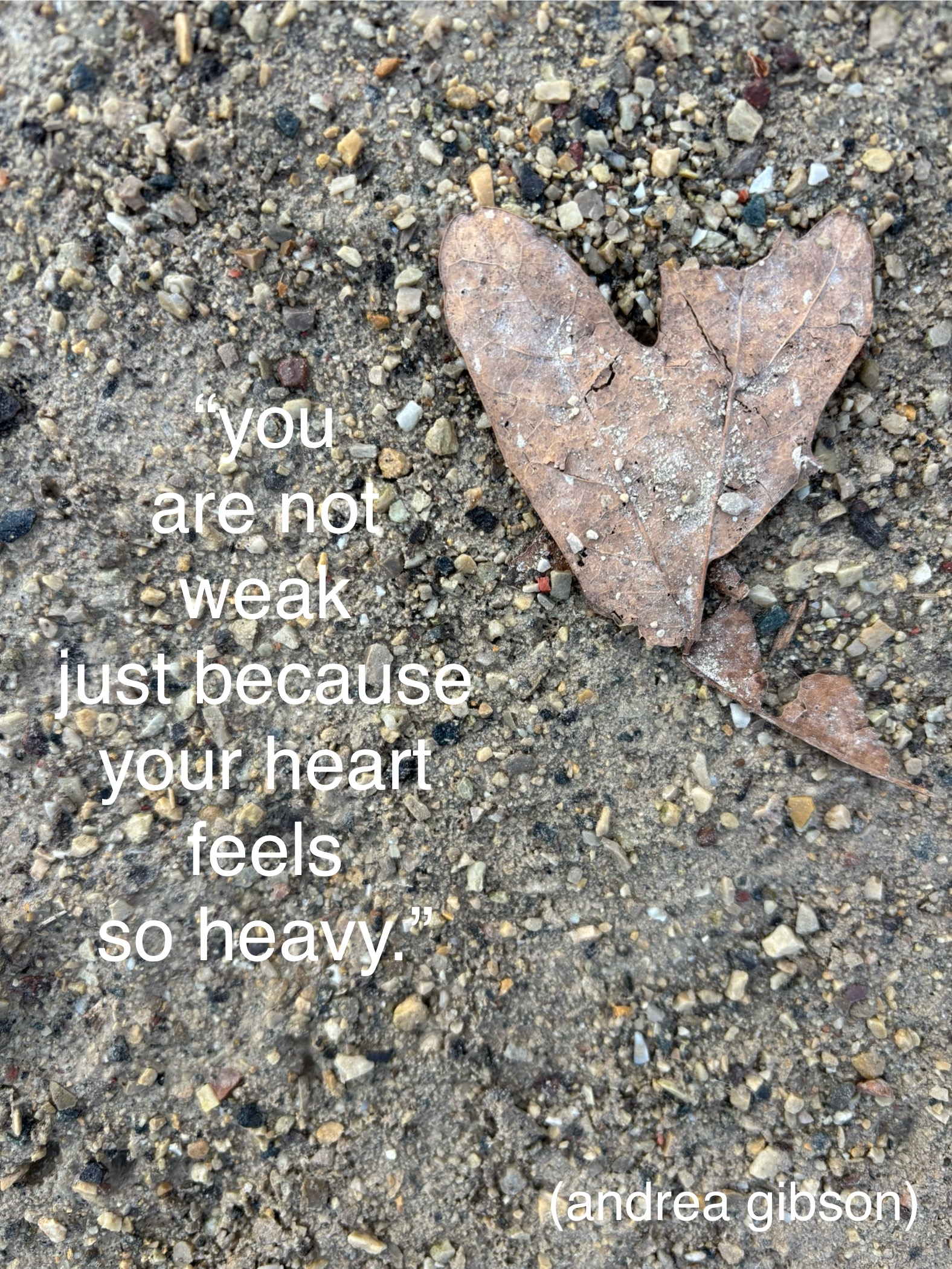
Contrast principle is really about how comparison shapes perception. I only know that I’m having a bad day because I believe that I’ve had good days. Last night I watched Anderson Cooper interview Tig Nataro for his series exploring grief. Tig Nataro recently lost her friend, poet Andrea Gibson. The love of life comes clear in the moment of the loss of life. The appreciation of life sharpens when the end rolls into view. Contrast principle.

I bumbled into an archaic word that is new to me: clepe. It means to give someone or something a specified name. To name. I was cleped David. As my end rolls into view I am more and more resisting the impulse to clepe my days. Why should my days be labeled either good or bad? On my last day, what will I be willing to give to have one more moment of this life? Why not clepe incredible each and every moment that I am fortunate enough to experience?

LAST I SAW YOU on the album THIS PART OF THE JOURNEY © 1997 Kerri Sherwood

Kerri’s heart is available for sharing on iTunes and streaming on Pandora

read Kerri’s blogpost about THE VIBRANT LEAVES

sharelikesupportthankyou

One Brief Moment [David’s blog on KS Friday]

“But time has many dimensions and in the end, time opens to timelessness.” ~ Peter Brook, The Quality of Mercy

One day I realized that I was like a sand painting: a bit of unique beauty created in the moment and meant to blow away with the winds. That is not a despairing thought. In fact, it was quite the opposite.

Late at night we watched a short documentary about the scale of time. It was eye-opening. The filmmaker was so overcome with realization of time that his model revealed that be broke down and cried. We are but a blip, a blink of the eye. The enormity of life. The impossibility of life.

Those who wish to have monuments erected for themselves are missing the point entirely.

Barney, the piano in our backyard, is slowly, over time, returning to dust. That is also true of Kerri’s Yamaha piano in her studio, only a fraction slower. Breck the aspen tree that came home with us from Colorado in the back seat of our car is now taller than our garage. If typical, Breck will live approximately 200 years. Twice as long as me, though the measure of time, the comparison, is arbitrary at best.

Breck and I each have our one brief moment in the sun.

GRATEFUL on the album AS IT IS © 2004 Kerri Sherwood

Kerri’s music is available on iTunes and streaming on Pandora

read Kerri’s blogpost about BRECK AND BARNEY

likesharesupportcommentthankyou

Golden Hour [David’s blog on KS Friday]

“We can easily forgive a child who is afraid of the dark; the real tragedy of life is when men are afraid of the light.” ~ Plato

We’ve planted tall grasses in both our front and back yards. This is our favorite time of year to watch the magic dance of the grasses. They put on their suits of warm autumn colors, yellow, orange and purple, and during golden hour, they literally glow while swaying in the breeze. It is sometimes shocking how beautiful they become in the golden hour.

I just learned that there are two meanings to the phrase “the golden hour.” The first refers to the quality of diffused warm light in the period shortly before sunset or just after sunrise. The second is new to me: “The term also has a separate, critical meaning in emergency medicine, referring to the first 60 minutes after a traumatic injury during which time is of the essence for surgical intervention.” (Wikipedia) The chances of survival are greater if treatment begins within the golden hour.

It was the phrase “willful ignorance” that stopped my scroll, landed me on Plato’s quote. It made me laugh. It is a phrase that, for me, now encapsulates the republican party, maga, and anyone who daily consumes fox news. It is one thing to be ignorant. It is another to choose ignorance. We are witness to the path of destruction wrought on our nation by people who are willfully ignorant, people who fear the light.

The results of the recent election read like both definitions of the golden hour. The injury to our nation has been substantial but our chances of survival just increased with a just-in-time intervention. And, what felt like a rapid descent into darkness just entered a golden hour. Time will tell if this period of warm, diffused light is a sunset or a new beginning: sunrise. My hope is for the latter, a new day guided by people who are not afraid and who welcome the light.

HOLDING ON/LETTING GO on the album RIGHT NOW © 2010 Kerri Sherwood

Kerri’s albums are available on iTunes or streaming on Pandora

read Kerri’s blogpost about THE GRASSES

likesharesupportthankyou

The Feeling Of Normalcy [David’s blog on KS Friday]

“If you do not change direction, you may end up where you are heading.” ~ Lao Tzu

After a long week of travel and a few days delay due to nasty weather, we took advantage of the first bit of sun and returned to our trail. It was as if an entire season had passed in our brief absence. So much life happened in such a small amount of time.

In truth, on the road home we discussed how it felt as if we’d been away for years. We felt as if we’d stepped into an alternative universe. Like a science fiction movie, it seemed that our rocket ship returned to earth and although we’d only aged a few days, the earth had aged a few hundred years. The world we knew no longer existed. It was a strange feeling to walk a trail we knew so well and yet it felt unknown.

It was, perhaps, more unsettling because that is how I feel about these un-United States these days. I walk through my days in places that I recognize and yet it is made strange by a congress that is effectively dissolved, the rapid destruction of the symbol we call The White House, a president blatantly and gleefully bilking the nation while building a Marie Antoinette ballroom while democracy crumbles, people starving, people being plucked off the street and disappeared for no other reason than their skin is brown, and the highest court in the land, rather than protecting the Constitution, betraying it, shoveling more power to the autocrat. We are no longer headed for a fascist state, we have arrived.

And I go to the grocery store as I always have. I rake the leaves that fell while we were gone. We make dinner each night. When the sun peeks from behind the clouds, we return to our trail and walk so we might feel a bit of normalcy.

But the feeling of normalcy is now our enemy. Human beings are excellent at adapting and even more skilled at denying; making the atrocious acceptable. Normalizing the outrageous is now the force we must resist. We have already gone too far in normalizing the monstrous, in accepting the incessant lies and petulant abuse of power – and willing abdication of responsibility in The House, the cowing of the once-free-press. We cannot allow the loathsome to become our new normal. We cannot become accustomed to oppression.

We can, however, recover the impulse that gave our nation its birth: we know how to rebel against a bully king doing the bidding of the morbidly wealthy. We know how to join with our neighbors and speak truth to power-run-amok. We know how to say to corrupt tyrants, “This will not stand.” We know how to set course toward a more perfect union, a nation where all people are created equal, respected, and protected equally under the law.

[Happy Halloween! I just had a conversation about costumes and what I would wear to be the most scary. My answer: a republican. What kind of monster takes away food assistance from the most needy to give more money to the already morbidly wealthy? And then lies about it. Scary.]

MILNECK FALL on the album BLUEPRINT FOR MY SOUL © 1997 Kerri Sherwood

Kerri’s albums are available on iTunes and streaming on Pandora

read Kerri’s blogpost about AUTUMN TRAIL

likesharesupportthankyou