Consider The Symbol [on DR Thursday]

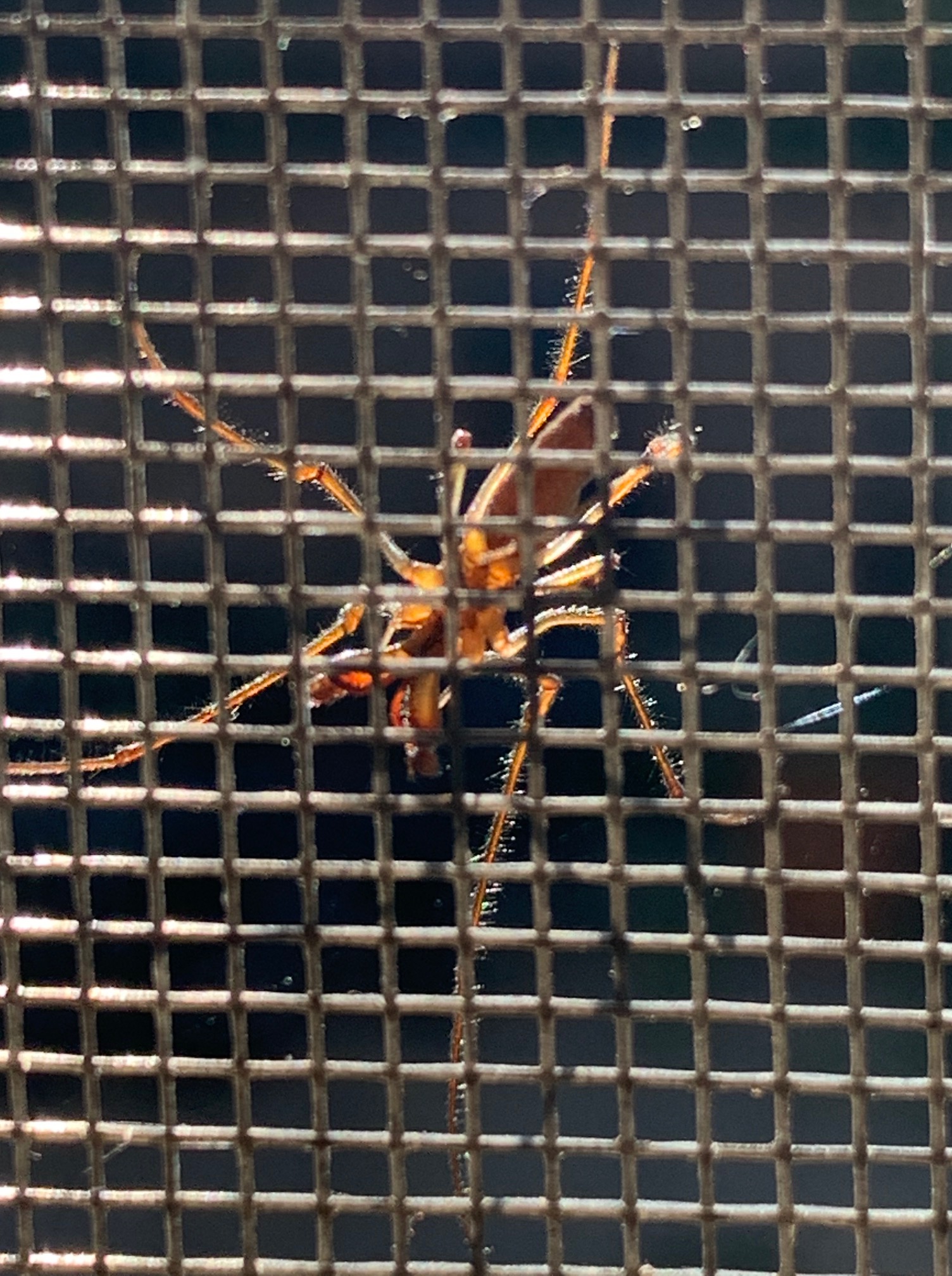
Because it is outside, she grabs her camera. Were it inside, I’d hear the special scream saved for spiders and I’d come running. The power of a screen, flipping fear to fascination. “It’s amazing,” she said and cringed.

Spider symbolism – like all vital symbols – carries the power of a complex split-metaphor. On one side of the screen they are toxic, malicious, potential bringers of slow venomous death. On the other side of the symbol, they are world creators, weavers of life and interconnectivity. Certainly, they are central characters in this world-wide-web that we enjoy.

In this era, we attempt to restrict our symbols, preferring them to be absolute, one-sided, either this or that. Symbols never work that way. They lose their power when cut in half. To be potent, a symbol must embody both sides of the moon. Limiting a symbol to only one side flattens it, robs it of dimension, renders it useless. The real power of the symbol ignites when both aspects are understood and embraced. Symbols are polarities.

We would be wise, in our nation, to look at both sides of our symbols. Our history, embodied in our symbols, is both shining and dark. Vapid fear-stories like “replacement theory” fester in a flattened symbol culture, a half-told history. Ugly nationalism grows in the spaces left empty by a cleaved symbolism, a highly-edited narrative.

Gaze through the screen at both sides of the symbol, and a fuller, richer, more color-full story emerges. An honest narrative.

Nations, like people, become healthy when they embrace all sides of their story, the dark side and the light, when they acknowledge both aspects of their symbol, when they take responsibility for their actions, the venomous and the virtuous alike.

read Kerri’s blogpost about THE SPIDER.
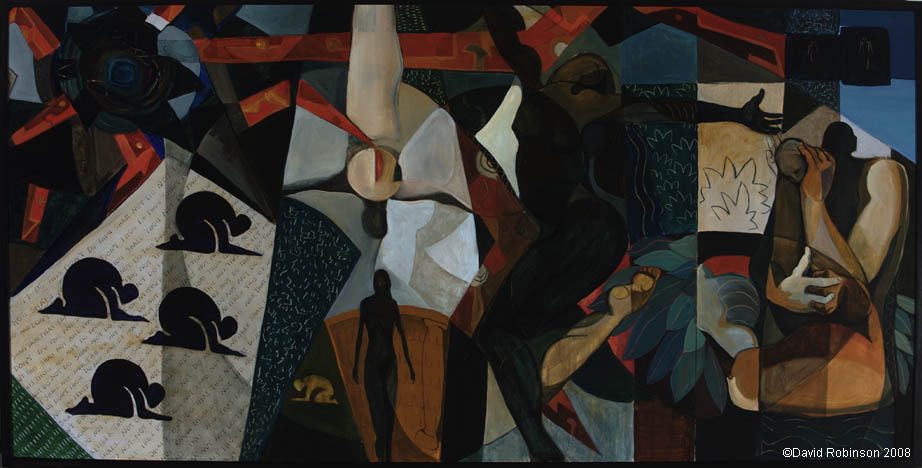
Prometheus Resurrection © 2008 David Robinson

Pull In [on DR Thursday]

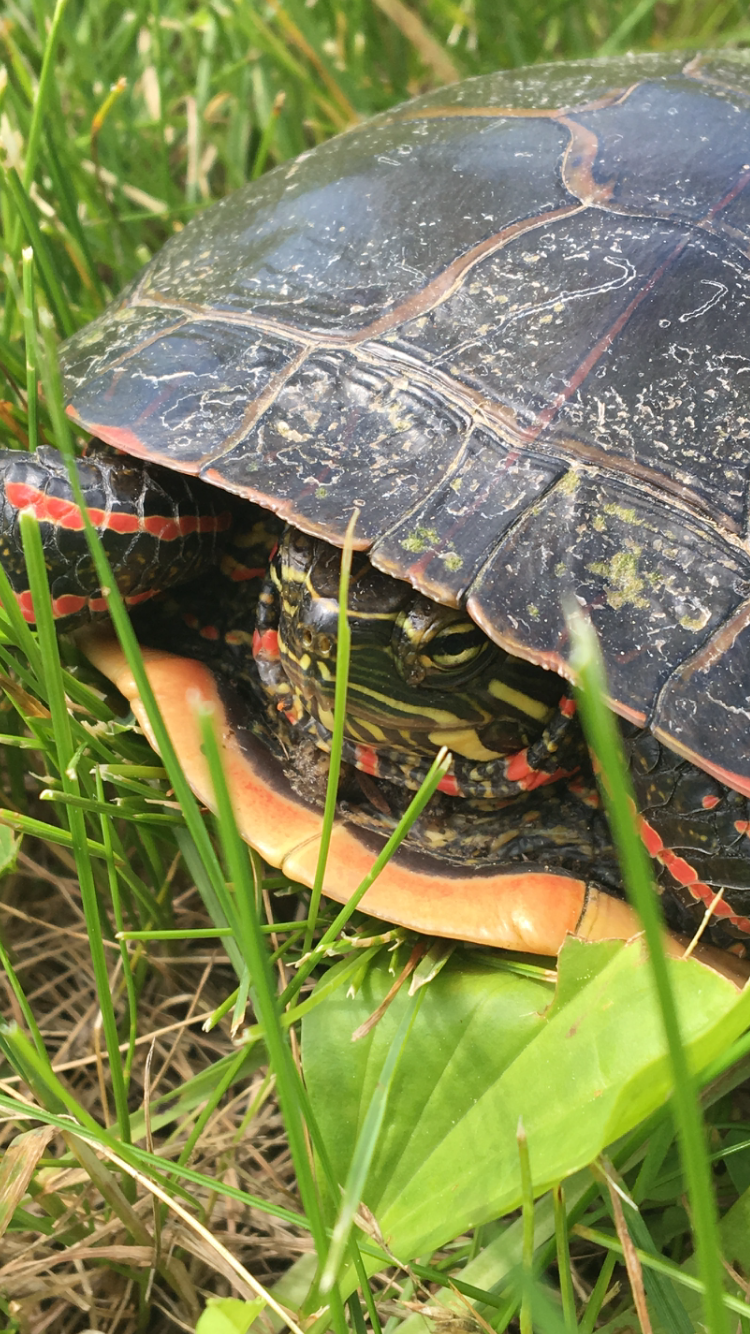
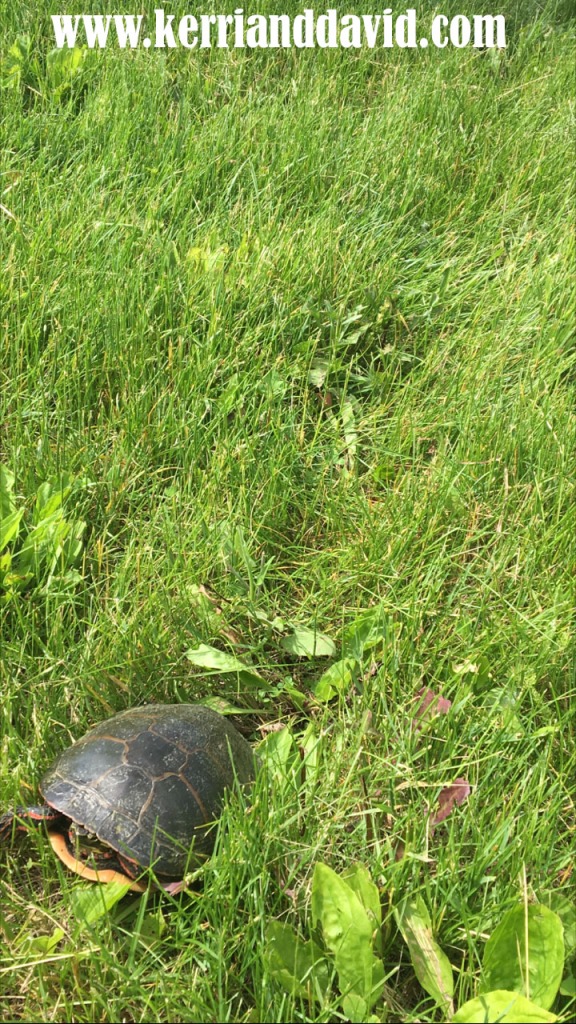
I suspect the turtle understood the giant blonde woman with the camera aimed at this face as a threat. He did what turtles do when stressed: retreated into his shell. “I’m not going to hurt you little guy!” Kerri said, on her knees, snapping pictures. The turtle was, at best, dubious of her reassurances.

We were considering going to an outdoor concert until we saw photos of large crowds of people packed together. Covid has made us crowd averse. “I’m not sure I’m ready for that,” we chirped together and laughed at our stereo response. “I wonder if I will ever be ready for that,” Kerri mused.

At this moment I know more people with Covid than I have personally known throughout the entire span of the pandemic. I suppose this virus that rolls on and on, shapeshifting as it goes, would exhaust our guard sooner or later. I am guilty of thinking, “What’s the point?” as I don my mask to enter a store. Yet, every day this week, a new name or group of names has joined my roster of friends-with-Covid. So, I put on my mask. I pull my head into my protective shell.

There are real threats and there are nice ladies with cameras that only seem dangerous. “May you live in interesting times.” We do. A pandemic. Global warming has arrived. Nationalist madness on the rise. We cannot send our children safely to school – or shop at the grocery store – or attend a concert – without the thought of gun violence. We are awash in real threats and, like countless societies before us, we seem dedicated to our own demise. Madmen and women are at the wheel and we are in the backseat whispering, “Slow down,” looking at each other with, “Do Something!” in our eyes.

When Kerri showed me the photo of the turtle I was struck by the calm on its face. I recognize that turtles probably don’t have the facial muscles to fully express their fear but nevertheless I was delighted by the notion that the turtle-in-retreat was calm. Nothing to be done but pull into the shell and wait it out. No reason to panic.

We’ve discussed being more turtle-like in our lives. We live in Interesting times and there’s not a thing to do about it, other than perhaps write. Make art. Change a few behaviors. We need not wrinkle our brows or cry out in fear while pulling our heads into our shells. The sunrise is still as beautiful, we hold hands when we walk, make dinner together, love on Dogga at night. There’s lots of love inside our shell, no matter the surrounding madness, a quiet center in the storm.

read Kerri’s blogpost about THE TURTLE

shared fatherhood © 2018 david robinson

Embody The Symbol [on DR Thursday]

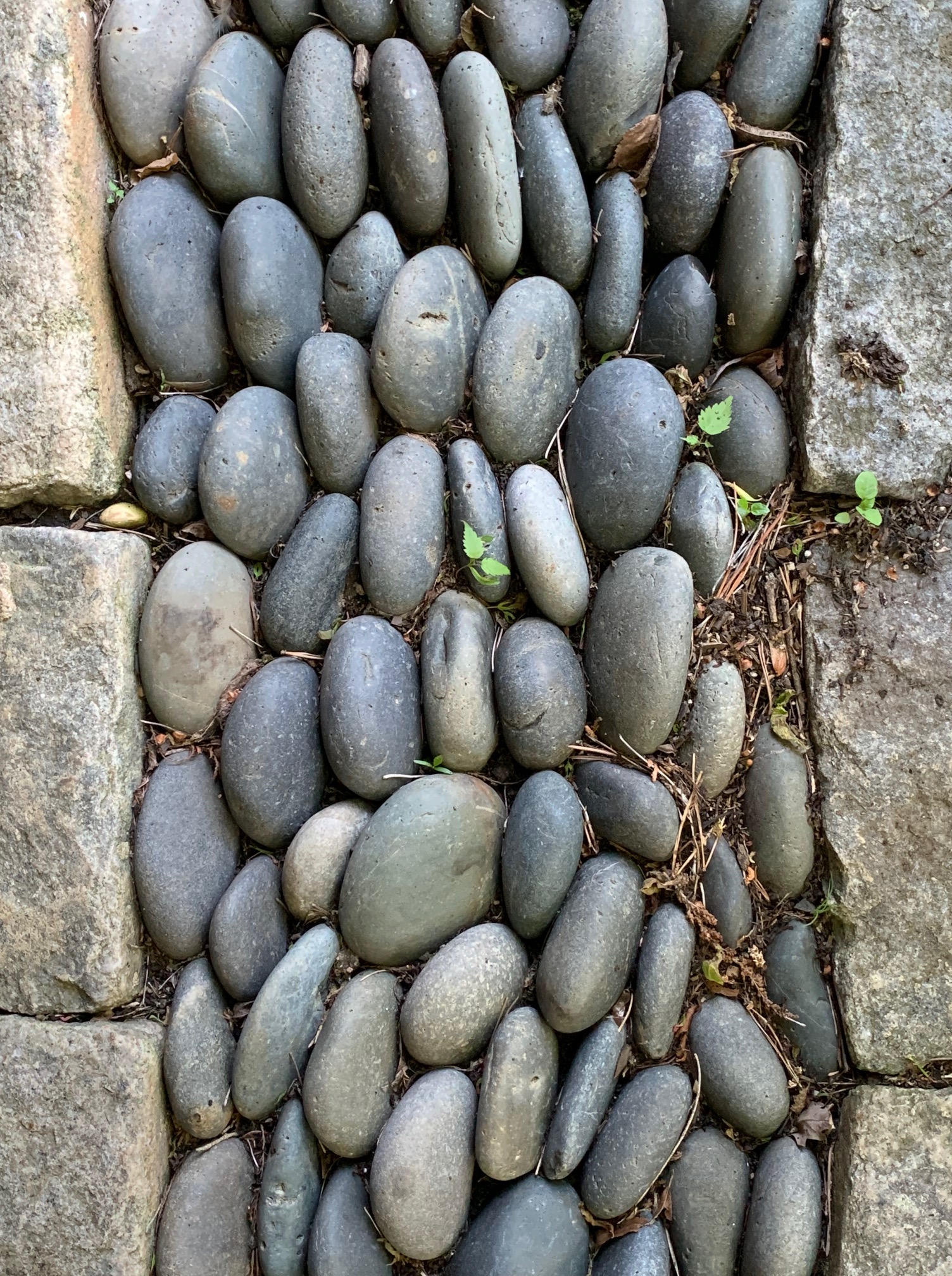
Everything in the Japanese Garden is symbolic, intentional. Pine trees represent longevity. Rocks, I’ve learned, represent the bones of the earth. They are as necessary in the design as are the “ephemeral blooms of the iris, rhododendron, and plum.” The symbol is not complete without both.

“The ephemeral existence of human life and the timelessness of nature.” Balance.

Entering the small yard of the Shoin House at the Chicago Botanical Garden is instantly calming for me. The small house is designed to “merge the outdoors with the indoors.” It is closed to the public but always beckons. I want to sit in the alcoves and write. Or do nothing at all. In the garden, I am instantly “connected.”

“Connectivity” is a word that has moved to the center of the work that I am currently doing. Amidst our ubiquitous capacity to share (Facebook, Instagram, Tiktok…email, chat, tweet, slack, text…) we are less and less connected. As Neil Postman wrote, we have made the irrelevant relevant and the relevant irrelevant. We share but do not connect. Shared information is not – and never will be – shared meaning.

Symbols empty of meaning when a community ceases to understand, honor, tend or acknowledge the significance of the symbol. And, symbols are the glue of a community. They are the physical, tangible location of an ideal. Disconnect from the symbol and the house falls apart.

I think that is why I am drawn to the Japanese Garden. There, beauty is intentional. The symbols are so well tended, so intentional, that one need not know the specific meanings to enter the symbol.

And, that’s the point. Connectivity happens when people, together, embody their symbols. They enter them. They become embodiments of their symbol(s).

It is the artist’s job to bring people into a shared moment. To give them access to a unified experience. To help them transcend the splinter symbols that divide – and see them for what they are. To help people step back and take a good look at what they, together, are creating. A garden? A desert? Balance? Imbalance?

read Kerri’s blogpost about THE ROCKWAY

prayer of opposites © 2006 david robinson

Wrap It [on DR Thursday]

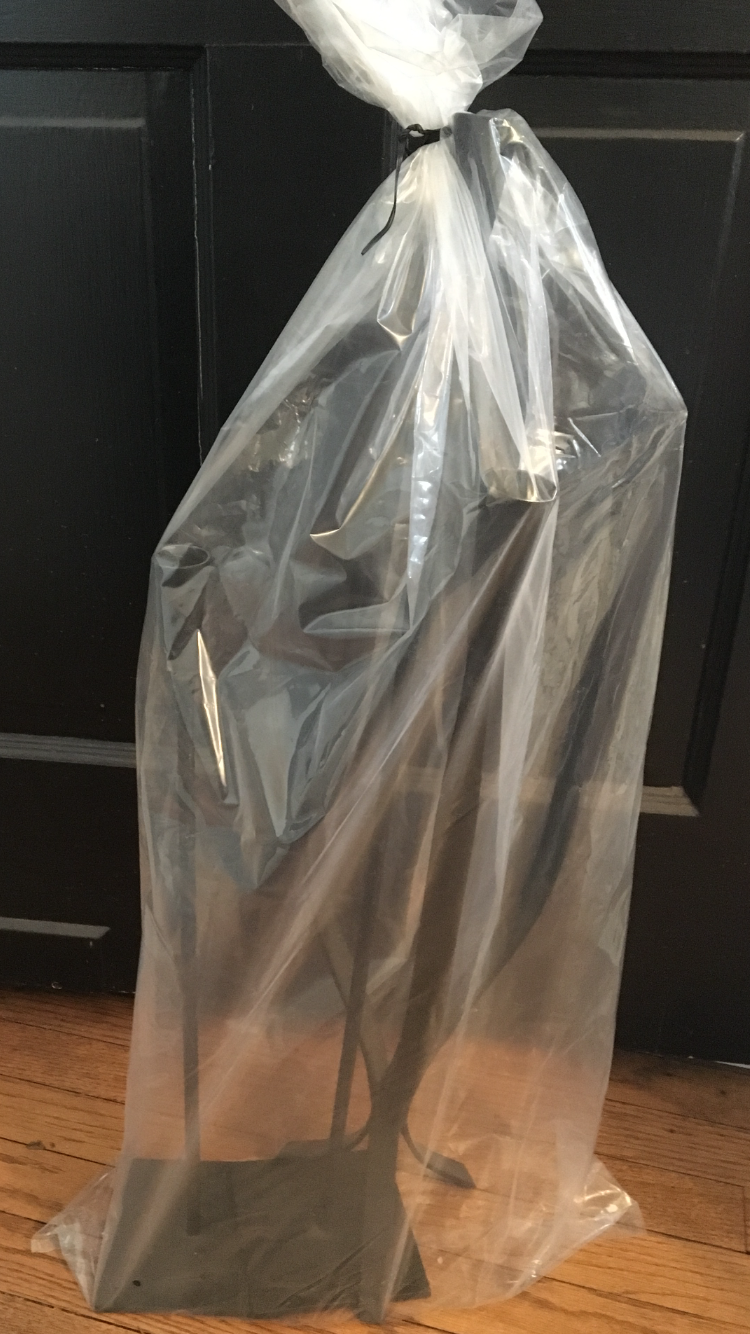
Christo wrapped mountains in fabric. He wrapped coastlines. He populated passes with umbrellas. When I saw the candlesticks wrapped in plastic and ready to roll out the door, I thought, “Little Christo.” Wrap it and it becomes something else. Visible, invisible.

My favorite part of Christo and Jeanne-Claude’s website was found way at the bottom. Click on the words, “Projects Not Realized.” There were so many ideas! Whacky and wonderful visions that, for one reason or another, never made it off the drawing board. Why was one building wrapped and another rejected? Why did the mountain of barrels never block the intersection? What sense is there to be made of projects that are not invested in sense-making?

Sense-making follows experience and, in these times with so much media shouting for attention and propagandizing belief, it’s very hard to have a direct experience. I suppose that’s why Christo wrapped mountains. It takes an extreme act of non-sense to shock us into silent what-the-heck-ness.

I saw his umbrellas popping vibrant yellow along the pass from Bakersfield to LA. Giant dandelions stretching for miles. What I most remember as I stopped to get a closer look: children found it impossible not to dance at their bases. Make sense of that.

read Kerri’s blogpost about CANDLESTICKS

greet the world © 2011 david robinson

Sit In The Quiet [on DR Thursday]

Years ago I directed a production of Into The Woods and I wanted a set design alive with David Hockney colors. The production was gorgeous. The set the designer created was a vibrant fantasyland with the dark undertones wrought by dinosaur-size-too-big foliage. Tiny people in an oversized children’s pop-up book.

If I were going to direct the musical again today, I’d approach it through a different lens. I wouldn’t place it in the vivid palette of fantasyland; this world we journey through is fantastic just as it is. When Kerri and I walk, I am sometimes stunned to silence by the shapes and patterns and pops of color. Ominous and serene. Alive.

For reasons that have nothing to do with reason, I started using imagined leaf shapes, plant-symbols in my paintings. I know when I someday return to my easel, the plant shapes will be present – perhaps even dominant. There is no end to the eye-popping variations. Our walks in nature have me “seeing” again.

A few years ago, Brad and I talked about the deep backstory of why an artist creates. Of course, there’s not a single driving reason – it changes over time as we change over time. I know many artists who’ve set down their brushes, singers who stopped singing. They satisfied their backstory. They channel their creative juices into other forms. Based on the evidence, these days I am a writer. Lately, I spend more time drawing cartoons than painting paintings. And yet, I still think of myself as a painter.

In the past, a step away from the easel was acknowledging a fallow season, letting my batteries recharge. This time, the step away is different. My reasons are spinning, changing. The younger me-artist was finding a place to transform pain into presence. The middle-age-artist-me entered the studio because it was the only place on earth that made sense. It was a sanctuary. A quiet place.

Each day I walk down the stairs and stand for a few moments with the canvas on my easel. It’s a stranger. I hear my easel whisper, “Not yet. Soon.” I am content with soon. I feel as if I am in an extended meditation, borrowing a tradition from Japanese masters, sitting in the quiet until there is no space between me and the brush, no space between me and the motion. No space between me and the shape, the pop of color, the infinite variance of pattern. No space between me and the surprise-of-what-will-happen. No space between me and the story.

read Kerri’s blogpost about TRILLIUM

joy © 2014 david robinson

Know Secret Things [on DR Thursday]

I wanted to begin this post with a quote from Rainier Maria Rilke’s Letters To A Young Poet. As I always do, I opened his book this morning and fell into it. I couldn’t decide which quote to use – there are so many! Finally, I put it down because I concluded that I’d have to place the entire book into this post. So, I begin this day both quote-full and quote-free. Nothing to share and everything to share.

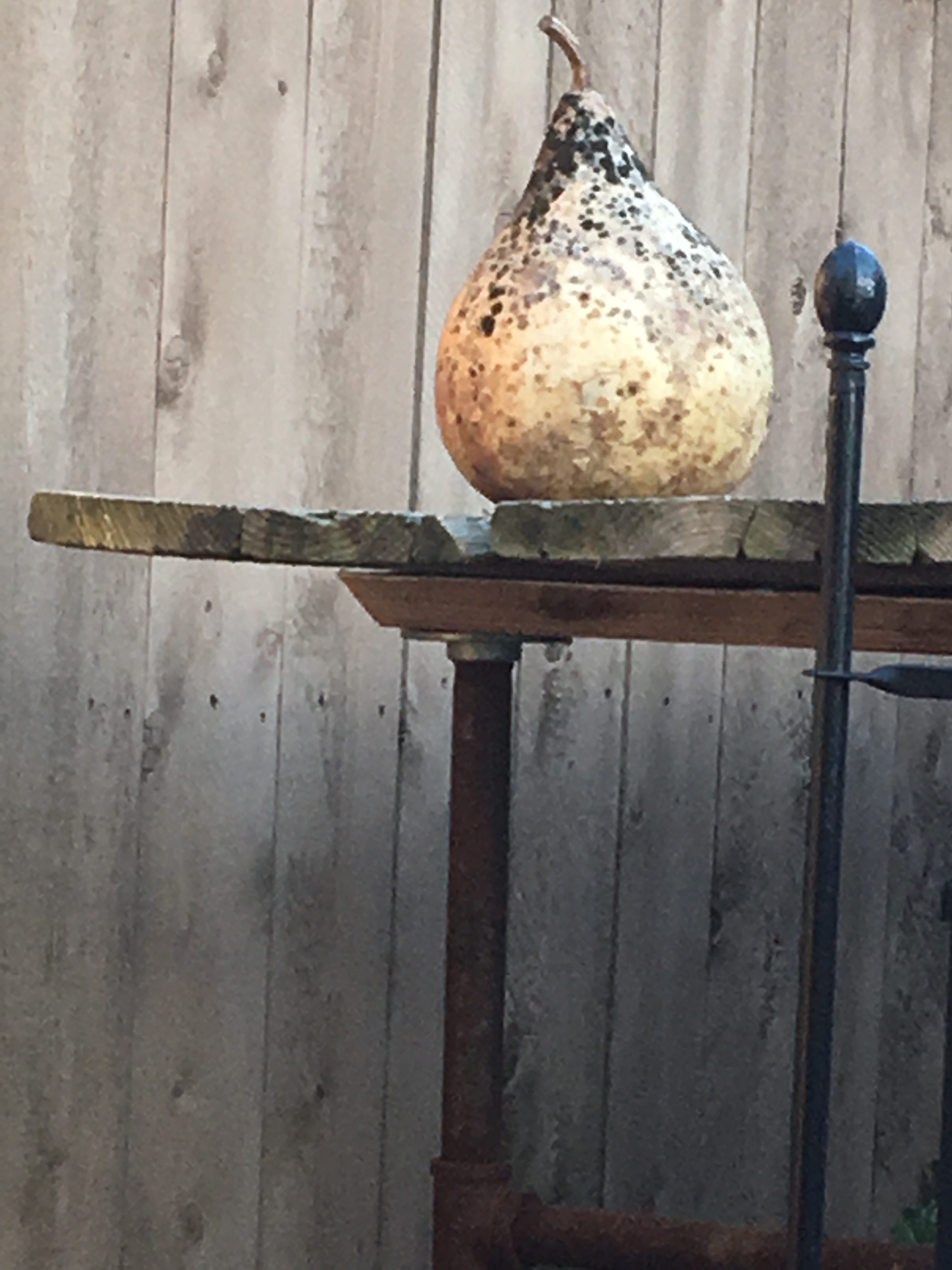
Showing me her photo, Kerri asked, “What do you think of this still life?” I don’t think I’ve ever heard her use the phrase, “still life.” It’s a painter’s phrase, much like the word “garment” belongs to costumers. “I love this,” I said, knowing why she used the painter-phrase. “It looks like a painting.”

My very first art teacher was a jolly older woman named Jackie Fry. She offered oil painting classes at the recreation center. I carried my paint box and canvas boards to Saturday morning classes. I was the odd ball in the class because I didn’t want to paint trees. I wanted to paint people. Not portraits. People. I felt badly about being the odd ball and she gave me the tidbit of advice that has informed my choices for decades: “Tree painters are a dime a dozen,” she said. “Follow your star and not theirs.”

Great advice. She made me paint still life set-ups. “You have to learn to see basic shape and color,” she said when she saw my frown. “People are shapes.”

People are shapes. Learn to see. Follow your star and not theirs. Advice worthy of Rilke, which brings a quote to mind:

“I want to be with those who know secret things or else alone.”

Phew. Now you don’t have to read the entirety of his very wise book just because I couldn’t decide which beautiful phrase to use.

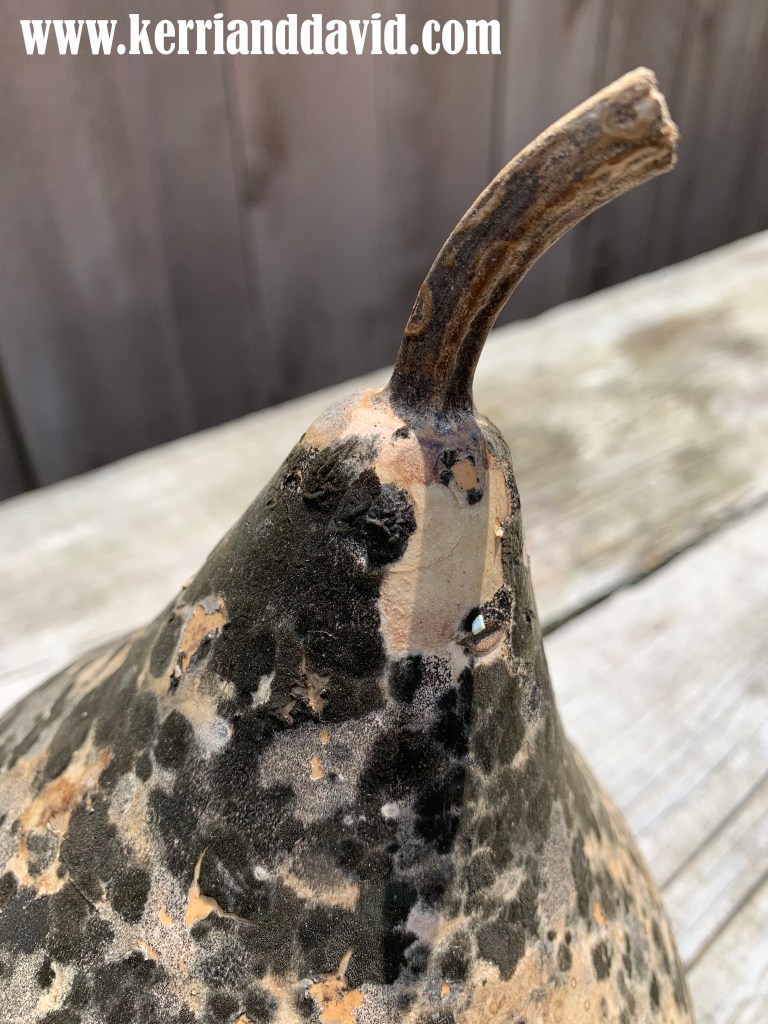
read Kerri’s blogpost about THE GOURD

john’s secret (pray now) © 2010 david robinson

Watch For Turtles [on DR Thursday]

“The art of living… is neither careless drifting on the one hand nor fearful clinging to the past on the other. It consists in being sensitive to each moment, in regarding it as utterly new and unique, in having the mind open and wholly receptive.” ~ Alan Watts

The ferns have returned. Last week they were sharp tendrils poking through the leaves and earth; little green aliens. A mere seven days later, they are over three feet tall, fern-flags unfurling.

Driving to our trail we saw a turtle crossing the road. Kerri whipped a u-turn and I jumped out of the car, picked it up, expedited its journey, moving it from the pavement to the grass. There’s something special about the turtles. Throughout March and April, while walking on our trail, we’d cross the bridge over the Des Plaines River, and look for the turtles’ return. The turtle in the road was our first sighting of the season. Later, on the bridge over the river, we saw a dozen. “They’re back!” she said and smiled.

Lately we’re given to walking the same trail. We’ve seen it change through several seasons. We followed our loop last week and I swear, this week, it’s an entirely different trail. The trees are flowering. The trillium are showing their purple.

I used to wonder how Emily Dickinson thrived looking at the same garden for years and years. How did she write such beautiful poetry with such a small window to the world? Now I know that her world was enormous and my question was too small.

“Hope is the thing with feathers…”

read Kerri’s blogpost about FERNS

iconic © 2010 david robinson

Reflect [on DR Thursday]

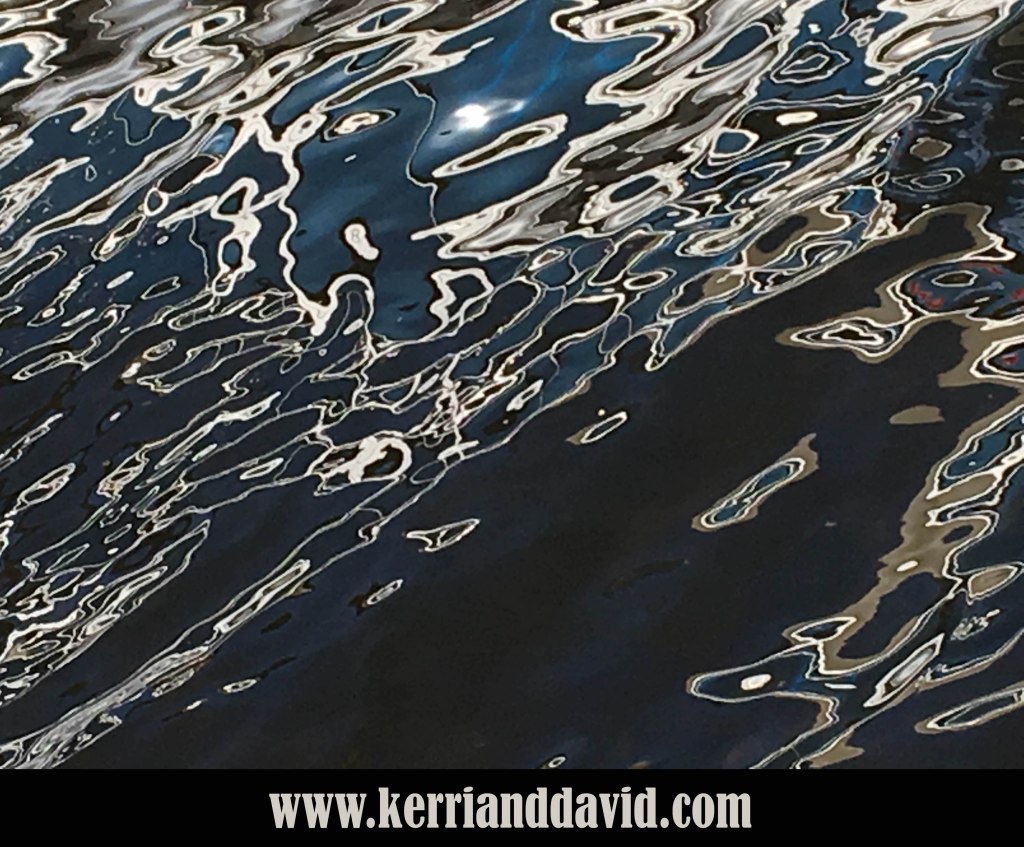
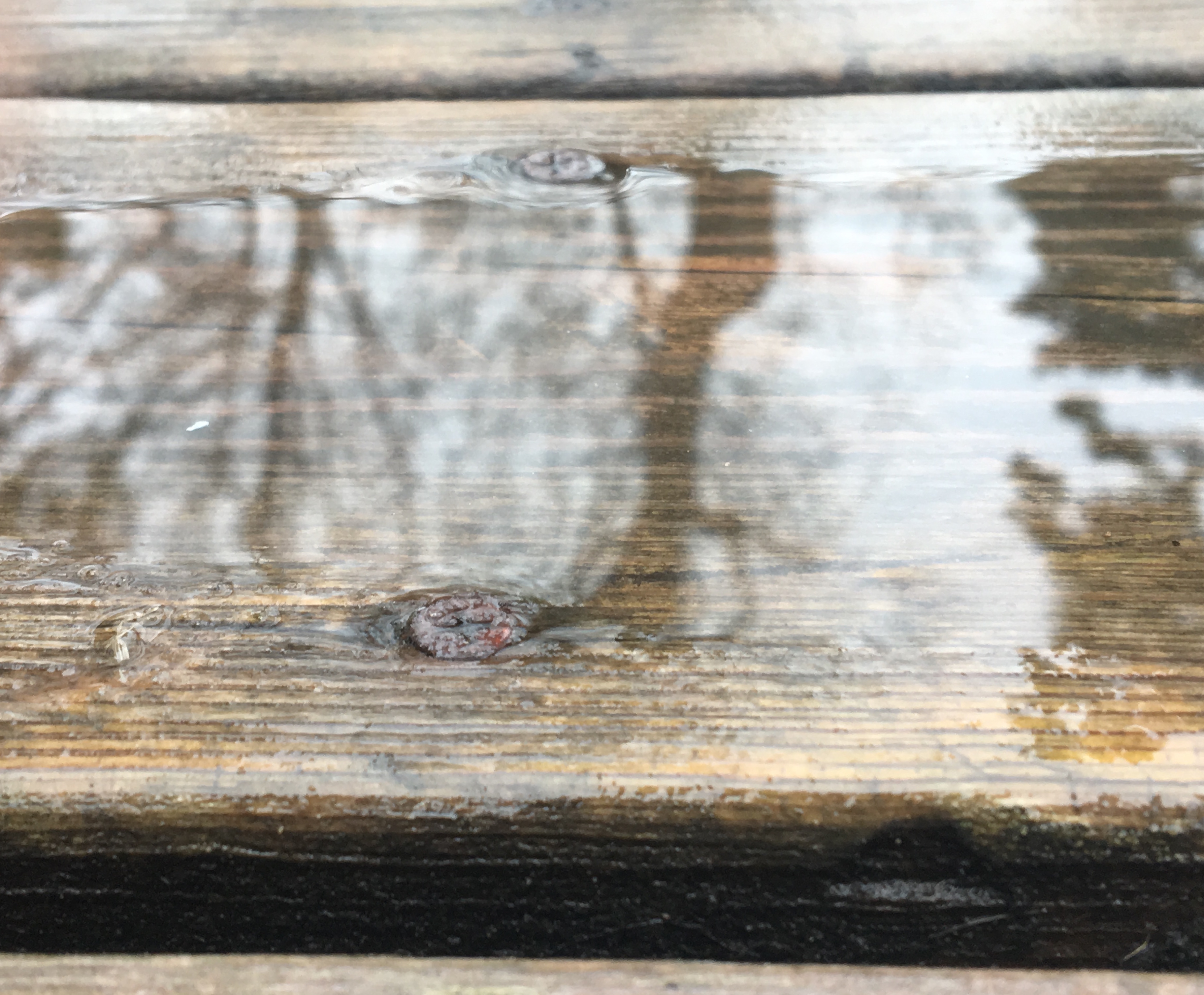
This reflection spiraled me into a fond memory. A long ago chance dinner in London with Jonathan Miller. He was kind and funny and took me upstairs to his studio to show me photographs he was readying for a gallery show. I could have talked with him all night. As I left he gave me a copy of his most recent book, On Reflection. Questions of reality and identity in the arts and beyond, explored through reflections. I had the book for years and lost it in a loan.

Reflections. I have crossed paths with many brilliant artists. Some, like Jonathan Miller, a single evening, a passing glance. Others, I had the good fortune to spend many years assisting and watching and learning from their work. James Edmondson. If I ever delude myself into the notion that my artistry is unique and truly individual, I only need stop for a moment and track the people who shaped me, who inspired me, who challenged me, who passed to me their traditions, who gave me an hour of their time to share their work and thoughts with me. I am a reflection of those many, many people.

My work in the world is made better by the reflections of Horatio and David and Master Marsh, people who give me their time by reading my work and sharing their thoughts. People who have jumped into my mad projects and made me and my work better.

I am the luckiest man alive. Each morning I get up early and sit next to my wife. We drink coffee and write. She edits my posts. We read to each other and offer advice or talk about word choices. I take her hand and bring her into my studio and ask, “Will you tell me what you see?” Lately, as I draw in pencil cartoons for work, she digitizes them, dumps them in Photoshop, cleans up my messes and makes them better. She makes suggestions. She offers reflections. She formats them for publication. They are transformed from my work to our work.

And, that is the secret I learned from my many master teachers. A unique perspective, an artist’s eye, is the blossom of many, many wise eyes coming together, expressing through a single moment, an opportunity. It’s all collaboration. Artistry is nothing more than a hologram of reflection.

read Kerri’s blogpost about REFLECTIONS

pax © 2015 david robinson

Dissolve And Do [on DR Thursday]

“If you hear a voice within you say, ‘You cannot paint,’ then by all means paint, and that voice will be silenced.” ~ Vincent Van Gogh

“A writer writes. A painter paints.” Wise words from Tom. It was a mantra and his patent response when asked how one becomes an artist. I imagine Tom learned this wisdom from DeMarcus. DeMarcus certainly learned it from his mentor. Artistic ancestor to descendent, the quality that makes an artist is the practice. Nothing more. Ask me what makes an artist and you will hear what I learned from Tom.

There’s a special, hidden layer in this mantra. Someday, if you are a lucky artist, you stop thinking of yourself as an artist. The role dissolves in the doing. It no longer matters how others see you or the label you apply to yourself. It’s nice to separate yourself from the herd yet service to the herd is the point. That, I am coming to understand, is the moment that artistry fulfills itself. A deep trust ensues. No blue ribbon or large sale or shiny prize will change the essential. No outside eye or opinion or judgment or praise alters the fact in the least. A writer writes. A painter paints.

How do you pursue an artistic life? We take walks and pay attention. French blue sky and early tree blossom. And then, each day, as is our practice, we write or draw or compose.

read Kerri’s blogpost about TREE BLOSSOM

Newborn, 48x32IN, mixed media

newborn © 2019 david robinson

Take Note [on DR Thursday]

Although it may not be at first apparent, this is a map for product development. A single stout stalk that supports shoots of replication that explode in support features. One clear central intention. Multiple expressions that return nutrient to the stalk.

Although it may not be at first apparent, this is a map for healthy community. A single stout story stalk that supports shoots of replication, diverse paths that explode in seeming individual expression. One clear central narrative. Multiple expressions sending sunlight back to the root.

Who hasn’t seen the time-lapse films of plants growing, forms expressing and then retreating, the accelerated motion of people commuting on a city street, what seems like chaos is, at speed, cooperation. Those people on the street in real time, walking to work, a to-do list on their mind, are mostly unaware of their symphony of togetherness.

It’s easy to forget the stout stalk when standing at the individual expression point. I have been witness to the demise of many organizations who turn against the stalk in favor of the feature. For instance, the fastest way to kill a non-profit organization is to attempt make it run like a for-profit business. It will forget its story-stalk and lose its heart and mind in a spreadsheet.

The quickest way to destroy a community is for its branches to forget that they are individual expressions of a single stout story. They are not separate as much as extensions. To focus on the multiple tiny expressions as if each small branch is a stand-alone truth is absurdity-creation. Chaos masked as convention. Inverted, the plant dies.

In our literature we are riddled with advice to turn toward nature. Existential crisis? Lost? Go to the meadow, find the woods, take a hike. Get quiet. We go there because…we are there. Alan Watts wrote,”We don’t come into the world, we come out of it.” We are not separate from the stalk; we are expressions of it. Occasionally, the map to sanity that we seek is hiding in plain sight dressed as a platitude. Go to nature. You cannot do otherwise. Realize it.

When I’m running abstract questions of design in my dreams, I know it’s time to take a walk. It’s time to stop, look around, take note of nature’s design, the perfection of a plant. A perfect yoga, branch-fingers reaching for the sun, root-fingers reaching deep into soil.

read Kerri’s blogpost about PARSNIPS

sam the poet, 48×48 (painted and sold a long time ago)

sam the poet © 2004 david robinson