Unroll And Tune In [on KS Friday]

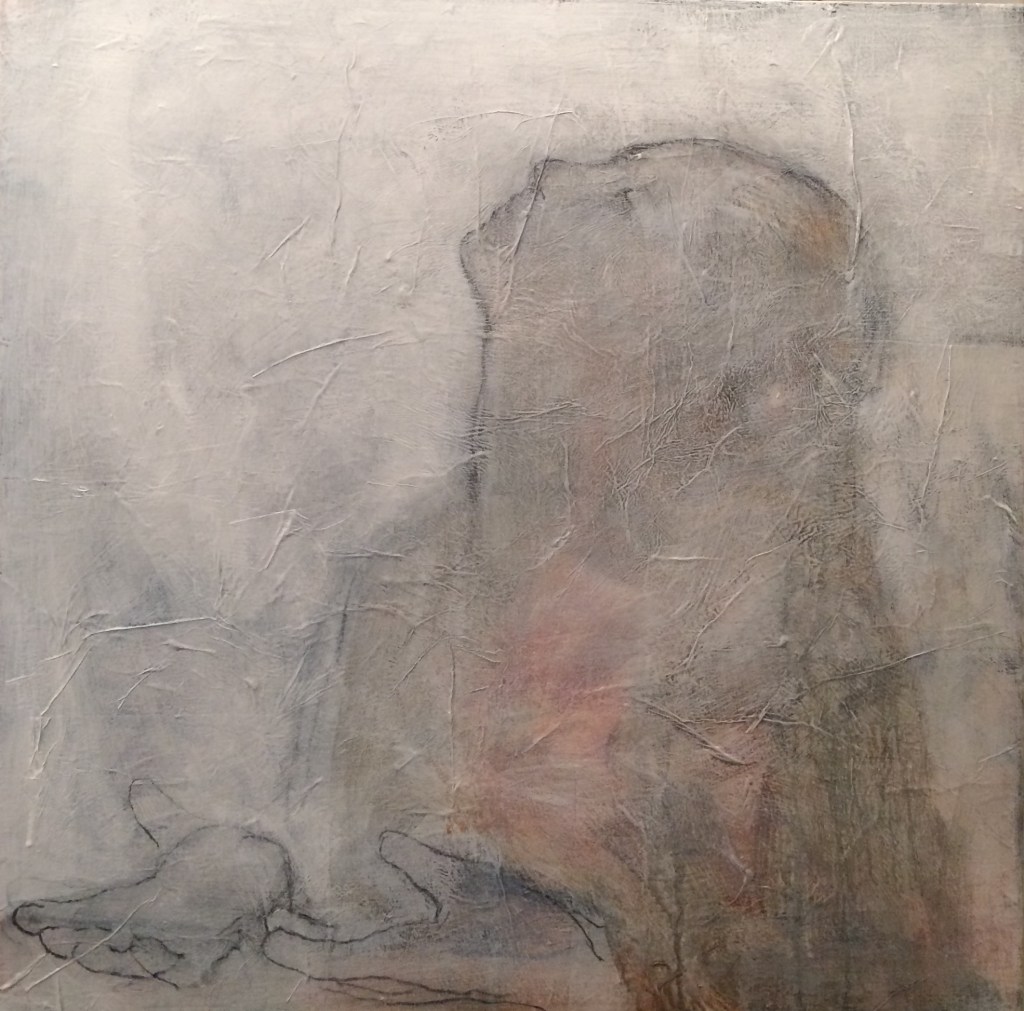
I did a stupid thing. A few years ago I rolled several of my canvases and stacked the many heavy rolls. Stacking them was my crime. The weight crushed the bottom rolls, potentially leaving ripples in the paintings. I know better. I’m unrolling each, one roll at a time, weighting the flat canvas so any potential wave is pressed. So far there is no damage.

I have opened three rolls. I have three more rolls to go. The opened rolls remain flat on the ground with the next roll layered on top. A new type of stack. Sedimentary paintings. Each layer provides weight to help flatten the previous roll. It’s slow going. I am being careful. I am treating the canvas – my paintings – with the respect that I should have afforded them long ago.

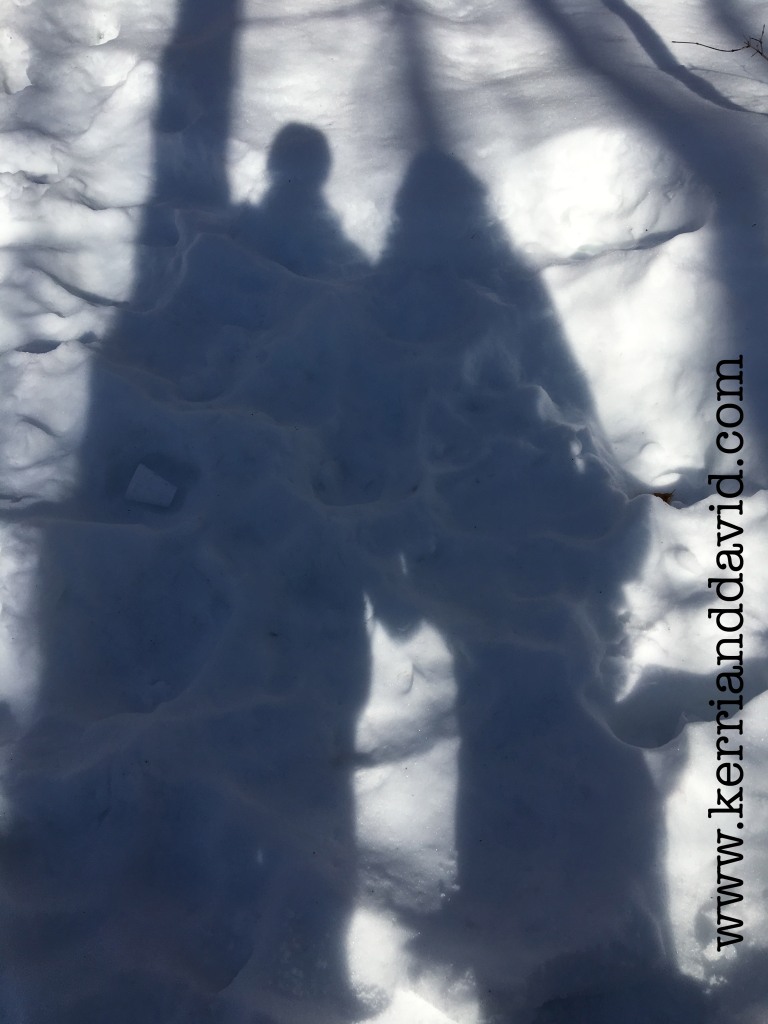
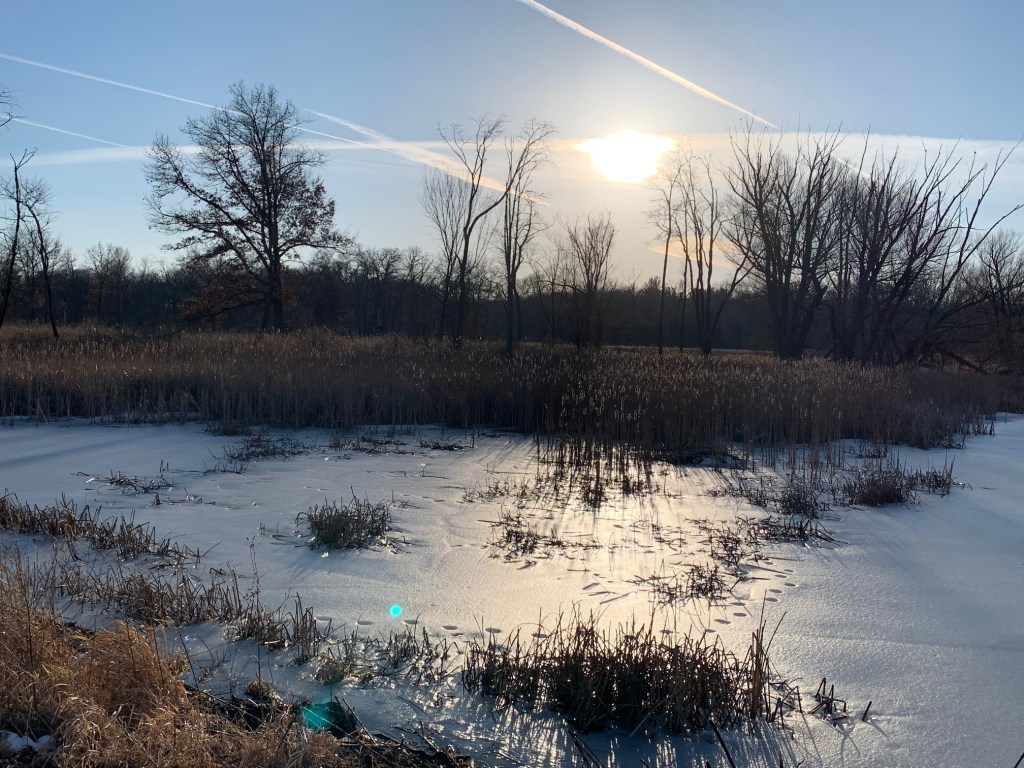
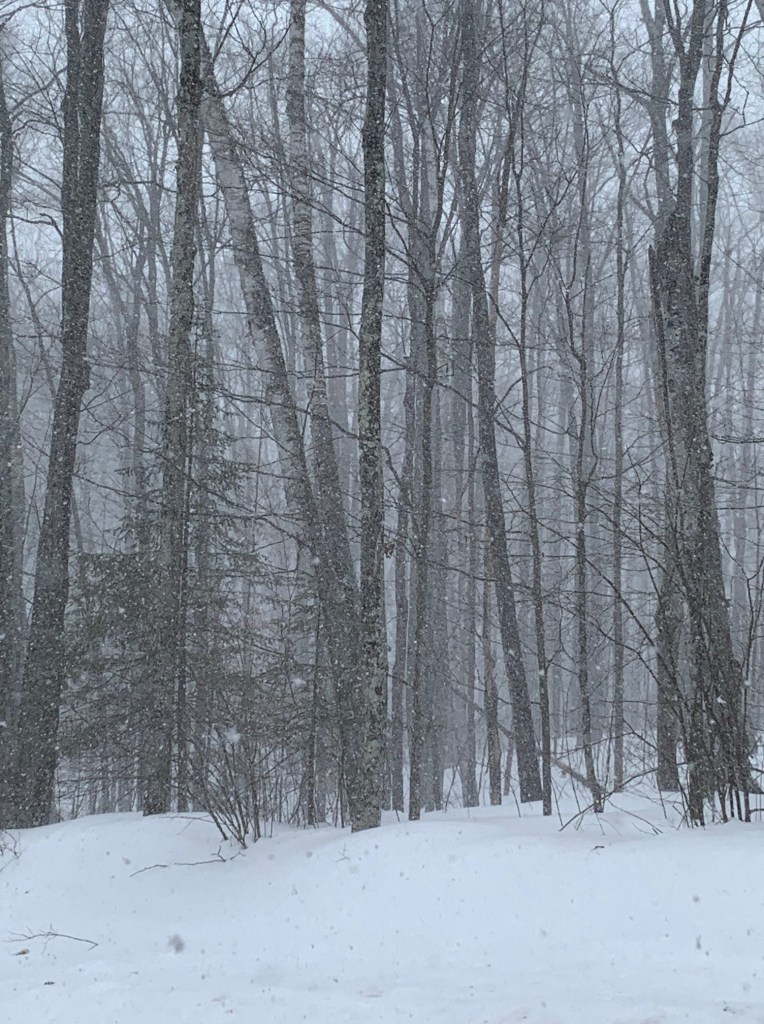
We took a walk on the road when we were up north. It was snowing and the world became snow-quiet. As without, so within. I became snow-quiet. The gang walked ahead as Kerri took a photo of the silent woods. I turned my face to the snow and felt the sting of each flake. Sometimes, when deep in the snow-quiet, the life-canvas is blank and affords the opportunity to discover the world anew; snow on my face for the first time. This earth is heartbreakingly beautiful.

Unrolling each roll of paintings is like turning my face to the falling snow. It makes me quiet. I am seeing paintings – my paintings – that I have not seen for a few years. I am afforded the opportunity to discover my world anew. I’m finding, as I carefully weight them, hoping the ripples are not permanent, that I have new eyes and new appreciation for my life and work. Unrolling the rolls, caring for the pieces, evokes peace in me.

I painted each of these paintings for the same reason. Standing before my easel quiets my mind and tunes me into something bigger than my tiny frets and future worries. It connects me – and that is whole point of the arts. It connects us. Unites us.

With each roll revealed, just as with each new painting, I become clear, if only for a moment. Like a walk through the woods on a snowy day.

[Peace is one of my favorites of Kerri’s compositions]

Kerri’s albums are available on iTunes and streaming on Pandora

read Kerri’s blogpost about SNOWY WOODS

peace/as it is © 2004 kerri sherwood

Ask The Same Questions [on DR Thursday]

Their call is ancient and beautiful. I imagine their unique voice reaches back to the pterodactyl. Sandhill cranes. We live on their migration path. Each spring they stop for a rest, passing through, heading north. The Des Plaines river, surrounded by abundant farm fields, provide ample road snacks and safe places for respite.

Last fall, during the southern migration, a crane couple took up residence in a cornfield we pass en route to our trail. They stayed so long that they became a fixture. We expected to see them. Statuesque, always together, I wondered if they were as excited to see us as we were of seeing them. “There they are!” the cranes point to our little black toaster car. “Those two are always together,” they observe. “I wonder where they are headed?”

We make the same observations and ask the same questions of them.

When we first saw their tracks in the snow it felt like a gift, like seeing two hawks circling or several deer peeking from the willows. Their prints were huge, almost too big to be real. They were so distinct that they reminded me of something Andy Goldsworthy might create. Patterns in the snow. Marks mysteriously etched across the landscape.

Were it stone instead of snow, white quartzite, these amazing marks would be petroglyphs. Abraded to leave us a message, a symbol whose meaning was lost in time but inspire speculation none-the-less. “Where did they come from,” we ask, knowing there is no answer but we have to ask anyway.

Our footprints cross theirs on the path. Brad does a masterful crane-walk-imitation. We laugh as man becomes bird, eyes intense. The original theatrical impulse. I look back at the our prints crossing the crane’s and marvel at the image. This startling canvas will certainly melt. Another reminder of Andy Goldsworthy. The power of impermanence, like a sacred sand painting, a spirit captured for a brief moment, witnessed, evoking power, and then disappearing into sun and wind and time.

Canopy, 48x48IN, acrylic

read Kerri’s blogpost about CRANES

Canopy © 2008 David Robinson

Study Flow [on Not So Flawed Wednesday]

Kerri just reflected that, so far this week, my posts have been cynical. “Now that wasn’t snarky at all!” she said after reading my Tuesday post. The unintentional theme of the week has been the silencing of people. That makes me sarcastic. Irritable. Sad. She suggested that I lean over and read my Post-It-note-life-reminder: Grace. Questions not answers.

It’s true. I need daily to remind myself to move toward rather than push against. Flow rather than resistance. I am more of an idealist than I care to admit so resistance comes easy. Seeing what-is-wrong-with-the-world is embedded in my DNA. It’s the dark-side of the idealist moon.

Because resistance is natural, flow has been my study. It is my life lesson. It is why I am drawn to tai-chi. Yoga, the physical art of opposition. Polarity and the other Hermetic principles. Circles and cycles rather than lines and achievements. These are my masterclass of balance: there is a time for resistance. There is a time for flow. Both/And.

Grace is a word of flow. Nimbleness. Poise. Ease.

The water flowing off the roof of our neighbor’s garage froze the vines on the fence into a crystal ice chandelier. The watercourse way slowed so we might appreciate it. It slowed so I might understand it: flow and resistance are two forms of the same thing. Ice is water. Water is ice.

Grace. Nature is an excellent teacher. Better than my Post-It note. Sans cynicism. Gorgeous in its lessons.

read Kerri’s blogpost about FLOW

Drop The Leaf [on Two Artists Tuesday]

I’ve spent hours of my life in figure drawing classes. There’s nothing more beautiful or complex than the human body. There’s nothing more sacred. When I was very young, I drew people – both naked and clothed, both male and female – from photos in The National Geographic magazines. I drew figures and bits of bodies from plaster casts – both plaster-naked and plaster-clothed. I drew figures from those weird artist wooden mannequins, never clothed, sex-neutral, gender unknown.

A friend just sent a story from The Washington Post. A principal in Florida was forced to resign after sixth grade art students were shown a picture of Michelangelo’s David. Had my eye-roll been any more pronounced my eyeballs would have popped out of my head and rolled across the floor. This principal’s forced resignation: a fig leaf by another name.

It’s true, The David was strapped with a fig leaf by outraged clergy shortly after it was displayed in public in 1504. Humanity has grown-up a bit since then, or so we might have hoped. It’s true: history repeats itself though you’d think with all the bodies sunning on Florida beaches, with the ubiquitous sex in movies, on television, and used to sell everything from automobiles to vacation destinations, that the un-leafed David might be understood as high art rather than an affront to any pretend moral authority.

Don’t look up if you visit the Sistine Chapel; Adam has yet to eat from the tree of knowledge and is naked, naked, naked. Touched by god. It is, after all, a painting of the day he was “born.”

The Greeks-of-yore, those whacky inventors of democracy and critical thinking, understood the body to be virtuous. Michelangelo was drawing from that deep pool of tradition and wisdom rather than the shallow frog pond of pretend-pious-purity. David, a biblical figure, stands naked before the giant Goliath. Virtue with a slingshot. Sacred and beautiful.

It takes a modern-day-Florida to turn virtue to vice while elevating vice as virtue. The cure for their fake-moral-fig-leaf is simple: attend a few figuring drawing classes. Drop the leaf. Or, go to the beach and open their eyes.

read Kerri’s blogpost on LEAF IMPRESSIONS

Lean Into The Questions [on Merely A Thought Monday]

A theme that surfaces in my conversations with Rebecca is how unsafe people feel – especially women – to ask questions. At work. At school. Asking a question is too often misunderstood as a challenge to authority. It’s dangerous. Smile. Be silent.

I suppose authority has always been thin-skinned though the idealist in me wants to believe that we’re all in this together. I know without doubt – as we all know – that the way forward is through the field of questions. The best answers open doors to better and better questions. Anyone afraid to be questioned and insisting that their answers are absolute – full stop – should inspire dread.

After eight years on the job, Kerri was handed a contract with the mandate to sign it. She asked a few questions. The description in the contract didn’t align with the reality of the job she was performing or the previous agreements made with her supervisors. Authority did not respond well to her questions. The ensuing assault was incessant. Bullying. Dangerous. For awhile she tried to comply with the only advice offered her: smile sweetly. I wondered, if a man was being similarly pummeled, would he be offered the same advice? When Kerri finally stopped smiling and stood solidly with her questions, she was branded “belligerent” and “uncooperative.”

I doubt a man would be similarly pummeled. To this day, I wonder at all the men and women in the community who watched the pummeling and said nothing. As witnesses to the danger in asking a question, they held-their-tongues. I suppose they learned their lesson. Ask no questions. See no evil. Hear no evil. Look away. Speak no truth.

And, while they weren’t looking, their community fractured and fell apart. All were diminished. Thugs count on division; it’s their secret sauce for establishing control. They engender silence. It’s how they maintain their authority.

And, isn’t that the true danger. We don’t want to bring the the wrath of the gorilla upon ourselves so we “get on board” or “toe the party line.” Smile sweetly. Pretend the bully isn’t beating the woman into submission. Make the assault her fault. She brought it on herself.

Kerri’s experience is a microcosm. The bullies have the microphone. World-wide, authoritarianism is on the rise.

If ever there was a time to lean into the questions, it is now. If ever there was a time to ask aloud, “What are we doing?” and “Why are we doing it?”, it is now. Together, asking questions capable of leading to answers that open doors to better and better questions. We have no shortage of persecutors beating down questioners while screaming that they have all the answers and their answers are absolute.

Perhaps the questions we need to ask together are simple: Is this who we are? Is this who we want to be?

read Kerri’s blogpost about SMILING

Appreciate The Simple [on saturday morning smack-dab.]

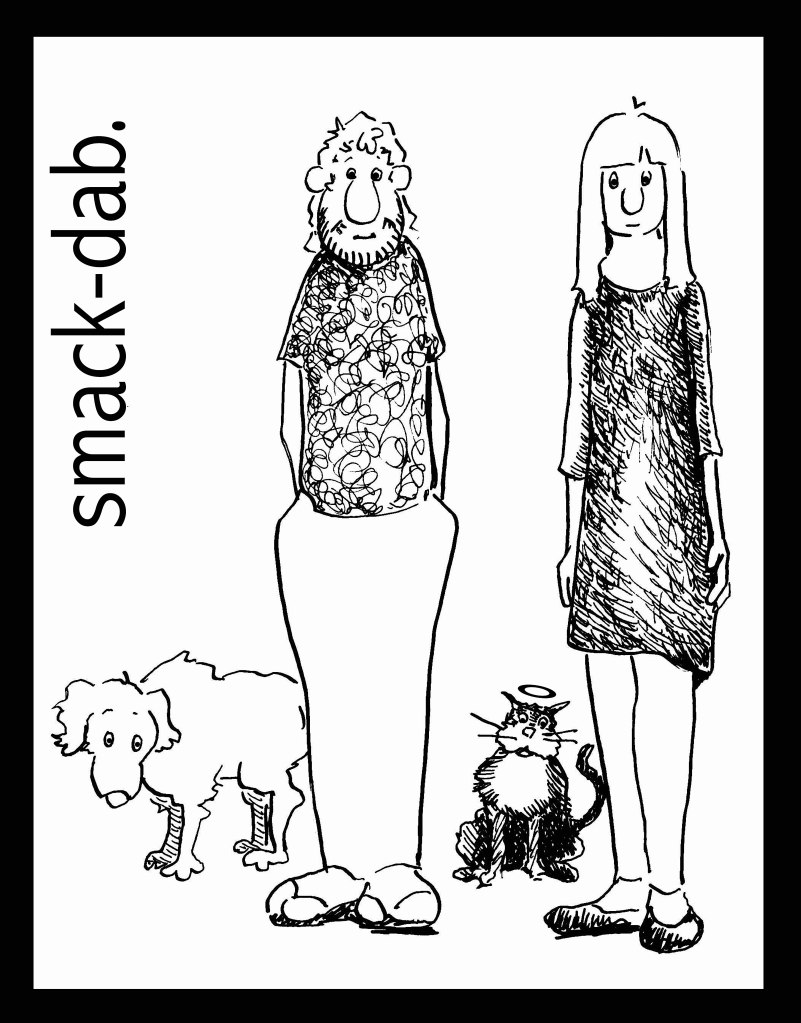
I awoke alarmed and sat up. Dogga was not sleeping at the foot of the bed! He’s always there! Where was he? And then I remembered. We were “up north” for a few days. Dogga was safe at home with 20. I lay awake feeling deeply his absence. Disoriented.

A few days later we were home. Because of my up-north-late-night-moment-of-bewilderment, I was hyper-aware of how “right” our world feels when we are all together. I adore our daily patterns and rituals. Dogga’s enthusiasm, his Aussie quirks inform every move we make.

Sometimes we think we hear BabyCat thumping around upstairs or awake feeling as if he just jumped onto the bed – we call it “the raft.” When we are all together on the raft, there is nothing better on earth.

It’s such a simple and yet profound thing. Presence. With it, all is right in the world.

read Kerri’s blogpost about THE RAFT

smack-dab. © 2023 kerrianddavid.com

Release The Seeds [on KS Friday]

“Creative people are driven to periodic symbolic self-annihilation and rebirth, much like the mythic phoenix.” ~ Alex Grey, The Mission of Art

I loaded my truck with my paintings. I drove to the beach where there were large fire-pits. I burned the paintings, bonfire style. I had so many paintings that it took three days, three truckloads, three successive nights. People helped, strangers who held vigil for me. Only one tried to talk me out of it.

Those nights on the beach were over 20 years ago. All along I’ve understood the conflagration. What I only now understand is the necessity of fire to release the seeds. Not just one seed, but hundreds. Thousands. And not all the seeds found rich soil. Only a few. And, once rooted, most of the seedlings were trampled, overshadowed or eaten. They never made it to the sun.

But the one seed, the single seed, released in fire, without will, intention or knowledge; the fortunate seed, flung into the air by heat and flame, caught the wind at just the right moment and fell to the earth haphazardly in an opportune spot. It took root. It drank in the sun. It survived the hungry deer nibbling close-by. And over decades, through harsh winter and sunny drought, it slowly, ever-so-slowly, grew.

A thousand seeds. One strong tree. New cones, loaded with millions of seeds. Ideas ripe for the wind.

A cycle that cannot be rushed. Each loop, lovingly and faith-full, takes time.

Kerri’s albums are available on iTunes and streaming on Pandora

read Kerri’s blogpost about SEEDS

part of the wind/blueprint for my soul © 1997 kerri sherwood

Sense The Air [on DR Thursday]

In the summer, it is a place of frogs and turtles perched on rocks, drinking in the sun. We stop and watch until the wary turtles slip into the murky water, the frogs halt their croak-symphony. Respectfully, we move on. Behind us, the symphony resumes.

In winter, it is a different scene. Sienna and ochre rather than a million shades of green. Silent, the musicians are on hiatus. The turtles sleep, having disappeared beneath the earth some months ago. They will return in several weeks without fanfare. Without formal announcement we will spy them on a log. Kerri always marks the first sighting in her calendar. “Turtles!” Some winter days we cross the long bridge and look into the river at their usual spot. We know it is too soon but such is the way with hope.

I’m getting a taste of the life my grandfather lived. One place. He lived in one town his whole life. My dad’s dad. I was with him one bright sunny day in the park when he stopped, sensed the air, and said, “We’d better get in. A storm is coming.” I thought he’d lost his mind. There wasn’t a cloud in the sky.

The clouds rolled in. Thirty minutes later, safe inside, we watched the heavens open and dump buckets of rain. Somedays on this trail we love, I sense the air. I know what’s coming. Having lived so many places, until now, I never understood the power of place, the relationship with the reeds, yearning for the symphony, knowing in my bones that the sun is not quite right for the turtle’s return.

read Kerri’s blogpost about THE MARSH

Feel The Rain, 24x24IN, mixed media

feel the rain © 2020 david robinson

Look In [on Not So Flawed Wednesday]

“I want to stand as close to the edge as I can without going over. Out on the edge you can see all kinds of things you can’t see from the center.” ~Kurt Vonnegut

Yesterday I applied for a job that is all about narratives told from the edges of society. I’m not sure why it surprised me to find such a cool-to-me job; our community seems addicted to shattering so there are plenty of small edges to be found. Small edges are fallacious and serve a myriad of false centers. Our survival will depend upon whether or not we can awaken from the shatter-narrative and make the decision to direct our broken focus toward a common center. No small feat.

It is the role of the shaman, the explorer, the artist, the researcher to stand on the edge and report back to the community what is seen and unseen. The voice from the edge is rarely welcome since the report is capable of popping delusions or pulling the sheep’s clothing from the wolf. Page one of the autocrats’ handbook instructs the elimination of artists and educators. Making an enemy of the eyes-that-see, demonizing educators and thinkers – the people who recognize pattern and metaphor. The game of Us-and-Them necessitates silencing the voices capable of calling out the wolf. Autocrats require blind sheep that follow without question.

Some famous edge sitters: Galileo. Cesar Chavez. Rosa Parks. Nelson Mandela. Susan B. Anthony. Albert Einstein. Frederick Douglass, a former slave and leader of the abolitionist movement, wrote extensively about what we call Critical Race Theory; it was clear in his view from the edge. It’s not a new theory. It’s an old pattern with a new name. I think he might denounce his Republican party affiliation were he alive today; they would certainly silence his voice. He would be fired were he a professor in Florida today. As would Martin Luther King, another famous voice from the edge.

Voices of reason are often voices from the edges. Voices of the future are always voices from the edges. Galileo was silenced for suggesting that the earth circled the sun and not the other way around. Over time, the voices from the edge, when authentic, always make the center better, the community stronger. Susan B. Anthony spent her life on the edge, lobbying the center, to secure for women the right to vote.

Progress. Growth. They are rarely inspired from the tight grip at the center. Silence the edges and the community atrophies. Stop the movement and the body dies. That page was left out of the autocrats’ handbook for obvious reasons.

read Kerri’s blogpost about EDGES

Drop In [on Two Artists Tuesday]

We stopped on the boardwalk. The sentinel tree stood solitary in the field. Its presence stopped us in our tracks. It was a bone keeping watch over the marshes. It felt forgotten. Unreachable. Made beautiful in its dedication. It inspired quiet. Suddenly, we found ourselves witness to the witness. Look-at-me-look-at-you.

Perhaps it was the boardwalk but I was thrust back in time to a pier. Long Island Sound. It was early morning. The sound and vibration called me to the pier’s end. I stood for a few minutes, eyes closed, and listened. Hundreds of birds, pigeons, chattering beneath the boards, their voices amplified by the wood and soundbox of the structure. I felt them through my feet. Kneeling, I tried to catch a glimpse of the cacophony-makers. They, too inspired quiet.

“Hawk!” Kerri said, pointing and bringing me back to the boardwalk. Beyond the sentinel a hawk threaded masterfully through branches.

I used to think that these magical moments took me out of the real world. Stopping time. Now, I believe the opposite is true. These moments snap me out of my mind-chatter and drop me into the real world. Achingly beautiful. Alive. No story necessary.

pigeon pier. 46x46IN

read Kerri’s blogpost about THE SENTINEL

pigeon pier © 2007 david robinson