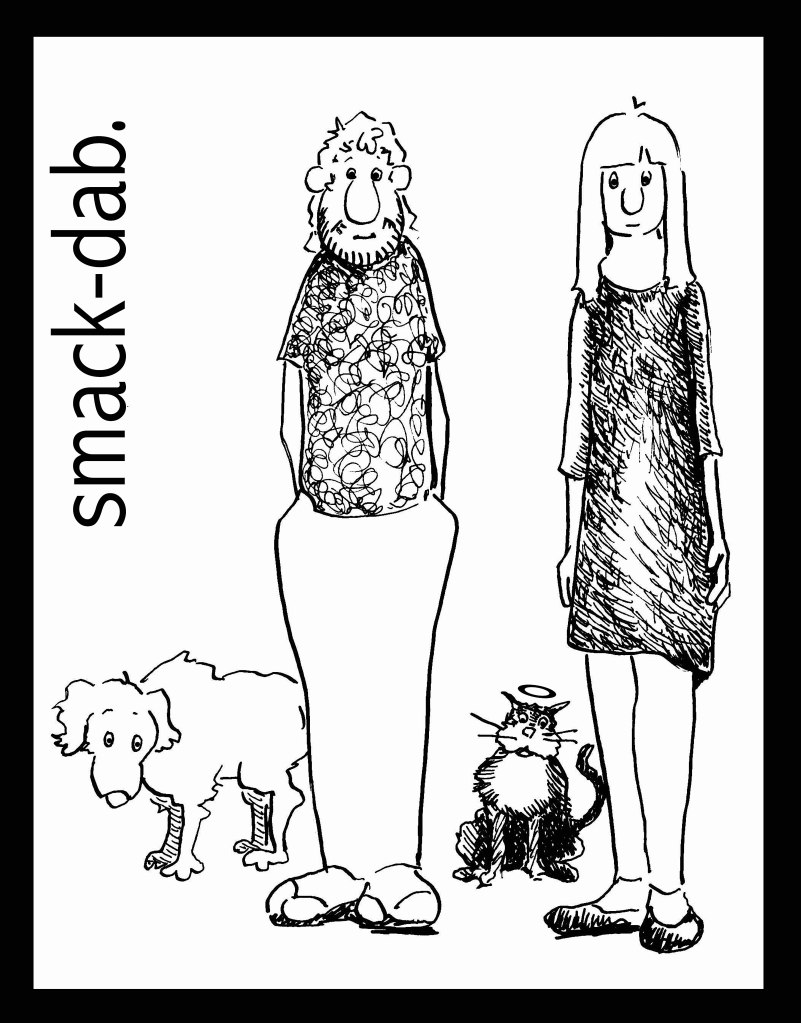
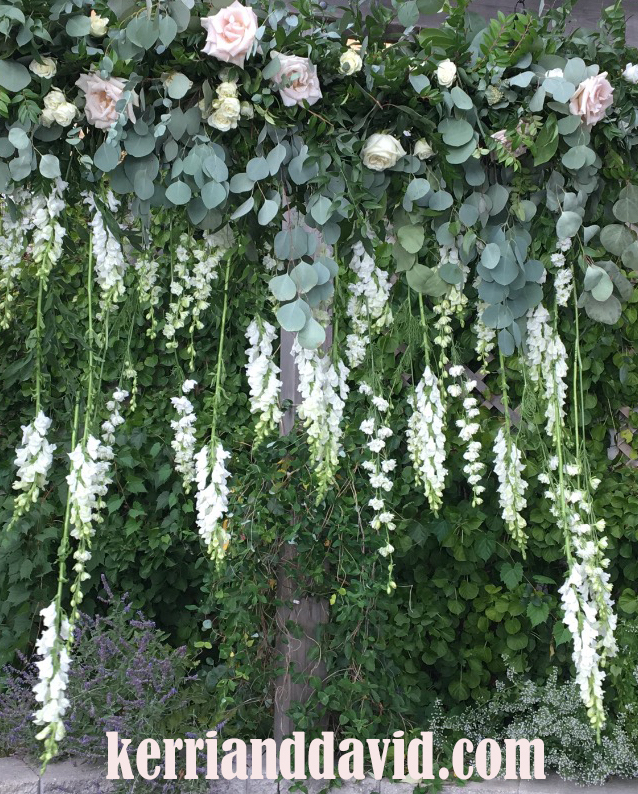
Round The Corner [on saturday morning smack-dab.]

Kerri breaks a pinkie toe about once a quarter. She is circular in her thinking so it only makes sense that she is circular in her movements. She regularly gets tangled in the vacuum cord – vacuuming in circles. The challenge for every circular thinker is that, unless they live in a yurt, they actually live in straight-line spaces. Circle in the square. Straight-line spaces, rooms shaped like rectangles, have corners and people that move and think in arcs often try to cut corners. Baby toes pay the price.

There is a special sound she makes when she’s re-broken her toe. There’s a special sound she makes when she sees a big spider. I’ve learned to discern the sounds. These days, instead of asking, “Is everything okay?” I know it is more efficient and helpful to ask, “Left or right?” Then, I find her writhing in a doorway and help her get off the floor.

read Kerri’s blog post about BABY TOES

smack-dab. ©️ 2021 kerrianddavid.com

Attend To The Quiet [on KS Friday]

My studio is a place of quiet. Inside and out. It is the place where I go – where I’ve always gone, when I need to recenter myself of exit the crazy-brain. Lately, my studio has been blown to bits. Water has been a near constant invader, either from the ceiling when the pipe broke in the spring or from the floor when roots clogged the sewer main. Twice. It seems as if water wants me to take a break from painting. There’s a metaphor in there somewhere.

Each time the water rises, the paintings rise, too. We scramble to move everything up the stairs. Mostly, they are stored on blocks so live protected above the rising tide – but pulling up carpet or clearing space for the plumbers has meant a perpetual studio deconstruction. Kerri stubbed her toe – okay, broke her toe – on one of the bigger paintings that now populate our sitting room. It’s a maze of paintings out there. Yet, she is wise. She’s insisting that we leave the paintings where they are, scattered here and there. At least for now. At least until we can clear out and rethink our space.

Kerri is much more sound sensitive than I am. I am much more spatially sensitive than she is. The sign on our deck, “Shh” addresses her need for sound-quiet. It’s all about space-quiet for me. Space-quiet means open space. It’s been that way all of my life: if there’s too much stuff, I shut down.

The water, as it turns out, is trying to tell me something. Lately, when I go down into the blasted-apart-and-now-empty-studio-space, I can breathe. I feel it every time I descend the stairs. I breathe. My space had become too impacted. Too many paintings, too many tables, too little space. “Shh.”

I’ve often written about the time, after I moved to Seattle, that I burned most of my paintings. I needed space. I felt like I couldn’t breathe. I was tired of hauling and storing paintings. I didn’t know what else to do. I needed air and fire brought it to me.

And, so, the water pours from the ceiling. It bubbles up through the floors. Again. What feels like a catastrophe comes with a cautionary message. No fire is needed this time. To attend to the space is to attend to the quiet. Stop. “Shh.” Breathe.

SILENT DAYS on Kerri’s album BLUEPRINT FOR MY SOUL, available on iTunes or streaming on Pandora

read Kerri’s blog post about SHH.

silent days/blueprint for my soul ©️ 1997 kerri sherwood

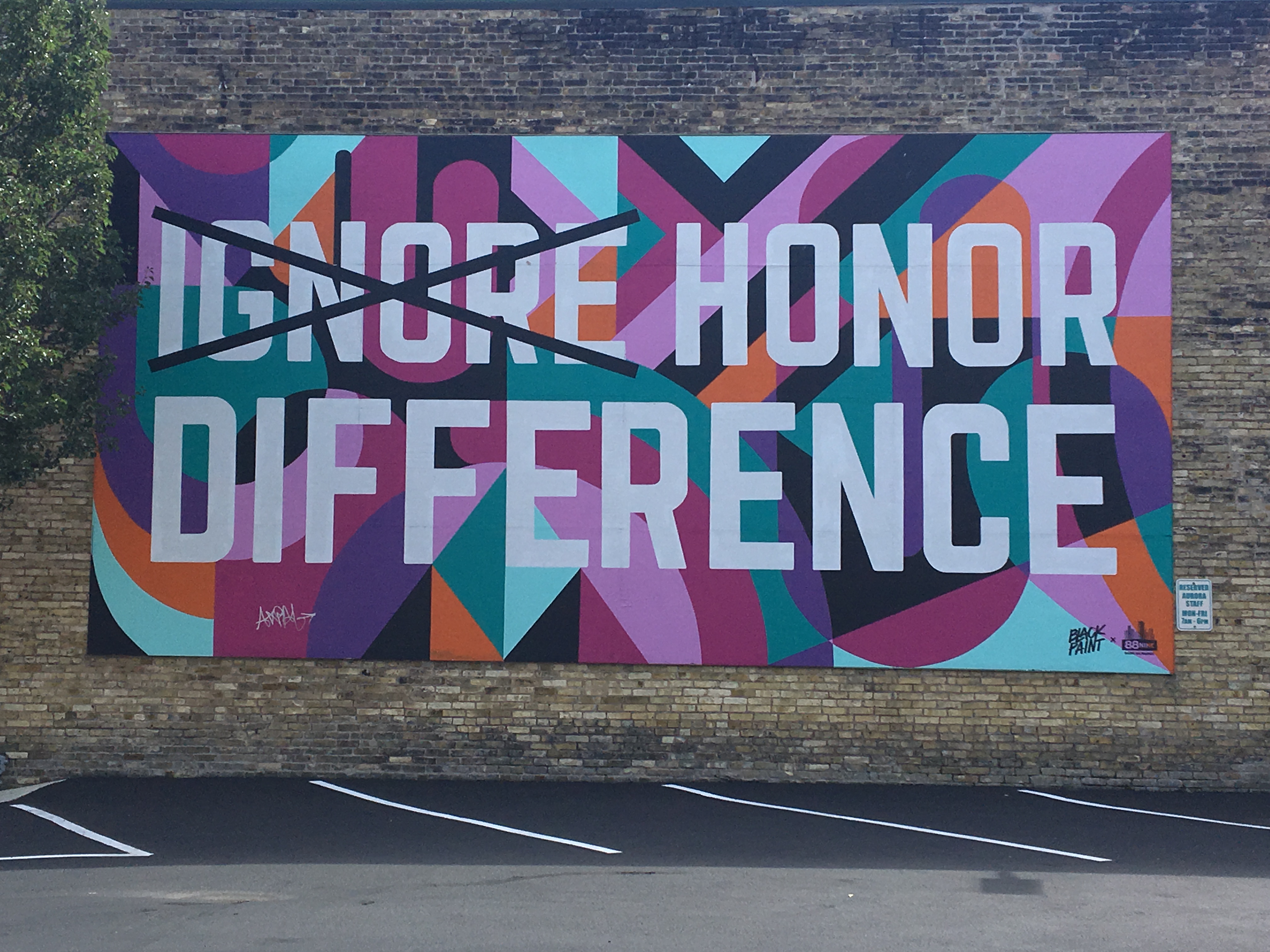
Honor Difference [on DR Thursday]

A Double Haiku:

Honor Difference.

A mural in Milwaukee.

Heart of the ideal.

Infinite palette,

Many hands, many painters,

Eyes that choose to see.

Read Kerri’s blog post about Honoring Difference

helping hands ©️ 2012 david robinson

Look At The Display [on Flawed Wednesday]

Del and Dorothy’s house sat on the side of a mountain. It was small. The kitchen table accommodated two and was placed close – very close – to the front door. Dorothy cooked on a wood burning stove. The house listed to the downhill side. It had a small yard that seemed carved out of the mountain. Del’s WW II jeep sat close to the edge. Dorothy populated the yard with blue glass and hummingbird feeders. It was a quiet home. A peaceful place.

Artifacts of a time gone by. Del fought in the second world war. He kept a corner display cabinet with things he’d brought home from the war. A Luger. Nazi insignia. A flag. Patches and medals. Booty from the enemy. It seemed out of place, especially in a home dedicated to simplicity and peace. The display was a curiosity for me. Why enshrine in your home objects from an enemy-of-the-past? I wanted to ask Del about it but he was not a talker. In fact, while, 50 years later, I would recognize Dorothy’s voice if I heard it today, I have no recall of the sound of Del’s voice. I can’t remember him uttering a word. I never broached the subject of the artifacts.

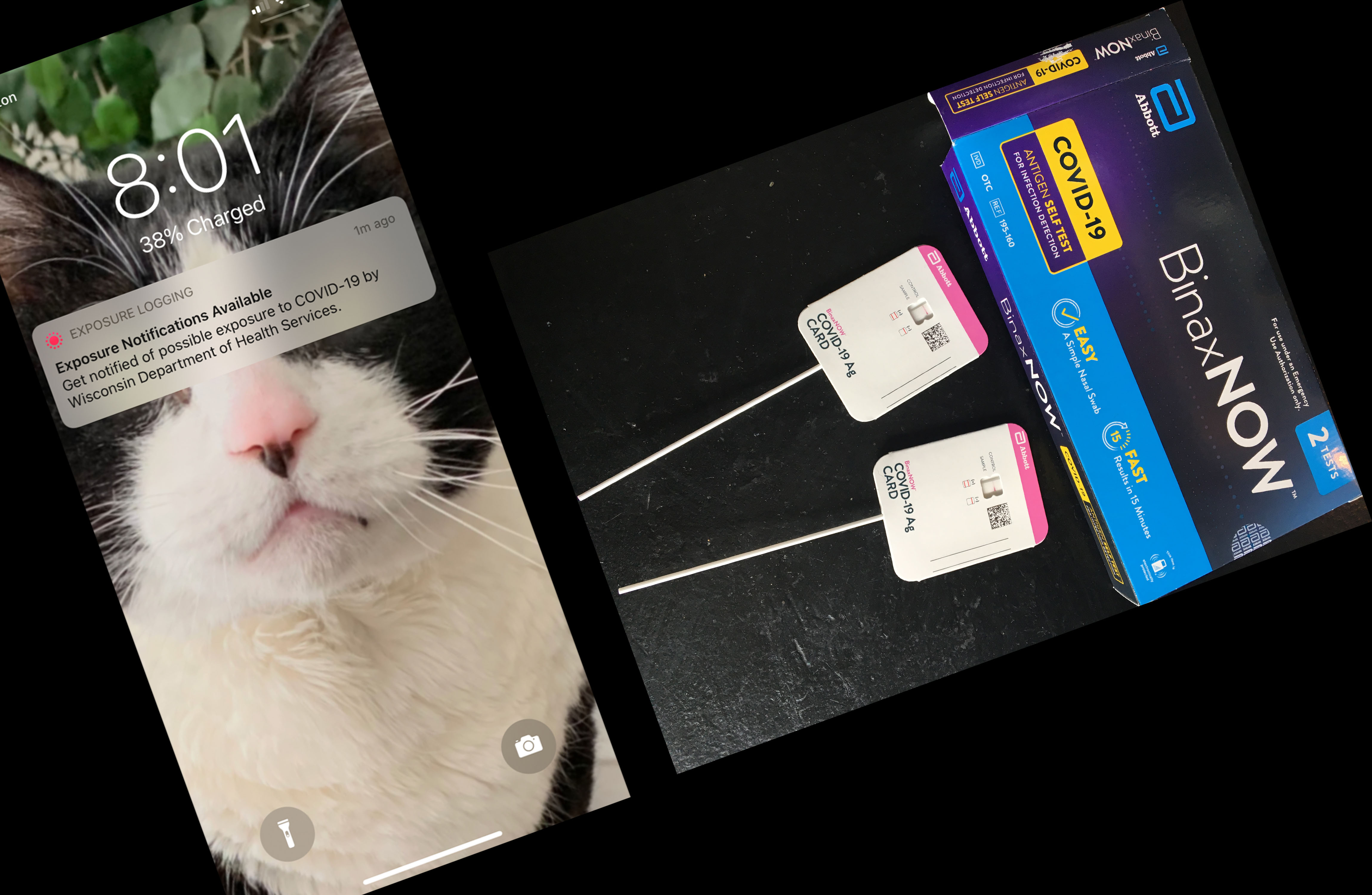
Each day we receive an alert on our phone. Exposure Notification Available. Recently, when Kerri officiated a wedding, we both took two Covid tests to make certain, while also vaccinated, that we were negative. Dangling from a clip on the side of our refrigerator are masks. Many, many masks. We put in our special box the flag they gave us on the day we were vaccinated. Wave the flag if you have a question or need help. The artifacts in a time of pandemic, now so normal that we barely see them.

This weekend, with all of the observances of 9/11, I watched a tour of the 9/11 museum. A crushed firetruck. A shoe. Xerox pages with faces and the word, “Missing.” Del whispered into my ear, “Pay attention. This is why I kept my display.” The tour guide said, “So we never forget.” The Luger. The Nazi flag and insignia. The medals and ribbons. The reason Del and Dorothy retreated to the mountainside, the reason they simplified and built a life of quiet and peace, the reason he kept his glass-cabinet-display. So they wouldn’t forget. The horrors that people enact upon each other in the name of…righteousness, control. Superiority. The madness people embrace when they are angry or scared. The lies so easily told and so hungrily gobbled.

People are capable of great things. We know because those things are meant to draw us together. They unite us. Great art.

People are capable of appalling acts. We know because those actions are born of and meant to divide. They rend us apart.

Del lived through the full savagery of what people are capable of doing, one to another. He came home and with Dorothy lived an intentional life of quiet, on the mountain, out of the main. I’ve noted of late that Kerri and I talk often, dream, of a mountain retreat. We are witness of what people are capable of doing, one to another. We are also witness of and generators of the beauty meant to draw people together. Her music. My paintings. The things people are capable of doing, one for another. We are surrounded by artists and art. Both/and.

History repeats itself. The story is told – again and again – through the art and artifacts we display, the symbols we keep. The memories we carry forward. Guernica. Empty shoes. A simple mask.

read Kerri’s blog post about ARTIFACTS

Appreciate The Other Life [on Two Artists Tuesday]

Every so often we pick images for the melange according to a theme. A few weeks ago all of the images were green. This week we noticed that we had several photos of words or phrases so we decided to have a theme week. Yesterday featured a message on the tailgate of a truck, “Every day above ground is a blessing.” Today, the other life. La Otra Vida.

Kerri and I met in middle age so our history together is short. Our pals are couples who’ve been married for decades. It is common for us to leave dinner with friends, after lively conversation of raising kids, vacation stories or tales of pets from the past, and need to talk about the eras in life that we didn’t pass through together. Our cartoon, Chicken Marsala, came from a conversation about the kids that we didn’t have. What kind of parents would we have been together? What would we have done differently in life had we met when we were younger? Would we have fallen in love had the previous-versions-of-ourselves met at an earlier phase in our lives?

La Otra Vida. The other life. We’ll never know the answers to our speculative questions. I was not the person at 25 that I am today. Kerri did not know me during my train-wreck years. I was – and in many ways still am – a restless wanderer but I have developed over the years the capacity to sit still. To appreciate where I am.

Last night, sitting on the deck sipping wine, the sun was down and we had the torches burning. Dogga was asleep at our feet. We were listening to the soundtrack from the movie About Time and Arvo Pärt’s Spiegel im Spiegel, a heartbreaking piece for piano and cello, began playing. I memorized the moment because, in another life, at a time that I was not so happy, I knew that La Otra Vida was out there somewhere. The other life. I knew someday, minus a few demons and with a few more miles behind me, that I would one day sit outside on a cool evening, my wife’s hand in mine, my dog asleep at my feet, and know with absolute certainty that life could not possibly be better.

I savored the moment. I will never take for granted this, the other life.

read Kerri’s blog post about LA OTRA VIDA

Stand In The Narrow Place [on Merely A Thought Monday]

“Western civilization has been a 2,000 year long exercise in robbing people of the present. People are now learning the joys that hide in the narrow place of the hour glass, the eternal moment.” ~ George Leonard, Mastery

The observation has become something of a yearly ritual. Every 9/11, I hear or participate in this conversation: one day, people got out of bed, drank their coffee, brushed their teeth and went to work or boarded an airplane. And then, they never came home.

We are fairly smothered in sentiments about appreciating life, seizing-the-day, living in the present moment, take nothing for granted… “You never know.”

Quinn gave me his copy of Mastery. As was his practice, he underlined significant passages in red pen – and the book was a festival of underlined passages. For years I kept the book on my desk or beside my bed. I’d flip it open and read the red sections. They served as a daily meditation. They gave my busy mind something generative and hopeful to occupy.

George Leonard called presence, “the plateau.” Eckhart Tolle calls it “the now.” In one of the gospels NOT included in the bible, Jesus is reported to have said, “The kingdom of heaven is on earth but men do not see it.” The Way of the Buddha leads to the present moment.

What do we see if we stop thinking long enough to experience the present moment?

2996 people died in the terrorist attacks on 9/11. These people could do nothing about what happened to them on that day. They brushed their teeth. They left for work or got on an airplane.

“You never know.”

This year, there was a new river-of-thought that ran through the annual ritual observation: the daily COVID death toll last week in these un-united states was above 1,000 a day. On January 7th, 2021, 4,147 people died of COVID. In the divided-united states, more than 660,000 people have died of COVID. World-wide 4,550,000 people have perished.

It’s impossible not to look at the numbers and wonder why-and-how we became our own terrorists.

In the past year, with the availability of a vaccine, with the proven effectiveness of masking and social distancing, these people, had they united with the help of their friends and neighbors, had choices. They – we – could have done everything to save their lives. We did not. We divided. 1000 yesterday. 1000 today. 1000 tomorrow. And growing.

Sometimes we know.

Appreciating life is – and always will be, at the narrow place of the hour glass – a community affair. In presence, on the plateau, the line between me and you blurs. It is the reason why all of those firefighters and first-responders ran into the towers that day. My life cannot be precious if I cannot see that yours is also precious. Why – on earth – on any given day – would I not do everything possible – anything possible – to protect your life? Why would you not do the same for me?

read Kerri’s blog post about BLESSINGS ABOVE GROUND

Miss The Point [on saturday morning smack-dab.]

Kerri is a detail girl. I’m a big-picture guy and generally live at 30,000 feet. It is common for us to have conversations about diametrically opposed topics and think we are talking about the same thing. It is also common, when we have a spat and are in mid-turmoil – to realize that we are, and have been all along, in absolute agreement. We’re simply looking at the same elephant from radically different points-of-view.

It is the reason that one of the most oft-spoke phrases in our house is: Wait! What are we talking about again?

read Kerri’s blog post about YELLOW AND GREY

smack-dab. ©️ 2021 kerrianddavid.com

Look. Really Look. [on KS Friday]

“I carry your heart with me (I carry it in my heart).” ~ e.e. cummings

The ritual became real when Kerri asked the bride and groom to turn and look at the community of people assembled as witnesses to their wedding, “No, really look,” she said. Eyes met eyes. Family. Friends. The unspoken but oh-so-apparent moment: We’re here for you.

Rituals, like a good story, are about single moments. Everything builds to the moment. In the ceremony, Kerri told the couple that they would have days that they could not take their eyes off of each other and that they would have days that were…not so much, but in all of their days, through all of their challenges and celebrations, they would have this moment, and this single-moment, when all else dropped away, would carry them through everything: standing before their community of support, they looked into each other’s eyes and said, “I do.” I carry your heart.

Initially, when they asked her to perform their wedding, she was stunned. “Why me?” she asked. After their ceremony, unique in all the world, simple and profound, I wanted to ask but did not, “Now do you know why they asked you?” My wife understands the power of a moment, the deep river of a ritual, and the long ripples that simple words and intentional actions can send through the long-body of a lifetime.

“Are you ready?” she whispered to the couple when the music faded. “Yes. Oh, yes,” they replied.

read Kerri’s blog post about I CARRY YOUR HEART

Kerri’s albums are available on iTunes and streaming on Pandora

Compose [on DR Thursday]

Many years ago I attended a workshop facilitated by Sam, a brilliant landscape painter. I was delighted and amused when he demonstrated his technique. Rather than paint what he observed, he took great pleasure in rearranging the elements. He moved the trees, altered the hills, relocated the barn. He laughed while mixing up his elements. His eyes sparkled with mischief. Rather than a workshop on painting, the day became an exercise in joy-in-art. Seeing and playing with what we see.

This morning I read that the word ‘composition’ means “putting together.” Definers-of-art-terms associate composition with freedom. “The artist has freedom when choosing the composition of their artwork.” It is a mistake to believe that compositional freedom is the sole province of an artist. If the mind is a canvas then thought is a composition. It is patterned and composed. Arranged and rearranged. We choose where we place our focus. Point-of-view is cultivated, it is not a default setting. We design the story-we-tell-ourselves-about-ourselves. And, then we project it onto the world.

The trick in both art and thought composition is not to wear ruts in the road. Sam was joyful in his art because he was constantly challenging and engaging with what he saw. Art was fun, not morbid tradition. Art was delight-full, not rule-bound or laden with the pressure to capture. Recall that stepping out of the rut was the first lesson in Julia Cameron’s The Artist’s Way. Morning pages and artist’s dates are meant to both see the ruts and open new paths. The same process applies to the thought-canvas. See the rut. Step out of it.

As Sam taught me so many years ago, seeing and playing with what we see begins with letting go of what we think we see. It begins with a blank canvas, an unfettered mind, and the freedom to choose the composition.

read Kerri’s blog post about COMPOSITION

Unfettered ©️ 2018 david robinson

Offer The Chair [on Flawed Wednesday]

“Indeed, the effect of the forum is all the more powerful if it is made clear to the audience that if they don’t change the world, no one will change it for them.” ~ Augusto Boal, Games For Actors And Non-Actors

Many of my pals in the theatre turned their noses up at me when I began doing work in corporations. They thought I was yet another theatre artist doing improvisation-games with the terminally neck-tied. I was not. My work was more in the tradition of Augusto Boal than Keith Johnstone. Some of the best plays I’ve ever facilitated, some of the most profound pieces of theatre I’ve directed and witnessed, happened in board rooms, classrooms or conference spaces. Here’s how I know: the actors and audience were one-and-the-same. Their play was personal. When they left “the theatre” they did not leave the nice story behind and end the evening with a cocktail. They were disrupted. They had seen something that could no longer be ignored or deflected. The hard work was about to begin.

People yearn. People entrench. People plant their flags and claim the most ridiculous territory. I’ve seen teachers come to blows over an overhead projector. I’ve seen lawyers undermine colleagues to gain dominion over a swiveling chair. And, the chair or the projector are never really the issue. The issue is usually an abstraction. Pecking order. Boundaries. Alliances. People have killed each other over a pair of shoes. It’s not the shoes but the status the shoes represent. Abstraction and illusion.

People are generally unconscious about the reasons beneath their passions. I’ve met a score of dedicated meditation practitioners who meditate to control their thoughts rather than realize them. Once I led a group of teachers through the ritual they enact each morning before the arrival of their students. The question was, “What are you preparing to do in your day?” Their answer was unnerving and revolutionary: they were preparing to control the kids. Teaching and learning were secondary.

We are witness to a country-wide communal piece of theatre, an unconscious play. The issue is not the mask. The issue has never been the mask. The issue is, I suppose, people feeling out of control, imposed upon. Fearful. They are, with their bare faces, making a stand. Drawing a line in the sand. That “no one can tell me what to do” might as well be “I am losing control over my life.”

And, as is always the case, as with the office chair and the overhead projector, refusing to don the mask does not really address the real issue, it merely deflects it. The energy and action is focused on non-sense. And when non-sense rules the day, the action taken actually brings about the thing-most-feared. Loss of control. The pandemic continues, the children are being taken, the economy suffers, the community fractures. It’s a lengthy list.

The lesson in the office chair wars and the overhead projector games is always the same. No one wins. Everyone loses in a toxic tug-of-war. The chair might be yours today but it will be theirs tomorrow. The game only ends when one of the players offers the chair to the other or the projector becomes a reason to share. The same will be true of the mask wars. People will die, the pandemic will continue until the mask becomes a generosity. Then, low-and-behold, the virus will abate and real control over our destiny will be within our grasp.

I hope that, like the lawyers or teachers who were brave enough to walk into the real story, to stand face-to-face with a dysfunction, that we meet our story and ask, “Why would so many sacrifice so much over a little piece of cloth?” An overhead projector. A pair of shoes. A chair that swivels…

read Kerri’s blog post about MASKS