Wait For The Flow

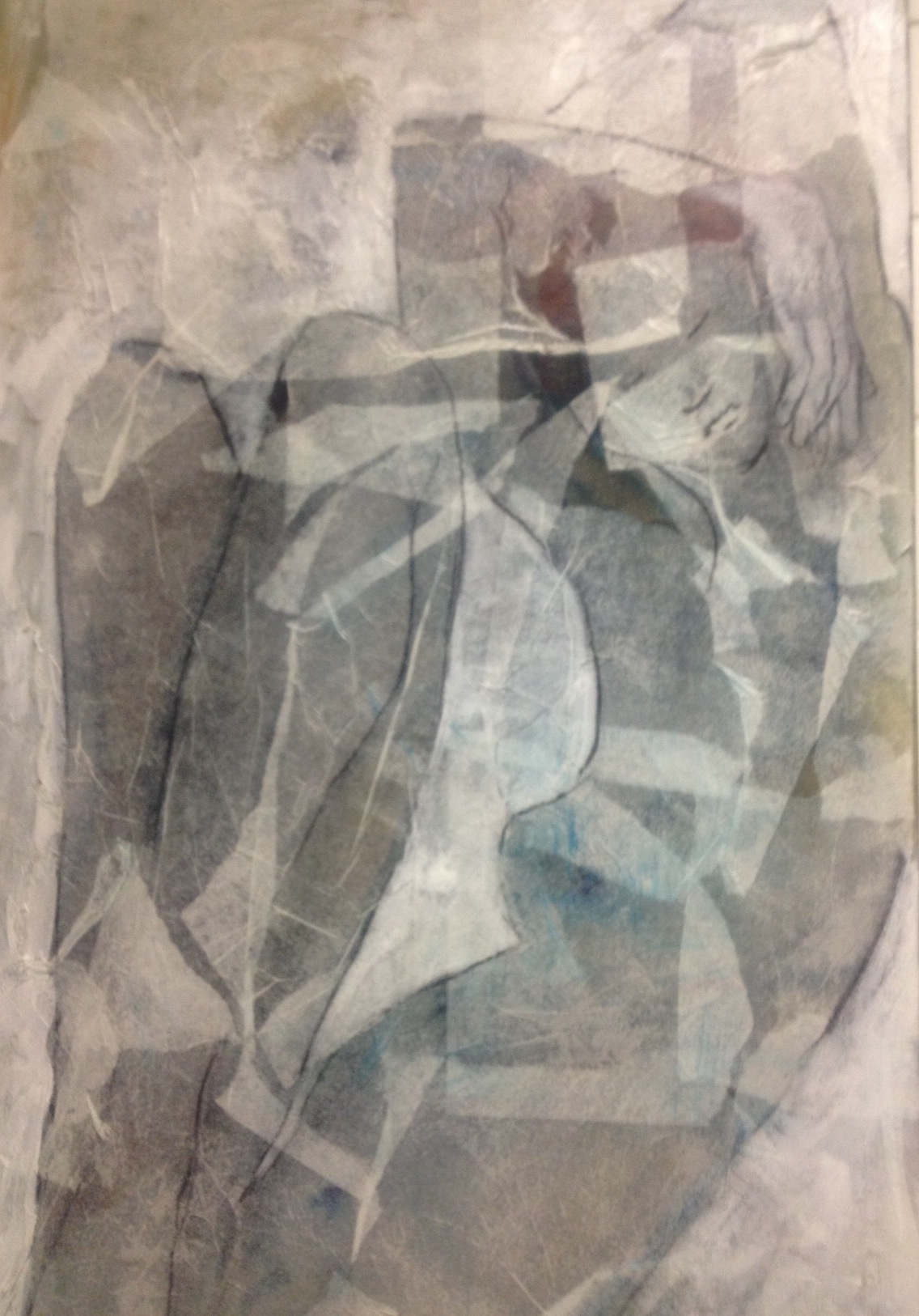
The Weeping Man

The Weeping Man

The Weeping Man is finished.

Sometimes the process of painting feels like wrestling with an angel: It will not release me. I will not let it go. We wrangle and discover the truth in each other. It is, as Quinn used to say of all relationships: “corrections as refinements”.

Sometimes a painting follows you for years and chooses its day. It chooses its time and simply steps into the light. It announces itself: “I am here now.” The Weeping Man was like that.

In my life I have painted hundreds of paintings and I can count a handful that are like The Weeping Man. Pure. In laying it out, I corrected one line. I added another. There are relatively few unnecessary brush strokes.

Flow is like that.

Answer The Question With A Question

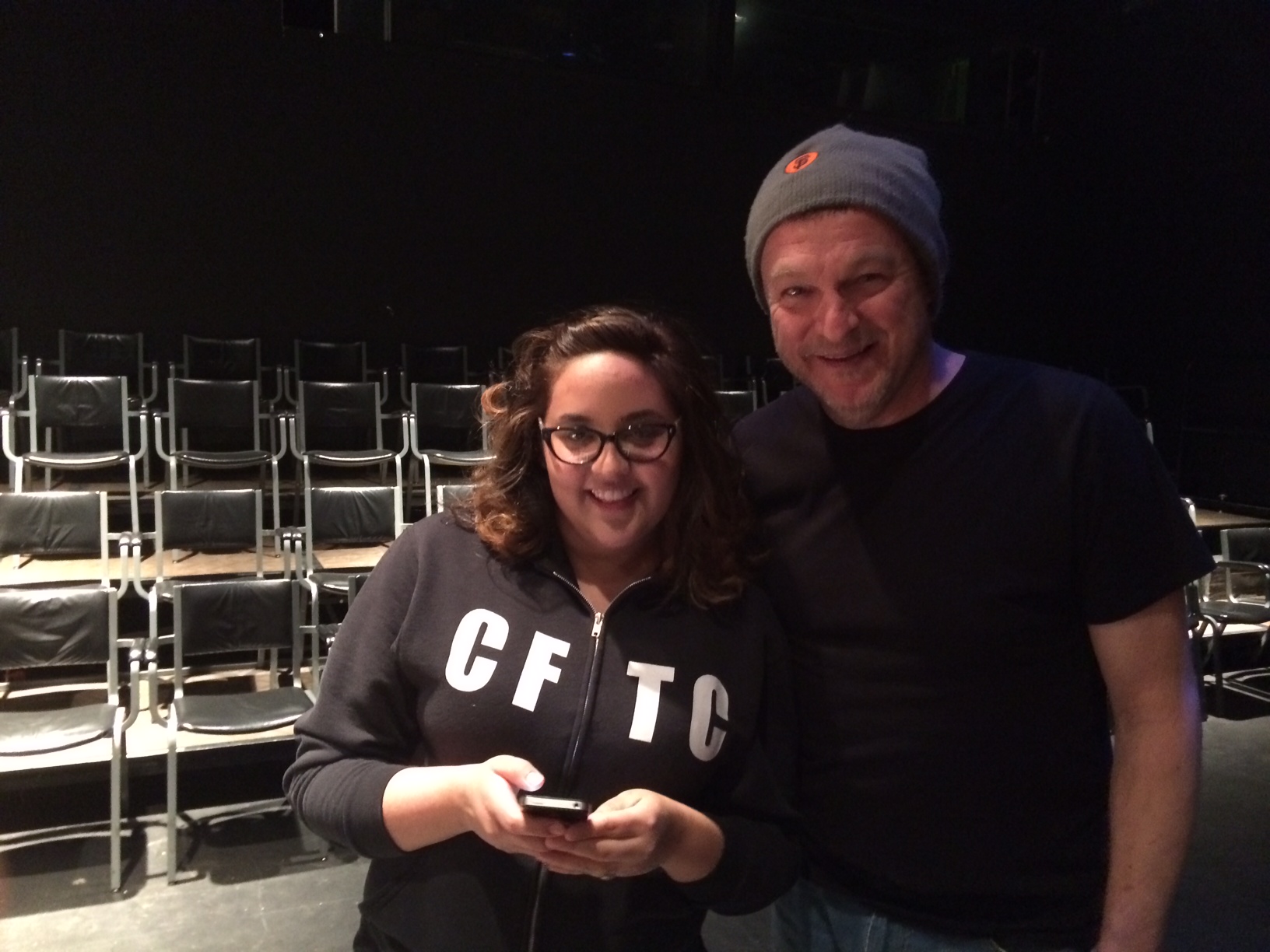
carrying on the tradition (and my heroes): mike and sabrina bartram

carrying on the tradition (and my heroes): mike and sabrina bartram at Changing Faces Theatre Company

Many years ago at the start of my career I bumbled into running a summer theatre company. It would become one of the great gifts of my life. At the time I decided that it would be my laboratory. I’d be able to experiment with directing processes and actor training techniques. What I didn’t realize until much later was that I would also be running an experiment in business and, more importantly, how to create a community mindset of support and empowerment (and, therefore, achievement). I was free to succeed because I gave myself permission to focus on the quality of the process instead of worrying about hard and abstract words like ‘achievement.’ My bottom line was the inner growth of everyone in the company, the inner growth of the community that we served.

When the company was up and running, when it was mature, company members swept the parking lot because they knew it would make the play better (improving the audience experience always impacts the performance). The people running the box office prided themselves on their kind service and efficiency because they knew that it would make the play better. The actors understood that they were in service to the play and not themselves. In fact, everyone in the company was in service to something bigger than themselves. That was the culture of the company. When pushed to articulate the success of what we created together, I’d say, “We’re focusing on the important stuff.”

Yesterday with great intention I sent that phrase (focus on the important stuff) out into the e-stratosphere. I lobbed it in association with the company that Kerri and I are in the process of creating to see what would come back at me. Like the summer theatre company, this new venture is our laboratory. What came back was the question, “What’s the important stuff?”

Sometimes the only way to answer a question is with another question. Take a look around your world. Take a moment to look at the difference between what you say and what you do. What do you see? What do you want to see? Big power comes to people when, like my company members (students) of so long ago, they realize that their “seeing” isn’t passive. The greatest single power any human being has is to choose where they place their focus. The greatest single revelation any human being has is to recognize that what they see impacts everyone around them. No one does this walk alone.

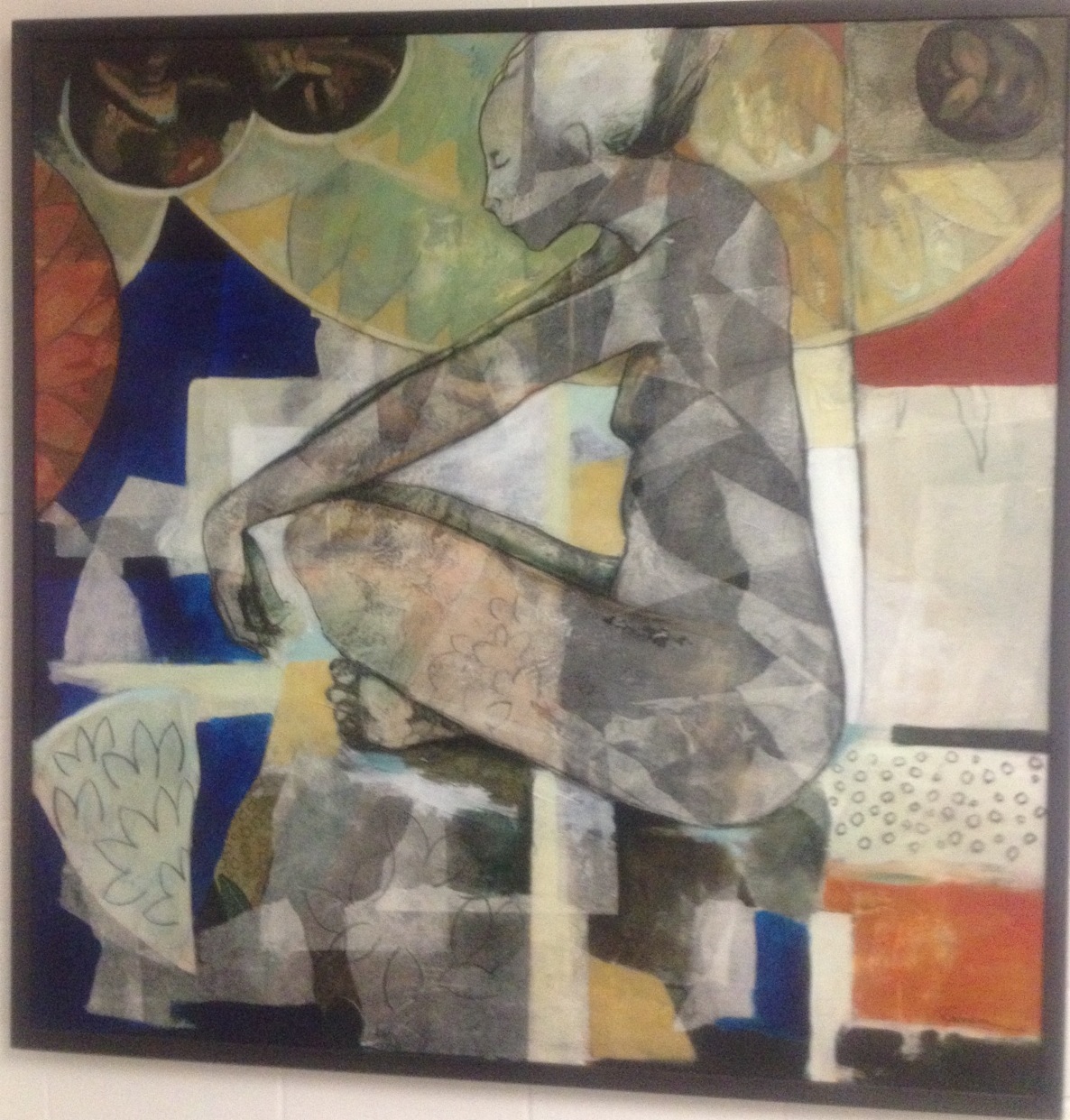
the very first painting in the Yoga series. It was an experiment, a walk of discovery. It's also about being alone

the very first painting in the Yoga series. It was an experiment, a walk of discovery. It’s also about being alone.

It’s easy to place a focus on an obstacle. It’s very easy to fix a gaze on the problems. It’s easy because, left alone, believing we are alone, that’s where most people default. Place yourself in a community that knows there is something bigger, something more important to see and serve, and the field of possibilities becomes easy. My company members of so long ago didn’t know what they couldn’t do so they did everything they imagined. That was only possible because they imagined it together. So, answering a question with a question, to you, what’s the important stuff?


There Is Wisdom In Dancing

TODAY’S FEATURED THOUGHT FOR HUMANS

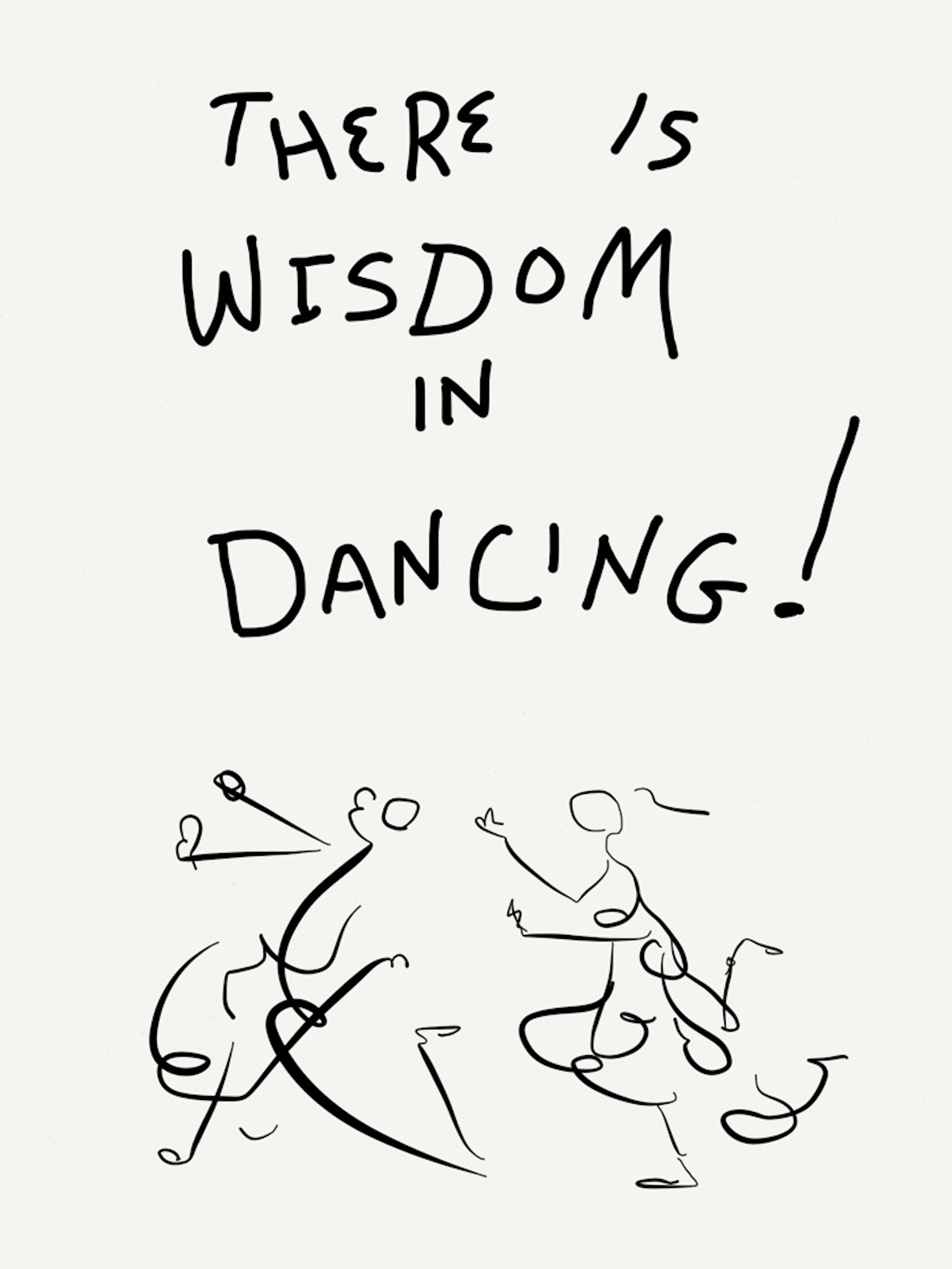
There is wisdom in dancing

To restate an old notion: knowledge is not wisdom. And, often times, our reliance on knowledge blinds us to wisdom (for instance, passing a test has little or nothing to do with learning). My mentors taught me that the toughest thing in life to master is relationship. The reason: relationship is at the heart of everything we do whether we acknowledge it or not. Life IS a relationship. Education, business, art, spirituality, leadership, management, self love, economics, agriculture, kindness, gratitude… are all relationship skills. Wisdom is found in the fields beyond your thinking. Get onto the floor of life and dance.

TO GET TODAY’S FEATURED THOUGHT FOR HUMANS, GO HERE.

Sometimes It Takes More Than A Text

TODAY’S FEATURED IDEA FOR HUMANS

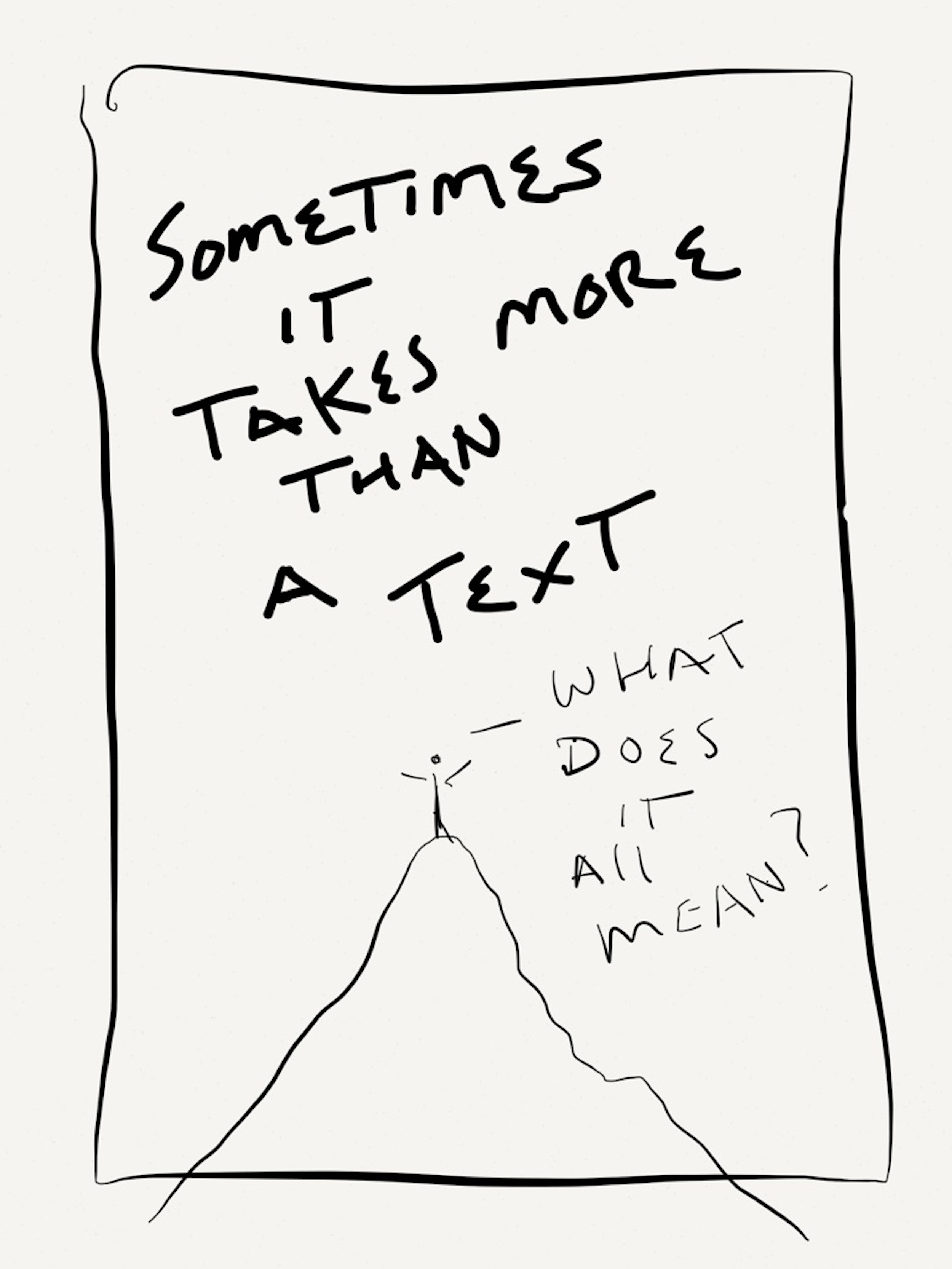
Sometimes It takes more than a text

In a recent post I wrote that we are often slaves to brevity. We want quick and easy answers to life’s big questions. Peter Block wrote that, in 30 years of consulting with businesses, he was routinely asked “How” but never asked “Why.” Relationship is at the heart of almost every big question (like leadership, management, marriage, self-love, the sacred,…) and, in relationship, there is no shorthand.

FOR TODAY’S FEATURED PRINT FOR HUMANS, GO HERE.

Fall Into It

lingering

lingering

Scott said, “In today’s world, if you can’t say it succinctly, you might as well not say it.”

Guitar Jim teases me each Sunday, saying, “Hey, I read the first 80 words of your blog!” I always laugh and he adds, “No, seriously. I didn’t have time to read the rest of it.”

I am like everyone else. I give only 3-to-5 seconds to any website that I visit. If it doesn’t capture me in that vast span of time, I move on to the next and the next and the next….

Click. Click. Click.

We are slaves to brevity.

In The Art of Living, Wilferd Peterson wrote: Travel with curiosity. It is not how far you go, but how deeply you go that mines the gold of experience. Thoreau wrote a big book about a tiny Walden Pond.

Going deeply takes time. My grandfather lived his entire life within a 10-mile patch of earth. He could smell a storm on the wind when all I – a visitor – could see was blue sky.

When I go to a museum, when I need to recharge my artist battery, I find the paintings that demand my attention, the pieces that want a relationship with me. Relationship takes time, too. Like Thoreau, I need to stare into the pond deeply, to spend time with it, to know it beyond mere thinking. Then I can breathe it in, feel the impact that only comes available with an engagement beyond the cursory. When I fall into it, it falls into me.

This is the challenge of our time, the artistic challenge of our time, the expectation that depth can be found by skipping a stone across the surface.

A good poem will not fully open without lingering in it.


Reach

photo-6In these few weeks post Lost Boy I’ve been writing thank you letters and sending Kickstarter rewards to the many people who donated to the campaign. I am humbled by the number of people who stepped forward to lend a hand, offer resources (financial and otherwise), and/or heap us with the moral support necessary to produce the play.

The Reminder: no one does anything alone. All creative acts, all things that are useful in this world, all triumphs that seem on the surface to be an individual achievement, are, in truth, a group effort. Life is a team sport. Quarterbacks are nothing without a front line, a coaching staff, a back office, a marketing machine spinning the tale. They also had mothers that for years drove them to practice, families that stood in the cold to watch them play little league, and a host of friends who told them that they could do it if the only kept going. Artists are no different. Even the loneliest painter has a rolling lifetime team whether they recognize it or not. Consider this simple basic: a painting is never complete until someone other than the artist engages with it. A play is never complete until an audience arrives. The whole point is to make or accept an offer to/from an other.

We, the people of these United States, place the accent of our existence on the achievement of the individual and that sometimes makes us blind to the obvious truth of our existence. We do nothing of worth on this earth without the support and participation of others; relationship is at the core of anything worth doing.

from the 2015 Racine snow carving contest. I'm sorry I did not capture the artists names!

from the 2015 Racine snow carving contest. I’m sorry I did not capture the artists names!

Once, many years ago, I lived in Los Angeles. I did not know my neighbors. I had no idea or desire to know who was living in the houses next to me. One night the earthquake came and our illusion of independence was stripped bare. With no power, no water, no heat, and compromised housing, the first thing we did was to reach to each other. When the illusions of comfort and security are stripped, our real need (each other) becomes glaringly apparent.

I wrote this play, The Lost Boy, because someone dear to me, over a decade ago, asked me for help. I was grateful that he asked – it meant I got to spend time with him and return some of the attention and love that he had invested in me. When the metaphoric earthquake hit – when Tom died – I had no recourse but to reach out to others; I produced this play when I realized that I was not alone and all I need do was ask for help. Legacy, like story or life, is an infinite loop of relationships.

Hear The Voices

photo-2This is the most unusual rehearsal process I’ve ever navigated.

First, I wrote the play and in preparing to perform it, I’m discovering it anew as if someone else wrote it. There have been brilliant and funny moments when I ask myself, I wonder why he wrote that? The good news is that I remember whom to ask.

Second, the play was originally meant for Tom to perform and since the story is Tom’s family narrative, I wanted the language and syntax to be Tom’s. In development, I recorded hours of conversation with him. Much of the first draft was a transcription so that I might capture word-for-word his language choices and speech patterns. Those structures survived the several rewrites that happened after Tom’s death. In preparing to perform the play I’m wrestling with the language. I’m wrestling with his language. It is almost as if I am discovering my own speech patterns and syntax – in telling Tom’s story I’m finding it necessary to tell it my way, not his. Essentially, as is true in all good storytelling, I am finding myself, my voice, through his story.

Tom and me a long time ago.

Tom and me a long time ago.

Finally, the music is a character in the play and the musicians, Mom’s Chili Boys, are madly rehearsing in California while the actors (Kerri and I) are rehearsing in Wisconsin. The internet is a beautiful thing as, each day, we pass notes, record voices, email questions; we will only be together in the same room 3 days before the first performance. We’re essentially workshopping the play from two locations. It is akin to rehearsing a symphony in parts and the parts only come together in the final day. They get to experience the whole symphony, the fullness of their music as played through all of the voices, only in the final hour. And that will be true of this play.

Each day I rehearse and I hear Tom’s voice in my head, telling me the stories that comprise the play. I am reminded that, whether artist or audience, art is a living thing. It is a relationship and ultimately that relationship is with your self.

title_pageGo here to buy hard copies (and Kindle) of my latest book: The Seer: The Mind of the Entrepreneur, Artist, Visionary, Innovator, Seeker, Learner, Leader, Creator,…You.

For all digital versions, go here (Leanpub)

Untitled by David Robinson

Untitled by David Robinson

Go here for fine art prints of my paintings.

Look Up

Eve, by David Robinson

Eve, by David Robinson

The nights have been bitter cold and clear. The cold always seems to make the stars sharp like crystals. Standing on the back deck, looking at the stars, I remembered a conversation I had years ago. I was working with students and we strayed into a discussion of human beings connection to the stars. It was cosmology in a nutshell.

Here was the gist of the conversation: something happened to human consciousness when they (we) understood that our patterns of life on earth were (are) oriented to happenings in the sky. For instance, our impulse to worship is intimately connected to the solstice and equinox: the disappearance and return of the light. Our migration habits, planting habits, daily rising-and-shining habits are relative to the movement of the sun. The tides in the ocean and the waters in our body are responsive to the pull of the moon. With the awareness, we crossed a line from chaos to order, from unconsciousness to consciousness. There was a relationship, a pattern, a belonging, a participation. There was something bigger.

During that same period in my life I also worked with a group of inner city students who had never seen the stars. It was a revelation for me. For them, there was no sense of relationship, there was no “something bigger.” There was a load of anger and existential separation.

This holiday season, I was struck by two things: 1) how many times I had conversations with people, glued to their televisions, who are frightened and feeling helpless by the happenings in the world, and 2) how many casual family photos crossed my path featuring a gathering of individuals, alone together, faces to smart phones. Everyone was looking down.

Standing on the back deck on a dark and starry night, wrapped against the cold, I wonder what some distant teacher in the future will tell his or her students about what happened to human consciousness when they (we) ceased looking up.

title_pageGo here to buy hard copies (and Kindle) of my latest book: The Seer: The Mind of the Entrepreneur, Artist, Visionary, Innovator, Seeker, Learner, Leader, Creator,…You.

Yoga Series 7Go here for prints of my paintings

Feel The Day

My favorite face of exuberance.

My favorite face of exuberance.

And so, the sun! These crisp, bright fall days bring pause. They make us slow down and pay attention to the small things, the sensual things: the smell of coffee, the sweet taste of butter on warm toast, the gentle music of the leaves, the blue sky vibrant through the luminous yellow leaves.

These are the days of easy appreciation; gratitude stands close-by. With senses heightened and deep inner quiet rising to the surface comes the simple acknowledgment that this day will never come again. It is precious, like all days, but on these days-of-the-senses, when reason, explaining, and justification take a break, the obvious becomes apparent. Every moment of life is this rich, precious. Wisdom comes through the senses, when tight reason takes a break. This life is passing. This life is bigger than any one of us. It is as vast as a human heart.

Turning my face to the autumn sun, I close my eyes and with great relish listen to the exuberant life celebration of Tripper Dog-Dog-Dog, barking because he can, digging holes to bury treasure, racing around the yard for no other reason than it feels really good.

title_pageGo here to buy hard copies (and Kindle) of my latest book: The Seer: The Mind of the Entrepreneur, Artist, Visionary, Innovator, Seeker, Learner, Leader, Creator,…You.

Yoga.ForwardFoldOr, go here to buy fine art prints of my paintings


State The Obvious

Sometimes it is necessary to state the obvious (to myself). Sometimes, for me, the potency of life is found in stating the obvious: children are born and children grow up. They leave home. They become parents. Parents become grandparents. Grandparents grow old and pass away. At no point do things stand still.

Or, the obvious can be stated another way: children have dreams. They pursue their dreams or run away from them. Either way, they pass through the stages of becoming – and, at some point, believe that they have actually grown into something (doctor, clerk, lawyer, teacher, vagabond, parent, athlete, etc.). They learn that their dreams are infinitely more complex than they realized. All dreams come with challenges, regrets, and discomfort. Regardless of the path, at no point do things stand still.

We want to “get there.” We desire to arrive. Usually, the misperception of arrival leads to crisis when things change. And things always change. This river of life never stands still. It is never static. It is never fixed. The moment of birth begins the progression to dying. And, depending upon what you believe, a new form always arises when old forms fall away. The new form, the new leaf, turns brilliant colors, withers, falls to the earth, becomes soil and mineral, feeds the root, and reemerges as the grape that ripens, is picked, and becomes wine.

Where is the arrival?

Even inner stillness is fluid. Try to hang on to it; grasping always disturbs the pond. Stillness is more akin to surfing than to stasis. Chaos and order are not opposite sides of a polarity; they are essential phases in a single cycle. Ripples are necessary to experience stillness. Fulfillment and emptiness are necessary to each other. One does not gain without losing. One does not live without dying.

There is no arrival. There are fluid moments of recognition, moments of presence (a word that is often mistaken for an arrival). Presence, otherwise known as consciousness, might be defined as the awareness and appreciation of each moment amidst the realization that things always change. To try and stop the river, to hold on to the moment, to try and stop time will always bring frustration. Presence describes your relationship with change.

This is the obvious thing: nothing is certain. Nothing is still. We always step into uncertainty. We always step. We are never still. Our steps are always into the unknown because no one has ever lived their moments prior to the living of them- despite what the to-do list and cubicle illusion might lead us to believe. Realize it and life is rich and mysterious. Resist it and life is rigid and rich with hardship.

Go here to get my latest book, The Seer: The Mind of the Entrepreneur, Artist, Visionary, title_pageSeeker, Learner, Leader, Creator…You.

Or, go here for a hard copy.