Ponder It [on DR Thursday]

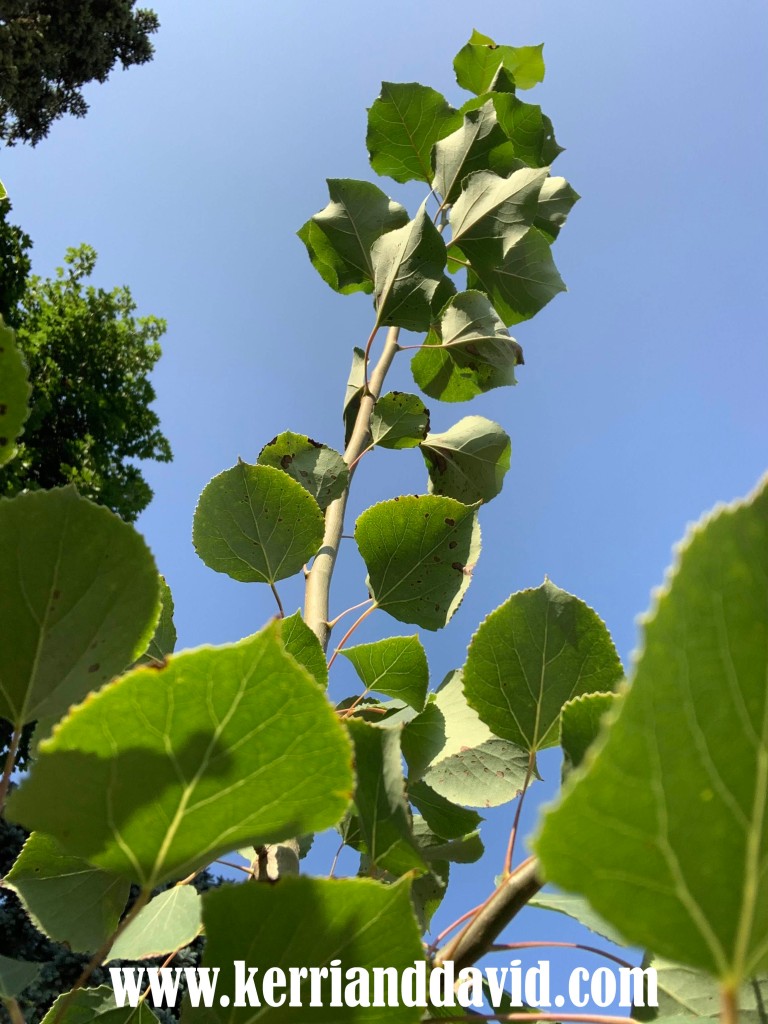
As you know, Breck-the-aspen-tree almost didn’t make it. Three years in a pot and one ill-conceived planting in the backyard left our poor Breck withered. A new spot in the yard restored Breck’s health but her growth was minimal. We removed dead branches. We assumed we’d stunted Breck’s growth so she would always be beloved and diminutive.

And then…It seems Breck is growing an inch every day. We began the summer looking down at her. Now, we crane our necks to see the new leaves sprouting at the top of her gangly reach. We joke that Breck is doing her Jack-In-The-Beanstalk imitation, though, at this rate of growth, it’s no joke. I confess to having a sit-down chat with her, cautioning her to not grow up too fast.

Last night I was awake most of the night. I thought about Breck and new growth. I thought about the cicadas, a surprising new form emerging from a discarded old body. I hoped against all hope that nature was talking to me, sending me a message. Be patient. All in good time. I’ve been sitting in the hallway for a very long time.

Perhaps, like Breck, I too am waiting for the optimal time, some intrinsic trigger and, suddenly and without warning or inhibition, I will reach to the sky. Perhaps, like the cicadas, in a moment of surprise, my new form will burst out of the old body, amazed at the sudden addition of wings.

In the meantime, I continue to do as I was taught: my job is to “put it out there”. The rest is out of my control [meantime: the intervening time. The hallway]. The operative word is “it”. It. I write and publish almost everyday. I paint and publish. We cartoon and publish. I toss resumes into the wind.

In the dark of night, thinking of aspen trees and cicadas, I ponder worthy questions. Breck needed assistance to move to new soil and then required recovery time. Storing energy for the right moment. The cicada lived underground until it felt an internal imperative to climb – an imperative that I imagine made no sense but had to be heeded just the right moment. For me, if nature is talking to me, it has me pondering what else – that I’ve not yet considered – might “it” be that I should “put out there”? Or better, does “it” matter at all? Perhaps all that I lack is the right moment. And there’s nothing to be done about that.

weeping man, 48x36IN, mixed media

My Site. Up and Running. At Long Last.

read Kerri’s blogpost about BRECK

share. like. support. comment. thanks.

Utter Life [on Not So Flawed Wednesday]

The theme of the mural is “humanity represented through different stages of life through song.” Past, present, future. The song of Sorrow. The song of Joy. The song of Hope. It’s painted above the proscenium arch of Chicago’s Auditorium Theatre, designed by artist Charles Holloway, the words at the apex are “The utterance of life is a song, the symphony of nature.” The symbols of his time.

Even as I write this, the birds this morning are in full-song. The utterance of life. The symphony of nature. Dogga barks to round out the bass section. Yesterday, standing on the bridge over the Des Plaines river, as we watched two deer amble across the trail, the ancient sound of Sandhill cranes croaked from above and two gawky-yet-glorious birds careened in for a landing on the sandbar just to our right. “We’re smack-dab in the middle of a National Geographic special,” Kerri whispered.

Sitting in the auditorium I wondered why the song of the past is Sorrow. Hope, Joy…Sorrow? It seemed a mismatch or, perhaps, a wrong assignment. Most of the people I know are suffering in the present moment. They sand off the rough edges of their memories so they remember their life-walk fondly. The song of warmth.

Honestly, the mural reminded me of another painting, a piece by a master-painter that lived during the same period as Charles Holloway. Gassed by John Singer Sargent. It was not something that sprung from his imagination. He witnessed this moment. A man who’d spent his entire life painting portraits of the elite. A genius artist. He painted his composition from what he sketched that day and it has become a symbol. The suffering of his present moment. The sorrows of the past in a world that had lost its mind. As testaments of the horrors of war, it lives up there with Picasso’s Guernica.

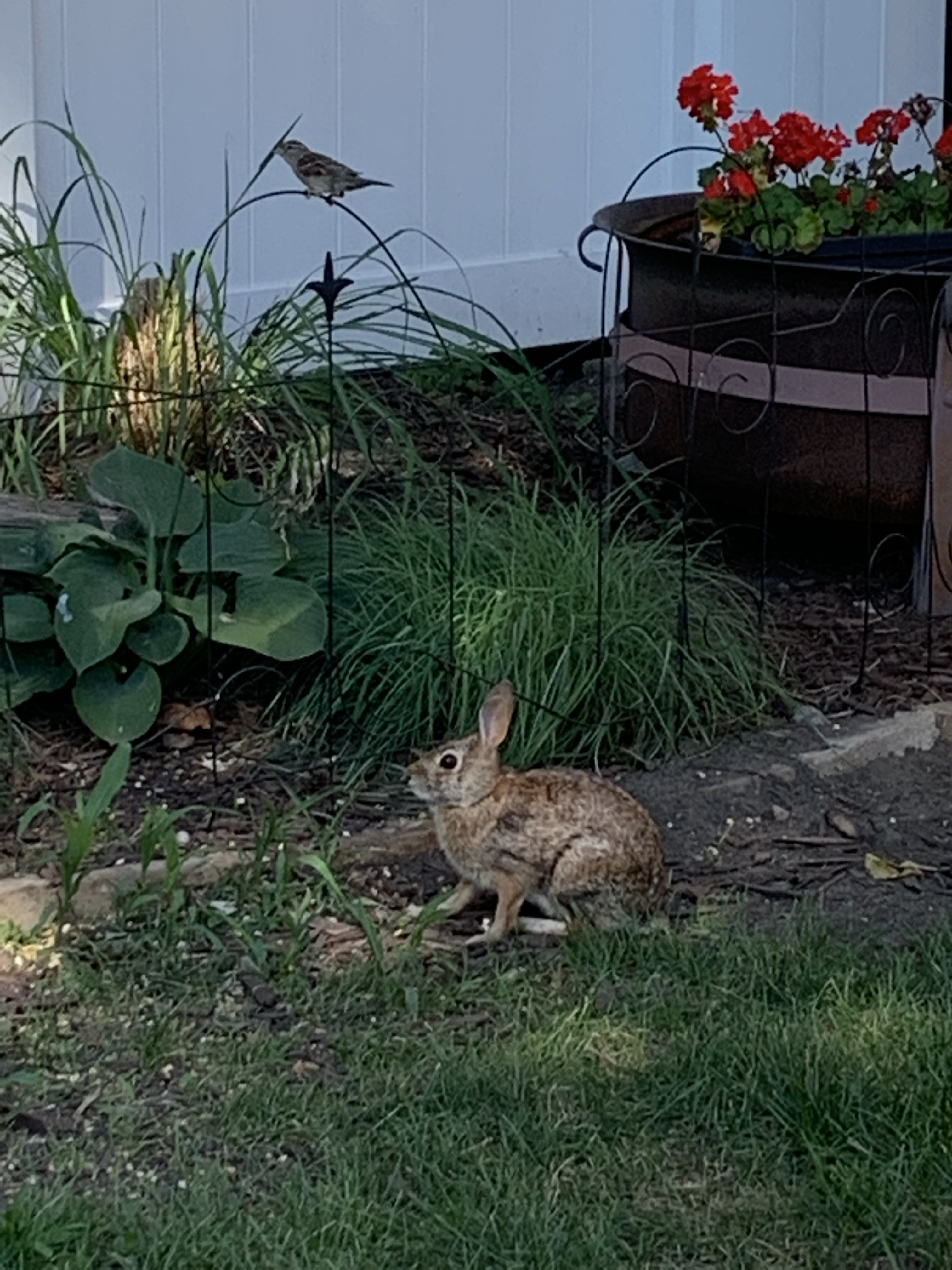
I just took a peek out of the window at the bird feeder. In addition to birds eating the seed, at the base are chipmunks, a squirrel, and the adolescent bunny. The song of Joy is also available in the present moment. I wonder, if I was commissioned to paint a mural over the proscenium arch of an enormous theatre, what would I paint to represent the human condition? The songs of past, present, and future?

It was a National Geographic Live event that brought us to the Auditorium Theatre: Coral Kingdom and Empires of Ice. The brilliant underwater photography and the lifetime exploration of a husband and wife team: David Doubilet and Jennifer Hayes. Among other things they’ve documented the impacts of climate change in the oceans. Even amidst the loss of reefs and disappearing ice that sustains life, theirs was a message of Hope. They infused us with their rich hope, drawn directly from their duet with nature. The utterance of life. Interconnected. The song of the future.

read Kerri’s blogpost about THE MURAL

coffee or like it or forward it or talk to us. All are appreciated!

See The Cycle [on Not So Flawed Wednesday]

I want to re-read Hermann Hesse’ book Siddhartha. Lately I’ve been thinking about cycles of nature, cycles of growth, cycles of life. Chaos-to-order and back again. Daylight-to-dark-night and back again. Nature, Hesse writes, is a self-fulfilling continuous cycle.

In the book, Siddhartha “achieves” illumination when he realizes the lesson of the cycle: that inside every “truth” is the potential for its opposite. Arrival is departure. Birth is death. Both/And.

The demands of language necessitate slicing single moments from the cycle. Isolating a “truth” from its opposite thereby fragmenting the wholeness inherent in the cycle. Slicing the cycle stops the fluid motion and calcifies the “belief,” making it hard, rigid in separation.

And then there’s this, the reason I want to re-visit the book. At the end of his life Siddhartha, as the ferryman, watches the river in full knowledge that what he sees moment-to-moment is never the same river. In the cycle, the moment is always unique. Both/And.

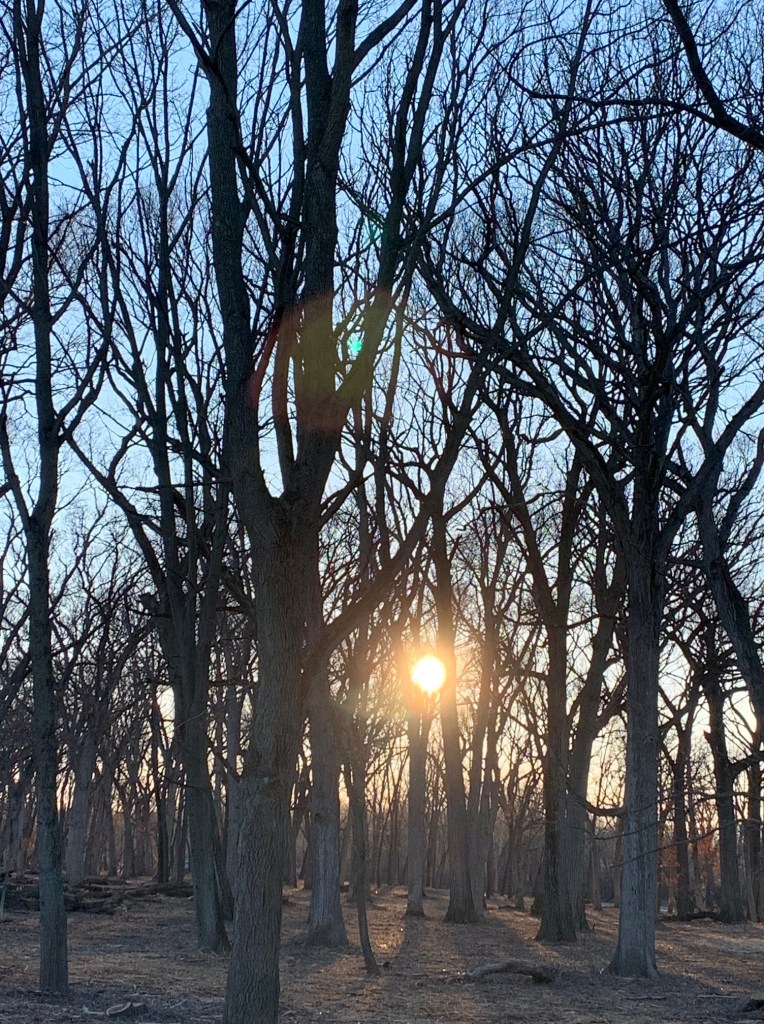
Standing on our trail, having stopped and witnessed many, many sunsets, the thought was so pure it swept the dullness from my eyes. This sunset is Siddhartha’s river. I’ve never seen THIS sunset or this forest or lived this moment. Quietly electric, I watched Kerri, caught in the beauty of the moment, point her camera as if for the first time toward the trees and the setting sun.

read Kerri’s blogpost about SUNSET

Cross Check [on Two Artists Tuesday]

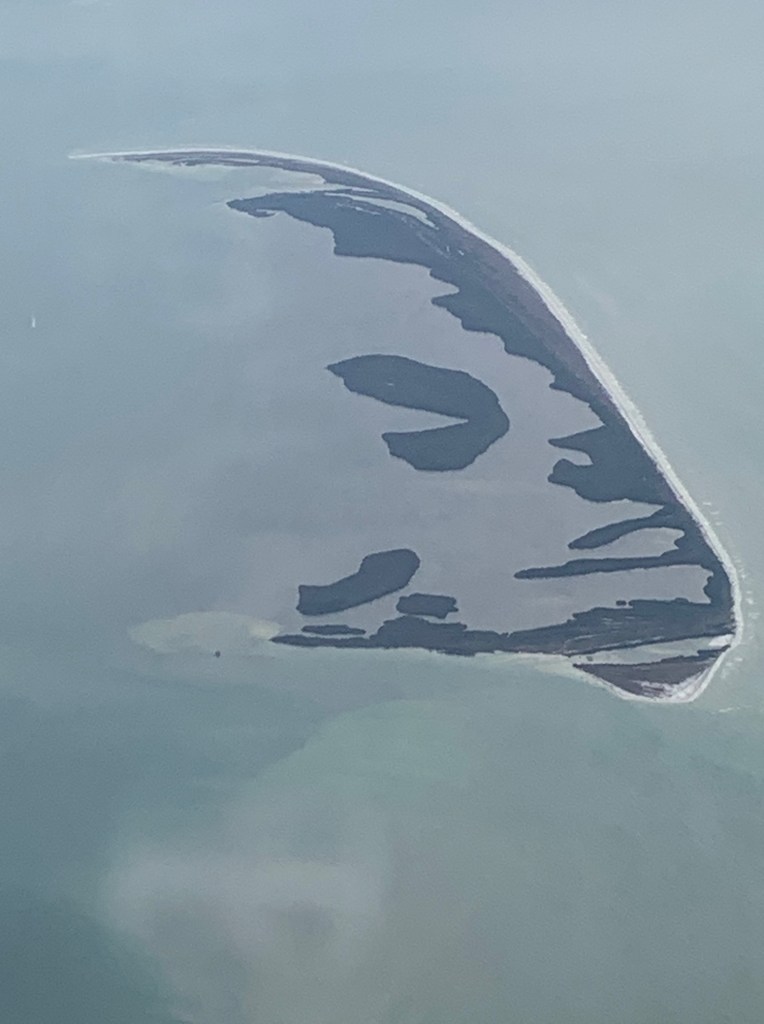
“It looks like a horses head,” she said, snapping the photo from her window seat on the plane. We were on approach to land, coming in over the bay.

I remember teaching myself to draw horses. I had (and still have) a passion for drawing people so my foray into horses was more an academic exercise than an inner need. I thought I should expand my horizons so the 8-year-old-version-of-me acquired a “how to draw animals” book. It suggested beginning with geometric shapes. Two connected circles defined the torso, the head – a circle and a trapezoid.

It was the same technique used by the teacher in my very first art class. See shapes. Arms are two tubes connected by a circle/elbow. Knees are circles, too! Foreground and background, what’s in front and what’s behind was taught using spheres and cylinders. Perspective was taught using a box. Transform a circle into a sphere through proper shading and you’ll know forever the magic secret of artistry. See a dragon in the clouds and you’ll know forever the magic secret of the human mind. It projects. It seeks sense from chaos. It projects order onto nature.

All the while Kerri is snapping photos of the island that looks like a horse’s head, I am pondering the normalization of hurtling through the air in a tube. People chat. Some are reading. The man across the aisle is asleep. “Prepare to land” is ordinary, uttered thousands of times each day. It’s the flip side of seeing dragons in clouds, another key to the human mind. Miracles made commonplace through repetition.

One human child is a miracle. It’s why we are making the trip. To meet a miracle. Yet, 7 billion miracles walking on earth?

“We’re flying,” I said.

“It’s been a long time,” she replied, showing me the picture on her phone, “Look! Doesn’t it look like a horse’s head? Well, like horse heads that I draw. No ears,” she qualified and smiled.

Miracles and magic. All the way around. Seen and unseen. Cross check. Wheels down. Prepare to return to the ground.

read Kerri’s blogpost about the HORSE HEAD

Immerse [on Two Artists Tuesday]

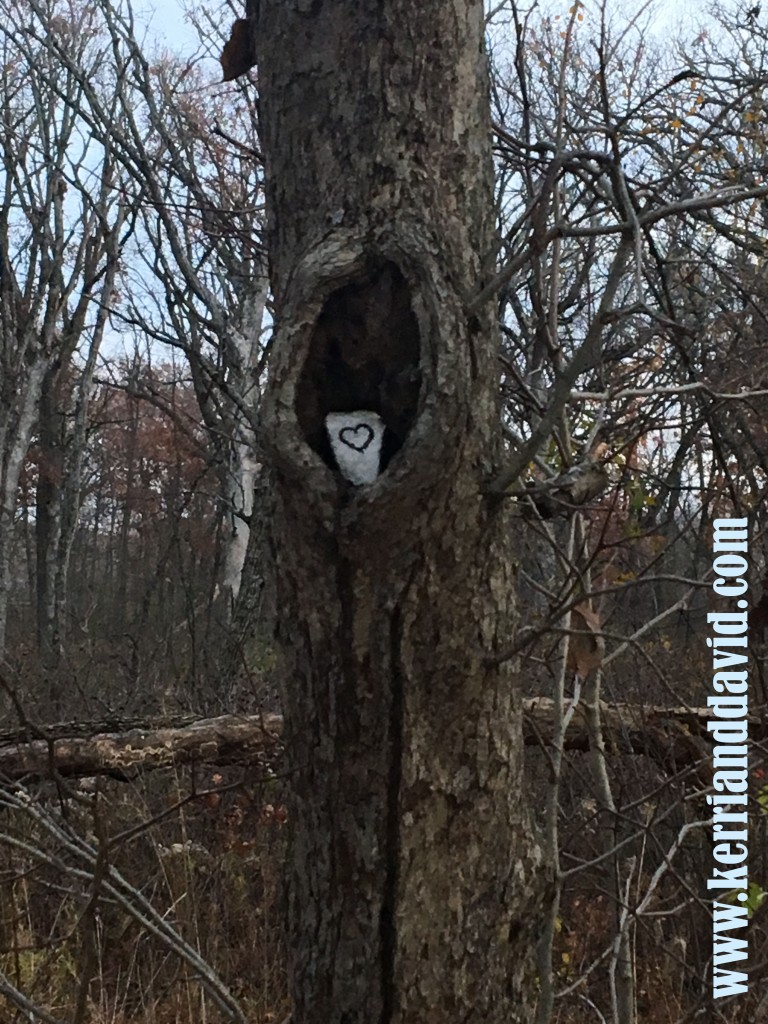
The bright green ring in the tree beckoned. A time portal. Climb the tree and slip through the hoop to another time. Another place. What will you find there? It was one of many awe-inspiring moments in the immersive light experience at the Chicago Botanical Gardens.

A few weeks ago Rob suggested that I consider producing immersive experiences and my walk through the Gardens started a thought-wander.

Immersive is a new word in town. Well, it’s an old verb sporting a new adjective meaning. It’s a tech term. Surrounding “the user” with a generated 3-D image. Wander around town and you’ll find Immersive Van Gogh or Immersive Monet or Frida Kahlo, also Immersive. Technically, escape rooms are immersive. So is Disney World. A 3-D created experience.

A walk in the woods cannot be considered immersive since no technology is involved.

Immersion, one step beyond immersive, is the “perception of being physically present in a non-physical world.” Virtual reality. Dreams might be considered immersive except, like nature, technology is absent so the experience cannot be considered virtual or immersion.

To immerse means to dunk yourself in liquid or to dive deeply into a passion. When I stand before my easel and brush color onto canvas, I leave the world as I know it. I immerse in my paintings, though viewers of my paintings are incapable of having an immersive experience with my less-than-3-D-paintings. Is paint a technology? When Kerri plays, she enters a transcendent place. She fills the room with energy and light and I am transported. Am I having an immersive experience? I believe so.

Rounding a bend the night we walked through the Garden we came upon a field of illuminated pillars, colors changing and hopping with the beat of the music. I told Kerri that I saw this very display 20 years ago in an art gallery, though the technology 20 years ago was new and not nearly as impressive as what flashed in the field in front of us. The pillar-field was alive and was both mesmerizing and familiar.

The Gardens themselves, sans lights and music, are immersive. Groomed and created, meant to transport us from our everyday lives. We oooh and aaaah every time we visit. An explosion of color in a petal. The shape of a leaf. The quiet of the grove.

I loved the lights, the heightened immersive experience. We’ll make it a tradition. I’m excited to immerse in Van Gogh or thrill my way through Cirque du Soleil. As for producing immersive experiences, I am content to smear color on canvas or fall head-long into a story. Or, best of all, walk our path through the woods. There is no greater transporter of time-and-space than to suddenly find myself eye-to-eye with a fox crossing the trail.

read Kerri’s blogpost about HOOPS

Choose Awe [on KS Friday]

Of course, it’s not enough to appreciate the cloud-stripes that stopped our motion on the trail. I might have painted them in one of my pieces – for no other reason other than they are a cool pattern. Of course, I would have believed I was making it up. Imagination at its finest. But, in mid-trail, to peer up and see them painted on the sky-canvas sent us into a Google frenzy. You’ll be relieved to know that striped patterns in cloud formations are due to an oscillation called the Kelvin-Hemholtz instability. Phew! Not aliens or Van Gogh run amok, just ordinary old Kelvin-Hemholtz, unstable and oscillating. Again.

Nature continues to astound me. Nature continues to blow my imagination to new heights. As an artist, I am relieved knowing that I will never create anything as perfect or profound as what nature tosses up every minute of every day. There’s nothing left to do but play in these fields and appreciate the conversation. Since I am also a unique-form-thrown-up-by-nature, respecting the conversation, having deep gratitude for the moment, wouldn’t hurt.

Standing on the trail, watching the miraculous lines scratched into the blue-blue sky, I re-realized something important: Google might be able to explain it – which is no small feat – but explaining it, labeling it, putting it into a context-box also diminishes it. It gives us the illusion that we are separate from it; that we can control-it-by-rationalization. Visitors at the zoo.

Sometimes I think awe is a better path than explanation. I imagine that we might approach global warming, weather weirding differently, if we weren’t under the illusion that we could Google nature into submission. Awe is participatory, boundaries dissolve. I-am-that. Life beyond definition, beyond category and sub-category, glimmers.

Next time, I will opt for a few more moments of astonishment before reaching for my phone. Explanations and easy answers can wait their turn in line.

Lost. In the Questions ~ Kerri Sherwood

Kerri’s albums are available on iTunes and streaming on Pandora

read Kerri’s blogpost about STRIPES

lost. in the questions © kerri sherwood

Knit It Together [on Two Artists Tuesday]

Bold lines that break the visual plane. Once upon a time it was how I started a painting. Impulsive, reactive, spontaneous slashes that fractured the image and, in my mind, made it more interesting. Those lines gave me a popcorn trail to follow. A hard edge to push against.

Sometimes I think my life’s work can be reduced into a single word: disruption. I was the guy brought in to offer a counterpoint. I am the guy brought in to tell the story that no one wants to speak. What if? Why not? The bold line to break the visual plane. There is always a pattern. There is rarely a problem. Problems incite blame-games. With pattern comes responsibility and the revelation of choice.

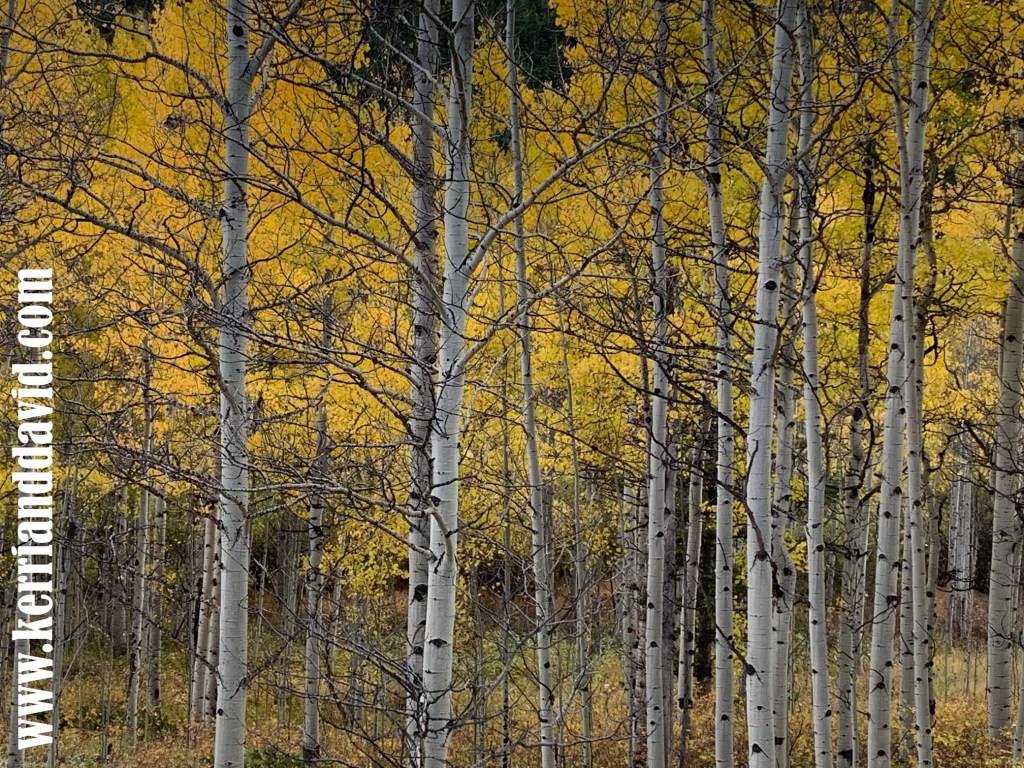
John Muir famously wrote, “And into the woods I go to lose my mind and find my soul.” We walk in the woods for the same reason. The circle comes around. The big bold slashes no longer break the visual plane but pull it together.

Mind breaks it. Soul knits it together. Ebb and flow.

Today is a day to walk in the woods.

read Kerri’s blogpost about BLACK TREES

Connect The Dots [on Two Artists Tuesday]

A curious sentiment painted on the concrete support wall of a busy overpass in a burgeoning city. Crumbling cement sidewalks, hard asphalt, steel cable supports securing a post just outside of the picture frame. A message about bridges painted beneath a bridge.

People hustle by as if there was no time to spare. They drive fast over and around the curious sentiment. The painter-of-the-sentiment placed it adjacent to a stoplight. Perhaps, while revving their engine, awaiting the return of the green light, a motorist might turn and read the thought. Perhaps the motorist might breathe it in. Perhaps the motorist might consider the message as they passed beneath the bridge.

What gets you from here to there? From birth to death? Amidst the hard realities of the road, the steel cables, the thoughtless people whizzing passed, the persevering grasses pushing through the cracks in the cement, the litter at your feet? A thirteenth century Sufi poet thought it important enough to write about it. A twenty-first century painter thought it important enough to paint the poem on a wall.

People across time and cultures have thought it necessary to place significant messages on walls. Aspirations and appeals to our better nature. A compass pointing the way for what might be, what exists but goes largely unseen. The primary thing. Every parent knows this bridge beyond the abstraction of a message on the wall. Every time rings are exchanged, vows spoken, the unseen is understood.

The hawk landed on the fence. Kerri met its eyes and they stared at each other for what seemed a very long time. Divisions disappeared. Forms fell away. Life experienced life.

Just try and place a word on that experience! A Sufi-poet tried. A contemporary street artist thought it necessary to paint the sentiment on a hard wall. What bridge connects the poet and the painter?

read Kerri’s blogpost about THE BRIDGE

Discover It [on Not So Flawed Wednesday]

The mist from the falls danced with the sunlight. Waterfall aura. Waterfall halo. We stood in the bands of color and laughed. Full body color tickle.

And then, a hush of utter appreciation. We listened to the chamber music of rushing water over the edge of rock. It was so beautiful there was nothing to be done but to close our eyes. Drink it in. Mist on our faces.

And then, we continued upward. The trail was steep so our steps were slow.

Krishnamurti wrote that, “To find out what is truth there must be great love and a deep awareness of (hu)man’s relationship to all things – which means that one is not concerned for one’s progress and achievements.”

In his book, Siddhartha, Hermann Hesse wrote that for every truth there exists an opposite truth. We humans are largely resistant to grasping both sides of wholeness. We like to be right so we tend to “fix” our half-truth in white-knuckled abstractions. Lost in our minds and paging through our rulebook-for-living, we miss the fullness of our relationship to all that surrounds us.

Standing by the waterfall, slowly climbing the mountain, it was easy to love our relationship to all things. The trail brought quiet to our minds. Each step, moment to moment, a full vibrant discovery of truth.

read Kerri’s blogpost about WATERFALL HALO