Connect The Poles [on KS Friday]

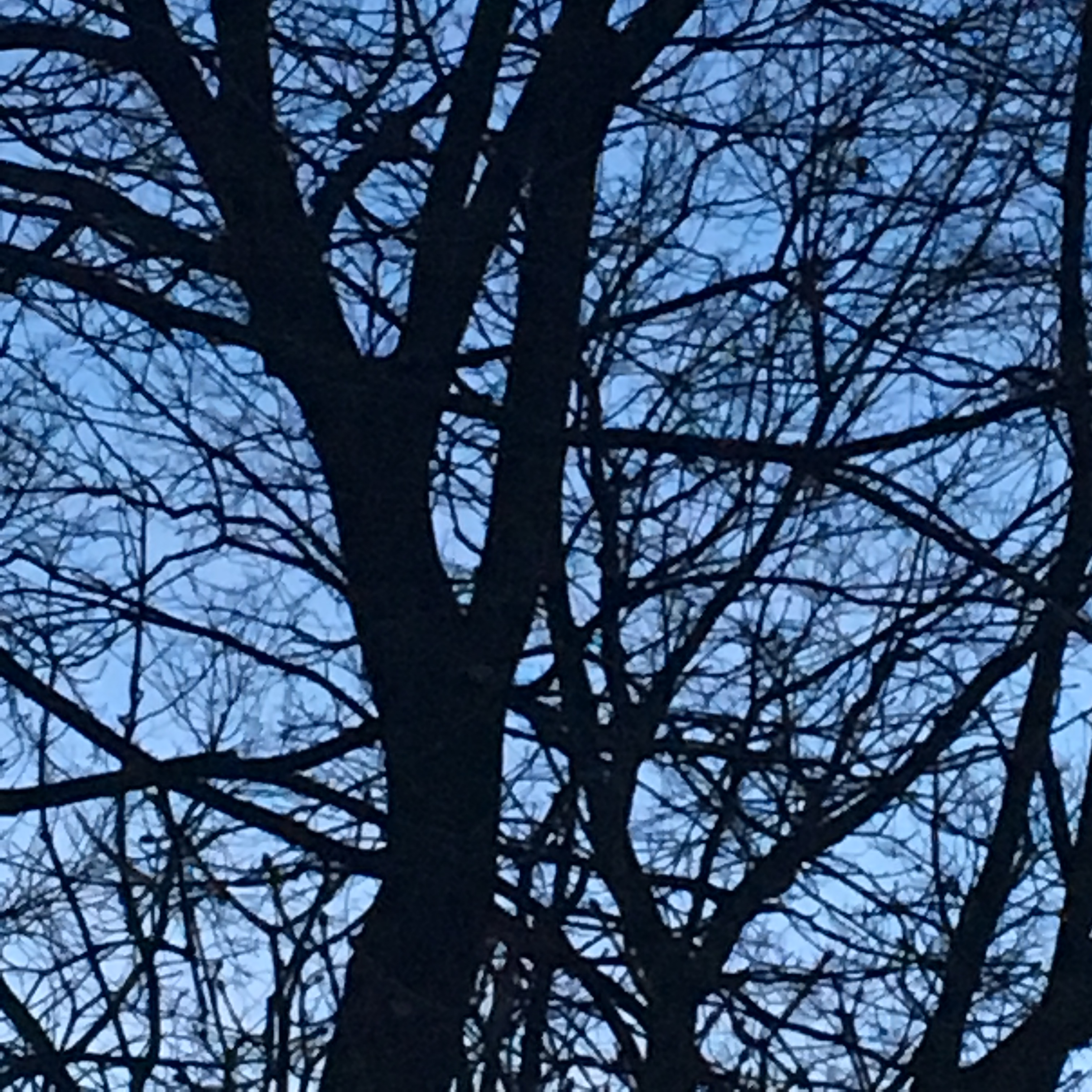
Though it is not, this could be a close-up of an x-ray. Arteries carrying blood away from the heart, veins carrying blood back to the heart, and the capillaries that connect the them. Outgoing. Incoming. And the connection between the two. And, as is always true of language, in the naming and the action-describing, the whole system is obscured. This part does this. That part does that. Mechanical mind applied to a miracle of pulsating life.

In North Carolina I overheard an old guy grousing about climate change. He is a sceptic. “There’s record snow in California!” he decried, “And, we’re having record heat here! You can’t have it both ways!” His reluctant listener bobbed her head. “It’s either warming or it’s not!” he railed. “Explain that to me!” Mechanical mind. Parts-thinkers cannot see the whole system. The capillary-word that tumbled from his mouth but bypassed his mind was “record.” The poles are, after all, connected.

I am fascinated by my current work. I am witness to and a participant in the creation of software. The language is familiar though the meanings are new: epic and story. Bug. My mind, lately, has been awhirl. The developers necessarily talk of information as content-objects. Items. The language of “fixed” things. Yet, the problems in the world that they design and solve for are “fluid.” Information, in our day-and-age, never stops. It grows exponentially everyday. It is movement, constant motion. More/faster. Sometimes I get a glimpse behind the curtain and see the developer’s work of content-items-in-motion. You’ve never seen a faster moving current of symbols. Is it a particle or a wave? It depends.

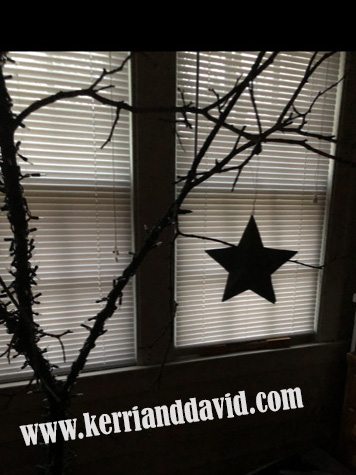
The tree in our front yard reaches toward the house. Kerri tells me that our children climbed through the branches when they were young. When the crew had to clear some branches to trench the yard, Kerri winced each time a branch snapped and fell to the ground. “I can’t look,” she said, not taking her eyes off the tree. Holding vigil. Holding her heart.

It’s easy to forget that, in all cases, no matter the eyes though which we see, the movement is always back to center. To the heart-of-the-matter. The pieces are never isolated. This tree is not separate or distinct from the sky or Kerri’s heart. The poles are always connected, whether we recognize it, see it, acknowledge it, or not. Breathe in. Breathe out. Two actions or one?

read Kerri’s blog post about THE TREE AND SKY

Kerri’s albums are available on iTunes or streaming on Pandora

Choose How [on Not So Flawed Wednesday]

My friend’s children are having children. The top-of-the-list advice my friends offer their children, now parents themselves, is this: it goes so fast. Appreciate every single moment. Love every phase. You will blink your eye and they will be grown and gone.

I lost my dad in September. I have, like most people who’ve lost a loved one, spent much of the time since his passing remembering and reflecting. It’s a mixed bag of treasuring moments and wondering why I didn’t fully appreciate others. It is true, you don’t know what you have until it’s gone.

What is so hard about appreciating – fully appreciating – the limited moments of your life?

I used to facilitate an exercise. It had four phases. Working in small groups, the first phase was to have a group member identify a problem in their life and then tell a blame-story about the problem. The rest of the group helped by supporting the person in their story of blame. The groups howled with laughter. Blame is fun. It’s addictive, like sugar.

In the second phase, the groups tried to “fix” the problem. The serious, concerned faces puzzled possible fixes but inevitably dissolved into more laughter: there’s nothing like trying fix a problem to create more problems and loop back into a juicy blame story.

Phase three was simple: I asked the original problem-story-teller to retell their story as a story of choice, not blame. I asked the other members of the group to support the teller in their story of choice. Silence ensued. And then, quiet presence as the new narrative – the story of choice – slowly inhabited the room.

Blame stories are like too much candy. They are easy to eat and yet have no real sustenance.
Stories of choice are much harder to tell but they are rich in awareness and appreciation of the moment.

We never arrived at the fourth phase: stories of opportunity. Activating choice. The notion of taking responsibility for choices always stopped the exploration. Our conversations about choice-avoidance usually filled the time.

What we gain in blame, we lose in appreciation of our moments. In order to taste the moment, one must first choose to be in it – and then choose how to be in it.

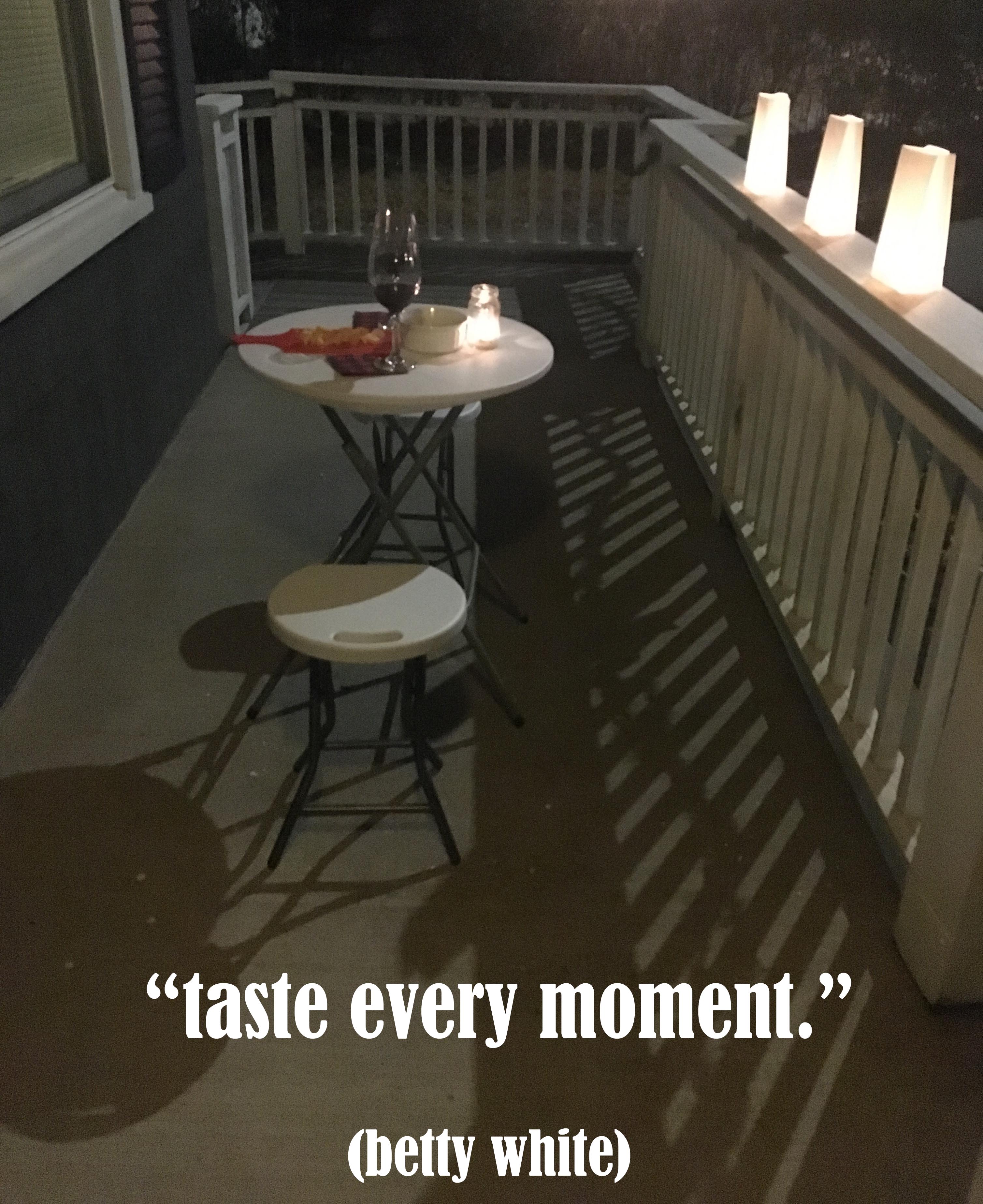
Grief is a phase to be loved, not avoided. As is the celebration of a first birthday. A new life. A lost love. A full spectrum. Taste every moment.

read Kerri’s blog post about MOMENTS

Know How It Feels [on saturday morning smack-dab.]

Love. It spans the full spectrum, doesn’t it? That’s how we know it’s the real deal: it hurts so good. It’s so good it hurts. It’s not a bad reminder on this day of gathering together or missing out. Love where you are because, chances are, where you are is full immersion in the love-spectrum-of-experiences.

Happy Holidays from two-artists-on-the-road.

read Kerri’s blog post about NOW I KNOW.

smack-dab. © 2021 kerrianddavid.com

Laugh With It [on Merely A Thought Monday]

Yesterday we celebrated an anniversary. Nine years ago we spoke on the phone for the first time. An offer of a free coaching call changed both of our lives. Kerri said, “Just think, we talked on the phone nine years ago and all hell broke loose.” I laughed. Her comment was, above all things, an understatement. Our road together has been both magical and tumultuous.

This season we are sitting on the cusp of the new. Appropriately, before turning our eyes to what’s-next, we’ve been looking back, sense-making what-was. We’re cleaning out. Making sense of the past is making space for the future. More than once I’ve said to myself, “If I knew then what I know now, I would never have had that problem. Or made that mess. Or tolerated that situation.”

What do I know now that I did not know then? Things are messy. Most of the ogres I fought existed nowhere but in my head. Some did not, but what was true of the imagined variety, the tangible ogres also were not worth fighting. “Take nothing personally” tops the list of “best-advice-ever.” Number two on the list is “Make no assumptions.” People are crappy. I’ve been crappy. People are great. I’ve been great. That’s pretty much true of everyone so a bit of grace and understanding goes a long way.

Burned into the things-I-know-now, way beyond a Facebook platitude, is this: life is as short as this moment so it’s best to appreciate everyone you love in this moment. For us, 2021 was the year of water but also it was a year of loss. Our sweet BabyCat left us quite suddenly. Our dear H passed in the summer. Peter died. We learned that Lance died, too young. My dad passed in September. And Ruby followed not long after. There are so many things I wish I’d said or done for Ruby. There were tug-of-wars that I had with my dad – that ate up months of life – that seem utterly silly to me, now.

The boxes that are coming out of my inner-attic are stuffed with the-need-to-be-right. Justifications. Explanations. Control fantasies. Armor. They are quite heavy and I am relieved to be tossing them into the bin.

I hope I am turning my face to see what Quinn knew and tried to teach me. Relationship is a messy business. No one knows what they are doing. There’s abundant love in all of it and it’s made visible when you choose to laugh with it rather than fight with it. The important stuff is lost or found in the very heart of the mess.

read Kerri’s blog post about MESSY

Reach Purely [on Two Artists Tuesday]

“Art, as best practiced and understood over the centuries, is a spiritual as much as technical pursuit.” ~ Kent Nerburn, Dancing With The Gods

It was disconcerting. It still is. The illusion was so distinct that I had to show the book to Kerri and ask if she saw it, too. Each morning I read a few pages from Kent Nerburn’s book. This morning, in a chapter entitled The Divine Thread, I turned the page and a single paragraph, just a few sentences, was printed in a font twice the size as anything else on the page. I read it a few times since the author had given the section such obvious emphasis. After the I finished the chapter, I looked back to reread the oversized section – and it was printed in the same size font as everything else. It wasn’t emphasized at all. The shock of it made me dizzy.

“Art, however, does create this touch. It speaks in different voices, different rhythms, different languages. There is no place in the human heart it cannot reach.”

Paul taught his student-actors that they had an obligation to something greater. “When you choose to get on the stage, you have the power to impact other people’s lives. Do not take that responsibility lightly.” Your art, your creation, if purely intended, will reach the heart of another – purely. Even the loneliest painter knows the transcendence of the expansive energy that comes through in the moment of creation. Transcendence is all inclusive.

I have been humbled by the great artists I’ve known. Teachers, mentors, and others. I’ve been humbled by their humility. Tom, a brilliant director of plays and believer of possibility, influenced more artists than any person I know. He was tortured by the size and scope of his gift. At the end of his life, sitting before a fire in his cabin, he was, for a moment lost in thought. I watched his revelation come to the surface. He looked into his wine and said, “I think I did my best work when I was a just starting, when I was second grade teacher. It was pure imagination. I had no idea what I was doing. I just knew that we could have fun telling stories and going on adventures where our imaginations led us. It was pure.”

I met a few teachers who’d been second grade students in that classroom of long ago. They told me that year changed their lives. They touched his heart and he touched theirs. Shrunken heads and planning expeditions to the Amazon. Maps and budgets and “What do we need to bring to survive?” They spent weeks preparing for “blind day,” an exploration of the world through the full scope of senses. “What could we learn if we didn’t rely on our sight? What would we need to prepare to help each other?” he asked. Pure.

For our wedding, Julia made for us a small box with a Klimt’sThe Kiss” decoupaged on the lid. Inside, she placed a few Euros. A metaphor. Great love as a container for great adventure. We placed the box in our sitting room in a spot where we see it everyday.

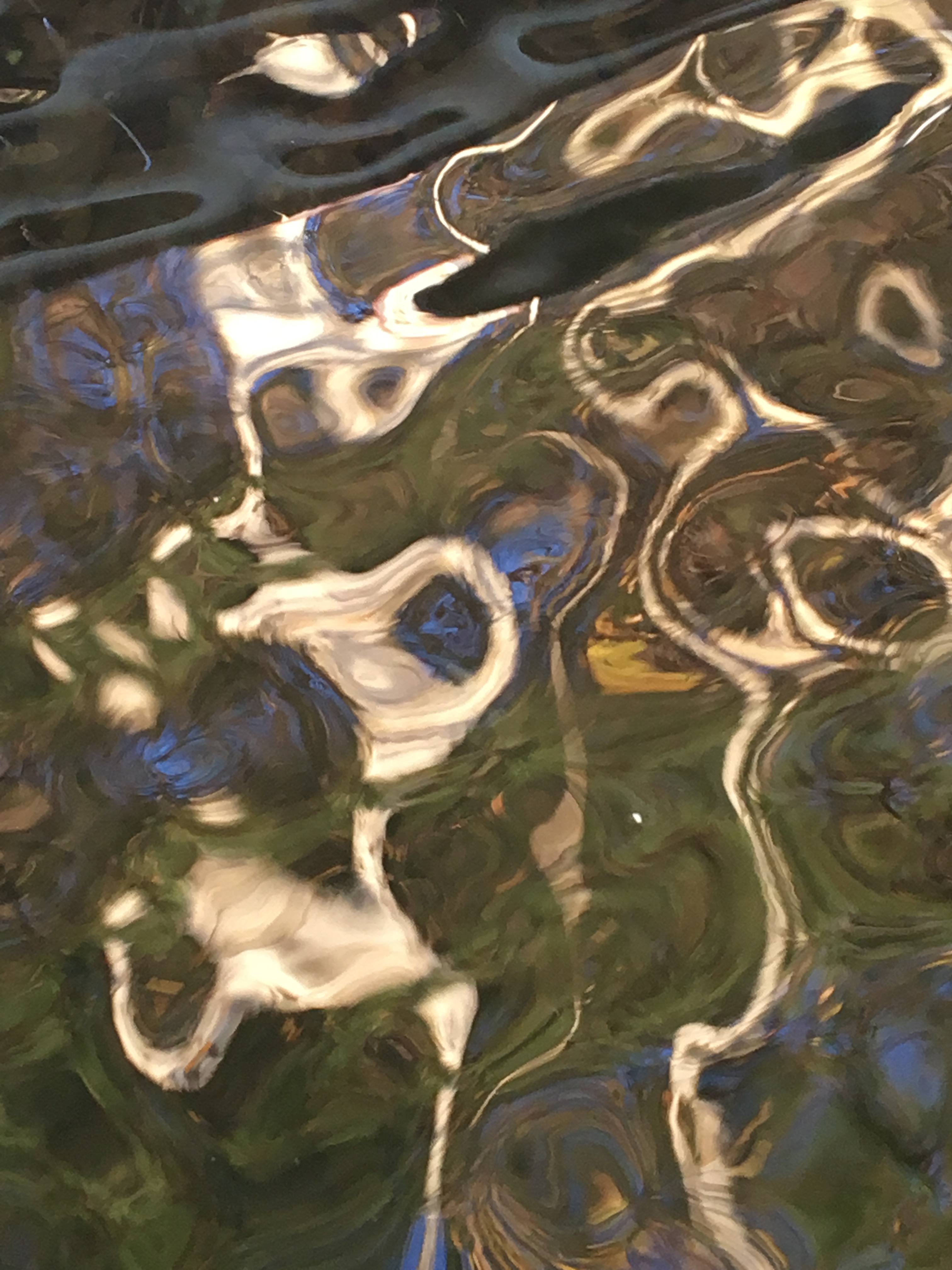
Kerri knelt on the dock to get this photograph of the water. “The color!” she gasped. Pull up an image of “The Kiss” – or any of Klimt’s paintings for a closer inspection and you’ll see this water pattern. Klimt might have painted it. He studied swirls in water, swimming color on the reflection of the surface. I’m certain of it.

Great love. Great adventure. Tom. Julia. Paul. Art that is pure. My head spins. There is no place in the human heart that art cannot reach.

read Kerri’s blog post about WATER

images of water © kerri sherwood 2021

Hold A Greater Space [on Merely A Thought Monday]

The sun was setting as we drove away from the memorial service. A celebration of life. We were quiet, lost in our thoughts. “I don’t know if I’ve ever before been to a celebration of life where I LEARNED something about life,” Kerri said. I was thinking the exact same thing. I’d just received a master class on how to live a good life. I just learned about the untenable nature of love.

It was Nancy’s service. Her husband of many years spoke. Her daughters spoke. Her stepchildren sang and read poetry. She was a longtime member of the church so the pastor told stories about her. The service was alive with laughter and with tears. Both. People applauded at the end of the slideshow, a photographic journey of a life that began in 1933.

We are inundated with notions that ‘the good life” should have no pain. It should be above hardship. Nancy’s life did not support that half-narrative. She experienced canyons of loss. As her daughter said, “She could have become hardened and bitter.” But, she didn’t. She didn’t ignore her pain or deny it, she allowed it. It was part of the color of her life. She did as the Buddhists recommend: joyfully participated in the sorrows of the world. She participated. She chose. She decided. She created.

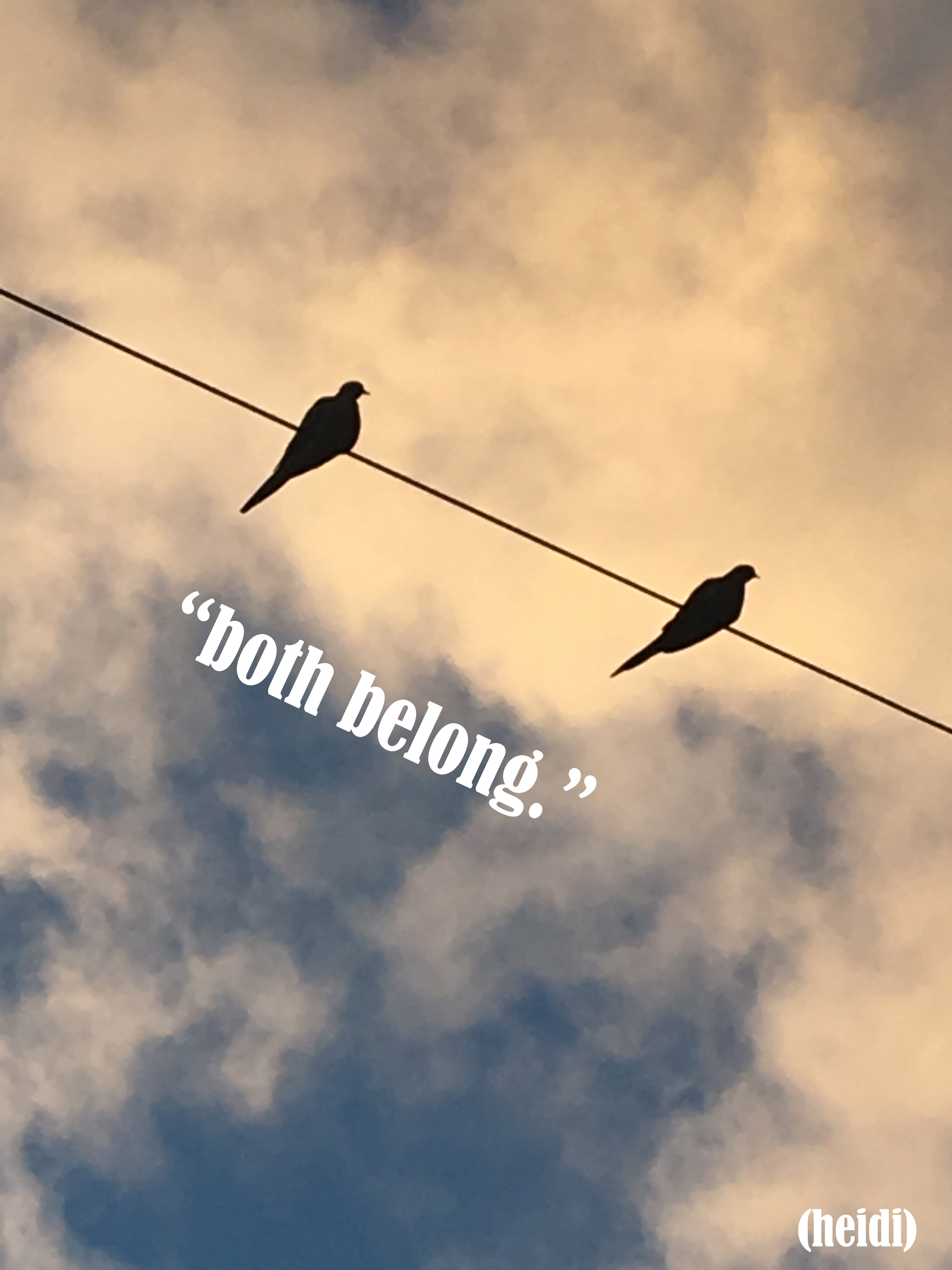
She surrounded herself with flowers and loved her garden. She made her table a magnet for family and friends. She did not sit and complain, she had no time for woe-is-me. She found opportunities to give and engage. Story after story of a woman, even in the heat of cancer, while awaiting the results of the latest scans that would determine the number of days she would have on earth, turned trips to the doctor into opportunities to shop with her daughters. Lunches. Expeditions to a beloved bakery. Create the extraordinary in the simple moment, regardless of the circumstance. We heard again and again these companion phrases, “She chose love.” The pain and the love, “Both belong,” Heidi said.

In an intentional life, one does not negate the other. Tragedy and triumph. Devastation and joy. It’s a decision. Where we focus will determine our experience of life. Nancy stood in her pain and uncertainty; she had every opportunity to become bitter. Instead, she focused on love. She created it. Nurtured it. Grew it. Offered it. She didn’t deny her pain. She held space for it in a greater container.

It was apparent in the laughter evoked in the stories told, it was apparent in the generosity of the service we experienced. This was not a Hallmark movie. It was a celebration of a life of texture, of impossible mountains to climb and of enormous blessings. It was the lesson Nancy lived because it was woven through every story told about her. “It’s what she taught me,” Heidi said, “Both belong.”

read Kerri’s blog post about BOTH BELONG

Decide To See [on Merely A Thought Monday]

My thoughts while watching the wedding:

Oprah asked Gary Zukav this question: Where is soul? His response: Where is it not?

Exchange the word ‘love’ for the word ‘soul.’ Where is love? Where is it not?

In the English language, words like ‘love’ and ‘soul’ are nouns. Things. And, things must have limits. It is a remarkable misunderstanding, a miracle of minimization. Love, the single hardest ‘thing’ to define, in fact, impossible to define, is undefinable because it is without limit. The best we can do is point toward love-made-visible. A newborn in the arms of its mother. The moment the couple, standing before their community, stares into each other’s eyes and promises, “I do.” Watching a sunrise on an anniversary. A mother dancing with her son, the groom.

Love is. Where is it not? That means, of course, that it is “in” everything, everywhere. The air we breathe. The thoughts we think. The actions we take, big and small. It is in how we treat our neighbors. In how we see ourselves. In how we report our news. In how we tell our lies and our truths. Love is.

It is the province of no-single-religion. In fact, it is where every religion on earth goes off the rails. To claim to be “the way” or “the one true…” is to attempt dominion over love. To place rules and boundaries on the boundless.

The question Oprah didn’t ask: if it is everywhere, in everything, in war and in peace, hate and acceptance, does it have any meaning at all? If it is ubiquitous, unchangeable and indescribable, why bother? Gary’s answer, I imagine, would be something like this: we choose the form we give to our love, do we not? We can choose to put the accent on unity. We can choose to put the accent on separation. Love is. We can choose to put the accent on division or we can choose to offer our support.

There is never more or less love. Isn’t that the point? Love is beyond definition. What changes is not the love or the amount of love. What changes is what we decide to see. What changes is how we decide to see, especially how we decide to see ourselves in this world with so many “others.”

read Kerri’s blog post about JUST LOVE

Make Life Better [on Merely A Thought Monday]

Lately, the universe has pitched me headlong into a master class on efficiency. Maximum productivity with minimum wasted effort. A useful concept in certain arenas and an intensely destructive concept in others. For a person who’s spent his life in a study of curiosity, art, and the creative, it’s an unexpected study at this stage of the game. It is sometimes uncomfortable but I consider it an opportunity for balance. Artists rarely meditate on efficiencies. We’re more of a discovery clan and efficiency is generally the enemy of discovery. No one ever sailed to the edge of the world with efficiency-on-their-lips.

Once, I made the argument to a school board that daydreaming was highly productive. It seems a no-brainer to me that exercising the imagination should be highly valued in a learning environment. Einstein’s Theory of Relativity came to him in a dream about cows. It is not an accident that many insights and revelations come in the shower or while driving or peeling a carrot. Newton’s apple did not fall on his head while he was exercising maximum productivity. The mind, to be efficient, needs space to breathe, fields to roam. It is the most elegant of paradoxes but mostly lost on worshipers at the altar of efficiency. In the modern business world, efficiency is all about time since time is billable. You know the mantra: time is money. Do more with less. Somehow, we’ve turned that nonsense into a virtue, a thing to be desired. A reason to squeeze.

There’s another, more admirable side to efficiency-seekers. How to make work less arduous. Grease the wheels and remove the friction. Relieve the burden. Not faster but easier. Ann used to say, “Find a need and fill it.” She’d look at people toiling and ask, “How can I ease their struggle?” Beaky was that way, too.

Near our home there is a stretch of shoreline with an ineffective seawall. It was built with stones and debris that become projectiles when hit by forceful waves. The locals know to avoid that stretch during a storm. It’s deadly. After the storm, it has become our ritual to walk the path to see the destruction. It’s always impressive. How far can a wave throw a heavy stone? The answer: farther than you think. Mother Nature yawns when we think we can control her. The seawall has become my metaphor for human hubris but also masterful inefficiency. It would cost money to build a proper wall. So, instead, after each storm, crews collect the rocks and pile them back on the shore, readying them to be hurled by the next storm.

We saw a double-rainbow and turned toward the shore. Kerri never misses an opportunity to capture a little miracle or a slice of beauty. We parked in front of the seawall-of-inefficiency and I laughed out loud. A budding Banksy sprayed a message on the rubble: love. The secret message-maker could not have found a more appropriate word: Love. Can you imagine anything more inefficient and, at the same time, more potent? Love moves mountains but is not billable. It transcends time. What better reason to do anything? Well, perhaps reason has nothing to do with it and never has. Reason has the worshipers-of-the-efficient perpetually re-stacking stones.

It’s easy to be seduced but let’s face it, life reduced to billable hours is not life at all. On the other hand, there is nothing more inspiring, nothing more curiosity-invoking than asking, “How can I make life better for everyone?”

Love on a rubble pile. What could be better? On second thought, what could possibly be more efficient?

read Kerri’s blog post about LOVE ON A ROCK

Refresh [on Two Artists Tuesday]

It’s been true since we met. People stop us in airports and on the street, they give us thumbs up or take a faux paparazzi-photograph. They tell us that we are cute or “lookin’ good!” Once, a shopkeeper came out of his store to tell us that we made him smile. When we walk the neighborhood, we are often met with people who tell us that we make their day. It always takes us by surprise and it always makes us smile.

What are people seeing? We are older and link arms when we walk. We hold hands. Our clothes are unintentionally the same. Black on blue jeans. We walk slowly. We talk to each other. We stroll; a walk without a destination. We don’t know what inspires the comments but always appreciate them.

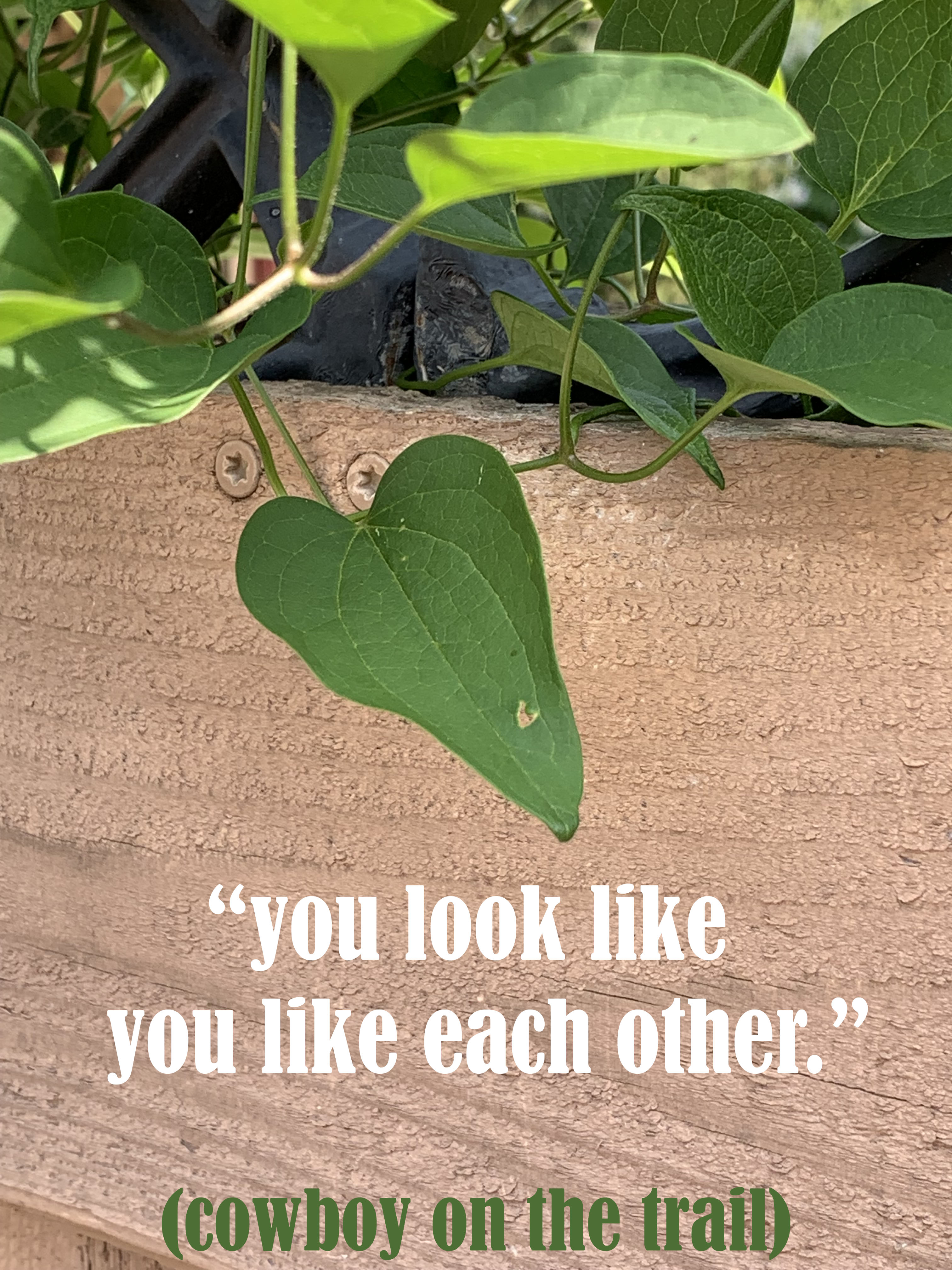
Kerri always coos when she sees a horse. In our imaginary life, she has horses, a donkey, and an old truck. We were walking on the trail in our flip flops (that always gets a raised eyebrow or two) when the cowboy came around the bend. “A horse!” Kerri whispered, and squeezed my arm. The cowboy sat up in his saddle, nodded as he rode passed, then said, “You look like you like each other.”

“We do.” I replied.

Perhaps it is that simple. We like each other.

We’re fortunate. Our work allows us to be together all day. Every day. That would, I’m sure, be the end of most relationships. We like it. When I need feedback on a painting, she is my best wise-eyes. “What do you see?” I ask. We read our posts to each other before we publish. We edit together. We cook together. We create together. Our list of joint projects is growing. Lately, our once-weekly-cartoon about…well…us, Smack-dab., is giving us tremendous energy. It is fun. We poke fun at ourselves. We capture the ridiculous and the poignant. We pay attention to the marvels of simple relationship.

Picasso said that, “Love is the greatest refreshment in life.” He also said that, “Art is the elimination of the unnecessary.” Those thoughts, placed side-by-side, I believe, holds the reason a cowboy sat up in his saddle and a shopkeeper ran into the street. We are refreshed. We practice the elimination of the unnecessary – on canvas, at the piano, and in life.

We didn’t try to make 24/7 togetherness. There was no rule or expectation. It’s what we wanted. It’s what we want.

I am on jury duty this week and was at the courthouse most of the day. When she came to fetch me I got in the car and we said at the same time, “That was weird!”

“Tell me everything!” she said.

“No. You first! What did you and Dogga do?” Our conversation took us deep into the night. There’s so much life and so little time. Perhaps that’s it. We know this day is precious and fleeting and act accordingly. It must show.

read Kerri’s blog post about YOU MUST LIKE EACH OTHER

Prove It [on Merely A Thought Monday]

I am about to prove that I am guilty of everything I accuse others of being. I am just as capable of surrounding myself with like-minded people as the next person. Let me explain:

I cheered when I read Marc’s response in the conversation chain. It was an appeal, an attempt to puncture a dedicated delusion, an untethered ideology. But, as is always the case when fantasy is met with fact, the holder of the fantasy vehemently defended and further retreated into their illusion. Confirmation bias.

Among my favorite phrases this week comes from a New Yorker article, Why Facts Don’t Change Our Minds. The phrase: the illusion of explanatory depth. Here are two quotes from the article:

“People believe that they know more than they actually do. What allows us to persist in this belief is other people.” In other words, we ally with people who hold a similar belief rooted in the same lack-of-knowledge. Apparently, as a species, we’d rather be reinforced in our ignorance than consider the possibility that we don’t know what we are talking about. Purple Kool-Aid is easier to drink than wondering if what we’re being told may or may not be truth. It explains the current GOP, Fox News, OAN, Ron Johnson, and the rest of the dangerous-national-clown-car.

Quote number 2: “As a rule, strong feelings about issues do not emerge from deep understanding.”

Strong feelings. Deep understanding.

In the canon of human self-aggrandizement, we delight in the narrative that we are primarily rational, that our reason, like a good border collie, has driven our emotions into safe containment. The opposite seems to be the case. Or, at best, we are a mass of contradictions.

There is a flip-side, a necessity woven into our contradiction that gives me hope. Strong feelings and deep understanding are not natural enemies and need not be pitted against each other. Think of it this way, no firefighter, in his or her right mind, would run into a burning building to save a life, if we were as rational and reasonable as we like to believe. They do, however, study fires beforehand to know how to run in, how to reach. They study the science. For every exploiter there is a matching story of a giver, someone whose strong feelings combines with their deep understanding in an effort to better the world, save a life, make things easier.

That which makes us crazy also makes us compassionate. How’s that for a statement of contradiction? Families fight each other until the forest fire threatens their house. Common cause and education are a great poppers of confirmation bias.

Some fires are manufactured with the sole purpose of exploiting confirmation bias. This kind of exploitation is dependent upon – and feeds upon – strong feelings with shallow roots in understanding. Ignorance. The big lie. Vaccine misinformation. Divide and conquer is always reliant on strong feelings intended to create blindness.

Some fires are real. And, the test of a real fire: divisions fall, eyes open, and people run toward the flames to help other people. It remains to be seen how hot and close the flames need to come before the confirmation bias burns off and we realize that we’re in real trouble, that science is real, and that the big trough of purple (red) kool-aid being proffered is doing the opposite of what it professes to do.

It may be in our nature to believe that we know more than we do, but, it is also in our nature, without concern or thought for our own safety, to reach for the drowning person. Deep understanding allies with strong feelings when people cared enough to learn how to reach, how not to become the person drowned by the drowning person.

Do you see it? I am an idealist. I want to believe in the goodness of humanity and the necessity of shared truth. Yet, despite powerful evidence to the contrary, I hold fast to my dedicated belief that we are capable of tipping toward love rather than falling toward hate, that, when faced with undeniable data, that we are capable of questioning our strong feelings en route to a deeper, shared understanding. We are capable of recognizing that the science that brought us the cell phone, satellites, allergy medicine, and electric light is the same science that brings us the data of climate change, and the best way to beat this pandemic. Cherry picking belief in science is…absurd and currently dangerous. Cherry picking news is equally as absurd and currently dangerous. From my idealistic mind, it is a necessity to ask questions, check sources, doubt belief.

We are certainly capable of knowing the real fires from the those fanned by the thought-arsonists. We are capable of questioning, of suspending our delusions. At least, I like to believe that we are. I, like you, surround myself with like-minded believers.

We’ve proven it again and again and again. When we recognize that the fire is real, our dedicated illusions burn the filters from our eyes, we transcend our little stories, and reach our hands with no thought of political alliance or other exploitative non-sense, to help dig our neighbors from the rubble.

read Kerri’s blog post about BASIC LOGICAL REASONING