Go Glacial [David’s blog on Not So Flawed Wednesday]

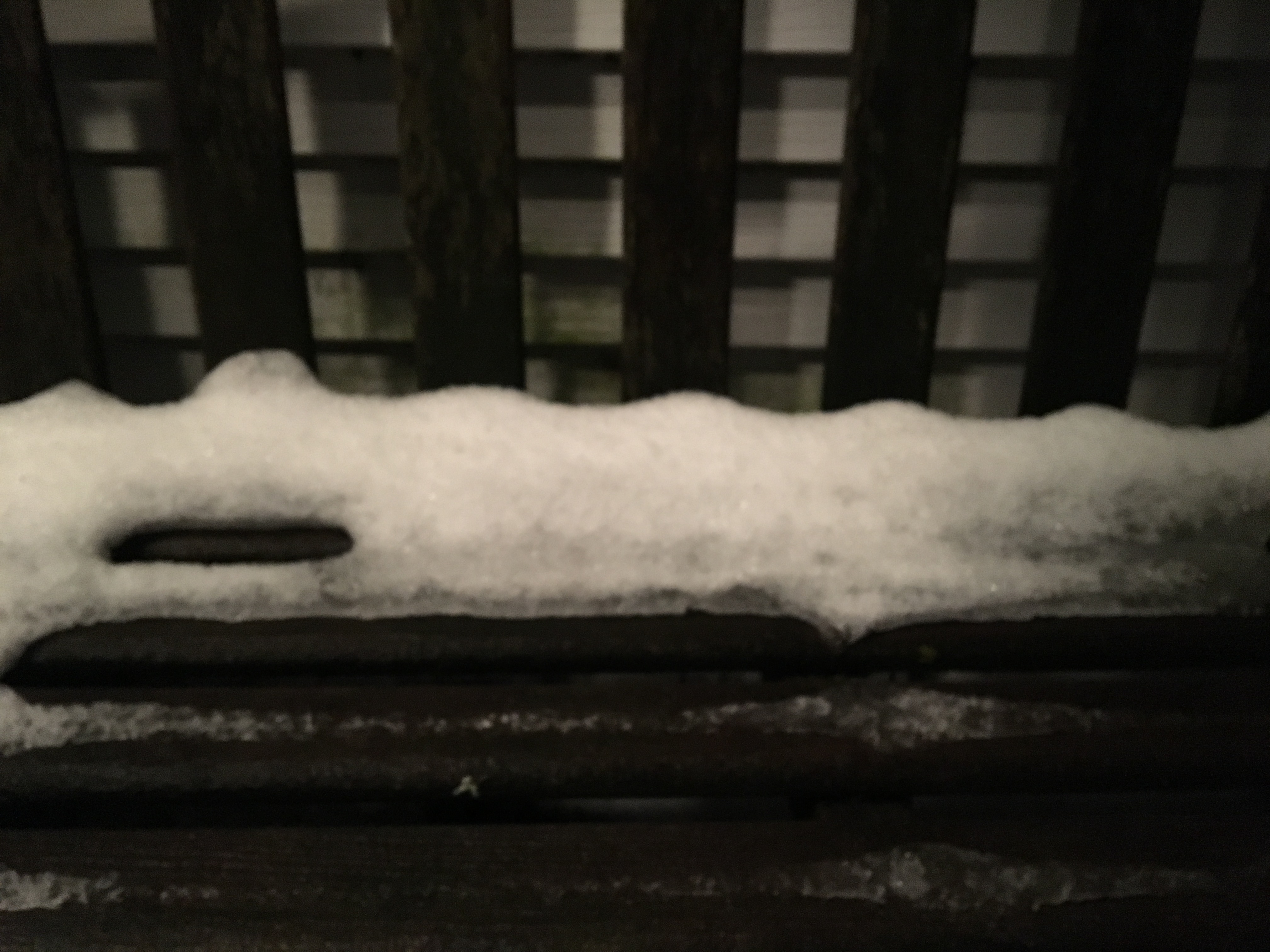
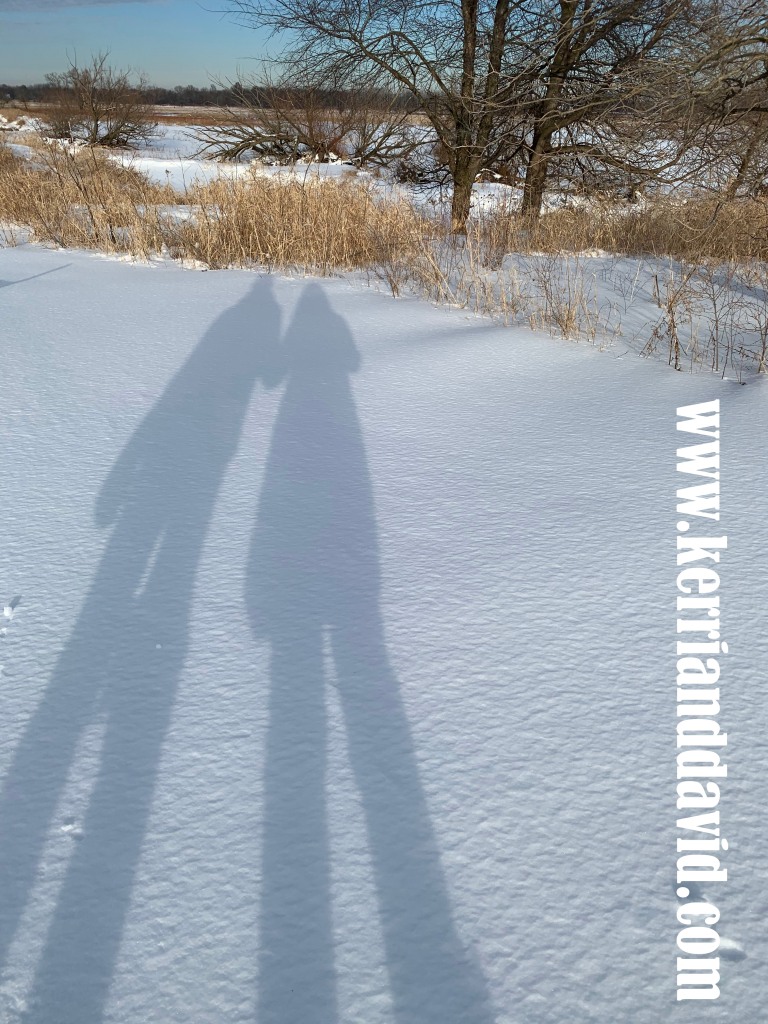
The rain has washed away the snow. Our world this week is cold and damp. Our backyard is part lake, part mud pit. We’re feeling the lack of fresh air, the need to get out onto a trail. We’ve been housebound too long. Later today we’ll bundle up against the rain and walk the neighborhood. We’ll skirt the lake. We will breathe. We won’t be in a hurry to arrive anywhere.

The winter has always been good for slowing down. It’s not advisable to race to-and-fro on icy roads. It’s contrary to the message of the machine. The rule of more/faster.

During these past several months I have learned something about myself. I’ve been working on a new play though I’ve only had a few hours a week to dedicate to its development. The work has been glacially slow. In old times, in colder climates, people used to keep their water running a trickle so their pipes didn’t freeze and burst. I started writing this play for much the same reason: to keep my creative energy flowing so my pipes didn’t burst. I had no other expectation beyond keeping the channel open through this time of freeze. Much to my surprise, glacial is a great process for me. This play is good. I’m coming to believe that most of the really bad playwriting that I’ve done in the past – most of the atrocious painting – is the result of working too fast. And, now that I think about it, most of the pieces I am most proud of took years to mature. The Lost Boy took over a decade – and multiple iterations – to finally find the stage.

Last night as I lay awake listening to the rain patter against the window, I had a wild idea. What if…?

And, what if my wild “What if…?” was not a complete idea, a fully formed god jumping from my brain, but merely the tiny thought-spark that starts my ice age rolling? A little bit of light calling for my attention. I’ll let this one simmer for a spell. In the meantime, I have a walk to enjoy, some air to breathe.

read Kerri’s blogpost about RAIN IN WINTER

share. like. comment. support…thank you.

buymeacoffee is a trickle of energy capable of keeping the pipes from bursting.

Grok The Rule [David’s blog on Two Artists Tuesday]

“A good poem looks life straight in the face, unflinching, sincere, equal to revelation through loss or gain.” ~ David Whyte

A good rule of thumb in the visual arts: areas of high contrast, in color-or-value, come forward while areas of low contrast retreat. Landscape painters use this rule to create the illusion of foreground and distance. Abstract painters use this rule to move the eye around a composition.

Storytellers and poets use the same rule. High contrast creates interest. It grabs attention. Low contrast sets the environment, the mood. “Some kind of relaxed and beautiful thing/ kept flickering in with the tide/ and looking around./ Black as a fisherman’s boot, with a white belly…” Dogfish by Mary Oliver.

Misused, it’s the rule-behind-the-reason that most of our news is “Breaking News!” False contrast. Hype. It’s the reason our national portrait is continually painted as divisive. High contrast pulls focus. The money follows the ratings so attention-grabbing is highly prized. Low contrast – like agreement, collaboration, sameness, community…truth – doesn’t generate the same level of interest or income.

Like all rules, there are worthy reasons to wield them. In the arts, the contrast principle is used to illuminate unity. To break an individual through to the experience of something bigger. To open questions. In our news-of-the-day, the rule is used to whistle a song-and-dance of discord and distraction. To separate into tribes. To manufacture the illusion of depth while sitting in shallow water.

The reasons to wield the rule are diametrically opposed.

It was a sad day when the young man, standing in our living room, told me that he would educate his child at home. His reason? He didn’t want his son to be stuffed with ideas. “Just the facts,” he said. “Just the facts.”

“Poor souls,” I thought of this man and his young child. How will they ever stare into the fiery face of democracy – an ongoing idea born of high contrast and wild ideas – the artistic kind, meant to bring people together in one nation under every possible god – like a poem. They won’t recognize democracy’s death when without question it slips like ashes through the fact of their fingers.

As for me, I’ll stick with the high and low contrast of Rumi, MLK, Shakespeare, Kahlil Gibran, Mary Oliver, Maya Angelou…

“Your task is not to seek for love, but merely to seek and find all the barriers within yourself that you have built against it.” ~ Rumi

[another worthy rule of thumb: never read the headlines prior to writing a post. All the icky-mush rushes to the foreground and permeates my brain]

read Kerri’s blogpost about FOG

like. share. support. comment. let us know you are out there.


buymeacoffee is a counterintuitive, highly appreciated, offering of support amidst a high contrast environment that keeps the artists among us hopping and hoping.

Consider The Landscape [David’s blog on DR Thursday]

“We are a landscape of all we have seen.” Isamu Noguchi

In my landscape of life, there is a mountaintop at sunrise. There is a nurse shark hiding in the coral. There is a boat with orca whales breaking on all sides. There is leap of faith after leap of faith after leap of faith. There are betrayals and loyalty. Lightning strikes and earthquakes. There are stages and audiences. Two times living under martial law. Revelations and reckonings. Leaves rustling. A white dog and a black dog with amber eyes. Fresh baked bread and hot coffee. Visits to the past. Fingers stinging with cold so near to frost bite. Shame and embarrassment. Triumph and encouragement. Near starvation and too-much-food. Friends suddenly appearing from nowhere and friends suddenly disappearing into the same nowhere. There is unbridled hope. There is a wasteland of despair. There is cursing the heavens and genuine thanksgiving. So many empty attempts at being clever. So much reinforcement of the fullness of my ordinary. There are so many yesterdays that blur and wash together, a raging river.

There is one today. A single now.

Certainly there is landscape enough to fill a thousand canvases with childlike play. There is enough to fill a million million pages with wonder. Cicadas and sunsets. The smell of fresh basil. To sculpt with words ideas that may or may not help others see the fullness of their unique landscape and how infinitely conjoined it is with mine.

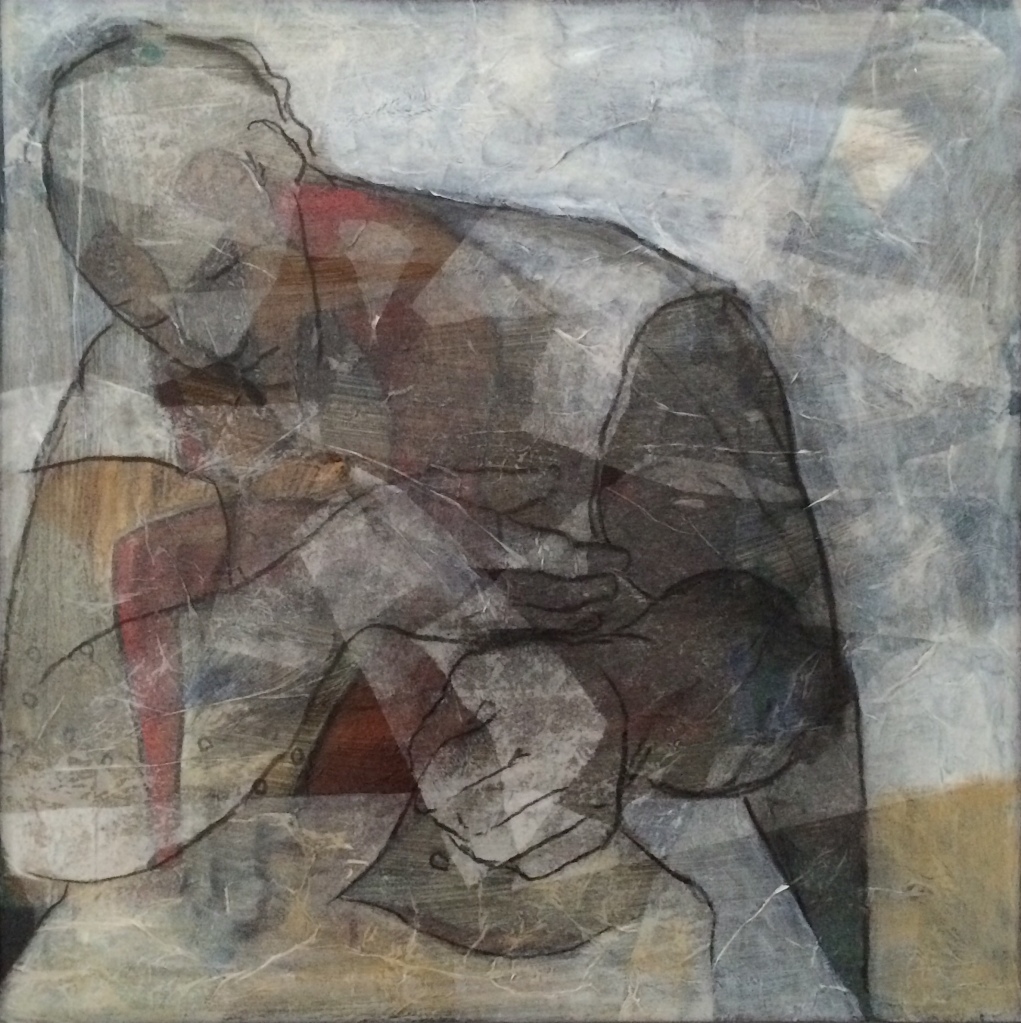
pax, 24x24IN, mixed media on panel

read Kerri’s blogpost about THE BOWL

like. share. support. comment. happy thanksgiving.

buymeacoffee is a landscape of opportunities to support the work of the artists you appreciate.

Follow The Popcorn Trail [on DR Thursday]

More than a decade and a half ago, a friend, a mystic, gave me a short-hand for my ikigai, my life-purpose. We were having a casual conversation when she got that look in her eyes. Nodding to some whispering voice I could not hear, she turned to me and said that she saw no career for me. Mine to do, my job, had (has) three aspects: to express what is true, to reach people through their hearts, to help them to believe (in themselves).

I confess to being a bit distraught at the “no career” part of her message. “What about my career as an artist?!” I wanted to protest but kept my panic to myself. I wanted her to ask the future a surprisingly pertinent question: In the absence of a career, how will I make a living? I kept that question to myself, too. I knew what she was telling me was true. Apparently I will bushwhack my way through life to the very end.

I thought about our conversation, her message to me, this morning while staring at Kerri’s photograph of green teasel. Staring at our prompts I never know what will pop into my mind. I never know what popcorn trail I will follow when we sit down to write. I am constantly surprised by the memory or idea that reveals itself. It’s akin to consulting the oracle: Why did this memory flood my heart and overtake my mind while staring at green teasel? It’s why I love writing our posts: the cultivation of surprise.

Looking back I have to admit that the whispering voice was spot on. When we write – and we write together every day – my hope is to reach people through their hearts. We laugh because I am much more “heady” in my writing than Kerri, who is all heart. Perhaps the whispering voice saw clearly our daily dedication to writing. Expressing my truth in word and image. It is the singular constant in my otherwise seemingly incoherent passage.

Wild teasel is a medicinal plant. In an age before modern medicine I would have sought it to treat my Lyme Disease. It’s an anti-inflammatory so I’d make a tincture to help my aching joints. I’d be filled with the wisdom of self-healing, connected to and grateful for the plants that surround me.

Perhaps that is why wild teasel inspired a memory of my mystic friend? An oracle. Nature’s healing. The sagacity of hindsight. Grateful for the wisdom and good hearts that surround me. The willingness to follow the popcorn trail, especially when it makes absolutely no sense, but knowing in my bones that it will lead to a delightful surprise: a memory of Ikigai revealed. A worthy life-purpose that can only be found in giving your gift to others.

read Kerri’s blogpost about TEASEL

like. share. support. comment. thanks!

Find The Hidden Message [on Two Artists Tuesday]

This morning, while the storm raged outside, thunder and wind shaking the house and dumping buckets of rain, I worked on my website. More specifically, I added a visual resume to our melange site. It’s a map of an artist taking his artistry into the marble halls of organizations…

In the past six months I’ve had several resume reviews. Advice from experts. Suggestions from friends. Modification upon modification akin to rearranging deck chairs on the Titanic. This mixmaster of my work history has had one incredible silver lining: I’ve had the opportunity to revisit every era of my career, the passions that drove my choices, the curiosity that necessitated stepping off the edge. In essence, so much thorough review and conversation has illuminated for me a through-line of my life-in-work.

My primary actions? I scatter ideas on the wind. Tom used to say, “You Johnny Appleseed-ed your way across the district.” I’m a consummate cross-pollinator: concepts from the stage introduced to the boardroom. And vice versa. But this most of all: I began this life with so little faith in myself that, over time, I became adept at guiding people to their self-belief; something I had to do for myself so I knew the path. I know the path well. It leads to center.

In the past I’ve been hyper-critical of my choices. They’ve often been less-than-lucrative, made from a different criteria – and have left me vulnerable. Now, from my view in the crows nest, looking back at where I’ve come from, I delight in my journey. To some it looks like the drunken path of a butterfly. To me it’s been a dedication to bringing my gift to the place where it was most needed. I followed the call. Every time. I continue to follow it. Following a calling rarely makes resume-sense.

Last week I wrote about sailing toward the horizon with the knowledge that your questions will only bring more questions, that masterpieces are made by sailing into unknown territory. And, if you are lucky, you’ll come to realize that what’s just over the horizon is more horizon. More curiosity. More experiences. More discoveries. More vital life.

This is the message hidden in my resume: I am unbelievably lucky.

read Kerri’s blogpost about THISTLE

like. share. support. comment. thank you.

Make It Visible [on Two Artists Tuesday]

“I believe that the very process of looking can make a thing beautiful.” ~ David Hockney

Sometimes I look at a blank canvas and see a composition. My job is to follow the image. To make it visible.

Sometimes I have an idea and I bring it to the canvas. My job is to explore the idea. To make it visible.

It’s a chicken-and-the-egg conundrum. What comes first? When I look at the peony do I see beauty or do I bring beauty to what I see? Is beauty a decision?

“Good-God!” I hear Kerri’s inner monologue-commentary on my too-ponderous questions. “Get out of your head! Smell the peonies!”

I wish I could. What happens when it’s not a peony that I see but my neighbor? Or someone whose worship is strange to me? Or someone with a different opinion?

Sometimes I look at a blank canvas. Sometimes I have an idea that I bring to it. Sometimes my job is to follow the image. Sometimes my job is to explore the idea.

The tricky part of language is that the biases are unseen. For instance, in English, the emphasis falls on the noun: me. Canvas. It implies the two are separate. Distinct. It obscures the relationship between. Connectivity is relegated to the basement, a lower status or obscured to the point of nonexistence. It fosters a philosophical orientation of…”it happens to me.”

Connectivity, once seen, once understood, requires us to recognize our responsibility for what we see. Our participation in the dance of creating what we see. In what we bring to “it”. What, exactly, do we wish to make visible?

read Kerri’s blogpost about the PEONY

Creative Think [on Merely A Thought Monday]

The truth is that I could talk with MM all day. Our calls are few and far between but it always feels as if we’re picking up a conversation from yesterday. His perspective on life is vast, deeply rooted like an oak tree, yet simple enough to play on a banjo. As per usual, he left me with a head-full-of-thoughts-to-think.

One of the thought-rocks he dropped on my head was this: we’ve lost touch with our connection to the humanities. And, we’ve lost that connection, not by accident, but through reckless intention. Years ago I was wide-eyed with disbelief when the local school system stripped history and the humanities from their course offerings to make more room for STEM; science, technology, engineering and math. “Short-sighted and fundamentally stupid,” I said to no one listening. Art was long gone. Music was nowhere to be found.

It’s hard to measure the real worth of the humanities on a test so it was sailed off the edge-of-the-curriculum-world. What , exactly, is the value of kindness, the worth of considering others, the merit of empathy and understanding interconnectivity? How important is it to know where you come from? The origin and cycles of knowledge and the grand mistakes of the past? What might be your intellectual lineage, your moral ancestry? How important is it to consider opposing ideas, to recognize there are many ways of seeing a single event? What happened the last time an out-of-control authoritarian impulse attempted to quash a diversity of opinion? How worthwhile might it be to understand that democracy is nothing more or less than an idea about how humans might create community together? It is not a given. It is not a fact. It is an ongoing relationship. The province of the humanities.

The operative word is “together.”

I laughed aloud the day after my call with MM. Two articles crossed my screen. Because I’m searching for jobs I’m paying attention to articles like The Ten Most Important Skills For Workers. You’ll not be surprised to learn that analytical thinking currently tops the chart but the king is about to be unseated by a new/old champion: creative thinking. Also rising in the top ten are “curiosity and lifelong learning” and “motivation and self-awareness” Of course, “unmotivated and unconscious” have probably never topped the list of desirable skills…though most factory work – and varieties of corporate work – generally produce those qualities in previously motivated human beings.

[I take a moment of silence to recount the multiple times I have, in my life, been told I was un-hire-able because I was too creative. “You’ll see how to improve things and want to make changes,” a manager famously told me. “My job,” he said, “is to keep that from happening. To maintain the status quo.” In another famous jaw-dropping moment, a potential employer told me I was not an attractive hire because I was educated so, “I would want things.”]. A cautionary tale to all those who currently fear exposure to ideas and the other purported horrors of the humanities and a fully educated mind.

Educated = curious = questioning. It’s simple.

Listen to Sir Ken Robinson ask a still-relevant question about whether or not our schools kill creativity. Killing creativity is the same as killing the humanities. Killing our humanity.

Ultimately the horse race between the analytical and the creative is itself symptom of the schooled ignorance. They are not really separate things. The right brain and left brain are only detached for the sake of study and discourse. They are ends of a spectrum and one cannot exist without the other. Like science and art: both are concerned with dancing to the beating heart and movement of the universe. They are two ways of walking at the yet-unknown. They are not oppositional.

Another quote from MM roared into my mind: if you ignore 100,000 years of human evolution, you might-could just miss the fundamentals.

It’s consilience. The unity of knowledge. The whole system. Heart and brain and gut. That’s the loop that MM and I regularly travel. We circle out and return once again to E.O. Wilson.

“One day we’ll figure it out,” posits MM. It’s another reason I adore our conversations: with his tongue firmly planted in his cheek, he is, all the same, infinitely hope-full.

read Kerri’s blogpost about CREATIVE THINKING

like? share? comment? coffee? (QR or link) all are greatly appreciated.

Release The Seeds [on KS Friday]

“Creative people are driven to periodic symbolic self-annihilation and rebirth, much like the mythic phoenix.” ~ Alex Grey, The Mission of Art

I loaded my truck with my paintings. I drove to the beach where there were large fire-pits. I burned the paintings, bonfire style. I had so many paintings that it took three days, three truckloads, three successive nights. People helped, strangers who held vigil for me. Only one tried to talk me out of it.

Those nights on the beach were over 20 years ago. All along I’ve understood the conflagration. What I only now understand is the necessity of fire to release the seeds. Not just one seed, but hundreds. Thousands. And not all the seeds found rich soil. Only a few. And, once rooted, most of the seedlings were trampled, overshadowed or eaten. They never made it to the sun.

But the one seed, the single seed, released in fire, without will, intention or knowledge; the fortunate seed, flung into the air by heat and flame, caught the wind at just the right moment and fell to the earth haphazardly in an opportune spot. It took root. It drank in the sun. It survived the hungry deer nibbling close-by. And over decades, through harsh winter and sunny drought, it slowly, ever-so-slowly, grew.

A thousand seeds. One strong tree. New cones, loaded with millions of seeds. Ideas ripe for the wind.

A cycle that cannot be rushed. Each loop, lovingly and faith-full, takes time.

Kerri’s albums are available on iTunes and streaming on Pandora

read Kerri’s blogpost about SEEDS

part of the wind/blueprint for my soul © 1997 kerri sherwood

Study The Studier [on DR Thursday]

I study the studier. She kneels, excited to capture the winter face of plants along the trail. It’s as if they call to her.

Where does it start? An idea. Broad and generic. Spontaneous. Studied.

For months I watched her take photos of the train through the trees. “Here it comes!” she’d laugh and pull her phone from her pocket, running to get the best spot on the trail. Each time as excited as the first. I took photos of her taking photos of the train snaking just beyond the trees.

Mostly she shoots close-up photographs. Spontaneous. She has an eye for detail. She helps me see what I overlook. I have an eye for the big picture, the metaphoric. I study. Pie-in-the-sky.

I think she would have been great pals with Georgia O’Keeffe. They’d have compared notes on the magic world of minutia. The dried flowers, the pattern in the petal. The amazing textures and vibrant winter colors. Some people see only brown. Kerri sees subtle changes, ochre, cream and an array of umber. A universe full of color. Just like Georgia.

This is where my studied painting started:

underpainting: train through trees.

Originally I intended to use a long canvas. The composition-in-my-mind was different, more spatially accommodating of the train. I was going to paint over something I didn’t like but she flung herself between me and the doomed painting, like the angel rescuing Isaac from Abraham’s knife. Needless to say, I shifted my composition. I had another canvas. Large and almost square.

It had been awhile since I attempted a larger painting so I made one rule: I had to have fun. Master Miller sent some cool tools for me to try. They are like large rubber scrappers and brushes. After a hiatus I have a tendency to go to detail too soon so I used his gifts to keep my strokes broad and light hearted.

Okay, I made two rules: I painted in 45 minute sessions. I generally have a 3 hour necessity but the realities of our circumstance make that dedication of time difficult. I start Dan Fogelberg’s album, Captured Angel, and when the last note is sung, I stop. I clean my brushes. It was a great way to stir my process-pot. It was frustrating and liberating at the same time.

This is where it may end. This painting has traveled a long way. Soon, I’ll turn it to the wall. I need to forget about it and will someday see it with fresh eyes. Right now, in a festival of irony, all I can see is the detail so I asked Kerri to come into the studio. Blinded by minutia I needed her wise eyes to tell me what she sees. Globally. The studier becomes the study. A perfect circle.

Train Through Trees, 48x49IN, mixed media

I’m slow-stepping into my new site. The construction continues…

read Kerri’s blogpost about DETAIL

train through trees © 2023 david robinson

Move The Eye [on Two Artists Tuesday]

“If you think good work is somehow synonymous with perfect work, you are headed for big trouble. Art is human; error is human; ergo, art is error.” ~ Art & Fear, David Bayles & Ted Orland

The winterberries came as a shock. Vibrant red pops in a bleak landscape of brown and grey. “They look like maraschino cherries!” Kerri laughed as she waded into the brush to get a photograph. In Wisconsin, the mere mention of maraschino cherries invokes immediate and widespread mixing of brandy old-fashioneds. Even though it was early in the day, I imagine people for miles around sensed the invocation and sprang toward their liquor cabinets.

“Sour or sweet?’ I asked, trying to be clever, but she was too engrossed in her photograph to hear my quip.

Watching her crouch to capture the shot, I thought, “Red makes the eye move.” It’s a lesson I learned beyond the abstract and used in my narrative paintings – a series that I’ve had on the back burner for ages. Limit the palette, move the eye with winterberry red. It’s a director’s thought. Guide the eye. It’s a playwright’s plot; tell the story through the anomaly. Create movement through curiosity rather than control.

Explode the idea. Run toward the edge. Extol the sore thumb!

I let my eye roam across the fields. Winterberry shock to Winterberry shock, electric reds pulling my eye across muted purple and drab green. The wind rattling branches, antlers clacking in the sky. I breathed it all in as she waded through the grasses back to the path. “Make big mistakes,” I heard Quinn whisper.

“The bigger the better,” I whispered in reply.

read Kerri’s blogpost about WINTERBERRIES