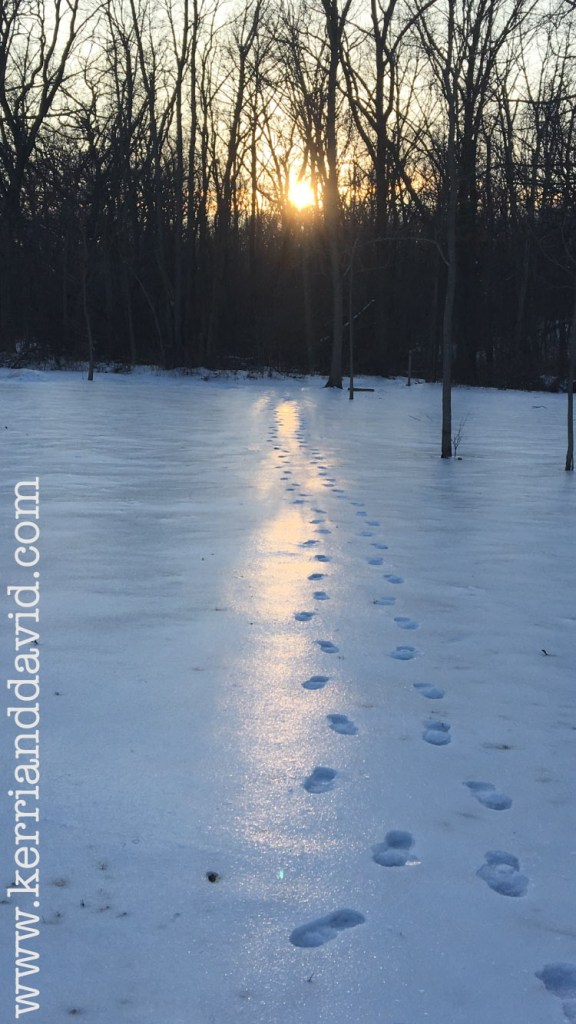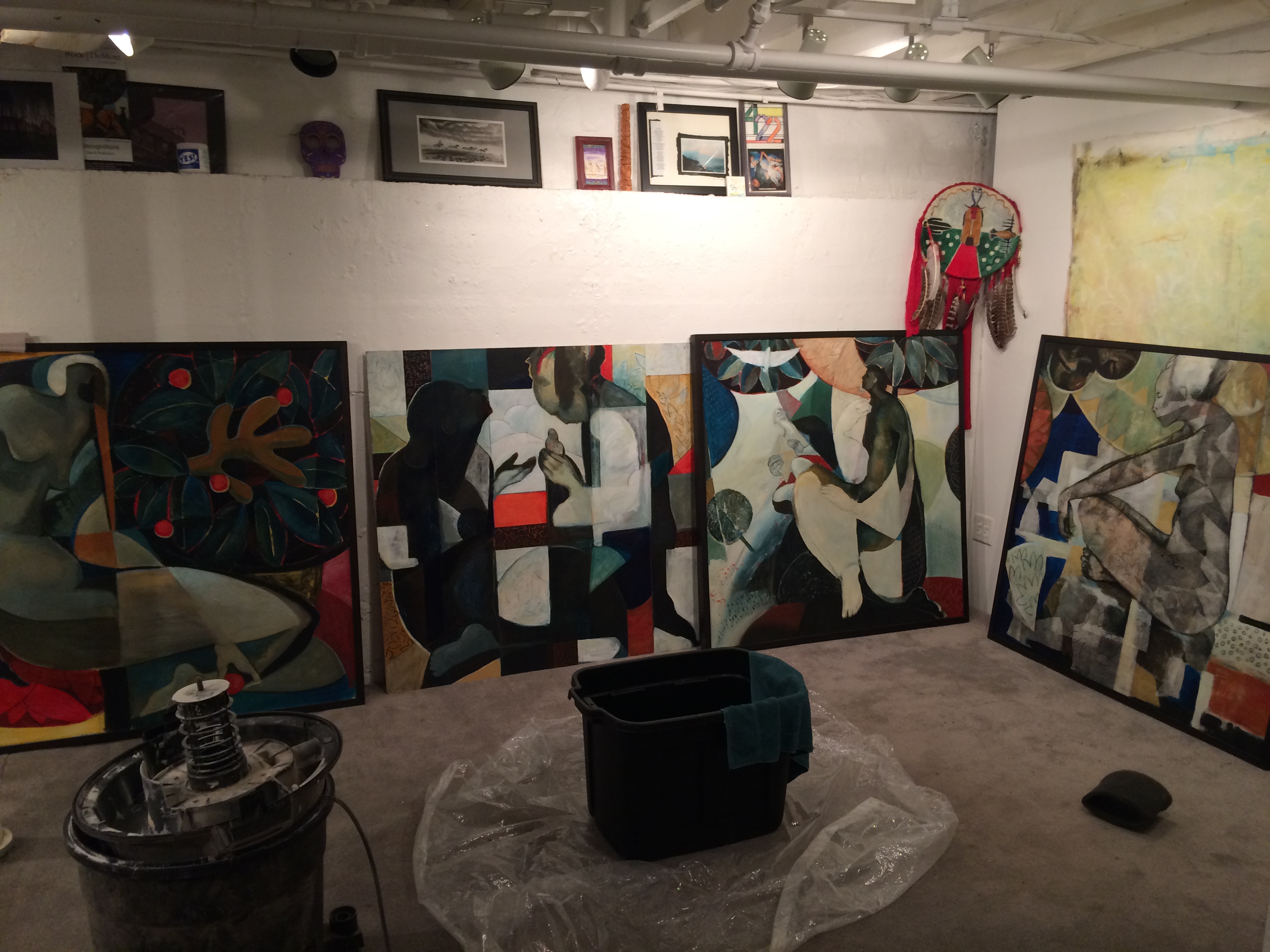
Prepare For The Jump [on DR Thursday]

On the upside, an in-studio-waterfall, after the shop-vac-a-go-go, the sodden-carpet-padding-removal, the baking-soda-ballet, amidst the-we-are-still-hunting-for-the-proper-gasket-to-stop-all-leaks-quest, an opportunity arises. It’s been awhile since I sat with my life’s work. It’s been awhile since I made time to stare at my paintings, each and every single one.

I confess that this year has been rife with artistic mourning. I have barely picked up a brush. I have sat in my studio like a visitor at a wake. I feel the emptiness as a loss and have asked myself the fear-question again and again, “Where did it go?”

One of my favorite books is Art & Fear. Recently, I flipped it open and read, “Your reach as a viewer is vastly greater than your reach as a maker. The art you experience may have originated a thousand miles away or a thousand years ago, but the art you can make is irrevocably bound to the times and places of your life. Limited by the very ground on which you stand.”

A second flip brought me to this passage about change: “Yet it’s demonstrably true that all of us do (from time to time) experience such conceptual jumps, and while ours may not affect the orbits of the planets, they markedly affect the way we engage with the world around us.”

The times of our life. The world, for us, stopped when Kerri broke her wrists. She was in casts when the pandemic washed over all of us. Our jobs disappeared. Our community fragmented. Our city burned with civil unrest, a young militia-boy murdered two people a few blocks from our home. My father took rapid steps toward the abyss. Kerri took a second fall, tore ligaments in an already injured wrist. Our BabyCat left us. We talk about 2019 as if it was decades ago. “Doesn’t it seem like years since we…”

I know this death I feel will find its springtime. There was a “me” before this time. There will be another “me” after. Sitting on the stairs, looking at my paintings, I know for the first time in a-year-that-feels-like-a-century, that a conceptual jump is bubbling. I remember the man who painted these paintings. I look forward to meeting the man who will one day pick up his brushes and dance with the muse again.

In the meantime, I sit with my paintings. I stand in the ground of my times. I will find the right gasket so water no longer rains into my studio. I will prepare for my jump by putting all of my pieces back together again.

read Kerri’s blog post about THE WATER STUDIO REVIEW

Really Look [on KS Friday]

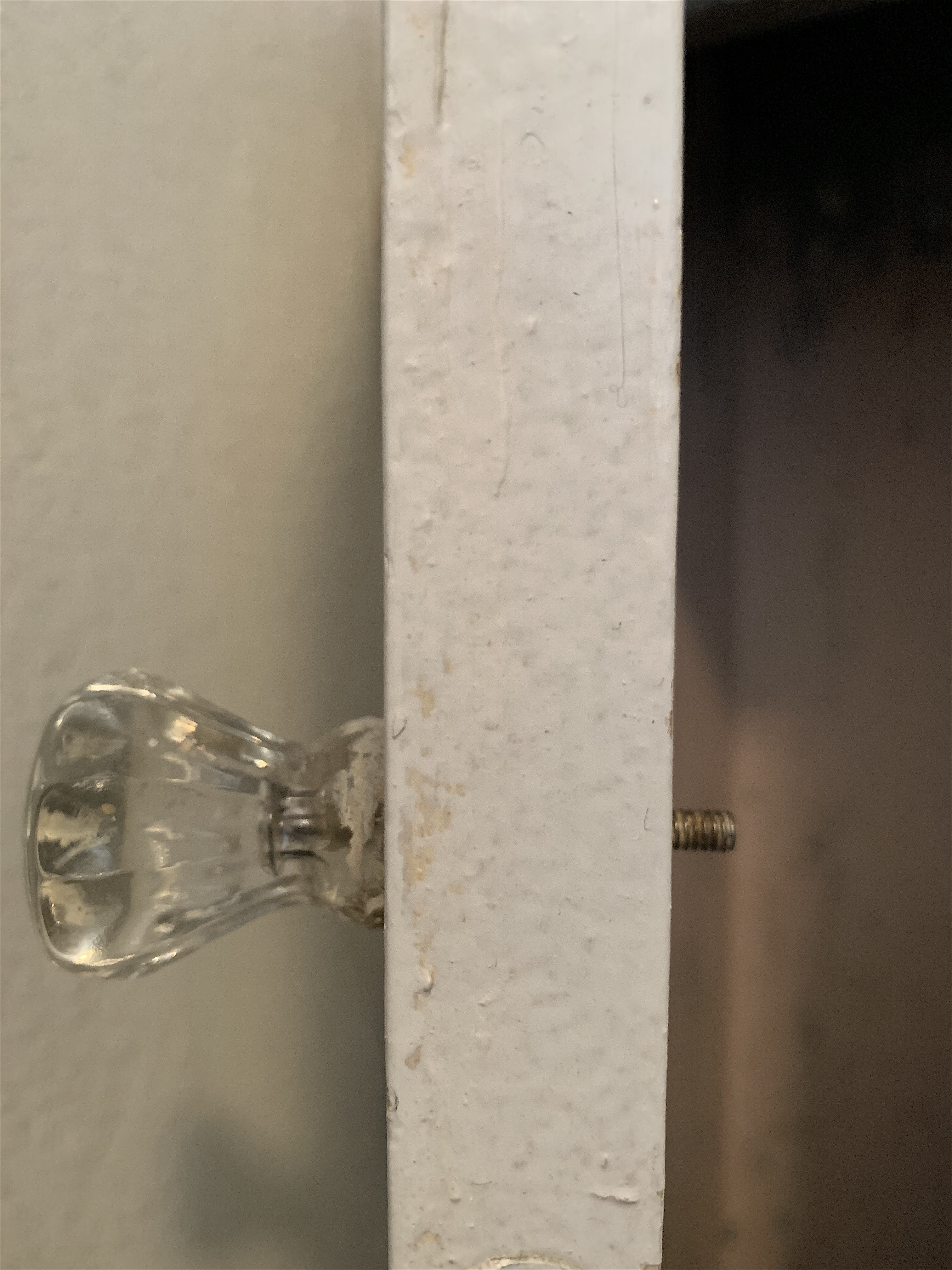
20 watches the house, the dog and our very large cat when we are away. To keep us in touch with what’s going on at home, he sends us mystery photos: common things around our house made mysterious through an extreme close up or unusual angle. Our job is to solve the photo-riddle. I love the game because, no matter where we are, it instantly makes me look at the world in a different way. Or, better said, it makes me look. Really look.

I also appreciate the game because, upon returning home, I run around the house looking at the objects he transformed into enigmas. All that I have grown dull to seeing re-emerges as rich in color and shape and texture and story.

Kerri has the visual sensibility of a contemporary artist. She went down a path of music but might just as well aimed her artistry at the visual. Hers is a natural sense of design. Her camera might as well be an accessory or visual-opportunity-attachment since she moves through the day capturing photographs of passing detail. I’ve known her to be paying bills and jump up suddenly to catch the light on the wall or the texture of the door. Her eye is never passive. She and 20 are alike in that. They are visual twins with unique sensibilities and both serve to keep my eyes open and looking-beyond-what-I-think.

Yesterday, in mid-sentence, she stopped and said, “Oh! I want to show you something!” turned and ran down the hall. When I started to follow she said over her shoulder, “You can’t look! Stay there!” A minute later she returned, sheepish, and showed me the photo she’d just taken. “Do you know what this is?” she beamed. Too excited to wait for my answer she announced, “It’s the laundry chute! Isn’t it cool!” She walked away studying her photograph, muttering, “It’s so coooool.” I ran to the laundry chute to have a look. To really look as if for the very first time.

read Kerri’s blog post about THE CHUTE

find Kerri’s albums on iTunes

Turn Around And Look [on KS Friday]

When we were at the other end of life, Roger and I often discussed the “bodies” of artists’ work. The overview of their lifetime of work and what it revealed. We speculated about what our bodies of work might someday reveal. He is, and always has been, singular, a director of plays, certain of his path. His body of work would be – and has become – the plays he’s directed and the actors that he’s instructed. It’s an impressive body of work. I am, as Horatio calls me, a polymath. My body of work has never been certain. As Roger knew with clarity the destination of his path, I knew with curiosity that I would be a wanderer. The path was and continues to be my destination.

In other words, I’m all over the map. It’s visible in my paintings. I dare anyone to make linear sense of my resume.

Tom Mck hired me because, in his words, I was a “Johnny Appleseed.” When he was old, he told me that he turned me loose in the schools to see what I’d stir up and also what I’d plant. It was one of my favorite “jobs” because it came without a description. I followed the fires. I found the need. I brought art and stories to hearts and minds grown arid from the pursuit of dusty answers.

Tom was a brilliant theatre artist and teacher. His body of work was immense. I was surprised, at the end of his life, when he told me that he rarely thought of the plays he’d directed. He believed his best work, the work that he most loved and defined him – his real body of work – was at the very beginning of his teaching career. He was assigned a 2nd grade class and had no idea what to do with them. So, his curriculum was to invent stories with them. They traveled the world as pirates, went on safari, designed and priced supply lists and mapped routes. Math and history and geography. For weeks they prepared for a day of being blind. What would they need to do to spend an entire day safely learning what it was to be without sight? Curiosity and discovery. Empathy. Inner and outer worlds. He ignited and followed their imaginations. Tom was a polymath, too. He was a Johnny Appleseed.

Today marks Kerri and my 156th week of consecutive posts. 3 years, 5 days a week. My wife is a poet and composer and pianist and teacher and singer/songwriter and recording artist and business owner and photographer and designer. A polymath. After breakfast each morning, we write. It occurred to me recently that my body of work, when all is said and done, will be my posts. I’ve directed many plays, performed many plays, written some really bad plays and a few good ones, consulted with corporations, performed stories at conferences and with symphonies, painted and shown paintings, written children’s books, taught and facilitated workshops and dug ditches and delivered warm bread to grocery stores. I started an experiential learning school, a diversity and inclusion training company, and coached people from all over the world. All of my wandering has provided a rich field of experiences to pull from, to ponder and reflect.

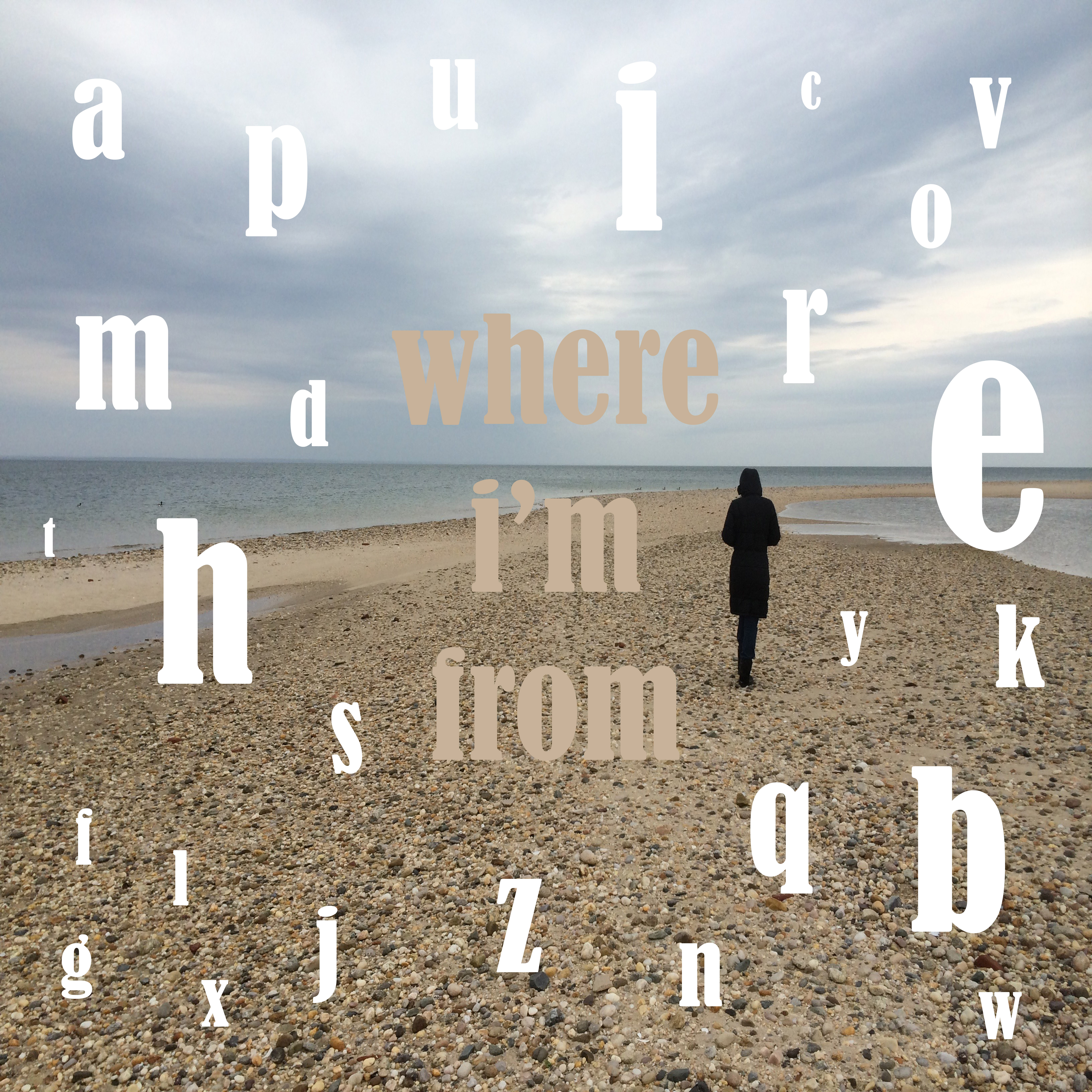
Sometimes (more times than I care to count) I ask myself, “How did I get here?” These days, in the pandemic era, I have plenty of time to look back on my road, on my body of work. “How” is a question that can only be answered after the fact. ‘How do we do it?” tops my list of most useless questions. How did I get here? What is my body of work? I turn around and look where I’ve traveled, where I’m from, and write myself into coherence.

where i’m from/blueprint for my soul is available on iTunes

read Kerri’s post about WHERE I’M FROM

where i’m from/blueprint for my soul ©️ 1997 kerri sherwood

Conceal To Reveal [on Two Artists Tuesday]

When I was tilting at windmills, one of my favorite things to facilitate was mask work. I brought masks to lawyers, to CEOs, to teacher’s, government workers, elementary school students, corporate trainers, business coaches and sometimes to actors. There’s nothing better than a mask to pop open possibilities and challenge petrified thinking.

Masks conceal and reveal. They serve the paradox and, therefore, are tapped into the root of truth.

It’s impossible to work with masks for long before realizing that the faces we wear everyday are also masks. We “put on” a smile. We attempt to hide what we feel by the mask we manufacture. Some faces freeze in masks of indifference or masks of disdain. We perform ourselves, and craft our masks accordingly.

Many cultures around this world believe the mask opens a communication with the gods. Don a mask and something bigger-than-you speaks through you. When I paint I often have that feeling. Artistry sometimes means getting out of the way so the creation can flow.

It’s why I brought masks to lawyers and CEOs and corporate folks and teachers. To introduce them to the fields that bloom beyond their need to control. So much of their lives, so many of their problems and challenges were wrestling matches of control. They were actively creating the obstacles that they desired to remove.

What do we actually control when we harden our faces over what we feel? What do we gain by attempting to control what others see or think or feel? We are makers of our own prisons. We are deluded by our fantasy that we have the capacity to determine what others see. The only control we exert is upon ourselves.

The mask work makes abundantly clear that control is not power. Power – creativity – flows. It is the dance of the artist to master technique, to learn control, and then transcend it. To get out of the way.

My favorite moment, with every group, in every circumstance, came when the masks released the people and they slowly, respectfully said goodbye and removed them. Their faces was also mask-less. It was like seeing infant’s faces. Bright. Open. They would, for a few brief moments, look at each other, unmasked and unprotected. Simply astonished at being alive, together, in the world.

read Kerri’s blog post about MASK

Follow The Conversation [on Merely A Thought Monday]

I met Horatio on an airplane. With his wife, Teru, we were seatmates on a flight from Washington D.C. to Seattle. I’d just finished facilitating a workshop at the Smithsonian about story, he was stepping toward directing films, and Teru is passionate about writing life histories. We talked about storytelling clear across the country and our conversation continues to this day.

David and I sat next to each other at a conference. I’d only just moved to Seattle, I knew no one. I saw a sign for the conference and wandered in. It was my good fortune to pick a seat next to a brilliant visual and theatre artist. We started talking about life and art. Years later, every gallery I enter, every play I attend, I have conversations with David in my mind – and hurry home to write him or call him and share what we talked about.

To this day, MM is my greatest collaborator. We used to sit in my office and dream big dreams – and then go out and make them happen. He is the ultimate player-of-infinite-games, playing-to-play. When I need my mind opened, my pot stirred, or my obstacles surmounted, I turn to MM.

I was visiting Tom McK at his ranch. When he asked me to help him tell a story I had no idea that his simple question, the story that he needed to tell, would take more than a decade and would only be possible after his death. His story became my story to tell.

It was Tom’s story that I told to Horatio that day on the flight from D.C. to Seattle. It was multiple good conversations over many years with David about writing plays that finally brought me to clarity. MM was my constant companion. With his band, Mom’s Chili Boys, he composed the music that supported the telling of Tom’s story. He built the world of the play and then, together, we stepped into the world and fulfilled Tom’s request.

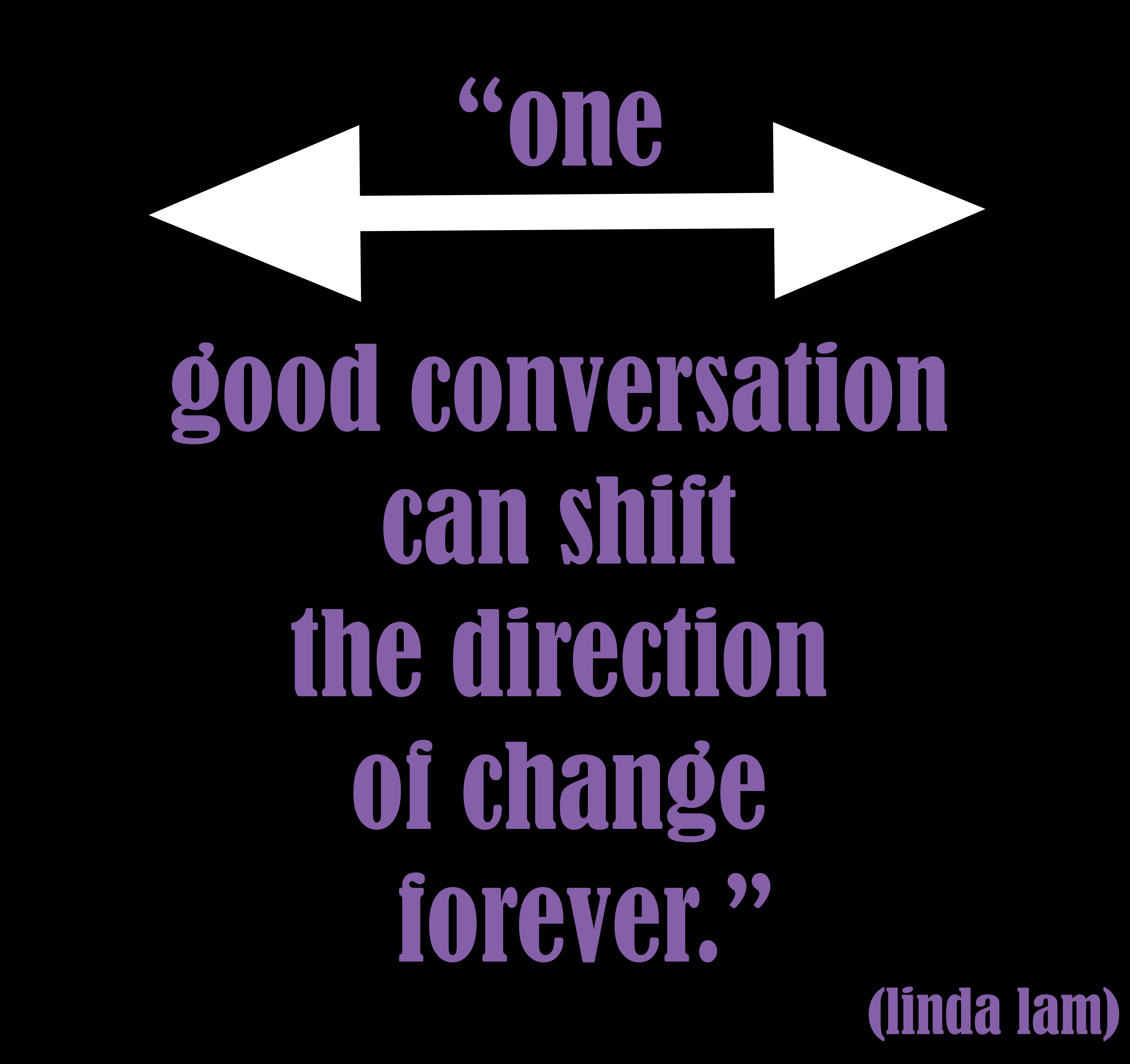
Fortuitous seat assignments on a flight. Following an impulse into a conference and taking any old seat. Playing an infinite game. One good conversation, again and again, and nothing will ever be the same.

read Kerri’s blog post about ONE GOOD CONVERSATION

Do It For Yourself [on Merely A Thought Monday]

I have been writing long enough to know that there are sedimentary layers to my themes. The top layer, the most superficial, is the political layer, current events. I am not above shouting into the storm. When I run to the keyboard and ring the alarm or presume that my point of view is relevant enough to roundly criticize others, I know that, above all, I’m breaking the first rule of happiness: I can never determine what another person thinks or does or feels. On my superficial days, in my ranting, I write for myself.

When I was at my saddest, I set about looking for goodness. I walked the streets of Seattle with the single intention of counting acts of kindness. As you might suspect there were more than I could count. In this world where we story ourselves as aggressive, unthinking and unkind, we are remarkably compassionate. Good will is simply more difficult to see. It is not the focus. The deeper layers of my writing-archaeology emerge when I direct my attention, when I exercise the artist in me and attempt to see beyond what I think. Since these are the layers where I desire to live and work, I suppose it is also true that on those days I also write for myself.

It is a looping life-lesson for me: I have the capacity to choose where I place my focus. I will see in the dark ocean where I decide to shine my light. I will author myself according to what/where I decide to give my focus. It is, among other things, why the film ABOUT TIME is among my favorite movies.

Lately, as one of our get-through-the-pandemic-winter-strategies, we’ve taken to assembling jigsaw puzzles. Entire evenings disappear into our intense pursuit of pieces. Our puzzle sessions require absolute focus – all of the other nonsense and monsters that vie to plague our brains are banished. Our focus is so thorough that we rarely speak. We do, however, listen to the soundtrack of ABOUT TIME. Again and again. When it finishes, one of us walks to the CD player (yes…we play CDs) and play it again. Sometimes we don’t make it past the first track, Ben Fold’s THE LUCKIEST. “Do you mind?” one of us asks. It’s a rhetorical question. It warms us so a repeat is always welcome.

Sitting at the dining room table, hunting for bits of colored cardboard, with the soundtrack playing, all things come into focus. While the surface-layer is on fire with a circus of instability, a pandemic, a climate that is changing, all jobs gone, a broken wrist that is not mending,…the deeper layer beckons: DogDog sits under the table, BabyCat is asleep on the chair, 20 just called and made us laugh, a postcard from Jen made us cry, my phone dinged with a text from a dear friend. I look across the table at my wife, pursing her lips as she plucks a piece of the puzzle from the table and attempts to make it fit, and I know to my bones that I am the luckiest.

To see it or not to see it; it’s my choice.

read Kerri’s blog post about REPEAT

Sit In The Sun [on Merely A Thought Monday]

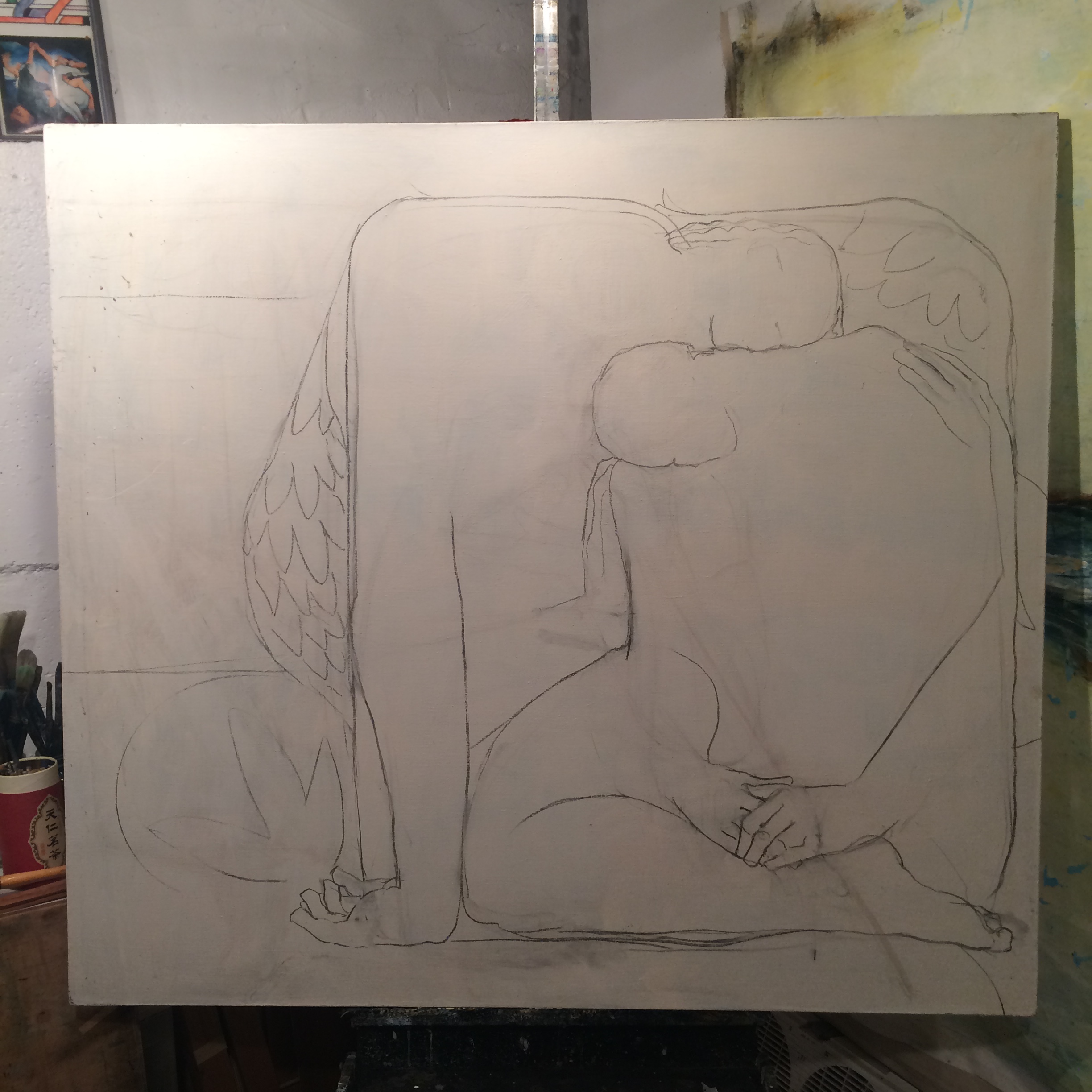
I made a third run at my Polynices & Eteocles painting. Brothers who kill each other over control of the kingdom. Reds and Blues. In the two previous attempts, the brotherly violence morphed into images of shared fatherhood. A quiet unity. On this, my third and last attempt, I grew bored with the image and the statement I wanted to make about these-un-united-united-states.

Kerri avoided my basement studio while the brothers, sketched in charcoal, were killing each other on canvas. With a few swipes of a rag and adjustments of line, the murderous brothers became an angel embracing a dejected soul. And, although Kerri was much happier passing through the studio en route to the laundry room with angels on the easel, I found that I was equally as bored with my feel-good statement as I was with my feel-bad statement. The rag cleared the offending charcoal angel.

I don’t want to make statements.

I know I am in an artistic growth phase when I find myself at cross-purposes. Sit still. Get busy. Get Quiet. Say something. The sitting still and the getting quiet are what’s really required. Germinate. Listen. The getting-busy and saying-something are puritanical overtones. Fear of…

A few years ago, Jonathan told us that a tree must split its bark in order to grow. It seems my bark is splitting.

Yesterday, while moving through my david-yoga practice, I had a wee-epiphany. Every yoga pose is a study of oppositions. The stretch, the balance, comes from oppositional reaching. Inner-space, flexibility, equilibrium are intentional contrast. Contrast need not be combative. I think I am out of balance.

Angels and dejected souls. Brothers warring for control. Combat and consolation. No wonder I’m bored. My statement-subjects are as dusty and old as humanity itself. I think the truth floating to the top in my silent sitting is that I have had too much of darkness. There is a lighter side to poetry and human nature.

I just might need to cross over and sit in the sun for a while.

read Kerri’s blog post about TWO PATHS

Get To Work [on Two Artists Tuesday]

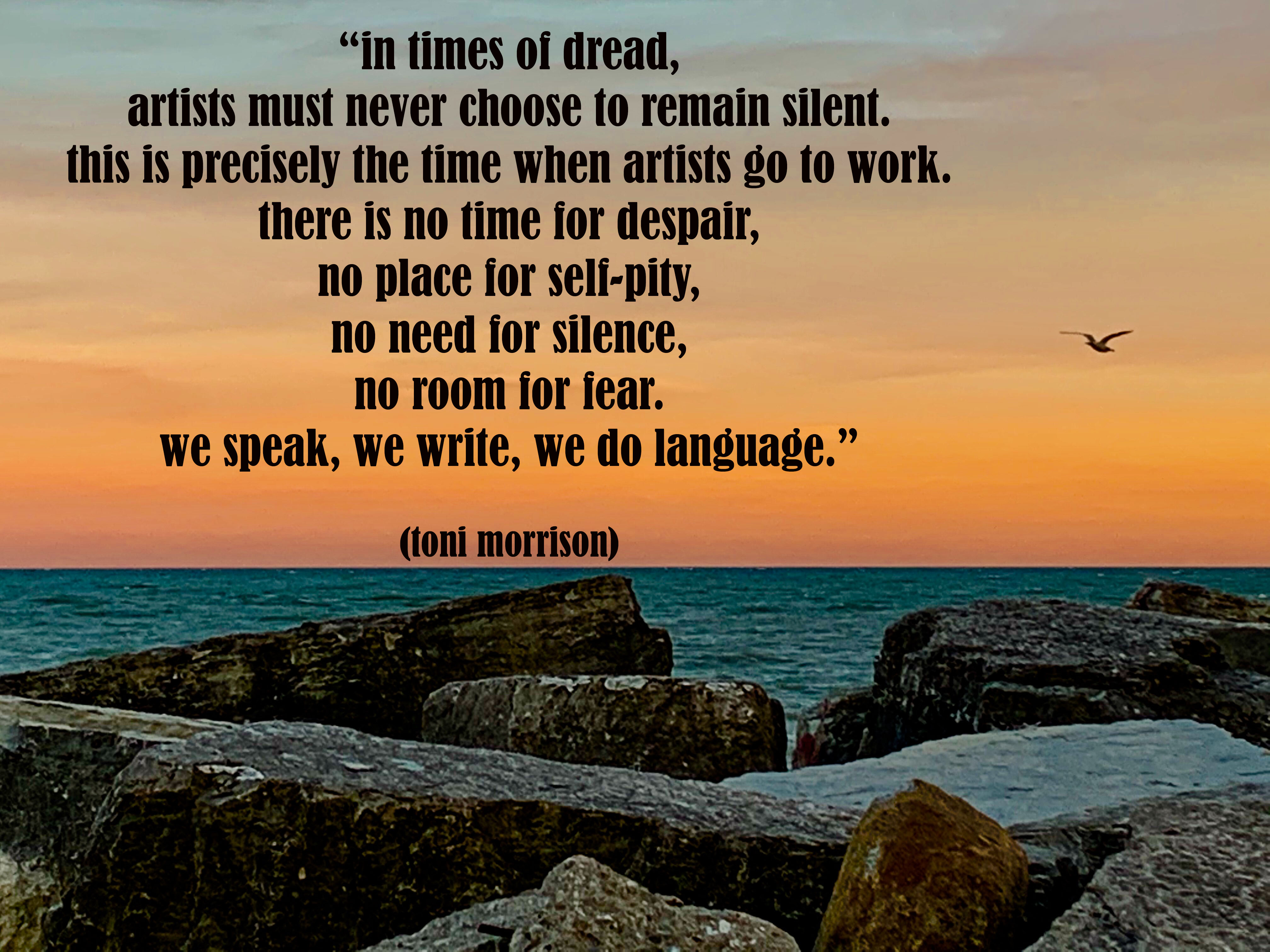
On page one of the despot’s handbook is this instruction: silence the artists. Mute the intellectuals. Authoritarians have power only when people become sheep. Silence in the face of abuse is tacit agreement. Permission to bully.

If I had a nickel for every time I’ve stood before a school board and explained that art is supposed to be powerful, that it plays a very important role in a healthy society, I’d have a lot of nickels. I was generally called to speak when a play or a painting upset the apple cart, when the art made the community confront a truth or look at a reality. Brecht’s Epic Theatre or the plays of Artaud were/are meant to shake the irrational in people, force them into discussion and revelation.

Art can be beautiful, poetry can soothe, but that is only one side of the coin. It can also shine a light and expose an ugly truth. It can give voice to what is not-being-spoken. It can work out problems on the stage instead of sending the violence into the streets. It can ask us to take a hard look at ourselves and our motives. Picasso’s large painting, Guernica, a response to horror wrought by fascists on the people of a town in Spain, is a powerful art-mirror.

The conscience of a community, like the conscience of every individual that comprises the community, lives beyond the superficial, it bubbles in the place beyond words. An artist’s job is to reach into that place, pull the veil for a moment, root or re-root the community in its values.

A despot’s job is to secure a unanimous vote, no questions asked. Sheep.

Art is not superficial. It is not the image or the words on the page. It is what the image, the words, the dance, the music, touch. Hearts. Souls. Conscience.

Without it, what remains is propaganda. Propaganda is never news, it is the opposite of art. It snuffs the question, it prevents the quest for meaning and deep-felt-truth. Without it, communities flatten, lose their center, wither, and fall apart. Silence, eyes downcast or sideways glancing. Permission to bully. Sheep.

It’s time for the artists to get to work.

read Kerri’s blog post about ARTISTS

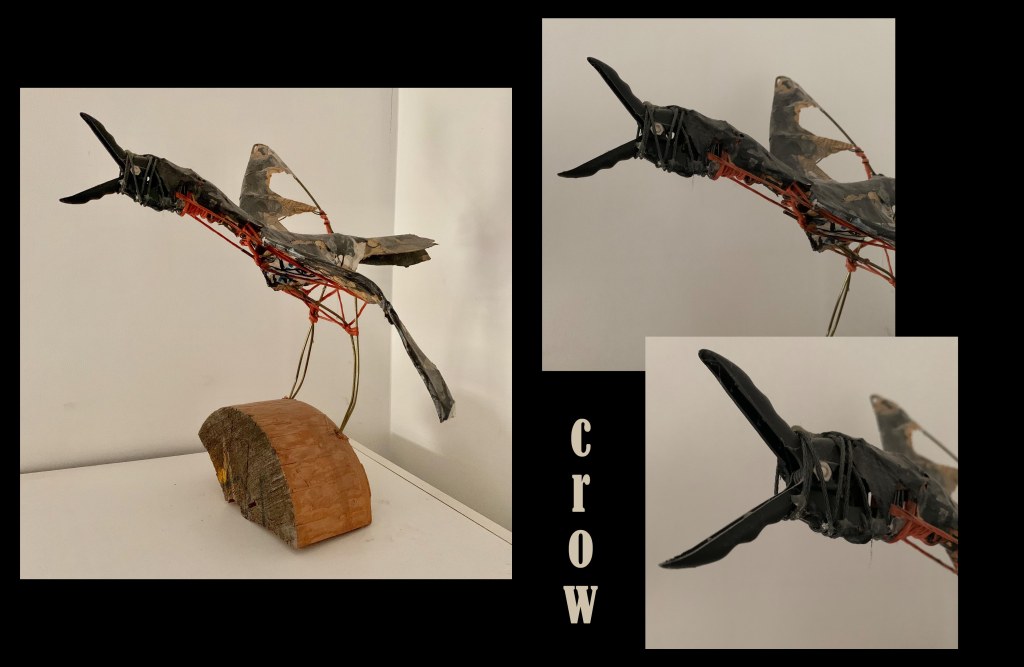
Listen To The Crows [on DR Thursday]

“Sculpture,” they said. “We think you need to do some sculpture.” They were pushing me to get out of my painter-comfort-zone. It was our agreement as an artist collective: help each other grow. Our group shows were driven by a clear intention. Challenge the art-wheels to exit the art-rut.

All of my life I’ve had a special relationship with birds. Owls show up at auspicious moments. Hawks visit when I need to step back and take the long view. The surprise turkey on our roof, harbinger of good things to come. At the time of my sculpture challenge, I was, each and every day, assaulted by crows.

I read that crows have facial recognition so I told myself the daily assault was a case of mistaken identity. I’d never done harm to a crow. Yet, everyday during my walk, I was dive-bombed. Once, a crow was so relentless that I took refuge in a coffeehouse.

The worst was the day, lost in thought as I approached the door to my studio, at the last moment, I saw a baby crow perched on the door step. I heard them before I saw them. An entire murder of crows came to the baby’s defense. I leapt over the baby and into the studio. They pounded the door and pecked at the windows. They circled my studio for hours. Angry cawing. It was a scene straight out of Alfred Hitchcock.

Crows seemed like the obvious subject matter for my first stab at sculpture.

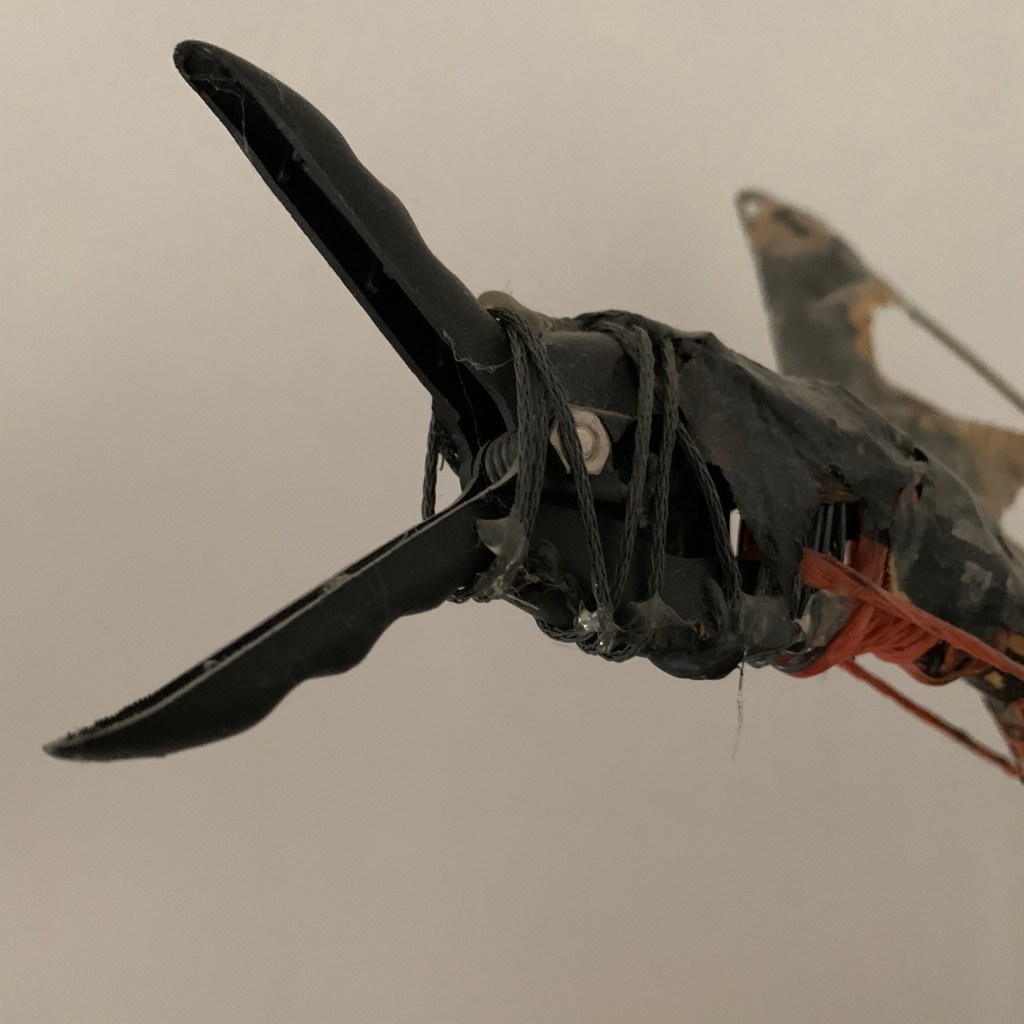
I decided to use found objects: wood, wire hangers, newspaper, string, a plastic clamp. India ink and glue.

Creating my sculptures became something of a meditation. As I bent the wire and glued the paper it occurred to me that perhaps the crows weren’t confusing me with someone else. Perhaps their attacks were meant for me. Perhaps I needed to listen. In some traditions, crows are the keeper of sacred law. They are heralds of consciousness change, shape-shifting. They thump you on the head when you need to wake up, when you are not living in alignment with your best interests. That was certainly true of me at the time. The crows were literally hitting me on the head.

I loved making my sculptures. I love what they brought me to understand. My artist-friends were more right than they knew; I needed to do some sculpture. I needed to exit my rut and step into a scary void and, in that way, invite new seeing, new forms, and finally, a new way of being.

read Kerri’s blog post about CROW

crow ©️ 2010 david robinson

Leave The Studio [on DR Thursday]

Kerri calls this snippet REACH

One day at the farmer’s market we saw a little girl chasing an enormous soap bubble. She was gleeful, squealing with delight. Looking at the faces of the adults watching the little girl, it was clear that they wished they were also racing across the grass, gleefully chasing bubbles. It was clear that they yearned to feel that carefree. In some distant place, they remembered.

These days I occasionally sit in my studio but I do not touch my brushes. There is a canvas on the easel. It’s good and worn and chunky just as I like them. It is waiting. I am waiting.

I believe, as Tom McK. taught me, that “a writer writes and a painter paints.” There is no magic to it. Well, that’s a lie. There’s plenty of magic when the painting begins, when the artist disappears. But first, the paint has to hit the canvas. Before disappearing the artist has to show up.

Yesterday, Skip sent me this lovely reminder. It’s from a tweet:

“I believe it was John Cage who once told me, ‘When you start working, everybody is in your studio – the past, your friends, your enemies, the art world, and above all, you own ideas – all are there. But as you continue painting, they start leaving, one-by-one, and you are left completely alone. Then, if you are lucky, even you leave.'”

That little girl chasing bubbles, her glee, is what happens when “even you leave.” All of the ideas of who you are or what you need to do or achieve, the expectations, the burdens and worries, the pandemic, the politics, the notions of success and failure, all leave the room. That’s when the bubble chasing begins. That’s when there is ample space for glee and delight.

Kerri chose this morsel for today and I’m so glad she did. “I want to do another version of this painting,” I said. That little girl, so long ago chasing an enormous soap bubble at a farmer’s market, is calling me back to my easel, she’s pointing to the studio door and asking me to leave.

Chasing Bubbles, mixed media, 33.25 x 48IN

read Kerri’s blog post about REACH

reach/chasing bubbles ©️ 2019 david robinson