Focus On The Important Stuff

an offer from TwoArtistMakingStuffForHumans

an offer from TwoArtistMakingStuffForHumans

A note from the temporary site of TwoArtistsMakingStuffForHumans:

The waxing moon was muted with fog. It made the air shimmer. Avalon was near. Although it seemed too soon, there was a hint of autumn in the air. We sat next to a chiminea talking to friends. Monica told us of her daughter working in villages in South America. She told Monica that, by our standards, the people there have nothing. They are possession poor. But, they were happy, genuinely happy. They didn’t have much money or stuff but they had the essential thing that many of us lack: peace of mind. They focus on different, more important stuff.

It brought to mind my experiences in Bali. When I arrived all I could see was the poverty. By the time I left several weeks later, I’d have given everything I own or will ever own to have what they have: presence. Ease of mind. They weren’t looking for fulfillment, status, or living for retirement. They were living. Life was fulfillment. In a world where all things are sacred, status is gained by the quality of your giving and not by the size of your piece of the limited pie. It is a different focus.

There is a hidden cost to what dominates our focus, the things that take our attention…as opposed to the things we pay attention to.

As artists, both Kerri and I believe the work of our lives has been, one way or another, to help people focus on the important stuff, to see the extraordinary in the ordinary moment, to find inside what people seek outside. We’ve both worked across the boundaries of business, art, and the fine art of living everyday, there is no lack of necessity to refocus the eye, mind, and heart.

In a few weeks we will be launching our business (details to follow). All the many aspects of our work – if you can call art a product and performing a service – are intended to support, exercise and pay forward a focus on the important stuff, the important moments…sometimes the teeniest things that in the chaos pass unnoticed.

We want to do for others what we do for each other. Check out our pre-launch coaching offer. Take us up on it! Or, if you know someone who might benefit from working with us, pass it on, pay it forward.

Meditate On Mistakes

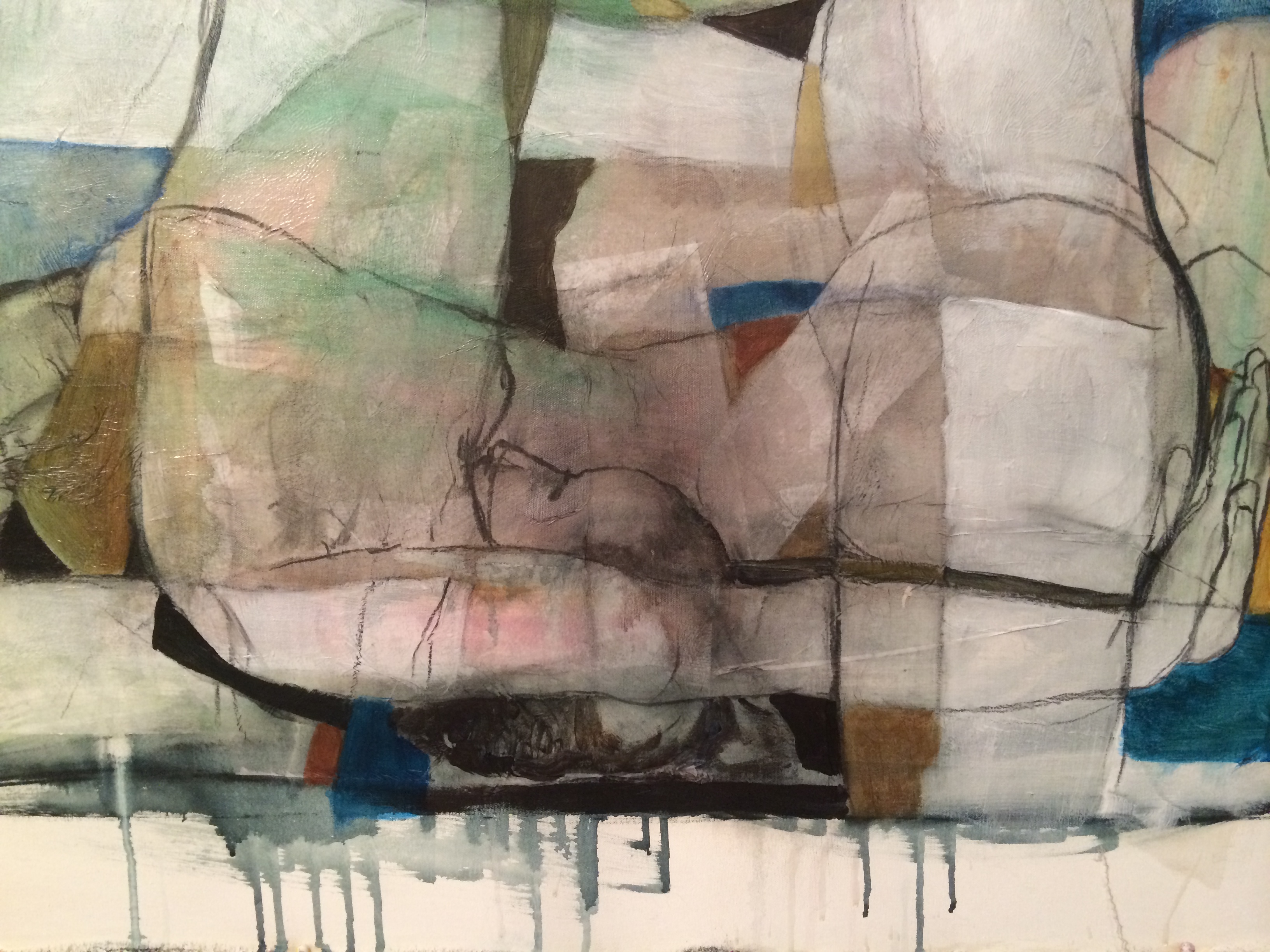
taking advantage of my mistakes: a detail of my latest painting in progress called Weeping Man

taking advantage of my mistakes: a detail of my latest painting in progress called Weeping Man

A meditation on mistakes:

Actors know. In performance, when they forget their line, they come alive. The exhilaration of forgetting shocks them into presence. The mistake achieves the essential thing: presence. The audience may not be aware of the lost line but they cannot help but come into presence when the actor does. That’s how it works. Presence begets presence. Actors also know that, in such a moment, tension is their enemy. Panic is counterproductive. Relaxation is the only path back to their play.

Mistakes wake us up.

Many years ago, I produced a summer theatre company. In the middle of a performance, a storm blew out the power to the theatre. The performance stopped. The emergency lights came on. The actors looked at the audience and the audience looked at the actors. And then, in the ghostly blue-white light, the actors continued their play. It was the one and only time that the play was riveting. Actors and audience alike became invested. They were together in an experience that was unique. It was, as are all true mistakes, unrepeatable.

the under painting and sketch.

the under painting and sketch.

The playwright John Guare wrote that a writer must write ten bad pages to arrive at the one good page. The writer must value the ten bad pages for the single good page to be possible. The ten bad pages, what educators, locked into testing regimens, might call mistakes, are necessary. Up front expectations of perfection are guarantees of mediocrity. No process is perfect – and that’s the point. Perfection, like happiness, comes after the fact. It is the blossom of a rich process. It ensues and only becomes available when mistakes are valued, when exploration is encouraged. A rich process is alive with trial and error, with strong offers that may or may not work. The strength of the offer, the capacity to make a grand mistake, learn, adjust and boldly offer again – is a great definition of freedom. It is otherwise known as vitality.

It’s what artists understand. When nothing seems to be working, when the most powerful offers fall flat, when paintings turn to mud, relaxation is the only path forward. There is comfort in knowing that the single good page is out there somewhere if only you keep making grand, luscious, brilliant mistakes.

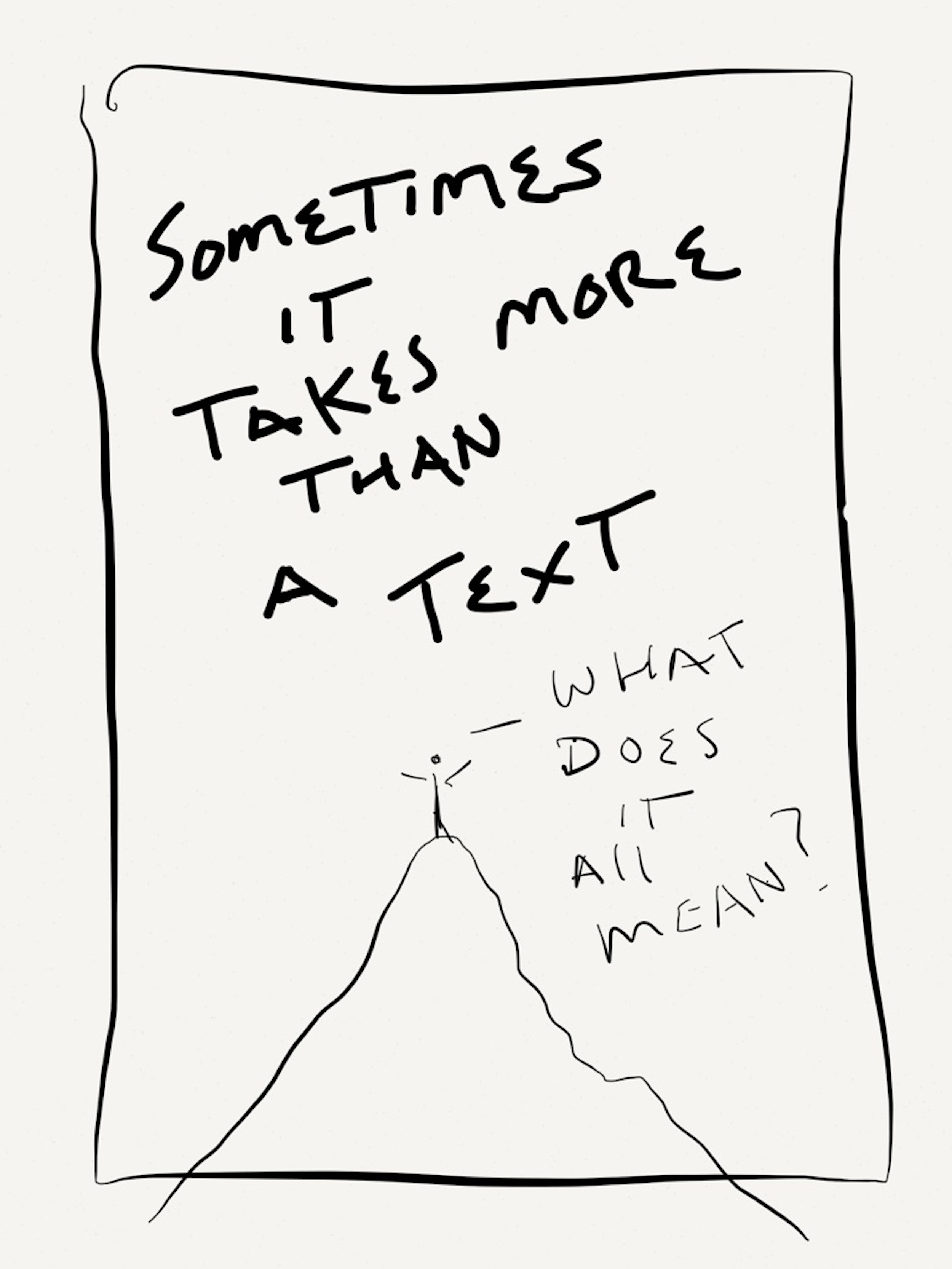
Sometimes It Takes More Than A Text

TODAY’S FEATURED IDEA FOR HUMANS

Sometimes It takes more than a text

In a recent post I wrote that we are often slaves to brevity. We want quick and easy answers to life’s big questions. Peter Block wrote that, in 30 years of consulting with businesses, he was routinely asked “How” but never asked “Why.” Relationship is at the heart of almost every big question (like leadership, management, marriage, self-love, the sacred,…) and, in relationship, there is no shorthand.

FOR TODAY’S FEATURED PRINT FOR HUMANS, GO HERE.

Open Your Eyes

a detail from the painting on the chopping block. It's called "The Stillness Must Be Immense."

a detail from the painting on the chopping block. It’s called “The Stillness Must Be Immense.”

There is a debate raging in my house. Yesterday I was about to wipe a painting off my canvas and begin anew when Kerri intervened. “I love it!” she declared. “I hate it,” I replied. “Truly,” she said, “I love it.” When I wrinkled my brow she restated, “I love it.”

Many years ago I was stepping toward a canvas to wipe it clean. The painting wasn’t working for me and I’d given up. I wanted to start anew. My landlady, Kathleen, came into the studio at just that moment and hurled herself in front of the canvas. “You can’t erase it!” she declared! “This is one of my favorites!” She had the look of a desperate woman begging for the life of her child. I relented. I couldn’t wipe it clean. She confessed to coming into the studio the previous evening and admiring the painting. “I spent a long time with it!” I made a deal with her. I promised to show the painting – to include it in one show – and let the public decide. If it was roundly reviled, as I KNEW it would be (as I was actively roundly reviling it), I’d paint over it without drama or interference. If it was appreciated by anyone, by a single person, Kathleen could say, “I told you so,” and I’d never paint over it.

the painting Kathleen saved

the painting Kathleen saved.

A few months later I hung the painting in my solo show at Rock/Dement studio gallery in

Seattle. At the opening a woman came into the gallery, stood before the painting, and burst into tears. She looked at me with tears rolling down her face and said, “I love it.” Kathleen waited a few days before allowing words to break through her smug smile, “Well,” she sighed, “I told you so.”

That painting is the reason I made the same deal with Kerri yesterday. I will let it remain long enough to show one time. If it is roundly reviled and ignored, then I will paint over the canvas without protest. If a single person likes it or expresses appreciation for it, she can bury me in a mountain of, “I told you so,” and the painting will live on long after I’m gone.

The Stillness Must Be Immense.

The Stillness Must Be Immense.

This morning I posted an image, a print that reads, “CROSS THE BOUNDARY OF ELEMENTS.” In the short blurb associated with the image I wrote that sometimes we have to stand in other people’s shoes. We have to see what they see. I am an artist and am convinced that artistry is all about opening new visions for others. It is about helping people see what is there, not what they think is there – and I’m certain that I fall into a thought eddy while painting. It is, perhaps impossible for me to see what others see in my paintings. What I judge to be worthless has often proven to be magnetic to others. And so, I am willing to make this bet, I delight in the moments when my understanding of life turns back on me, flings itself in front of me and screams, “Open your eyes!”

another detail of the painting.

another detail of the painting.

Fall Into It

lingering

lingering

Scott said, “In today’s world, if you can’t say it succinctly, you might as well not say it.”

Guitar Jim teases me each Sunday, saying, “Hey, I read the first 80 words of your blog!” I always laugh and he adds, “No, seriously. I didn’t have time to read the rest of it.”

I am like everyone else. I give only 3-to-5 seconds to any website that I visit. If it doesn’t capture me in that vast span of time, I move on to the next and the next and the next….

Click. Click. Click.

We are slaves to brevity.

In The Art of Living, Wilferd Peterson wrote: Travel with curiosity. It is not how far you go, but how deeply you go that mines the gold of experience. Thoreau wrote a big book about a tiny Walden Pond.

Going deeply takes time. My grandfather lived his entire life within a 10-mile patch of earth. He could smell a storm on the wind when all I – a visitor – could see was blue sky.

When I go to a museum, when I need to recharge my artist battery, I find the paintings that demand my attention, the pieces that want a relationship with me. Relationship takes time, too. Like Thoreau, I need to stare into the pond deeply, to spend time with it, to know it beyond mere thinking. Then I can breathe it in, feel the impact that only comes available with an engagement beyond the cursory. When I fall into it, it falls into me.

This is the challenge of our time, the artistic challenge of our time, the expectation that depth can be found by skipping a stone across the surface.

A good poem will not fully open without lingering in it.


Dance Without Effort

my mud-slog

my mud-slog

Last night I painted badly and I did it intentionally. I went down into the cool of the basement studio to escape the heat and humidity. A new canvas was stapled to the wall, gessoed and ready to go. I picked up my brushes, squeezed paint onto the palette and began working.

Many years ago I made the switch from oils to acrylics because the fumes were making me ill. It was a happy accident. Acrylics required me to work fast and fast meant I had no time to think. I learned by default that I am a much better artist when I’m not laboring over the details. Sometimes the process feels like an invocation. Sometimes the process feels like a rolling mess that morphs and morphs until the final moment when, like focusing a telescope, the image becomes crystal clear.

My paintings are generally big. They demand a full-body engagement, painting-as-dance. I know I am working well when I lose track of time, when the dance overtakes me, and the line between painting and painter disappears. It is pure magic: a place free of thought-obstacles.

Last night there was no magic. When I was younger the slog sessions would depress me. I believed I had to have magic all of the time and felt despair when, instead of magic, I danced knee-deep in mud. It took a long time for me to appreciate the necessity of the mud dances. Painting badly is, of course, necessary to paint well. In fact, I now know that there is no such thing as painting badly just as there is no such thing as perfection. Saying more with less is a life-long learning process for all artists. Freedom of expression is a yoga, a practice. It has as much to do with muscles as it does with minds. It is a yoga of brevity. It is as efficient as breath. It is a paradox of stepping out of the way so that you can fully step forward.

I once saw an exhibit of the hundreds of sketches and studies John Singer Sergeant did before painting El Jaleo. I loved it. He drew the same thing over and over again. He painted again and again the smallest detail. He was putting the image into his body. He was teaching his muscles to flow without tension. The finished painting (the last thing in the exhibit) was thrilling. It is a celebration of brevity, free motion without mental intervention. It made me dizzy. It made me cry because I knew how devoted he was to his practice to say so much with so little. I knew how many hours of effort it took for him to dance so effortlessly.


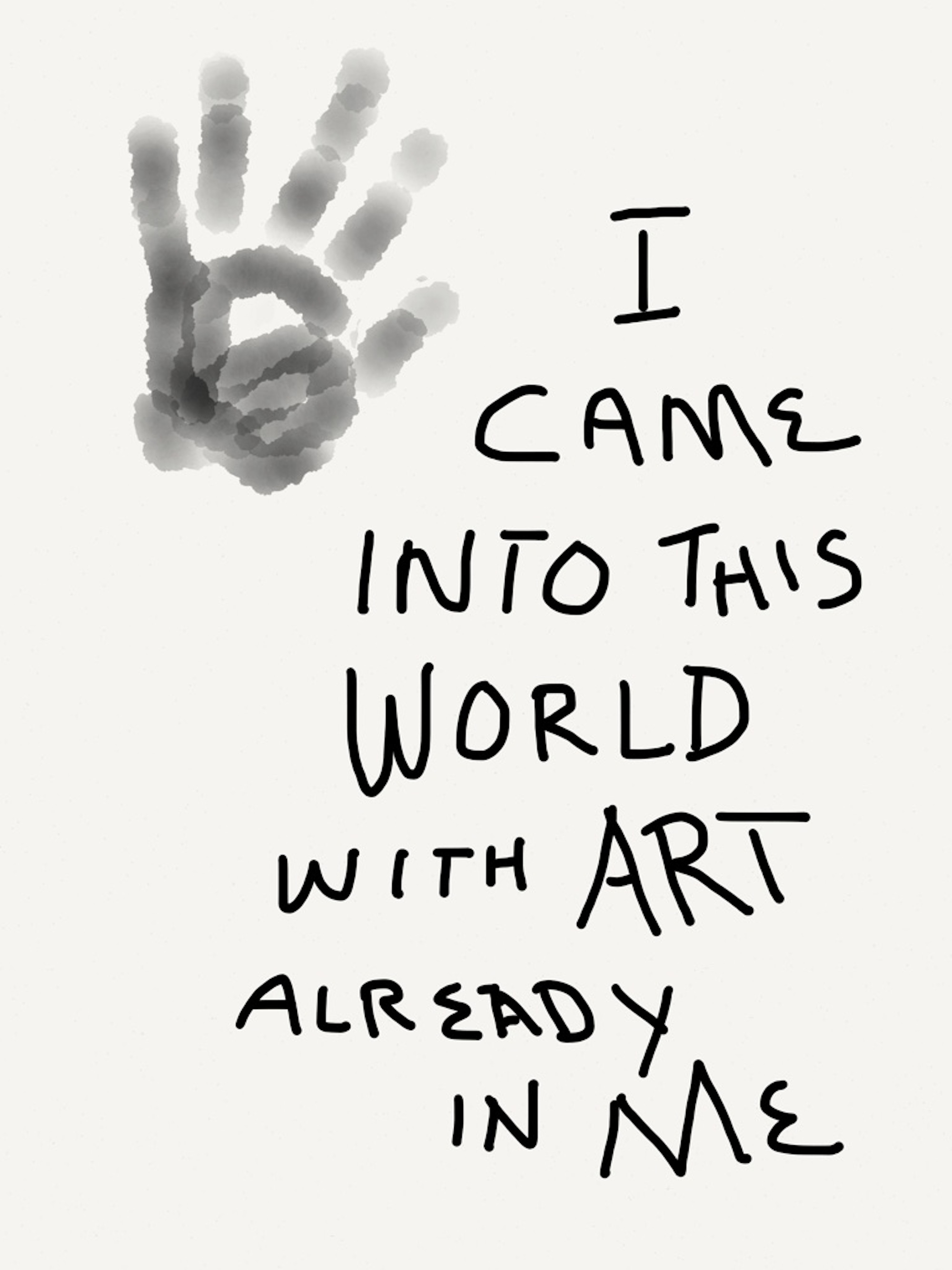
Art Already In Me

TODAY’S FEATURED PRINT FOR HUMANS

Art In Me

FOR TODAY’S FEATURED PRINT FOR HUMANS, GO HERE.

Paddle On

photo-3We’d been out in the canoe for more than an hour. The morning was warm and the water was still. We hugged the shore, cruising the lily pads. Dan told us some of the lily pads were over 150 years old. I was amazed at their capacity to reach through time but also reach through long stems to the water’s surface to drink the sun.

The turtle emerged from nowhere. It appeared from the depths, through the lily pad stem forest, and rose to within inches of the surface. It was big for a lake turtle, perhaps the size of a dinner plate. I let my paddle trail in the water. It was so close I could have reached into the water and touched it. We glided forward and turned the canoe so Kerri might see it but the turtle had already disappeared.

the view from the canoe

the view from the canoe

Turtle is perhaps the oldest known symbol for the earth. In many traditions, turtle carries the world on her back; the earth is her shell. She is a great reminder to go slow and persevere, to live grounded amidst the chaos of life. She symbolizes patience and ease. I was struck by how similar are the symbols of turtle and lily pad. Peace. Ease. Both are extraordinary symbols of grounding or rooting. Both cross the boundary of elements: the turtle lives in water and land. The lily pad reaches through the water to find air and sun. Both inhabit the depths and reach to the surface.

It feels as if I came into this world with art already in me. From an early age I drew pictures, not because I wanted to but because I had to. Like the lily pad, I was reaching for something unknown. I drew the same images over and over again: a cabin in the woods, eyes, clowns. I wasn’t drawing to master the image, I was drawing and painting in order to reach beyond the image. There was something there, beyond, deep in the depths, a root, rich soil, the void. There was a force behind the image that pulled me. My artistry felt like a descent into the caves of the ancients, a search for sources mythological.

Sometime during these past few years, the direction of the pull reversed itself. Like Orpheus in the underworld, I turned around. I walked toward the surface. In essence, the pull to the depths became a reach to the light. The sun called. Balance, in this life, at long last necessitated light and warmth.

Tom once told me that inheriting his family’s ranch and subsequently finding a trunk hidden in the wall of the house containing his ancestors possessions served as an affirmation that he had finally come home. Sitting in the canoe, the turtle rising by my side, I felt the affirmation. I am now only inches from breaking the surface. I drink the light because I know the depths and am adept at walking in the dark unknown.

the first layer of  under-painting for the next piece

the first layer of under-painting for my next piece

I am working much slower now. I am in no hurry to get anywhere. And my art, my life, is the better for it.


Walk With Your Ally

another painting in the Yoga series

the latest painting in the Yoga series

David is among my chief muses. He was the first person I met in my spontaneous-no-plan-move-to-Seattle over 15 years ago. We sat next to each other at a conference and he asked me if I wanted to be in a play. When I said yes he said, “Great. Can you be at rehearsal tonight?” Like me, he is a painter as well as a theatre artist. He steps through life with his eyes firmly focused on the possibilities. He reminds me that obstacles are nothing more than interesting process steps. When I wander through museums or galleries David goes with me whether he is there or not. When I see a play that inspires me, I wish that he might see it, too, so we might talk about it.

Recently, he sent this quote: “My intention has been, often, to say what I had to say in a way that would exemplify it; that would, conceivably, permit the listener to experience what I had to say rather than just hear about it.” – John Cage, Where the Heart Beats: John Cage, Zen Buddhism, and the Inner Life of Artists.

When I was in college studying acting I had a professor who would say, “You will always know a good play from a bad play because a bad play wants to tell you what happens. A good play wants to include you in what happens.” He also used this rule to define good acting from bad acting. His shorthand phrase was, “Show me, don’t tell me.” It is the artistic equivalent of, “Give a man a fish and he will have a meal; teach a man to fish and he will eat forever.” Art, regardless of the form it takes, is meant to teach people to fish.

Art is not a “thing,” it is a relationship. It is a dynamic orientation to life. It is an experience (not a possession). My interpretation of my professor’s rule goes something like this: a good play/performance/painting includes; a bad play/performance/painting excludes. Vital art reaches for others. Empty art rejects or attempts to elevate itself above others.

The best artists I know have learned to get out of their own way. They have essentially, let go of all investment in self-importance. They serve the art and, so, are not terribly invested in whether a critic or a friend likes or dislikes their work. They have grown beyond attempting to control the perceptions of others (control is an act of exclusion); they are attempting to reach the soul of the matter, touch the soul of the other.

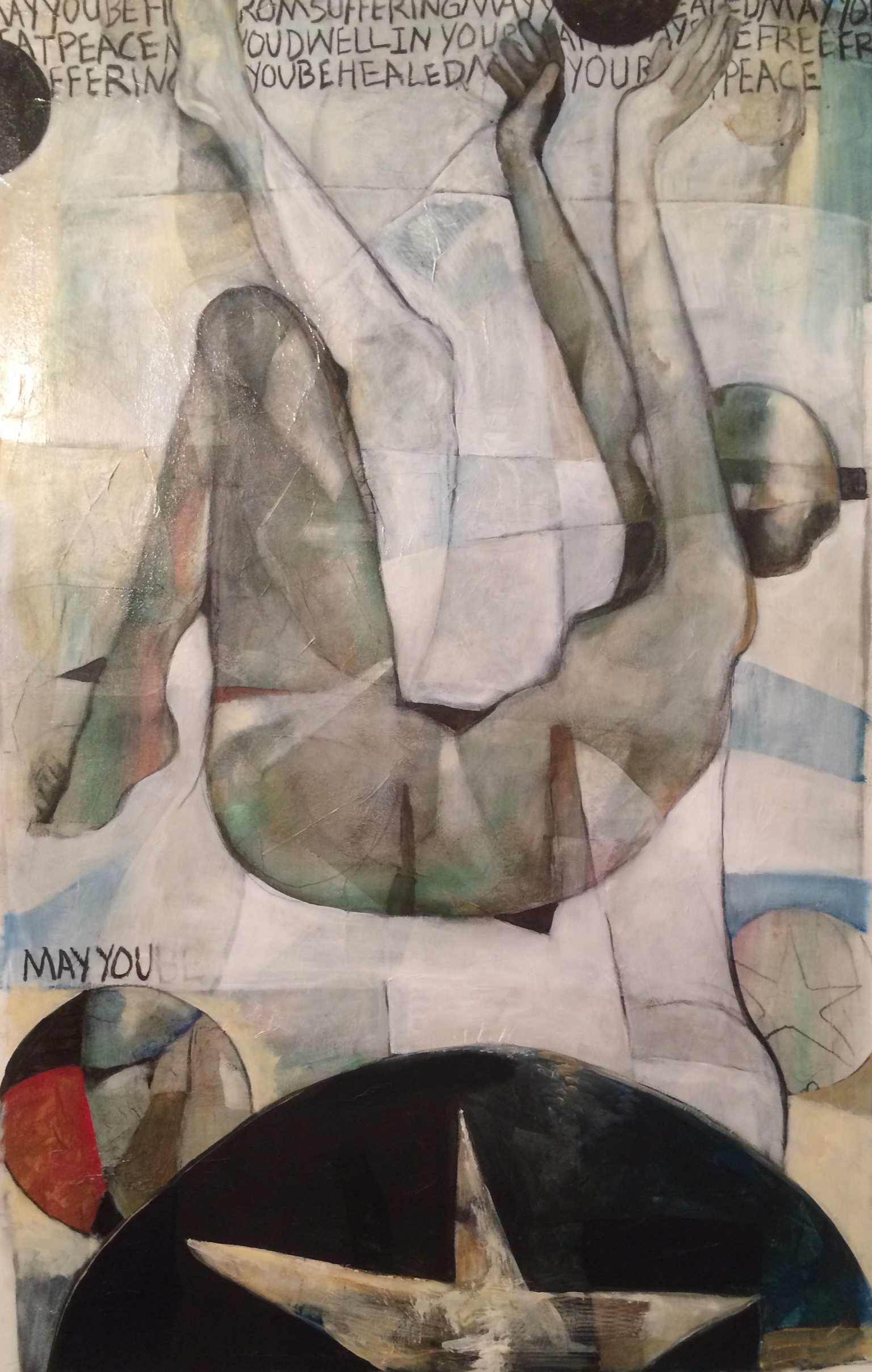
finally finished: May You Be

finally finished: May You Be

It is also true that great artists are constantly learning. And, since growth is always in the direction of the unknown, it is terribly important to have allies to walk with you. Stepping into the unknown is best done in the company of others, those special few wanderers who you can turn to and say, “Whoa! Did you just see that?” David, who is always there with me, laughs in response to my awe, and says, “Tell me! What did you see?”


Hear The Calling Voice

photo

next steps to my latest painting. it’s coming along!

“Maybe that means that the voice we should listen to most as we choose a vocation is the voice that we might think we should listen to least, and that is the voice of our own gladness….I believe that if it is a thing that makes us truly glad, then it is a good thing and it is our thing and it is the calling voice that we were made to answer with our lives.” ~ Frederick Buechner, Secrets In The Dark

This week I received an email from a long lost friend, a man I haven’t seen in over 25 years. Although we have yet to talk, his email contact has already sparked within me a life review. What have I done in all of these years? Who have I become in the quarter century since last I saw my friend? He wrote a brief three sentence overview of career advancement and family highlights (graduations and retirements). In attempting a reply, I found it impossible to encapsulate my path as there has been nothing linear, logical, or similar in my steps. I’ve walked a much different road. My inner imperative roars rather than whispers.

My life has been a source of great concern for my parents. Security has never been high on my list of occupational criteria. The day that I graduated from college my mother asked in all seriousness, with the love and concern that can only come from of a worried mother, “Now that you’ve gotten the theatre thing out of your blood, what are you going to do with your life?” She could see (before I did) my attraction to edges and my need to run at them and jump. She understood my need to question the rules, challenge assumptions, and live on the margins so I might better see and understand the happenings in the main stream. She saw and for a while feared the call of the art within me.

a close-up

a close-up

Judy once told me that she never wanted to be too comfortable because she intended to live life, not protect herself from it; she didn’t want to become complacent in this gorgeous life. Security is low on her list, too. She’s my go-to person when I lose the voice of gladness in the static and clamor of ‘should-do.’ She cuts through the noise, “Can you hear the birds, feel the sun on your face?”

When we were students in college, Roger asked me to read Herman Hesse’s book, Narcissus and Goldmund. He told me that he would most likely live the life of Narcissus and I would follow Goldmund’s route. Narcissus is a priest and teacher seeking God in the rituals of the institution. Goldmund finds illumination through the mess and random experiences of his life. One seeks God through order. The other finds God in chaos. Both are following their call, their voice of gladness. My path has, as Roger predicted, mirrored Goldmund’s. The voice, the call of gladness is clear to me on the inside while the path is nearly unrecognizable from the outside perspective.

another close-up

another close-up

So, what to tell my friend when we speak? Like all artists, I have answered the calling voice with my life.