Meet The Fire

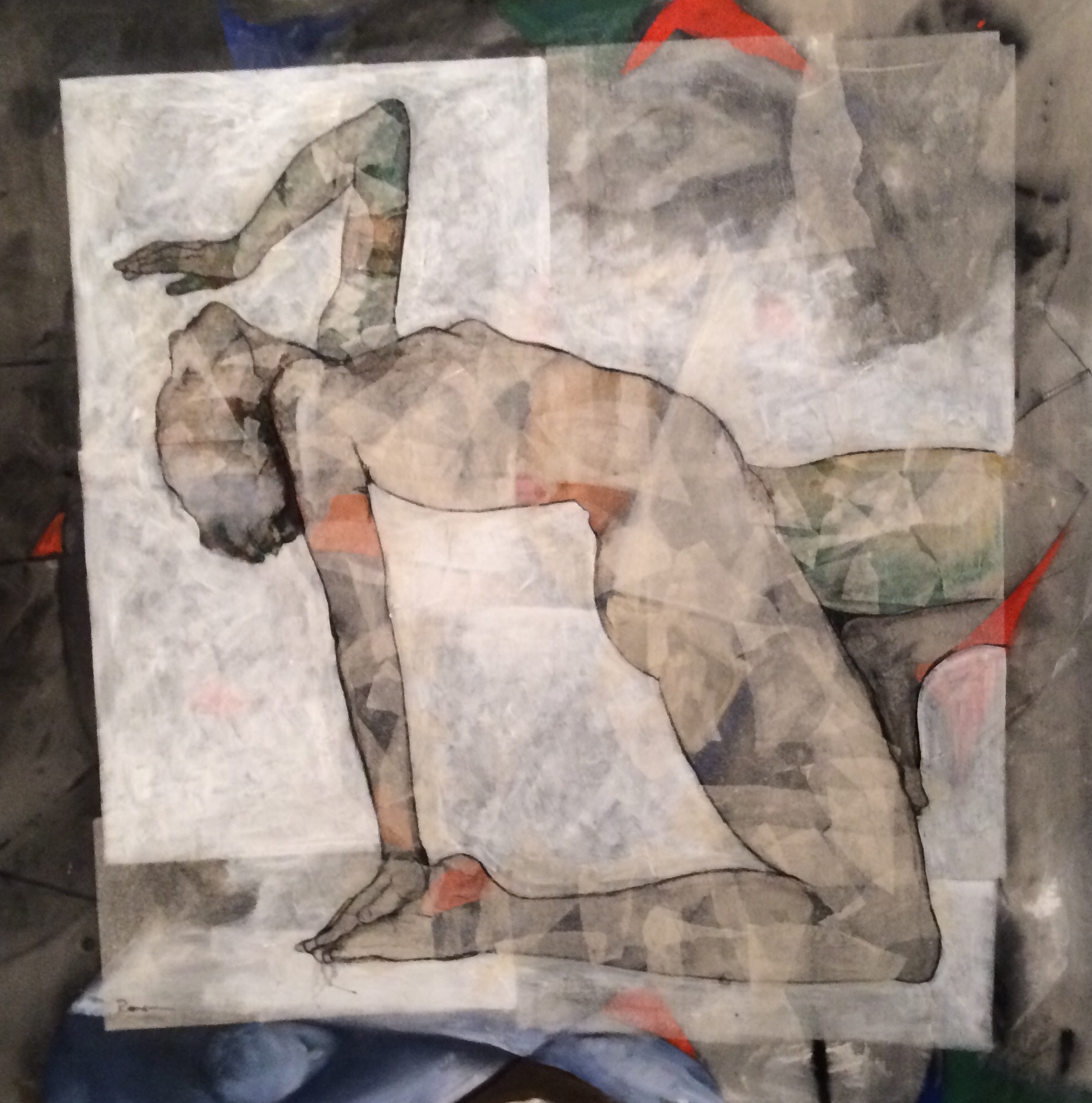
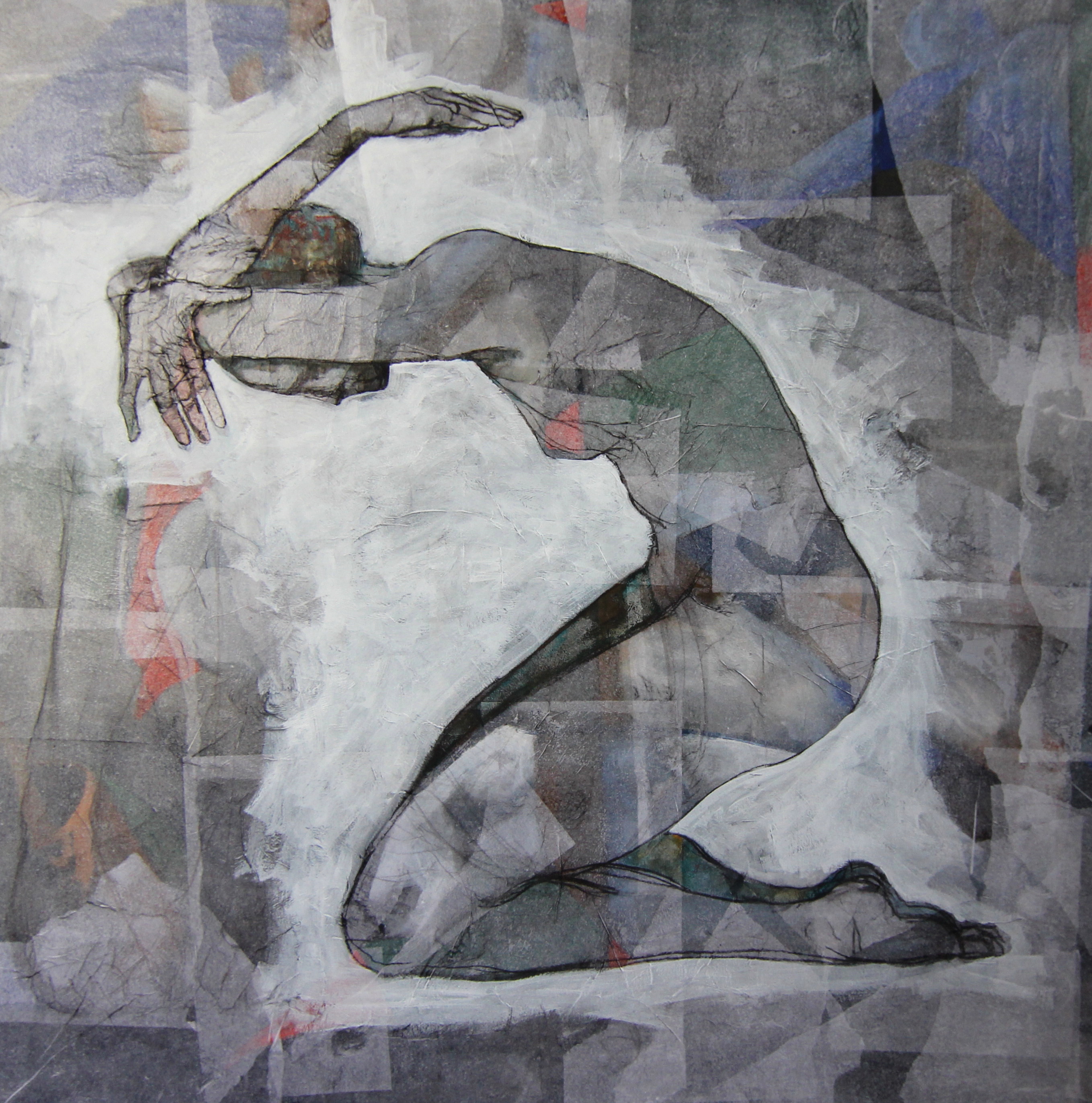
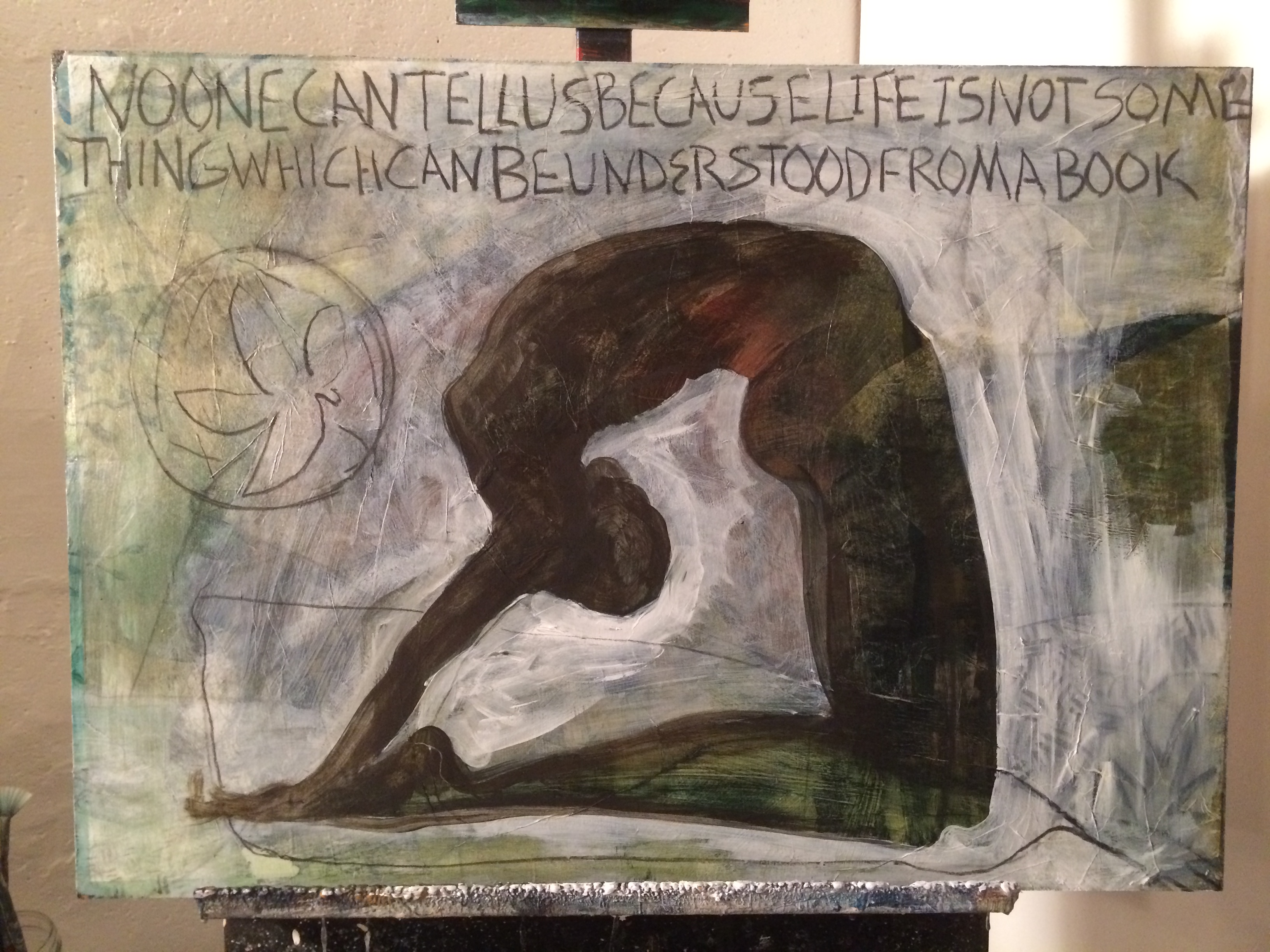
a work in progress. this one is slow going!

a work in progress. this one is slow going!

In order for the phoenix to rise it must first burst into flames and be reduced to ash. Every rebirth requires a death. I imagine the phoenix does not relish the flame but after a few cycles it recognizes the necessity of the fire.

The same image (metaphor) is everywhere: the caterpillar must first cocoon and then be reduced to mush before the impossible happens. The leaves must fall from the tree before the root can replenish, revitalize, and do the impossible: bring forth new life.

The healers in Bali assured me that a wound is necessary to open the door to the gift – and each had suffered a devastating wound or loss en route to fulfilling their healing power. The journey through the wound was necessary to turn on the power. The heroes cycle, the belly of the whale, the quest through the wasteland, finding joyful participation in the sorrows of the world; growth is a fiery, difficult business.

In my life I’ve worked with many, many people in all manner of change and transformation processes. It is surprisingly common for people to want their phoenix without experiencing the flame. It took me a while to realize that people (organizations and otherwise) were hiring me under the guise of helping them transform but in truth they really wanted me to help them circumvent the fire.

People go to great lengths to avoid the flame. No one willingly seeks the wound and no one transforms without it. No one in their right mind jumps out of bed in the morning ready to jump into the abyss and yet the adventure is impossible without it. If a full rich experience of living is the aim of our limited time on this earth, then the fire is necessary. The fire is part of the ride.

Fire avoidance is what dulls an otherwise vital life. Comfort is certainly a worthy aspiration but as the only aspiration it deadens, it limits the life-color-palette to taupe. The trick, as all the stories teach us, is never to avoid the fire, to protect yourself from it, but to be alive in it, to know what it is to be reduced to ashes and know somewhere deep inside that the phoenix will always rise just as spring will always come.

Seek Solitude

from my Yoga series of paintings

from my Yoga series of paintings

It is easier to sail many thousands of miles through cold and storm and cannibals, in a government ship, with five hundred men and boys to assist one, than it is to explore the private sea, the Atlantic and Pacific Ocean of one’s being alone. ~Henry David Thoreau, Walden

I remember watching a documentary of the painter Lucien Freud. He said he couldn’t understand why anyone would choose to be a painter because the choice meant living a solitary life. His comment struck me as odd because, for me, solitude was necessary for the muse to come through. I often yearned for solitude. I always looked forward to my time with the muse.

More than twenty years ago, for a period of time, I was painting exclusively. I had an abundance of solitude. Each evening my dear friend Albert would show up at my door, force me out of the studio and take me to a coffeehouse. He told me that he feared my isolation, that without human contact and conversation, I might twist. His fear, although probably valid, also struck me as odd.

A solitary life can be quiet, prayerful; it can be full. A solitary life can also be lonely and empty. The difference, of course, is in the presence of a relationship. Most painters that I know, most artists, feel as if they are a “channel to something bigger.” Something comes through and it is in the solitary moments that the channel opens. It is in the solitary moments that the relationship becomes available. The relationship with the muse can be full, rich, and three-dimensional. I imagine monks, nuns and ascetics of all spiritual traditions know this relationship, too. Solitary need not be lonely just as, paradoxically, the loneliest place on earth can be in the middle of city teeming with people.

The exploration of the private sea, the Atlantic and Pacific Ocean of one’s being is the province of the artist. The relationship with “something bigger,” with the muse, is the seed from which all art forms grow. The seed is visible in the adornments found in pyramids, in the harp of Orpheus, and in the paintings of Marc Chagall. It is present when children with gusto run their fingers through paint or dance all alone in the grass just because it feels good.


Take The Time

Yoga Series 7When the world says, “Give Up,” Hope whispers, “Try one more time.”

I am updating my website though I am no longer permitting myself to call it an update. To update implies (to me) something periodic. This thing requires constant attention. As it turns out, websites never sleep. Rather than an update I now think of it as a scheduled feeding. Our cat, Baby Cat (were he human he’d be a sumo wrestler or a bouncer at a biker bar), is the only creature alive that requires more feeding than my website. Baby Cat is much more vocal about his scheduled feedings so I’m mentally linking my Baby Cat and website feedings.

My current website feeding, let’s call it an appetizer, involves paintings. I’m including an archive that reaches back a decade or more. There are paintings that go back further in time (much further) and I will post my archeology as I continue the feeding. The remarkable thing about including an archive is that it has provided the opportunity for a life-in-art review. And, I don’t recognize the guy that did some of those paintings. I recall applying paint to canvas but the overall experience is akin to remembering a past-life. They are at the same time “me” and “not me.” A few years ago I went to a Picasso retrospective at The Seattle Art Museum and wondered if the man at 90 years old liked or appreciated the work he did at 20 years old. Like all great painters he grew simpler with age, he said more with less. With age, he had less to say so he was at once both free and precise (a great definition of artistry).

In my life-in-art review I’ve been most interested in the work that happened during transitional periods. For instance, shortly after I moved to Seattle (sixteen years ago) I took most of my existing paintings to a local beach and, over three consecutive nights, burned them. It was my version of a forest fire, a spontaneous conflagration that stripped my internal landscape bare. What followed was a slow revitalization. Renewal. I remember the faces of the people who helped carry my paintings to the fire. They thought I was engaged in a fiery self-sabotage. I knew otherwise. My work had become sterile and heavy. Hope was calling and I needed to drop some dead wood, shed an old skin,… (fill in your favorite analogy). It was hard, messy, scary, and, for me, necessary.

A few years ago I followed Barney and Skip around the Benziger Winery. They were giving me lessons in biodynamics. The lesson over and over again: it’s about the health of the soil. The health of the vine is an expression of the health of the soil; excellent wine cannot be pushed. It takes time. It takes attention to the whole system. Art follows the same principles.


Make No Sense

these hands will change

these hands will change

The woodpecker hammered high atop the ancient television antenna. He seemed not to be bothered by his lack of progress, beak on metal. At first I thought it made no sense and then it occurred to me that progress was not the goal. Perhaps the woodpecker hammered for the pure pleasure of the sound of it. It need not make sense. This woodpecker was an artist to his or her core!

Yesterday was a “no-power-tools” day. No sharp objects were allowed. No walking near ledges permitted. I was distracted; tired to the core. Late in the day we drove 45 minutes to a bakery called ‘Simple’ in Lake Geneva. They make the world’s best flourless chocolate cake. “This makes no sense,” Kerri said as we stepped out of the bakery with our cake. We laughed and ate a slice in the car; pure pleasure before driving home.

Every time the neighbors let their dogs out, Tripper Dog-Dog-Dog runs a frenetic figure eight in the backyard, over and over and over. He exhausts himself. He is having some exotic shepherd fantasy or perhaps he cannot contain his delight. It makes no sense for him to run a trench in our backyard for dogs he’s never even seen. He runs for the pleasure of it.

We sat in the sun this morning drinking coffee. The sky was cloudless, the air was cold but the sun was warm. We leaned against the house, saying little, feeling the warmth seep into our bones. We both knew that on this day we would do nothing. There would be no visible progress toward any defined goal. The wheels of society would have to grind on without us. We needed most to stop, to sit, to stare, to laugh at the Dog-Dog.

photo-2I started a painting a few weeks ago. It is a figure falling through space. Something has been wrong all along and sitting in the sun I figured it out. The hands are all wrong. Rather than reaching for something to grasp they ought to be letting go.


Gear Down, Baby!

a detail from my painting, John's Secret

a detail from my painting, John’s Secret

When writing The Seer I showed the early chapters to some pals and the response was unanimous: break it down into smaller bites. The conceptual steps were too big for readers to connect the dots.”What!” I exclaimed. “Are you kidding me!” I protested. “Are you telling me that people need me to spell it out for them? Am I supposed to hit them on the head with a hammer?” I cried in disbelief to my bemused pals. Their response to my inner adolescent was, again, unanimous: yes. You need to go slower, take smaller steps, and come a bit closer to earth. The details matter. The job is not to be understood. The job is to create understanding.

After gnashing my teeth and tearing my clothes I took their sage advice. And, it was sage advice. The book that I published was comprised of only the first three chapters from the original manuscript broken into smaller thought-bites. Breaking it down was one of the hardest and best things I’ve ever done. Like Horton the-hearer-of-a-Who, I discovered complete new universes in the details, in the things I’d deemed too insignificant to mention or simply didn’t see with my head so firmly in the clouds. Ironically, while writing a book entitled The Seer, I learned a lesson in seeing.

Skip laughed when we first met. He’s a very-big-thinker and, like me, sees the world from 30,000 feet. He exclaimed, “Oh, No! You have the curse, too!” From 30,000 feet, small steps and details are almost invisible or easy to ignore. From 30,000 feet, everything is inter-related, one great big dynamic flowing motion. From 30,000 feet, the ubiquitous question is, “Don’t they see?” The runner-up question is, “What’s the problem?”

As we learned in school, the devil is in the details so, with my head in the clouds I have often been surprised by the detail-devil. People on the ground plant flags and guard territory. People on the ground choose sides and assume a defensive posture before thinking to ask a single question. Fear drives swifter action than does lofty reason. People are much more complex than they seem from the conceptual heights.

And, the only way of working with a complexity is through a simplicity. Connect the dots. Do not assume that “they” will “know” or “understand.” Do not assume that “they” see what I see or believe what I believe – or that what I see or believe is better or more valid than what they see. Opening a heart is a slow affair. Listening is best done when leaning in. Asking questions before making statements is good artistic process. Be a dot that connects to the other dots. Art, in all of its forms, is meant to serve as the great dot connector.

John's Secret by David Robinson

John’s Secret by David Robinson

Kerri, no stranger to my 30,000 foot rants, has developed a short-hand phrase for those too-many-moments when I need to move slower and pay attention to the details. She is helping me with this life lesson by applying a simplicity to my complexity. Now, when I have assumed that the dots are already connected and am perplexed by the breakdown, she simply says, “gear down, baby.” Move to a lower gear and open your eyes. Connection always happens in a lower gear. What is really there is infinitely more important (and often more beautiful) than what we want to be there. Releasing the “shoulds” opens eyes and hearts for shared experiences. So, gear down, baby.


Find The Riches

an illustration from Beaky's book, SHAYNE.

one of my illustrations from Beaky’s book, SHAYNE.

During my call with Jim I told him that my projects this year have been the most satisfying of my life. Certainly they have been the most important. And, they have also been, as I laughingly used the term, “negatively lucrative.” He didn’t yet know of Beaky’s books, of her website, of her book signing, so I sent him a few of my favorite photos from the event. Later, he sent me this text:

“It is wonderful to be able to eat and pay the bills but there are – for a fact – things money can never buy. That famous author’s obvious joy being one.”

Isn’t that the truth? What price could we possibly place on joy? What price would we pay for true love? What price do we place on personal truth? What is the price tag on fulfillment?

I suspect that the great disease of our time – something future history professors and archaeologists will investigate – is that we’ve managed to place a value on our values; morality has somehow enmeshed with money, the purpose of education has somehow become the achievement of a bigger paycheck. In this never-ending political season, count the number of times and ways our candidates tell us that we must weigh our interests against our values.

What is the price of a value? What is the purpose of a value if it has a price?

All my life I’ve been told by people who love me, that, as an artist, I need to make a distinction between the work I do for food and the work I do for love. Most artists, myself included, feel their work is a kind of call. It is an imperative, a necessity. It is food. It is love. Most artists, myself included, do their work-for-love whether they are paid for it or not. They have to. I have to. It is a call. It is nourishment. There is no way in a culture that has placed a value on its values to recognize the real value of food-for-the-soul and food-from-the soul (the purpose of artists in a culture); a market cannot make sense of soul nourishment. This line of distinction, work-for-food or work-for-love, is at best a wonky value statement. It is a line that only makes sense to a people versed and rehearsed in trading their soul-requirements for a better retirement.

what is the price of joy?

what is the price of joy?

Last night I finished reading aloud to Kerri Tuesdays With Morrie. Jim’s text and Morrie’s messages are in beautiful alignment: there are, for a fact, things that money can never buy. And, those things are where the riches of this life can be found.

Breathe Out. Breathe In

...if beakybeaky was a band, this would be the album cover...

…if beakybeaky was a band, this would be the album cover…

“The most important thing in life is to learn how to give out love, and to let it come in.” Mitch Albom, Tuesdays With Morrie.

Somewhere in the 22nd hour of our drive, the sun rose. Even through our exhaustion and bad fast food coffee, it took our breath away. It replaced, or, rather, swallowed, a brilliant sliver-crescent moon.

We’d stayed longer in Tampa than we expected. The day after Beaky’s book reading and signing, Sunday, we were exhausted so we delayed our return trip home for a day. The following day, Monday, was bad for Beaky – she was in tremendous pain and we were overwhelmed with the need to stay. So, we stayed, knowing the result would be a 24 hour dash home for rehearsals.

“His voice dropped to a whisper. ‘Let it come in. We think we don’t deserve love, we think if we let it in we’ll become too soft. But a wise man named Levine said it right. He said, ‘Love is the only rational act.’” Mitch Albom, Tuesdays With Morrie

...and the truth of beakybeaky....

…and the truth of beakybeaky….

This year is unusual. I’ve done too many plays, paintings, and projects to count and each had its rewards and regrets. Twice since the turning of the New Year I’ve completed a project that was so fulfilling, so right, that I would not change a thing. Both have this in common: the intention was pure. I did them for the right reason: someone else. The first, The Lost Boy, was a message from Tom to his nephew, Seth, and I was the messenger. The second, Beaky’s first book, Shayne, was to make a dream happen. Every dream needs assistance to be born: the manuscripts existed. Beaky’s desire to share (publish) existed. They lacked an illustrator and designer. I did the illustration. Kerri did the layout and design; a dream fulfilled itself. For me, both are lessons in breathing out love so that I might also breathe it in.

Just prior to Beaky’s reading, we took a series of selfies with her. I told her that, if Beakybeaky was a rock band, the selfies would make excellent album covers. After our photo opp, we wheeled her to a standing-room-only crowd, many people that she knew and many more that she didn’t, people who’d gathered to hear an almost-94 year old author read and sign her very first book.

a dream fulfilled

a dream fulfilled

Breathe out. Breathe in. It turns out that an exhale is necessary for the inhale.


See It Blaze

text from Krishnamurti as it appears in my painting

text from Krishnamurti as it appears in my painting

Every once in a while the things I read, the experiences of my life, seem to coordinate. Like a thought-confluence, the books, the poems, the errands, the conversations, run into a single thought-stream. It’s as if they called each other last week and asked, “So what are you going to wear?” Often, this is how the universe places its hammer on my head.

A few stanzas from a Mary Oliver poem, Morning Poem (read the whole poem sometime. It’s breathtaking):

each pond with its blazing lilies
is a prayer heard and answered
lavishly,
each morning

 whether or not
you have ever dared to be happy,
whether or not
you have ever dared to pray

Did you catch the word, ‘lavishly?’

Here’s a bit from Carlos Castaneda, A Separate Reality:

What makes us unhappy is to want. Yet if we would learn to cut our wants to nothing, the smallest thing would be a true gift…. A warrior knows that he is waiting and what he is waiting for; and while he waits he wants nothing and thus whatever little thing he gets is more than he can take.

Prayers answered lavishly. Whatever little thing he gets is more than he can take.

For me, there are a few important words that have, from over-use, fallen into the bin of meaninglessness:

presence, transformation

Actually, they are in the bin because we’ve managed to make them (like the word, ‘art’) commodities, marketing terms, something owned or purchased with coin or wile or reason. Something possessed or not possessed. Something available to a few but not all.

Sometimes the words open again, the experience opens again, when said another way. For instance, the phrase, “cutting our wants to nothing,” is another way of saying ‘presence.’ Don Juan would have made a good Buddhist! When present, the ordinary pond blazes, it teems with life and isn’t the experience of teeming life at the heart of any good prayer? The last time you caught your breath, a sunset or watching your child sleep, you were present, you wanted for nothing,  your prayers were lavishly answered.

my latest work-in-progress

not yet finished – maybe never will be – an, perhaps, that is the point.

The message of the hammer on my head: The pond is always blazing. The transformation is not in the pond but in our ability to see it.


Dance With The Fire

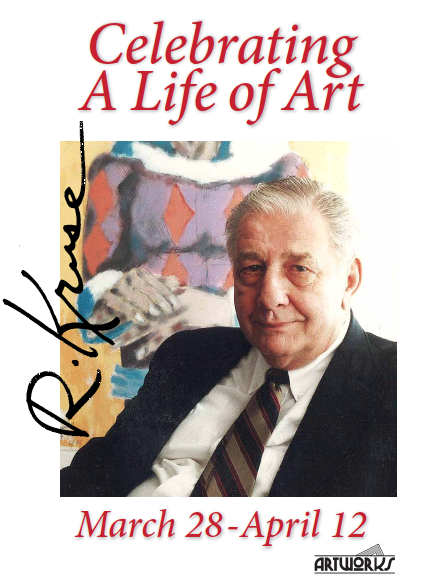
Screen Shot 2015-03-29 at 5.21.46 PMLast night was Duke’s (Richard Kruse’s) memorial art show. There was an abundance of food, wine, laughter and stories. The gallery was literally filled with his paintings, prints, and sculpture. He was prolific. His paint encrusted chair, draped with his paint spattered coat, sat empty before his easel; on the easel was a large sketch pad, a place for notes for Duke and his family. I watched people approach the chair, catching their breath before sitting to compose their thoughts in the very chair he’d occupied for decades to compose the paintings that lined the walls. The chair became sacred space, a bridge between worlds.

I did not know him but I felt an immediate kinship with his work. He was a figurative painter – as am I – and given to the mystic – as am I: he worked the figure to find the soul shining inside – as do I. It was a great treat to thumb through his sketchbook. The energy and freedom of his drawings took my breath away; this was a man who needed to make art. It was an imperative made visible. I found an even deeper kinship in his imperative.

It’s hard to explain to someone who is not filled with the fire, the inner necessity to draw, dance, make music,…. It is more than a want or desire. It can be ignored but withering is the price. If it is not honored it will consume. To someone who does not know this fire the making of art appears as an indulgence. To someone who burns with the fire, anything else is a distraction; they will construct their life patterns according to the necessity of the fire.

The myth of the suffering artist is perpetuated by non-artists. The only artists that suffer are those who ignore their gift. Most people, despite their rhetoric, fear the kind of freedom and energy evident in Duke’s sketchbook. Artists run at the unknown. They develop craft so they might relinquish control in order to dance with the fire. Too much investment in control (of self, of other, of circumstance) smothers the flame. By the stories I heard, by the power of his sketches, by the laughter his life evoked, I can only assume that Duke must have been a master of this fire-dance.


Step Back

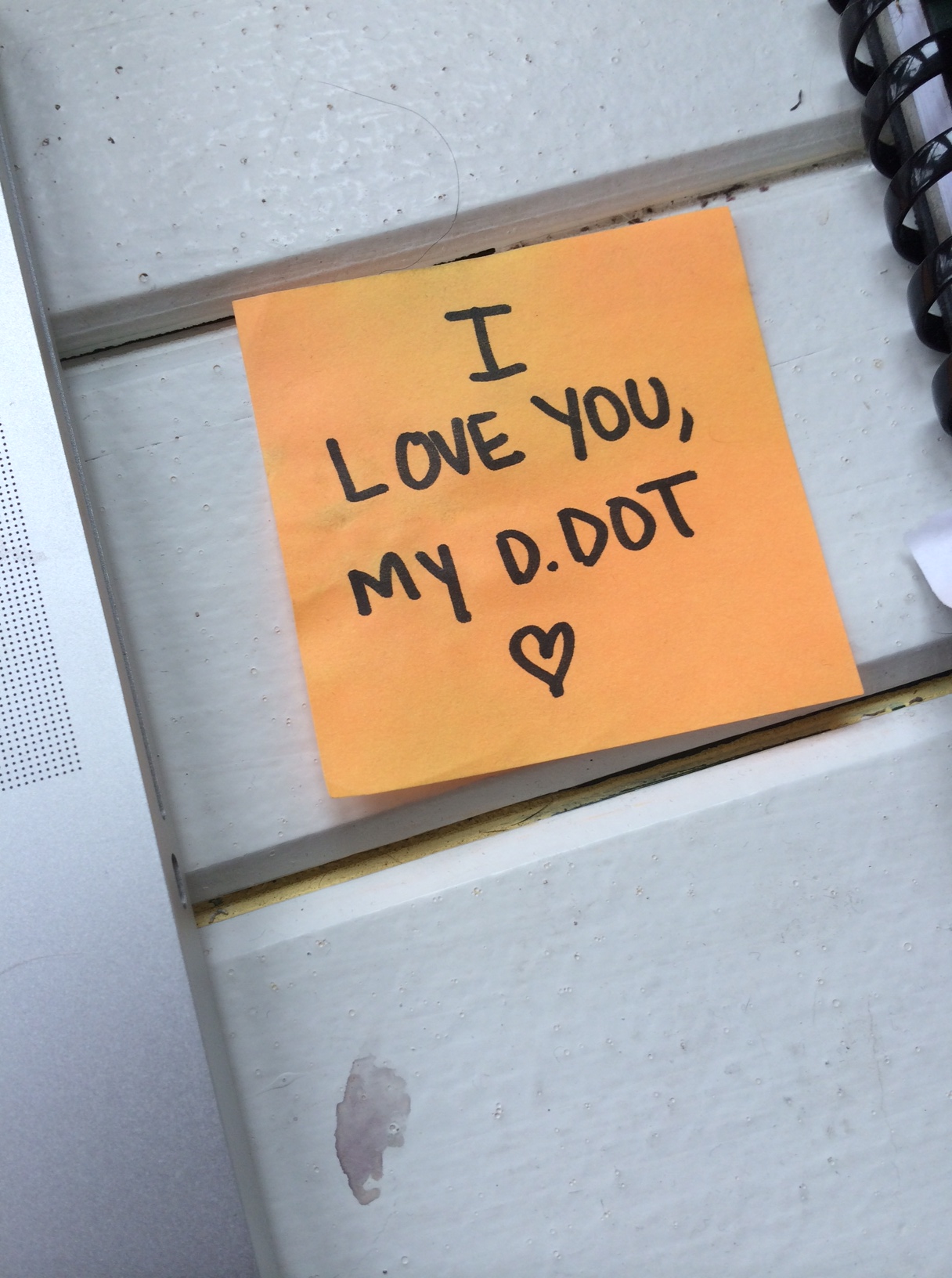
On the desk there is a wire and wood sculpture of a crow, a flour sifter stuffed with colored pencils, a little tiny picnic basket containing the sisu phone, a plant from Jen, a hanging jar holding rocks and crystals, stacks of paper and notebooks – each representing a project that is in motion, pens and pencils galore, three pink post-it notes with “right,” “left,” and “a gift from me to 2 U! Pass it on!” written on them. There is also a weathered orange post-it note by the computer with this much treasured-phrase: “I Love You, My D.Dot.” If I had to surrender all of my worldly possessions except for one, I would choose to keep the orange post-it note.photo

On Friday afternoon we will help John hang a memorial art show of his father’s paintings. It is how his dad wanted his life to be celebrated. As I was in the studio painting this morning I thought that, someday, someone might do the same for me. I wondered who might think to celebrate my life with a show of my paintings. Who might read some of what I have written? And, what if all that matters in this world can be expressed on a single orange post-it note? What if it is not the paintings or the books or plays – the things I produced? What if all that really matters is if I paid attention and loved mightily during the time allotted me? What more do I need than to have lived a life that warranted an orange post-it note?

Last night we had a band rehearsal in the sanctuary. I stepped away from Kerri, Jim, and John (the real musicians) and walked to the back of the sanctuary so I could listen to the song. It was gorgeous and they were unaware of how gorgeous it was – of how gorgeous they were. They were simply working. I was captured by the moment. I literally ached with how full and rich was the moment. I simply could not believe the depth of my good fortune. Kerri sang, Jim and John played, and I cried with the power of it all.

The moment was ordinary for them, extraordinary for me – and isn’t that always the way? The extraordinary is always waiting in the ordinary, in the post-it note, in the rehearsal, in the person passing you on the street, in the hard choice, making a meal, the sigh of the Dog-Dog in the middle of the night? Isn’t this very notion – opening the extraordinary hiding in the ordinary – the reason we live and make art? Isn’t the real practice of the artist simply a matter of stepping back so we might see it – and then share what we see?