Make A Savory Day [on Two Artists Tuesday]

“I don’t believe in guilty pleasures. I only believe in pleasures.” ~ Ira Glass

Among other things, covid has been a great disruptor of our patterns. Our life today barely resembles the life we knew two looooong years ago. Yesterday, while driving through the farmlands en route to buy a loaf of bread at Simple Bakery in Lake Geneva, Kerri said, “It’s all so weird.”

Among our new patterns is more appreciation of our time. We are less willing to stuff our day with things to do, rather, we’ve established a slower rhythm and points during the day to stop, sit together, and savor the events of the day. It began at the onset of the pandemic with our covid-table in the sunroom. A place to sit and watch the sunset at days end. Soon, there were snacks. And then a glass of wine. It became a ritual. Now, there is nothing more important in our day than to meet at our table. Talk. We call friends and family from the table. Dogga leads the way. He meets us there, positioned just behind our chairs with his bone or a few mauled toys. Sometimes we sit for hours – far beyond sunset. We eat our meals there.

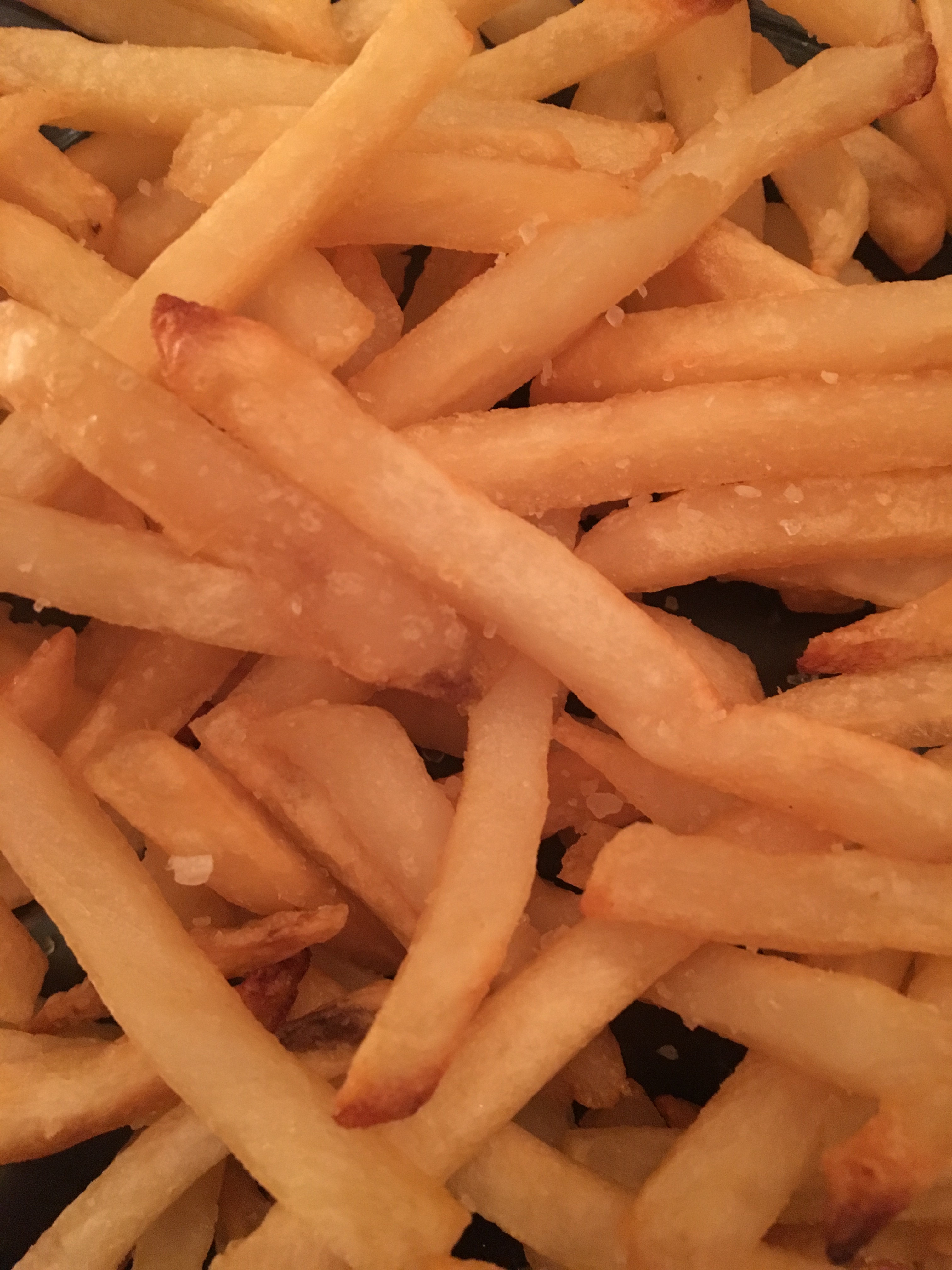
We’ve also established patterns of anticipation within our patterns. My favorite, the silliest but most effective, is french fries for snack. There’s nothing more satisfying on a cold winter evening, than hot salty french fries. We make sure that it’s not a common, every night affair. We save it for the tough days or as a surprise. “Is it french fry night?” Kerri hops and claps in anticipation when she notices that the oven is preheating. Yes. Oh, yes.

The new pattern, of course, is not the table or the fries. It’s the decision to make moments special. We decided amidst the pandemic, the broken wrists, the job losses, the civil unrest, the loss of family and friends, to make lemonade from this time of abundant lemons. We decided to accent the pleasures. To walk slower. To meet our days, not with a list of things-to-do, but with the intention of making a most savory day from the ingredients found in our pantry.

Pattern disruption. Within the hard breakdown of the known, the loss of the comfortable, we are fortunate. Many times, sitting in our sunroom, the happy-lights reflecting in the windows, Dogga quietly behind us chewing his bone, Kerri says, “I love this space.” I nod my head. Me, too. The literal and the metaphoric.

read Kerri’s blogpost about FRENCH FRIES!!!!

Share Appreciation [on Not So Flawed Wednesday]

“I’ve got an old mule and her name is Sal
Fifteen miles on the Erie Canal”

~Low Bridge, Everybody Down, music and lyrics by Thomas Allen, 1913

She’s a donkey, not a mule, yet I couldn’t help but appreciate the collision of power sources present in this photograph. From donkey to solar.

I’ve read that the innovations of the industrial age were meant to spare humans of muscle-toil. If an engine could power it, a human didn’t have to. The innovations of the information age are meant to spare us mental and sense toil: why stress to parallel park your car if the car can do it all by itself? Why add the numbers if the spreadsheet does it for you? Why look up information if Siri or Alexa can bring it to you? What does it now mean to stay in touch? Text and facebook and tweet and email and zoom and facetime and slack and chat and…call.

Oil, coal and gas are the energy systems of the past. They are donkeys and mules standing next to renewable energy sources like wind and power. It takes time for an infrastructure to be built. It takes time for people to wrap their imaginations around a different way. Do you remember the loud resistance in the early days of the credit card proclaiming that plastic would never replace paper money? That was not so long ago. There were similar angry voices declaring the auto-mobile was a flash-in-the-pan. “Nothing will replace the horse!” Our local supermarket just installed banks of electric car charging stations. Energy systems are slowly moving away from grids: the power source and the property will (mostly) be one and the same.

Industries, like people, either adapt or die. Most retail chains that came late to online shopping are going or already gone. Many have said that they didn’t see the change coming. Or that they couldn’t imagine a world in which people bought stuff without first touching it. Cars are in vending machines. Isaac Asimov would have loved it!

Did I mention that the solar panel in the photograph senses and moves with the sun? As it turns out, the donkey does, too. Much for the same reason. Only, for the donkey, the heat of the sun feels good and I doubt the solar panel cares or feels anything. Sensing and feeling are still on opposite sides of the change-line. At least so far. There may come a day in the not-so-distant-future that the donkey and the solar panel share appreciation for the heat of the sun. The donkey will wag its tail. The solar panel will stretch and sigh. The stuff of children’s books or sci-fi. At least for now.

read Kerri’s blog post about DONKEY & SOLAR PANEL

Find A Way [on Two Artists Tuesday]

In the age of Covid, the rules are different. We keep our distance from friends and loved ones. We make rules for engagement. Vaccinations, boosters and negative tests are the requirement for a visit. What was once connective tissue – like an airplane – is now a barrier. A cost/benefit analysis is required before stepping into a terminal. And then, spin the world of rules and boundaries on its axis and this is also true: we find a way. It’s what I appreciate most about people. Will finds way.

A species ends when it can no longer adapt to changes in circumstance.

For weeks we searched for a way to see Craig. To give him his xmas presents. A restaurant that required masks, proof of vaccination, and had a protected outdoor patio provided the necessary ingredients. On a January night, with temperatures dipping into the low 20’s we sat at a table nested between heaters and shared a meal. We exchanged gifts. And, we weren’t the only guests dining on the patio. Other patrons also searched for and found a way.

We loved our meal and our time together. We laughed at the absurdity of the situation. We acknowledged and embraced the necessity of outdoor dining in sub-zero temperatures. We made a story that we’ll tell in years to come. Do you remember when…?

Zoom has become a way. To a point. We’ve learned in this time of pandemic that seeing someone on a screen doesn’t replace seeing them in person. At work we’ve learned that many things can be done through a screen but many generative experiences are slower or inhibited without presence.

Presence.

Energy begets energy; the fire of enthusiastic idea generation is dampened through an app. As Skip said at our end of year meeting, “Nothing replaces breaking bread together. Someday we’ll share a meal.” I look forward to that time, to meeting the incredible people that I see each day through my screen.

We are racking up stories as we adapt to an ever-changing circumstance. To drive rather than fly takes time so we’re learning to take more time. To not rush to arrive. We feel the limits on the distance of our reach. We’re learning the depth of yearning to be-with as opposed to merely-look-at. We’re learning the necessity of boundaries and the health-considerations that come with saying “No.” Mostly, we’re learning the hard line between what’s do-able through a screen, and when we need to consider the ridiculous – and find a way.

read Kerri’s blog post about HEATERS

Choose How [on Not So Flawed Wednesday]

My friend’s children are having children. The top-of-the-list advice my friends offer their children, now parents themselves, is this: it goes so fast. Appreciate every single moment. Love every phase. You will blink your eye and they will be grown and gone.

I lost my dad in September. I have, like most people who’ve lost a loved one, spent much of the time since his passing remembering and reflecting. It’s a mixed bag of treasuring moments and wondering why I didn’t fully appreciate others. It is true, you don’t know what you have until it’s gone.

What is so hard about appreciating – fully appreciating – the limited moments of your life?

I used to facilitate an exercise. It had four phases. Working in small groups, the first phase was to have a group member identify a problem in their life and then tell a blame-story about the problem. The rest of the group helped by supporting the person in their story of blame. The groups howled with laughter. Blame is fun. It’s addictive, like sugar.

In the second phase, the groups tried to “fix” the problem. The serious, concerned faces puzzled possible fixes but inevitably dissolved into more laughter: there’s nothing like trying fix a problem to create more problems and loop back into a juicy blame story.

Phase three was simple: I asked the original problem-story-teller to retell their story as a story of choice, not blame. I asked the other members of the group to support the teller in their story of choice. Silence ensued. And then, quiet presence as the new narrative – the story of choice – slowly inhabited the room.

Blame stories are like too much candy. They are easy to eat and yet have no real sustenance.
Stories of choice are much harder to tell but they are rich in awareness and appreciation of the moment.

We never arrived at the fourth phase: stories of opportunity. Activating choice. The notion of taking responsibility for choices always stopped the exploration. Our conversations about choice-avoidance usually filled the time.

What we gain in blame, we lose in appreciation of our moments. In order to taste the moment, one must first choose to be in it – and then choose how to be in it.

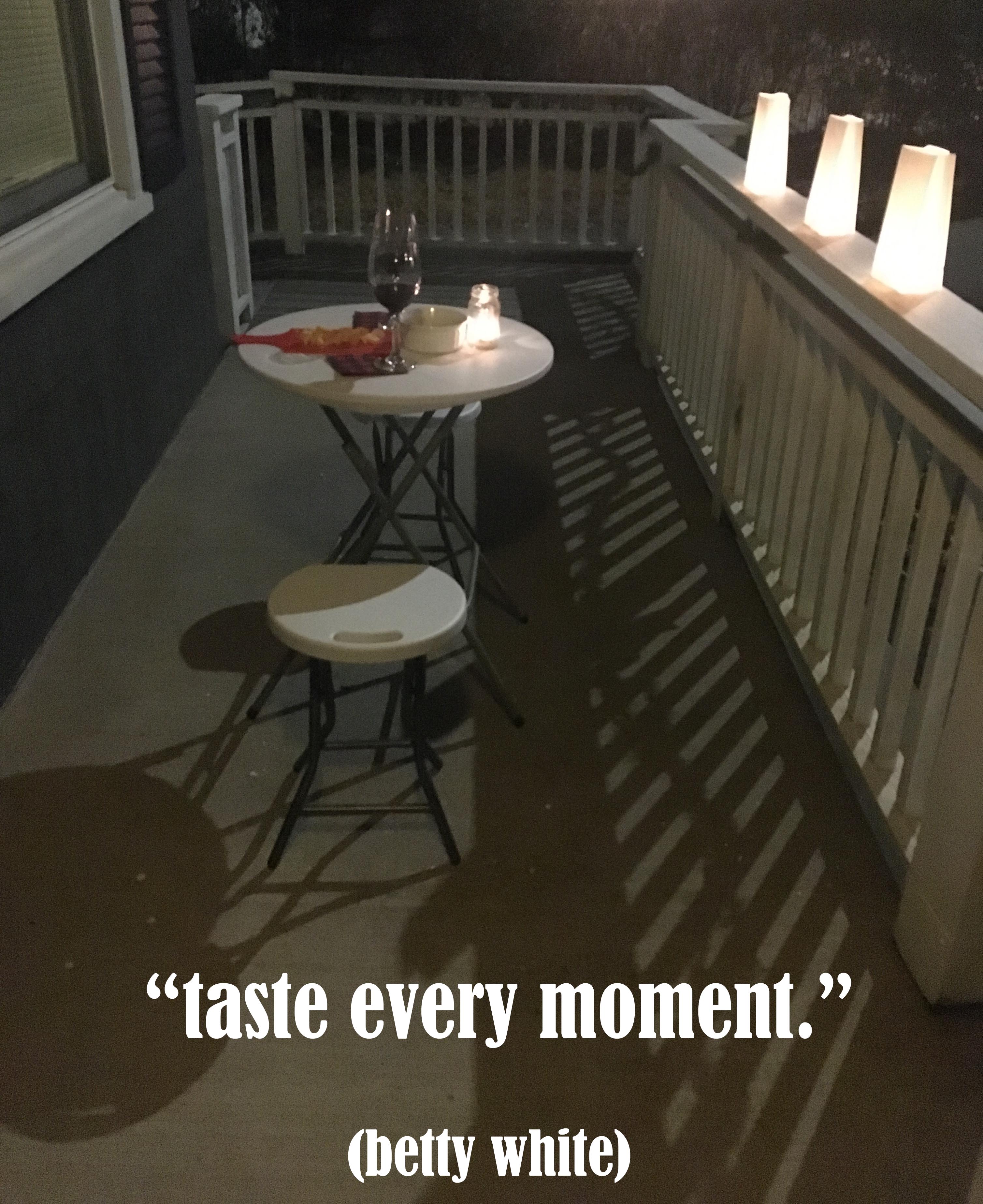
Grief is a phase to be loved, not avoided. As is the celebration of a first birthday. A new life. A lost love. A full spectrum. Taste every moment.

read Kerri’s blog post about MOMENTS

Attend To Beauty [on Two Artists Tuesday]

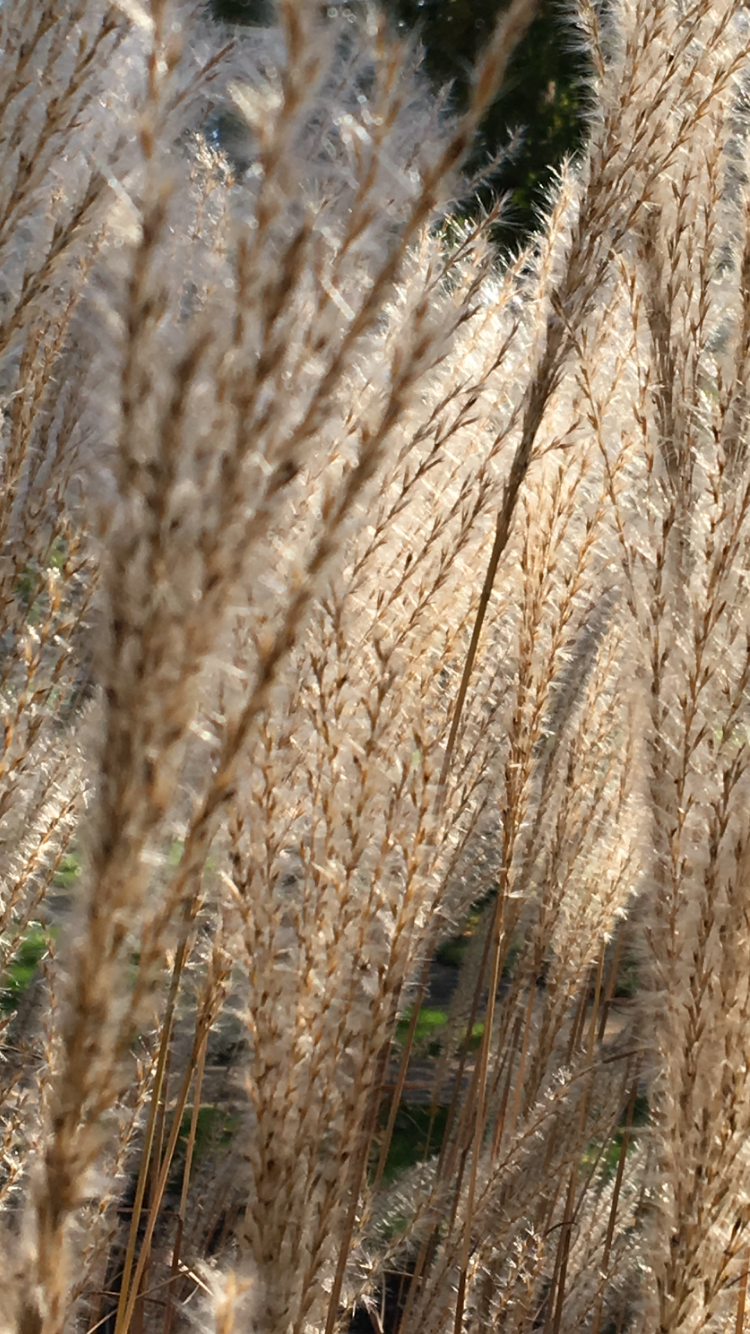
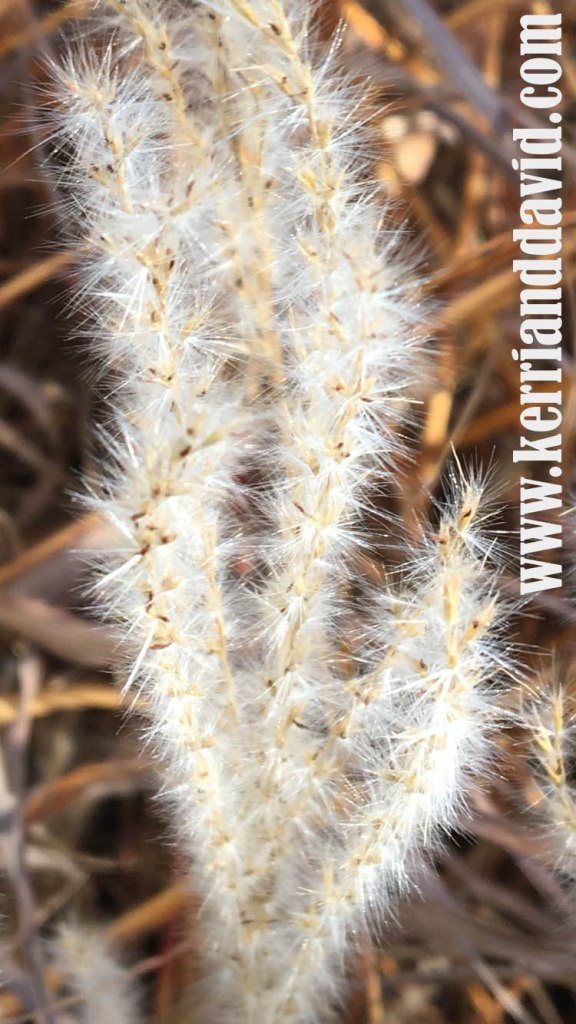
We are fans of ornamental grass. They line our walkway and populate the area along the fences. DogDog’s round-about sign is now nearly obscured, standing in the middle of tall grasses.

Some folks cut back their grass plants at the end of the season but we let ours stand through the winter. The reason has nothing to do with the health of the plant and everything to do with aesthetics. There are few things more beautiful than ornamental grasses aglow in the winter sun. I have been brought to tears watching the dance of the grasses, alight in pink and orange against the cold blue of a snowy afternoon. Magic beings swaying. [My grass-inspired-tears brought Kerri to consider that my heart just might not be made of cardboard (single ply) after all].

We attend to beauty, not because we are artists but the other way around: we can’t help but attend to beauty and that is what makes us artists. Yamaha paid Kerri a great compliment when she said of our home, “Everywhere I look I see something beautiful.”

Saturday, while raking the leaves, the air was crisp and birdsong, so unexpected, called to me to listen. As I stood listening to the birds, a breeze caught the grasses and they bristled, caught the wind and swayed. I dropped my rake and watched the performance, birds singing to the modern dance of grasses.

Our mail carrier broke my revelry with a greeting. She said, “I’d rather be doing my job than yours. I hate raking leaves!” I laughed. The color of the leaves, the sound, the fall smells. The performance. At that moment, I felt like the luckiest person alive.

“Oh, I don’t mind it,” I replied. “Actually, I’m enjoying it.”

“Well,” she said, “It’s a good thing then. I think I’ll stick to the mail.”

Yes. It’s a good thing. A very good thing, indeed.

read Kerri’s blog post about GRASSES

Appreciate The Other Life [on Two Artists Tuesday]

Every so often we pick images for the melange according to a theme. A few weeks ago all of the images were green. This week we noticed that we had several photos of words or phrases so we decided to have a theme week. Yesterday featured a message on the tailgate of a truck, “Every day above ground is a blessing.” Today, the other life. La Otra Vida.

Kerri and I met in middle age so our history together is short. Our pals are couples who’ve been married for decades. It is common for us to leave dinner with friends, after lively conversation of raising kids, vacation stories or tales of pets from the past, and need to talk about the eras in life that we didn’t pass through together. Our cartoon, Chicken Marsala, came from a conversation about the kids that we didn’t have. What kind of parents would we have been together? What would we have done differently in life had we met when we were younger? Would we have fallen in love had the previous-versions-of-ourselves met at an earlier phase in our lives?

La Otra Vida. The other life. We’ll never know the answers to our speculative questions. I was not the person at 25 that I am today. Kerri did not know me during my train-wreck years. I was – and in many ways still am – a restless wanderer but I have developed over the years the capacity to sit still. To appreciate where I am.

Last night, sitting on the deck sipping wine, the sun was down and we had the torches burning. Dogga was asleep at our feet. We were listening to the soundtrack from the movie About Time and Arvo Pärt’s Spiegel im Spiegel, a heartbreaking piece for piano and cello, began playing. I memorized the moment because, in another life, at a time that I was not so happy, I knew that La Otra Vida was out there somewhere. The other life. I knew someday, minus a few demons and with a few more miles behind me, that I would one day sit outside on a cool evening, my wife’s hand in mine, my dog asleep at my feet, and know with absolute certainty that life could not possibly be better.

I savored the moment. I will never take for granted this, the other life.

read Kerri’s blog post about LA OTRA VIDA

Appreciate The Break [on KS Friday]

Before we went to sleep last night we took Dogga to the car and sat in the air conditioning for half an hour. He needed a break from the heat and humidity. We needed it, too.

I’ve been working in the basement. It’s been so humid that my fingers stick to the track pad on my computer. On a Zoom call I was sharing a screen and Skip said-more-than-asked, “What are you doing!” I can be clumsy and inept without sticky fingers and sweat running into my eyes so it must have been a riot trying to follow my staccato presentation. And, let’s not talk about diminished brain function in heavy air and intense heat. My synapses fire in slow motion, if at all.

Sometime in the night the air cooled. We knew it was coming. Our conversations have been about holding on until Thursday night. “It’s going to break,” we promised each other. “It’s going to break,” we’d tell the dog.

On Monday, in the midst of yet-another-down pour, with water gushing up from the floor drains in the basement, ankle deep in water with shop vacs humming, running buckets of water up the stairs and out into the rain, Kerri stopped and said, “I think we’re handling this pretty well.”

It’s going to break. We are handling it pretty well. “Arranging the furniture in our mind,” as we read this morning, “to create a space of happiness.” Yes. Expect it. Create it. The water is up to our ankles so we might as well splash and have some fun.

Our wet humid world has exploded in tones of green. The grasses grow by the minute. The weeds, too.

That morning someday, full of hope in our expectation. Today, full of hope, because it is our expectation.

Sitting in the car last night, on “errands” to nowhere, the car idling, we were finally cool. DogDog walked slow circles in the back and then poked his head between the seats for a pet. “I’m not sure it gets any better than this,” I thought but did not say.

Sometime in the night, the air cooled. We knew it was coming.

That Morning Someday on Kerri’s album Blueprint For My Soul

All of Kerri’s albums are available on iTunes and streaming on Pandora

read Kerri’s blog post on TALL GRASSES

that morning someday/blueprint for my soul ©️ 1997 kerri sherwood

Smile With Pete [on Two Artists Tuesday]

It is a hot and humid morning as we sit to write. The sky is dark and rumbling. A storm is moving in. Dogga doesn’t like the thunder. He stays close. He studies our responses. Kerri jumped up to close the windows against the rain.

News of Pete’s passing came yesterday. And, although I have not seen him in a few years, it sucked the air from my lungs. His path through life was not easy. He was the first truly free spirit I met in my youth. I’d met lots of pretenders, cape-wearing artists that fancied themselves to be free. Angry activists. Pete was different. His protest against the Vietnam war meant that he simply refused to fight. Peace made him a criminal so he went where he could live as he believed, a hippie, living off the land and off the grid. He understood that his actions mattered. He understood that his choices impacted everyone so he was dedicated to making sustainable, non-violent life-choices. Pete was way ahead of his time.

He was a beekeeper and, occasionally, when he needed help, I rode in his old truck and helped him lift the heavy hives, moving them to the next field. He collected the honey for sale and made beeswax candles. If a puritan work ethic smashed into a Buddhist mindset, Pete was the result. He worked hard. He relaxed hard.

He believed in the illumination of human consciousness. He meditated and practiced presence. We talked endlessly about the nature of…nature and what it was to be of the earth and not on the earth.

One night, after a long drive and a long day of moving hives to a farmer’s field, too late to drive home over the passes, the farmer gave him permission to camp overnight. Pete rolled out his sleeping bag and fell asleep under the stars. Two county ditch riders, seeing a hippie in a farmer’s field, decided it would be great fun to run their truck over the hippie. Pete’s hair got caught in the bumper. He was drug behind the truck for a long, long way before his hair finally released from his head.

No one can explain how he survived. His body was broken, his brain was damaged, but his spirit was unharmed. I’ve never seen another human being go through so much, lose so much, and come out smiling. In my middle age, years after the “accident,” sitting with Pete at family picnics, I’d ask him how he was doing. “Greeeeaaaaat!” he’d say, smiling his famous smile, closing his eyes again, turning his face to feel the sun.

No one I’ve ever known had more reason to be bitter yet had less capacity for self-pity. A peace-lover who became a survivor of horrific violence, an independent spirit who became impossibly dependent, a man of nature who was rendered incapable of doing any more than looking at the mountains and the fields, and his response was to smile.

Pete was rendered present. He embraced a simple gratitude for every day of life. He was capable of being no where else and inhabited his limitation with appreciation.

Even in his wreckage he managed to live fully his convictions. Isn’t that the mark of a great person?

read Kerri’s blog post about GRASSES

Sit On The Curb [on DR Thursday]

As much as our wily-ole brains would like us to believe otherwise, we can be nowhere else but in the present. Everything else is imagination.

Years ago I belonged to a support group of independent consultants. We met once a month to discuss our business challenges, insights, and to give and receive some advice. One of the members of the group was a Byron Cady coach. I have no memory of the discussion that prompted her to offer this Byron-thought-metaphor: “If your house burns down, rather than race around in panic, the best thing you can do is sit on the curb and appreciate the moment.”

To the consumer-mind, wisdom often sounds like bad advice. That you are alive, that you have this moment, means that no real possession was lost. The question is, in the face of calamity, what will you make of the moment?

Brother Joseph told the story of holding a woman wearing expensive furs, each finger was diamond encrusted, as she died on the street. He was, in the moment, overwhelmed by the worthlessness of her stuff. The illusion of value once life has gone.

Life. This moment. Calamity is certain to come. Sit on the curb and see what is there, beyond what you think is there.

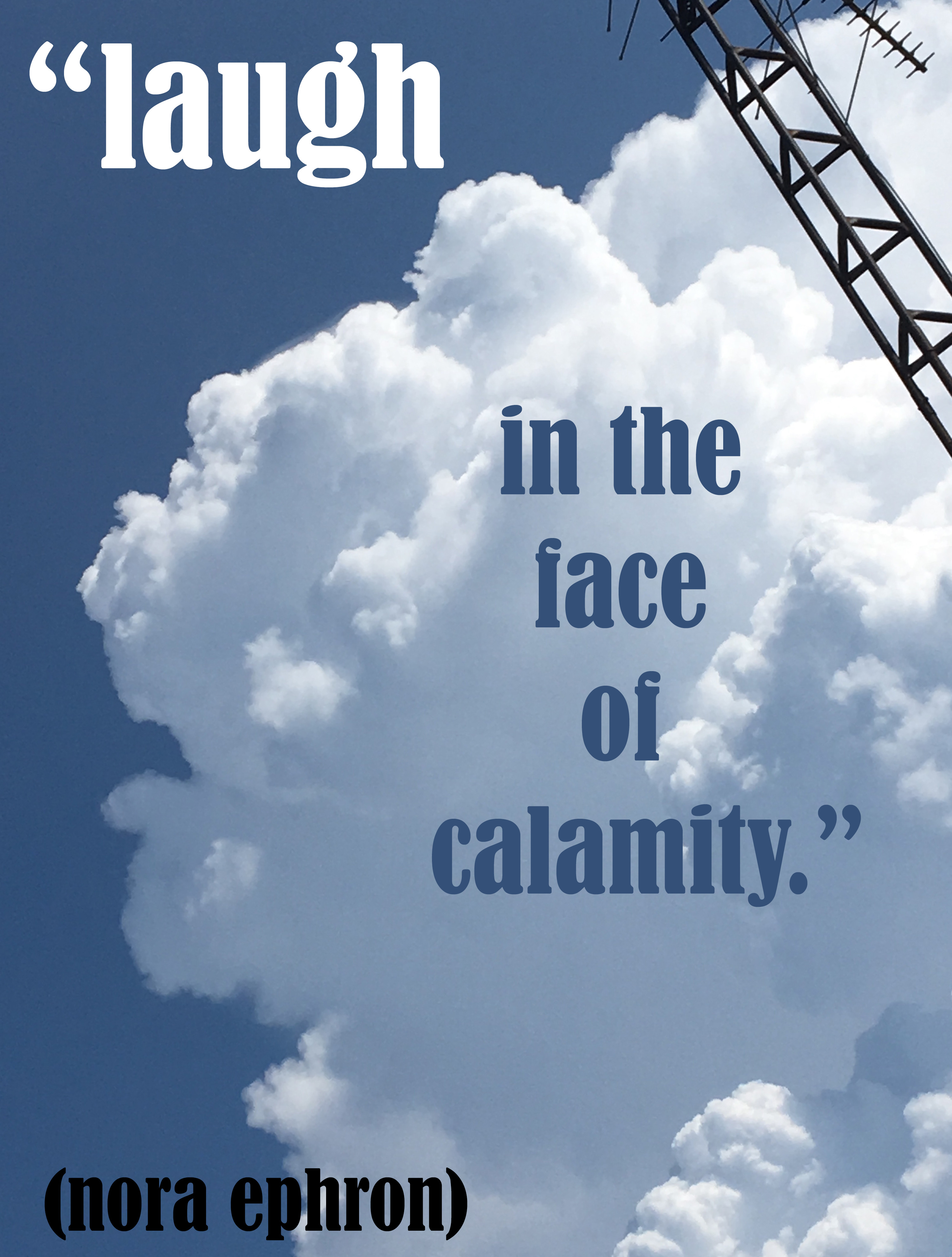
We’ve had our share of adversity these past few years. I would like to report that we laughed heartily in the face of lost jobs and broken wrists and pandemic madness and civil unrest. We did not. We shook our fists at the sky. We made up words and ran loops like Chicken Little. We invested in all manner of fear-of-the-future and ran from monsters-of-the-past. None of our racing around or fist-shaking brought comfort or change.

But, the moments that we took a breath, walked a trail or sat on the back deck and listened to the cardinals and crows, sipped hot coffee on cold mornings, held hands – sat on the curb and appreciated the undeniable truth of our moment: we have everything. We have this moment – the only moment of life that we’ll ever inhabit. We have each other. The rest, the fear of future, demons of the past, are pure imagination. In those moments, wrapped in a circumstance of calamity, we laughed at the beauty of it all.

read Kerri’s blog post about LAUGH IN THE FACE OF CALAMITY

Climb The Ladder [on Merely A Thought Monday]

Very few images are as potent as Tom Mck’s story of finding his 90 year old aunt Bunty on the roof of the farmhouse. There had been a storm. She’d hooked her cane on a rung and climbed the rickety ladder to make sure the shingles were intact, “Papa put a fine roof on this house,” she said, staring down at her alarmed nephew. Bunty was a farm woman. She saw no reason why she should not be on the roof. As the elder of the family, she was the keeper of the legacy. The house and ranch were the tangible creations of her ancestors and she was the steward.

Years later, when Bunty was gone and Tom was the ancestral steward, his task was untenable. The city was spreading like a fire, gobbling up farm land. He knew it was only a matter of time before the ranch was consumed. A Walmart was being built and he could almost see it from the porch. “What am I going to do?” he asked, knowing that he was the end of the line. His question was rhetorical. Sometimes the steward’s job is to close the door on an era. He knew what he had to do.

After Tom passed and the ranch was sold, I imagined him, like Bunty, standing on the roof of the farmhouse. He made sure that, as the land was lost, the legacy remained intact. He was strong, like Bunty. His ladder was rickety but he climbed it none-the-less. He made sure the shingles were intact. He met his task without self-pity.

I learned from him that life can forge you into strong metal or, if you choose, if you feel sorry for yourself, it can break you into tiny pieces. Jonathan told me that a tree must split its bark to grow and I understood that as a metaphor for aging. The bark splits because the spirit outgrows the body’s capacity to contain it. Beaky was like that. And, Dorothy. Mike. Grandma Sue. H. I admire them. Bodies break down. Aging hurts. Spirits, on the other hand, need not wither.

I’m told that, in her elderhood, Margaret stopped what she was doing each day to go out back and watch the sun set over the desert. She was made hardy by a hard life. She was made kind by how she chose to live within her hard life. Drying her hands, stepping out on the back porch, the sky electric with peach and pink, she met each sunset with gratitude. Intentional thankfulness for the day.

Gratitude is not a soft thing. It is an attribute of the strong. Hard won from a long life of choices. Bitterness is easy, a lazy thing. Climbing the ladder, standing on the roof, feeling the aches and the loses, facing the running sands with a smile and admiring the day’s end, celebrating the shingles that held fast through the storm and those who placed them, that takes grit. Courage. And, an understanding of the connected power and responsibility of standing in the long line of ancestry.

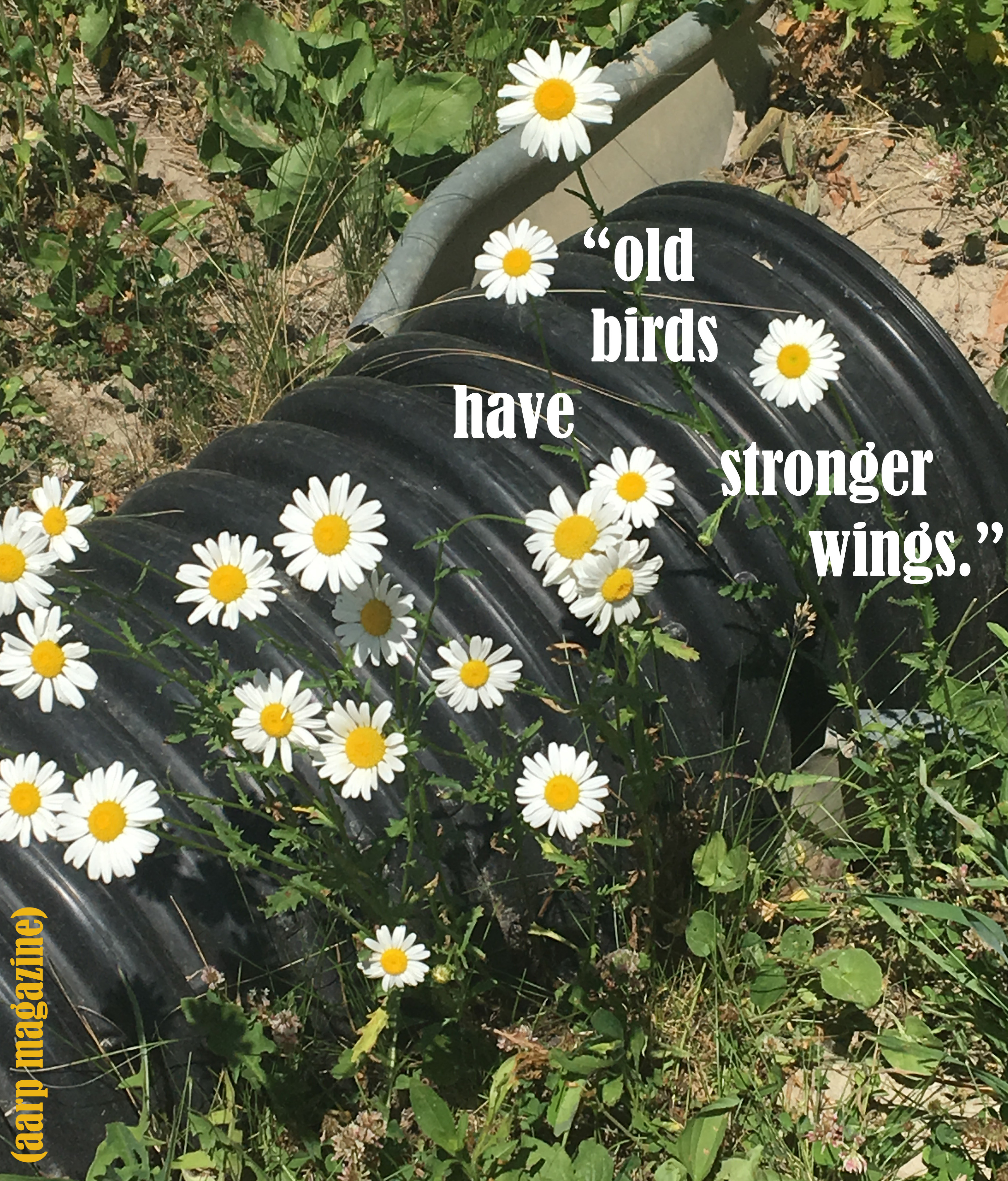
read Kerri’s blog post about STRONG WINGS