Look Out [on Two Artists Tuesday]

Perhaps the most useful and profound lesson I’ve learned happened under the water. I was doing my first night dive. I was scared. I was not yet a confident diver. As we descended the world became inky black. All I could see was where I pointed my light.

It was that simple. I can see where I point my light. That’s it. And, more to the point, I choose where I point my light. I have the capacity to choose what I see. I can…and have…chosen to focus on hardship and lack. I can…and have…chosen to focus on what I love. On any given day my focus bounces full spectrum between complaint and appreciation. And then I remember: it’s my light, where do I want to aim it?

There’s a second aspect of the lesson. My focus is a beam. My light is not all encompassing. Each of us looks at life through a soda straw. None of us has the big picture. That’s why the commons is so important. In order to know what to do, we need to bring our many perspectives together to approximate something close to a full picture. Rather than fight about disparate points of view – who is right – it’s more useful to try and assemble all of those differing views, like the pieces of a jigsaw puzzle, into a bigger picture. No one wins when the pieces refuse to interlink.

With two broken wrists the cello became impossible to play. It has sat in her studio, the case unopened, since her fall over two years ago. I remember the day we bought it. We were early in our relationship, not yet married. I knew she was having cello dreams. We went to the music store for some other purpose, I can’t remember. The cello was sitting in the corner. She sat. She began to play. It was a perfect fit. And, although we could not afford it, we also could not leave it behind. It was a perfect fit.

Our lives these past two years have been a descent into dark water. We’ve worked hard to shine our light at our good fortune in a dark and inky landscape. As we make our way back to the surface, we are cleaning out. Taking stock. “The cello needs to be played,” she said, deciding to sell it. “I’ll never be able to play it, now.” She took photographs of her cello. Sent out a message through the network.

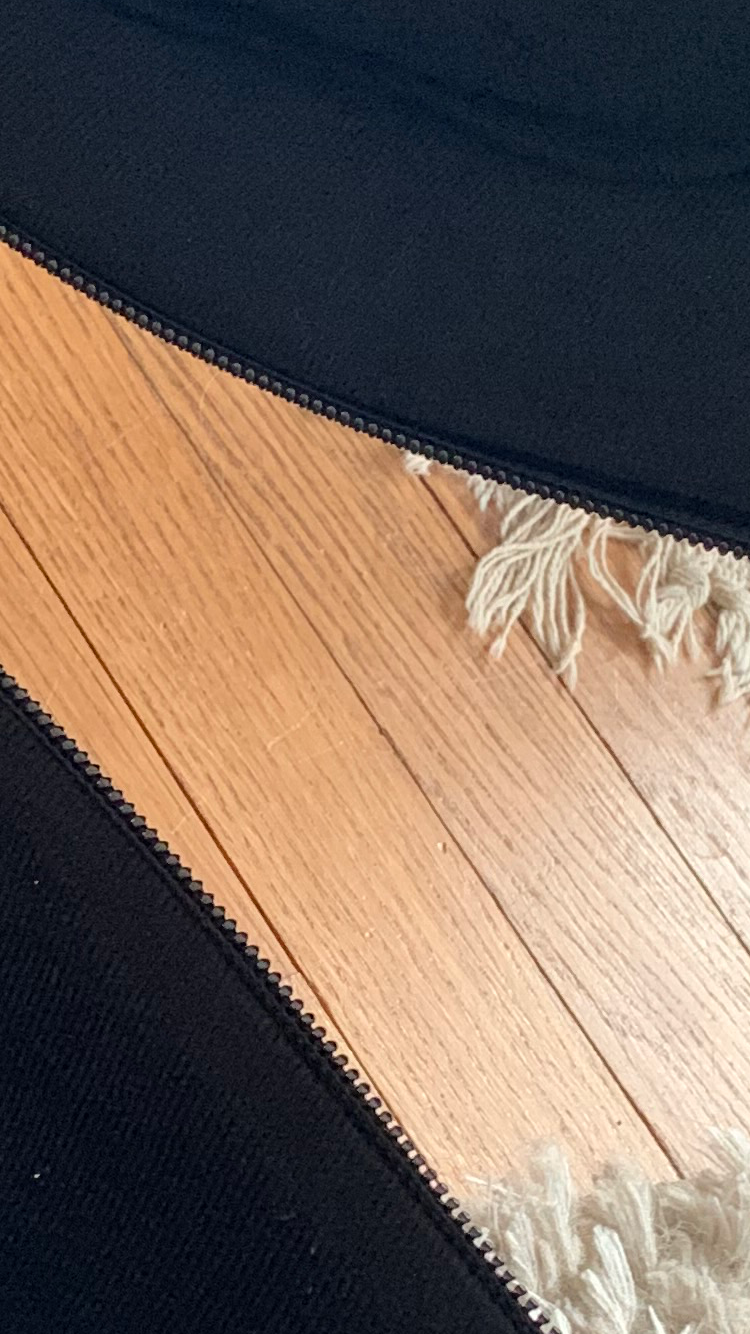
At the end of the day she showed me the photo. Edges. The view from inside the empty cello case, looking out. A slice of the world visible outside the case.

What’s “out there” is rarely clear. We see a small slice. It tickles our curiosity. The cello dream moves on making space for…? Who knows? We can’t see that far. In the meantime, we keep our eyes and hearts uplifted as we slowly kick our way back to the surface.

read Kerri’s blogpost about EDGES

Look Out The Window [on Two Artists Tuesday]

I came down the stairs, having just finished work for the day, and found her staring out of the bedroom window. “You have to come see this!” she said.

Atop John and Michele’s house, hundreds of birds, starlings, jockeying on the roof, taking turns diving into the gutters. And then, in heartbeat, the entire murmuration whirled as one into the sky. The visual impact of their singular launch nearly knocked us over.

And then, they were in the trees and swooping down to the pond. We ran to the sunroom where we could see the backyard. Dozens and dozens of birds and, we realized, not just starlings, great-tailed grackles were in the mix. The starlings, apparently late for a date or not willing to wrestle the grackles, swirled into the sky and disappeared, leaving the great-tails to enjoy the pond.

For a few moments it was like watching a bird ballet. The pulse of bird dancers, rising and falling in groups to the water, according to a symphony that we could not hear but could see in their choreography. And then, like the starlings, in a heartbeat, they were gone.

We looked at each other to confirm that we actually saw what we just saw. No dream or hallucination. It happened and we were lucky enough to look in the right direction at the right moment.

It’s not that it’s rare. This ballet happens all day, everyday. It’s rare that we are privy to the performance or are captured by the play happening around us.

“What if I hadn’t looked out the window?” Kerri asked.

read Kerri’s blogpost about STARLINGS AND GRACKLES

Step Off [on Two Artists Tuesday]

“A tree is not made of wood, it is wood.” ~ Alan Watts, The Watercourse Way

Language is powerful. It’s a drum I have beat for a long time, the notion that we insist that the narratives we wrap around ourselves are somehow “reality.” We are told that 50% of Russians believe the hell wrought on the Ukraine is merely propaganda. A made-up story. Not true. It is the narrative they are fed and, in order to eat it, they must ignore any evidence to the contrary. Their economy crumbles. The ruble falls. How could they not see it? Don’t laugh. 40% of USAmericans still believe the last presidential election was stolen, a plausible story only if wearing blinders with fingers placed firmly in ears. Burying your head in the sand is not a Russian or American trait, it’s uniquely human. We see what we believe, not the other way around. Our language makes it so.

Years ago I read that the word “wild” could only come from a people who believe all things must be tamed. Wild makes no sense without the concept of tame. Wild, bad. Tamed, good. So, a people afraid of their own “nature” must become tamers. A people who think “nature” not only can be but must be managed. To be “above” it all, in charge and atop the pyramid, giver of names. It is the necessary narrative for such tamers of the wild, those who story their very nature as corrupt. Tamed, good. Above it all. Separate. Is it any wonder the intrinsically conflicted human world rarely embraces peace? Our narrative leads us to believe, amidst so much inner and, therefore, outer conflict, peace is something to be created because we are naturally conflicted. What else?

Where, exactly, does wild end and tame begin? Where’s the line that delineates nature from civilization? What if nature is neither good nor bad? What if your nature was neither good nor bad? Perhaps self-love would be within reach and, as a natural extension, the love of others, too. It’s an alternative narrative though not possible in a belief-story that fears the wild. Wholeness begins with a step off the pedestal.

It’s in the language. Somehow separate from the world in which we live, not “in” nature or “of” nature , we are deluded to believe we are made of different stuff. Above it. Divinely manufactured. Made.

Manufactured. Made. Trees made of wood.

And, just what are we made of? I guess it depends on the story we decide to tell. Wild stuff.

read Kerri’s blogpost about TREES

Let Fly [on Two Artists Tuesday]

“We have to continually be jumping off cliffs and developing our wings on the way down.” ~ Kurt Vonnegut, If This Isn’t Nice, What Is?: Advice For The Young

It is now my opinion, based on life’s experience, that it you don’t find the cliff, the cliff will find you. Wing development is the name of this game. Hide in the closet, bury your head in the sand, drink yourself to oblivion, pretend the monster is not at the door, and you’ll discover in your last moments that looking the other way was, in fact, your cliff.

Master Marsh once asked me why I had the need to run and jump off every cliff. At the time I said, “I don’t know!” My latent response comes straight from Vonnegut: wing development. Apparently my wings took their sweet time developing and needed some extra cliff-age. And, as we all know but are too polite or arrogant to admit, wing development never ceases. There’s always another cliff until there’s not.

We had a rare warm day so took a walk on our favorite trail. The brilliant raw sienna of the empty pod caught Kerri’s eye. While she took photos of the pod I thought about the thousands of seeds it once held that took flight on the wind. A few certainly found fertile soil. Most did not. That’s the idea behind Kurt Vonnegut’s advice. Don’t hoard your idea seeds. Put them out. Audition for the play. Submit your story. Offer your idea. There’s great truth to the advice: your job is to put it out there, not to decide whether or not it is good enough. Explode the pod rather than protect the seed.

Greg recently told me said, “it doesn’t have meaning until it’s published.” He wasn’t speaking about publishing in a newspaper or by Random House. Sending an email is an act of publishing. To text is to publish. Greg was referring to sharing. It has no meaning until it is shared. And, sharing your creations can be -and often is – vulnerable and scary. Giving a speech is terrifying to most people. Dancing, painting, composing a song, playing a solo, offering your idea in a meeting…all are acts of publishing. All are potential cliffs to jump off.

Explode the pod. Let the seeds fly. The wind will carry them. Some will find fertile soil. Most will not. Wing development is easier when you realize that you are a pod of ideas and not a judge of worth or value.

read Kerri’s blog post about THE POD

Shape The Vessel [on Two Artists Tuesday]

George Ohr was one of the great ceramic artists of the late 19th and early 20th century. Like Van Gogh, he died unknown, never experiencing the success of his work. Robert reminded me of George Ohr’s story and I reminded Robert that Ohr would be a terrific story for him to tell through a one-man play.

What is it to follow your art-call with heart and dedication with nary a hint of financial reward or success on the horizon? Vincent Van Gogh would have been called an amateur during his life since the making-of-money is the flag we plant in the sand marking the line between being a professional and a dilettante. Those lines do not exist for artists with a deeper call. The money does not the artist make.

The Ohr-O’Keefe Museum of Art was designed by renowned architect Frank Gehry, quite a journey for the unseen work of George Ohr’s life to find so much vibrant admiration after his passing. Had he known it would have changed nothing. He’d have spent his days at the potter’s wheel either way.

“Shape clay into a vessel; It is the space within that makes it useful. Cut out doors and windows from a room; It is the holes that make it useful. Therefore, profit comes from what is there; Usefulness from what is not there.” ~Lao-tzu

Profit and usefulness. Shape and space. Mary Oliver asked the question: What will you do with your one wild and precious life? It hits the nail squarely on the head. It was not the pots that George Ohr made or the paintings that Van Gogh painted, it was the space they entered while throwing pots and painting paintings. It was the world they entered through their artistry, more expansive than financial success, more necessary than renown. A wild and precious life lived wildly and with avid appreciation.

Standing amidst the brilliant orchids, some of the flowers were in their last days. Their beauty fading, they cared not a wit. It is not in their nature to stretch their faces and pretend that the cycle of life is more valuable in the early bloom than it is in the late retreat. All is treasured, beguiling. Every last moment, not to be stalled or held onto. The root as necessary as the bloom, the winter as indispensable as the spring.

read Kerri’s blogpost about FIREWORKS

Name Your Wine [on Two Artists Tuesday]

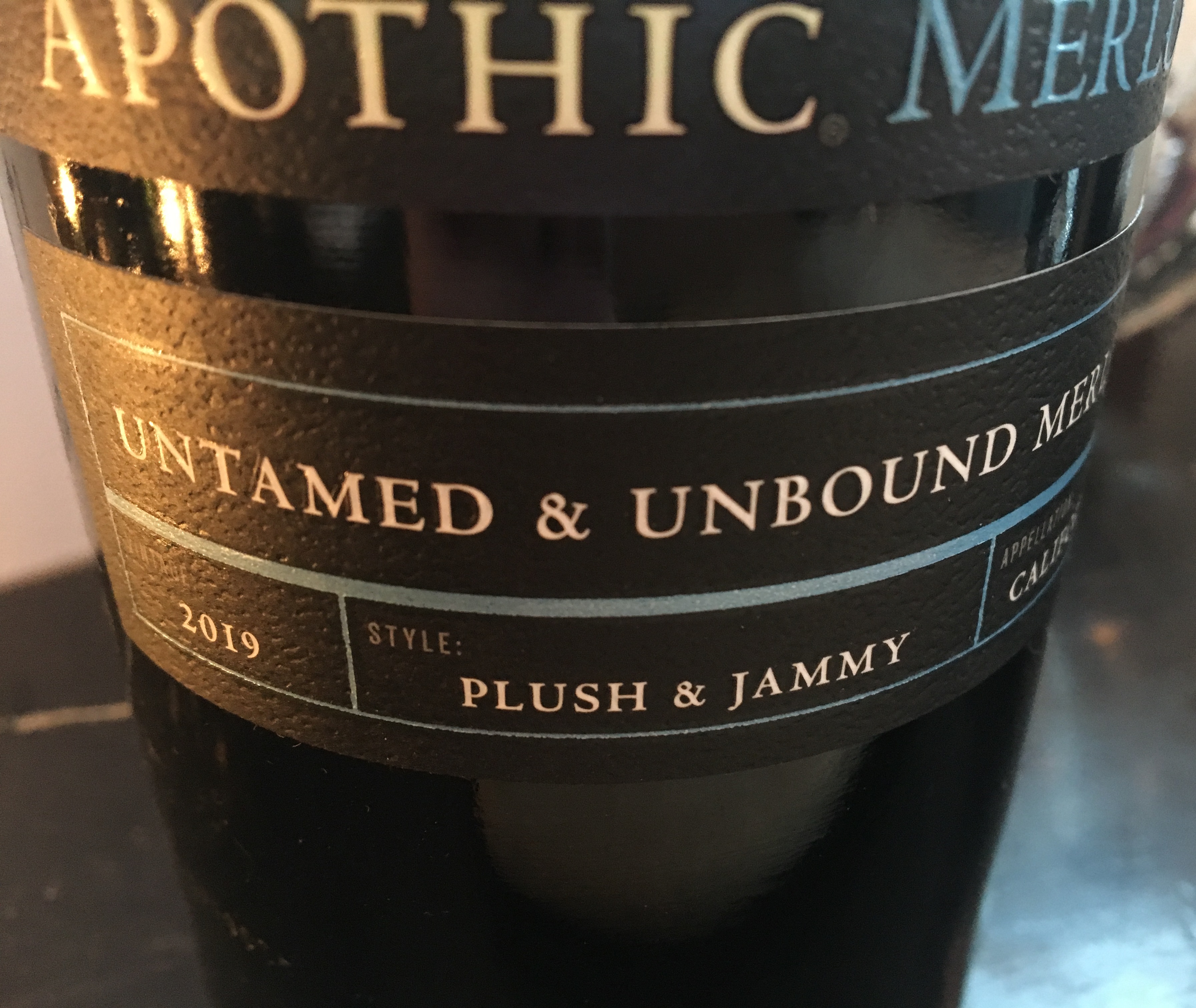
“Ooooh,” I said, reading the bottle, “I want to be untamed and unbound. Plush and jammy!” She rolled her eyes. I won’t tell you what she said. There might be children reading.

As wine bottles often do, it inspired an interval of time paying attention to the phrases I paste on the labels of my life. What if I described my days with wine-label terminology? Last week was definitely earthy and robust. Crusty with hearty notes of calamity.

In my work life, I’m hearing with alarming frequency the word taxonomy. We need to create a taxonomy. We are approaching a taxonomy. The study of naming. The science of definition. With what classification will we identify, and therefore label, our creation? If our product was wine, what would we say of it? Bold and expansive, yet subtle and refined? Are we talking about what it is, what it does, or defining it so it will sell? Those levers are never mutually exclusive. A written language is always an abstraction. Reaching yet never hitting its mark.

Aren’t we living in an age where the world is seeking a new-ish taxonomy? Spin your news channels and hear the same story-wine described in remarkably contradictory terms. What is fruity to one audience is classified as filthy to the other. Two labels, one wine. One team refusing to taste for themselves. We brand ourselves “divided.”

William Shakespeare either created or wrote for the first time in the English language over 1,700 words. I want him on my taxonomy team. I want him to lead my wine-life-labeling committee. Though, I imagine he would be amused to tears at our wild word-world of marketing, our reality-wielding-“news” channels, he wouldn’t be at all surprised that the power of a label pasted on an experience. “Call it what you will,” he might say, “It’s a sorry sight.” No matter. Words, words, words.

Sorry sight! A great name for a wine. A bold red blend for a brave new world. William gives it two thumbs up. Edgy and energetic, nutty and dippy with hints of crackers.

read Kerri’s blog post about WINE LABELS

What’s Now? [on Two Artists Tuesday]

After a fairly contentious conference I co-facilitated in The Netherlands, Kerri and I took the bullet train to Paris. It was early in our relationship and our first time abroad together. We couldn’t afford to get to Paris otherwise, so tagging a small vacation onto a work trip seemed foolish not to do. It was the perfect place at the perfect time. I released the conference friction the moment we stepped off the train. I didn’t know it at the time but on the streets of Paris I left behind a skin that I’d badly needed to shed.

We had limited funds so we bought baguettes and Camembert cheese, fruit, tarts from vendors and bottles of wine. We ate in parks. We wandered the streets. Climbed the hill to Sacre’- Coeur, visited Rodin, and tried to get lost. We fell exhausted into bed each night, full of art and sound and color and delicious wandering. One night we sauntered to the Arc de Triomphe and barely escaped a riot. Bus loads of police in riot gear appeared on the street and, wide-eyed, we slipped out of the crowd and hustled to find more peaceful rues. Paris now serves as a marker. There was before Paris. And after.

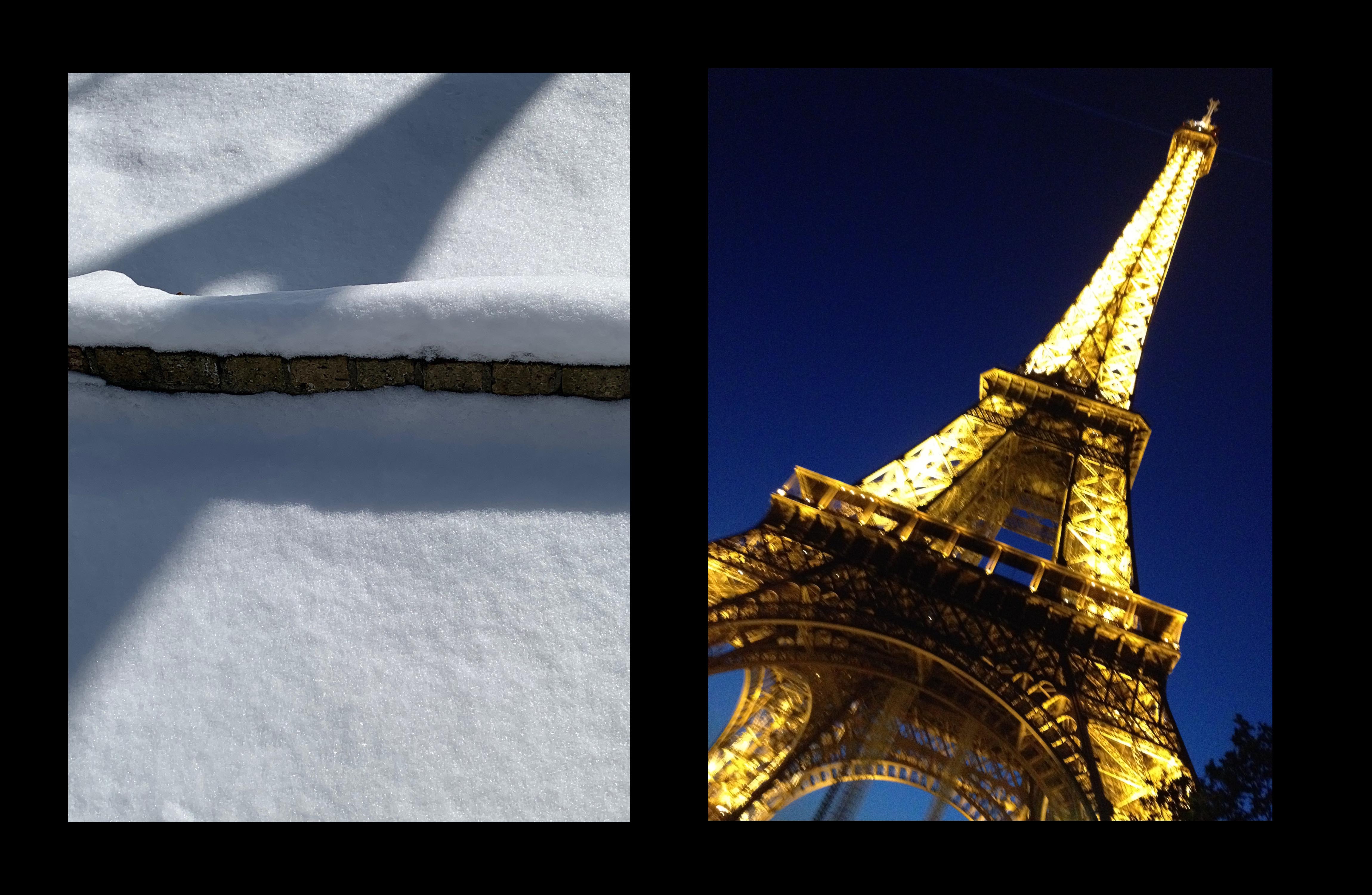
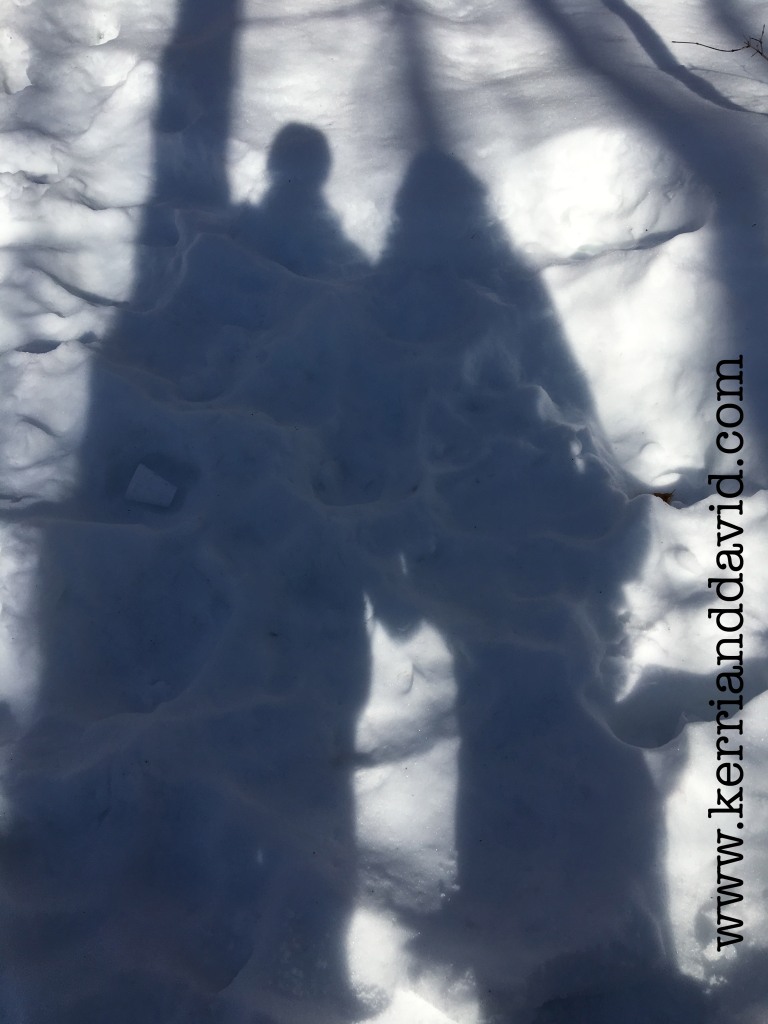
“This shadow looks like that picture I took of the Eiffel Tower,” she said, showing me the photo of the shadow. The angle is perfect. The shadow is appropriate. Shadows. What was. An outline of the people we were, reflected on the snow. And, the series of photos, shadows along the way, the surprising people we have lived-into since we wandered those streets, shedding old skin, and boarded a plane home with a a question, “What’s next?” What’s now?

read Kerri’s blog post about SHADOWS

Love Your Vintage [on Two Artists Tuesday]

The woman on the Apple support line told Kerri that her computer was vintage. “As if I didn’t know!” Kerri groused after the call.

In the middle of the night, after the firemen had determined that the burning electric smell wasn’t coming from inside our walls (a story for tomorrow), their chief took one last look around and said, “You have some really nice antiques here.”

“Thanks,” Kerri said, avoiding my smirk.

We are not collectors of antiques. Not on purpose. Our house is populated with stories and random pieces of furniture that we like and could afford. For instance, the two chairs in the sunroom are made of course-weld steel with raw wood seats. $5 for both. They are quirky, like us. An old door, set on two sawhorses, serves as a table for our plants. Budget and taste. Or, taste defined by budget. As Gus says in My Big Fat Greek Wedding, “There you go.”

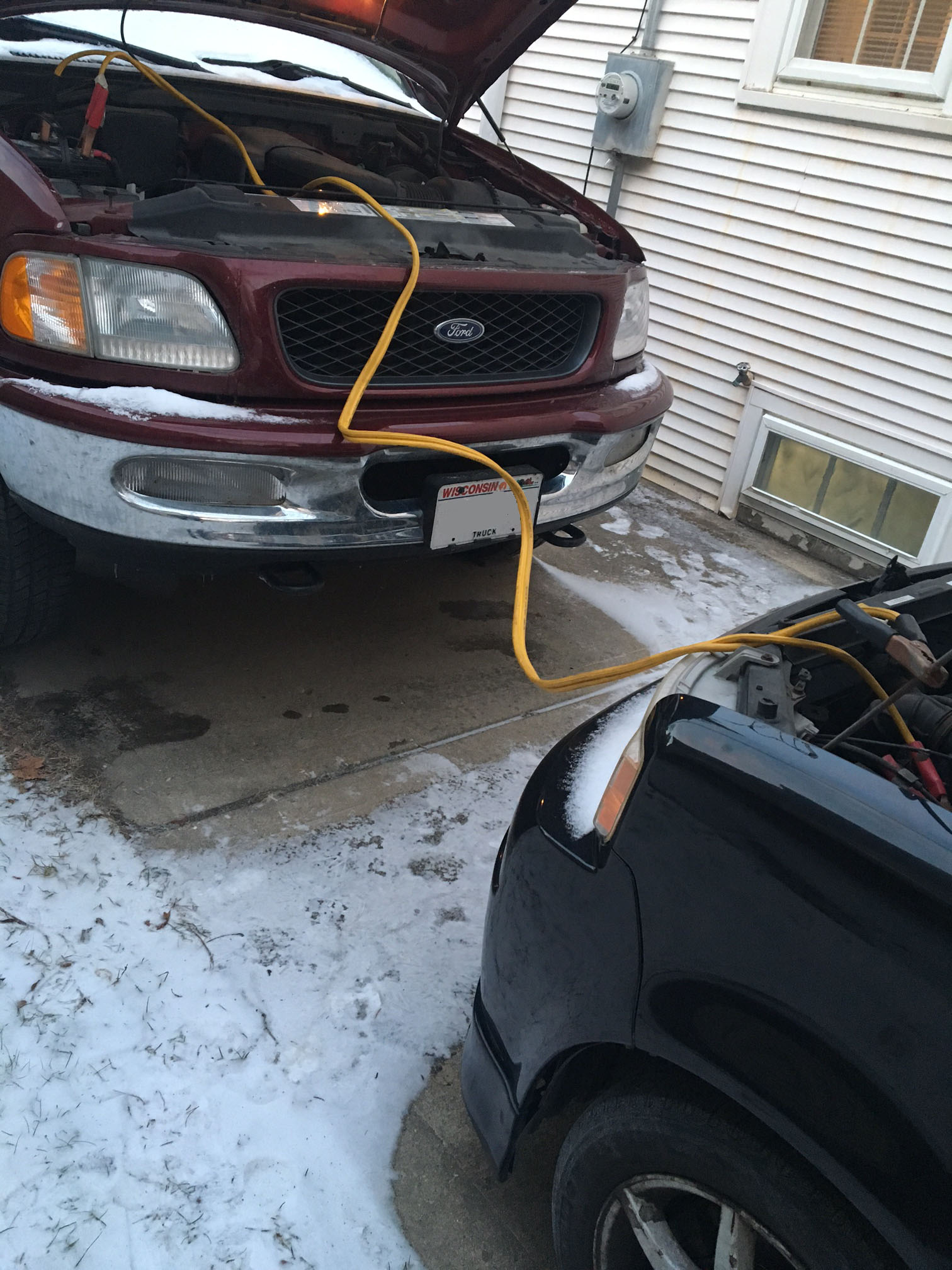
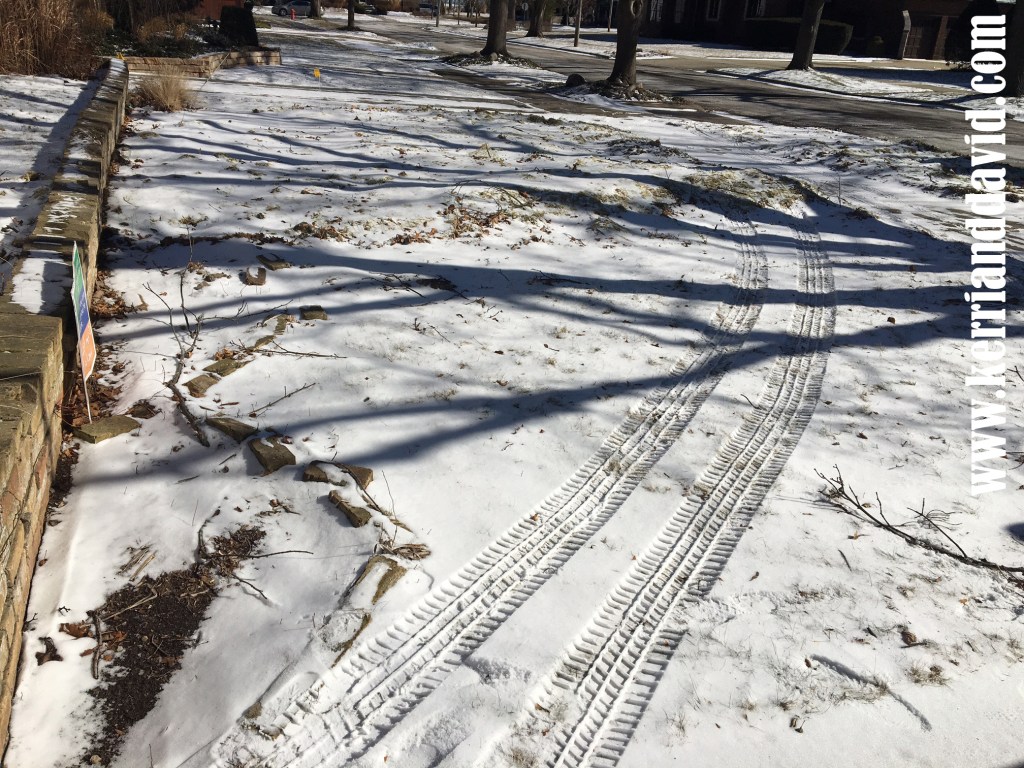
Big Red and Little Baby Scion are long-in-the-tooth, too. And, isn’t that a great idiom! Showing their age. Horses gums recede with age (I just read this!) so older horses seem to have longer teeth. I am suppressing the urge to run into the bathroom and look at my gums in the mirror. “I am not a horse,” I whisper to my urge. Vintage, vintage, vintage. Last month Big Red wouldn’t start. He needed a new battery. Yesterday, we pushed Little Baby Scion down the driveway so we could get the newly-batteried-Big Red out. We drove him across the front yard. Classy people. LBS decided not to start and, after refusing her jump from Big Red, she’s destined to have a tow truck adventure to visit Steve [Thanks to John and Michele, our awesome neighbors, for helping us push Little Baby Scion back up into the driveway for safekeeping until the tow].

“We’ve had one hell of a week,” I said, after being rear-ended. It was lucky that we were in Big Red. Normally, we’d have been in Little Baby Scion and it would not have been pretty. It occurs to me that we are living an Aesop’s fable: you can never see your good fortune since it sometimes comes dressed as a problem. Stepping out of the truck to see the damage – and being amazed that, after being hit so hard, that there was not a single scratch on Big Red. The other car lost its grill to Big Red’s trailer hitch. Pieces of plastic and glass were everywhere. “I’m glad Little Baby Scion broke down,” I thought. Our unintentional vintage collection could have just saved our lives.

“We’re really lucky,” Kerri said. Yes. Yes we are.

read Kerri’s blog post about JUMP STARTS

Arrive At The Essence [on Two Artists Tuesday]

This past Saturday we passed a milestone. We began writing our Melange on February 12, 2018, four years ago. We’ve published 5 days a week, every week, no matter what chaos or crazy storm blew through our lives.

Our Melange has moved through many phases. Originally, we wanted to regain some control over the publication of our music, paintings, plays, children’s books and cartoons. In our first post I called it our “pile of creative perseverance.” Also, we wanted to make a living from our mountain of work so we set up Society6 storefronts and spent hours each day developing products based on what we published. It was a blast and a total bust.

Eventually, the stores fell off, the daily themes changed, and we arrived at a pure essence: we love to sit together and write. Each day. There’s always a visual prompt, mostly from photos Kerri’s taken during the week. There’s only one rule: we can’t read or know what the other is writing about until we’ve completed our drafts. And then we read to each other, talk about our posts and clean them up. It’s my favorite thing to do. It feeds our hearts, energizes our artistic souls and that is more than enough.

Somedays I feel as if we are writing ourselves into existence. Our Melange is the story we tell each other – and you – of our life together. It’s a continuation of the Roadtrip, the daily emails we wrote to each other before we met. And, if the Roadtrip was a narrative offering of “this is me,” the Melange is a narrative offering of, “this is us.”

We launched the Melange with this Chicken Nugget (below). I wrote, as an introduction in the inaugural post, that this Nugget – and the Melange – was “a quiet reminder that the universe of feelings was – and is – so much bigger than words can possibly contain.” Ironic, yes? Coming from two people who, each and every day, write words as their way of reaching into this vast universe of feelings.

Thank you for reading what we write. We appreciate every step you take with us on our journey.

read Kerri’s blog post about 4 YEARS

chicken marsala © 2016 kerri sherwood & david robinson

the melange © 2018-22 kerri sherwood & david robinson

Fill The Pot [on Two Artists Tuesday]

It’s food week at the Melange. Well, truth be told, it’s always food week here. When we’re not in our studios we meet in the kitchen and either eat food or talk about eating food. Sometimes – okay – everyday, when I am up in my office working, Kerri sends me a midmorning text: “Are you staaaaarving?” My reply never waivers: “Yes. Yes I am.” Snacks appear and happiness ripples throughout the house.

It’s winter and it’s covid so our circle of experience has shrunk mightily. Kerri injured her foot so our daily winter walks through the frozen tundra are on hiatus. As our recent photographs have betrayed, we are explorers in our own house. Photos of Dogga. Photos of the moon. Clever shots of candles and glasses of wine. And food, food, food.

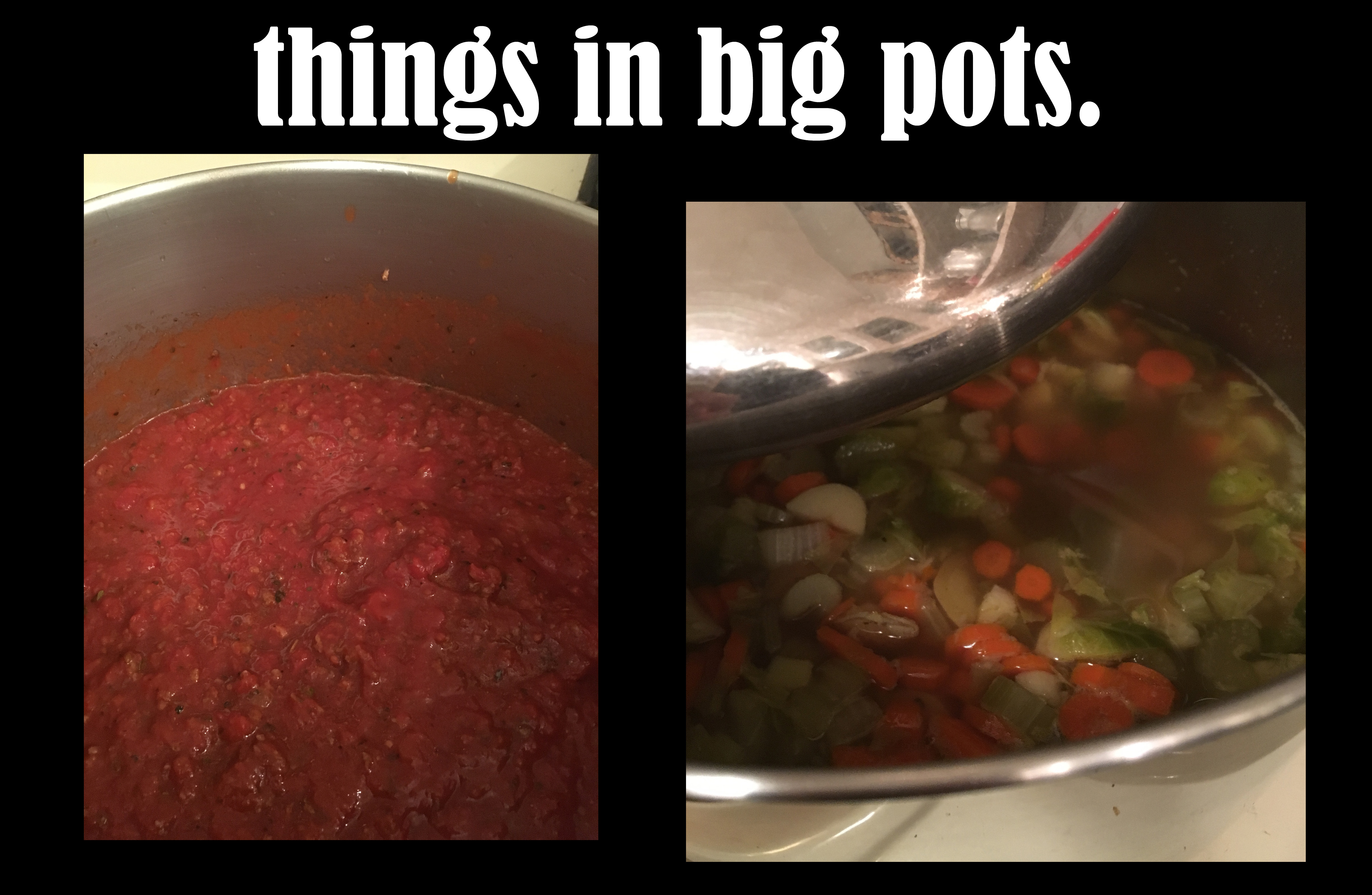
Because it is winter, the big pot has re-emerged. Soups or spaghetti sauce are often simmering on the stove. During the warm months, the big pot goes on vacation but faithfully returns when the temperatures drop. There are weeks when the big pot never makes it back to the cabinet. It’s a workhorse.

I appreciate the reappearance of the big pot because, in addition to being essential for soups, it evokes stories. It never fails. The pot comes out. The chopping commences. And the stories start to roll. Our big pot has been around for a very long time so it is alive with story. Big pots bring memories of parents and grandparents, holiday meals, Dorothy cooking on the cast iron stove. It evokes remembrance from childhood, steam rising from the pot and fogging the kitchen window. Once, as a boy, I couldn’t breathe and leaned over the big pot. The steam helped.

This week we are excited: we have a new soup to try. Last week we made a simple vegetable soup, a recipe we lifted from 20. The big pot also helps us to dream. We remember a pre-covid world when we had gatherings and dinner parties, when we squeezed people into chairs at the table, elbows negotiating heaping plates of pasta, crusty bread, and wine. Laughter. “It’s the first thing we’re going to do,” Kerri says, “when this is all behind us.” The pot will come out. A vat of sauce will bubble on the stove. Friends will pack into the kitchen, asking, “When do we eat?”

read Kerri’s blogpost about BIG POTS